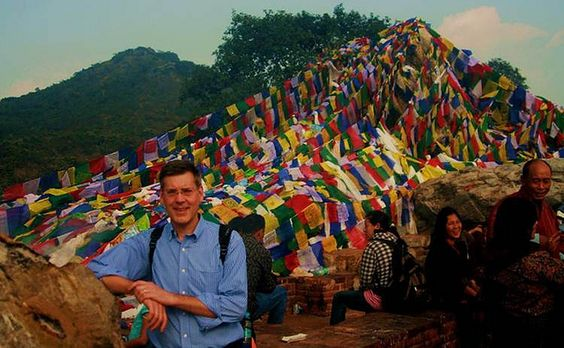
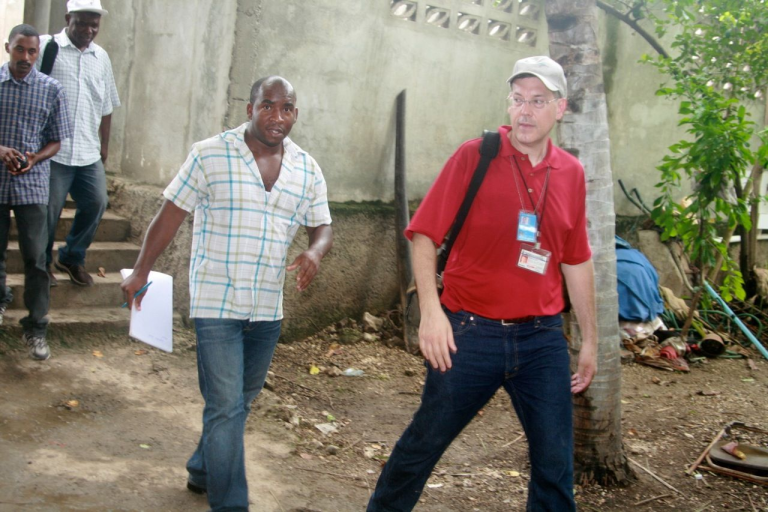
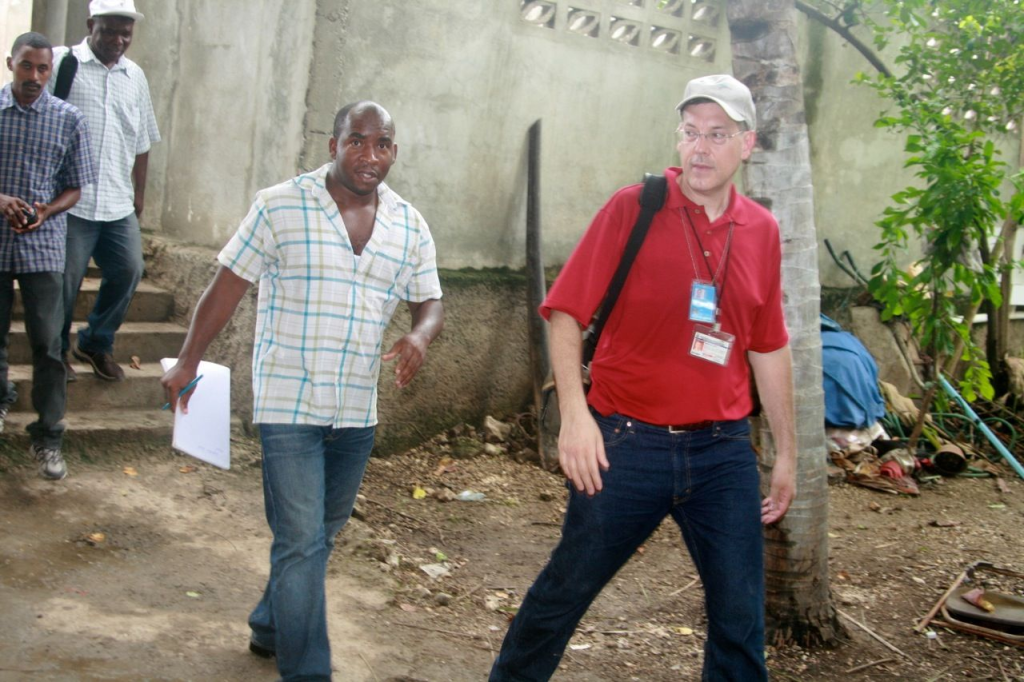
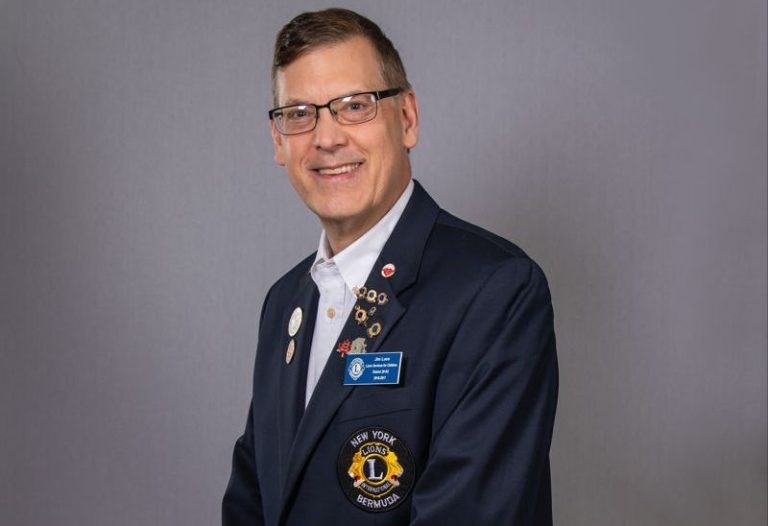
Jim Luce’s extensive body of work chronicles over two decades of humanitarian efforts through Orphans International Worldwide, documenting the organization’s mission to support vulnerable children across the globe. From post-tsunami recovery in Indonesia and Sri Lanka to earthquake relief in Haiti, and from establishing orphanages in India to working with Tibetan refugees, Luce’s writings capture both the profound challenges and inspiring triumphs of international child welfare work. His articles, spanning from 2007 to 2024, offer an intimate first-person perspective on disaster response, cross-cultural collaboration, and the tireless dedication required to raise what he calls “global citizens” in some of the world’s most challenging environments.
Had the horrible events of the Nazi occupation not transpired, Janusz Korczak would still be remembered as one of the great educational innovators and child advocates of the twentieth century. However, his courageous response to the events of the Holocaust established him as something even greater.
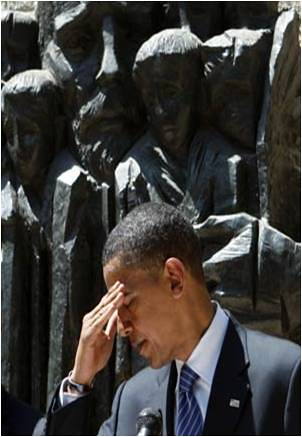
Barack Obama pauses during a ceremony in Janusz Korczak Squareat Yad Vashem Holocaust Museum in Jerusalem.
Many years ago my good friend David Gilfix wrote a play about the great Jewish-Polish orphanage director, Janusz Korczak, and it was ultimately produced in New York. The following is the introduction to the play:
“If the value of a museum exhibition can be determined by its long-term impact, then the Ghetto Fighter’s Museum on Kibbutz LohameGetaot in Israel was invaluable to me. It was at this museum in the early 1980s that I first learned about the Jewish/Polish orphanage director, Janusz Korczak. So powerful was this exhibit that I decided there and then to someday write a play about this man. I wanted to bring Korczak, his co-director Stefa Wilczynska, and the children they sought to protect back to life. I wanted to know them. And for me, the only possible way of doing this was in the form of a play.”
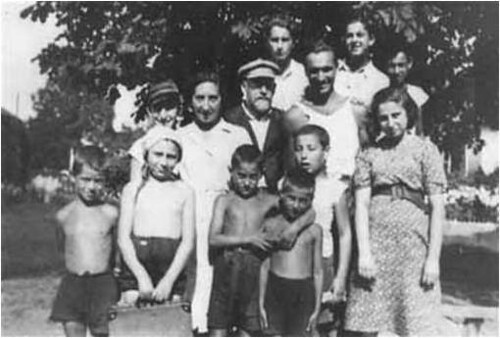
JanuszKorczak with friends and children.
Having visited orphanages in the developing world at that point of my life, I think subliminally David’s play began to focus my mind on what I could do to help save today’s children in crisis. The result was the creation of Orphans International Worldwide, now affiliated with the United Nations, which takes an interfaith approach to raising children in their own cultures.
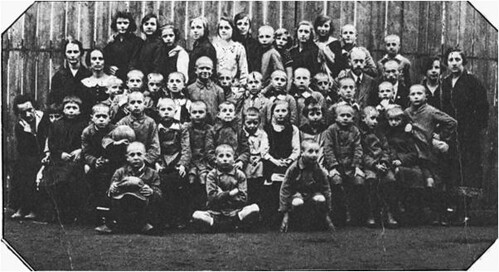
Staff and children of Nasz Dom (“Our Home”) Orphanage, run by Maryna Falska and Janusz Korczak in Pruszkow, Poland.
Janusz Korczak, the pen name of Henryk Goldszmit, was a complicated yet brilliant, multi-faceted man. There was Korczak the author, whose witty novels, social satires, and children’s books were read across Europe. There was Korczak the doctor, whose research and publications in medical journals were instrumental towards major improvements to pediatrics in pre-World War II Poland. Most of all, there was Korczak the exceptional orphanage administrator.
Korczak established a Jewish orphanage in Warsaw in 1911 called the “Dom Sierot,” and together with Stefa Wilczynska, he ran it for more than thirty years. He also ran a Christian orphanage in Bielany and served on the Board of Directors of several other orphanages.
Korczak’s revolutionary ideas about child development almost single-handedly upgraded the orphanage institution in Poland. His theories about a child’s “right to respect” and “the dignity of the child” had enormous influence throughout Poland and Europe. Korczak’s Children’s Court, which became integral to the way he nurtured and governed children within his orphanage, is still studied today.
When Germany invaded Poland in World War II and forced a huge portion of the Jewish population including the Dom Sierot inside the Warsaw Ghetto, Korczak’s total energy was devoted to saving his orphans as well as other abandoned children.
Had the horrible events of the Nazi occupation not transpired, Korczak would still be remembered as one of the great educational innovators and child advocates of the twentieth century. However, his courageous response to the events of the Holocaust established him as something even greater.
Korczak received multiple offers from well-meaning friends outside the Ghetto walls to be smuggled to freedom. He rejected all of them, for he would not abandon his children.
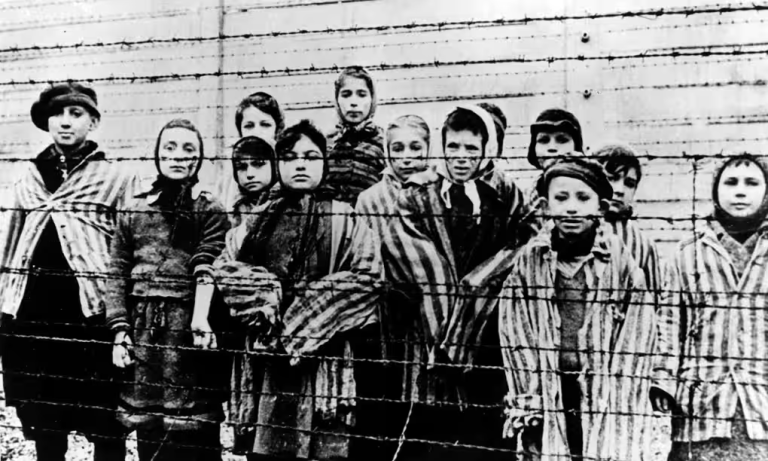
On August 5th, 1942, Korczak, Stefa Wilczynska, and approximately 200 orphans were put on a train that would take them to their death in Treblinka. Immediately thereafter, the Warsaw Ghetto Fighters adopted a new battle cry: “Remember Korczak’s children!” He had become legend.
Today Janusz Korczak is a national hero in Poland. Israeli school children learn about his exploits. And in Poland, at the site of the former death camp in Treblinka, there are numerous plaques commemorating the countries from which people died. Only one mentions a person’s name. It says, “Janusz Korczak and the Children.”
A free press, often termed the “fourth estate,” is fundamental to preserving democracy. It serves as a watchdog, holding government officials and institutions accountable by uncovering corruption, exposing injustices, and ensuring transparency. A vibrant media landscape fosters informed citizenry by providing diverse perspectives and critical information necessary for public debate and decision-making. By amplifying marginalized voices and scrutinizing power, a free press upholds democratic principles, encourages civic engagement, and guards against the erosion of civil liberties. In essence, the freedom of the press is indispensable for a healthy, functioning democracy, ensuring that truth and justice prevail over censorship and propaganda.
Cairo — The arrival of Reginald’s pudgy younger brother, Dudley, from England was a source of both excitement and trepidation. Reginald, a man of routine and order, was a picture of precision and predictability. Dudley, on the other hand, was a whirlwind of impulsive energy and unpredictable antics.
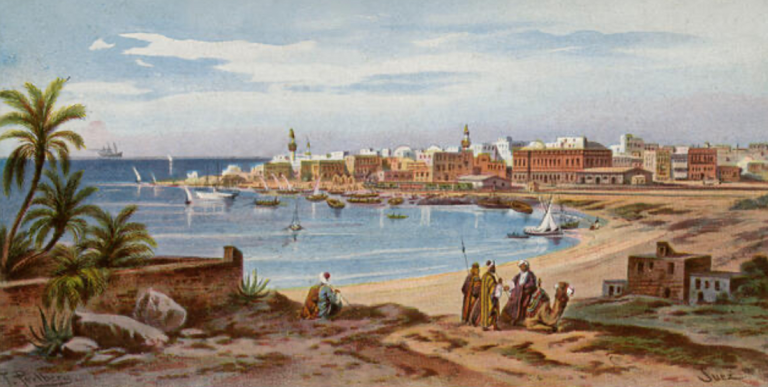
Dudley Featherbottom arrives on holiday to visit his brother Reginald in Cairo, 1865.
As the steamship docked, Reginald stood on the pier, his spectacles perched precariously on his nose, a mixture of anticipation and apprehension etched on his face.
He had meticulously planned Dudley’s visit, a month of carefully curated activities and experiences designed to showcase the wonders of Cairo.
But Dudley, true to form, had other plans.
“Reginald, old boy!” he exclaimed, bounding off the ship, his luggage trailing behind him like a mischievous puppy. “I’ve brought you a surprise!”
Reginald’s heart sank. He knew that Dudley’s “surprises” were often less than delightful.
Dudley produced a small, caged monkey from his coat pocket. “Meet Bartholomew!” he announced proudly. “He’s my traveling companion.”
Reginald stared at the monkey, which was already attempting to unbutton his waistcoat. “Dudley,” he began, his voice trembling slightly, “I don’t think Bartholomew is quite what I had in mind…”
But Dudley was already off, dragging Reginald towards the bustling souk, Bartholomew chattering excitedly on his shoulder. Reginald’s carefully planned itinerary lay in tatters, replaced by a chaotic adventure with his unpredictable brother.
Days turned into weeks, and Reginald found himself swept up in Dudley’s whirlwind of mischief. They visited the pyramids, not in the sedate manner Reginald had envisioned, but with Bartholomew perched atop the Sphinx, much to the amusement of the local vendors.
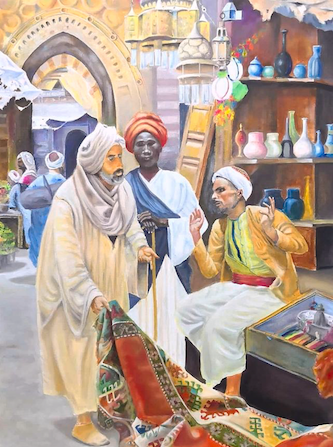
They ventured into the labyrinthine alleyways of the souk, Dudley bargaining with flamboyant gestures and Reginald trailing behind, apologizing profusely for his brother’s antics.
One evening, Dudley announced that he had procured tickets to a performance of the belly dancers. Reginald, horrified, protested that such entertainment was hardly respectable. But Dudley, ever the showman, insisted, and Reginald, outnumbered and outmaneuvered, found himself swept into the vibrant spectacle.
To his surprise, Reginald found himself captivated by the dancers’ grace and the infectious rhythm of the music. He even found himself tapping his foot, a rare occurrence for a man of his reserved nature.
As the month drew to a close, Reginald found himself strangely reluctant to see his brother go. Dudley, despite his chaotic tendencies, had brought a spark of life and adventure into his otherwise predictable existence.
As the steamship pulled away from the dock, Reginald waved goodbye, a faint smile playing on his lips. He knew that Dudley would be back, and that his next visit would undoubtedly be just as unpredictable and unforgettable.
And as he watched his brother disappear into the distance, Reginald couldn’t help but feel a pang of excitement for the next chapter in their shared adventure.
WEAVE THIS SECOND VERSION INTO THE FIRST…
Reginald Featherbottom, a man of routine and order, found himself thrown into chaos upon the arrival of his younger brother, Dudley. Dudley, a whirlwind of impulsive energy and unpredictable antics, had arrived in Cairo with the express purpose of enjoying a month-long holiday, much to Reginald’s chagrin.
As the days passed, Reginald noticed a peculiar pattern in Dudley’s behavior.
He would disappear for hours at a time, returning with a mischievous glint in his eye and a faint scent of exotic spices clinging to his clothes. Reginald, ever the observant elder brother, couldn’t help but wonder about Dudley’s clandestine activities.
One afternoon, Reginald decided to follow his brother’s trail. He discreetly trailed Dudley through the bustling souk, his heart pounding with a mixture of apprehension and curiosity. He watched as Dudley disappeared into a dimly lit alleyway, only to emerge moments later with a young, handsome merchant, their arms linked.
Reginald’s suspicions were confirmed.
Dudley, the paragon of propriety, was engaging in a clandestine romance with a local merchant, a fact he had kept hidden from his unsuspecting brother. Reginald’s mind reeled with the implications of this revelation. How could Dudley, a man of such impeccable breeding, stoop to such a scandalous affair?
Torn between his duty as a brother and his desire to maintain his own reputation.
As the week progressed, Reginald found himself playing an unwitting role in Dudley’s charade. He would receive cryptic notes from Dudley, requesting his assistance in covering up his whereabouts. Reginald, a man of principle, found himself torn between his duty as a brother and his desire to maintain his own reputation.
One evening, Dudley announced that he had secured tickets to a performance of the belly dancers, a spectacle that Reginald, a man of refined sensibilities, considered to be utterly distasteful. However, Dudley, ever the showman, insisted, and Reginald, outnumbered and outmaneuvered, found himself swept into the vibrant spectacle.
To his surprise, Reginald found himself captivated by the dancers’ grace and the infectious rhythm of the music. He even found himself tapping his foot, a rare occurrence for a man of his reserved nature.
As the week drew to a close, Reginald found himself strangely reluctant to see his brother go. Dudley, despite his chaotic tendencies, had brought a spark of life and adventure into his otherwise predictable existence.
As the steamship pulled away from the dock, Reginald waved goodbye.
A faint smile playing on his lips. He knew that Dudley would be back, and that his next visit would undoubtedly be just as unpredictable and unforgettable. And as he watched his brother disappear into the distance, Reginald couldn’t help but feel a pang of excitement for the next chapter in their shared adventure.
The True Tales of Reginald Featherbottom, Correspondent of The London Clarion
Orphans International Sri Lanka was founded following the 2004 tsunami. Now fully trained, the staff are beginning their own program for the children of Unawatuna.
The James Jay Dudley Luce Foundation Supporting Young Global Leadership
Unawatuna, Sri Lanka.Orphans International Sri Lanka, an affiliate of Orphans International Worldwide, was founded in Sri Lanka following the 2004 Tsunami.
The organization, to help Sri Lankan children, was built in memory of Dr. Cresenta Fernando, a Sri Lankan native who worked for the World Bank in Washington and who perished in the Tsunami of 2004.
For the last year, the NGO staff have worked and trained in community center of a village called Kathaluwa. This ocean-side village sits about 30 minutes south of the city of Galle in the Southern Province.
Today, now fully trained, the staff are beginning their own program for the children of Unawatuna, about 15 minutes south of Galle. For the first year, they will be hosted by the local Buddhist temple.
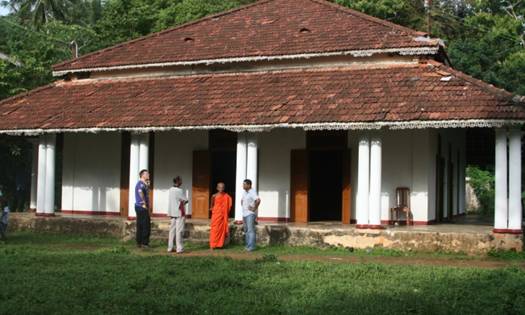
Perched on a hill overlooking beautiful Unawatuna Bay, the temple is at peace. Several years ago it was far more chaotic. It was where the survivors of the Tsunami fled — up the hill — to seek protection following the 2004 Tsunami.
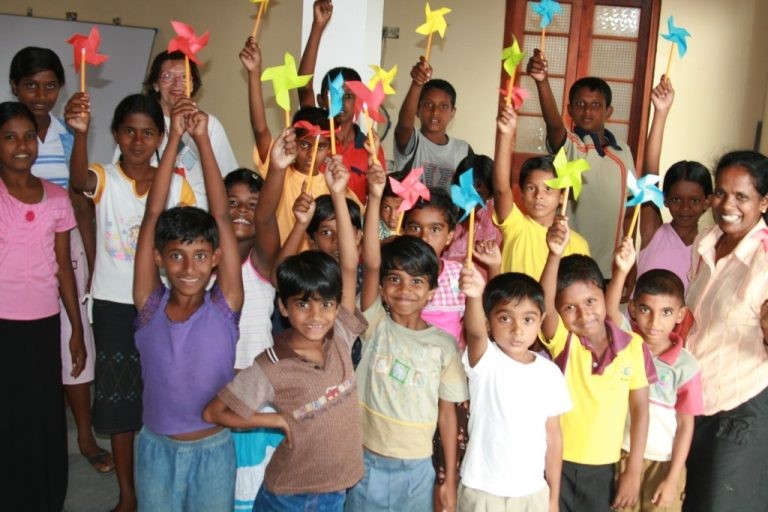
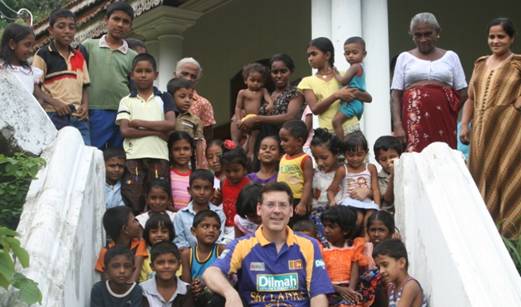
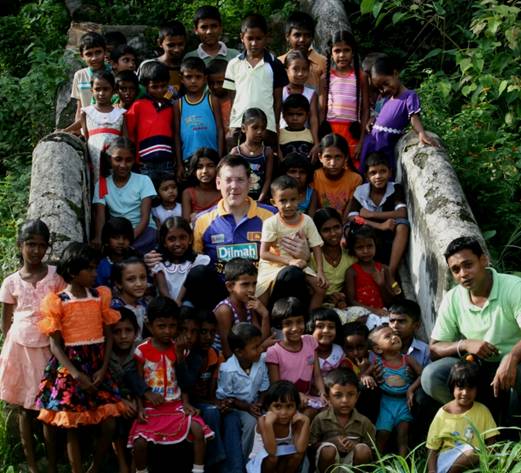
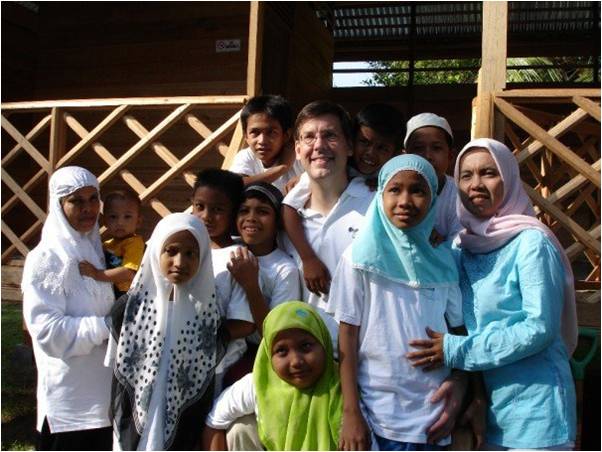
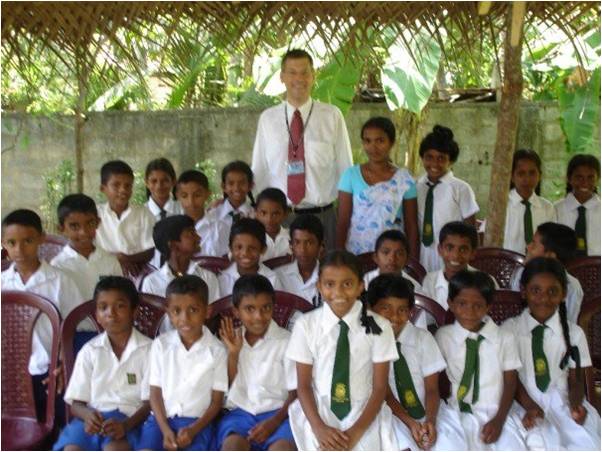
The author meets the children of Orphans International in Unawatuna.
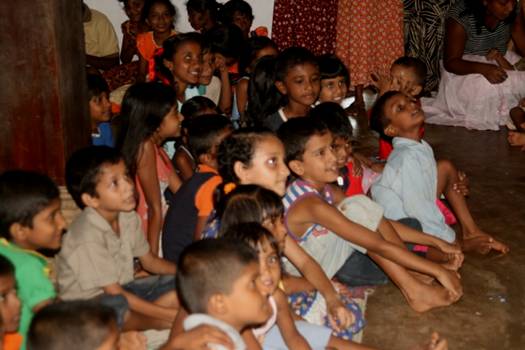
The program has about 60 boys and girls already involved. Fourteen of them are orphans from the Tsunami that the group has worked with.
The staff of Orphans International in Sri Lanka have been trained now for three years.
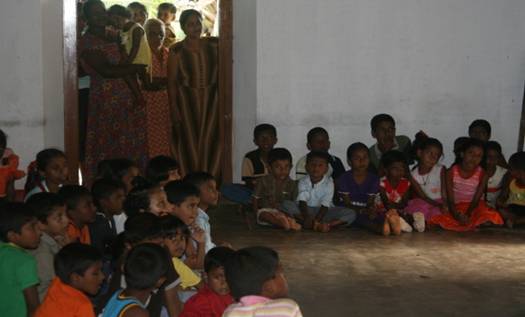
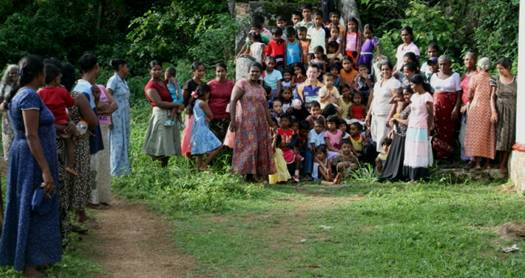
About 60 children and that many adults gathered for cake.
They include two brothers: Buddika Bandera, local director, and Indika Bandera, a global officer of Orphans International Worldwide presently assigned to Sri Lanka.
The idea for Orphans International Worldwide began when I adopted a son from Indonesia in 1995, and was traumatized by the 199 children I left behind.
Officially, OI Worldwide began in 1999 — this year is the association’s tenth anniversary. Coincidentally, my fiftieth birthday.
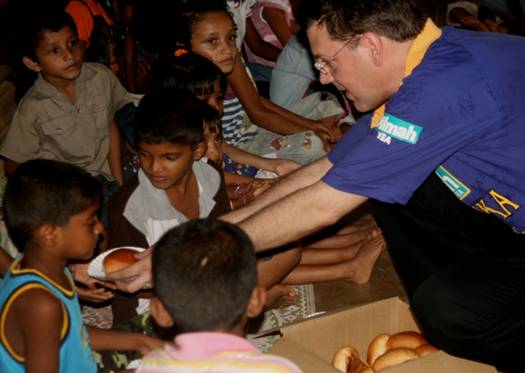
I helped pass out pastries to children who had witnessed the Tsunami.
My mother challenged me at the age of forty to begin a “better way” of taking care of children, which today is both our “small-homes” model and “family-care” model.
My mother then died, and proceeds from her estate went into implementing our project, now operating is Asia, Africa, and the Americas.
ADVERTISEMENT
Our first homes — in Indonesia and Haiti — opened their doors to children in need in 2001.
I spoke to the kids in English and staff translated into Sinhala.
That year we were incorporated as a non-profit organization in the U.S. for the purpose of raising funds for and educating the public on the plight of the poorest of the poor: orphaned and abandoned children in the developing world.
Orphans International Sri Lanka began following the 2004 Tsunami when an American family, the Cohen’s, cared enough about a lost Sri Lankan son-in-law to begin a program for children in his memory.
The Tsunami hit Unawatuna directly, and many of its survivors made it to the Buddhist temple overlooking the sea. That is where OI Sri Lanka is now based.
Buddika Bandera (green shirt, right) is the local project director.
John Lee was the first international director of OISL. Based in New York, but originally from Malaysia and Singapore, John devoted two years of his life to training Indika and Buddika Bandera. These two brothers now head the program by themselves.
The organization’s first program was held in Kathaluwa, where OISL staff and overseas volunteers trained with local staff to teach computer, English, and vocational training to the children.
After one year, OISL has moved all of its resources now to focus on the village of Unawatuna.
Here, we will offer Orphan International Worldwide‘s “Family Care Model” — providing the extended families with the resources to be able to keep a child in the family. Small funding for school uniforms, books and food is given to the aunts, uncles, or grandparents.
The adults of Unawatuna are delighted that OI will offer programming.
The mission of Orphans International Sri Lanka — as for all OI associated projects — is to help orphaned or abandoned children grow into solid citizens and leaders of the world.
OI’s approach, as I wrote ten years ago, is:
“Interfaith, because there are many paths up the mountain; Interracial, because there is but one race – the human race; International, because our neighbors are our family; Intergenerational, because there is much to learn from our elders; and Internet-Connected, because the world today is at our fingertips.”
Inside the hillside temple is an intricately carved wooden alter.
The Buddhist temple has served the Unawatuna community for about 300 years. It enjoys tremendous support from the village’s 30,000 residents.
The senior monk attended my welcoming party. At 70, the venerable Matara Kusalagnana is a wise and particularly soft-spoken man.
Orphans International Sri Lanka now overlooks Unawatuna Bay.
The OI projects around the world have received funding from Newman’s Own, the Red Cross of Monaco, and individual support.
Orphans International is associated with the United Nations Department of Public Information.
All children in the care of Orphans International must be given the same love and security that each of our team members would give to our own children. The rule is named after my adopted son, Mathew, now 15. He surprised me recently by stating he wished to move to Sri Lanka, study Buddhism, and teach computer skills to our kids there.
Giving children a chance to grow up and explore their world is what Orphans International is all about.
Photos by Indika Bandera. Transportation courtesy of Air France. Originally published in The Huffington Post, July 19, 2009.
I recently sat down in Jacmel with Jacques Africot, the Director of Orphans International Haiti, to speak about the role of education in the developing world. OI Haiti is part of Orphans International Worldwide, which I founded a decade ago.
“All families – anywhere in the developing world, maybe simply anywhere in the world – wish to have well-educated children, even though they themselves might lack a formal education,” Jacques said.
Jacques is the man of the house, serving as male role model for our orphan children.
Over the course of an interview, Jacques told me the following:
“Here in Haiti, parents think that once they tell the children not to do something, the children must obey. But often the children disobey – because the parents themselves are not doing what they are asking.”
Jacques continued:
“It is a typical example of ‘do what I say, not what I do.’ In reality, children do what they watch their parents do, not what the parents advise them to do At Orphans International Haiti, we serve as the parents to the children in our care. We must be able to raise these kids to become productive members of our society – to move themselves and our nation forward.”
Jacques (r.) relaxes with a supporter from America, Tommie Pegues (l.).
“I have observed that they imitate us. I like to read and the children notice that. They, in turn, pick up a book themselves. They begin to read.
I file reports to New York regularly on the computer. As I work electronically, our kids ask me if they, too, can go on-line – to meet the world, to learn new things, to practice reading and writing. They also, of course, like kids in the U.S., want to play electronic games.
“I think the best method to educate these kids – any kids – is to have the parent or houseparents do what they want children to do. The kids will do it without being told anything else.
Jacques Africot at the Cyvadier Plage Hotel, down the road from OI Haiti.
“In general, we don’t leave the TV on in our orphanage home. We make television special – and we gather to watch special programs or a movie – and discuss them afterwards.
“One French movie we watched together recently was Kirikou, about an island village without water. One special little boy in the film was able to bring water to the village. He was magic.
“Our children repeat phrases from the movie endlessly. “Kirikou might be small, but he is bright!” is often heard in our home.
“I know that if I had shown them an inappropriate movie, they would do the same. It is up to me as director to feed their young minds carefully.
Sharing a cup of coffee with Jacques Africot as I interview him for this piece.
“I also like to encourage our kids to do things themselves. Let them try it on their own. Of course, they often fail the first time, but they do not get discouraged and try again.
“Running this project, we are often low on funds – especially given the economy. But I do not give up – I figure out how to make things happen. The children watch my every move. They learn and grow.
Jacques depends on staff like houseparent Faline to set examples for the kids.
“Everyone has their own dream, but I would hope that our children grow up to serve their community. Serving the community while building their own families is the most important thing I think they can do.
“It is my hope that our children will be engineers, teachers, nurses. But if they want to be a beautician or work in construction, it does not matter. What matters is that they know they have an obligation to our society. And they worked to fulfill this obligation.
“I remember Rose Nancy, one of our girls, once asked me what she and her ‘siblings’ needed to give me – what they owed me – for raising them. I told her, “Only be successful in whatever you do!”
“I was trained in Indonesia, working with Tsunami orphans beginning 2005. I saw there was a challenge with how to get the boys to treat the girls fairly.
“Of course, this was a different culture than my own. It was Asian and Moslem – but the commonalities were great.
“The problem was, the girls complained that the boys were teasing them. Does this ever happen in America? I realized we sometimes do not get the reason kids react the way that they do. Why they do something mean-spirited.
“I remember we explained to one teenage boy how to treat the girls. He asked, “So I am not allowed to be friends with – to play with – the girls?” In his mind, his teasing was just playing.
“I explained that sometimes boys’ ways may not match with the girls’ way. I said, when he plays with girls, he needs to play by their rules. To be gentle.
“It reminds me of the dog and cat playing with each other in our home. Sometimes the dog plays too rough. It is his nature. But we are there to intervene when needed.
Jacques Africot (heart T-shirt) with staff and volunteers from around the world.
It amazes me as I travel the world to visit Orphans International projects – in Indonesia, in Sri Lanka – how staff like Jacques bring their wisdom to the children but also how much they learn from them. They give so much, but however hackneyed, they get so much back in return. I know I do.
The mission of Orphans International Worldwide, which began as “Raising Global Leaders,” has now expanded. Today our mission statement has evolved… into “Ending Orphanages Globally.”
The mission of Orphans International Worldwide, which began as “Raising Global Leaders,” has now expanded. Today our mission statement has evolved through ten years of experience coupled with a continued vision into “Ending Orphanages Globally.” An ambitious goal.
This was my announcement at the Orphans International Worldwide Congress IV held at N.Y.U. Medical School in October 2008, featuring some of the best minds in the international field of orphan care, including:
Dr. Donald Hoskins, president of the Board of Directors of Orphans International America, and the cornerstone of our organization;
The Congress’ moderator, Dr. Harriet Katz, who moderated our last panel at the United Nations on Global Warming;
Dr. Sonia Ehrlich Sachs, whose work on the Millennium Village Project I have been following avidly for years;
Dr. Jane Aronson, America’s foremost expert on conditions of adoptive children in the developing world;
Dr. Emmanuel d’Harcourt, from the International Rescue Committee, which outfitted our health clinic in Indonesia after the 2004 Tsunami;
Both Dr. Richard Alderslade, Chief Executive of the Children’s High Level Group; and Corinne Woods, HIV/AIDS Section of UNICEF
Dear friend and mentor, Peter Yarrow of Peter, Paul & Mary, famed singer and social activist.
The Congress had several eye opening panels, including “Challenges of Child Survival in Africa,” “Life in the Orphanage: How Children Are Affected by Institutionalization,” “Children’s Health in Fragile States: Challenges and Ways Forward,” “Witnessing the Effects of Agent Orange on Vietnamese Children, Three Generations Later,” “Improving Services for Children in Eastern Europe,” and “The Global Challenges of Children with HIV/AIDS.”
The Congress ended with a panel on “Interning at OIW: A Firsthand Perspective.” Our unusual interns become senior interns, then sub-committee chairs, and eventually Advisory Board members. There is a reason for this progression: Satisfaction, not guaranteed, is obtainable through dedication.
In 1998, I began to dedicate my life and our organization to developing a small home alternative to traditional orphanage “warehouses,” where staff rotated in shifts and children had no constant adult to bond with. I fully dedicated myself to this cause when I left Wall Street after the Tsunami of 2004.
My adopted son Mathew — who I met in 1995 when he was ten months old — attended our World Congress at N.Y.U. Medical School — now a teenager and a testimony that we can make a difference to the lives of children in the developing world.
Our children in Haiti and Indonesia, as well as Tanzania and Sri Lanka, are raised according to “Mathew’s Rule” — that we treat the children in our care the way in which we would treat our own children. Since the start — at the end of the last century — we have been “Raising Global Leaders,” and Mathew is as global as they come. Yet much has changed over the last thirteen years since I first met Mathew.
Ten years later, with sixteen million AIDS orphans in Sub-Saharan Africa alone, and with a global economic meltdown bouncing from Indianapolis, Hamburg and Singapore to Indonesia, Haiti and Sri Lanka. My original model needs to be strengthened.
We cannot house all of the children orphaned by disease,disaster and economic collapse. Yet we have come to realize that nearly every orphan in the developing world can be housed through existing homes, through existing families.
I am excited at this moment in time to introduce Family Care — providing the mechanisms needed to house orphans in their own extended families. And to announce an End to Orphanages Globally, by 2050.
The OIW Family Care Model, developed by a team led by Toni Cela, applies the simple concept of “kinship care” — supporting extended family members’ ability to provide temporary or permanent care for orphaned children.
According to the United Nations, UNICEF, and Save the Children:
• The number of orphans worldwide is estimated at 210 million, rapidly increasing due to the AIDS epidemic, natural disasters, low world health standards, immense poverty, and food shortages made worse now by our global financial collapse.
Some countries are more in need than others. Here are three that Orphans International are in: Haiti is the poorest nation in the Western Hemisphere, with severe impacts on child health and well-being. Today, 70% of the Haitian population lives on less than $1 per day.
• Daily food insecurity affects 40% of households. One-fourth of all Haitian children suffer from malnutrition.
• In addition, 40% of the population has no access to basic healthcare.
• Per capita health spending — both public and private — averages $21, compared with an average of $281 for all of Latin America.
Indonesia faces even more economic and structural insecurity. A tragic 52% of Indonesians live below the poverty line, on less than $2 per day. The malnutrition rate is 28% for children under the age of five.
• Nearly 25% of the population does not have access to safe drinking water.
• Although nearly 95% of the school age population is enrolled in primary school that number plummets to just over 55% for secondary school enrollment.
Tanzania is ranked one of the world’s poorest countries. Tanzania has one of the lowest rates of secondary school enrollment in the entire world.
• 85% of children are enrolled in primary school; however 20% of these children drop out of primary school before graduation and only 5% go on to secondary school.
• Tanzania’s annual per capital income is $390. With 40% of its people in Tanzania living in chronic food deficit regions due to irregular rainfall. Of children under five years old, 38% are chronically malnourished and 30% of the total population is malnourished.
• Malaria is the leading killer of children in Tanzania. The mortality rate for children under 5 years old is 118 for every 1,000 births. The life expectancy for a child born in Tanzania today is 52 years.
These cold, abstract numbers hide unimaginable misery which only adds to the desperation of orphaned children in the developing world.
Orphans International is open today in Indonesia, Sri Lanka, Haiti, and Tanzania, beginning to move children into the homes of their own homes.
We are on the ground and ready to move forward in many other countries stretched across three continents: the Philippines in Asia & the Pacific, Ghana in West Africa, and the Dominican Republic in the Caribbean and South America.
Orphans International Family Care focuses on three primary objectives:
Education — providing for tuition, uniforms, and materials, as well as access to Internet-connected computer labs;
Health Care — providing health clinic services on-site; and
Nutrition — providing food assistance and nutritional education.
Research shows what your heart already knows — that “kinship,” or family-care, results in better social, emotional, educational, and health outcomes for the child‘s well-being than institutional care. At our next Congress, medical, educational, and social professionals will elaborate.
The OI Family Care model, in contrast to institutional orphanages, strengthens the social and emotional network of the child by connecting him or her to family, friends, neighbors, and the community. You will be hearing more from those with doctorates from Columbia, Harvard, and N.Y.U.
Orphans placed in kinship care — in OIW Family Care — are also able to maintain their linguistic, cultural, religious, and family traditions. The Family Care model also offers more security and stability for the child, and usually helps keep the child in their same community and school, requiring less government intervention.
We will save the science of “kinship care” for our next Congress. It is enough to say: these relationships are conduits for the transmission of knowledge and culture. They are essential to successful transition into independent living as an adult.
This is an ambitious goal, yet I believe it is achievable. I dedicate myself and my organization to use these relationship to End Orphanages Globally by 2050.
With the assistance of our supporters — interns, volunteers, committee members or chairs, Board members, staff, or colleagues — we can together end the sorry lot of the world’s “orphan warehouses.” We can give each and every orphaned child back to a family who will raise them as we would raise our own — with hope and dignity and love. We can make a place at the table for all the children of the world.
Originally published in The Huffington Post, June 28, 2009.
I grew up in the Midwest, where malls represented everything I disliked: crass materialism, brand name infatuation, and generic pop culture. So, imagine my surprise when I discovered the vibrant mall culture of Southeast Asia.
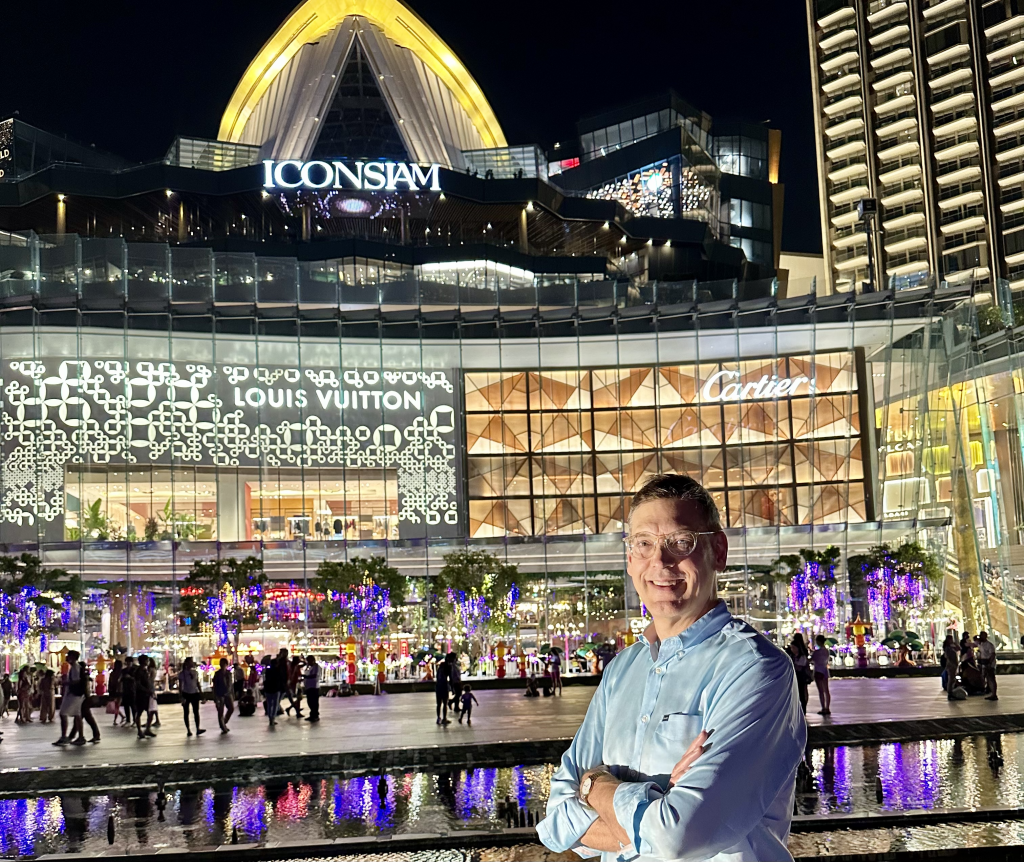
Bangkok, Thailand. Forget backstreet brothels and drunken ex-pats and backpackers. We are on the sophisticated side of a romantic night in downtown Bangkok. We are exploring Icon Siam, a truly tremendous mall in downtown Bangkok.
One of the most remarkable of these malls is IconSiam in downtown Bangkok. This isn’t just a shopping center; it’s a microcosm of modern Thai culture and a symbol of contemporary urban life in Southeast Asia.
Icon Siam is a large mall in downtown Bangkok. Photo: Bix Luce.
In cities like Jakarta and Bangkok, the sweltering tropical heat and frequent air pollution drive locals into the air-conditioned havens of gigantic, often spectacular shopping malls. For young professionals, mall life is not just a pastime but a norm and a crucial part of the urban lifestyle.
IconSiam, a sprawling complex on the Chao Phraya River, is a marvel of architecture and design. The mall’s two residential towers overlook the river, adding to its grandeur. The upper part of the building is designed to resemble a krathong, a traditional floating lantern made from banana leaves, which Thais release on the water during theLoy Krathong festival.
A Culinary and Cultural Haven
Stepping into the G Floor of IconSiam, visitors are transported to SOOKSIAM, a vibrant replica of a traditional floating market. Here, you can sample authentic Thai cuisine from all 77 provinces of Thailand. It’s a gastronomic journey that brings the flavors of the streets into a refined indoor setting, offering everything from spicy som tam to delicate mango sticky rice.
The upper part of ICONSIAM represents a krathong. A krathong is a floating sacrifice often folded from banana leaves released on the water during the holiday of Loy Krathong.
Art and Entertainment Extravaganza
IconSiam is also a hub for Thailand. The ceilings of the Light of Wisdom Pillars are adorned with gold leaf, polished floors, and opulent chandeliers, creating a fairy-tale ambiance. The ICONCRAFT floors showcase traditional wooden columns and offer a wide range of artisanal Thai crafts, blending modern retail with cultural heritage.
This is Bangkok’s version of Chicago’s Bean.On the first floor you will find The Veranda. Here you will find some great and beautifully decorated and designed restaurants and coffee shops.Of course, Apple has a presence here. Singapore has Southeast Asia’s first Apple store – this is its second.On the G Floor of ICONSIAM you enter a replica of a (floating) market called SOOKSIAM. Here you can taste typical Thai snacks and meals are prepared that you normally find in the street stalls all over Thailand, but here it offers food from all 77 provinces of Thailand.SIAM Takashimaya is also called the Siam Department Store and is actually a huge Japanese shopping mall in ICONSIAM. SIAM Takashimaya has seven floors and consists of hundreds of Japanese stores and eateries.
But IconSiam isn’t just about Thai culture. The SIAM Takashimaya, a massive Japanese department store within the mall, spans seven floors and houses hundreds of Japanese shops and eateries. This blend of Thai and Japanese influences highlights the cosmopolitan nature of Bangkok’s mall culture.
Light of Wisdom Pillars. The ceiling is decorated with gold leaf. The polished floors and many chandeliers complete the fairy tale.
A Shopper’s Paradise
IconSiam is a paradise for shoppers, with an array of luxury brands like Tiffany, Louis Vuitton, Hermés, and Cartier. The stores are not just places to buy goods but immersive experiences. For instance, the Bvlgari store features a VIP area known as the “Elizabeth Taylor Lounge,” while the Louis Vuitton store boasts interiors designed by Thai artist Mook Ploenchan Vinyaratn.
There are also boutiques or flagship stores from brands like Versace, Michael Kors, Fendi, Gucci, Prada, Dolce & Gabbana, Bally, Patek Philippe, Saint Laurent and so on.
ICONCRAFT floors with the typical wooden column in ICONSIAM.
For those looking for unique Thai souvenirs, IconSiam offers a plethora of options, from coconut lamps to fruit-shaped soaps. The mall also provides an ICONSIAM Tourist Card, offering discounts of up to 30%, making it an attractive destination for international visitors.
The Tasana Nakorn terrace on the sixth floor of ICONSIAM.
Iconic Living
Beyond shopping and entertainment, IconSiam offers luxurious living spaces. The Residences Mandarin Oriental Bangkok, adjacent to the mall, provides opulent accommodations with stunning river views, reinforcing the idea that malls in Southeast Asia are multifaceted environments catering to all aspects of life.
TRUE ICON HALL is the place for big shows and concerts. This venue has two large halls can be merged into a mega-sized hall.
For live performances, the TRUE ICON HALL is a state-of-the-art venue with 2,700 seats, capable of hosting concerts and large-scale events. This multi-functional space underscores the mall’s role as a cultural epicenter.
River Park with in the foreground the ICONIC Multimedia Water Features at ICONSIAM in Bangkok.
In Southeast Asia, malls like IconSiam are more than just shopping centers; they are cultural hubs, culinary destinations, and entertainment complexes. They reflect the region’s blend of tradition and modernity, offering a sanctuary from the tropical heat and a space where people can experience the best of what contemporary urban life has to offer.
For someone who once despised mall culture, IconSiam has transformed my perspective, showing me that in Southeast Asia, the mall is not just a place to shop but a vibrant part of the social fabric.
How TI gave a humanitarian the courage to transform the world’s orphanages.
By Julie Bawden Davis
For Jim Luce, a trip to Indonesia to help a friend changed his own life. On a drive through the countryside in 1995, the former Wall Street investor made a fateful visit to an orphanage.
Luce made the life-altering decision to quit work and donate all of his money, including his 401K, to Orphans International, Making A Vow of Poverty.
“I’m not sure why I stopped, but I felt compelled to do so,” says Luce. “The facility was clean but visibly struggling with poverty. There were six volunteers to care for 200 children.”
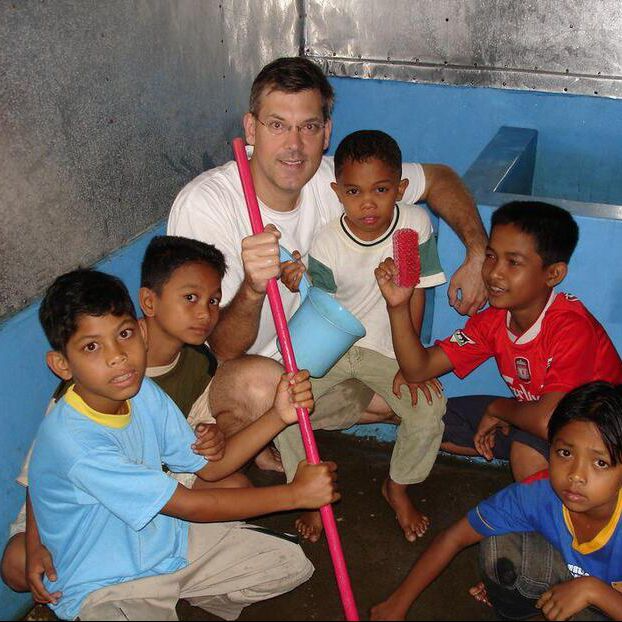
One of those children, a 10-month- old boy, stood up in his crib and reached out his arms when he saw Luce. “It was incredible,” says Luce. “Energy flowed between us, and it was as if he was saying, ‘I’m your child.’ I fell madly in love instantly.” Right then and there, Luce decided to adopt the child, who he named Mathew. Nine months later he took the boy home to New York City.
As excited as he was about adopting Mathew, Luce felt haunted by the other 199 orphans he had left behind. After telling his mother, a child psychologist, about his feelings, she suggested he stop complaining and do something about it.
“To humor my mother I began working on a feasibility study regarding orphanages, which ended up being 350 pages and took two years to write,” he says. “She agreed to edit the proposal, which looked at how orphanages are built traditionally and how they can be design- ed differently so that the occupants can bond with adults and become more mainstreamed into society. The document also addressed the idea of starting a nonprofit to build orphanages around the world.”
Just two weeks after he finished the proposal, his mother died suddenly. Luce was stunned to learn that she had willed him part of her estate so that he could start an organization for orphans. Not long after, his brother, Rick, who had been struggling with cancer, also passed away. But before he died, he made Luce promise that he would realize his dream.
“On his deathbed, Rick said he took my vision seriously, and he was leaving money in his will for the project. He also made me promise to become a Toastmaster so that I could learn to effectively communicate my vision.” Keeping his word, Luce joined the Roosevelt Island Toastmasters in New York City, where he was a member from 2001 to 2008.
Taking Action
Today, Luce credits Toastmasters for giving him the direction and courage to make his dream a reality. He heads up the New York City- based nonprofit Orphans International Worldwide, which has opened orphanages around the world in countries such as Haiti, Indonesia, Tanzania, Sri Lanka, the Dominican Republic and India. The group’s mission is to help orphaned and abandoned children grow to become solid citizens of the world, and its basic principle is simple: Everyone involved in the organization must treat each child in their care as if he or she were their own.
Linda is a Chicago-based officer of Orphans International, as well as a past member of the Roosevelt Island Toastmasters. She says the speaking and negotiation skills Luce acquired in Toastmasters help him on a regular basis.
“Jim is very positive and animated when he speaks, and he inspires confidence while sharing difficult issues facing orphans,” Linda says. “For instance, he is in Sri Lanka today writing for the Huffington Post from personal interviews he is doing with children’s aid workers from the civil war conflict zone. His speaking and listening skills are carrying him through these challenging discussions.”
Luce ran the organization while working on Wall Street, but in 2004, when Northern Indonesia was devastated by an offshore earthquake that created the deadly Indian Ocean tsunami of 2004, the need for orphanages skyrocketed.
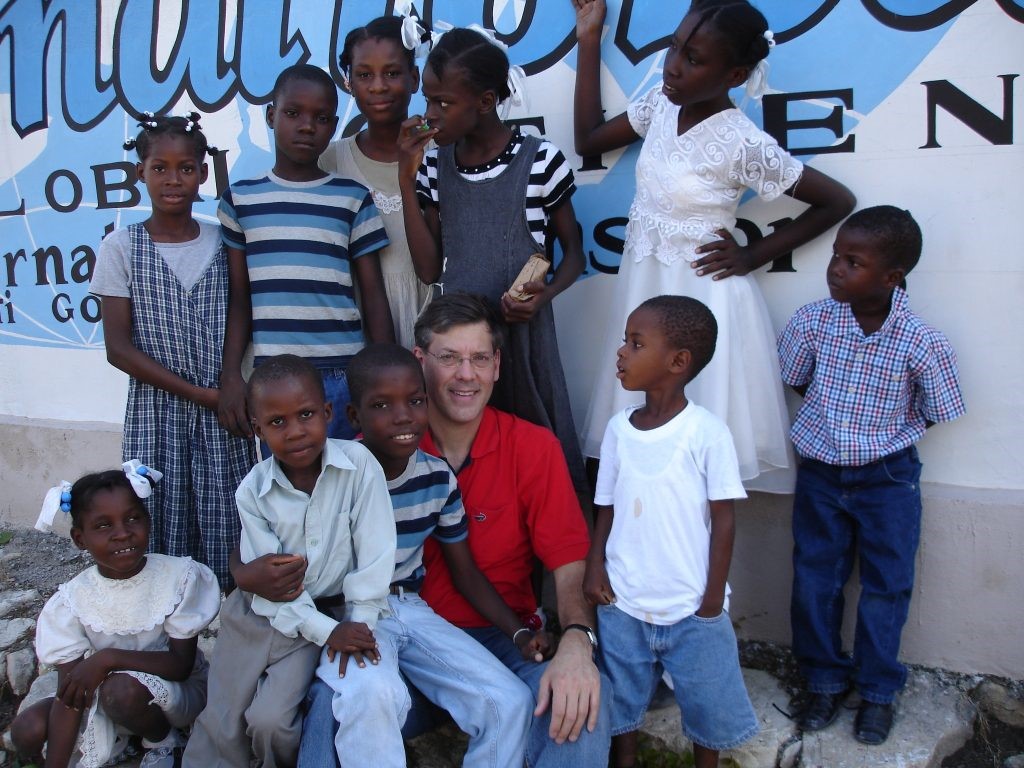
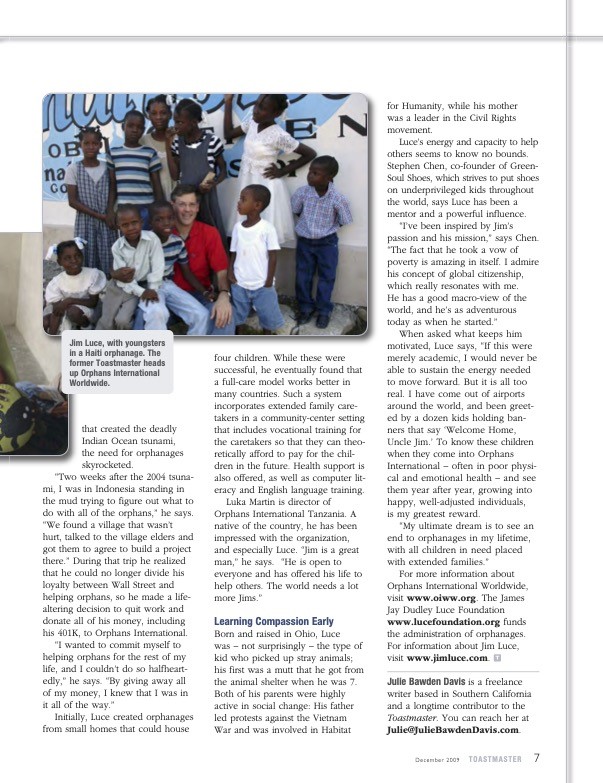
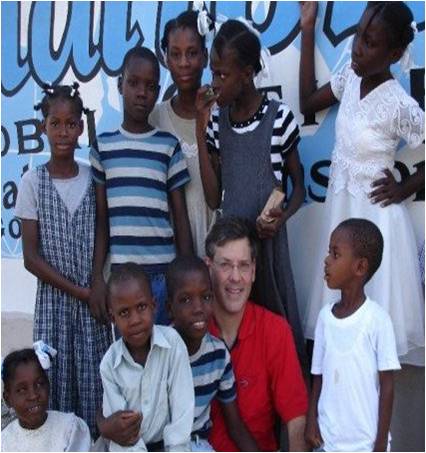
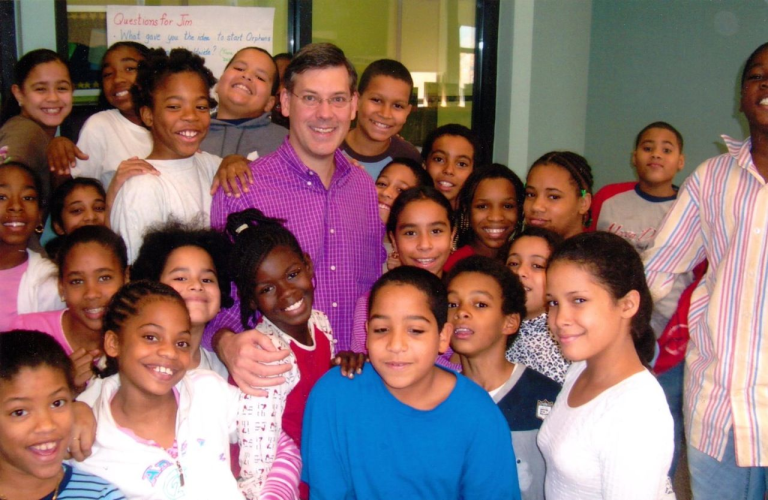
Jim Luce, with youngsters in a Haiti orphanage. The former Toastmaster heads up Orphans International Worldwide.
“Two weeks after the 2004 tsunami, I was in Indonesia standing in the mud trying to figure out what to do with all of the orphans,” he says. “We found a village that wasn’t hurt, talked to the village elders and got them to agree to build a project there.” During that trip he realized that he could no longer divide his loyalty between Wall Street and helping orphans, so he made a life-altering decision to quit work and donate all of his money, including his 401K, to Orphans International.
“I wanted to commit myself to helping orphans for the rest of my life, and I couldn’t do so halfheartedly,” he says. “By giving away all of my money, I knew that I was in it all of the way.”
Initially, Luce created orphanages from small homes that could house four children. While these were successful, he eventually found that a full-care model works better in many countries. Such a system incorporates extended family caretakers in a community-center setting that includes vocational training for the caretakers so that they can theoretically afford to pay for the children in the future. Health support is also offered, as well as computer literacy and English language training.
Luka Martin is director of Orphans International Tanzania. A native of the country, he has been impressed with the organization, and especially Luce. “Jim is a great man,” he says. “He is open to everyone and has offered his life to help others. The world needs a lot more Jims.”
Learning Compassion Early
Born and raised in Ohio, Luce was – not surprisingly – the type of kid who picked up stray animals; his first was a mutt named Brian that he got from the animal shelter when he was 7. Both of his parents were highly active in social change: His father Stanford Luce led protests against the Vietnam War and was involved in Habitat for Humanity, while his mother was a leader in the Civil Rights movement.
Luce’s energy and capacity to help others seems to know no bounds. Stephen Chen, co-founder of Green-Soul Shoes, which strives to put shoes on underprivileged kids throughout the world, says Luce has been a mentor and a powerful influence.
“I’ve been inspired by Jim’s passion and his mission,” says Chen. “The fact that he took a vow of poverty is amazing in itself. I admire his concept of global citizenship, which really resonates with me. He has a good macro-view of the world, and he’s as adventurous today as when he started.”
When asked what keeps him motivated, Luce says, “If this were merely academic, I would never be able to sustain the energy needed to move forward. But it is all too real. I have come out of airports around the world, and been greet- ed by a dozen kids holding banners that say ‘Welcome Home, Uncle Jim.’ To know these children when they come into Orphans International – often in poor physical and emotional health – and see them year after year, growing into happy, well-adjusted individuals, is my greatest reward.
“My ultimate dream is to see an end to orphanages in my lifetime, with all children in need placed with extended families.”
For more information about Orphans International Worldwide, visit www.orphansinternational.org. The James Jay Dudley Luce Foundationwww.lucefoundation.org funds the administration of orphanages.
Julie Bawden Davis is a freelance writer based in Southern California and a longtime contributor to the Toastmaster. You can reach her at Julie@JulieBawdenDavis.com.
When I founded Orphans International Worldwide (OIW) in 1999, I had no idea it would grow into an international movement.
A Google search today reveals 31,000 mentions of “Orphans International” on the Internet. In 1999 there was none.
Like Alcoholics Anonymous, the idea caught fire. Today, there are over 100 “Orphans International” organizations in Asia, Africa, and the Americas. Not to mention Europe.
I have been part of the lives of the children of OI Haiti since inception years ago.
None of these organizations are affiliated with Orphans International Worldwide. Yet they have all jumped on the OI bandwagon. These include:
Advocate for Orphans International
AIDS Orphans International
Displaced Orphans International
Educating Orphans International
Friends of the Orphans International
Friends of the Orphans International
God’s Orphans International
Help for Orphans International
Hope for Orphans International
Light for Orphans International
Lost Orphans International
New Help for Orphans International
Operation Orphans International School
Organizing for Orphans International
Orphans Hope International
Orphans International Adoption
Orphans International Foundation
Orphans International Helpline
Orphans International Meet-Up
Orphans International Organisation
Rescued Orphans International
Street Orphans International
Teens for Orphans International
Tsunami Orphans International
Widows and Orphans International
World Initiative for Orphans International
There are also OI Worldwide affiliates, past and present: China, Dominican Republic, Ghana, Greece, Haiti, India, Indonesia,Mauritius, the Philippines, and Sri Lanka.
In the wake of the earthquake in Haiti, with so many frauds being perpetrated on-line for relief funds that the FBI has issued a warning, it is hard for Americans to know who to trust.
I trust the American Red Cross, The Clinton Initiative. And Orphans International Worldwide in Haiti.
We were on the ground in Indonesia within weeks of the Tsunami.Now, how fast can we respond to the disaster in Haiti? It is up to our donors.
OI Worldwide began a decade ago. The prestigious law firm of White & Case agreed to assist me legally structure my vision which I called simply “Orphans International.”
A global model similar to the International Red Cross and its global affiliates was chosen. OI Worldwide was to be the umbrella organization under which stood two categories, “project” and “donor” nations.
On-line dictionaries today define “OI.” Relief agency registries listOI Worldwide. The motto of Orphans International and its affiliates is “Raising Global Leaders.” And we are associated with the U.N.
The official logo of Orphans International affiliates globally was designed in 1999.
I visited an orphanage outside Manado, Indonesia in 1995 where I meet my future son Mathew. I was distressed at the conditions for children and my mother strongly encouraged me to address those conditions.
With my adopted son Mathew, at my 50th birthday past last summer. OI Worldwide projects try to treat their children as well as I treat Matt.
I wrote the voluminous Initial Report for Orphans International from 1998-2000 to address these conditions. This is how my “Orphans International” began.
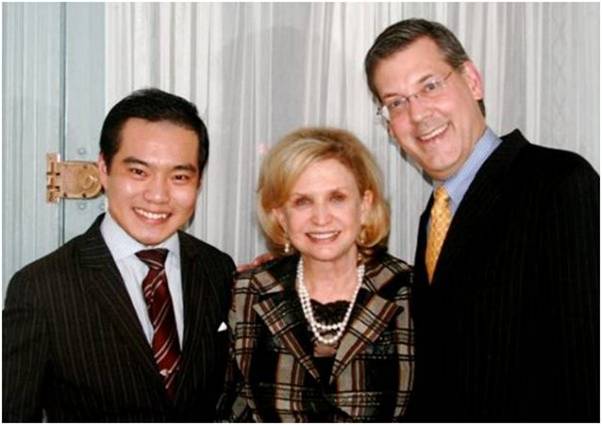
OI Worldwide Officer John Lee, U.S. Rep. Carolyn Maloney and me at a recent event.The girls’ room at OI Indonesia after the Tsunami in Aceh, Sumatra was named in her honor.
OI Worldwide has been officially associated with the United Nations (Department of Public Information) since 2007. Our global organization certifies and de-certifies donor and project nations as necessary.
None of the organizations listed above are associated with the United Nations except Orphans international Worldwide.
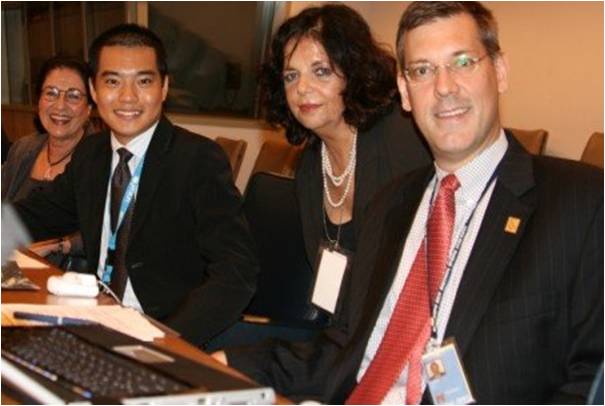
OI Worldwide advisor, officer, U.N. representative and I speaking at the United Nations.
Like corporate franchises, not all start-ups survive. Active projects today include, in order of approval: Indonesia (2001), Haiti (2001), and Sri Lanka (2005). India is now in its start-up phase (2009).
OI Worldwide is the body that maintains the organization’s Global Standards – about 20 pages long – which are posted on-line. These are the only standard for international orphan care readily available to the public.
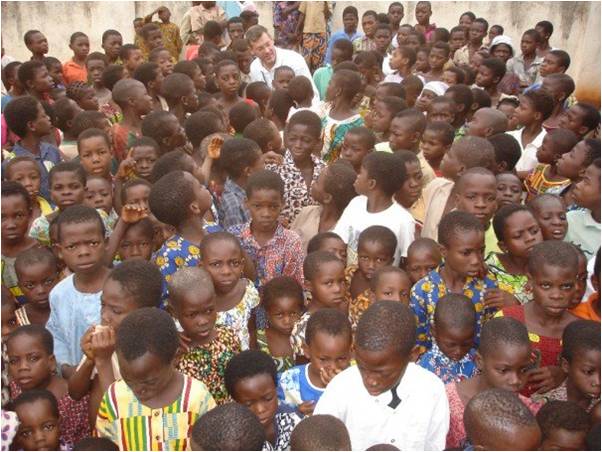
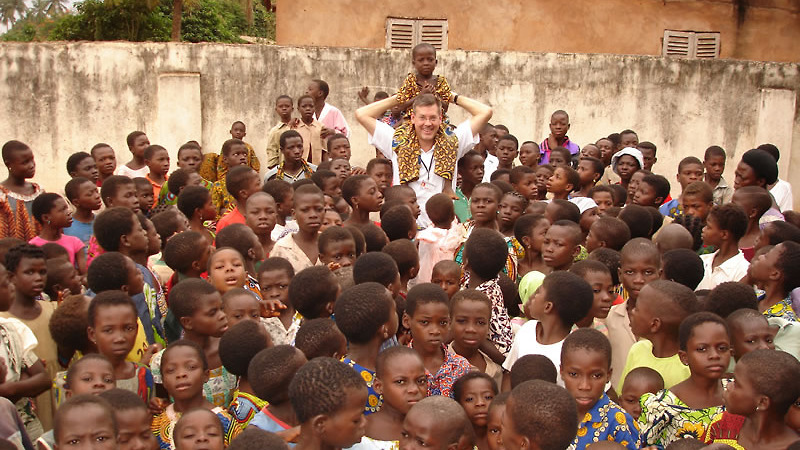
The author visiting children on an organizing trip in rural West Africa.
These Standards include OI‘s non-participation in international adoption. OI projects raise their children locally to become future leaders. We treat the children in our care the way we would treat our own kids.
Standards are amended at OI Worldwide‘s biennial World Congresses. Two Orphans International projects successfully completed their mandates following the Tsunami of 2004 and were closed.
OI Worldwide Standards are summarized after my own son, “Mathew’s Rule” – that each child in the care of OI Worldwide be treated in the way we would treat our own child.
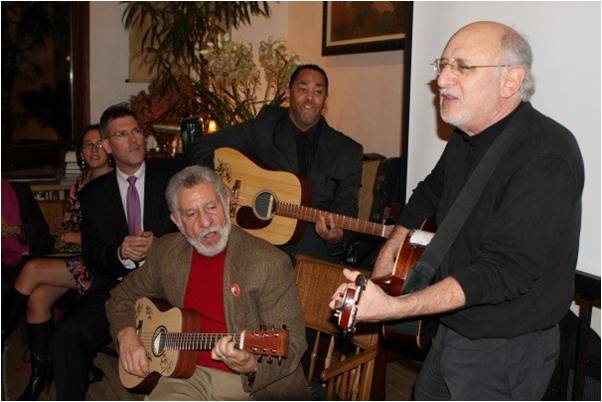
Peter Yarrow has performed benefits for us in his own home, spoke on orphans in Vietnam at our Congresses, and sits on the Global Advisory Board of OI Worldwide.
The first OI Worldwide World Congress was held in Bali, Indonesia (2004), the second in Sumatera, Indonesia (2005), the third at Columbia University (2006), and the fourth at N.Y.U. Medical School (2008).
The last OIW World Congress was devoted to the theme Health Needs of Children in Developing World, focused on family care. The fifth Congress was planned for Haiti in the fall of 2010, but will now be moved
OI Worldwide was initially founded to build an SOS-like small-home community for orphaned children. This “full-care” model proves to be economically challenging and politically unpopular in both hoist countries — and with the U.N., including UNICEF.
Orphans International Worldwide was on the ground in Sri Lanka after the Tsunami.
Based on my experiences in Sri Lanka, I made the decision in 2007 to move all OI Worldwide projects into a “family care” model. Following the disaster in Haiti, we are now about to roll out family care there as well.
Today, with the specific objective of “Ending Orphanages Globally,”OI Worldwide embraces family care and will phase out beds as its children age out of its programs – including Haiti.
The electronic newsletter, OI Worldwide InterNews, registered with the U.S. Library of Congress, published from 2001. Subscribe here.
Child care models, including “Small home-based full-care” and “OI Family Care.”
Global affiliations, including with the U.N. and the International Red Cross.
The mottos: “Interfaith, Interracial, International, Intergenerational, Internet-Connected,” “Raising Global Leaders,” “Ending Orphanages Globally,” and “Mathew’s Rule.”
As we speak I am multi-tasking more than I have in my entire life.
We will open OI Worldwide Haiti in the next few weeks on donated land outside Port-au-Prince and accept our first 100 children into family care, working with our NGO partner CharityHelp International (CHI)
Donors are coming to us from China, Korea, Greece, the U.K. and France. Of course, the U.S. is our funding base. If you would like to contribute to OI Worldwide‘s efforts in Haiti, contribute here.
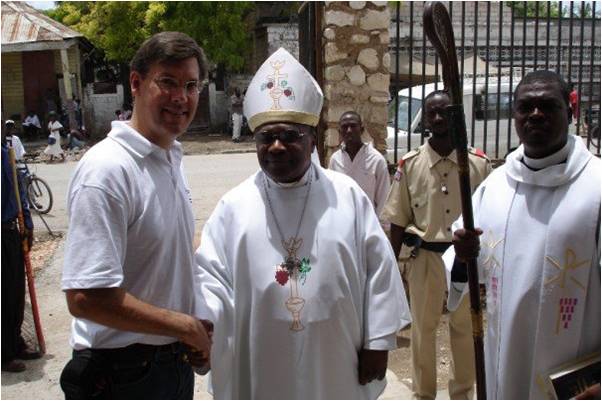
With my friend, the amazing Episcopal Bishop of Haiti, before the earthquake.
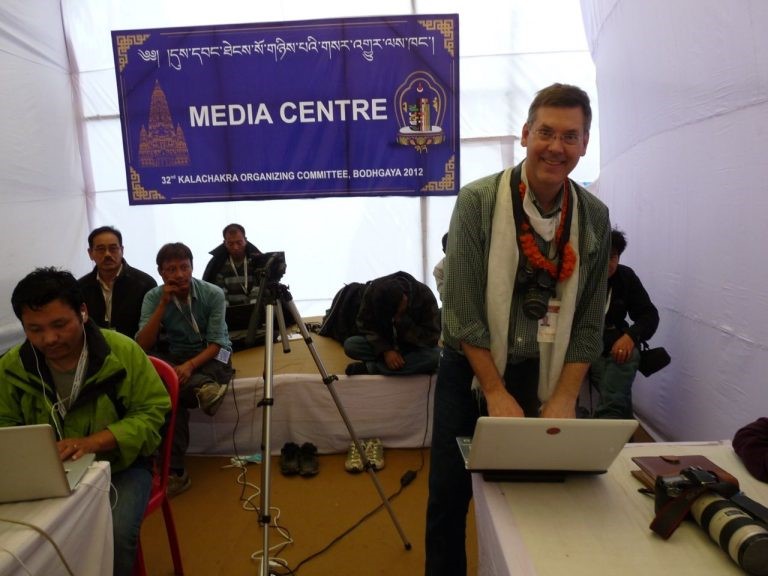
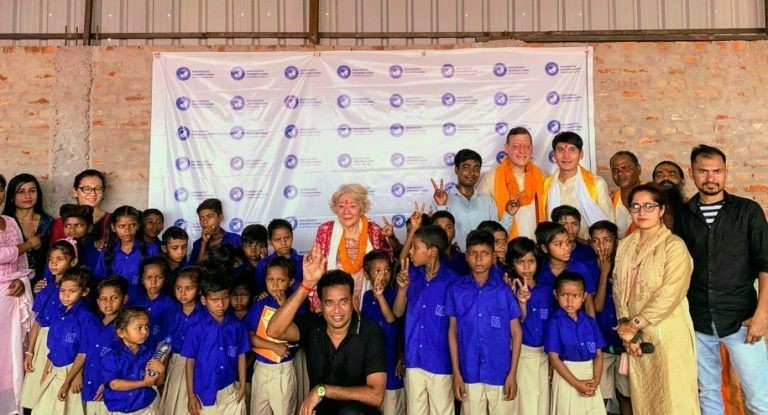
Bodhgaya, India. This weekend we opened our Saraswati Centre’s free primary school and broke ground for Gaia Holistic Orphan Home with Dr. Kazuko Hillyer Tatsumura, founder. Extreme heat plagued us, with temperatures above 110 degree, but about 100 children and their parents attended the ceremony which was covered extensively by the local media.
Sitting barefoot, lotus-style for a lengthy and elaborate Hindu opening ceremony performed by three pandit.
Three Hindu pandits and a yogi, as well as a Buddhist priest were present, along with elected public officials. The school was officially opened when Dr. Kazuko and I cut the red ribbon. Her Gaia Holistic Foundation banner hung in the first classroom and our Orphans International and J. Luce Foundation banner hung in the second.
Students wearing new school uniforms in “Yale blue” with Jim Luce.
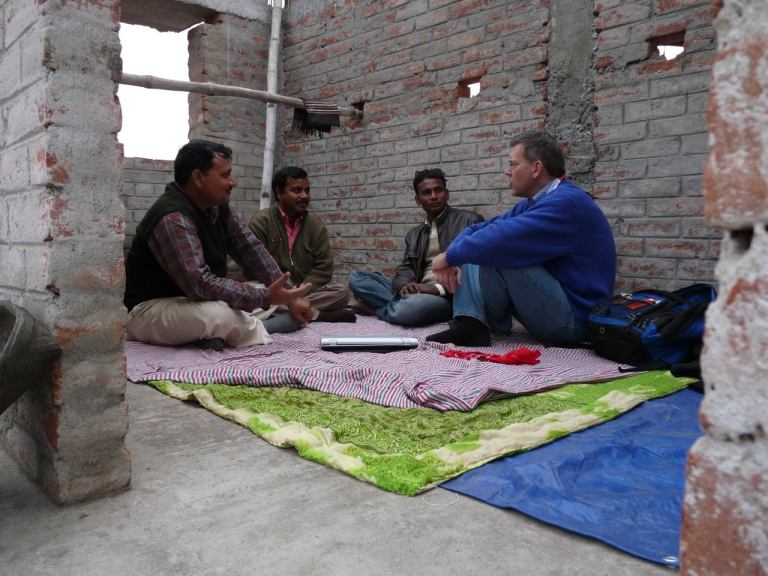
There are about 400 children in the immediate neighborhood belonging to the caste known as “Untouchable” (Dalit) which was formally dismantled in 1949 but sadly has not been eradicated. In Bihar, India’s poorest province about the same size as Ohio. These kids are literally the poorest of the poor, living with their subsistence farm families often in huts constructed of mud with no source of running water.
Dalit, meaning “broken” in Sanskrit, were historically excluded from the four-fold varna system of Hinduism (Caste system). Predominantly Hindu, they can also be Buddhist, Sikh, Christian, Muslim, etc. Jurist and reformer B.R. Ambedkar (1891-1956) said that ‘untouchability’ came into Indian society around 400 CE, due to the struggle for supremacy between Buddhism and Brahmanism (an ancient term for Brahmanical Hinduism).
Climate change has brought upon Bihar a heat wave – the temperature during the ceremony hit 111° – the hottest in memory. Our car procession stopped at a large bamboo arch built across the dirt road for the occasion. Celebratory pennants were strung across the road and oncoming, old-style farm tractors had to be helped to pass under them.
“Free School Opened for Poor Children.” Hindustan Times, April 29, 2022.
As we waited in the sweltering sun, a colorful drum band came down the road to escort us, with student merrily waving flags from around the world we had brought from New York. I chuckled to see the Greek flag looking out of place in the middle of India, and puzzling at first as it was upside down.
Vicky Sharma with Dr. Kazuko Tatsumura at Groundbreaking of Gaia Holistic Children’s Home at Saraswati Centre, Bodhgaya, Bihar, India.
We arrived at the gates of Saraswati Centre, across from the first giant bodhi tree that Lord Buddha had sat under as he searched for enlightenment. Dr. Kazuko and I held a pair of scissors to cut the red ribbon to open the facility itself. The crowd of parents, students and staff cheered, although the extreme heat kept the numbers smaller than anticipated. We were showered by the students with flower petals and ceremonial Indian and Tibetan khata were placed around our necks along with garlands of flowers.
We then were ushered onto special carpeting, in our bare feet, to sit lotus-style for a lengthy and elaborate Hindu ceremony performed by three pandit. We followed as directed, sprinkling marigold petals and holy water from the River Ganges (“auspicious!”) on the temporary brick alter laden with fruit specially constructed for this ceremony. Three commercial air conditioners labored nearby, overwhelmed by the heat.
Decked out like an Indian wedding or circus tent, our compound was covered with parachute-like material with the sides decorated with brightly colored fabric. The entire tent was carpeted. Chairs covered in cloth were neatly arranged in rows.
Saraswati Free School of the J. Luce Foundation India, Bodhgaya, Bihar.
We then crossed the road for a Buddhist ceremony under the tremendous bodhi tree named “Saraswati” after the Hindu and Buddhist God of Culture (“Benzaiten” in Japanese). A statue of Lord Buddha sits at the bottom of the tree where many of the crowd bowed reverently. A pack of local boys merrily climbed the enormous branches of the tree unfettered by the extreme heat. A Hindu yogi took place in the ceremony as incense was burned and then tucked into the thick bark of the old tree.
Jim Luce touching “Untouchable” children in Bodhgaya, Bihar, India.
The next order of business was to cut the second red ribbon opening the Saraswati Free School, two temporary brick rooms covered with a galvanized blue roof, complete with white board – modern chalk boards. One room had a Gaia Holistic Home Groundbreaking ‘step-and-repeat’ banner measuring ten-by-ten feet, while a matching Orphans International and J. Luce Foundation hung in the second room.
Following this red ribbon ceremony, our guest of honor Dr. Kazuko distributed books and school uniforms to the eighty students assembled. We had desks for only 75, but 150 had shown up to register; we estimate 300-400 children of school age live in the community.
A Tibetan film crew working on a documentary of Dr. Kazuko continued to gather footage as she reached out to each and every boy and girl, with a look of joy on all of their faces. Dr. Kazuko always looks her happiest in the presence of innocent children.
“Free School Opened for Poor Children.” Hindustan Times, April 29, 2022.
However, the extreme heat was taking its toll and we only distributed a sampling of her Gaia Holistic Groundbreaking t-shirts to the children before rushing to the speeches so that we could end the program. This part of the ceremony was coordinated by our Saraswati principal in conjunction with the principal of our partner Lotus Free School located in a neighboring community. Three years old, the Lotus School is similar to our own, funded generously by Japanese benefactors through Nirvana Japan NGO in Tokyo.
Bix & Jim Luce with Lama Thupten Phuntsok of Manjushree Orphanage.
Dr. Kazuko spoke on the need for compassion, I spoke about education being the surest ladder out of abject poverty, Lama Thupten spoke on the need of all people to gather to protect the poorest of the poor regardless of race or creed, and local public officials warmly welcomed us and thanked us for coming to their community to assist the neighborhood children. Local news crews covered the event resulting is several video reports and newspaper stories which made the nations Hindustan Times in both Hindi and English.
There was a stage, podium, and dais with sound system, and our program continued there. A large “Welcome Dr. Kazuko Tatsumura!” blue banner hung across the stage, complete with Gaia Holistic’s logo.
Dr. Kazuko was wilting but steadfast. She refused to take a break. After two hours, I cut the three-hour program short and helped escort her to the waiting air-conditioned car. I slapped the back of the car to leave immediately and, as the children crowded to wave goodbye, I could see her eyes roll up to the top of her head as she fell back against the head rest, fainting with heat exhaustion and jet lag. She recovered with the car’s a/c and was safely returned to the Sakura Hotel where she crashed in her ground floor room until the next day.
One of two temporary classrooms housing 80 students at Sarasawati Free School.
The rest of us crowded into various vehicles and convened at a restaurant in the town center to celebrate an almost perfect Opening. Other than heat, over which we had no control, it had been perfect.
The principal and staff of our school overseeing Jim’s interview.
We toasted the Board of the J. Luce Foundation India — Dip Agrawal, Ansar Ali, Santosh Kumar, Ramdhani Yadav — for coordinating such a Herculean event. We recognized the teachers and staff of our Saraswati Free School and the Japanese Lotus School, about twenty minutes, distant. We broke roti together and pledged to cooperate fully as Saraswati Free School grew. I was so proud, pleased and profoundly moved by the camaraderie.
We will be back to monitor progress of the school and orphan home in August and then November. My ten-year visa to India was a good investment! We hope to expand rapidly to 150 students and will begin a free lunch program shortly. We will now focus on building the toilet and septic tank facility to expand the one toilet temporarily in place.
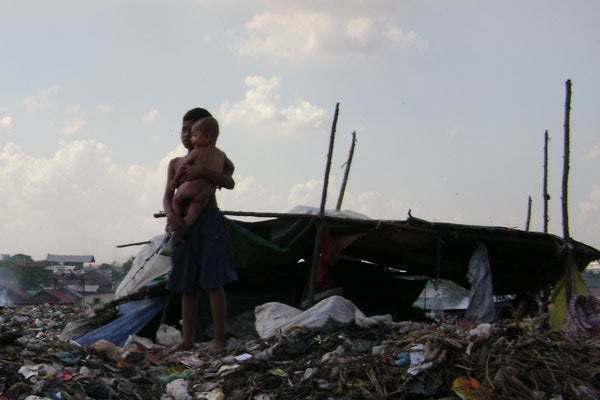
The day I carried my own infant son Mathew into the hot equator sun from an orphanage in Sulawesi, Indonesia 28 years ago, and another day distributing New Year’s gifts to nearly naked yet dignified children living in the largest garbage dump of Bali were indeed watershed moments in my life. The Opening of Saraswati Centre for Dalit children in Bodhgaya, Bihar, India has become yet another.
Animal rights and animal rescue are intrinsically linked, reflecting a shared commitment to the well-being and dignity of all animals. Animal rights emphasize the ethical treatment of animals, recognizing their value and advocating for their protection against cruelty and exploitation. This ethical framework underpins the mission of animal rescue organizations, which work tirelessly to save animals from abuse, neglect, and abandonment, providing them with the care and compassion they deserve. Together, these efforts highlight our collective responsibility to ensure that animals lead lives free from suffering, embodying a broader societal movement towards kindness, empathy, and respect for all living beings.
With a background in East Asian Studies and firsthand experience from multiple visits to China, Jim Luce offers unique insights into the country’s culture, society, and global influence. His deep connection to the Chinese diaspora—shaped by living with partners from Indonesia, Malaysia, Singapore, Thailand, the Philippines, and the U.S.—enriches his perspective on their diverse experiences, challenges, and contributions worldwide. Through his writing, Jim bridges understanding between China and its far-reaching diaspora communities.
Throughout history, monarchies have served as enduring pillars of continuity, weaving together the threads of tradition, identity, and governance that define nations. From the transformative reign of King Edward VII to Princess Diana‘s legacy of compassion and defiance, royal figures have shaped not only the political landscapes of their times but also the cultural imagination of generations. In this collection of writings, Jim Luce explores the multifaceted roles of monarchy—examining how these ancient institutions have adapted to modern challenges while maintaining their unique capacity to unite peoples and preserve historical memory. Whether through the lens of Victorian succession or contemporary commemoration, these essays illuminate the complex interplay between crown and country, revealing why monarchies continue to captivate and influence our world today.
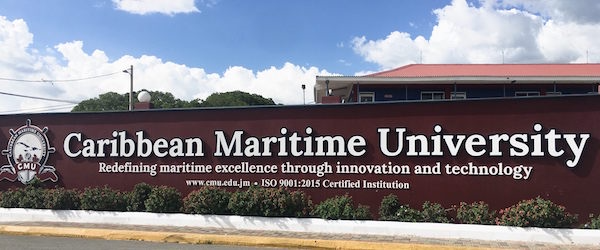
Kingston, Jamaica.U.S. philanthropist Jim Luce is to set up a new centre at the Caribbean Maritime University, CMU, to train Jamaicans in leadership and related skills.
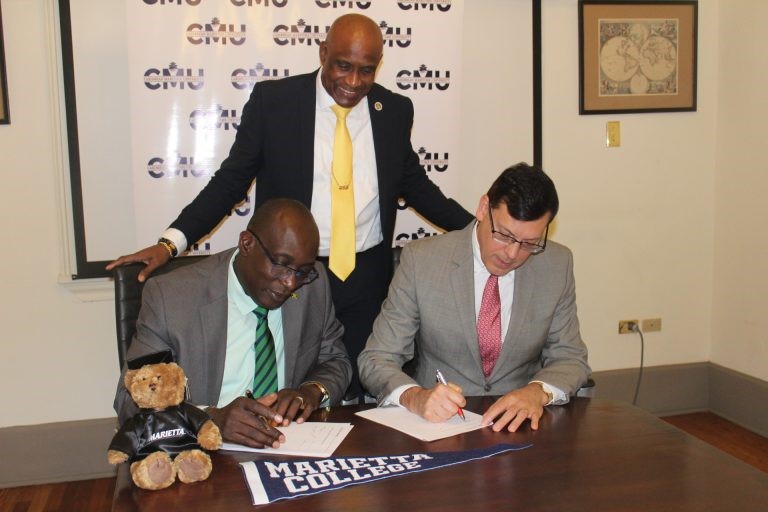
The agreement to establish the Centre was signed on Monday, November 12, 2018 between Mr. Luce and the Minister of Education, Youth and Information Sen. Ruel Reid at a brief ceremony at the Terra Nova Hotel in St. Andrew.
The James Jay Dudley Luce Leadership Centre will operate both face-to-face classes as well as online modules. Mr. Luce who has also been appointed as an Adjunct Professor at the CMU said he was humbled by the opportunity to collaborate with the University.
“I was excited when the Jamaican Minister of Education Hon. Ruel Reid asked me to join the Faculty of the Caribbean Maritime University as Adjunct Professor.”
The Centre will offer a range of academic degrees from Associate to Doctoral and will include English as a second language (ESL) component for non-native speakers.
For his part, CMU president, Prof. Fritz Pinnock said the partnership would improve the leadership skills for student on campus.
“This partnership with Jim Luce and support from the James Jay Dudley Luce Foundation establishes a partnership that will positively impact the well-being of our students,” Prof. Pinnock said. “It will further accelerate progress in providing a platform for leadership excellence, enabling our students and Jamaicans at large to reach further heights in fulfilling their potential.”
The J.Luce Foundation has established a scholarship fund for CMU cadets and collaborated with Marietta College in Ohio in The United States. A US 1.5 million-endowment fund is being established as the Marietta College Luce Leadership Scholarship.
The Foundation is a New York State Corporation, with dual objectives to offer grants and ‘spotlighting’ to individuals and organizations bettering humanity in the fields of the Arts, Education, and Orphan Care.
Despite the often murky and corrupt nature of politics, democracy remains the sole system capable of shielding society from the grips of autocracy, oligarchy, and monarchy. In a democracy, participation isn’t merely a privilege but a crucial obligation, ensuring that power rests with the people rather than a select few. In the United States, engaging in the political process is especially vital to preserving the nation’s foundational ideals of liberty and justice. Active civic involvement helps steer the country towards a future that reflects the diverse voices and values of its citizens, keeping it on a course of collective governance and accountability.
Jim Luce’s New York City writings capture the soul of the metropolis through intimate encounters with both cultural icons and unsung heroes who define its character. These essays chronicle decades of city life—from the raw energy of 1980s Times Square to the tranquil paths of Roosevelt Island—weaving together profiles of figures like Yoko Ono and Keith Haring with stories of immigrants, activists, and neighborhood champions who embody New York’s restless spirit. Whether uncovering the hidden histories of East Village institutions or tracing the journeys of those who’ve triumphed over adversity, Luce reveals how individual lives pulse through the city’s broader narrative, creating a mosaic of human drama that makes New York endlessly compelling.
Education serves as the cornerstone of human development and societal progress, encompassing the full spectrum from vocational training that builds practical skills, to professional education that advances careers, to liberal arts learning that cultivates critical thinking and cultural understanding. Since 1999, the J. Luce Foundation and Orphans International Worldwide have championed the transformative power of education alongside their commitment to developing Young Global Leadership—recognizing that tomorrow’s leaders must be equipped not only with knowledge and skills, but with the vision and capacity to address our world’s most pressing challenges.
Jim Luce explores the transformative power of education, emphasizing its ability to inspire, empower, and create lasting global impact. Drawing from his extensive experience, Luce highlights innovative educational initiatives and the importance of nurturing young leaders. His writing advocates for access, equity, and compassion in learning, encouraging readers to support educational opportunities worldwide. Through storytelling and advocacy, Luce demonstrates how education can change lives and build a brighter future for all.
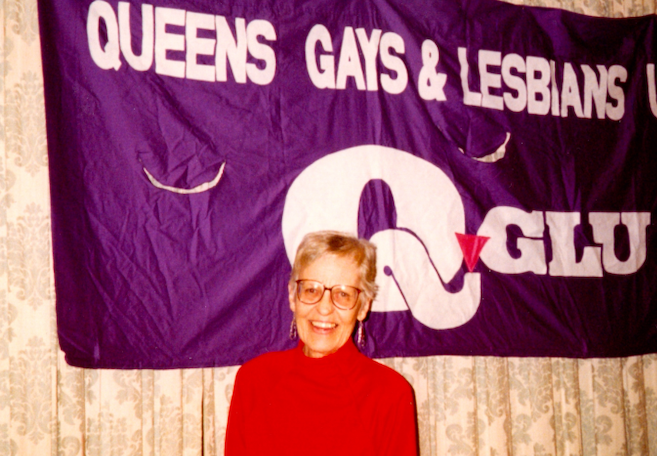
New York, N.Y. I marched in the very first Gay Pride parade in 1993 with the Queens Gay and Lesbian Unted (Q-GLU) with a great group of people including its founding member Ed Sedarbaum and Danny Dromm.
A few of the first Q-GLU meetings were held in our Jackson Heights, Queens apartment.
My mother, Frances Dudley Alleman-Luce, supported me by coming out for Q-GLU galas. My partner at that time was my second, Jeff Tendean, the other father of our son Mathew James Tendean Luce. Jeff and I became New York City Domestic Partners the first day the program was launched, legally becoming couple #76 in the City of New York. Domestic partnership was the precursor to gay marriage.
The pride parade is held in June to commemorate the 1969 Stonewall riots in New York City, a pivotal moment in modern LGBT social movements. We march to create community and honor the history of our movement. In 1970, pride and protest marches were held in Chicago, Los Angeles, New York City, and San Francisco around the first anniversary of Stonewall. The events became annual and grew internationally.
I have attended pride celebrations in San Francisco and Chicago, and traveled to San Juan, Puerto Rico for their first Pride Parade in 1990 that commemorated those who had passed during the AIDS epidemic.
The struggle for LGBTQ+ equality represents one of the defining civil rights movements of our time. Across the globe, millions of people face persecution, violence, and systemic discrimination simply for being who they are. From workplace harassment to denial of basic services, from family rejection to state-sanctioned violence, LGBTQ+ individuals navigate a world that too often treats their existence as controversial rather than celebrating their contributions to our shared humanity. This ongoing fight for recognition, protection, and equal treatment under the law reflects broader questions about how we define justice, dignity, and belonging in modern society. As we examine these issues, we must consider not only the legal and political dimensions of LGBTQ+ rights, but also the deeply personal stories of resilience, courage, and hope that drive this movement forward.