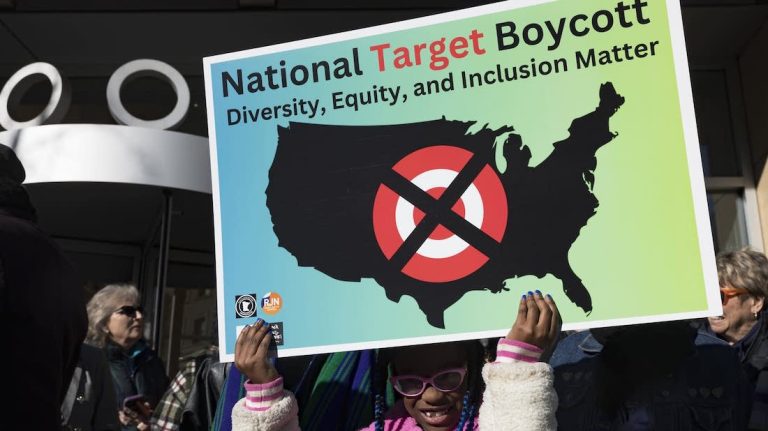
The Trump administration has characterized DEI as “illegal and immoral discrimination programs”
New York, N.Y. — The Trump administration has launched a sweeping attack on Diversity, Equity, and Inclusion (DEI) programs across the federal government and educational institutions.
On January 20, 2025, President Trump issued an executive order eliminating all DEI programs in the federal government, followed by another order on January 21 revoking previous administration’s DEI-related policies. This move has sent shockwaves through schools and universities nationwide, with many scrambling to comply or face potential loss of federal funding.
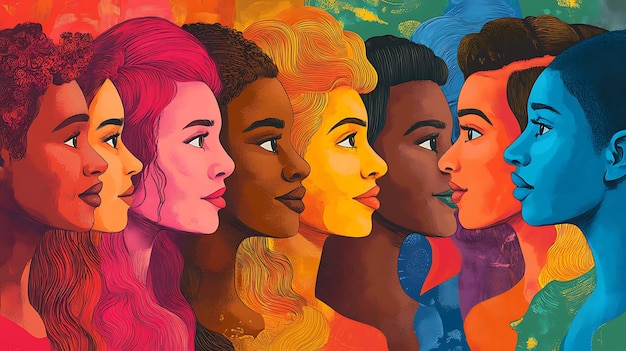
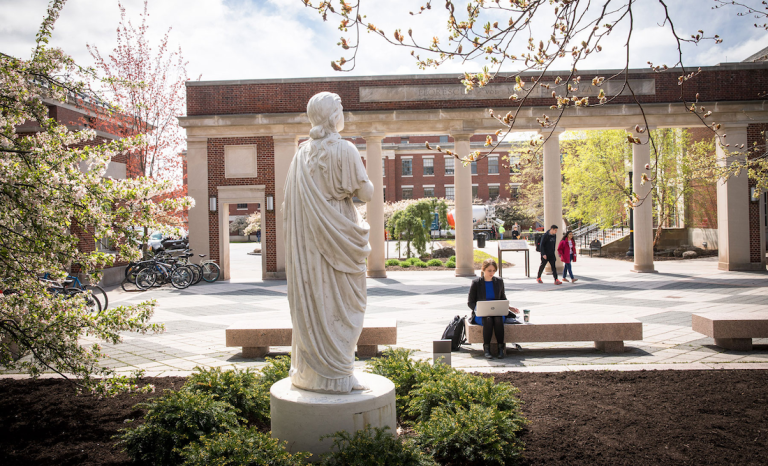
DEI refers to initiatives aimed at promoting fair treatment and participation of individuals from diverse backgrounds, particularly those historically underrepresented. These programs have been recognized for fostering cultural awareness and political engagement among college students.
However, the Trump administration has characterized DEI as “illegal and immoral discrimination programs.” This stance has led to significant changes in various institutions:
The University of Iowa discontinued living learning communities focused on Latino, Black, and LGBTQ+ experiences.
Universities in Minnesota lost funding for teacher shortage mitigation scholarships.
The University of Texas System shut down 24 DEI offices and eliminated over 300 positions.
Arizona’s Maricopa County Community College District has banned DEI-related professional development and group activities.
Critics argue that the administration’s actions conflate DEI with long-established civil rights protections. They contend that diverse workplaces tend to perform better and that the anti-DEI stance imperils access to federal jobs that have historically provided a pathway to the Black middle class.
The debate over DEI continues to intensify, with supporters emphasizing its importance in creating inclusive environments and opponents arguing it promotes discrimination. As the situation evolves, educational institutions and businesses are left grappling with how to navigate this new landscape.
Analysis: Monty Python’s Lasting Echoes in American Culture
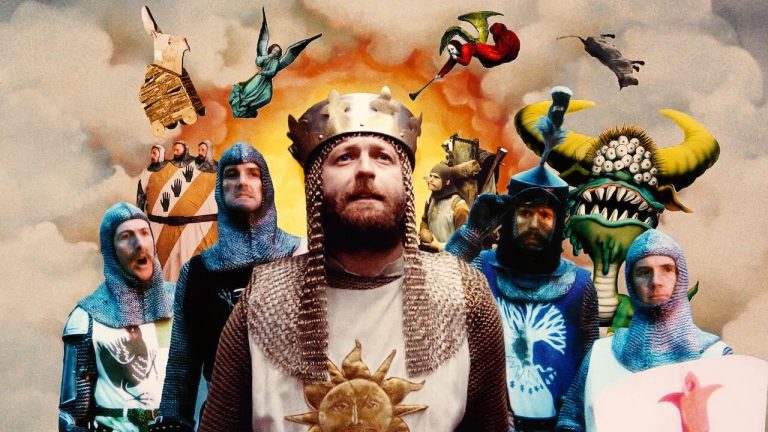
New York, N.Y. –– Monty Python, the British comedy troupe formed in 1969 by Graham Chapman, John Cleese, Terry Gilliam, Eric Idle, Terry Jones, and Michael Palin, left an indelible mark on American culture despite its distinctly British origins. Through their television series Monty Python’s Flying Circus (1969–1974), films like Monty Python and the Holy Grail (1975) and Life of Brian (1979), and a legacy of absurdity, the troupe reshaped American humor, media, and even language, influencing generations of comedians, writers, and everyday discourse.
One of Monty Python’s most significant contributions to American culture was introducing a surreal, irreverent comedic style that broke from the punchline-driven norms of U.S. television in the late 20th century. When Flying Circus began airing on PBS stations in the mid-1970s—thanks to grassroots campaigns by American fans—it offered a stark contrast to sitcoms like The Brady Bunch or variety shows like The Carol Burnett Show. Sketches such as “The Dead Parrot” and “The Spanish Inquisition” embraced non-sequiturs and absurdity, paving the way for shows like Saturday Night Live (SNL), which debuted in 1975. Lorne Michaels, SNL’s creator, has acknowledged Python’s influence, with early cast members like Chevy Chase and John Belushi echoing their anarchic energy.
The troupe’s films amplified this impact. Monty Python and the Holy Grail, with its low-budget ingenuity and quotable lines (“It’s just a flesh wound!”), became a cult classic on American college campuses, where midnight screenings fostered a subculture of fans reciting dialogue verbatim. This phenomenon mirrored the Rocky Horror Picture Show’s interactive appeal but leaned harder into intellectual satire. Life of Brian, though initially controversial for its religious themes, found a devoted U.S. audience over time, its sharp critique of dogma resonating with a growing countercultural skepticism in the 1980s.
Monty Python’s linguistic influence is equally profound. Phrases like “And now for something completely different” and “Nobody expects the Spanish Inquisition!” have entered American vernacular, often used ironically in casual conversation or media. The term “Pythonesque” was officially recognized by the Oxford English Dictionary in 2005, reflecting how their brand of humor—blending the absurd with the cerebral—became a shorthand for unconventional creativity. This linguistic legacy is evident in American late-night shows, where hosts like Stephen Colbert or John Oliver deploy Python-esque tangents to skewer politics and culture.
Beyond comedy, Monty Python shaped American pop culture through adaptation and homage. The Simpsons, a cornerstone of U.S. animation, owes a debt to Python’s irreverence, with creator Matt Groening citing their work as a key inspiration. Episodes like “Homer vs. the Eighteenth Amendment” mirror Python’s knack for blending historical satire with silliness. Similarly, films like The Big Lebowski (1998) by the Coen Brothers echo Python’s penchant for quirky characters and narrative detours. Even tech culture bears their imprint: the programming language Python, created by Guido van Rossum in 1989, was named after the troupe, a nod to its whimsical yet functional ethos embraced by American coders.
The troupe’s influence also extends to theater and music. Eric Idle’s Spamalot, a 2005 Broadway musical adapted from Holy Grail, won the Tony Award for Best Musical, proving Python’s humor could thrive in America’s commercial theater scene. Songs like “Always Look on the Bright Side of Life” from Life of Brian have been adopted as anthems of resilience, sung at sporting events and funerals alike, showcasing their cross-cultural adaptability.
Monty Python’s impact wasn’t immediate—early U.S. reception was niche—but it grew through VHS rentals, cable reruns, and eventually streaming platforms like Netflix, where younger generations discovered their work. This slow burn reflects how their humor, often steeped in British idiosyncrasies, required Americans to embrace a broader, more global comedic palette. By challenging cultural norms around religion, authority, and propriety, they emboldened U.S. creators to push boundaries, from South Park’s provocation to The Office’s deadpan absurdity.
In 2025, as comedy continues to evolve in a polarized America, Monty Python’s legacy endures as a reminder of humor’s power to unite through shared absurdity. Their rejection of convention resonates in a digital age where memes—modern equivalents of Python’s non-sequiturs—dominate discourse. From SNL to Silicon Valley, their fingerprints are everywhere, proving that a group of British eccentrics could redefine what makes America laugh.
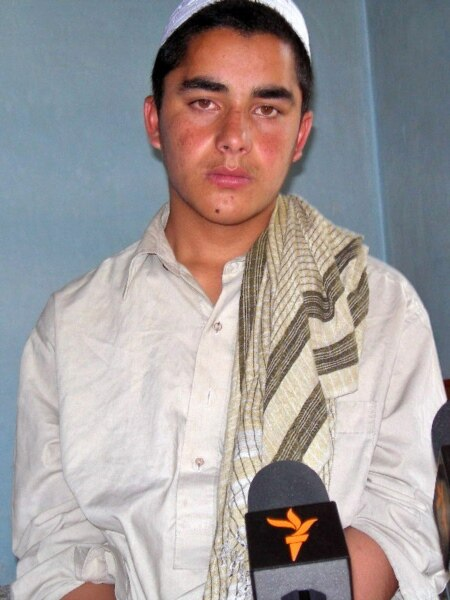
New York, N.Y. – The J. Luce Foundationhas released its report entitled A Close Look at Teenage Suicide Bombers in Pakistan and the Broader Region. The foundation, focused on raising, supporting and educating young global leaders, studied the issue of adolescent suicide bombers from the perspective of exploitation/victimizationand prevention.
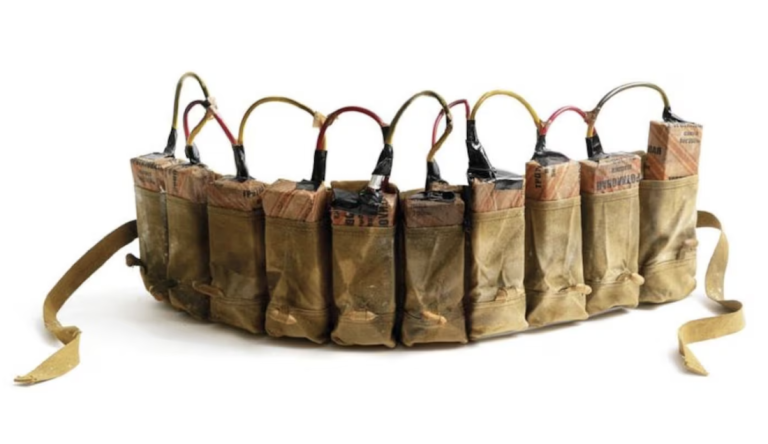
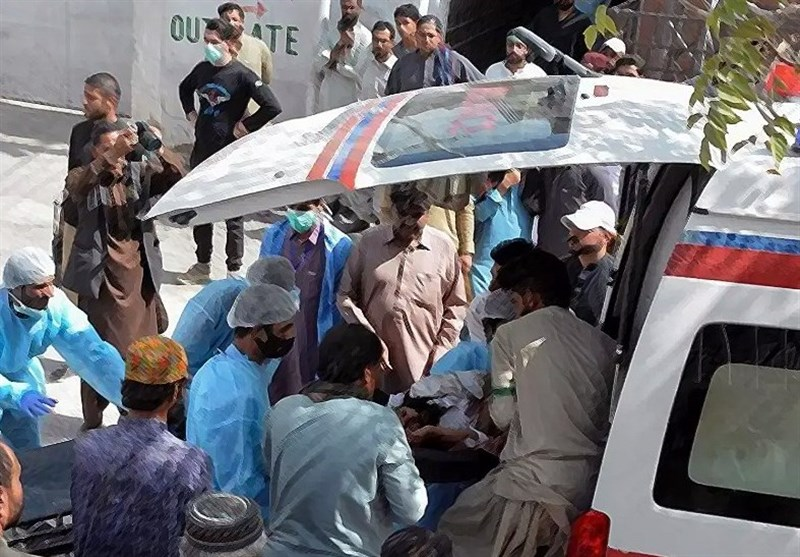
The phenomenon of teenage suicide bombing in South Asia represents a profound humanitarian tragedy reflecting the exploitation of vulnerable youth by extremist organizations.
Teenage suicide bombing is a complex and sensitive issue, particularly in regions affected by conflict. Reports from organizations like the Pakistan Institute for Peace Studies (PIPS) suggest a trend of young people, including teenagers, being brainwashed and recruited for such acts.
Over its last 25-year history, the J. Luce Foundation has addressed the issue of child soldiers and youth radicalization in Asia as well as in Africa. Militant groups involved in child recruitment in Pakistan include the Taliban, Tehrik-i-Taliban Pakistan [TTP], ISIS-Khorasan, and Lashkar-e-Jhangvi.
The Pakistan Institute for Peace Studies reports a trend of young people being recruited and being brainwashed in seminaries or extremist madrassas.
Both the J. Luce Foundation and the Pakistan Institute for Peace Studies have sought answers to the following questions:
Recruitment & Radicalization
How do extremist groups recruit teenagers? What factors—economic, political, social, or psychological—contribute to their radicalization?
Teenagers are often coerced or radicalized through extremist madrassas, poverty, or familial ties
A lack of economic opportunities and education makes youth vulnerable
Madrassas, social media, or familial indoctrination can become ‘radicalization channels’
The process through which teenagers become suicide bombers typically involves a complex interplay of indoctrination, coercion, manipulation, and in some cases, exploitation of pre-existing psychological vulnerability. Extremist groups employ sophisticated recruitment strategies, often targeting youth from marginalized communities or conflict-affected regions where educational and economic opportunities are limited.
Cultural & Religious Perspectives
How do different communities, religious leaders, and scholars view suicide bombing?
Due to gender dynamics, most bombers are male, although girls have been used in rare cases
Recruitment and Radicalization Processes
Children used in suicide attacks may be subjected to intensive ideological conditioning, with recruiters framing martyrdom as honorable and divinely sanctioned. In some documented cases, children from religious schools (madrassas) have been specifically targeted for recruitment, though it’s crucial to avoid over-generalizing this connection, as the vast majority of religious educational institutions do not promote extremism.
The ability of young bombers to approach targets without arousing the same level of suspicion as adults makes them valuable tactical assets for terrorist groups, despite the profound moral violations involved in such exploitation.
Suicide terrorism has seen dramatic growth worldwide in recent decades, evolving from relatively rare occurrences to a persistent tactical choice for various extremist organizations. According to comprehensive research, suicide attacks increased from an average of five per year in the 1980s to ten per year during the 1990s, before surging dramatically after 2001.
South Asia has emerged as a particular hotspot for suicide terrorism, with Pakistan and Afghanistan experiencing recurring waves of attacks. What makes this regional context especially troubling is the documented use of children and adolescents as suicide bombers. The devastating effectiveness of suicide terrorism—being thirteen times deadlier than other forms of terrorist attacks—makes the recruitment of young perpetrators a strategic choice for extremist organizations operating in the region.
Several extremist organizations operating across South Asia have documented histories of recruiting and deploying minors as suicide bombers. The Islamic State group’s regional affiliate, IS Khorasan, has been implicated in utilizing children for suicide operations. The Taliban, various Al-Qaeda affiliates, and separatist groups like the Balochistan Liberation Army also operate in the region, though their specific involvement in recruiting minors for suicide missions varies.
Psychological and Social Dimensions
While suicide terrorism differs significantly from conventional suicide, both phenomena affect adolescent populations in South Asia
Research challenges the conventional assumption that suicide bombers are exclusively driven by religious extremism or political ideology
A content analysis of newspaper reports from Pakistan identified 289 suicides among children and adolescents during a two-year period (2019-2020), with the highest frequency occurring in late adolescence (ages 15-18 constituted 66% of cases).
This demographic pattern parallels the age range of many recruited for suicide bombing operations, suggesting that terrorist organizations may deliberately target an age group already experiencing heightened vulnerability and identity formation challenges.
Prevention Strategies and Interventions
Preventing the recruitment of teenagers for suicide bombing operations requires multifaceted approaches addressing both security concernsand underlying social factors. Effective counter-terrorism measures include enhanced intelligence gathering, border security, and international cooperation, but these must be complemented by programs addressing the root causes of youth vulnerability to extremist recruitment.
Educational initiatives play a crucial role in prevention, particularly those promoting critical thinking skills that help young people resist extremist propaganda. The high incidence of suicide in older adolescents (ages 15-18) in Pakistan highlights the need for targeted mental health interventions for this age group. Similar interventions could potentially reduce vulnerability to terrorist recruitment, though such programs must be culturally appropriate and accessible to at-risk populations.
Community-based approaches have shown promise in several regions, particularly those engaging religious leaders, educators, and families in preventive efforts. These stakeholders can help identify early warning signs of radicalization and provide alternative narratives to extremist ideologies.
Research indicates this remains an ongoing security challenge in Pakistan and surrounding regions, with multiple documented cases of minors being used in suicide operations. Understanding this complex issue requires looking beyond simplistic explanations to examine the interplay of psychological, social, political, and economic factors that facilitate youth recruitment into terrorist organizations.
Off-Broadway Play Godly Bastard Features Teen Suicide Bomber
The J. Luce Foundation is producing the Off-Broadway Pakistani American play Godly Bastard, a well-researched theater production with nuanced contexts, that looks to foster empathy and critical reflection without oversimplifying a deeply complex issue. “Artistic representations of these issues, such as theatrical productions, can potentially contribute to public understanding and prevention efforts,” states Jim Luce, foundation president.
“But this is provided the subject is approached with appropriate sensitivity, with research and ethical consideration. By illuminating the complex factors leading to youth involvement in suicide terrorism without sensationalizing violence, we believe such a production will stimulate public dialogue necessary to address this troubling phenomenon.”
The play has been written by the internationally-recognized Mumtaz Hussain.
This story was originally published by Chalkbeat. Sign up for their newsletters at ckbe.at/newsletters
By Arina Limarieva, Chalkbeat (
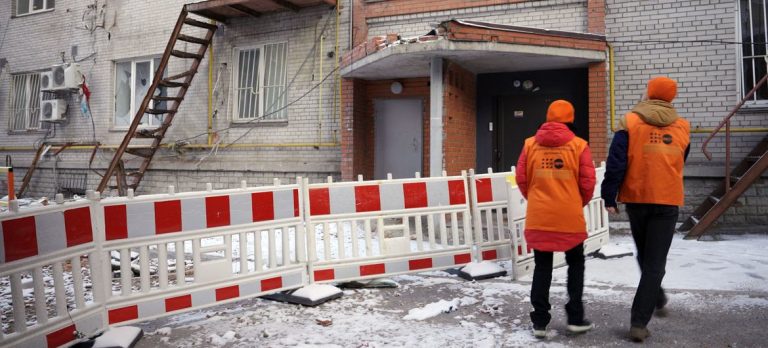
New York, N.Y. —Until I was 5, I had lived my whole life in Luhansk, Ukraine. Then, in April 2014, Russia invaded Luhansk and another nearby region, Donetsk. Russia declared these eastern Ukrainian areas independent states and renamed them Donetsk People’s Republic and Luhansk People’s Republic. These name changes are part of how the Russian government tries to erase the Ukrainian identities of people who live there.
After the invasion, my family moved to Ukraine’s capital, Kyiv, and tried to find a better life. My dad listened to political podcasts and interviews, but my parents didn’t talk to me about the political situation much. I knew there was a war, that Russia had claimed our land, and that the two countries hated each other.
It took years for my family to fully adjust to our new lives. School helped: In Kyiv, I went to one school with the same kids from first grade through seventh grade. We didn’t even know how close we’d gotten. In sixth grade, another kid from Luhansk joined our class, and we exchanged sad glances.
Every summer, I’d go to camps for a Japanese martial art calledaikido. My favorite camp was outside Kyiv, in a forest by a lake. The last night of camp was prank night. During my last summer in Ukraine, on prank night, my best friend and I put toothpaste on some sleeping kids’ arms and cheeks, then snuck out of the dorm. We laughed and ran to the beach and watched the sunrise.
A few months later, on February 24, 2022, Russia launched an even bigger invasion into Ukrainian territory. It attacked towns and cities all across Ukraine, including Kyiv. Rumors of war had been circling us like snakes. My neighbors often lit fireworks, so when I heard loud bangs at 5 a.m., I went back to sleep. An hour later, my mother woke me up and said, “Wake up, the war started.” Those words were like freezing water over my body.
I heard the sound of bombs from my apartment. Out my window, I saw people rushing with suitcases to their cars.
I had practiced packing my things a few days before, so I went ahead and packed for real. My dad asked me to help him carry our bags to the car,and the sounds outside became terrifyingly loud. Huge swishes, then deafening blasts when bombs flew into buildings. I was shaken to my core.
My dad drove the two of us to the gas station, about seven minutes away, and waited in the line of cars for 20 minutes. My grandmother, mother, and one-year-old sister were at home finishing packing. I texted my classmates, who I was supposed to see two hours later in English class.
As my dad and I sat in a traffic jam, I got a message from one of the tougher guys in class. “I am going to miss all of you and I hope one day we will see each other again,” he wrote. We were friends, but I didn’t think I’d ever see him so vulnerable. It was the first time that many guys in my class admitted they had feelings. We all texted that we were afraid and were going to miss each other. It didn’t feel real.
After my dad and I picked up the rest of our family, we drove southeastalong the Dnipro Riverfor about two hours, arriving at a village near Cherkasy where my great-uncle lived. There, we lived for about two weeks, eight people in very close proximity. Because it was a small village, it felt safer. There were not a lot of alerts and sirens.
My friends who had stayed in Kyiv, meanwhile, constantly awoke to sirens and bombs and had to hurry into bomb shelters. They described their daily lives to me on the phone in voices laced with anxiety.
Early one evening at my great-uncle’s place, as the sun began to set, our phones blared a bomb warning. The serene atmosphere crumbled. We quickly got into the car and drove 30 minutes to my great-uncle’s wife’s parents. They had a basement we could shelter in. I grew up Christian, but that evening was the first time I had prayed in years. I didn’t know who might die that night. That’s when my parents decided to leave the country.
On March 6, 2022, my 13th birthday, we stopped at a hotel for a night on our way to the Hungarian border. The five of us dragged our suitcases. My grandma and I shared one room, while my parents and younger sister shared another.
Everybody was on edge and too exhausted to talk, so we got room service, including my favorite chocolate cake, but my euphoria at being 13 lasted about three minutes. Then the grief and sorrow and fear came back.
We stayed in a hotel in Hungary for three days. My dad could not get the right documents to leave the country, so he returned to Kyiv while the rest of us drove to Slovakia. Next to the road were beautiful fields full of flowers, but stress plagued our minds.
In Slovakia, we stayed with a Slovak friend of my dad’s and two other refugee families, also from Kyiv. We were there long enough for the other two refugee kids and me to start school there. I learned Slovak and even made friends. But I worried about my dad.
Three months into our stay, he joined us in Slovakia. New wrinkles had grown around his eyes, but his hug was still as warm and big as ever. The four of us stayed in my dad’s friend’s apartment for anotherthree days.We then got the word that we could all immigrate to the United States.
I was somewhat ecstatic to see America as I knew it from the movies. I imagined a bright city with lights shining on me as I danced. I did not think that this move would be permanent.
In June 2022, we flew to New York. We lived at first with a family friend on Long Island. I started eighth grade in a middle school there. Because Ukrainian kids start studying English in first grade,I did not require ESL classes.
My accent set me apart though.All the kids in the school had known each other since kindergarten. I didn’t fit in and only made three friends. I might have made more friends if I didn’t focus on school so much, but reading a book during lunch gave me more comfort than kids asking me how to cuss in my native language.
I have gone to three schools in the last two years, a stark contrast to the one school in Kyiv that I attended for seven years. Two of them were middle schools, and now I attend a high school in Queens.
I get tired of talking about Ukraine to Americans. Whenever I mention my nationality, a beloved part of my life, I get the same questions — often about the war and if anyone I know died in it. (Thankfully, nobody close to me has been among the dead.)
The new U.S. president claims that he is capable of finishing the war “within weeks” even as Ukraine mourns the three-year anniversary of the Russian invasion. His words remind me of how Putin said he could control Kyiv in three days. He did not. It hurts to see the new U.S. administration turn its back on a democratic Ukraine and embrace its aggressor, Russia.
I constantly look for media coverage about Ukraine. My Spotify playlist of Ukrainian songs is up to 13 hours and 19 minutes. I text my loved ones there, and I think about them, especially late at night. I hate that my only access to them is through a screen. I yearn to be back in the Kyiv school I attended for seven years, singing makeshift karaoke as our teacher walks in and tells us to quiet down. I yearn to be back at my old dojo doing aikidowith my friends.
Arina Limarieva is a proud Ukrainian who writes poetry, takes photographs, and practices aikido and its philosophy.
But I don’t like feeling sad or like a victim. I have friends here, and I found people to do aikido with. My school offers college credit during junior and senior years. I should be halfway through my college credits by the time I graduate high school. This intense academic load helps to distract me from my sorrow, but the sorrow sometimes spills over.
Not long ago, I walked into my guidance counselor’s office, feeling overwhelmed. When I closed the door of his office, I suddenly collapsed on the chair and started sobbing. I was so tired of everything in my life.
My guidance counselor said supportive things and let me cry for five minutes. Then he started using calming techniques. “What is your happy place?” he asked. “Whenever I am stressed I like to think about my happy place. Walking on the beach, or just being out in nature. What’s yours?”
I took a few deep breaths and realized that my happy place was the aikido summer camp where my best friend and I watched that forbidden sunrise.
The tears fell anew, and as they did, I tried to make sense of a happy place I might never return to. I tried thinking instead of people as my happy place, but the people I imagined comforting me were also from Ukraine, like my friend from camp. And anyone still there remains in danger from the ongoing war.
I started to see a therapist four years ago back in Ukraine, and I still “see” her on Skype once a week. She can get me to talk about my feelings, and we have tough conversations about the fact that I can’t control everything about my life.
My parents do not expect to return to Ukraine. All my high school classes seem to be about wars. I’ve been crying a lot. The news about the war looks bad, and it seems likely I won’t be able to go back in the next few years. I’m trying to be realistic and still have faith that, one day, my homeland will be safe.
Raising questions about ethical implications of news organization receiving payments from political entities they cover.
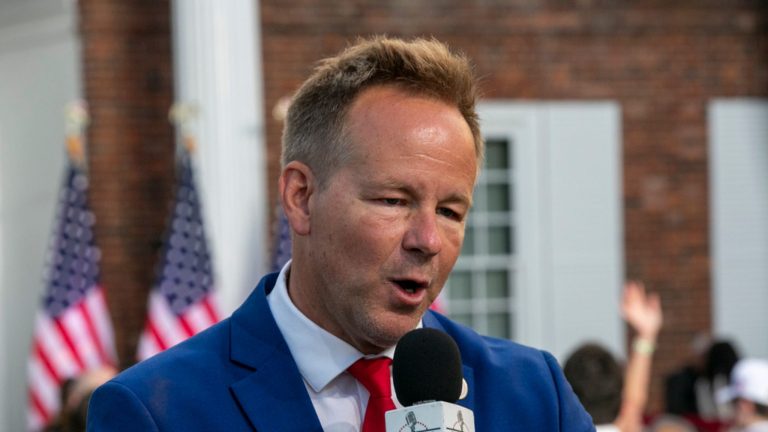
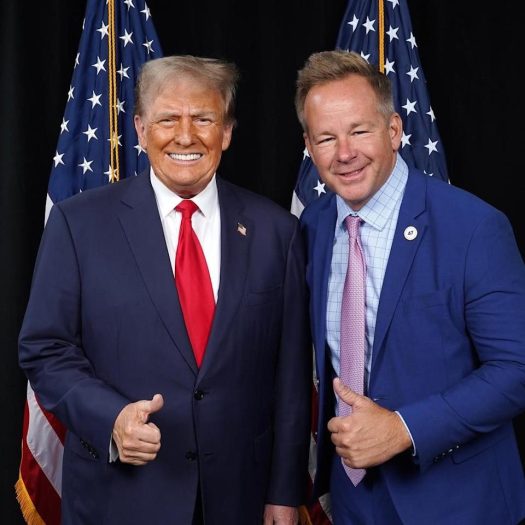
Washington, D.C. –– In a recent development that has raised eyebrows in media circles, Brian Glenn, the reporter who gained notoriety for questioning Ukrainian President Volodymyr Zelenskyy‘s attire during a White House meeting, has been revealed to have ties to a news outlet that received substantial payments from Trump-affiliated political committees.
Glenn, who currently works for the pro-Trump streaming platform Real America’s Voice, was previously the face of Right Side Broadcasting Network (RSBN) from September 2020 to May 2024. During his tenure as program director, RSBN received $92,000 in “broadcast” fees from Trump’s Save America committee and his campaign.
The total amount received by RSBN from Trump-affiliated political committees stands at $192,000, with nearly half of that sum coming during Glenn‘s time as program director. This financial relationship has raised questions about the ethical implications for a news organization receiving payments from the political entities they cover.
When confronted about these payments, Glenn referred to them as “production” expenses and attempted to deflect by questioning the funding sources of major networks’ White House briefing room cameras.
However, reputable news organizations typically cover their own costs when reporting on political events to maintain editorial independence.
The revelation comes in the wake of Glenn’s controversial questioning of President Zelenskyy about his choice of attire during a recent Oval Office meeting with President Trump. The incident, which was seen as an attempt to humiliate the Ukrainian leader, set a tense tone for the meeting and was followed by criticism from Vice President JD Vance.
This development highlights the changing landscape of White House press coverage under the Trump administration, with traditional media outlets being sidelined in favor of conservative activists and Trump-friendly journalists. The situation has sparked debate about journalistic ethics and the blurring lines between political activism and news reporting in the current media environment.
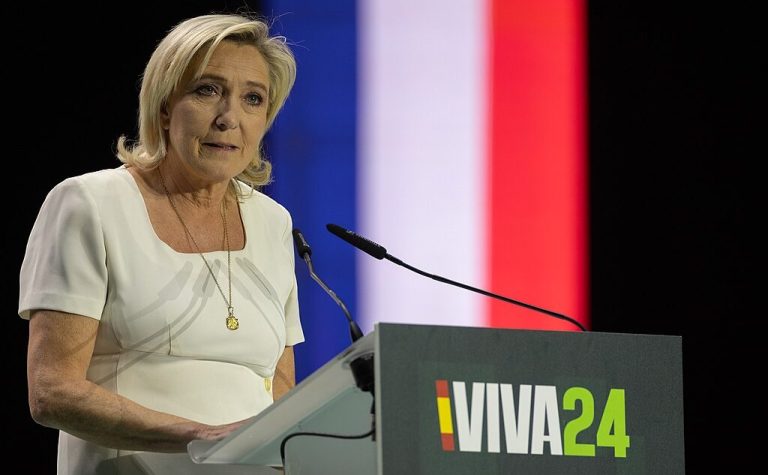
Paris, France– Marine Le Pen, leader of France’s National Rally party, has long been associated with the same brand of populist rhetoric that propelled Donald Trump to power in the United States.
However, recent developments suggest Le Pen is distancing herself from the former president. Sources close to Le Pen report that she privately expressed dismay over Trump’s latest controversies, signaling that even among Europe’s far-right figures, Trump’s polarizing actions may have gone too far.
Le Pen’s growing unease reportedly centers on Trump’s inflammatory statements, legal battles, and unpredictable policy positions. While she once found his approach a valuable reference point, insiders say she now believes aligning too closely with Trump could harm her image ahead of upcoming French elections.
The shift illustrates how global populist leaders are grappling with the fallout of Trump’s legacy, raising questions about the sustainability of his brand of politics on the international stage
Political analysts note that Le Pen’s new stance may be a strategic pivot to appeal to a broader electorate. By rejecting the more extreme facets of Trumpism, she could soften her party’s image and gain moderate votes. Observers emphasize that this move highlights the nuanced balancing act of right-wing leaders who seek to harness populist energy without fully embracing its most polarizing figure.
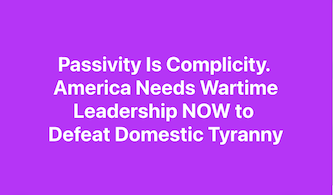
Not Disagreement But WAR: Confronting Trump’s Assault on Democracy
New York, N.Y. — To dismiss the threat of Donald Trump as a mere “difference of opinion” is to misunderstand the gravity of this moment. This is not a policy debate or a clash of ideologies.
This is WAR—a war for the soul of American democracy, waged by a man who incited insurrection, weaponized lies, and pledged loyalty to autocrats over his own nation.
Trump’s actions transcend partisan politics; they are acts of sedition, a betrayal of the U.S. Constitution and the American people he swore to serve.
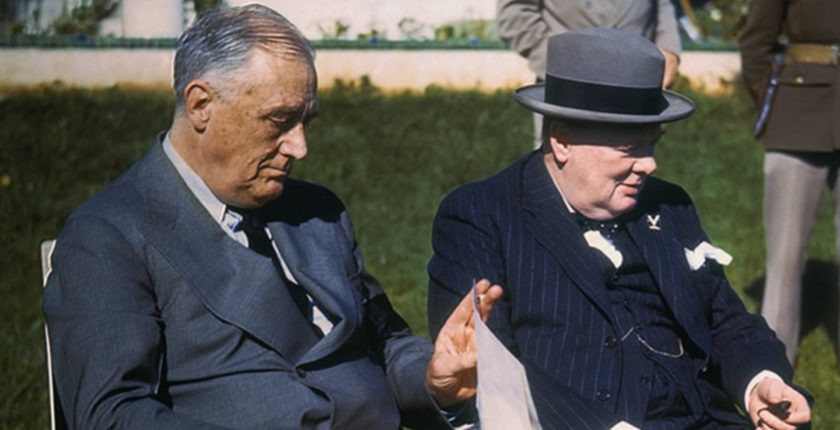
Roosevelt and Churchill knew how to fight fascism with fire, stressing the need to defending democracy over decorum.
History teaches us how Democracies die
They are not conquered overnight but eroded by those who exploit division, normalize lawlessness, and dismantle institutions from within. In World War II, Winston Churchill and Franklin Delano Roosevelt rallied free nations against existential threats with clarity and resolve.
Today, we face an enemy within: Trump and his enablers, who mirror the tactics of Vladimir Putin—undermining elections, attacking the press, and glorifying violence to cement power. Yet our leaders respond with fundraising emails, platitudes about unity, and performative outrage. Auction paddles and hashtags will not and cannot win this war.
America needs leaders who name Trump what he is: a Domestic Enemy
Leaders who prioritize defending democracy over decorum, who mobilize legal, political, and moral forces to neutralize his movement. This is not hyperbole—it is survival. To hesitate is to surrender.
Why Canada and Mexico Must Pull U.S. Products to Fight Trump’s Tariffs
This decisive action, spearheaded by the Liquor Control Board of Ontario (LCBO)—one of the world’s largest alcohol buyers—marks a critical stand against what many see as economic bullying from the south. Ontario Premier Doug Ford declared, “As of today, every single one of these products is off the shelves,” emphasizing the province’s $1 billion annual U.S. alcohol sales now halted.
The LCBO’s role as the exclusive wholesaler in Ontario ensures bars, restaurants, and retailers can no longer restock American spirits, signaling a unified economic pushback.
This move follows Trump’s tariffs, effective since Tuesday, which target Canadian imports amid his broader trade war rhetoric. Canadian Prime Minister Justin Trudeau has accused Trump of orchestrating “a total collapse of the Canadian economy” through these levies, suggesting a sinister motive to weaken Canada for potential annexation—a claim reinforced by Trump’s repeated, provocative remarks about making Canada the 51st state.
Canada’s Foreign Minister has labeled these statements “very serious,” reflecting a national alarm that the U.S. establishment narrative—framing tariffs as mere economic strategy—obscures a deeper geopolitical agenda.
From our perspective, Canada and Mexico’s retaliation is not only justified but necessary.
Trump’s tariffs, initially delayed after border security promises but enacted this week, disrupt decades of tariff-free spirits trade, a cornerstone of North American economic harmony. The LCBO’s action, echoed by provinces like Nova Scotia and British Columbia, which are also removing U.S. products, counters this aggression with a proportional, if not overdue, response.
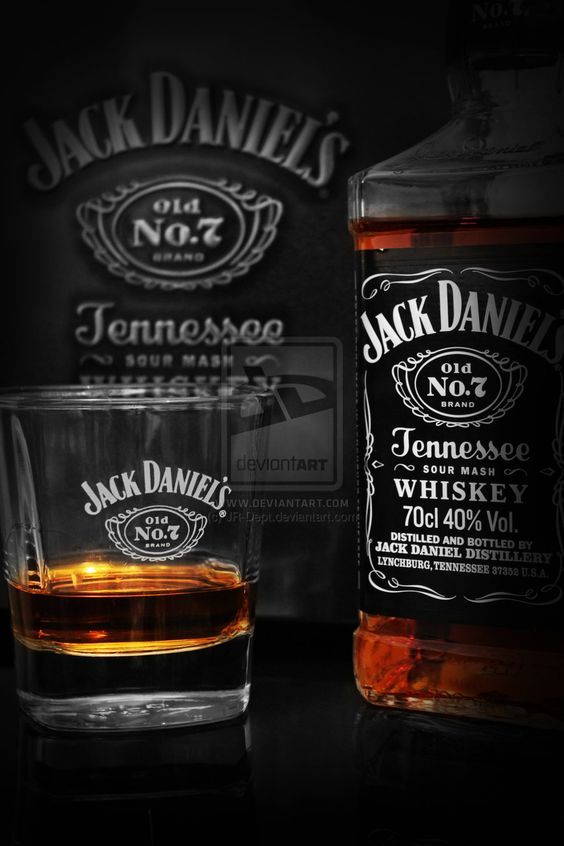
Brown-Forman CEO Lawson Whiting has called this “worse than a tariff,” lamenting lost sales, but his complaint rings hollow when viewed against the $155 billion in Canadian retaliatory tariffs on U.S. goods. Why should Canada absorb economic hits quietly when the U.S. imposes unilateral penalties?
The establishment narrative—pushed by U.S. business leaders like Whiting—frames this as an overreaction, arguing it harms American jobs, particularly in Kentucky’s $9 billion bourbon industry.
Yet, this overlooks the asymmetry: Canada’s move targets a fraction of U.S. exports, while Trump’s tariffs threaten Canada’s $25.9 million liquor trade and broader sectors like automotive and energy.
Ontario’s Premier Ford, alongside leaders like Nova Scotia’s Tim Houston, has vowed further measures, including electricity export taxes, to match Trump’s 10% energy tariff. This tit-for-tat approach levels the playing field, forcing the U.S. to reconsider its strategy.
Mexico, too, should follow suit.
Though not yet detailed in provincial actions, the precedent set by Canada’s LCBO and others suggests a regional strategy. Trump’s 25% tariffs on Mexican goods, alongside Canada’s, demand a unified response. Pulling American alcohol—brands like Jack Daniel’s and Jim Beam—would signal to the U.S. that North American neighbors won’t bend to economic coercion.
The Distilled Spirits Council of the U.S. warns of 31,000 potential job losses, but this hinges on a flawed assumption: that Canada and Mexico should prioritize U.S. interests over their own sovereignty. Instead, redirecting consumer demand to local distilleries, as Trudeau urges with his “choose Canada” campaign, fosters self-reliance.
Critics might argue this disrupts cross-border supply chains, but the real disruption began with Trump’s tariffs, not Canada’s retaliation. The U.S. auto industry’s brief tariff pause for GM, Ford, and Stellantis highlights selective relief, raising questions about fairness.
Canada’s action, while impacting $965 million in Ontario imports, pales against the broader trade war’s toll—tens of thousands of jobs at risk, as Doug Ford predicts plant shutdowns within 10 days. This isn’t petty vengeance; it’s a strategic defense against a policy that Trudeau warns will raise costs for Americans too.
The establishment might dismiss this as political theater, but the sentiment on the ground—reflected in posts found on X—shows public support for standing firm. Canadians are embracing local alternatives, a move that could reshape trade dynamics long-term.
Mexico, with its tequila industry, has equal stake in resisting. Together, these nations should escalate by targeting U.S. luxury goods and tech, amplifying economic pressure until Trump relents. This isn’t just about liquor; it’s about asserting dignity against a tariff regime that threatens annexation under the guise of trade.
“No Other Land” is a must-see—for both its gripping story and its bold vision
New York, N.Y.— In a world often divided by conflict, No Other Land emerges as a beacon of hope, resilience, and human connection.
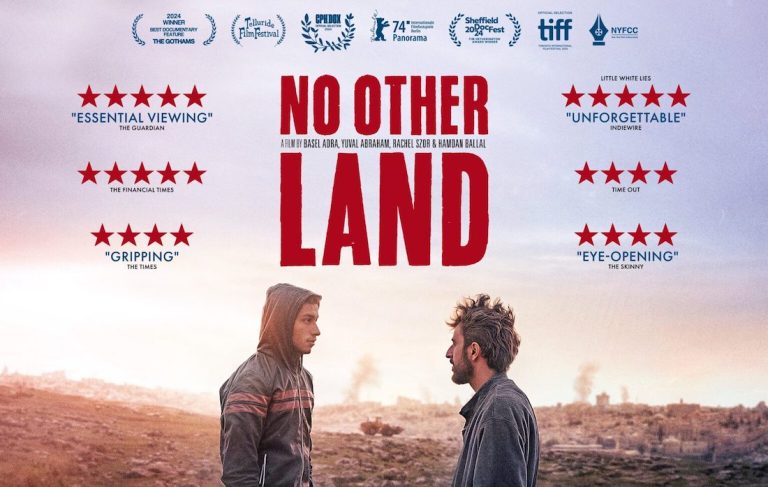
This 2024 documentary, directed by a Palestinian-Israeli collective—Basel Adra, Hamdan Ballal, Yuval Abraham, and Rachel Szor—marks an extraordinary debut that has captivated audiences and critics alike.
A co-production between Palestine and Norway, the film offers an unflinching yet deeply human look at the Israeli-Palestinian conflict, earning accolades at prestigious festivals, including the Panorama Audience Award for Best Documentary Film and the Berlinale Documentary Film Award at the 74th Berlin International Film Festival.
Its crowning achievement came at the 97th Academy Awards, where it clinched Best Documentary Feature Film—a testament to its universal resonance.
No Other Land centers on Basel Adra, a young Palestinian activist from Masafer Yatta in the occupied West Bank.
Where Israeli soldiers demolish homes and displace families
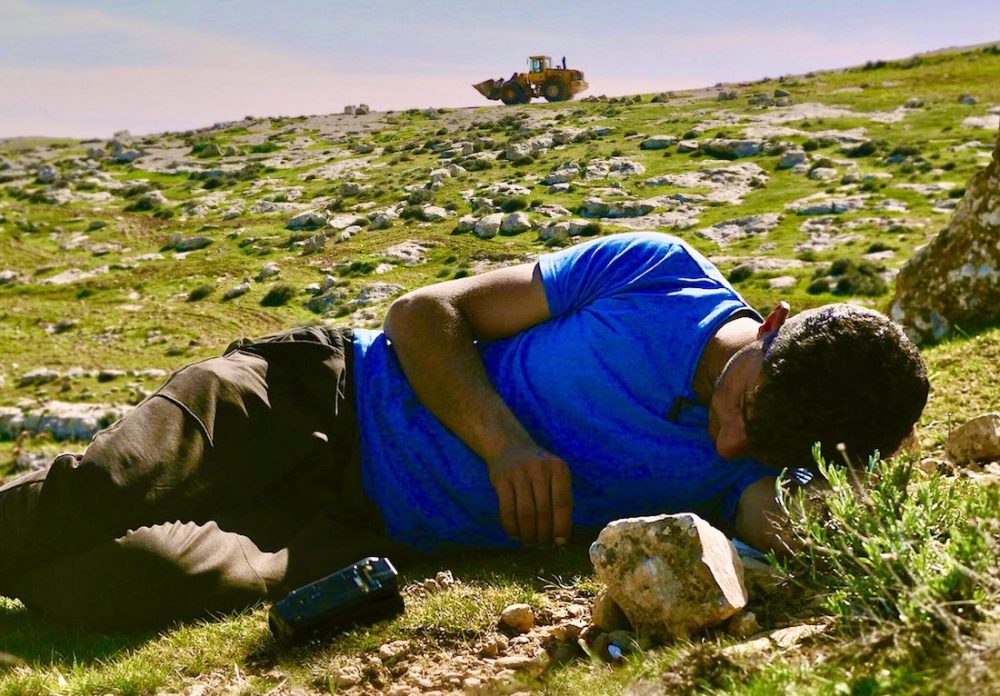
For years, Adra has documented the systematic destruction of his homeland, where Israeli soldiers demolish homes and displace families under a court order designating the area as a military firing zone.
Armed with a camera, Adra captures the slow erasure of his community, turning his lens into a tool of resistance. What sets this story apart is the unexpected friendship he forms with Yuval Abraham, a Jewish Israeli journalist.
Together, they navigate the stark disparities between their lives—Adra enduring constant oppression and violence, Abraham living with the freedoms of Israeli citizenship.
Their bond, fragile yet profound, becomes the heartbeat of the film, offering a rare glimpse of solidarity amid division.
The film’s origins are as compelling as its narrative
In a Variety interview at Berlinale, Adra and Abraham shared how their collaboration began five years ago.
Abraham, a journalist, and Szor, his Israeli colleague, first came to Masafer Yatta to report on the region. There, they met Audra, a local activist, and a partnership blossomed.
“We became friends but also activists together, working on articles about the area,” Adra explained. The idea for No Other Land soon followed, born from a shared desire to amplify the voices of those facing displacement.
Alongside co-directors Ballal, a Palestinian, and Szor, they crafted a film that transcends traditional documentary storytelling, blending raw footage with an intimate portrayal of their evolving relationships.
Visually and emotionally, No Other Land is a triumph
The cinematography—often handheld and unpolished—immerses viewers in the immediacy of Masafer Yatta’s struggles.
Scenes of bulldozers tearing through homes are juxtaposed with quiet moments of Adra and Abraham strategizing or reflecting, their conversations revealing both the weight of their mission and the strength of their connection.
The film doesn’t shy away from the harsh realities of occupation, yet it avoids despair, instead spotlighting the power of resistance and empathy.
The directors’ decision to let the story unfold organically, without heavy narration, trusts the audience to feel the stakes—and it pays off.
Critics and audiences have lauded No Other Land for its bravery and nuance
Its premiere at Berlinale in February 2024, sparked standing ovations, with attendees praising its ability to humanize a complex conflict.
The Panorama Audience Award and BerlinaleDocumentary Film Award underscored its impact, while the Oscar win cemented its place as a landmark in documentary filmmaking.
Reviewers have called it “a masterclass in collaborative storytelling” and “a poignant reminder of cinema’s power to bridge divides.”
The film’s success lies not just in its awards but in its ability to provoke thought and inspire action, making it a vital contribution to the global conversation on justice and coexistence.
For the directors, No Other Land is more than a film—it’s an act of defiance. As a Palestinian-Israeli collective, they’ve created a work that challenges narratives of enmity, proving that shared humanity can thrive even in the toughest circumstances.
The film’s message is clear: resistance is not just about survival but about building something better, together.
As Adra put it, “Creating this movie was our way of fighting back.” That fight has now reached screens worldwide, leaving an indelible mark.
No Other Land is a must-see—not only for its gripping story but for its bold vision of what’s possible when people unite across divides.
It’s a documentary that doesn’t just document; it dares to dream. In a year of remarkable cinema, this film stands out as a powerful, positive force—one that lingers long after the credits roll.
New York, N.Y. — Prostate cancer ranks among the most frequent cancers affecting men globally, with over 1.4 million new cases annually.
Despite its prevalence, myths and confusion persist.
This article offers a clear overview of prostate cancer, exploring its origins, signs, and treatment paths, while dispelling common misconceptions to empower those at risk or their loved ones with essential knowledge.
Prostate cancer originates in the prostate gland, a small organ beneath the bladder that aids sperm production. Key risk factors include advancing age—particularly beyond 50—and a family history of the disease.
As it progresses, symptoms may include urinary difficulties, blood in urine or semen, pelvic discomfort, erectile challenges, and, in advanced stages, weight loss or leg swelling.
Insights into Causes, Symptoms, and Care
Detection often begins with a PSA blood test, measuring prostate-specific antigen levels, though elevated results can stem from non-cancerous conditions like inflammation or benign growths. Imaging, such as MRI, may follow, aiding diagnosis without immediate biopsy.
Prostate cancers vary by cell type.
The most common, adenocarcinoma, makes up about 95% of cases and grows slowly, while small cell carcinoma, less than 5%, is more aggressive. Rarer forms include sarcomas (from connective tissue), neuroendocrine tumors (from hormone cells), and transitional cell carcinomas (from bladder lining spread). Treatment hinges on the type—adenocarcinoma often responds to surgery or radiation, while aggressive forms may need chemotherapy.
Staging, using the TNM system (Tumor, Nodes, Metastasis), ranges from Stage I (confined, small tumor) to Stage IV (spread to bones or organs). Early stages may warrant monitoring, while advanced cases demand prompt intervention.
Symptoms like frequent urination or pain guide diagnosis, with options including active surveillance for low-risk cases, surgical removal, radiation, hormone therapy, chemotherapy, or immunotherapy, tailored to the patient’s health and preferences.
Debunking myths, prostate cancer isn’t always aggressive—many cases progress slowly, allowing for watchful waiting. Regular screening and a healthy lifestyle—exercise, balanced diet, and avoiding smoking or excess alcohol—can lower risks. Consult a healthcare provider for symptoms or concerns to ensure timely, informed care.
Chicago, IL –– I know this silent invader firsthand, and through my family as well. Too many hospital visits, too many funerals. My brother’s pancreatic cancer, snuffing out his light in a matter of months. My aunt’s breast cancer which she beat with a double mastectomy. My mother’s lung cancer from a life of post-World War II smoking.
My own body has fought and won battles with this insidious shadow:
Basal Cell Carcinoma, cut our from my face, sewn back together with 24 stitches.
Human Papillomavirus (HPV) rectal cancer, removed in three laser procedures, leaving a 2″ x 2″ bleeding wound inside my rectum that took weeks to heal, and then…
Kaposi Sarcoma, once known for killing AIDS patients in San Francisco and New York, which was brought into remission through radiation.
Battles won, but not the war.
This month another shadow darkened my MRI scan with a score of “4” on a 1-5 prostate scale from the imaging reporting and data system (PI-RADS). “5” is very likely to be cancer, while “4” is a “high chance.”
The next step is a biopsy to determine my grade or Gleason Score, based on a 1-10 scale. “6” would mean slow-growing. “9” or “10” is aggressive. Of course, my grade could be in the range of 1-5 and my cancer journal could be closed. Or somewhere between 6-10. My understanding is that there is an imprecise correlation between Gleason Scores of 6 / 7 / 8 / 9-10 with Stage 1 / 2 / 3 / 4 Cancer, but I am still learning…
At 65, I am calculating what another 5 years, 10 years, 15 years would mean to my life. My dad passed at 83, his mother at 102. My sleep is now interrupted with thoughts of what has to be done to put my house in order should have a particular expiration date. Not nightmares specifically, but anxious dreams.
From MRI to Biopsy: Understanding PI-RADS and Gleason Scores
New York, NY — If your urologist suspects prostate cancer after a PSA test, they’ll likely recommend imaging to guide the next steps. Among imaging options, an MRI offers the clearest view of the prostate. After the scan, a radiologist assigns a PI-RADS score, a standardized metric that helps determine whether further testing, like a biopsy, is necessary to confirm the presence of cancer.
The PI-RADS system, known as the Prostate Imaging Reporting and Data System, was created to streamline prostate cancer diagnosis and reduce unnecessary procedures. During an MRI, detailed images of the prostate are captured, focusing on areas of concern. Each area is rated on a scale from 1 to 5 based on the likelihood of cancer. These individual ratings are combined into an overall PI-RADS score, which the radiologist uses to assess risk:
PI-RADS 1: Very low risk—no signs of cancer.
PI-RADS 2: Low risk—cancer is unlikely.
PI-RADS 3: Intermediate risk—cancer may or may not be present.
PI-RADS 4: High risk—cancer is likely.
PI-RADS 5: Very high risk—cancer is almost certainly present.
This score is a crucial tool when PSA levels rise and other conditions, like prostatitis or benign prostate hyperplasia (BPH), are ruled out. While the PI-RADS score doesn’t confirm cancer, it guides the decision to proceed with a biopsy. Before MRIs became standard, many men underwent biopsies that showed no significant cancer. Now, a score of 3 or higher typically prompts further investigation.
If a biopsy is needed, it often involves taking up to 12 tissue samples from the prostate, guided by the MRI to target suspicious areas flagged by the PI-RADS score. A pathologist then examines these samples and assigns a Gleason score, which reflects the cancer’s aggressiveness. The Gleason score combines two numbers (1 to 5) based on the most common and second-most common cell patterns in the samples. A score of 1 indicates normal cells, while 5 indicates highly abnormal ones:
Gleason 6: Low-grade cancer; monitoring through regular checkups is often recommended.
Gleason 7: Intermediate-grade; a 3+4 score may suggest monitoring, while 4+3 indicates faster growth, possibly requiring treatment.
Gleason 8–10: High-grade cancer; immediate treatment is typically advised due to aggressive cell changes.
Understanding these scores empowers patients to make informed decisions with their doctors, balancing the risks of intervention with the need for timely action.
Washington, D.C. — In a thought-provoking exploration of American governance, experts are examining how the addition of a 51st state could reshape the nation’s political, economic, and cultural landscape. The debate centers on longstanding proposals to grant statehood to Washington, D.C., or Puerto Rico—each offering unique challenges and opportunities.
Political analysis
Political analysts note that a new state would alter Senate dynamics and Electoral College calculations, potentially shifting legislative priorities. Proponents argue that statehood would empower residents through enhanced representation and localized governance, while critics warn of resource allocation challenges and regional disparities.
Economics
Economically, Puerto Rico could spur new federal investments and development initiatives, but experts caution that integrating a new state into existing fiscal frameworks would require careful planning.
Culture
Culturally, the addition of a state with its own distinct identity—be it the urban vibrancy of Puerto Rico or the rich heritage of Puerto Rico—could deepen America’s diversity and foster a more inclusive national narrative.
Ultimately, the discussion about a 51st state goes beyond mere numbers.
It challenges citizens to rethink what it means to belong to a unified nation, balancing historical traditions with the evolving aspirations of its people. As policymakers debate the merits and pitfalls of expansion, the conversation continues to reveal the complexities of modern American democracy.
Burlington, Ont. — A bald eagle and a Canada goose clashed in a gripping 20-minute showdown on Burlington Bay, Lake Ontario.
The encounter, pitting the U.S.’s iconic predator against Canada’s tenacious emblem, has captivated viewers—not just for its raw drama but for its uncanny resonance with current U.S.-Canada trade tensions.
Spoiler alert: the eagle lost.
The spectacle was captured by local photographer Mervyn Sequeira immortalized in stunning images shared on his Instagram, @msequeiraphotography.
Sequeira, a seasoned wildlife photographer, called it “unexpected and deeply symbolic.”
The bald eagle swooped down, talons ready, eyeing the goose as prey. Undeterred, the Canada goose flared its wings, hissed fiercely, and met the challenge head-on.
“The eagle had the edge in power,” Sequeira noted, “but the goose’s defiance was relentless. They circled, splashed, and lunged until the eagle finally retreated.”
A Political Parallel?
The timing—amid renewed trade friction between former U.S. President Donald Trump and Canadian Prime Minister Justin Trudeau—adds a layer of intrigue. “It’s hard not to see the symbolism,” said political analyst Daniel Foster.
“The U.S. looms large, but Canada holds its own. Here, the underdog won.”
Ornithologist Dr. Rachel Collins agreed, highlighting the goose’s grit: “Geese are scrappy fighters. Facing down an eagle for that long is extraordinary.”
Canada’s Feathered Victory
As the photos spread online, Canadians seized the moment, dubbing it a symbol of national pride.
Memes erupted with quips like “Canada: Small but mighty” and “Eagle 0, Goose 1.” For Sequeira, it was simply nature at its finest.
“I aimed to capture wildlife’s beauty,” he said. “But sometimes, nature hands you a story that echoes far beyond the frame.”
New York, N.Y. — One of the primary challenges of running a global relief operation from New York is assuring local staff are doing their jobs properly without the ability to have full-time, in-person oversight. One measure to counter this has been to place staff from New York in our international projects for coordination, cooperation and supervision.
This leads rise to another challenge: placing and monitoring NYC-based staff to projects across Africa, Asia and the Americas.
Personnel Issues Gone Wrong
Indonesia
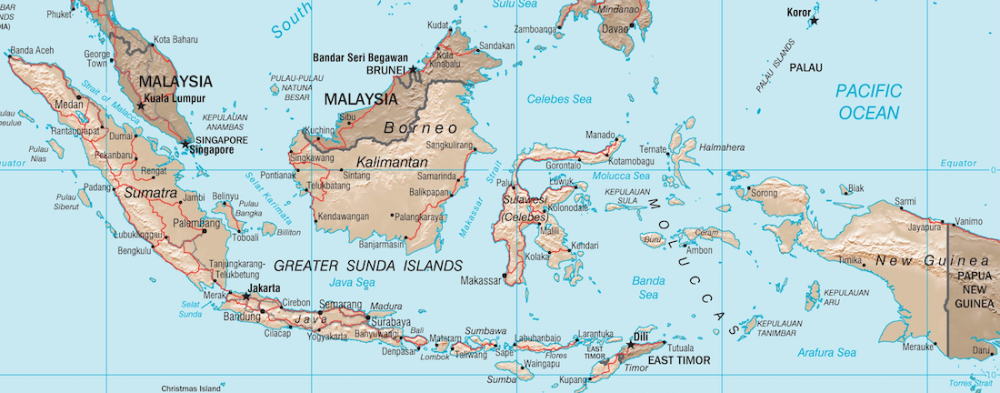
The U.S. director of our project there was a Peruvian American from New York. He trained with us in New York for about a year, and did field work with us in Peru, before being sent to Indonesia to coordinate our project after the Tsunami there.
He fell in love with a local woman and almost had our orphanage burned down when, against our rules, he invited her to spend the night on our campus. The young men in the village were so repulsed by this affront to sharia law, they marched on our orphanage with torches in the middle of the night. The mayor of the village interceded and saved our facility.
He then left our project with his girlfriend to move to the capital, at which point we lost track of him. We heard through the grapevine that he had become drug addicted.
An additional problem was that he was the son of one of our then-board members. When this young man resurfaced in Jakarta after six months, he expected us to fly him back to New York. I refused as he had been terminated two weeks after he left the project, and his mother resigned from our board in protest.
Haiti
While exploring project options in French speaking Togo in West Africa, I came across a young man with tremendous potential. I thought he would be ideal to direct our project there, but after corrupt demands from the government-for-life, that project did not come into fruition.
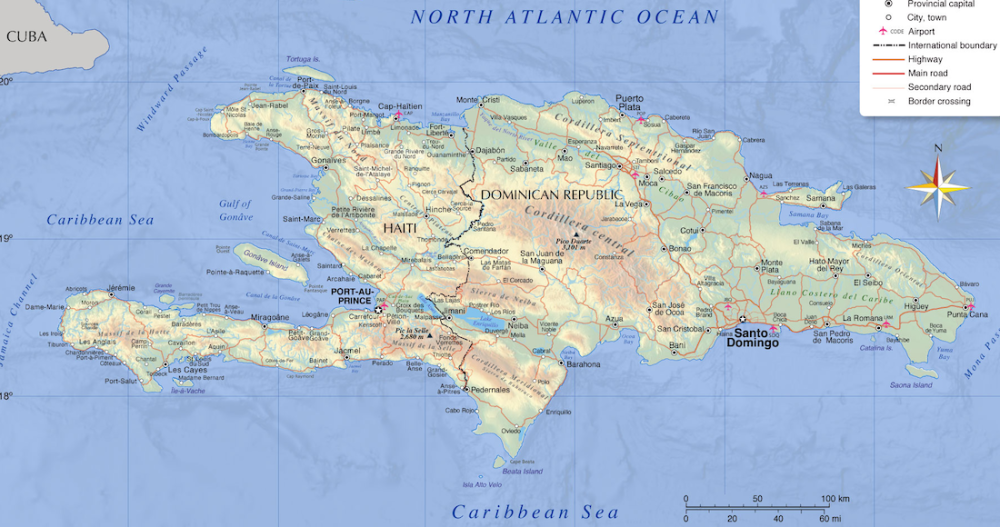
This young man requested placement at our project in French-speaking Haiti. I explained to him that our people on the ground in Haitispoke Creole more than French, and that the conditions in Haiti were extremely challenging. He assured me that being from West Africa, he could deal with difficult situations.
So I agreed to see and he flew to Paris, and then onto New York, for four weeks of in-house training – then on to Port-au-Prince. He was shocked by the challenges in Haiti, from hygiene to nutrition.
Unhappy with about everything, he survived three months before he crashed. He had a nervous breakdown. We had to send him back to Togo on a special Air France medical flight, which cost us a fortune. We understand that he had a complete recovery upon his return.
Sri Lanka
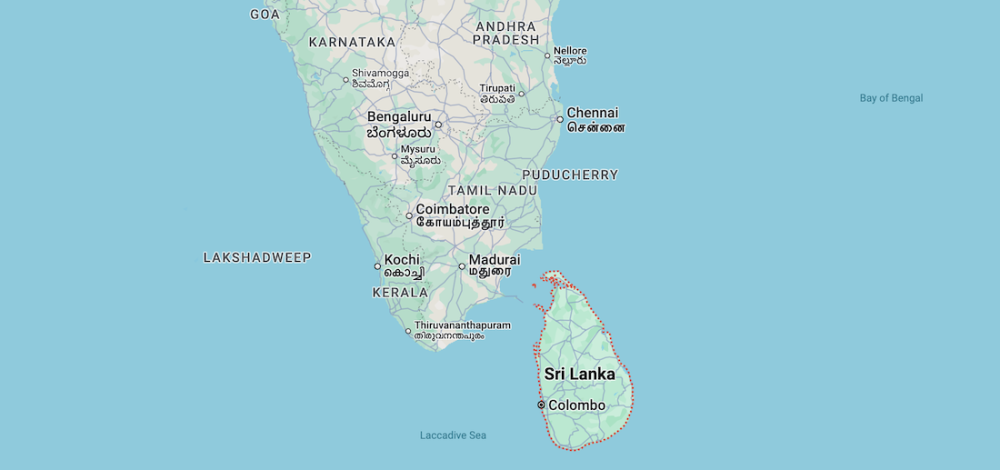
A wonderful volunteer, a freshly graduated liberal arts major, wanted to see the world and be of service. He signed up to work with us in Sri Lanka. There, we had a house and a ‘housemother,’ a Sri Lankan mother whose children had grown and left home, taking care of our kids there. As housemothers often do in South Asia, more so twenty years ago, she took care of the house. Helping to cook, clean, and care for our children. She did not like Americans, and especially American men, to be in ‘her’ kitchen or laundry room.
Being a good liberal, and unfamiliar with local cultural mores, our volunteer wanted to erase gender roles and help cook in the kitchen and do her own laundry. His intentions were honorable. But she would complain to us in New York that she did not want him to assist her. We spoke to him again and again about this situation, but he decided we were ‘taking advantage of her and wanted no part of it.’
Our housemother finally called us, in tears, and said he was hiding his dirty laundry under his mattress so he could wash his clothes himself. She said if she could not manage our home there without interference, she would resign. We had to balance a senior staff member with years of experience with a young volunteer from Minnesota. So we had to fly him home. And he went on to complain through social media how he was victimized when he ‘stood up for women.’
These experiences highlight the complex challenges faced by humanitarian organizations operating on a global scale.
Cultural misunderstandings, personal relationships, and differing expectations can lead to significant disruptions in project operations. It’s crucial for organizations to develop comprehensive training programs that address cultural sensitivity, clear communication protocols, and strategies for adapting to diverse environments.
Additionally, implementing robust vetting processes for both local and international staff, along with regular check-ins and support systems, can help mitigate potential issues before they escalate. Ultimately, successful global humanitarian work requires a delicate balance of cultural awareness, flexibility, and adherence to organizational guidelines to ensure the effective delivery of aid and support to those in need.
In an age where every dollar spent is a vote cast, the decision toboycott Target is not just a protest—it’s an act of stewardship.
New York, N.Y. — At The Stewardship Report, we believe in wielding our resources wisely, honoring our values, and holding corporations accountable when they falter.
Today, as a 40-day “Target Fast” begins with Lent, we stand resolute in support of this movement. Target’s retreat from its diversity, equity, and inclusion (DEI) commitments is a breach of trust that demands a response—one rooted in principle and power.
Target once staked its brand on inclusivity.
In the wake of George Floyd’s murder in Minneapolis, where the company is headquartered, it pledged to amplify Black and minority voices, pouring resources into DEI initiatives.
Shoppers responded, entrusting Target with their hard-earned money—millions daily from Black consumers alone, a figure Rev. Jamal Bryant has pegged at over $12 million per day. That trust wasn’t charity; it was an investment in a vision of equity. Now, under pressure from a shrill faction of right-wing detractors, Target has scaled back those efforts. This isn’t pragmatism—it’s cowardice.
The evidence of consumer backlash is already clear.
On February 28, a 24-hour “economic blackout” saw Target’s store traffic plummet 11% and its website visits drop 9%, per industry reports. Yesterday’s fourth-quarter earnings for 2024 confirmed a 3% decline in net sales, with February flagged as a weak spot.
These aren’t abstract figures—they’re the sound of stewardship in action, of wallets closing to a company that’s lost its way. Black shoppers, alongside allies, are redirecting their economic might elsewhere, and rightly so.
Some might argue this boycott risks harming minority-owned brands still stocked at Target—brands like The Lip Bar, whose founder Melissa Butler has voiced such concerns. It’s a fair point, but stewardship demands a broader lens.
Target’s DEI rollback isn’t an isolated misstep; it’s a signal of corporate capitulation spreading from Walmart to Amazon. If we don’t act now, the erosion of inclusion will only deepen. Those brands deserve our support—directly, not through a retailer that’s abandoned its moral compass.
This 40-day boycott, championed by Black faith leaders and grassroots organizers, is a powerful echo of history. It recalls the Montgomery Bus Boycott, when disciplined stewardship turned economic pressure into social change. Target may bank on this fading quietly, but past boycotts—like Bud Light’s 2023 sales hit or Target’s own Pride Month stumble last year—prove otherwise.
Consumers hold the reins; stewardship means using them.
We acknowledge the challenges Target faces—looming tariffs under President Trump’s policies, a shaky retail climate—but hardship doesn’t justify betrayal. Contrast this with Costco, which leaned into DEI and saw web traffic soar 22% on February 28. The market rewards conviction. Target’s wavering has cost it ours.
So, we urge you: Embrace this boycott as an act of stewardship. Shop local, support small businesses, or choose retailers that still honor inclusion. Target thrived on our faith; now it must reckon with our resolve. Forty days is just the beginning. Let’s steward our resources—and our future—well.
To connect passionate graduates with local charities seeking board members and volunteers
New York, N.Y. — On March 4, 2025, the Harvard Club of New York City hosted a landmark event bringing together over 300 Harvard alumni to explore opportunities in nonprofit board service.
The evening, organized by Harvard Alumni for Climate and the Environment representative Eleanor Powers and Harvard Alumni Disaster Preparedness and Response Team coordinator Nermin Ahmad, aimed to connect passionate graduates with local charities seeking board members and volunteers.
Responsibilities, challenges, and personal growth opportunities that come with serving on a charity’s board
The event began with an insightful panel discussion on the expectations and rewards of nonprofit board service. Experienced board members and nonprofit executives shared their perspectives on the responsibilities, challenges, and personal growth opportunities that come with serving on a charity’s board.
Following the panel, attendees moved to the historic Harvard Hall, where they engaged in lively conversations with representatives from various nonprofit organizations. This networking session allowed alumni to explore a wide range of causes and potential roles, from environmental conservation to education and social services.
Nermin Ahmad, the event coordinator, expressed enthusiasm about the gathering’s potential impact: “Our past events have resulted in numerous successful matches, connecting Harvard alumni with organizations looking to expand their boards, volunteer base, and donor networks. The intellectual capital and diverse expertise our alumni bring to these roles are invaluable to the nonprofit sector.“
The event also featured representatives from various Harvard alumni groups, including the Harvard Black Alumni Society, Harvard Latino Alumni Alliance, and Harvard Asian American Alumni Alliance, emphasizing the diverse backgrounds and interests of the attendees.
As the evening progressed, many alumni expressed excitement about the potential to make a difference in their communities through board service. The Harvard Club plans to follow up with participants to track the connections made and board positions filled as a result of this networking initiative.
This event underscores the ongoing commitment of Harvard alumni to leverage their education and experience for the greater good, fostering a culture of philanthropy and civic engagement among graduates. As the nonprofit sector continues to play a crucial role in addressing societal challenges, the involvement of skilled and dedicated board members becomes increasingly vital.
The success of this gathering has prompted discussions about making it an annual event, with potential expansions to other cities with significant Harvard alumni populations. By facilitating these connections, the Harvard Alumni Association aims to create a ripple effect of positive change, empowering nonprofits and enriching communities across the nation and beyond.
Targeting U.S.-based dissidents, news organizations, government agencies and a large religious organization
New York, N.Y. — The U.S. Justice Department announced indictments Wednesday against 12 Chinese nationals accused in a global hacking campaign targeting U.S.-based dissidents, news organizations, government agencies and a large religious organization.
According to court documents, China’s Ministry of Public Security and Ministry of State Security used a network of private companies and hackers-for-hire to steal information and help locate dissidents and critics throughout the world.
“Today’s announcements reveal that the Chinese Ministry of Public Security has been paying hackers-for-hire to inflict digital harm on Americans who criticize the Chinese Communist Party (CCP),” said Assistant Director Bryan Vorndran of the FBI’s Cyber Division in a statement.
The suspects include two officers in China’s Ministry of Public Security, eight employees of a company known as i-Soon, and two members of a group known as Advanced Persistent Threat 27 (APT27).
A spokesperson for the Chinese Embassy in Washington, Liu Pengyu, told The Associated Press Wednesday that the allegations were a “smear” and said, “We hope that relevant parties will adopt a professional and responsible attitude and base their characterization of cyber incidents on sufficient evidence rather than groundless speculation and accusations.”
All of those indicted are at large, and the Justice Department is offering a reward of up to $10 million for information about the MPS officers and i-Soon, the Chinese company that employed most of the hackers.
The company is accused of selling stolen information “to China’s intelligence and security services to suppress free speech and democratic processes worldwide, and target groups deemed a threat to the Chinese government,” according to a news release from the FBI.
i-Soon also conducted computer intrusions on its own initiative, charging “the MSS and MPS equivalent to between approximately $10,000 and $75,000 for each email inbox it successfully hacked,” the indictment said.
The company also provided training in hacking skills to the government agencies.
Among the group’s targets were a large religious organization critical of the Chinese government that previously sent missionaries to China, and a group that promoted human rights and religious freedom in China.
The New York Assembly and multiple news organizations in the U.S. were targeted, including those that have opposed the Communist Party of China or delivered uncensored news to China.
Foreign targets included a religious leader, a Hong Kong newspaper and the foreign ministries of Taiwan, India, South Korea, and Indonesia, according to the Justice Department release.
Separate indictments were issued against the two men connected to APT27, Zhou Shuai and Yin Kecheng, “for their involvement in the multi-year, for-profit computer intrusion campaigns dating back, in the case of Yin, to 2013,” the Justice Department release stated.
Zhou Shuai
Yin Kecheng
The State Department announced a reward of up to $2 million for information leading to the arrest of Zhou and Yin.
They are accused of hacking numerous “U.S.-based technology companies, think tanks, law firms, defense contractors, local governments, health care systems, and universities, leaving behind them a wake of millions of dollars in damages,” the release stated.
Yin is accused in a U.S. Treasury Department hack between September and December 2024.
The two face several charges that include computer network conspiracy, wire fraud, aggravated identity theft and money laundering.
“As evidenced by today’s and previous announcements, China offers safe harbor for private sector companies that conduct malicious cyber activity against the United States and its partners,” State Department spokesperson Tammy Bruce said in a statement.
The indictments were the result of a joint investigation by the Justice Department, FBI, Naval Criminal Investigative Service and Departments of State and the Treasury.
Field Office: New York [www.fbi.gov]
“From at least in or around 2016, through in or around 2023, the Chinese technology company Anxun (i-Soon) Information Technology Co., Ltd., aka “i-Soon” (“i-Soon”), and its personnel, allegedly engaged in numerous and widespread compromises of email accounts, cell phones, servers, and websites at the direction of, and in close coordination with, the People’s Republic of China’s (PRC) MSS and MPS. Incorporated in or around 2010, in Shanghai, China, i-Soon allegedly profited and grew as a key player in the PRC’s hacker-for-hire ecosystem. At certain times, i-Soon had three (3) teams of employees allegedly working to attack computer systems. i-Soon employees allegedly compromised and attempted to compromise victims across the globe, including a large religious organization in the United States, critics and dissidents of the PRC government, a state legislative body, United States government agencies, the ministries of foreign affairs of multiple governments in Asia, and news organizations.”
“If you have any information concerning this case, please contact your local FBI office, the nearest American Embassy or Consulate, or you can submit a tip online at tips.fbi.gov.
Aga Khan IV championed pluralism, tolerance, and interfaith dialogue. He spoke frequently about the compatibility of Islamic faith with modernity, democracy, and human rights, positioning himself as a moderate voice in an era of rising extremism.
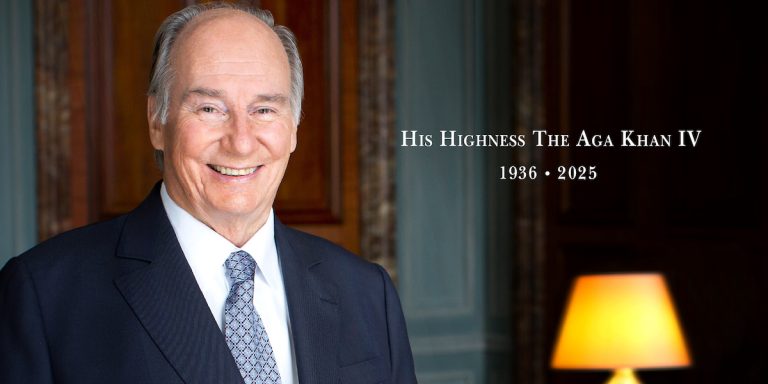
New York, N.Y. — Aga Khan IV (Shah Karim al-Hussaini) died on February 4, 2025, at age 88 in Lisbon, Portugal. He was buried on February 9, 2025, in the Mausoleum of Aga Khan in Aswan, Egypt. The Aga Khans claim the titles of Prince and Princess by virtue of their descent from Fath Ali Shah of the Persian Qajar dynasty, and this title was officially recognized by the British government in 1938. He was given the title “His Highness” by Queen Elizabeth in July 1957.
However, he wasn’t royalty in the traditional sense of ruling a kingdom. He was the 49th hereditary imam of Nizari Ismaili Muslims, serving from 1957 until his death in 2025, leading a community of approximately 15 million followers worldwide.
His son Rahim Al-Hussaini was named as his successor, becoming Aga Khan V.
A Spiritual Leader’s Modern Vision
Aga Khan IV inherited his position at age 20 when his grandfather, Aga Khan III, bypassed the line of succession to select him as the next imam. The young leader quickly proved his grandfather’s choice prescient, combining deep religious devotion with a modern, progressive worldview that would define his six-decade tenure.
Unlike many religious leaders who maintained distance from worldly affairs, Aga Khan IV believed his spiritual responsibilities extended to improving the material conditions of his followers and humanity at large. He pursued degrees from Harvard University and held a deep appreciation for architecture, education, and sustainable development, which would become cornerstones of his philanthropic work.
Building Institutions for Development
The Aga Khan Development Network (AKDN), established under his leadership, grew into one of the world’s most comprehensive private development networks. Operating in approximately 30 countries, primarily in Asia and Africa, the network employed roughly 80,000 people and touched millions of lives annually.
The AKDN encompassed a diverse portfolio of institutions. The Aga Khan Fund for Economic Development supported businesses and industries in developing nations, creating jobs and fostering economic growth. The Aga Khan University, with campuses in Pakistan, Kenya, Tanzania, Uganda, Afghanistan, and the United Kingdom, provided world-class education and healthcare training in regions desperately needing skilled professionals.
His commitment to healthcare manifested in a network of hospitals and clinics serving remote and underserved populations. The Aga Khan University Hospital in Karachi, Pakistan, became a center of medical excellence in South Asia, while rural health facilities brought basic medical care to villages that had never seen a doctor.
The Aga Khan University Hospital is globally recognized with established working associations with other leading University Hospitals in the world. This enables the latest protocols for treatment, medicines, surgery, diagnostic and laboratory, with superior equipment and technology, benefiting many patients everyday. Photo credit: Aga Khan University Hospital.
Champion of Architecture and Culture
Aga Khan IV possessed a profound appreciation for Islamic architecture and cultural heritage. In 1977, he established the Aga Khan Award for Architecture, which became one of the most prestigious honors in the field. The award recognized projects that combined aesthetic excellence with social purpose, from mud-brick schools in Yemen to public housing in Indonesia.
His personal involvement in architecture extended beyond awards. He commissioned and funded restoration projects for historic Islamic sites, including the Humayun’s Tomb in Delhi, India, and the Al-Azhar Park in Cairo, Egypt. The Cairo project transformed a 500-year-old garbage dump into a 30-hectare (74-acre) green space, simultaneously creating jobs and restoring adjacent historic neighborhoods.
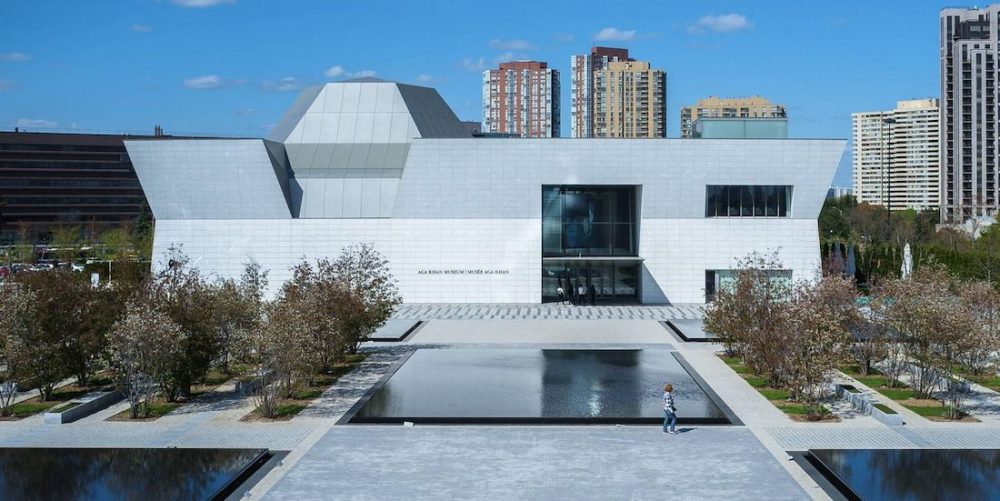
The Aga Khan Museum in Toronto, Canada, and the Aga Khan Centre in London, England, stand as monuments to his vision of preserving and sharing Islamic culture with the world. These institutions house priceless artifacts while serving as centers for dialogue and understanding between cultures.
Founded in 2014, the Aga Khan Museum in Toronto, Ontario in Canada is home to a growing Permanent Collection of over 1,200 masterpieces, including manuscripts, paintings, ceramics, and textiles from the 9th to the 21st century. Photo credit: Aga Khan Museum, Toronto.
Education as Empowerment
Education remained perhaps his most passionate priority. Beyond universities, the Aga Khan Education Services operated schools across three continents, educating hundreds of thousands of children annually. Many of these schools served impoverished areas where quality education was otherwise unavailable.
The Aga Khan Academies, a network of residential schools modeled on the International Baccalaureate system, aimed to develop future leaders from across socioeconomic backgrounds. With campuses in Mombasa, Kenya, and Hyderabad, India, these institutions provided rigorous education emphasizing ethics, service, and pluralism.
His educational philosophy stressed critical thinking over rote memorization and encouraged students to engage with diverse perspectives. This approach reflected his broader belief that educated, empowered individuals were essential for societal progress.
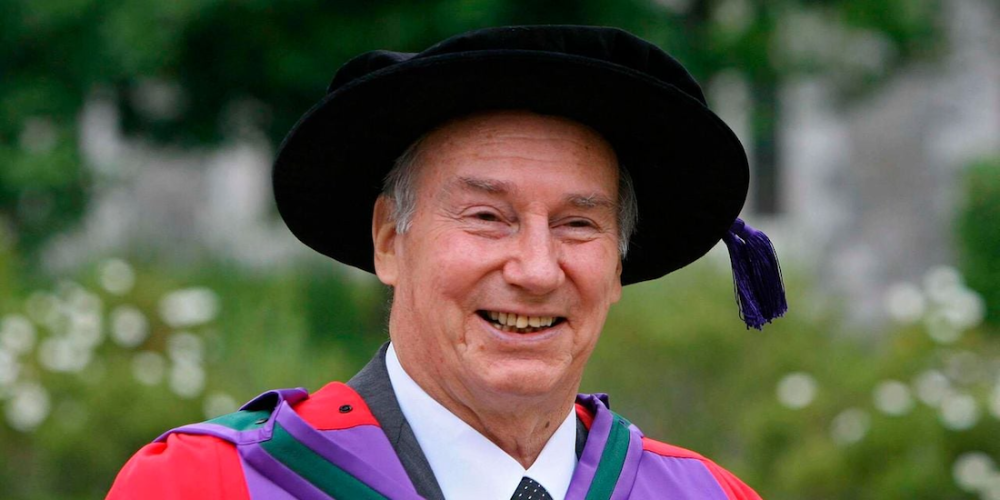
His Highness the Aga Khan after being honored by the National University of Ireland, Maynooth.
Advocate for Pluralism
Throughout his imamate, Aga Khan IV championed pluralism, tolerance, and interfaith dialogue. He spoke frequently about the compatibility of Islamic faith with modernity, democracy, and human rights, positioning himself as a moderate voice in an era of rising extremism.
He maintained that Islam’s core principles aligned with universal human values and that Muslims should engage constructively with people of all faiths and none. This message resonated particularly in Western countries, where he worked to build bridges between Muslim communities and broader society.
His emphasis on meritocracy within his institutions, hiring and serving people regardless of religious background, demonstrated his commitment to pluralism in practice. The AKDN employed people of all faiths and served beneficiaries without regard to religion, ethnicity, or nationality.
Diplomat and Global Citizen
Aga Khan IV moved comfortably in international diplomatic circles, advising world leaders and advocating for development priorities. He addressed the United Nations, the European Parliament, and national legislatures, arguing for increased investment in development and for policies recognizing the dignity and potential of all people.
His relationship with various governments proved complex. While maintaining strong ties to Pakistan, where the Ismaili community has deep roots, he also developed significant relationships with Canada, Portugal, and several African nations.
Canada granted him honorary citizenship in 2009, recognizing his contributions to humanitarian causes.
He served as a mediator in regional conflicts and advocated for refugees, drawing on his community’s own history of displacement and resettlement. His personal wealth, estimated in the billions of dollars (€) and derived partly from traditional religious offerings and investments, funded much of his philanthropic work.
Personal Life and Succession
The imam married Sarah Croker-Poole in 1969, and the couple had three children: Princess Zahra, Prince Rahim, and Prince Hussain. The marriage ended in divorce in 1995. In 1998, he married Gabriele zu Leiningen, with whom he had a son, Prince Aly Muhammad, before that marriage also ended in divorce in 2014.
Despite personal challenges, he maintained close relationships with his children, involving them in the work of the AKDN and preparing them for leadership roles. Prince Rahim, now Aga Khan V, worked extensively in development projects and served on various AKDN boards, gaining experience that would prove invaluable in his new role.
Legacy of Service
The scope of Aga Khan IV’s impact defies simple measurement. The AKDN’s annual budget exceeded $1 billion (about €950 million), touching sectors from microfinance to music, early childhood development to disaster relief. His institutions educated millions, employed hundreds of thousands, and provided healthcare to countless individuals who might otherwise have gone without.
Beyond material accomplishments, he leaves a legacy of ideas: that faith should inspire service, that development must be holistic and sustainable, that quality matters as much as quantity, and that human dignity transcends all boundaries.
His passing marks the end of an era, but the institutions he built and the example he set will continue shaping lives for generations. As his son assumes the mantle of leadership, the Ismaili community and the broader world will watch to see how Aga Khan V carries forward his father’s extraordinary legacy of compassion, vision, and service to humanity.
The Liberatory Living Room Performance Closes Echo Park Lake Exhibition with Call for Solidarity
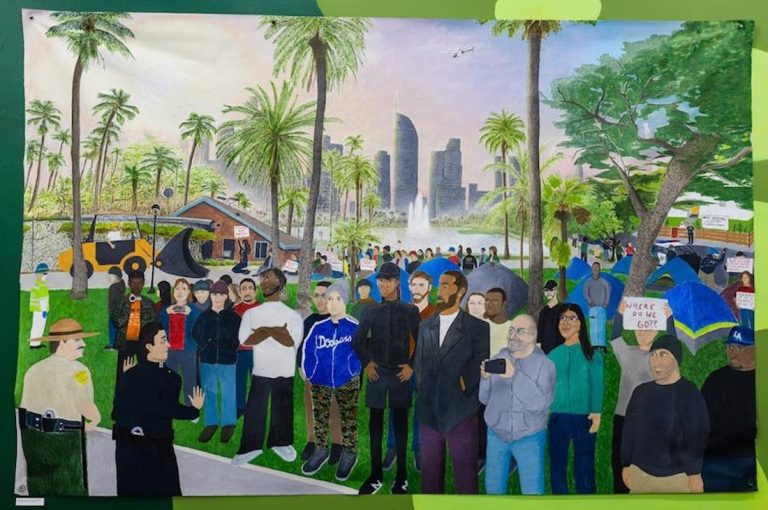
Los Angeles, CA — On Friday, March 21, 2025, at 7:00 p.m., the Skid Row History Museum & Archive will host “The Liberatory Living Room: Belongings Precede Belonging,” a performance marking the finale of the Tents and Tenants: After Echo Park Lake exhibition.
Organized by the UCLA Luskin Institute on Inequality and Democracy, with support from the Mellon Foundation, this event invites the public to witness the After Echo Park Lake Archive Collective’s exploration of how an encampment at Echo Park Lake became a radical commons—a microcosm of resistance against Los Angeles’ “policed-propertied order.”
The exhibition, running February 1–March 30, 2025, at the museum—a project of the Los Angeles Poverty Department (LAPD)—documents the 2021 Echo Park Lake encampment, where unhoused organizers, abandoned by the city during the COVID-19 pandemic, forged a community and uprising.
That community, however, faced a militarized eviction in March 2021, a pivotal moment exposing state violence against the unhoused.
The After Echo Park Lake Research Collective’s 2022 report, (Dis)Placement: The Fight for Housing and Community after Echo Park Lake, challenged city claims that displaced residents were housed, revealing that only 17 of 183 individuals found long-term housing, with many left in permanent displaceability.
Critics argue this reflects a “housing ruse”—a misuse of public funds to criminalize poverty rather than provide real solutions, despite expanded federal and state relief resources.
“The Liberatory Living Room” performance, featuring members of the After Echo Park Lake Archive Collective, will delve into the “politics and poetics” of the encampment, emphasizing how belongings—tents, makeshift infrastructure—preceded belonging, creating a shared space of solidarity.
The event builds on the exhibition’s mission to preserve this history, offering lessons for future social movements. It contrasts sharply with the city’s narrative, as posts on X highlight ongoing public frustration: many argue the 2021 eviction prioritized gentrification over human needs, with police harassment and closed facilities like showers and bathrooms exacerbating unhoused suffering.
The UCLA Luskin Institute, under Director Ananya Roy, has long studied racial banishment and housing injustice, partnering with movement scholars and unhoused comrades to challenge systems of inequality. The exhibition, open Thursdays through Saturdays from 2–5 p.m., also includes earlier programs like the February 21 panel, “Tenants in the Streets,” amplifying voices from Skid Row and beyond.
The Los Angeles Poverty Department, founded in 1985 by Skid Row residents, curates the museum as a space for art, history, and activism, fostering performances like LAPD’s Festival for All Skid Row Artists and Walk the Talk parade.
Yet, the establishment narrative—city officials’ claims of housing success—faces scrutiny. Reports from the Luskin Institute and sentiment on X suggest the eviction prioritized property interests over people, with gentrification driving the removal of Echo Park’s unhoused community.
While the city touted the sweep as a public safety measure, evidence shows it deepened poverty and displacement, contradicting promises of stable housing. The exhibition and performance aim to counter this, archiving the encampment’s radical vision of a “collective future” free from carceral containment.
“The Liberatory Living Room” invites housed and unhoused attendees alike to engage with this history, asking: What does Los Angeles look like from its most precarious residents’ vantage point?
The performance, rooted in the poetics of survival, underscores the encampment’s infrastructure—gardens, kitchens, jobs programs—as acts of resistance. It challenges viewers to imagine a city where housing justice, not banishment, prevails, drawing on the After Echo Park Lake Archive Collective’s ongoing work since 2023.
Support for LAPD’s museum and programs, including this exhibition, relies on public donations, ensuring Skid Row’s stories endure. As Los Angeles grapples with homelessness—exacerbated by economic hardship and systemic neglect—these events offer a clarion call for solidarity, urging a reimagining of urban space beyond police and property.
About Los Angeles Poverty Department Founded in 1985, Los Angeles Poverty Department is made up of people who make art and live and work in Skid Row. LAPD creates performances and multidisciplinary artworks that connect the experience of people living in poverty to the social forces that shape their lives and communities. LAPD’s works express the realities, hopes, dreams and rights of people who live and work in L.A.’s Skid Row.
LAPD’sSkid Row History Museum & Archive is curated by L. A. Poverty Department. The space operates as an archive-, exhibition-, performance- and meeting space and collects, preserves, and disseminates the history of the Skid Row neighborhood.
Chris Villain’s cover proves treat art isn’t confined by tradition. Sometimes, defying gravity just means daring to land in uncharted territory
New York, N.Y. — Since its 2003 debut, Wicked’s show-stopping anthem “Defying Gravity” has become a cultural touchstone, synonymous with empowerment and rebellion. Originally written for Elphaba, the misunderstood “Wicked Witch of the West” (traditionally played by a woman), the song’s soaring vocals and themes of liberation have inspired countless covers.
Yet in a twist worthy of the musical itself, male performers have increasingly claimed the song as their own—defying not just gravity but gendered expectations in the process.
From Broadway to Boycotting Norms
Composed by Stephen Schwartz, “Defying Gravity” was crafted to showcase Elphaba’s metamorphosis from ostracized outcast to defiant heroine. Actresses like Idina Menzel and Cynthia Erivo have made the role iconic, but the song’s universal message—“It’s time to try defying gravity”—has transcended its origins. Enter a wave of male artists reimagining the powerhouse ballad, often adding raw vulnerability or theatrical flair.
Simon Cowell Impersonators and Viral Moments
The trend took a playful turn on Britain’s Got Talent in 2019, when contestant Jonathan Goodwin, a Simon Cowell impersonator, swapped snarky critiques for a surprise performance of “Defying Gravity.” Clad in Cowell’s signature tight T-shirt and deadpan demeanor, Goodwin’s act blurred parody and passion, earning a standing ovation and headlines like “Simon Sings Schwartz!” The clip went viral, proving the song’s adaptability—and its knack for upending expectations.
Chris Villain’s DIY Triumph
Among the most celebrated male covers is Chris Villain’s self-produced rendition, a tour de force blending vocal prowess with cinematic storytelling. Filmed in a moody, industrial setting, Villain’s 2020 YouTube video reinterprets the song as a gritty battle cry, swapping Elphaba’s broomstick for brooding visuals and a rock-infused arrangement.
His soaring falsetto and emotional delivery struck a chord, amassing nearly 200,000 views and comments praising his “chills-inducing” take. Fans and theater bloggers alike have dubbed it “the definitive male cover,” with one user writing, “He didn’t just sing it—he reclaimed it.”
Why Male Covers Resonate
The rise of male “Defying Gravity” covers reflects broader shifts in how audiences engage with musical theater. Social media platforms like YouTube and TikTok have democratized performance, allowing artists to reinterpret roles traditionally bound by gender.
For some male singers, tackling the song is a technical challenge—navigating its demanding range (originally written for a mezzo-soprano) requires creative key changes or vocal hybridity. For others, it’s a political statement, queering a narrative about societal rejection.
“Theatre is about empathy, not gender,” argues vocal coach Mariah Jensen. “When a man sings Elphaba’s struggle, it underscores that her fight against labels isn’t just a ‘witch’s’ story—it’s everyone’s.”
Controversy and Celebration
Not all reactions have been positive. Purists argue that male covers dilute the song’s feminist roots, while others accuse performers of “stunt singing.” Yet many fans, including LGBTQ+ advocates, champion the trend as a celebration of fluidity. “Elphaba’s an outsider—why gatekeep her anthem?” tweeted Broadway composer Andrew Lippa in 2022.
As Wickedheads to the big screen in 2024 with Cynthia Erivo and Ariana Grande, “Defying Gravity” continues to evolve. From drag bars to college recitals, its legacy lies in its ability to inspire anyone brave enough to rise—regardless of who they are, or how high the notes.
Washington, D.C. — A young mother, five children in tow, steps off a train in the central Ukrainian city of Dnipro, holding a small bag. She is fleeing Russian attacks in the Zaporizhzhia region, she is also escaping a violent partner, a man who once beat her so severely she suffered a miscarriage.
She needs urgent medical attention, legal assistance and a safe place for her children. “We met her at the train station,” says Tetiana, a psychologist with a mobile team since 2022. “We also organized a medical escort and lawyers to help with her documents and referrals.”
Trauma, distress and surging domestic abuse
Tetiana’s unit is one of 87 UNFPA psychosocial support teams, on call for emergency interventions. She can also refer survivors for longer-term assistance, job training and access to legal aid. These resources remain critical for survivors of abuse long after the initial danger has passed – especially in a country where three years of war have caused widespread trauma and deep psychological distress.
Since Russia’s full-scale invasion three years ago, reports of intimate partner violence, domestic abuse, sexual violence and other forms of gender-based violence have surgedmore than threefold in Ukraine. An estimated 2.4 million people – mostly women and girls – are in urgent need of gender-based violence prevention and response services. “Even after finding some physical safety in Dnipro, many struggle with lingering panic attacks, nightmares and depressive symptoms,” says Tetiana.
Almost two thirds of households in Ukraine report dealing with some form of anxiety, depression or extreme stress, thwarting people’s ability to find work or care for family members. Financial hardship, mass job losses, deaths of loved ones and fears of future attacks are only intensifying their distress. Without proper counselling and care, the cycle of trauma can also be passed down to future generations, risking long-term and wider-spread harm to the community
Surviving is just the beginning
Roman joined the team in Dnipro as a social worker in April 2022, arranging coordination with social services and public organizations. “We have built a response system for people’s safety and support,” he said, explaining that they are often the first to respond to cases of gender-based violence, after the police. “We are an ambulance of sorts for gender-based violence incidents.”
These services are vital, especially for women without stable income or housing, as the war has put many at risk of economic exploitation or renewed violence.
“Many people think surviving the initial threat is the end of the story,” added Tetiana. “But the real healing only starts once they are physically safe. Without psychosocial support, it’s difficult for them to recover from trauma or prevent further harm.”
In crisis settings, the risk of violence against women and girls escalates – including conflict-related sexual violence – and the demand for protection and response services spikes. Yet, as displaced women often lack social networks to turn to and are stigmatized if they report abuse, the police can request the mobile team’s support on-site to coordinate further interventions, such as safe housing or counselling.
Health workers under fire
It’s a situation fraught with danger, and response workers themselves can come under fire. “When we arrive at the sites of attacks or in cases of violence. We don’t have time to slow down,” explained Roman. “We switch on immediately and start providing services. It’s like our own reactions are on hold. Only later, when we look back and discuss it, do we realize how difficult it actually was.”
Since February 2022, the World Health Organization has confirmed over 2,200 attacks on healthcare facilities, services and personnel in Ukraine by the Russian Federation. Last year, over 300 of these affected medical facilities – a threefold increase on 2023.
While his work is critical, Roman said it takes a toll. “With each shelling, it builds up – one after the other. Depending on the severity of the damage, you feel it differently each time. But for the most part, we stay focused on what must be done, putting our feelings aside on the spot. Then, once the immediate crisis is handled, we turn to our own support networks and process it all.”
Why these services must endure
Since 2022, more than 50 of UNFPA’s mobile psychosocial teams have been funded by the US Government, and play an indispensable role in helping Ukraine’s most vulnerable. “The city services function, but they lack the same impact and reach. That’s why the mobile teams are essential, especially in times of war, as we navigate the wave of displaced people,” said Tetiana.
Women are fundamental to the resilience of Ukraine’s families, workforce and larger community, but they have endured immense suffering over years of conflict. Ensuring they are supported throughout their personal recovery will be crucial to safeguarding Ukraine’s long-term recovery.
With uncertainty now surrounding funding for humanitarian work around the world, the continuity of this vital work is under threat. 640,000 women and girls will be affected by cuts to psychosocial support, gender-based violence services, safe spaces, and economic empowerment programs. Protection for refugees and crisis-affected communities will be diminished.
Essential health services to prevent and respond to gender-based violence, support to women-led organizations, and programmes promoting women’s economic empowerment are all at risk of closure – gravely endangering the safety and well-being of millions of people.
“I don’t really know what claim Denmark has to (Greenland), but it would be a very unfriendly act if they didn’t allow that to happen because it’s for the protection of the free world.” – Donald Trump
New York, N.Y. — In an era of geopolitical upheaval, the idea of new U.S. states joining the union seems almost impossible—yet history has a way of surprising us.
Two territories, worlds apart, present an unlikely but thought-provoking question: Will Gaza become a U.S. state before Greenland? And what about Panama?
Greenland, an autonomous territory of Denmark, has long been eyed by American strategists.
Its vast natural resources and strategic Arctic location have made Greenland a point of interest, with President Donald Trump famously suggesting purchasing it.
While Greenlanders have historically resisted integration with the U.S., its economic reliance on Denmark and the potential for greater autonomy under American governance keep the conversation alive.
The U.S. president was asked about the island in the Air Force One press room on January 25, 2025. “I think we’re going to have it,” he told reporters, adding that the island’s 57,000 residents “want to be with us.”
“I think the people want to be with us,” Trump said when asked about the island in the press room on board the presidential plane.
“I don’t really know what claim Denmark has to it, but it would be a very unfriendly act if they didn’t allow that to happen because it’s for the protection of the free world,” he added.
“I think Greenland we’ll get because it has to do with freedom of the world,” Trump continued.
“It has nothing to do with the United States other than that we’re the one that can provide the freedom. They can’t.”
Gaza – the ‘Riviera of the Middle East’
On the other hand, Gaza is a geopolitical flashpoint, torn apart by decades of conflict.
The U.S. has long been involved in Middle Eastern affairs, but direct governance of Gaza would be unprecedented. Trump announced in February his plan to turn the Gaza Strip into a high-class resort, a “Riviera of the Middle East.” However, what if, after years of war, destruction, and international negotiations, an unexpected proposal emerged?
What if a coalition of displaced Gazans, international diplomats, and U.S. officials saw statehood as an unorthodox path to stability—akin to Puerto Rico but with unique security guarantees?
Giving Back the Panama Canal
Since returning to office, Trump has made repeated claims that China operates the Panama Canal and threatens to take it back from the Panama Canal Authority, which has controlled it since 1999.
Could the 51st (or 52nd) state come from an unexpected place? Would an ice-covered island or a war-ravaged coastal strip be the next addition to the stars and stripes? Perhaps the real question isn’t if—but why?
1959: Alaska and Hawaii
Each of these scenarios seem improbable, yet history is filled with once-unthinkable shifts. Alaska was a Russianterritory, Hawaii a monarchy.
#51stState #Alaska #Arctic #Denmark #DonaldTrump #Gaza #Greenland #Hawaii #MiddleEast #Mideast #New York City #Panama #Puerto Rico #Russia
It is a wake-up call that cannot—and should not—be ignored
New York, N.Y. — I am riveted by 13 Reasons Why—the quality of the acting, the gripping plot, and the all-too-familiar high school drama. Watching this series brings back memories of my own high school years, where I served as editor of the newspaper and on the student council. The experience was so intense that I ultimately moved to New York City in search of a fresh start.
High school can be a place of immense pressure, social isolation, and emotional turmoil. The trauma it inflicts can last a lifetime—or tragically, for some, it can cut life short.13 Reasons Why does not shy away from the painful realities of bullying, depression, and suicide. Instead, it shines a necessary light on the struggles young people face, offering a deeply moving and, at times, heartbreaking portrayal of mental health challenges.
As an advocate for youth mental health through The J. Luce Foundation’s Bauer Fund—named in honor of Grant Bauer—we recognize the urgency of addressing suicide prevention and ensuring that young people have access to the support they need. Help is available. Numerous suicide prevention resources exist for youth, and no one should ever feel alone in their darkest moments.
We commend the creators, writers, and actors of 13 Reasons Why for their tremendous contribution to the mental health and well-being of young people, not only in the U.S. but around the world. This series sparks crucial conversations, encouraging empathy, understanding, and action. It is a wake-up call that cannot—and should not—be ignored.
If you or someone you know is struggling with thoughts of suicide, it’s important to remember that help is available, and you are not alone. In the United States, teens can reach out to the 988 Suicide & Crisis Lifeline by calling or texting 988 for free, confidential support 24/7. You can also chat online at 988lifeline.org.
If you prefer to talk with someone who understands youth-specific challenges, The Trevor Project offers crisis support for LGBTQ+ teens at 1-866-488-7386 or by texting ‘START’ to 678678.
Many schools have counselors and trusted adults who can provide guidance and connect you with local mental health resources. If you’re feeling overwhelmed, reaching out to a friend, family member, or teacher can be a first step toward getting the help you deserve. You are valued, and support is always within reach.
Rochester, N.Y. –– In a groundbreaking recognition that underscores its commitment to inclusivity, the University of Rochester Simon Business School has been named the most diverse business school in the United States by U.S. News & World Report.
This accolade not only highlights the school’s dedication to fostering a diverse learning environment but also reflects a broader trend in higher education towards embracing varied perspectives in business education.
The Simon Business School, known for its rigorous academic programs and innovative research, has made significant strides in recent years to enhance diversity among its student body, faculty, and staff. With a focus on creating an inclusive atmosphere, the school has implemented various initiatives aimed at attracting students from underrepresented backgrounds. This includes partnerships with organizations that promote diversity in business education and targeted outreach efforts to prospective students.
In conjunction with this achievement, the Simon Business School is embarking on an exciting collaboration with the J. Luce Foundation, a nonprofit organization dedicated to empowering young leaders through education and mentorship. Together, they are launching a digital marketing and marketing analytics campaign aimed at promoting diversity in business education and highlighting the unique offerings of the graduate program
The campaign will leverage cutting-edge digital marketing strategies to reach a wider audience, particularly targeting high school and undergraduate students from diverse backgrounds who may not have considered pursuing a business degree. By utilizing data analytics, the campaign will assess engagement and effectiveness, ensuring that the messaging resonates with potential students.
The J. Luce Foundation, founded by entrepreneur and philanthropist Jim Luce, has a long history of supporting educational initiatives that empower young people. Luce expressed enthusiasm for the collaboration, stating, “We are excited to work with the Simon Business School to create opportunities for underrepresented students. By showcasing the diverse community at Simon, we can inspire more students to pursue their dreams in business.”
As the Simon Business School continues to lead the way in diversity, it sets a precedent for other institutions to follow. The recognition from U.S. News & World Report serves as a reminder that diversity is not merely an aspiration but a necessity in today’s interconnected world. With initiatives like the partnership with the J. Luce Foundation, the Simon Business School is not only celebrating its achievements but also paving the way for a more inclusive future in business education.
As the campaign unfolds, the Simon Business School and the J. Luce Foundation are poised to make a significant impact, demonstrating that diversity in business education is not just a goal but a vital component of success in the modern economy.