[draft]
GET FROM YOUTUBE
[draft]
GET FROM YOUTUBE

[draft]
Orphans International Worldwide
World Congress III & Reception
“Building Bridges”
Alfred Lerner Hall, Columbia University, NYC
(Satow Room, Fifth Fl., 115th St. & Broadway)
Saturday, July 8, 2006; 8am – 6pm; $20
SPONSORED BY AIR FRANCE
Program
8:30am – 10:30am Registration: Hannah von Krause (USA)
Coffee: Phyllis M. & Rupert Cort, Hosts (Guyana)
8:45am – 9:45am OIWW Business Meeting
Jim Luce, Chair
A. OIWW Election of Officers for 2005-2006
B. Selection of OIWW Meeting Sites for next five years
C. Presentation of Global Standards
Standards are being re-drafted by students of the
Kellogg School of Management of Northwestern University, Chicago
Approval at World Congress IV
D. Address from the Founder: Fifth Anniversary Global Action Plan – Jim Luce
Approval Needed
Workshops
10:00am – 11:00am Workshop 1: OI Projects Around the World
Moderator: Hubert Eteh-Benissan (Togo)
Ariele Cohen, Esq. (Sri Lanka)
Yuri Guanilo (El Salvador, Sumatera)
James Larèche (Haiti)
Rosa Suárez (Dominican Republic, Peru)
Uche Udensi (Ghana, Togo, Nigeria)
11:15am – 12:15pm Workshop 2: OI Education & Health
Moderator: Donald Hoskins, MD (USA)
C. Nilsa Olivero, PhD (Puerto Rico)
Wendy Budin, PhD, RN (USA)
Doris Chernik, PhD (USA)
Gail Farber, MD (USA) Jim Luce (USA)
12:30pm – 1:30pm LUNCH – courtesy of Air France
1:45pm – 2:45pm Workshop 3: Standards, Compliance & Image
Moderator: John Wilbeck, MBA (USA)
Nathan Byrd (USA)
Andrys Erawan (Indonesia)
Messan Minyanou (Togo)
Jennifer Prince (Guyana)
Ethel Romm (USA) Anne Sullivan Smith, PhD (USA)
3:00pm – 4:00pm Workshop 5: Development for the Future
Moderator: Carol Noll Hoskins, PhD, RN (USA)
Tom Cohen (USA)
John Garesché (USA)
Rajiv Mallick (India)
Felicia Nair, MBA (UK)
Boris Stankevich (Belarus)
4:15pm – 5:30pm Closing Remarks Moderator: Jim Luce (USA) With OI Worldwide Officers and Congress Panel Moderators
8:00 pm – 11:00pm Reception in the OIWW Office, Roosevelt Island
540 Main Street #418, Buzzer 157; (212) 755-7285 (“F” Train)
Host: Jim Luce, OIWW Founder (USA)
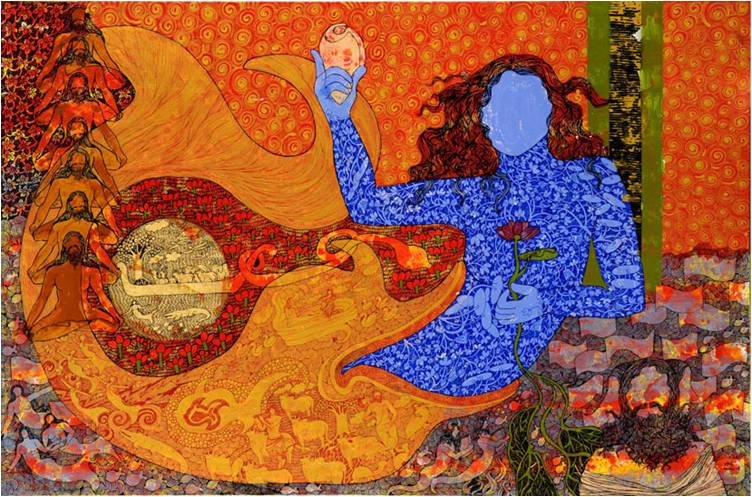
Seema Kohli (b. 1960). “Untitled,” 2007. 46 x 70 inches.Mixed media on canvas. Photo courtesy of Donald and Shelley Rubin.
New York, N.Y. Don Rubin is becoming perhaps my favorite mentor and role model. He is the ultimate in cool. At 76, he and his wife Shelley do what they want — redo Barney’s in Chelsea into a top art museum, the Rubin Museum of Art; support human rights; corner the market in contemporary Cuban art; and now — who knew? — introduce an exceptional, personal collection of modern and contemporary South Asian art at his alma mater, Oglethorpe University in Atlanta.
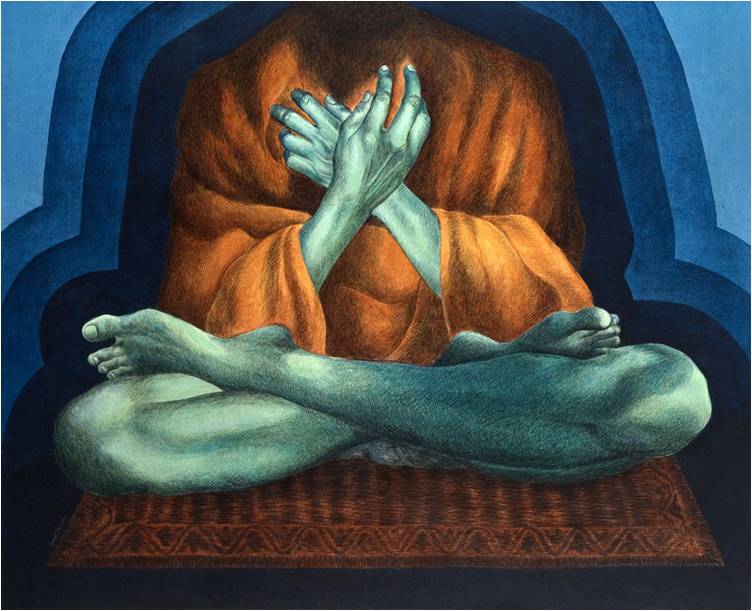
Kamal Mitra (b. 1962). “Meditation,” 2007. 49 x 59 ½ inch.Acrylic on canvas. Photo courtesy of Donald and Shelley Rubin.
I first profiled Don’s work on HuffPost here, when he challenged me several years ago to “get my arms around” Cuban art. I chronicled his private Cuban art collection. As we sometimes meet for lunch in Chelsea, I am always amazed at his grand vision. His work — particularly with Tibetan art — is beyond anything I will ever achieve in my lifetime. Imagine my surprise when I recently discovered the Rubins have also assembled a world-class collection of modern Indian art. Part of their collection just opened at his alma mater in Atlanta, the Oglethorpe University Museum of Art.
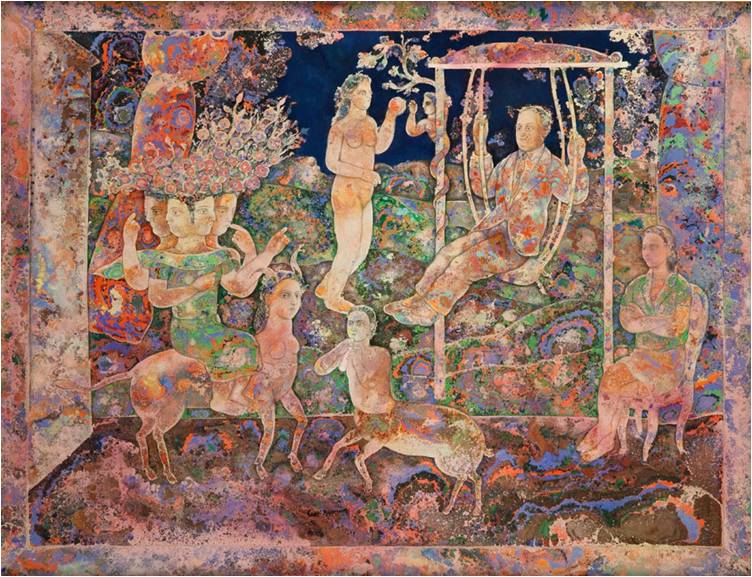
Sakti Burman (b.1935). “Untitled,” c. 2000s. 34 1/4 x 44 1/2 in. Oil on canvas.Photo courtesy of Donald and Shelley Rubin.
The exhibition — Goddess, Lion, Peasant, Priest: Modern and Contemporary Indian Art from the Collection of Shelley and Donald Rubin — is the first public display of this collection of more than 50 works from 28 of India’s most famous artists, including Francis Newton Souza, Sakti Burman, and Seema Kohli. I grasped that this exhibition is both important and extraordinary — and spoke to several friends who know this world better than I who strongly confirmed my gut reaction.
With imagery from all walks of life, from the poorest citizens to dynamic deities, the works of Goddess, Lion, Peasant, Priest focus on India’s incredible people: individual characters gazing back at us, men and women inhabiting spaces urban and rural, kneeling bodies meditating and praying. India’s modern and contemporary art affirms that the modern is truly global.
These works celebrate everyday life in South Asia and its many diasporas, from the most mundane moments to the most transcendent. The 180-page exhibition catalogue is rich in hue and detail. It features fascinating commentary from academic and auction world luminaries such as Edward Wilkinson, Rebecca M. Brown, and Susan S. Bean. The forward was written by Oglethorpe’s president, Lawrence M. Schall.
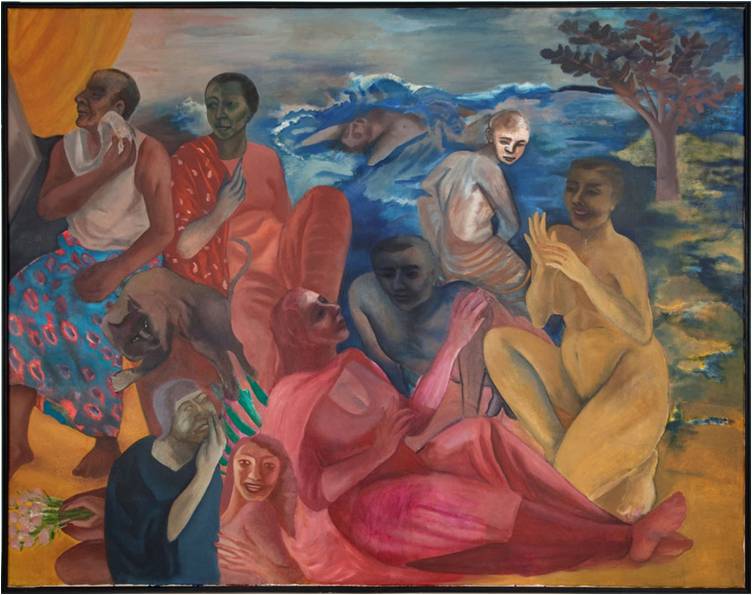
Nalini Malani (b. 1946). “Love, Deception, and Intrigue,” 1985. 68 x 88 inches.Oil on canvas. Photo courtesy of Donald and Shelley Rubin.
Not having the honor of being Indian myself, as India is not far behind China in providing thought leaders and thought leadersfor our common future, I reached out to three Indian-American friends prominent in the global art community, Aroon Shivdasani, Mira Nair, and Sundaram Tagore. I have profiled the work of Aroon and Mira many times before, and realize I have been lazy in not covering Sundaram’s impressive art career. Sundaram and I go back to college together.
Aroon Shivdasani, founder and executive director of the prestigious Indo-American Arts Council and its phenomenal New York City film festival, told me why she thought Don’s private collection is important:
Donald Rubin’s art collection is visionary in his focused, systematic collection of Cuban, traditional Tibetan, and contemporary Indian art. His personal attention to both the art as well as its presentation is his genius.
He has ensured that New Yorkers have access to rare Himalayan art (at the Rubin Museum) that may never have crossed their paths or their understanding prior to this permanent exhibition and the clear curatorial explanations of each work’s background and raison d’être.
New York is richer for this jewel of a museum. I look forward to seeing how he houses his Indian art collection. I love the gestalt of the Rubin museum in its all encompassing embrace of the total culture — in every facet — of Himalayan art, and hope his Indian works will one day find a similar home here in New York City.
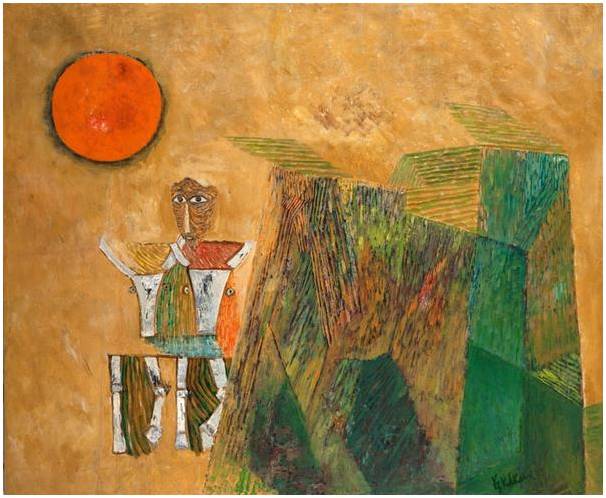
Krishna Shamrao Kulkarni (1916-1994). “Untitled,” c. 1970’s.Acrylic on canvas. 46 x 56 in. Photo courtesy of Donald and Shelley Rubin.
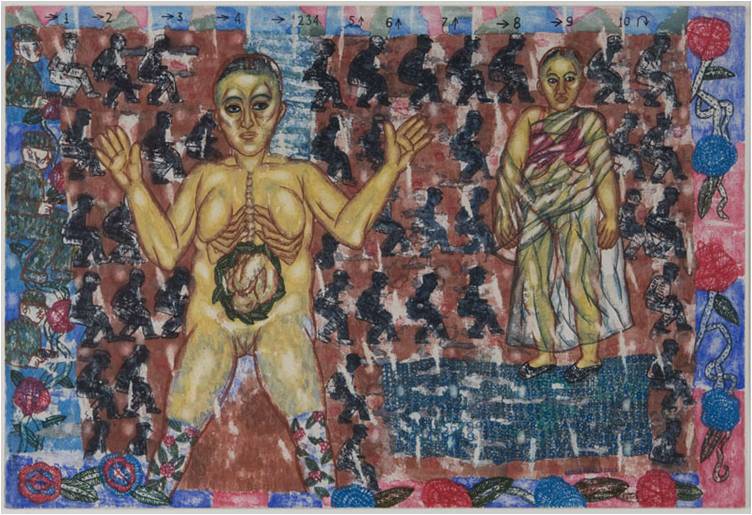
Arpita Singh (b. 1937). “Security Check,” 2003. 22 x 32 inches.Watercolor on board. Photo courtesy of Donald and Shelley Rubin.
Don Rubin is not only a pioneer in making the world a more just society, but he is an extraordinary visionary whose life work makes the world more beautiful and connected. Don and Shelley’s private collection of contemporary Indian art — Goddess, Lion, Peasant, Priest — offers us an incredible view into contemporary South Asian art and must be seen in person or though the wonderful 180-page catalogue.
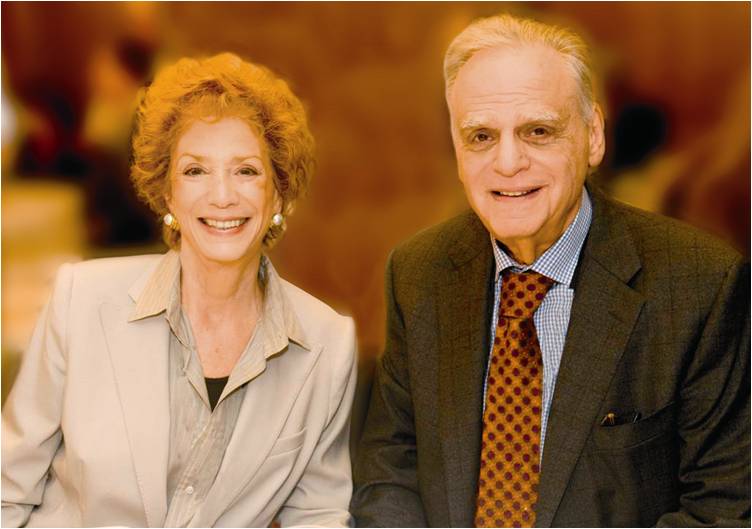
Shelley and Donald Rubin. Photo courtesy of Melanie Einzig.
Oglethorpe University Museum of Art Presents
Goddess, Lion, Peasant, Priest: Modern and Contemporary Indian Art
from the Collection of Shelley and Donald Rubin
Tuesday, March 15 through Sunday, May 15
See Jim Luce on:
Art | India and Indian-American Culture | Film | Literature | Photography
Goddess, Lion, Peasant, Priest: Modern and Contemporary Indian Art — in Atlanta (Originally published in Huffington Post, April 4, 2011)

[draft]
New York, N.Y. — xxx
Explaining President Nixon’s “Enemies List” to Young Global Leaders (Aug. 13, 2010)
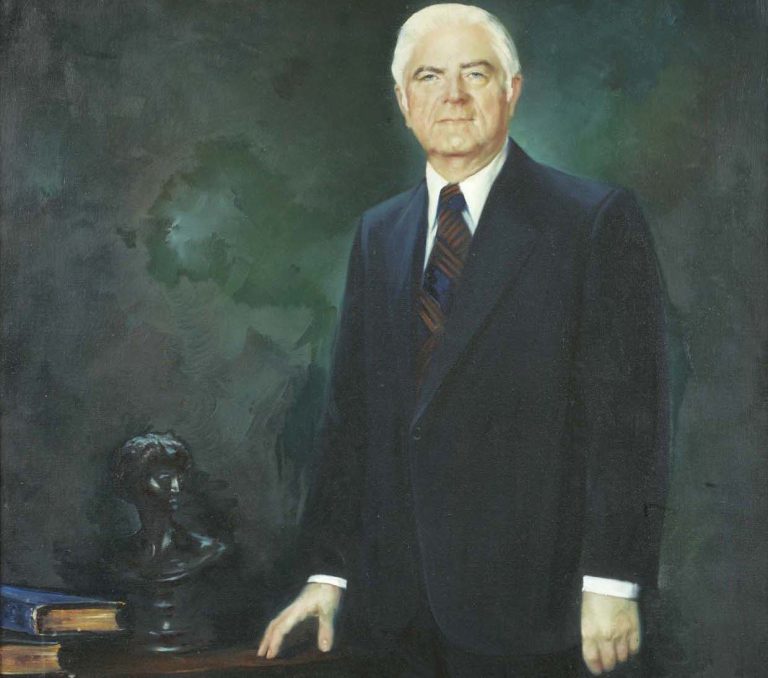
New York, N.Y. — Abraham “Abe” Beame, born Abraham Birnbaum in London to Polish Jewish parents, immigrated to the United States as a child, eventually attending Baruch College, part of the City University of New York (CUNY).

As the 104th Mayor of New York City, Beame’s tenure from 1974 to 1977 was marked by one of the most challenging periods in the city’s history—the financial crisis that threatened to bankrupt New York.
Despite these challenges, Beame’s commitment to his city and his background as an immigrant who rose through the ranks embodies the spirit of global citizenship.
Beame’s journey from the Lower East Side, where he grew up, to City Hall was one of perseverance and dedication. He was a skilled accountant who understood the intricacies of the city’s finances better than most.
His education at Baruch College equipped him with the tools needed to navigate the complex financial landscape of New York City.
Though he faced immense criticism during his mayoralty, especially regarding the city’s fiscal troubles, Beame worked tirelessly to stave off bankruptcy, negotiating with federal and state officials to secure aid and implement austerity measures.
His actions, though controversial, were driven by a deep sense of responsibility to the millions of New Yorkers who relied on the city’s services.
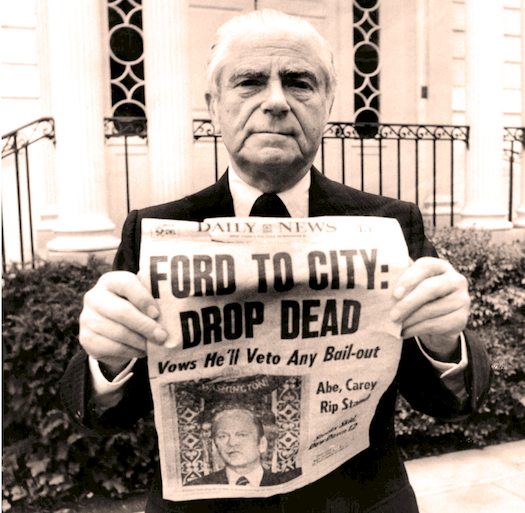
He exemplified global citizenship by showing that even in the direst of circumstances, leadership requires a focus on the collective good. His experience as an immigrant who became the first Jewish mayor of New York City also highlights the importance of diversity in leadership roles.
Beame’s story is a reminder that leaders are often forged in the crucible of crisis and that their legacies are shaped not just by the decisions they make, but by the values they uphold.
Abe Beame – Immigrant Mayor who Led New York City thru Crisis (Aug. 113, 2011)

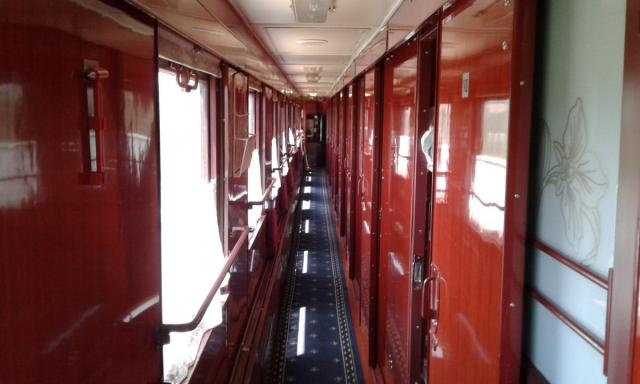
New York, N.Y. I once traveled the Trans-Siberian Railroad from Vladivostok on the Pacific Coast to Irkutsk and Lake Baikal, and then by Aeroflot on to Moscow. This was before the Iron Curtain fell. But the memories I made in that hot, sealed train without a bathing facility as we crept along the Chinese border, shades drawn as required, remain with me longer than the ring worm I developed there.

Siberia, a vast expanse in Russia, is a region of breathtaking natural beauty, rich history, and remarkable resilience. Spanning over five million square miles, Siberia encompasses everything from dense taiga forests to expansive tundras, majestic mountain ranges to tranquil lakes.
This land, often misunderstood and underappreciated, offers an incredible tapestry of cultures, traditions, and natural wonders that have shaped its unique identity and contributed significantly to the global community.
Siberia’s history is a testament to the resilience and unyielding spirit of its people. Throughout centuries, Siberians have faced extreme climates, political upheavals, and economic challenges. Yet, they have thrived, developing a deep connection to their land and an enduring sense of community.
The indigenous peoples of Siberia, such as the Yakuts, Evenks, and Chukchi, have lived in harmony with nature for thousands of years. Their traditional knowledge and practices offer invaluable insights into sustainable living and environmental stewardship. The Siberian landscape, with its harsh winters and short summers, has taught its inhabitants to adapt and innovate, fostering a culture of resourcefulness and ingenuity.

Siberia is a melting pot of cultures and ethnicities. The diverse population includes Russians, Tatars, Mongolians, and many other groups, each contributing to the rich cultural mosaic. This diversity is reflected in the region’s languages, customs, and artistic expressions.
We are particularly fascinated by the region’s music and dance, which often incorporate elements of shamanism and folklore. Traditional Siberian music, with its unique instruments and haunting melodies, tells stories of the land and its people, preserving the heritage and history of generations. Festivals and celebrations throughout Siberia are vibrant displays of cultural pride and unity, bringing communities together in joyous revelry.
Siberia’s natural beauty is awe-inspiring. The region is home to some of the world’s most remarkable landscapes, including Lake Baikal, the deepest and oldest freshwater lake on Earth. Known as the “Pearl of Siberia,” Lake Baikal is a UNESCO World Heritage Site, renowned for its crystal-clear waters and unique biodiversity. We are particularly drawn to the lake’s endemic species, such as the Baikal seal, which are found nowhere else in the world.
The Altai Mountains, with their rugged peaks and serene valleys, offer another stunning natural spectacle. These mountains are not only a haven for wildlife but also a sacred place for the indigenous peoples, who believe that the spirits of their ancestors dwell in the highlands. Hiking through the Altai Mountains, one can feel the profound connection between the land and its inhabitants.
Siberia’s natural resources have been a significant driver of Russia’s economy. The region is rich in minerals, oil, and gas, making it a critical player in the global energy market. Despite the challenges associated with resource extraction, Siberia continues to contribute to the world’s energy supply, showcasing its economic importance.
Moreover, Siberia is a hub for scientific research and exploration. The region’s unique climate and geography make it an ideal location for studying permafrost, climate change, and biodiversity. Siberian scientists and researchers are at the forefront of global efforts to understand and mitigate environmental challenges, contributing valuable knowledge and expertise to the international community.
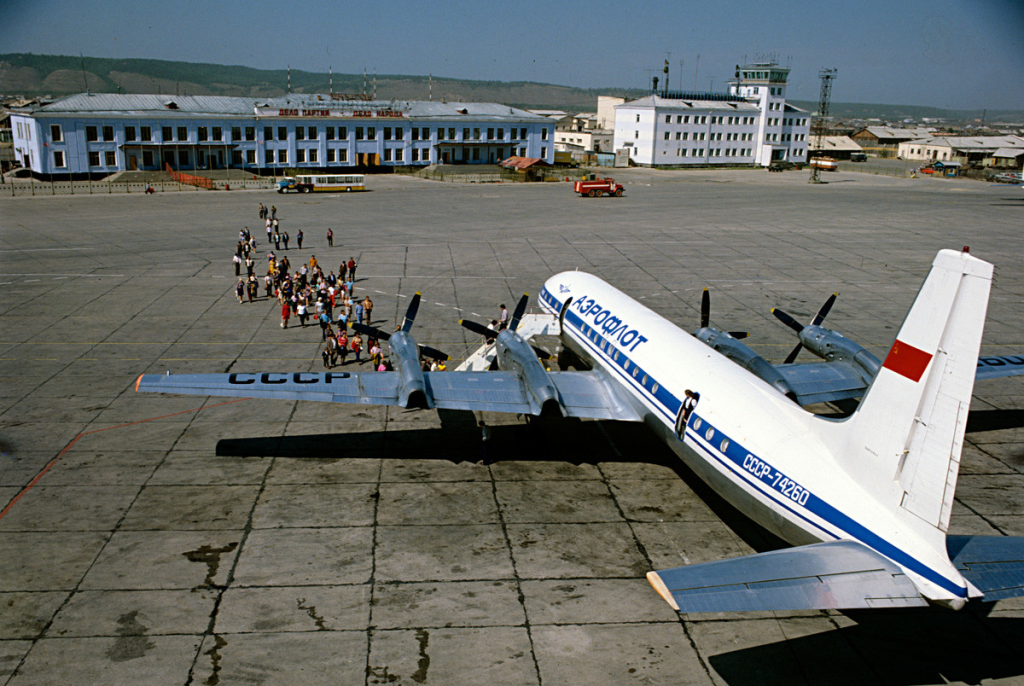
As we celebrate the beauty and resilience of Siberia, we must also recognize our shared responsibility in preserving this incredible region. The environmental challenges facing Siberia, such as deforestation, pollution, and climate change, threaten its delicate ecosystems and the livelihoods of its people. It is imperative that we work together to promote sustainable practices, protect natural habitats, and support the cultural heritage of Siberia’s diverse communities.
In recognizing Siberia’s contributions to the world, we are reminded of the interconnectedness of our global community. By honoring and safeguarding the rich heritage and natural beauty of Siberia, we not only celebrate a remarkable region but also contribute to a more sustainable and harmonious world.
TAGS: Jim Luce, New York, Siberia, Resilience, Cultural Heritage, Natural Beauty, Indigenous Peoples, Sustainability, Global Community
Crossing Siberia by Train and Plane: From the Pacific to Moscow (July 9, 2010)
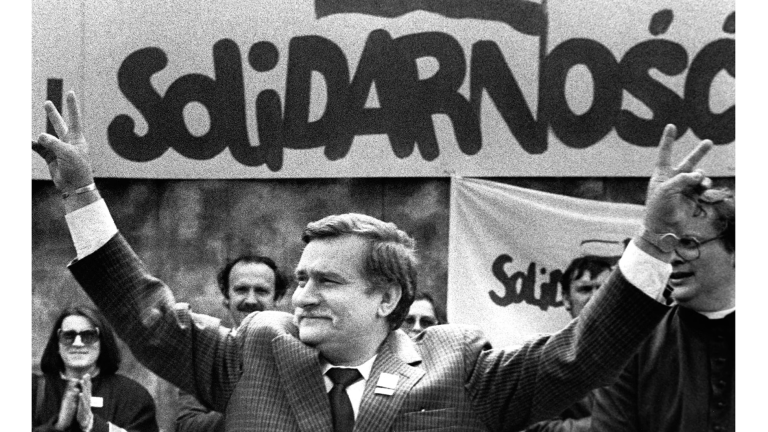
New York, N.Y. We have been inspired by many leaders, but few have left as profound an impact on the world as Lech Wałęsa. Born 1943 in Popowo, Poland, Walesa emerged from humble beginnings to become a beacon of hope and a symbol of the struggle for freedom and justice. As a thought leader and global citizen, Wałęsa’s legacy transcends borders, inspiring millions with his unwavering commitment to democracy and human rights.
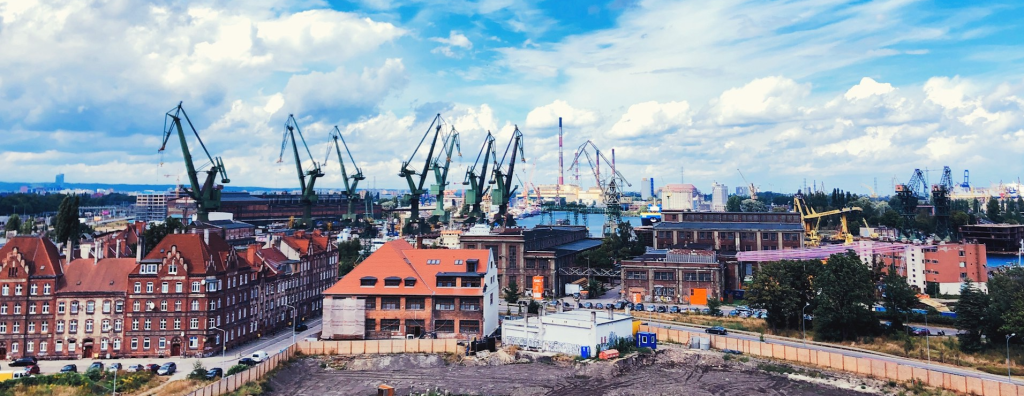
Wałęsa’s journey began in the shipyards of Gdansk, where he worked as an electrician. It was here that he witnessed firsthand the harsh realities of life under a repressive regime. The conditions in the shipyards were dire, and the workers were subjected to inhumane treatment and gross exploitation. This fueled Wałęsa’s determination to fight for the rights of his fellow workers and, by extension, the broader Polish society.
In 1980, Wałęsa co-founded Solidarity (Solidarność), the first independent labor union in a Soviet-bloc country. Solidarity quickly grew into a massive social movement, representing a wide array of societal interests and becoming a powerful voice against the oppressive communist regime. Under Walesa’s leadership, Solidarity championed nonviolent resistance and sought to bring about change through negotiation and peaceful protest.
Yet, his resilience and steadfast commitment to his cause never wavered. Walesa’s courage was a testament to the power of the human spirit and the enduring quest for freedom. His efforts culminated in the historic Round Table Talks in 1989, which led to the peaceful transition of power in Poland and the eventual collapse of communism in Central and Eastern Europe.
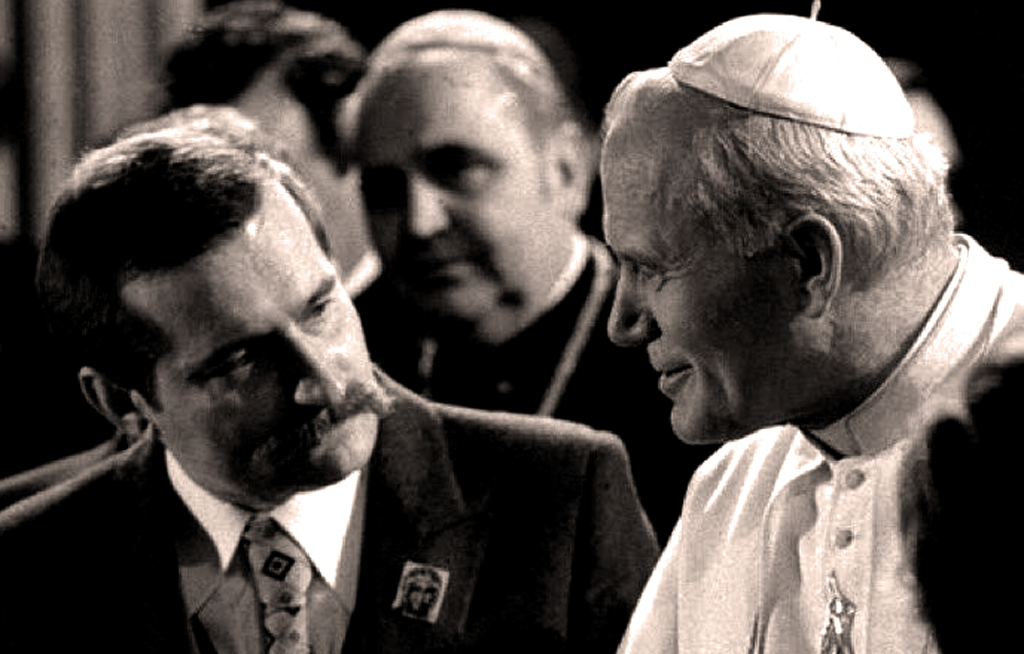
Lech Walesa’s impact extends far beyond Poland’s borders. His story is a powerful reminder that individuals, no matter their background, can effect significant change in the world. As a global citizen, Walesa has consistently advocated for democracy, human rights, and social justice. His work has earned him numerous accolades, including the Nobel Peace Prize in 1983, recognizing his efforts to promote peaceful and democratic solutions to political conflicts.
Walesa’s influence on the global stage is evident in his numerous speaking engagements and participation in international forums. He has shared his experiences and insights with leaders and activists worldwide, emphasizing the importance of solidarity, dialogue, and perseverance in the face of adversity. His words resonate deeply in today’s world, where the fight for democracy and human rights remains as crucial as ever.
His leadership style, characterized by humility, empathy, and a deep sense of justice, serves as a model for those who seek to create positive change. Walesa’s ability to unite diverse groups under a common cause is particularly noteworthy. He understood that true leadership is about building bridges, fostering inclusivity, and empowering others to take action.
In reflecting on Lech Walesa’s life and achievements, we are reminded of the power of collective action and the importance of standing up for what is right. Walesa’s legacy is a call to action for all of us to engage actively in our communities, to advocate for those who are marginalized, and to work tirelessly for a more just and equitable world.
Lech Walesa’s journey from an electrician in Gdansk to a global symbol of freedom and democracy is a powerful narrative of hope and resilience. His life’s work underscores the fundamental belief that ordinary people can achieve extraordinary things when they come together in the spirit of solidarity and mutual support.
As we continue to navigate the complexities of our modern world, let us keep Lech Walesa’s legacy alive by championing the values he stood for. Let us remain vigilant in our pursuit of justice, steadfast in our commitment to democracy, and unwavering in our belief in the power of unity and collective action.
Lech Walesa: Champion of Solidarity and Global Democracy (July 9, 2010)
TAGS: Lech Walesa, Solidarity, human rights, democracy, global citizen, thought leader, Nobel Peace Prize, Gdansk, Poland, nonviolent resistance, social justice
ABOUT Addiction Advice Africa Africa – South Africa – West Americas & Caribbean Analysis Animals & Animal Rights Anthropology Architecture Asia – East Asia-Pacific Asia – South Asia – Southeast Authoritarianism Available Content Calendar Canada Celebrity Children Childrens' Literature China (PRC) Cities & Urban Development Corporations Cuisine & Culinary Arts CULTURE Dance Disaster & Development Economics Education Europe Events Extremism Eyewitness Faith, Religion & Theology Family & Relationships Fashion Film & TV Global Warming Goodness Gun Control Health & Hygiene Heros of Democracy History Human Rights Humor Immigration & Migration In Depth International Relations Jim Luce Writes Law & Judicial System Leadership Liberation Movements Media Mental Health Mideast Monthly Feature Museums & Galleries Music Nature News Obituary Older Adults Open Orphans International Outer Space Pacific Islands Peace & Conflict Resolution Philanthropy Philosophy Philosophy Photography Poetry & Fiction Politics Pop Culture Poverty Press Pulse Profiles Racisim & Black Lives Matter Review Royalty Science & Technology Service Organizations Sexuality & Gender Social Media Sports & Olympics The Arts Theater & Comedy Travel U.N. U.S. Video Viewpoint War, Conflict & Terrorism Women WORLD World War II World War III Youth
Photo: xxx Credit: xxx
New York, N.Y. xxx
[draft]
Title (July 3, 2018)
ABOUT Addiction Advice Africa Africa – South Africa – West Americas & Caribbean Analysis Animals & Animal Rights Anthropology Architecture Asia – East Asia-Pacific Asia – South Asia – Southeast Authoritarianism Available Content Calendar Celebrity Children Childrens' Literature China (PRC) Cities & Urban Development Corporations Cuisine & Culinary Arts CULTURE Dance Disaster & Development Economics Education Europe Events Extremism Eyewitness Faith, Religion & Theology Family & Relationships Fashion Film & TV Global Warming Goodness Gun Control Health & Hygiene Heros of Democracy History Human Rights Humor Immigration & Migration In Depth International Relations Jim Luce Writes Law & Judicial System Leadership Liberation Movements Media Mental Health Mideast Monthly Feature Museums & Galleries Music Nature News Obituary Older Adults Open Orphans International Outer Space Pacific Islands Peace & Conflict Resolution Philanthropy Philosophy Philosophy Photography Poetry & Fiction Politics Pop Culture Poverty Press Pulse Profiles Racisim & Black Lives Matter Review Royalty Science & Technology Service Organizations Sexuality & Gender Social Media Sports & Olympics The Arts Theater & Comedy Travel U.N. U.S. Video Viewpoint War, Conflict & Terrorism Women WORLD World War II World War III Youth
[draft]

Photo: “We Shall Overcome (Freedom Summer Bus),” 1964
[draft]
My mother, Frances Alleman-Luce, helped with the training program at Miami University on Ohio during Freedom Summer when young people form New York were bused through on their way to integrated lunch counters in Mississippi.
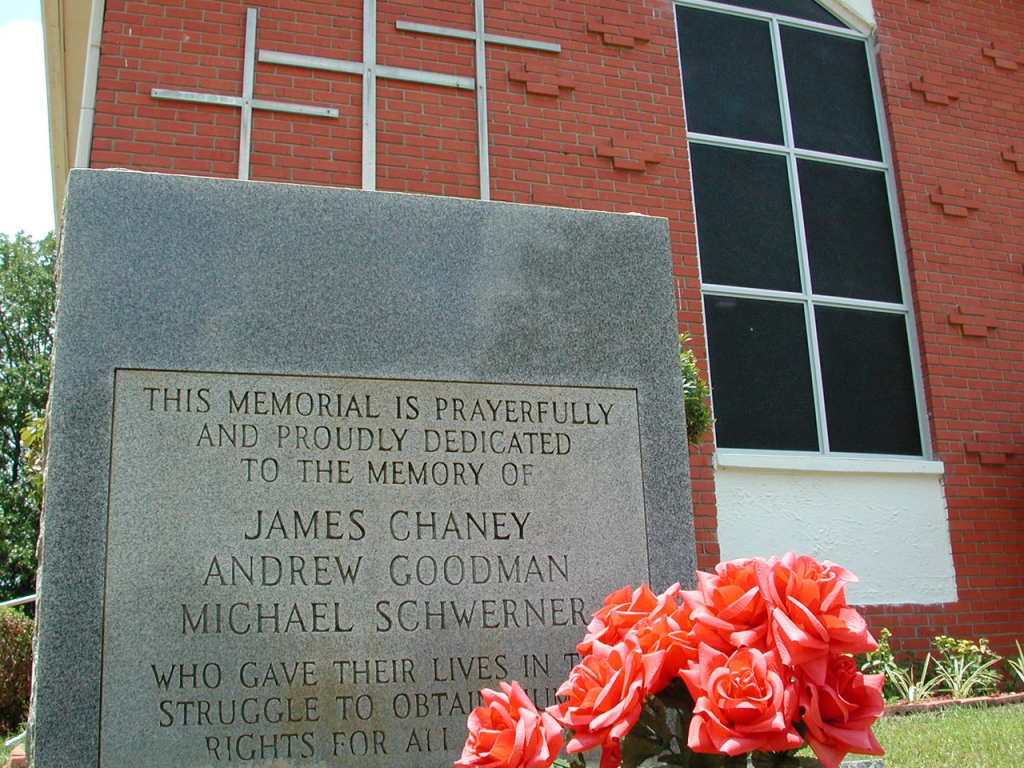

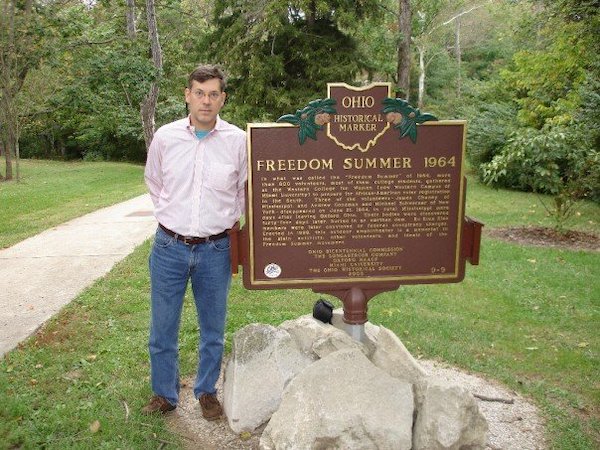
Freedom Summer 1964 (June 23, 2010)

Photo: Author posing with his father Dr. Stanford Luce in front of tan historic early Midwestern log cabin belonging to Miami University in Oxford Ohio restored by my parents in memory of my brother Rick who passed away in 2001 at 49 from cancer.
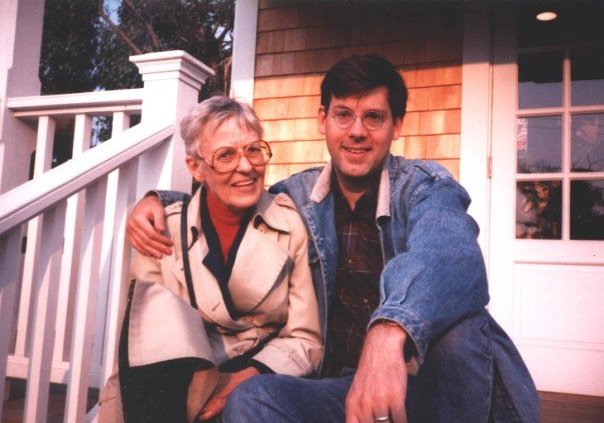
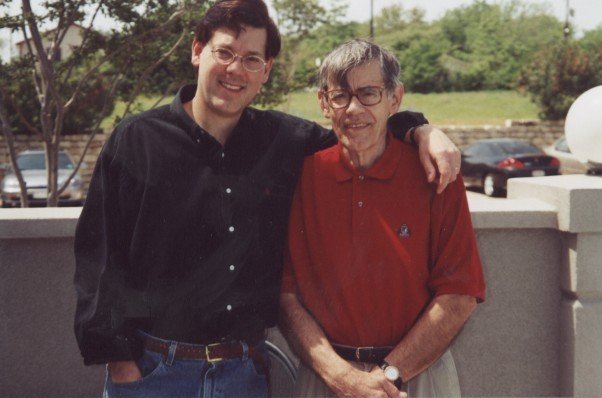
The author with his father in Oxford Ohio in the early 2000’s.
[draft]
xxx
x
x
x

[draft]
On July 28, 1917, the NAACP organized a silent march of 10,000 women, men, and children down New York’s Fifth Ave. to protest the recent massacre of African Americans in East St. Louis, Ill., as well as the recent lynchings in Waco, Tex., and Memphis, Tenn. Photo from The Brownies’ Book at the NYPL.
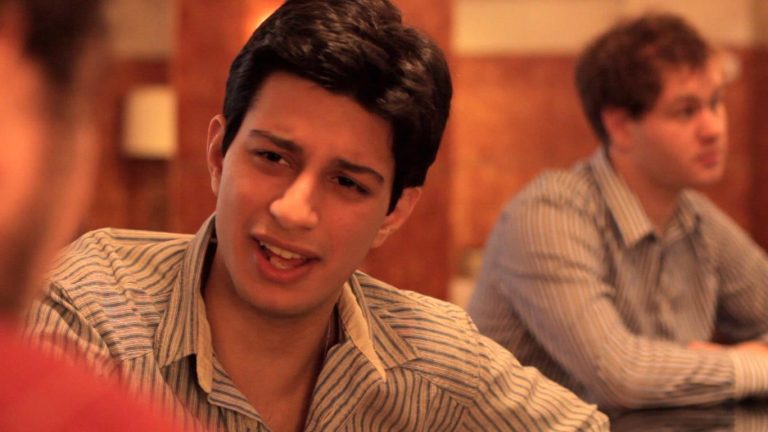
Photo: Indian-Bahrain actor Zoran Saher in 2008.
New York, N.Y. x
[draft]
Three films remain fresh in my memory: Ghalib Shiraz Dhalla’s Embrace about the 2008 terrorist massacre in Mumbai, Strangers with young director Kabir Chopra, young actor Zoran Saher, and Reprise, a “relationship” film featuring two women and a college-bound daughter.
Young Global Leader from Mumbai, New York and Abu Dhabi: Zoran Saher (June 22, 2010)
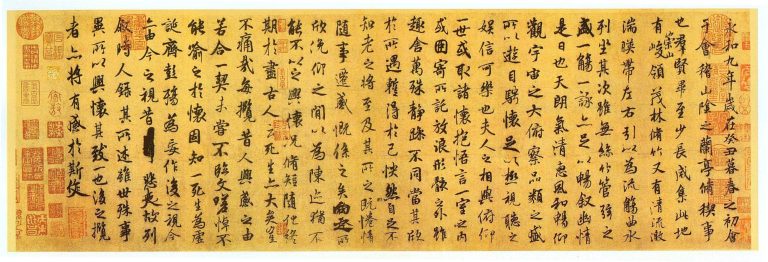
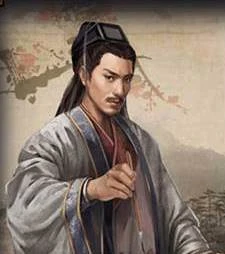
Wang Xizhi (c. 303 – 361) was a renowned Chinese calligrapher from the Eastern Jin Dynasty, revered as the “Saint of Calligraphy” by later generations. Born in Linyi, Shandong Province, he spent most of his life in present-day Shaoxing, Zhejiang.
Wang learned calligraphy from the master Wei Shuo and excelled in various scripts, particularly the semi-cursive style. His most celebrated work is the “Preface to the Poems Composed at the Orchid Pavilion” (Lantingji xu), composed in 353 at the Orchid Pavilion Gathering.
Though the original is lost, numerous fine tracing copies exist, with the earliest dating back to the 7th century.
Wang was renowned for his proficiency in multiple script styles, including regular, semi-cursive, and cursive forms.
Other famous works attributed to him include the “Letter of Distress and Indignation” (Sangluan tie) and “Letter to Kong” (Kong shizhong tie), of which tracing copies were preserved in Japan’s Shōsōin treasure house.
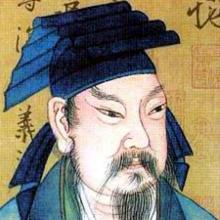
Wang’s unique calligraphic style greatly influenced later generations of calligraphers.
Emperor Taizong of the Tang Dynasty admired Wang’s works and included 1,000 characters written by him in a calligraphy guide for students.
Wang’s calligraphy was also highly valued by collectors, with a small Tang reproduction of his work selling for $48 million at a 2010 auction in China.
Wang had seven children, all notable calligraphers, with his youngest son, Wang Xianzhi, being the most distinguished.
Wang Xizhi is particularly remembered for his hobby of rearing geese, as legend has it that he learned the key to turning his wrist while writing by observing their neck movements. It is said that he practiced calligraphy so diligently by a pond that the water turned black from his inky brushes.
“Sage of Calligraphy” from Shandong Province (June 20, 2010)

Jim Luce กับเด็กกำพร้าจากเหตุการณ์สึนามิปี 2004
เครดิต: Orphans International
โดย Jim Luce
12 พฤศจิกายน 2007
ในสหรัฐอเมริกามีผู้ใจบุญมั่งคั่งหลายคนที่คิดว่าพวกเขาสามารถใช้ประสบการณ์และความคิดสร้างสรรค์เพื่อพัฒนาชีวิตของผู้คนในประเทศกำลังพัฒนาได้ ตอนนี้ฉันรู้แล้วว่าหลังจากเจ็ดปีของการก่อตั้งองค์กรการกุศลระดับโลกของฉันเอง มันเป็นไปได้แต่ก็มักจะมีปัญหา คุณต้องมีความหลงใหล พลังงาน และความเฉลียวฉลาดมาก แต่คนที่ช่วยคุณในต่างประเทศก็ต้องมีเช่นกัน
ฉันเคยทำงานใน Wall Street หลายปีที่แล้ว ได้พบกับผู้คนหลากหลายเชื้อชาติและบุคลิกภาพที่ต่างแสวงหาเงินอย่างมีความสุข ฉันตระหนักว่าด้วยจุดประสงค์ร่วมกัน ความแตกต่างทั้งหมดสามารถเอาชนะได้
ในเวลานั้นฉันใช้เวลาช่วงสุดสัปดาห์ช่วยเหลือสุนัขและแมวที่ถูกทอดทิ้งจากท้องถนนในนิวยอร์ก แต่ฉันสนใจที่จะทำอะไรบางอย่างเพื่อช่วยโลก เมื่อเพื่อนชาวอินโดนีเซียขอให้ฉันเดินทางไปกับเขายังบ้านเกิดของเขาที่เกาะซูลาเวซี ฉันกระโจนเข้าหาโอกาสนั้นทันที ชีวิตของฉันกำลังจะเปลี่ยนแปลงอย่างมาก
บังเอิญเราได้ขับรถผ่านสถานเลี้ยงเด็กกำพร้า และฉันรู้สึกอยากเข้าไปเยี่ยมชม ฉันรู้สึกทึ่งกับมัน ในช่วงหลายปีที่ผ่านมา สถานเลี้ยงเด็กกำพร้าในสหรัฐฯ ได้ถูกยกเลิกไปและถูกแทนที่ด้วยระบบอุปการะเด็ก เมื่อก้าวเข้าสู่สถานที่ที่มีแสงสลัวนั้น ฉันรู้สึกท่วมท้นกับสภาพที่ยากจนอย่างสุดขั้ว มีความรักใคร่มากมาย แต่ตัวสถานที่เองนั้นทรุดโทรม ถ้าเด็กเหล่านี้มีเงินเพิ่มสำหรับอาหารและที่พัก—ประมาณ 600 ดอลลาร์ต่อปี—พวกเขาจะเติบโตได้ดี ฉันสามารถทำอะไรได้บ้างเพื่อให้เกิดสิ่งนี้ขึ้น?
เด็กทารกคนหนึ่งโดดเด่นกว่าคนอื่น ๆ และดวงตาของเขาที่ขอร้องแต่มีความตั้งใจเหมือนจะเรียกร้องให้ฉันพาเขากลับบ้านด้วย ชื่อของเขาคือ Mathew เขาอายุ 10 เดือน
ความเชื่อมโยงระหว่างเรานั้นทันที และหลังจากพูดคุยกับคู่หมั้นของฉัน ฉันตกลงที่จะรับเขาเป็นบุตรบุญธรรม เจ้าหน้าที่ขอให้เสื้อกล้ามที่เต็มไปด้วยรูของเขาอยู่กับเด็กคนต่อไป
ภายในหนึ่งปี Mathew ได้ผ่านขั้นตอนราชการของอินโดนีเซียและอเมริกา และอยู่ในอ้อมแขนของฉันที่สนามบิน Kennedy
ก่อนที่ Matt จะมาถึง ฉันได้พูดคุยเกี่ยวกับสิ่งที่ฉันได้เห็นกับนักจิตวิทยาเด็กที่มีความเฉลียวฉลาดในบอสตัน, Frances Dudley Alleman-Luce, แม่และเพื่อนของฉัน. ฉันไม่สามารถหยุดคิดถึงทารกคนอื่น ๆ ที่สถานเลี้ยงเด็กกำพร้าที่มีสภาพแย่กว่าโรงเลี้ยงสัตว์ในนิวยอร์กได้ พวกเขาทั้งหมดไม่สามารถถูกอุปการะได้ แต่พวกเขาสามารถได้รับความช่วยเหลือได้ แม่ของฉันและฉันได้พูดคุยกันเกี่ยวกับวิธีการที่เราสามารถทำได้
แล้วก็มาถึงจุดไคลแมกซ์: “แม่ เดาว่าอะไร?” ฉันพูด “ฉันรับอุปการะเด็กชายตัวเล็กคนนั้น—ตอนนี้คุณเป็นคุณย่าของเขาแล้ว!” มันใช้เวลาเพียงไม่กี่วินาทีให้แม่รู้ว่าจากทฤษฎีมันได้กลายเป็นเรื่องส่วนตัวอย่างลึกซึ้ง—และหน้าประวัติศาสตร์ใหม่ในครอบครัวของเราได้เปิดขึ้นแล้ว ผู้หญิงที่เป็นผู้นำครอบครัวของเรา ด้วยรากฐานลึกในพิวริตันและแองกลิกันในนิวอิงแลนด์ ได้มีหลานชายชาวจีน-อินโดนีเซีย
เมื่อ Matt มาถึง แม่กอดเขาทันทีเหมือนลูกของตัวเองและพาเขาทัวร์ Harvard Yard เหมือนที่พาเรามาตอนเด็ก ชี้ให้เห็นรากฐานของครอบครัวเรา วันนี้เขาเป็นวัยรุ่นธรรมดาในนิวยอร์กซิตี้
วิธีการแก้ปัญหาที่ฉันพบในเกาะซูลาเวซีต้องมีอยู่ แม่ของฉันได้ศึกษาความมุ่งมั่นที่จะให้ความรักและความเอาใจใส่แก่ผู้ยากไร้ และท้าทายให้ฉันคิดแนวคิดในการปรับปรุงชีวิตของเด็กกำพร้า
จึงเกิดไอเดียระบบอุปการะเด็กกำพร้าทดแทนในประเทศกำลังพัฒนา แนวคิดของฉันคือบ้านเล็ก ๆ ที่มีเด็กเพียงสี่คนและพ่อแม่บ้านในแต่ละที่ ฉันมุ่งหมายที่จะเลี้ยงดูเด็กกำพร้าตั้งแต่ทารกจนถึงวัยผู้ใหญ่เหมือนที่ฉันจะเลี้ยงลูกของตัวเอง แนวคิดง่าย ๆ นี้ถูกบันทึกเป็น “กฎของ Mathew” เด็ก Mathew สามารถเติบโตที่นี่ได้ไหม? นี่คือเกณฑ์ที่เข้มงวดและหลักของเรา
แม่ของฉันเสียชีวิตในปี 2001 และในพินัยกรรมของเธอได้กำหนดเงินเพื่อให้ฉันเริ่ม Orphans International ด้วยมรดกของฉัน—จากผู้ร่วมก่อตั้ง Harvard (Thomas Dudley) ถึงผู้ก่อตั้ง Naval War College (Stephen Bleecker Luce)—บางทีเธออาจเชื่อว่าการสร้างสถาบันอยู่ในยีนของฉัน
เราได้จดทะเบียน Orphans International ในอินโดนีเซียในปีนั้น และเปิดบ้านแรกในซูลาเวซี ในปี 2002 เราได้จดทะเบียนในนิวยอร์กและเริ่มระดมทุนที่นี่ เราเริ่มงานในเฮติในปี 2003 และในที่สุดก็เปิดบ้านในโกนาว
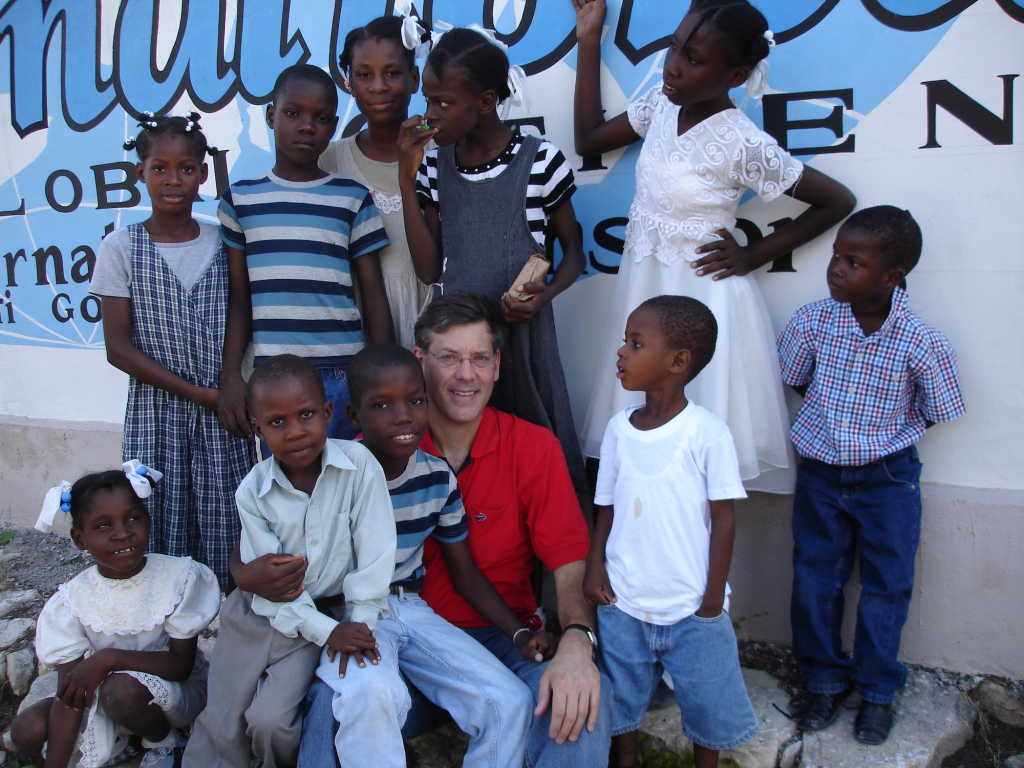
จากนั้น สึนามิได้กวาดผ่านมหาสมุทรอินเดียจากอินโดนีเซียถึงศรีลังกา การบริจาคหลั่งไหลเข้ามาจากชุมชน Roosevelt Island ของฉันเองและจากครอบครัวที่มีชื่อเสียงทั่วโลกที่ได้ยินเกี่ยวกับเราผ่านคำพูดปากต่อปาก เราได้วางพนักงานลงพื้น—ในโคลนจริง ๆ—ในไม่กี่วันในอาเจะห์ อินโดนีเซีย และได้ตั้งบ้านอย่างรวดเร็วและรับเด็กกำพร้าจากสึนามิด้วยความรักและความเอาใจใส่ ฉันนึกถึงแม่ของฉัน
เมื่อคลื่นกวาดศรีลังกา คู่สามีภรรยาหนุ่มศรีลังกา-อเมริกันถูกจับอยู่ในความมรณะบนชายหาดใกล้กอล สามีถูกกวาดไป ภรรยาชาวอเมริกันของเขารอด ในความทรงจำของเขา พ่อของเธอได้ให้คำมั่นว่าจะสร้างหมู่บ้านเด็กกำพร้าในศรีลังกา
เราสร้างองค์กรไม่แสวงหาผลกำไรที่เกี่ยวข้องกับสหประชาชาติ โครงสร้างของเราคือ Orphans International Worldwide โดยมีสำนักงานบริหารในลิมา เปรู และโปรแกรมฝึกงานอาสาสมัครในนิวยอร์ก โครงสร้างนี้ทำให้เรารักษาค่าโสหุ้ยต่ำ; การตรวจสอบล่าสุดของเราพบว่ามีการใช้จ่ายในการบริหารไม่ถึง 8 เปอร์เซ็นต์
เพื่อสนับสนุนความพยายามเหล่านี้ เราได้สร้างวง Founder’s Circle, President’s Circle และ Advisory Board—แต่ละกลุ่มมีข้อผูกพันทางการเงินเฉพาะ ตั้งแต่เราเกี่ยวข้องกับสหประชาชาติ Department of Public Information, กฎของ Matt ได้ถูกพัฒนาและกลายเป็นมาตรฐานสำหรับสถานเลี้ยงเด็กกำพร้าในประเทศกำลังพัฒนา
หลังจากสึนามิ ฉันลาออกจากงาน Wall Street เพื่อทุ่มเทให้กับการเพิ่มการเงิน สร้างโปรแกรม และรับรองการปฏิบัติตามมาตรฐานทั่วโลกของเรา ความก้าวหน้าอย่างมหาศาลได้รับจากผู้เชี่ยวชาญท้องถิ่นที่ซื่อสัตย์ สน
รียงความ: เด็กกำพร้าคนแรก แล้วอีกหลายคน (June 10, 2010); First One Orphan, Then Many More (New York Times, Nov. 12, 2007)
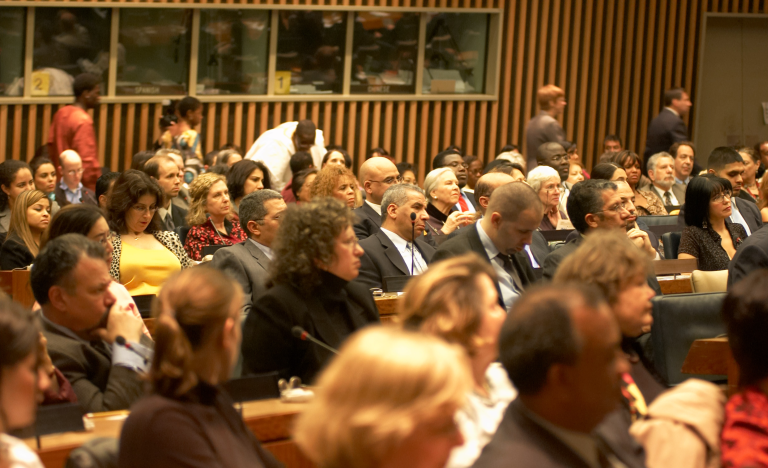
November 2006
[draft]
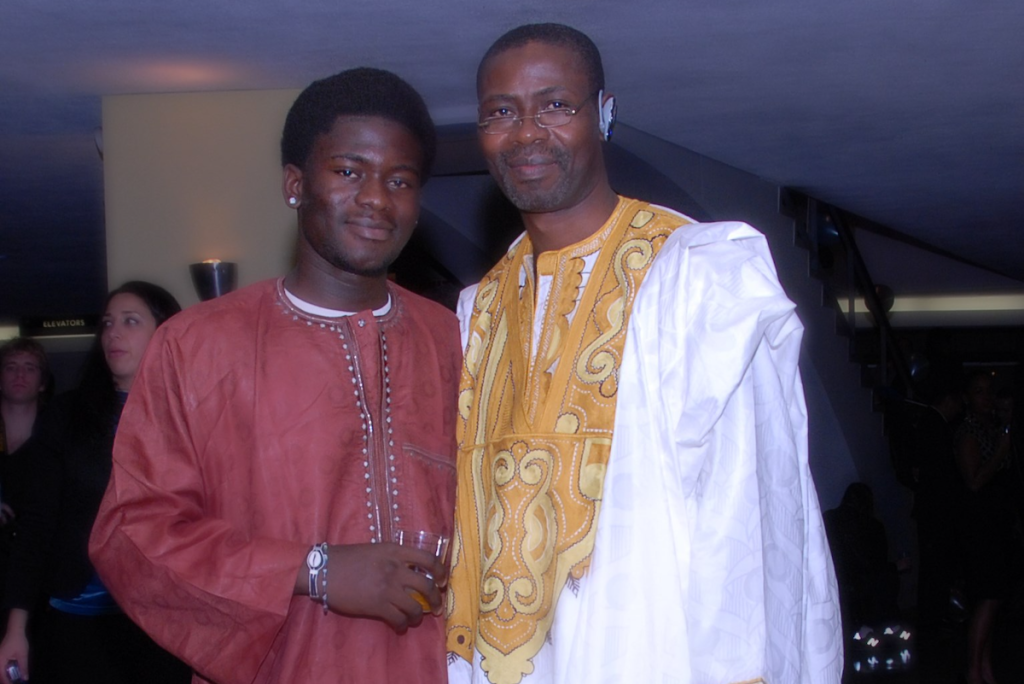
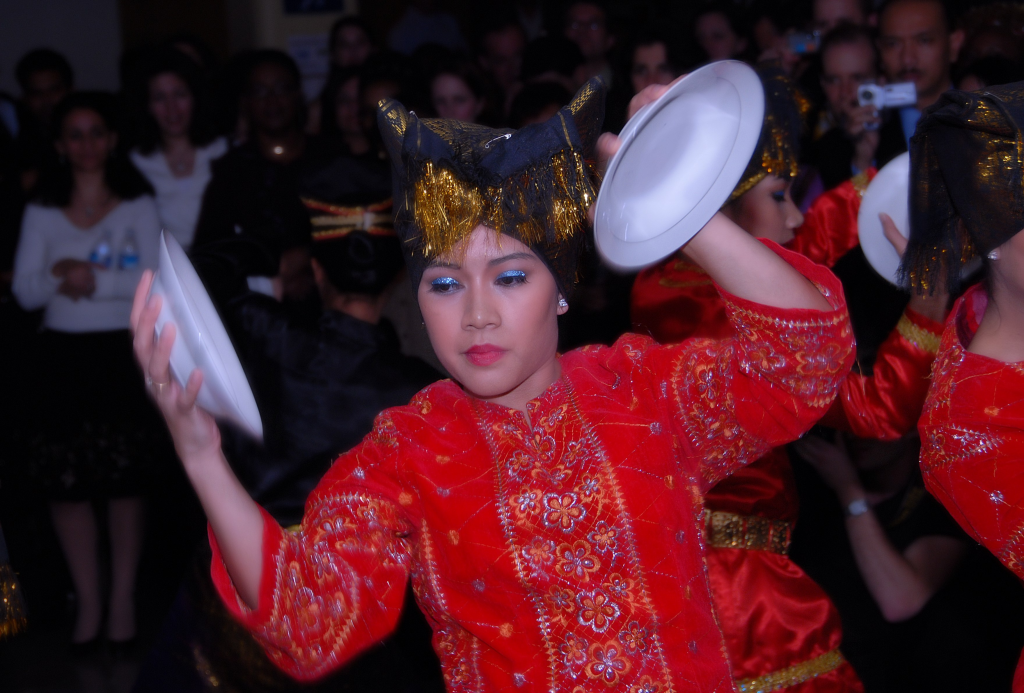
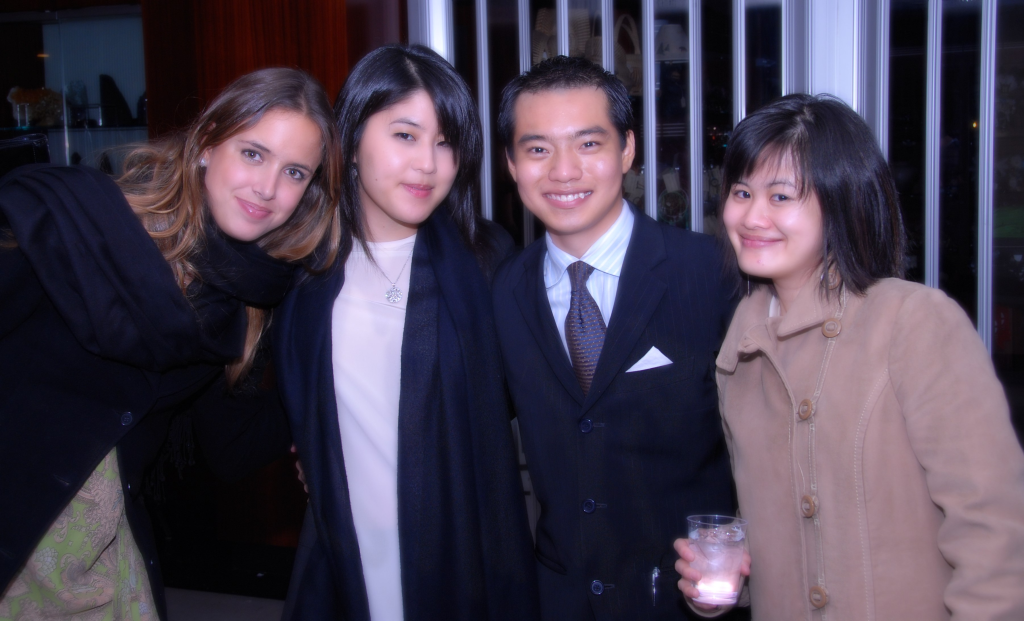
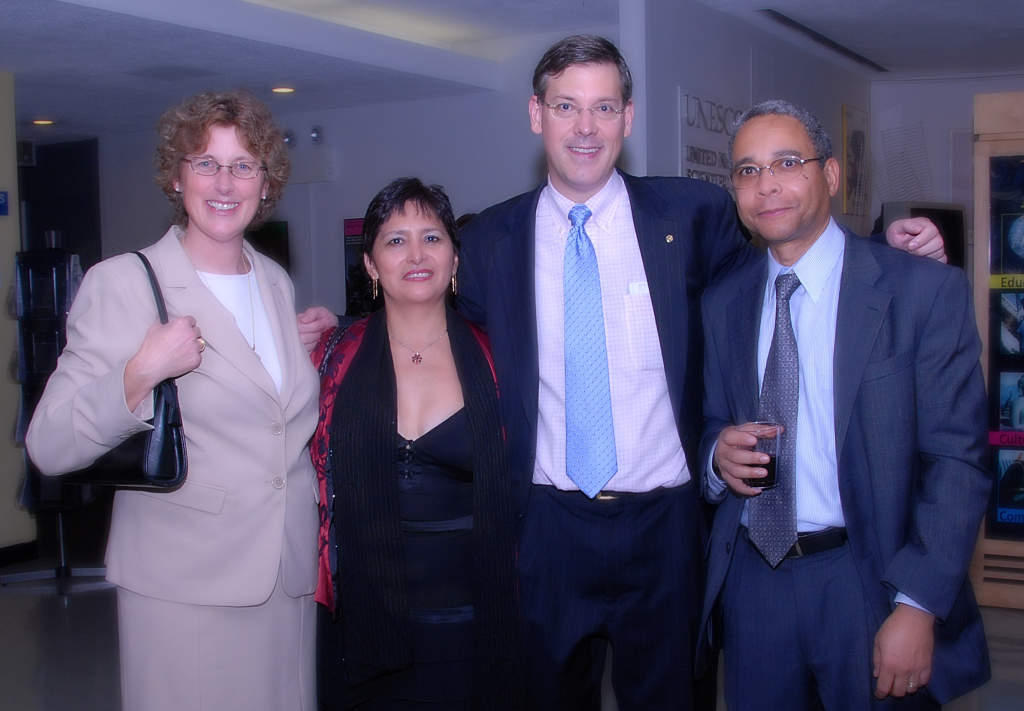

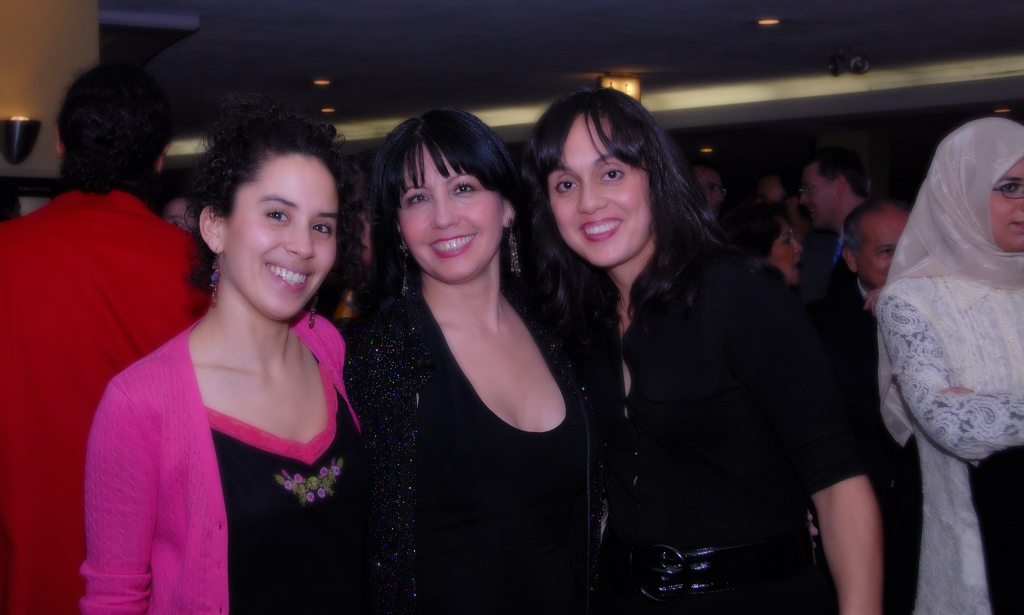
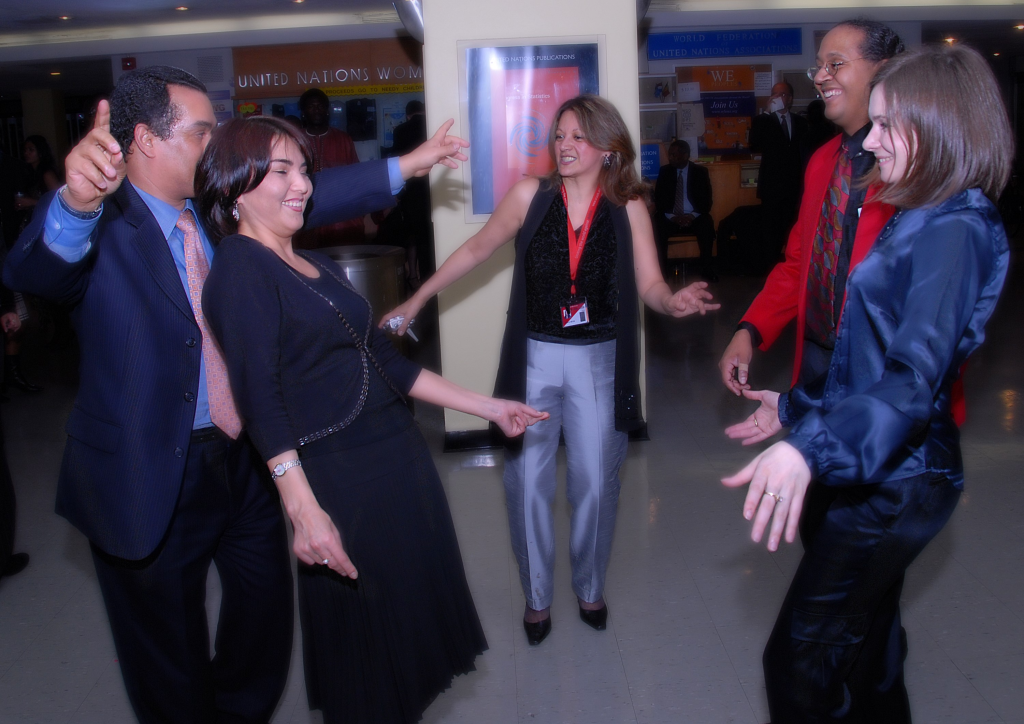
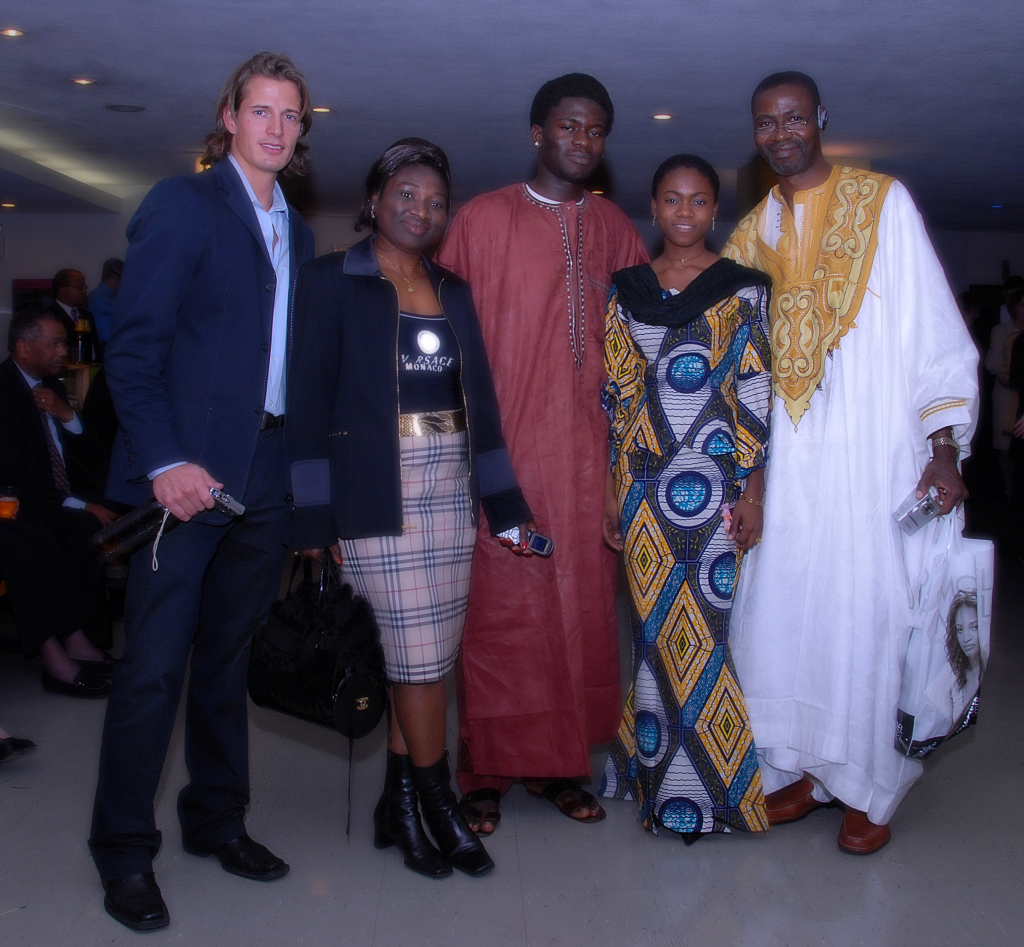
Orphans International Celebrates Five Years at United Nations (June 7, 2010)
[draft]

Indonesian Consulate Awards Evening 2008 (May 25, 2010)
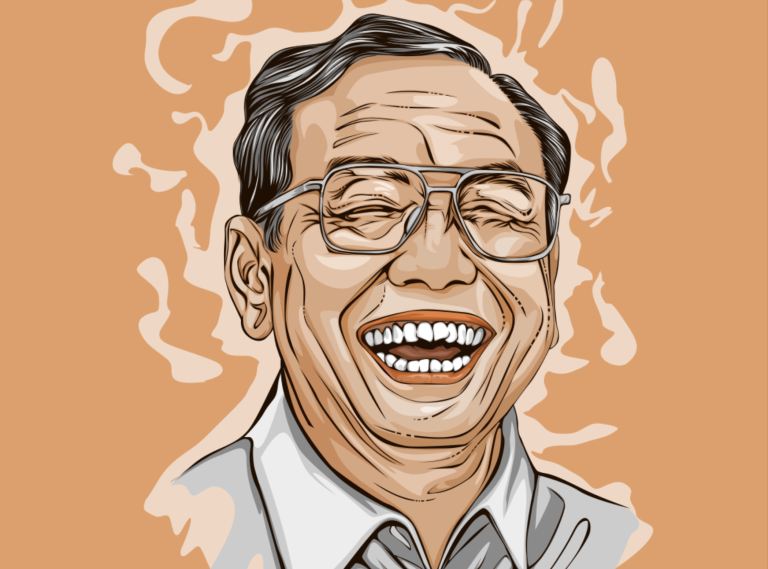
Former Indonesian President Remembered as Advocate for Tolerance, Democracy
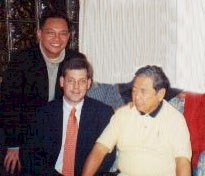
New York, N.Y. I first met former Indonesian President Abdurrahman Wahid, affectionately known as Gus Dur, in a hotel room in Washington, D.C., in March 2002. Despite being blind, this remarkably tolerant Muslim cleric exuded wisdom and kindness. My friends and I sat at his feet, drawn to his profound insights. My connection to him came through his daughter, Yenny Wahid, who was then studying at Harvard. We also had the pleasure of meeting his charming and lovely wife Sinta, a political activist.
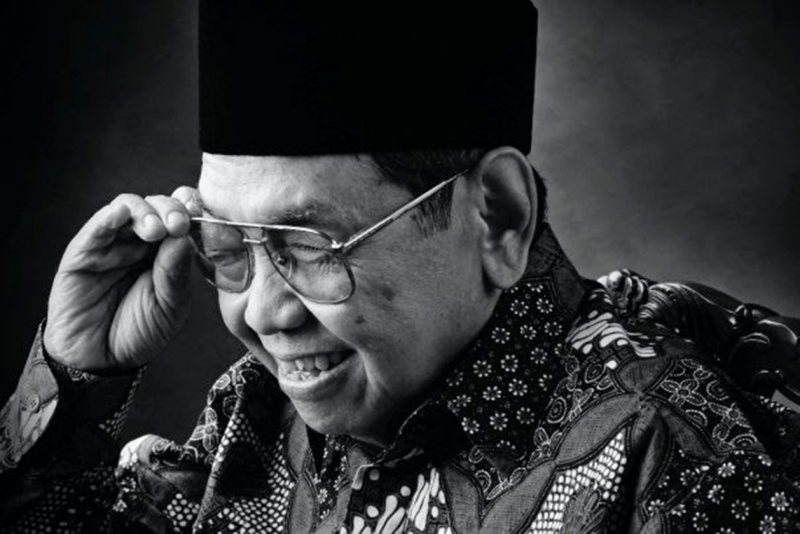
Gus Dur passed away this week and was laid to rest after a state funeral. In 1999, he became Indonesia’s first elected president following the fall of military strongman Suharto. Although his presidency was brief and tumultuous, he remains a key figure in Indonesia’s transition to democracy and the establishment of a national identity rooted in tolerance.
Thousands of mourners chanted Islamic prayers as Gus Dur was buried near his home in East Java on Thursday. He died on Wednesday at the age of 69 due to complications from diabetes and strokes.
Current President Susilo Bambang Yudhoyono led the memorial service, praising Gus Dur as one of Indonesia’s finest sons and statesmen.
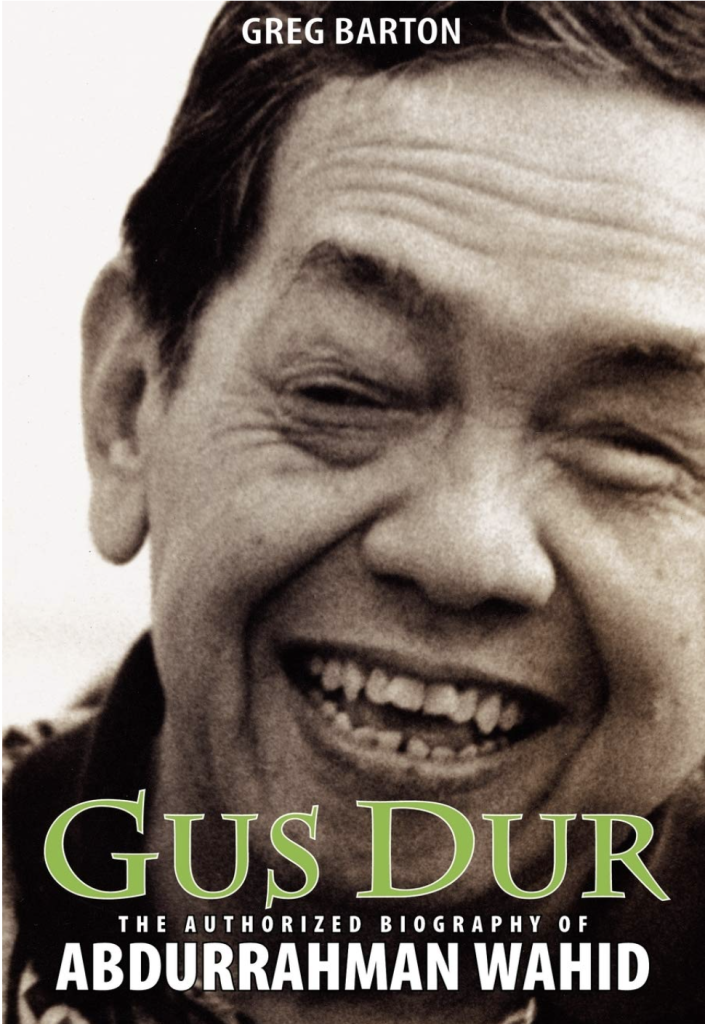
I have met the author Greg Barton and read his book which I highly recommend. In October 1999, Abdurrahman Wahid, almost blind and recovering from a nearfatal stroke, was elected as Indonesia’s fourth president. Referred to as ‘Indonesia’s surprising new president’ by the Economist, the man who had commanded the highest respect of his fellow countrymen for his lifetime devotion to public service, liberal democracy and tolerant Islam, was impeached in humiliating and controversial circumstances less than two years later.
Wise to some, insolent to others, Abdurrahman’s mercurial style of leadership constantly confounded critics and ultimately caused him to be widely misunderstood by both domestic and international observers. For the first time, biographer Greg Barton delves beneath the surface and gives us a unique insight into the man and his world drawn from his long relationship with Gus Dur – including being at his side during the final extraordinary months of the presidency. Those interested in the drama of modern Indonesian politics will find this book provides a fascinating and invaluable account of the enigmatic Gus Dur.
Gus Dur rose to political prominence as the leader of Nahdlatul Ulama (NU), one of Indonesia’s largest Islamic movements. A vocal critic of Suharto’s nearly three-decade rule, Gus Dur was chosen by parliament to be Indonesia’s fourth president following Suharto’s resignation in 1999.
Political commentator Wimar Witoelar, who served as Gus Dur’s chief presidential spokesman, highlighted the former president’s legacy of tolerance and equality, which continue to define Indonesia’s democracy. Witoelar emphasized, “The anti-corruption efforts, the reduced military role in politics, the equal treatment of Chinese and other minorities, and the religious pluralism we see today are all outcomes of Gus Dur’s breakthroughs.”
World leaders have extended their condolences to Gus Dur’s family and the people of Indonesia. U.S. President Barack Obama, who lived in Jakarta briefly as a child, commended Gus Dur for his commitment to democratic principles, inclusive politics, and religious tolerance.
Gus Dur sought dialogue with ethnic separatists in Aceh and Papua, visited East Timor to apologize for Indonesian atrocities, and attempted to establish a truth commission. He also took a firm stance against Islamist extremists after terrorist bombings in 2000. I remember walking through the carnage of the Bali nightclub bombing after the fires had died down, site left unsecured, and feeling the voices of those who perished.
As president, Gus Dur challenged traditional power structures, worked to diminish the military’s political influence, and aimed to decentralize power across Indonesia’s provinces. However, his administration faced criticism for unpredictable cabinet reshuffles and allegations of nepotism. He also alienated some Muslim supporters by advocating for diplomatic relations with Israel and lifting a ban on communism.
Gus Dur’s presidency ended in 2001 with his impeachment for alleged corruption, charges he denied. Despite attempts to remain in power by declaring a state of emergency, he eventually stepped down and was never tried on criminal charges. Witoelar noted that Gus Dur was ousted because he refused to compromise his political integrity.
While Gus Dur’s presidency was brief, his vision of Indonesia as a tolerant, pluralistic society remains influential. His enduring legacy continues to shape the values and democratic principles of modern Indonesia.
Jim Luce Writes Profiles & Obituaries

Image: “Azur and Asmar” is about boys from very different backgrounds who think of each other as brothers. Credit: Genius Products.
[draft]
Two children were raised by the same woman: Azur, blond, blue-eyed, son of the lord, and Asmar, dark-eyed, dark-skinned, son of the nurse. Brought up like brothers, the children are brutally separated. But Azur, haunted by the legend of the Djinn Fairy, will search for her beyond the seas. The two “brothers”, now grown-up, meet again and compete to find the fairy and free her. They will discover magical lands and face many dangers and wonders.
Published: Dec 18, 2008, 6:54 p.m. MST
“Azur & Asmar: The Princes’ Quest” has a pretty decent concept for an animated film. In fact, it would be interesting to see what Disney or Pixar could do with this material.
Until then, we’ll have to settle for this so-so French import, which boasts some less-than-impressive animation work, especially in comparison to its first-rate American competition. (It’s on par with the digitally animated “VeggieTales” productions).
If that’s not bad enough, the voice talent is pretty uninspired — at least the ones in the English-language dubbed version. The voice actors give flat, emotionless performances that suggest they were there to collect a paycheck and nothing else.Report ad
The title characters are youngsters from very different backgrounds who think of each other as brothers. Azur is the son of a British nobleman. However, he has been raised by his wet-nurse, who has treated him the same as her own biological son, Asmar.
Upon reaching his teens, though, Azur is separated from Asmar and his beloved “Nanny.” And he’s been shipwrecked in an unknown land where the residents are suspicious of this blond-haired, blue-eyed newcomer.
As it turns out, this is “Nanny’s” homeland, and soon enough, Azur is reunited with her and Asmar, who’s become a member of the royal guard.
Asmar has also become obsessed with finding the Djinn-fairy — it’s a legend that the two heard when they were boys. And this quest may turn these nonbiological brothers into rivals.
Screenwriter/director Michel Ocelot and his team of animators clearly tried to give this feature a unique look, but because of the inexpressive characters and robotic movements the whole thing feels cold and aloof.
Also, the muddled, confusing conclusion certainly doesn’t end things on the right note.Report ad
“Azur & Asmar: The Princes’ Quest” is rated PG and features some strong animated violent content (sword play, stabbings and animal violence), some crude humor and references (including animal scatological humor), derogatory language and slurs based on race and ethnicity, and brief, partial female nudity (a breast-feeding sequence). Running time: 94 minutes.
Children’s Literature | Azur & Asmar: The Princes’ Quest (June 19, 2009)

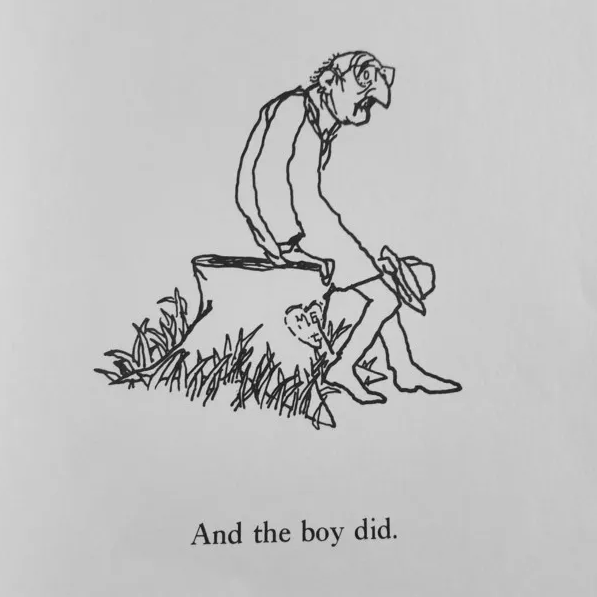
New York, N.Y. In Shel Silverstein’s The Giving Tree, children are presented with a kindly tree who gives of its fruit, give of its branches, and eventually even gives of its trunk until there is nothing left except a stump.The children then have a place to sit, and the tree is happy and continues to give;
Reading this tale, I first thought it was a travesty. How stupid that a tree would be reduced to a stump and still feel worthy? Still, in my own life, building an international organization to help orphans around the world, I have had to make similar judgments at every step of the way:
There is no guide. So I will attempt to write one. “Mathew’s Rule” is the foundation of Orphans International Worldwide, the organization that I founded in 1999. It states simply that each child in our care be treated the way we would treat our own children.
I now offer “Jim’s Rule” – how to know how much to give back to society. As humans we have basic and secondary needs that are vital to our life and happiness. Primarily, we must eat, sleep, have housing and clothing, and maintain our health.
Secondarily, we need to share love – with parents, children, and life partners; Desires such as better food, nicer housing, more expensive clothes, going to the gym are on a third plane;
“Jim’s Rule” states that as long as our primary and secondary needs are met, sacrifices may be made on the third level to better our world;
As a result of my choices, unexpectedly, I meet regularly with heads of state and royalty, sip champagne and eat caviar. I also celebrate family birthdays at White Castle, own few clothes, and allow my friends to treat me to Broadway plays and buy me books for my birthday. The socks-and-underwear under the tree at Christmas that annoyed me in my youth now delight me;
It has been difficult for me to be comfortable being treated to dinner and theater – I’m used to treating. The feeling might be like being able to accept care one day from my own child.
“Jim’s Rule” applies when one without or with little institutional support thinks about how far they can go without a safety net. Globally, there is a safety net for do-gooders in family, neighbors, and one’s house of faith. But these often have limits that can be exhausted early.
Time is another precious asset.
Our bodies’ needs vary greatly. I can go on five hours sleep per night for a month but then crash for a whole day.
To remain focused, I try to limit myself with Orphans International to twelve hours a day, six days a week. To flourish in a relationship and be a good father, is how I use the other 12 hours;
To be an asset to society, one must maintain one’s base. Without a base, you are a liability to everyone. You can only help others if you are not in need of help yourself. Like adults who must receive oxygen in an airplane emergency first, our children benefit when we are stable.
So how much is too much when it comes to giving your all? Learning from our children’s book, The Giving Tree, I propose Jim’s Rule:
Give of your fruit, your extra money and time. Perhaps give your branches, even more of your resources. But your trunk is your essence.
A stump helps humanity only in fairy tales.
How Much Is Too Much? A Guide to Giving Your All, Literally (March 20, 2008)
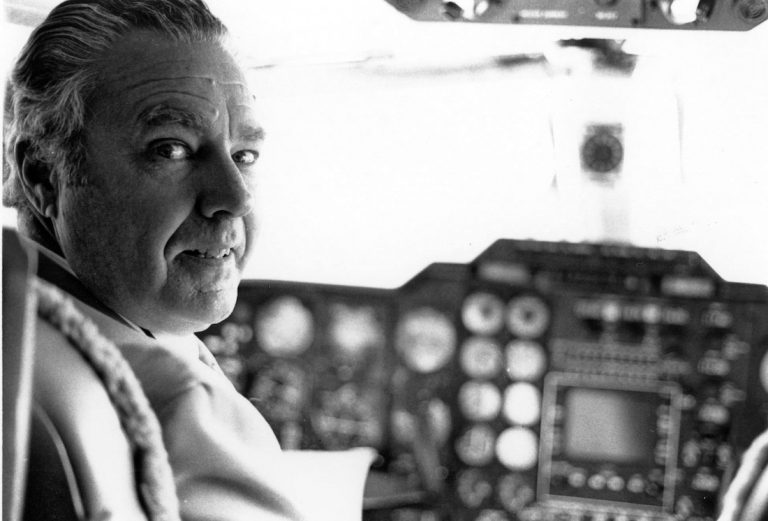
New York, N.Y. – A $1 million gift from Cornell College parent and life trustee Peter Paul Luce will expand and modernize Cornell College’s admission center.
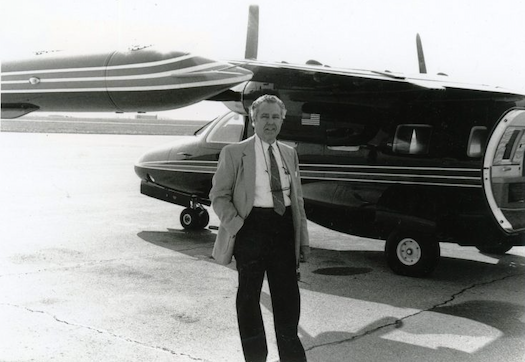
Luce, of Englewood, Colo., connected with Cornell when his daughter Lynn was drawn to Cornell’s One-Course-At-A-Time calendar. Luce served Cornell as a trustee when Lynn began at Cornell in 1989.
He became a life trustee in 2003, and received honorary alum status in 1995 with his wife, Betsy.
“I’ve always been an admirer of One-Course-At-A-Time,” said Luce. “It’s not only the best innovation in higher education in a long time, it’s the only one.”
Luce’s patronage of Cornell College has long created extraordinary opportunities for Cornell, its students and prospective students. Starting in the 1990s, Luce personally flew high school counselors to visit Cornell on his twin engine prop jet.
When Luce completed his three terms as a trustee, the son of Time Magazine founder Henry R. Luce was recognized by the Henry Luce Foundation, which gave Cornell $1 million to fund and endow the Peter Paul Luce Gallery.
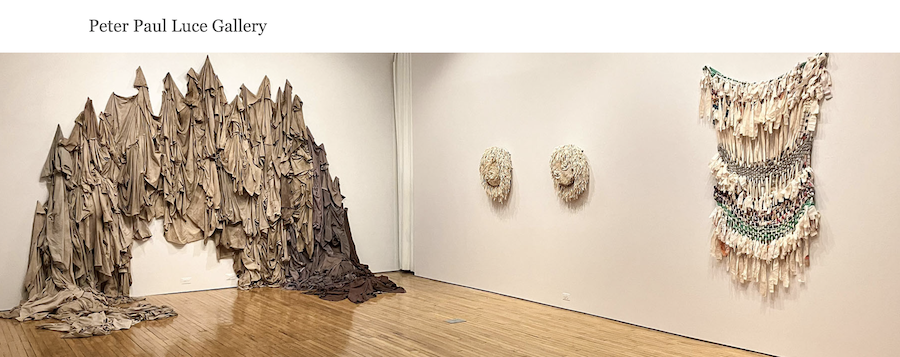
“Mr. Luce has been a long-time supporter of the college’s student recruitment program,” said Vice President for Enrollment and Dean of Admission Jonathan Stroud. “He understands the importance of a professional and attractive facility for receiving prospective students and their families.”

The expansion and renovation of the Peter Paul Luce Admission Center will enhance the professional work environment for staff and will create a more inviting reception area for visitors. New offices will be built and the reception space will double in size to provide a more attractive and comfortable space for receiving visitors and interviewing students.
“Peter is a loyal friend of Cornell, and this gift is another demonstration of his support for the College and for our admission program,” said Cornell College President Les Garner. “We are extremely grateful for his commitment to this important project.”
Henry Luce Son and Cornell Parent Donates Admission Center (March 20, 2008)