The Stewardship Report

Home Blog Page 40

Xinhua: Events Held Across China for National Tree Planting Day


Photo Essay from Xinhua

Beijing Xinhuanet is the web portal for news and information services of Xinhua News Agency. It is China‘s most influential online media and a Chinese website with global influence. Xinhuanet serves as an important window for the world to understand China, providing authoritative and timely global news and information service 24 hours a day.

Children of a kindergarten plant seedlings with their teacher in Lijiang, southwest China’s Yunnan Province, March 12, 2025. Tree planting events were held across the country on Wednesday to mark China’s National Tree Planting Day. (Photo by Zhao Qingzu/Xinhua)

Volunteers take part in a tree planting event in Dongli District of north China’s Tianjin Municipality, March 12, 2025. Tree planting events were held across the country on Wednesday to mark China’s National Tree Planting Day. (Xinhua/Sun Fanyue)

People water a seedling during a tree planting event in Dongli District of north China’s Tianjin Municipality, March 12, 2025. Tree planting events were held across the country on Wednesday to mark China’s National Tree Planting Day. (Xinhua/Sun Fanyue)

Primary school students take part in a tree planting event in Binhai New Area of north China’s Tianjin Municipality, March 12, 2025. Tree planting events were held across the country on Wednesday to mark China’s National Tree Planting Day. (Photo by Du Penghui/Xinhua)

Volunteers take part in a tree planting event in Shizhong District of Zaozhuang City, east China’s Shandong Province, March 12, 2025. Tree planting events were held across the country on Wednesday to mark China’s National Tree Planting Day. (Photo by Sun Zhongzhe/Xinhua)

Volunteers take part in a tree planting event in Rongcheng City, east China’s Shandong Province, March 12, 2025. Tree planting events were held across the country on Wednesday to mark China’s National Tree Planting Day. (Photo by Li Xinjun/Xinhua)

A teacher and children water a seedling at a kindergarten in Qingdao City, east China’s Shandong Province, March 12, 2025. Tree planting events were held across the country on Wednesday to mark China’s National Tree Planting Day. (Photo by Zhang Ying/Xinhua)

An aerial drone photo taken on March 12, 2025 shows volunteers taking part in a tree planting event in Binzhou City, east China’s Shandong Province. Tree planting events were held across the country on Wednesday to mark China’s National Tree Planting Day. (Photo by Chu Baorui/Xinhua)

A volunteer plants a tree seedling with a primary school student in Luoping County, southwest China’s Yunnan Province, March 12, 2025. Tree planting events were held across the country on Wednesday to mark China’s National Tree Planting Day. (Photo by Peng Yikai/Xinhua)

Volunteers plant trees in Shijiazhuang, capital of north China’s Hebei Province, on March 12, 2025. Tree planting events were held across the country on Wednesday to mark China’s National Tree Planting Day. (Photo by Liang Zidong/Xinhua)

People take part in a tree planting event in Jiaozuo City, central China’s Henan Province, on March 12, 2025. Tree planting events were held across the country on Wednesday to mark China’s National Tree Planting Day. (Photo by Xu Hongxing/Xinhua)

Volunteers take part in a tree planting event in Yuping Dong Autonomous County, southwest China’s Guizhou Province, March 12, 2025. Tree planting events were held across the country on Wednesday to mark China’s National Tree Planting Day. (Photo by Hu Panxue/Xinhua)

Volunteers and students take part in a tree planting event in Qianxi City, southwest China’s Guizhou Province, March 12, 2025. Tree planting events were held across the country on Wednesday to mark China’s National Tree Planting Day. (Photo by Fan Hui/Xinhua)

Students plant seedlings at a primary school in Xinghua City, east China’s Jiangsu Province, on March 12, 2025. Tree planting events were held across the country on Wednesday to mark China’s National Tree Planting Day. (Photo by Zhou Shegen/Xinhua)

Students plant seedlings at a primary school in Xinghua City, east China’s Jiangsu Province, on March 12, 2025. Tree planting events were held across the country on Wednesday to mark China’s National Tree Planting Day. (Photo by Shi Daozhi/Xinhua)

Volunteers plant mangroves seedlings at Dongzhaigang National Nature Reserve in Haikou, south China’s Hainan Province, March 12, 2025. Tree planting events were held across the country on Wednesday to mark China’s National Tree Planting Day. (Xinhua/Yang Guanyu)



Human Rights Council: Child Victims of Trafficking Increasing


New York, N.Y. — Children make up almost four in 10 victims of trafficking worldwide, but the true number of youngsters caught up in the illegal practice is likely much higher, a senior U.N. official warned on Wednesday.

In a new report, Dr. Najat Maalla M’jid, who’s the Special Representative of the U.N. Secretary-General on violence against children, said that traffickers are quick to exploit technological advancements – and people in emergencies.

She said that children – mainly girls – are increasingly vulnerable, as poverty, food insecurity, humanitarian crises and conflict lead to displacement and violence, which are among the main drivers of illegal trafficking.

Conviction for trafficking in children remain low and perpetrator continue to enjoy impunity, corruption, stigma, fear and the lack of protection limits children’s ability to report and seek justice,” she told the Human Rights Council in Geneva.

Highly profitable crime

“As a result, trafficking in children remains a low cost and low risk, yet high profits crime, generating billions of dollars annually.”

Dr. Maalla M’jid warned that trafficking networks are growing alarmingly and are increasingly well organised.

She said that criminal ringleaders now use artificial intelligence to lower their overheads and reduce the likelihood of detection.

The senior UN official also noted that the demand for exploitative services involving children is increasing, from sexual exploitation, domestic slavery, child marriage, recruitment into armed groups, forced begging and criminal activities.

The U.N. Special Representative for children caught up in conflict, Virginia Gamba, told the Council that more than one in six children worldwide are living in conflict zones.

She called on all states to produce policies which allow every child to be shielded from harm so they can grow up in a peaceful environment. 

Trump Administration Eyes 18th Century Law for Migrant Deportations


Alien Enemies Act: Could Trump Revive a WWII-Era Tool? (Answer: Yes)

Washington, D.C. — In a move that could reshape immigration policy, the Trump administration is reportedly considering the use of the Alien Enemies Act of 1798 as a legal mechanism to deport migrants. This obscure piece of legislation, enacted during the early years of the United States, grants the president broad authority to detain and remove non-citizens deemed a threat during times of war or national emergency.

While rarely invoked in modern times, its potential revival has sparked debate among legal scholars, policymakers, and immigrant rights advocates.

The Alien Enemies Act was originally signed into law by President John Adams as part of a series of measures known as the Alien and Sedition Acts, aimed at addressing perceived threats from foreign nationals amid tensions with France. The law allows the president to apprehend, restrain, and deport any non-citizen from a country with which the U.S. is at war, without requiring congressional approval.

The living quarters at the War Relocation Camp in Arizona, during the Second World War. Photo credit: NSF / ALAMY.

Its most notable use came during World War II, when President Franklin D. Roosevelt invoked it to authorize the internment of over 120,000 Japanese Americans, a decision widely regarded today as a grave violation of civil liberties.

Sources close to the Trump transition team suggest that the administration may interpret the act’s language broadly, potentially applying it to undocumented migrants or individuals from nations deemed hostile, even in the absence of a formal declaration of war. This approach aligns with President Donald Trump’s campaign promises to prioritize border security and expedite deportations. During his first term, Trump implemented policies such as the “Remain in Mexico” program and family separations at the border, signaling a hardline stance on immigration that could intensify in his second term.

Legal experts are divided on the feasibility of this strategy.

Supporters argue that the act’s text provides clear presidential authority, especially if tied to national security concerns like drug trafficking or terrorism. “The language is intentionally broad,” said Professor Michael Carter, a constitutional law scholar at Georgetown University. “In theory, the administration could designate certain migrant groups as threats under a national emergency framework and move forward with deportations.”

Critics, however, caution that such an application would face significant legal and ethical challenges.

The American Civil Liberties Union (ACLU) has already signaled its intent to oppose any use of the act, citing its historical misuse. “This law was last used to justify one of the darkest chapters in American history,” said ACLU attorney Sarah Nguyen. “Reviving it to target vulnerable populations would almost certainly violate due process and international human rights standards.” Courts could also intervene, as they did during Trump’s first term when federal judges blocked portions of his travel ban targeting Muslim-majority countries.

The political context adds another layer of complexity.

With Republicans set to control both chambers of Congress in 2025, the administration may face less legislative resistance to its immigration agenda. However, public opinion remains polarized. A recent Gallup poll found that 54% of Americans support stricter immigration enforcement, while 41% favor expanding protections for undocumented migrants. Any move to invoke the Alien Enemies Act could reignite protests like those seen during Trump’s first term, when thousands took to the streets over immigration policies.

Historical precedent offers a mixed picture.

Beyond World War II, the act was used sparingly—once during the War of 1812 to detain British nationals and again in World War I against German Americans. Each instance occurred during a declared war, a condition absent today. To bridge this gap, the Trump administration might lean on existing national emergency declarations, such as those related to border security, though this would likely trigger lawsuits questioning the act’s scope.

Internationally, the move could strain diplomatic relations, particularly with Mexico and Central American countries, which have borne the brunt of U.S. deportation efforts. Mexican Foreign Minister Juan Morales expressed concern in a recent statement, urging dialogue over unilateral action. “We respect U.S. sovereignty but expect mutual cooperation on migration issues,” he said.

As the administration prepares to take office on January 20, 2025, the potential use of the Alien Enemies Act remains speculative but plausible. Observers say it would reflect a continuation of Trump’s aggressive approach to immigration, testing the limits of executive power in a deeply divided nation. For now, the debate simmers as stakeholders await concrete policy announcements.

Trump Administration Eyes 18th Century Law for Migrant Deportations (March 13, 2025)


#AlienEnemiesAct, #TrumpImmigration, #DeportationDebate, #BorderSecurity, #ImmigrationPolicy

Blue Ghost Soars as Moon Memory Bridges Generations of Discovery


One Midnight Moment, A Lifetime Of Stars:
How Neil Armstrong’s “Giant Leap” Inspired A New Space Age  

New York, N.Y. — It was 2:56 a.m. on July 21, 1969, when I—still groggy but wide-eyed—stared at a flickering TV screen. My mom had woke me up to witness the moon landing. I was ten and we were visiting my aunt and uncle in Upstate New York. They still had a black and white TV while our family had just gotten our first colored television the year before…

Together, my mom and I watched Neil Armstrong descend the lunar module ladder, his voice crackling through the static: “That’s one small step for man, one giant leap for mankind.” For this ten-year-old in pajamas, it wasn’t just history—it was magic.  

I didn’t sleep for days.

I was excited by the possibilities of space. The universe had another surprise in store. Two years later, at age 12, I was able to attend a flight event in Ohio where Neil Armstrong himself made an appearance.

“I stood in line clutching my Apollo 11 newspaper clipping,” they say. “When I reached him, I froze. He smiled, signed it, and said, ‘Keep looking up.’ That autograph became one of my most treasured possession.”  

Five decades later, the faded ink of that autograph still pulses with meaning. “Holding it today, I’m transported back to that starry-eyed kid. Armstrong didn’t just walk on the moon—he made us believe we could touch the impossible.”  

From Moon Dust to Modern Missions  

Fast-forward to 2025, and the impossible is again within reach. While my autograph rests in its album, a new chapter in space exploration is unfolding: the rise of Blue Ghost, a lunar lander developed by aerospace startup Firefly Aerospace. Designed to deliver payloads to the moon’s surface, Blue Ghost represents the next leap in privatized space missions—a far cry from the government-led Apollo era, yet deeply rooted in its legacy.  

Blue Ghost isn’t just machinery; it’s a bridge between generations,” says Dr. Lisa Tanaka, a planetary scientist involved in the project. “Today’s kids watching Blue Ghost will become tomorrow’s engineers, just like those inspired by Armstrong in ’69. The dream hasn’t changed—we’re just equipping it with better tools.”  


“The dream hasn’t changed—we’re just equipping it with better tools.”  


Why Blue Ghost Matters  

Named for the ethereal glow of moonlight, Blue Ghost aims to land on the moon’s Mare Crisium basin in 2025, carrying scientific instruments to study lunar soil and radiation. Its success could pave the way for sustainable lunar bases, a critical step toward Mars colonization.  

For me, the mission feels personal. “When I heard about Blue Ghost, I got the same thrill I did at ten—that sense of wonder, of what’s next? We’re not just revisiting the moon; we’re reinventing humanity’s relationship with space.”  

The Ripple Effect of a “Giant Leap”  

Armstrong’s steps did more than imprint bootprints in lunar regolith; they ignited a cultural wildfire. The Apollo 11 broadcast drew 650 million viewers worldwide, uniting globe in shared awe. Today, space exploration is democratized: private companies like SpaceX and Blue Origin collaborate with NASA, while smartphone apps let anyone track satellites overhead.  

“The spirit of 1969 is alive in every student who joins a robotics club, every amateur astronomer gazing through a telescope,” says historian Margaret Lowell, author of Beyond the Horizon: How Apollo Shaped the Modern World. “Blue Ghost and its peers aren’t just machines—they’re manifestations of curiosity passed down like a baton.”  

A Call to the Next Generation  
As Blue Ghost prepared for its maiden voyage, I remind today’s youth: “Don’t let anyone tell you space is routine. Every launch, every discovery, is a miracle. You could be the first person on Mars—or the first to find life beyond Earth. The universe is waiting.”  

And what would Neil Armstrong say about Blue Ghost? He’d probably humbly credit the team. But deep down? He’d be thrilled. The journey he started isn’t over—it’s just beginning.

Blue Ghost Soars as Moon Memory Bridges Generations of Discovery (March 11, 2025)

#MoonToMars #ArmstrongLegacy #BlueGhostRising #SpaceGeneration #CosmicConnections #MoonwalkMemory #NextGiantLeap #SpaceDreamsUnfold   


Many Faces of Sadness: Exploring Emotion Through Art, Science


New York, N.Y. Sadness, a fundamental human emotion, continues to captivate artists, scientists, and mental health professionals alike. Recent studies and artistic expressions have shed new light on this complex feeling, revealing its multifaceted nature across various disciplines.

Sadness. Photo credit: Andrej Lišakov/Upsplash.

Music and Sadness

Sad music isn’t just depressing; it can be oddly satisfying. Research shows it activates both emotional and pleasure centers in the brain, releasing hormones like prolactin and oxytocin, which help us feel calmed and consoled. This makes sad songs a source of comfort, especially during tough times, offering a safe way to process emotions.

Poetry and Sadness

Poets have long captured sadness through metaphors and imagery, creating works that resonate deeply. Classics like Walt Whitman‘s “When Lilacs Last in the Dooryard Bloom’d” and Percy Bysshe Shelley’s “Adonais” transform grief into art. Modern poets like Richard Siken and Charles Bukowski continue this, helping readers find solace in shared experiences.

Mental Health and Sadness

Mental health experts distinguish normal sadness from clinical depression, defined as extreme, persistent sadness lasting over two weeks, affecting daily life.

Recent studies, like the CDC report, show the COVID-19 pandemic increased depression rates, emphasizing social connectedness as a key factor in mental well-being.

Literature and Sadness

Literature explores sadness through characters and stories, offering readers a sense of companionship. Works like F. Scott Fitzgerald‘s The Great Gatsby depict emotional turmoil, resonating with readers’ own experiences, providing a space to process and understand sadness.


AspectOriginal PointsExpanded DetailsExamples/Sources
MusicSad music activates emotional and pleasure centersReleases prolactin, oxytocin; cathartic, creates connection, nostalgiaGreater Good Magazine, Psychology Today, Neuroscience News
PoetryWhitman, Shelley express sadness through elegiesUses metaphors, imagery; contemporary poets like Siken, Hughes, BukowskiLanguage is a Virus, Hello Poetry, Interesting Literature
Mental HealthDistinguishes normal sadness from clinical depressionRecent studies on COVID-19 impact, social connectedness; treatment advancementsMedical News Today, CDC, NIMH
LiteratureAuthors explore sadness, provide solaceOffers companionship, emotional healing; examples like “Gatsby,” “Mockingbird”Electric Literature, Everyday Health, Literati Pulp
Study/ResearchPublication DateKey FindingRelevance to Sadness
Greater Good MagazineNovember 18, 2021Sad music releases prolactin, oxytocin, offering consolationExplains “beautiful sadness” in music
CDC ReportMarch 31, 2022Social connectedness lowers mental health issues during COVID-19Highlights impact on depression rates
NIMHJuly 16, 2023Advances in depression treatments, both pharmacological and psychotherapeuticEnhances understanding of clinical depression management

Improving and expanding the story on sadness involves adding depth to each section with recent studies and examples. Music’s “beautiful sadness” is enriched by biological and psychological insights, poetry’s expression through literary devices connects with readers, mental health distinctions are updated with pandemic impacts, and literature’s role in coping is deepened with specific works. This comprehensive approach ensures a richer narrative, reflecting sadness’s multifaceted role in human experience.

In music, the phenomenon of “beautiful sadness” has gained attention.

Brain scientists have discovered that sad music activates both emotional and pleasure centers in the brain, explaining why melancholic melodies can be oddly satisfying. This finding aligns with the observations of Eli Siegel, who noted that “the presentation of sadness in art, the drama, poetry, could please people,” suggesting that grief might be closer to happiness than previously thought.

Poets have long grappled with sadness, creating powerful verses that resonate across generations.

From biblical lamentations to modern works, poetry has served as a vessel for expressing and exploring sorrow. Notable examples include Walt Whitman‘s “When Lilacs Last in the Dooryard Bloom’d” and Percy Bysshe Shelley’s “Adonais,” both elegies that transform grief into art.

In the realm of mental health, psychiatrists and psychologists distinguish between normal sadness and clinical depression.

The American Psychological Association defines depression as “extreme sadness or despair that lasts more than days,” interfering with daily life and causing physical symptoms. The World Health Organization emphasizes that a depressive episode involves a persistent low mood or loss of interest in activities for at least two weeks, accompanied by other symptoms such as poor concentration and feelings of worthlessness8.

Literature has long been a medium for exploring the depths of human sadness. Authors and poets like Richard Siken, Ted Hughes, and Charles Bukowski have created works that delve into melancholy and despair, resonating with readers who find solace in shared emotional experiences.

As our understanding of sadness evolves, it becomes clear that this emotion plays a crucial role in the human experience. Whether expressed through art or studied in clinical settings, sadness continues to be a subject of fascination and importance across disciplines.


#SadnessExplored #EmotionalScience #ArtAndPsychology

Tags: sadness, emotion, music, poetry, psychiatry, psychology, literature, mental health, art

Prague Philharmonia: One of Most Recognized Orchestras in World


Prague — The Prague Philharmonia was founded in 1994 on the initiative of the conductor Jiří Bělohlávek (1946-2017) under the original name Prague Chamber Philharmonia. Today it is one of the most recognized orchestras, not only among Czech but also world ensembles. Regular invitations to tour abroad as well as recording projects with the most renowned international labels bear testimony to this. Since the 2015–16 season the orchestra has been led by the French conductor Emmanuel Villaume.

The characteristic sound

Freshness, energy and perfectionism are characteristics inscribed in the orchestra’s ‘Birth Certificate’, as well as a love of music expressed in each of their concerts. Behind the highly valued distinctive sound of the Prague Philharmonia is partly its key repertoire, which has been from the beginning Viennese Classicism, namely compositions by Joseph Haydn, Wolfgang Amadeus Mozart and Ludwig van Beethoven.

However, the orchestra is remarkably flexible in this respect, and is capable of expanding from concertanto repertoire for a chamber set up without a conductor, to projects involving a large symphony orchestra augmented by extra players from the Orchestral Academy. In this way, even as a large body, the orchestra is able to retain the characteristic sound that Jiří Bělohlávek honed with them over a period of eleven years, as well as its esprit, linking the generation of excellent, experienced players with the greatly talented and perfectly technically prepared younger players.

A partner of star artists

Prague Philharmonia is a frequent partner of renowned conductors and soloists, including Christopher Hogwood, Michel Swierczewski, Libor Pešek, Shlomo Mintz, Julian Rachlin, Robert McDuffie, Martha Argerich, Yefim Bronfman, András Schiff, Emmanuel Pahud, Gautier Capuçon, Daniel Müller-Schott, Sarah Chang, Isabelle Faust, Gábor Boldoczki, Jonas Kaufmann, Luciano Pavarotti, Diana Damrau, Anna Netrebko, Angela Gheorghiu, Plácido Domingo, Elina Garanča, Juan Diego Flórez, Thomas Hampson, Magdalena Kožená, and many others.

Anna Netrebko

Bryan Hymel

A guest at top world venues

Prague Philharmonia is regularly invited to international music festivals and gives concerts at top world venues (BBC Proms, MITO Settembre Musica, Prague Spring, Festspielhaus Baden Baden, Elbphilharmonie Hamburg, Gasteig Munich, Berliner Philharmonie, Alte Oper Frankfurt, Royal Opera House Muscat in Oman, Tokyo Suntory Hall, Paris, San Francisco…). 

Recordings for prestigious labels

Over the period of its existence, the orchestra has recorded over 90 CDs released by leading Czech and world music publishers, such as Deutsche Grammophon, Decca, Supraphon, EMI, Warner Classics and Harmonia Mundi. A number of them have been awarded prizes, such as the Gold Record RAC Canada in 2000, Harmony Award in 2001 and Diapason d’Or in September 2007. The CD Heroique with Bryan Hymel was in 2016 nominated for an International Opera Award and a recording of Bohemian Rhapsody with the trumpet player Gábor Boldoczki for Sony Classical was nominated at the Classical Music Award 2018. The Prague Philharmonia has collaborated on recordings with Anna Netrebko, Magdalena Kožená, Bryan Hymel, Isabelle Faust, Eva Urbanová, Andrew von Oeyen, Jean-Guihen Queyras, Iva Bittová and Dagmar Pecková. Among the critically acclaimed CDs stands out the live recording of Smetana’s Má vlast (My Country) from the Prague Spring Festival in 2010, conducted by Jakub Hrůša.

In 2017 a CD ‘Bohemian Rhapsody’ with Prague Philharmonia and the trumpet player Gábor Boldoczki was released by Sony Classical  and the eagerly anticipated CD ‘Eternamente’ with the soprano Angela Gheorghiu was launched by Warner Classics.  Its most recent ‘profile’ recording CD with works by Maurice Ravel, Claude Debussy and George Bizet with Emmanuel Villaume released by Warner Classics received excellent reviews from the London Sunday Times, Gramophone, and the BBC Music Magazine, which included it in its top ten recordings of the week. In November 2019 saw the release of the long-awaited debut album by the tenor Benjamin Bernheim in collaboration with the orchestra by Deutsche Grammophon.

Repertoire

In its choice of repertoire, the Prague Philharmonia focus remains on the era of Viennese Classicism, to which works from the period of Romanticism, as well the 20th and 21st centuries, are added. This philosophy inspires the programming of not only the Orchestral Series (A), but also the newly established donor’s series, the LOBKOWICZ Series.

As far as Czech composers are concerned, the orchestra finds itself most ‘at home’ with the work of Bohuslav Martinů. Contemporary music is also given a great deal of attention and the orchestra is keen to premiere commissioned pieces. This has led to the launch of a special, unconventional series of meetings called Contemporary Music Seris (S) at the Experimental space NoD, with remarkable guests from the world of contemporary music discussing their works. The programming of concerts continues to have young audiences in mind, including concerts for children in the Rudolfinum and the established Chamber Series (K), held at the impressive interior of the Czech Museum of Music.

Lobkowicz Series

Krása dneška (S)

Chief conductors

From the 2015–2016 season the post of music director and chief conductor has been held by the distinguished French conductor Emmanuel Villaume, who has presented the orchestra with new challenges in the form of French repertoire and large symphonic-vocal works. At the beginning of 2017, under Emmanuel Villaume’s leadership, the Prague Philharmonia toured extensively and successfully across the USA.

Between the years 1994-2005 the orchestra was led by one of the most internationally recognised conductors and the founder of the orchestra, Jiří Bělohlávek (1946-2017), who later became its Music Director Laureate. The second chief conductor was the Swiss conductor and flautist Kaspar Zehnder. The excellent Czech conductor, Jakub Hrůša, led the orchestra in the years 2008-2015.

Orchestral Academy

The Prague Philharmonia Orchestral Academy was established in 2008 as the first such project in the Czech Republic. Each year the orchestra welcomes to its family circle twelve to fourteen young talented musicians. They are assisted by the Prague Philharmonia players in gaining the experience of orchestral playing, and are enthusiastically introduced to the rudiments of the orchestra philosophy: precision, a sense for ensemble playing and for detail, artistic humility, friendship and respect. From the beginning, members of the Academy take part in Prague Philharmonia projects. They go on tours in the Czech Republic and abroad, and get opportunities to perform in the Chamber Series and take part in recordings.

Concerts for children

The Prague Philharmonia has been a trailblazer in the field of educational programs and concerts for children in the Czech Republic.

The regular series of concerts for children held at the Rudolfinum each year is among the most popular in PragueConcerts for schools and Orchestra ZOOM in Czech and English are another PKF projects. Added to that is the outstanding Notička Children’s Club for audiences between 3 and 14 years old, where music is sensitively and creatively interlinked with other art forms.  

Prague Philharmonia: One of the Most Recognized Orchestras (March 10, 2025)


Nine Out of 10 Gazans Unable to Access Safe Drinking Water


Palestine — Severe water shortages in Gaza have reached critical levels, with only one in 10 people currently able to access safe drinking water, the UN Children’s Fund (UNICEF) warned on Monday. 

The situation has deteriorated further following Israel’s decision on Sunday to cut power to the enclave – in a bid to increase pressure on Hamas over hostage releases – disrupting vital desalination operations.

Rosalia Bollen, a UNICEF official in Gaza, reported that 600,000 people who had regained access to drinking water in November 2024 are once again cut off. “It’s really vital for thousands of families and children to restore this connection,” she said.

UN agencies estimate that 1.8 million people – over half of them children – urgently need water, sanitation and hygiene assistance.

Speaking at a press conference in Geneva, the UN aid agency for Palestine Refugees (UNRWACommissioner-General Philippe Lazzarini expressed that “the situation is similar to the one which prevailed in October 2023.

West Bank displacement

Mr. Lazzarini highlighted the escalating crisis in the occupied West Bank, where Israeli security operations have led to the largest displacement of Palestinians since 1967.

Around 40,000 people, many of them refugees, have been forced to flee their homes, with entire communities emptied due to intensified military activities.

The Commissioner-General condemned what he called the systematic dismantling of UNRWA’s operations in the West Bank and East Jerusalem following Israel’s ban on agency operations, pointing to the “increased pressure from the municipality to vacate its premises and halt service provision,” with international staff denied entry or expelled.

Mr. Lazzarini warned that efforts to undermine UNRWA – through funding suspensions, legislative restrictions and disinformation campaigns – pose a severe threat to regional stability.

Calls for unhindered access

Humanitarian Coordinator Muhannad Hadi called for the entry of lifesaving aid to resume “immediately,” as any further delays will affect the progress achieved during the ceasefire.

Meanwhile, Mr. Lazzarini further emphasised the importance of a political framework to prevent the crisis from escalating.

He referenced ongoing diplomatic efforts, including proposals led by Saudi Arabia, the European Union and the League of Arab States, to implement a two-State solution and transition humanitarian services to Palestinian-led institutions.

“When there is political will, humanitarian assistance can be unhindered and uninterrupted,” he underscored.

Funding crisis

As the crisis unfolds, UNRWA is also grappling with severe financial constraints, exacerbated by funding suspensions from key donors.

Mr. Lazzarini urged Member States to sustain UNRWA’s operations until a clear political solution emerges, warning that cutting support prematurely will only intensify calls for Palestinians’ return or resettlement.

The rights of Palestinian refugees exist independently of the agency,” he said, underscoring that ending UNRWA’s mandate without a viable alternative will only deepen civilian suffering. 

Nine Out of 10 Gazans Unable to Access Safe Drinking Water (March 10, 2025)


Poland’s Fiery Push for Nuclear Weapons Divides European Allies


Cowardice Will Be Our Downfall’: Poland’s Leader
Urges Europe to Arm Against Russian Threat

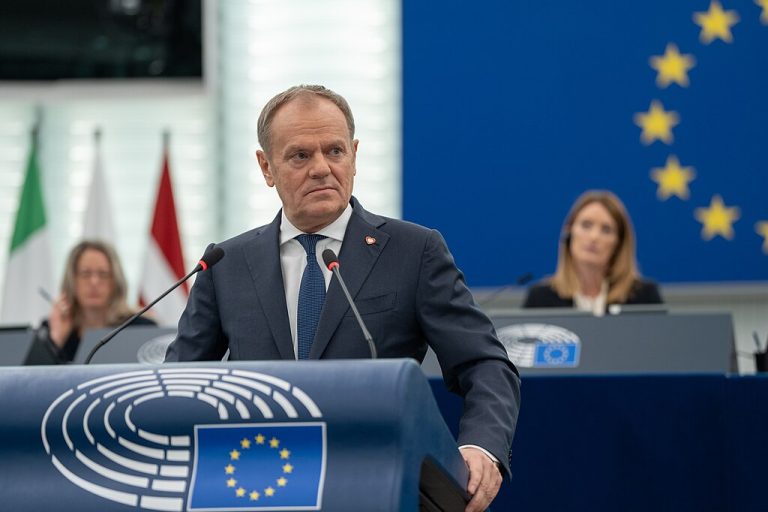
Warsaw, Poland — In a blistering address to lawmakers on Tuesday, Polish Prime Minister Donald Tusk accused European nations of “strategic cowardice” in their response to Russian aggression, demanding NATO deploy nuclear weapons in Poland to counter what he called “the existential threat” posed by President Vladimir Putin’s regime. The remarks, which included sharp rebukes of Germany and France for prioritizing diplomacy over military readiness, have reignited debates over Europe’s security strategy amid the prolonged Ukraine war.

A Scathing Critique of European Policy
Tusk’s 45-minute speech marked one of his most confrontational tones since returning to office in December 2023. He lambasted the European Union’s “naïve” reliance on economic sanctions and peace negotiations, arguing such approaches only embolden the Kremlin. “History has shown that dictators understand only strength,” Tusk declared. “When Europe hesitates, when we cloak our fear in empty diplomatic phrases, we invite further violence.”

The Prime Minister singled out Germany’s refusal to send long-range missiles to Ukraine and France’s calls for a “negotiated ceasefire” as examples of “dangerous indecision.” His comments reflect growing frustration among Eastern European nations, which have long warned against underestimating Putin’s territorial ambitions. Poland, which shares a 232-mile border with Ukraine, has been one of Kyiv’s staunchest allies, committing 4% of its GDP to defense in 2024—the highest in NATO.

The Nuclear Question
Central to Tusk’s appeal was a call for NATO to integrate Poland into its nuclear-sharing program, which currently allows member nations like Germany and Belgium to host U.S. nuclear warheads. While Poland lacks its own nuclear arsenal, Tusk argued that stationing allied weapons on its soil would create a “red line” to deter Russian advances. “We cannot defend Europe with speeches alone,” he said. “Deterrence requires credibility—and credibility requires resolve.”

The proposal faces significant hurdles. NATO’s nuclear-sharing framework requires consensus among all 32 members, and officials in Washington, Berlin, and Paris have privately expressed reluctance. U.S. National Security Advisor Jake Sullivan reiterated this week that “no changes to NATO’s nuclear posture are imminent,” though he acknowledged Poland’s “legitimate security concerns.”

Mixed Reactions From European Capitals
Tusk’s combative stance drew immediate backlash from leaders advocating de-escalation. French President Emmanuel Macron warned against “militarizing European discourse,” while German Chancellor Olaf Scholz emphasized “dialogue and restraint.” In contrast, Baltic and Nordic leaders voiced sympathy. Lithuanian Foreign Minister Gabrielius Landsbergis stated, “Poland’s urgency is ours as well. Putin only stops when he meets resistance.”

Meanwhile, Kremlin spokesperson Dmitry Peskov accused Tusk of “warmongering,” asserting that nuclear deployments near Russia would “force a proportional response.”

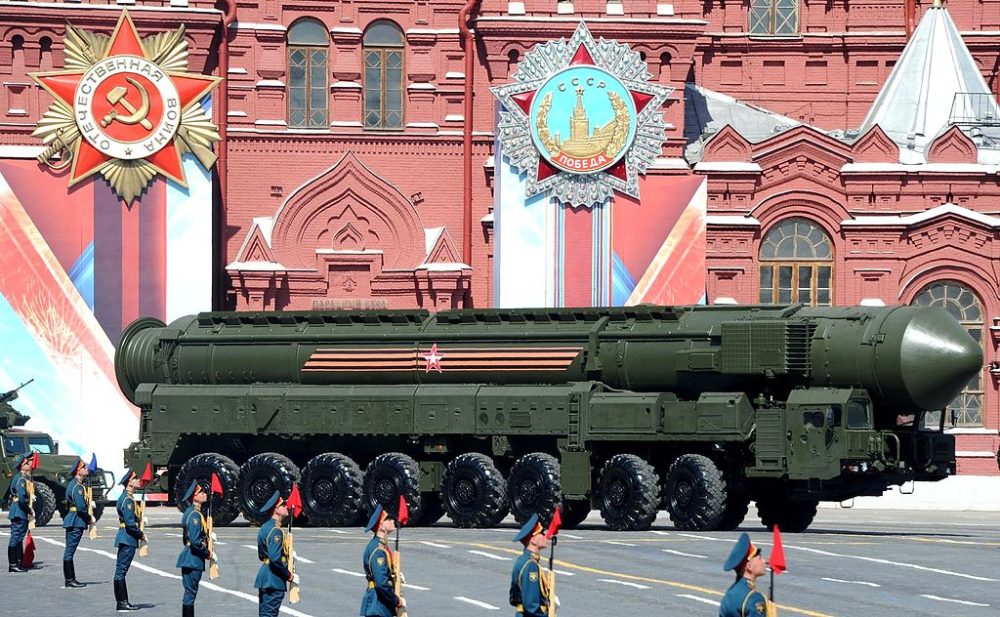
Military parade on Red Square, Moscow. Photo credit: Russian Federation Presidential Press and Information Office.

Analysts: Ambition vs. Reality
Security experts note logistical and political challenges to Tusk’s vision. Nuclear-sharing arrangements require extensive infrastructure and months of coordination. Additionally, polls show only 35% of Poles support hosting nuclear weapons, with many fearing retaliation. “This is as much about politics as security,” said Maria Kowalska, a Warsaw-based defense analyst. “Tusk is signaling resolve to voters and allies, but actualizing this would strain NATO unity.”

Others highlight Poland’s rapid militarization—a 150% increase in defense spending since 2022—as evidence of its shift from EU integrationist to frontline defender. “Poland no longer sees itself as just a partner but as a leader in European defense,” said Klaus Schmidt of the European Council on Foreign Relations.

Historical Shadows
Tusk’s rhetoric resonates in a nation scarred by centuries of Russian domination. Partitions of Poland in the 18th century, Soviet occupation during WWII, and Moscow’s Cold War grip over Eastern Europe fuel enduring skepticism of détente. “For Poles, Putin isn’t a new threat—he’s the latest incarnation of an old one,” said historian Piotr Nowak.

What Next?
While NATO Secretary-General Jens Stoltenberg affirmed the alliance’s “ironclad commitment to all members,” he avoided endorsing Tusk’s nuclear push. For now, Poland’s demands remain symbolic—a rallying cry to harden Europe’s defenses rather than an imminent policy shift.

Yet as Russia makes incremental gains in Ukraine, the pressure to choose between restraint and escalation will only intensify. Tusk’s gamble is that fear of Putin will outweigh fear of confrontation. In his words: “Cowardice today guarantees catastrophe tomorrow.”

Poland’s Fiery Push for Nuclear Weapons Divides European Allies (March 10, 2025)


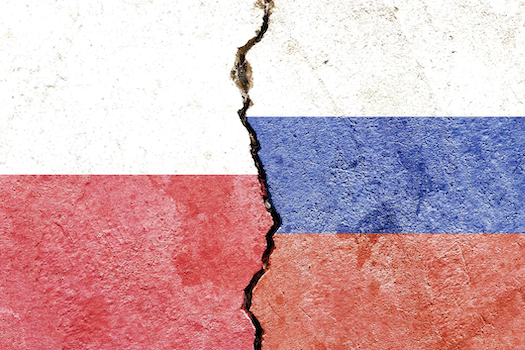
#PolandVsRussia #NuclearDeterrence #EuropeanSecurity #StandUpToPutin
#EUDefense #NATODivide #GlobalSecurity #PolandDefense

Tags: Poland, NATO, European Union, Russia-Ukraine war, nuclear weapons, security policy, Donald Tusk, Vladimir Putin, Eastern Europe, military deterrence, diplomatic tensions, defense spending

Climate Crisis Hits Home: Jakarta’s Annual Floods Worsen


Thousands Displaced as Flooding Hits Indonesian Capital Jakarta

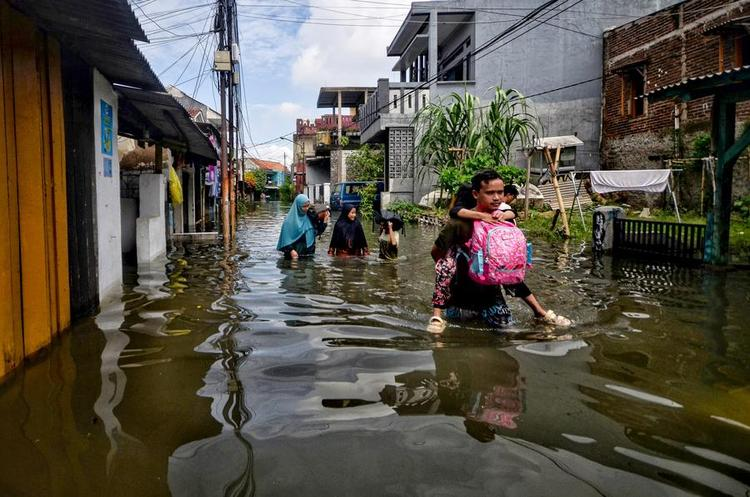
People wade through floodwater after heavy rain in Dayeuhkolot, Bandung, Indonesia, March 9, 2025. Photo credit: Septianjar Muharam/Xinhua.

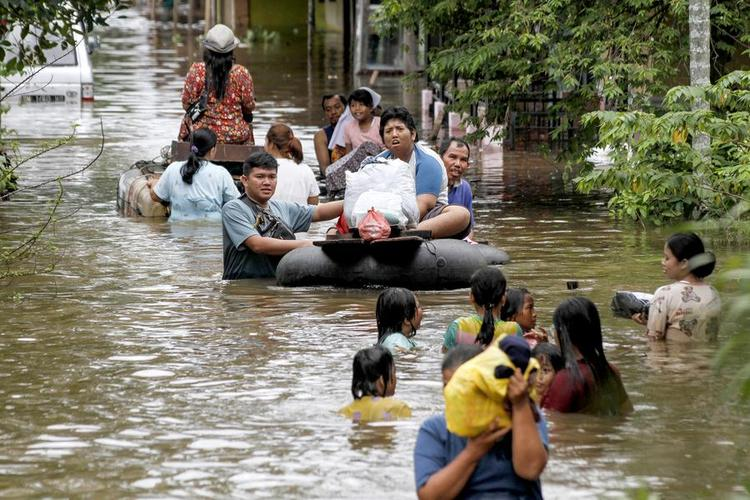
Jakarta — Residents are wading through flooded streets as Indonesia faces the aftermath of heavy rainfall that has inundated the capital and surrounding areas.

The Meteorology, Climatology and Geophysics Agency (BMKG) had warned of extreme weather from March 18-20, 2025, due to the appearance of Tropical Cyclone Seed 91S in the Indian Ocean and Madden-Julian Oscillation activity.

The extreme weather has exacerbated Jakarta’s chronic problems of poor urban planning and land subsidence.

Recent floods displaced 120,000 residents, killed a child, and overwhelmed infrastructure.

Heavy showers persisted for several days, with daily rainfall recorded between 165mm and 208mm, overwhelming Jakarta’s drainage system, which can only handle a maximum of 150mm of rain per day.

People wade through flood water after heavy rain and overflow of Siak River in Pekanbaru, Riau province, Indonesia, March 6, 2025. Photo credit: Hadly Vavaldi/Xinhua.

As of 2025, Jakarta’s metro area population is estimated at almost 12 million inhabitants. In 2024, 315 people were killed and 49 were recorded missing following 913 flood and landslide events across Indonesia.

It’s important to note that the number of deaths can vary significantly from year to year depending on the severity and frequency of natural disasters.

Climate change is expected to increase the frequency and intensity of extreme weather events, potentially leading to higher casualty rates in the future

The flooding has resulted in significant disruptions, with reports of:

  • A young child’s death
  • 120,000 residents displaced
  • Critical infrastructure failures
Rescue team members work on site after flood and landslide in Sukabumi Regency, West Java, Indonesia, March 9, 2025. Photo credit: Indonesia’s National Disaster Management Agency/Handout via Xinhua.

Jim Luce of Orphans International Worldwide reflects on Jakarta’s flash flooding challenges, recalling being stranded at Mall Taman Anggrek due to impassable roads after heavy rains.

Rainfall exceeding Jakarta’s drainage capacity continues to highlight the city’s vulnerability and the urgent need for sustainable solutions.

Local authorities are urging residents in disaster-prone areas to remain vigilant, as the impact of extreme weather may lead to floods, landslides, and falling trees. 

Rescue team members work on site after flood and landslides in Sukabumi Regency, West Java, Indonesia, March 9, 2025.

The BMKG has also warned of high waves in the southern waters of Bali and the Lombok Strait, reaching up to three meters.

As Indonesia continues to face the challenges of climate change and urbanization, questions arise about Jakarta’s preparedness for more frequent floods and extreme weather events.

Floods and landslides accounted for 86.8% of all natural disaster-related deaths in Indonesia in 2024.

Climate Crisis Hits Home: Jakarta’s Annual Floods Worsen (March 10, 2025)


#JakartaFloods #IndonesiaRains #ClimateEmergency #ExtremeWeather

Tags: Jakarta, Indonesia, flooding, extreme weather, climate change, urban planning, infrastructure

Thailand: Justice Ministry Probes Death of Disgraced Police Officer


Thai Ex-Police Chief ‘Joe Ferrari’ Found Dead in Prison Amid Controversy

Bangkok — Thitisan Utthanaphon, infamously known as “Joe Ferrari” for his collection of luxury cars, was discovered dead in his cell at Klong Prem Central Prison in Bangkok on March 7. The former Thai police officer had been serving a life sentence for the 2021 torture and killing of a drug suspect during an interrogation that was captured on video and widely condemned.

Prison officials reported finding Thitisan slumped against his cell door with a towel tied around his neck. An initial autopsy suggested suicide as the probable cause of death. However, his family has expressed doubts about this conclusion, citing visible bruising and bloodstains they claim to have seen on his body. They have called for an independent post-mortem examination to uncover the truth.

Police in Thailand, like most of the Global South, are underpaid. Photo by K-Na Jaa/Pexels.

The Justice Ministry has responded by launching an investigation into the circumstances surrounding Thitisan’s death. Justice Minister Tawee Sodsong emphasized the need for transparency and cooperation from prison authorities. As part of the probe, the chief guard of Zone 7, where Thitisan was detained, has been suspended pending further inquiries.

This development comes amid allegations from Thitisan’s family that he had been assaulted by prison staff in the past. In January, he was reportedly reprimanded after reporting another inmate for breaking rules. These incidents have fueled speculation about possible foul play.

Thitisan’s case first gained international attention in 2021 when a video surfaced showing him and other officers placing plastic bags over a suspect’s head during an interrogation. The suspect died from suffocation. The footage ignited public outrage over police brutality and corruption in Thailand.

At the time of his death, Thitisan had served three years and six months of his life sentence. His demise has reignited discussions about accountability within Thailand’s justice system and the treatment of inmates in custody.

Authorities have pledged to conduct thorough investigations into both the cause of death and any potential misconduct by prison staff. Meanwhile, the public remains divided over whether Thitisan’s death was a suicide or evidence of deeper systemic issues within Thailand’s correctional facilities.


#JoeFerrari #PrisonDeath #ThailandNews #PoliceAccountability #JusticeForAll

Tags: Thitisan Utthanaphon, Joe Ferrari, Bangkok prison, police brutality, Thailand justice system, prison investigation, autopsy report, viral torture case

Trump Puts 60 Universities Under Microscope Over ‘Antisemitism’


Harvard, Yale Among Schools Threatened With Funding Cuts in Antisemitism Probe

Washington, D.C. — In a move that has sent shockwaves through academia, the Trump administration announced on Monday that 60 universities, including Ivy League institutions like Harvard and Yale, are under investigation for alleged antisemitic harassment. The Department of Education warned these schools of potential federal funding cuts if they fail to meet their obligations under Title VI of the Civil Rights Act, which prohibits discrimination based on race, color, or national origin.

The announcement follows last week’s decision to revoke $400 million in federal grants from Columbia University.

The administration accused Columbia of failing to protect Jewish students amid campus protests over Israel’s handling of the Gaza conflict. These protests, which escalated last year, have been labeled by the administration as fostering “anti-Semitic and anti-American” sentiments.

Education Secretary Linda McMahon condemned universities for allowing what she described as “relentless antisemitic eruptions” that have disrupted campus life. President Trump echoed these sentiments, praising recent arrests of pro-Palestinian activists and warning that more actions would follow. He emphasized his administration’s zero-tolerance stance toward “illegal protests” and alleged “pro-terrorist activities” on campuses.

Many protestors include Jewish students advocating for Palestinian rights.

Critics argue that the administration’s approach undermines free speech and diversity initiatives. Some faculty members at targeted universities claim the accusations are politically motivated and exaggerate the scale of antisemitism on campuses. They also point out that many protestors include Jewish students advocating for Palestinian rights.

This crackdown is part of a broader effort by the Trump administration to combat antisemitism in higher education. However, detractors accuse the government of using these measures as a pretext to weaken civil rights protections and suppress dissent. As investigations unfold, universities face a precarious balancing act: addressing concerns about antisemitism while safeguarding free expression.

Trump Puts 60 Universities Under Microscope Over ‘Antisemitism’ (March 10, 2025)


#TrumpAdministration #Antisemitism #HigherEducation
#FreeSpeech #CampusProtests

Tags: Columbia University, Harvard University, Yale University, Department of Education, Linda McMahon, Title VI Civil Rights Act

England’s First Sodomy Law Saw Hundreds Sentenced to Death


London — The “Buggery Act” (1533), formally titled An Acte for the punishment of the vice of Buggerie, was England’s first civil sodomy law, enacted during Henry VIII’s reign and piloted by Thomas Cromwell. It criminalized “buggery“—interpreted by courts as anal penetration and bestiality—making it punishable by death, shifting such offenses from ecclesiastical to secular jurisdiction.

Repealed under Queen Mary I in 1553, it was reinstated by Elizabeth I in 1562 and remained in force until replaced by the Offences Against the Person Act (1828), with the death penalty for buggery persisting until 1861.

Determining the exact number of gay men executed under the Buggery Act 1533 is challenging due to incomplete historical records, inconsistent enforcement, and the broad application of the law.

Historical evidence suggests that executions specifically for homosexual acts under the Buggery Act were relatively rare in the 16th and 17th centuries and often tied to broader political or criminal accusations.

The first recorded execution occurred on July 28, 1540, when Walter Hungerford, 1st Baron Hungerford, was beheaded on Tower Hill alongside Thomas Cromwell. Hungerford faced charges of treason, witchcraft, and buggery with his servants, though the buggery accusation may have been added to humiliate him or bolster the case. This remains the only well-documented Tudor-era execution explicitly linked to the Act’s sodomy provisions, and some historians argue it was politically motivated rather than a straightforward prosecution of homosexuality.

From the Act’s inception in 1533 through the 17th century, prosecutions for sodomy alone were sparse—fewer than a dozen are recorded up to 1660, possibly due to limited surviving records or lax enforcement. The law’s vagueness and the requirement for clear evidence (e.g., two witnesses) made convictions difficult unless paired with other crimes. For instance, Mervyn Tuchet, 2nd Earl of Castlehaven, was executed in 1631 for sodomy and assisting rape, but his case involved multiple charges and noble privilege, not solely homosexual acts.

Executions increased in the 18th and early 19th centuries as societal attitudes hardened and legal records became more detailed. Between 1806 and 1835, approximately 404 men were sentenced to death for sodomy in England, with at least 56 executed, according to estimates derived from court records and newspaper accounts.

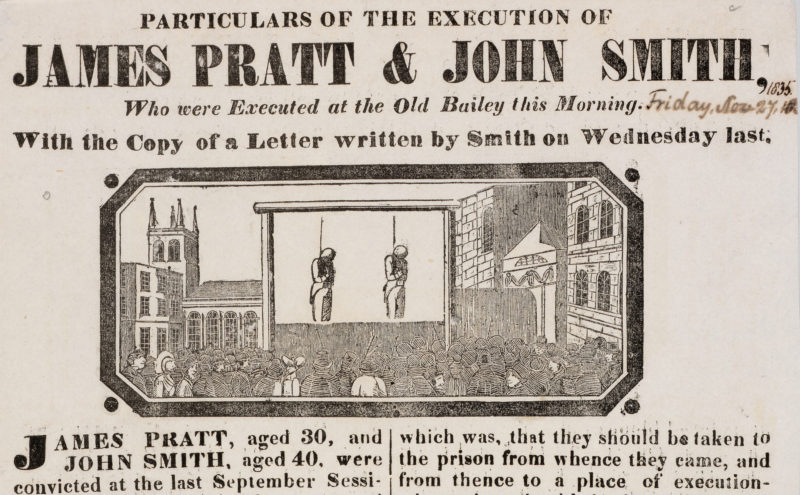
The last two men hanged for sodomy were James Pratt and John Smith, executed on November 27, 1835, outside Newgate Prison in London, convicted of buggery after being caught in a Southwark lodging. This marked the end of executions under the law, though the death penalty remained legally possible until 1861, when it was replaced with imprisonment under the Offences Against the Person Act (1861).

No comprehensive tally exists for the total number of gay men killed over the Act’s 300-year span (1533–1835). The term “buggery” encompassed acts beyond male homosexuality, including bestiality and, initially, heterosexual sodomy, complicating statistics.

Many prosecutions targeted behavior rather than identity, and “gay men” as a modern category didn’t exist in Elizabethan or later legal contexts—records focus on acts, not orientation. Estimates suggest a minimum of 60–70 executions specifically for male sodomy across three centuries, with the true number likely higher but obscured by lost records, unreported cases, or convictions masked as “attempted buggery” or other offenses.

Speculation about hundreds or thousands of deaths often arises from the law’s long duration and harsh penalty, but evidence doesn’t support such figures. Enforcement varied widely: the 16th century saw minimal use, the 17th century sporadic cases, and the 18th–19th centuries a sharper rise amid growing moral panic and urban “molly house” raids.

Still, the Act’s primary historical impact may lie less in executions and more in its role as a tool of fear, political leverage (e.g., against monasteries during the Dissolution), and colonial exportation of anti-sodomy laws.

Although precise figures elude us, at least 56 men were executed for sodomy between 1806 and 1835, with earlier cases like Hungerford and Tuchet adding to a conservative estimate of 60–70 over the Act’s enforcement. The actual toll could be modestly higher, but claims of mass executions lack substantiation from surviving records.

England’s First Sodomy Law Saw Hundreds Sentenced to Death (March 10, 2025)


Bornfield to Score International Premiere of Godly Bastard Off-Broadway


Innovative Composer Jeremiah Bornfield Elevates Godly Bastard with New Musical Score

New York, N.Y. — Award-winning composer Jeremiah Bornfield has been tapped to compose the musical score for the international premier of Godly Bastard, an Off-Broadway production produced by the J. Luce Foundation.

The play, written by Pakistani American artist, filmmaker, and playwright Mumtaz Hussain, tells the harrowing tale of an illegitimate boy placed in a South Asian orphanage who is coerced by extremists into martyrdom—a suicide bombing meant to restore his mother’s honor.

Bornfield’s compositions have been performed at prestigious venues such as Carnegie Hall, Lincoln Center, and Taipei National Theater.

His work has aired on PBS and HBO and has been featured in acclaimed films like Diane (introduced by Martin Scorsese) and Hitchcock/Truffaut, which was nominated for the Cannes Film Festival’s Golden Eye Award.

Rolling Stone critic Peter Travers described him as “gifted,” and he received a gold medal in film scoring from the International Independent Film Awards.

In addition to film scoring, Bornfield has collaborated with renowned ensembles such as Sō Percussion, the Grammy-winning Attacca Quartet, and the Prague Philharmonic.

He has also worked with Metropolitan Opera singers Trudy Craney and Nicholas Tamagna and librettist Royce Vavrek. His recent commissions include a viola concerto for Dr. Boris Vayner and the University of Kansas orchestra..

His dynamic approach to composition promises to enhance the emotional intensity of Godly Bastard through a score that marries classical roots with modern storytelling.

With accolades that span prestigious film scores and experimental chamber music, Bornfield’s contribution is expected to bring a transformative auditory dimension to the production, furthering the play’s impact on audiences worldwide.

Bornfield to Score International Premiere of Godly Bastard Off-Broadway (March 9, 2025)


#JeremiahBornfield, #GodlyBastard, #OffBroadway, #MusicalScore, #ContemporaryComposer, #ClassicalMeetsModern, #JLuceFoundation


How Did Christopher Marlowe, Probable Atheist and Spy, Die?


Christopher Marlowe, a contemporary of Shakespeare, died at the age of 29
under circumstances that remain shrouded in mystery and speculation.

London — Christopher Marlowe, “also known as “Kit,” died on May 30, 1593, at the age of 29 in Deptford, England, under circumstances that remain shrouded in mystery and speculation.

According to the official coroner’s report, Marlowe was fatally stabbed above the right eye by Ingram Frizer, a businessman and occasional servant, during a meeting at a lodging house owned by widow Eleanor Bull. The incident reportedly occurred after a day of eating and drinking, involving Marlowe, Frizer, and two other men: Nicholas Skeres and Robert Poley, both known for their shady connections to espionage and underworld activities.

The coroner’s inquest, conducted by the coroner of the Queen’s Household, concluded that Frizer acted in self-defense.

The report states that an argument erupted over the “reckoning” (the bill for their meal), during which Marlowe, allegedly in a fit of rage, seized Frizer’s dagger and struck him on the head. In the ensuing struggle, Frizer redirected the weapon, stabbing Marlowe in the forehead, killing him instantly. Frizer was arrested but pardoned by Queen Elizabeth I within a month, raising questions about the incident’s true nature.

Scholars and historians have long debated the official account.

Marlowe’s death coincided with his entanglement in legal and political troubles. Days earlier, on May 18, 1593, he was summoned by the Privy Council to answer charges of atheism and heresy linked to a blasphemous manuscript found in the home of his associate, Thomas Kyd.

Released on bail, Marlowe was under scrutiny when he died. His known associations with the Elizabethan intelligence network—possibly as a spy under Sir Francis Walsingham—fuel speculation that his death was a targeted assassination, perhaps to silence him or settle a political score.

Alternative theories suggest a personal feud or a staged killing, but no definitive evidence has resolved these mysteries.


How Did Christopher Marlowe, Probable Atheist and Spy, Die? (March 9, 2025)

Social Security Under Siege: Staffing Cuts Threaten Vulnerable


Millions at Risk as Social Security Staffing Cuts Threaten Retirement and Disability Benefits

Washington, D.C. –– Millions of Americans who rely on Social Security could soon face longer wait times, lost benefits, and growing bureaucratic nightmares as the agency responsible for processing claims and answering critical questions faces severe staffing shortages. The Social Security Administration (SSA), already struggling under years of budget cuts, is now bracing for even deeper reductions, sparking fears that vulnerable retirees, disabled individuals, and their families will be left in limbo.

For seniors who depend on their monthly checks to survive, for workers suddenly struck by disability, and for widows trying to navigate an already complex system, these cuts could mean financial devastation.

“This is not just a budget issue; this is a human issue,” said Linda Carter, a retired nurse in Ohio who recently spent six hours on hold trying to resolve a mistake in her benefit calculation. “We worked our whole lives and paid into this system, and now they’re making it impossible to get the help we need.”

A System on the Brink

The SSA processes retirement and disability claims for over 71 million Americans. In recent years, however, the agency has been forced to operate with fewer employees despite a growing workload. Budget cuts and hiring freezes have left offices across the country understaffed, while demand for services continues to rise as Baby Boomers retire in record numbers.

The impact is already severe. SSA employees report being overworked, and phone lines are jammed, leaving countless callers unable to get through. In-person service is increasingly difficult to access, with some offices closing permanently. Applications for disability benefits—often a lifeline for those who can no longer work—are taking months or even years to process.

“We have people who have paid into Social Security for decades, and now, when they need it most, they’re being told to wait—and wait—and sometimes die waiting,” said David Ramirez, a caseworker in a Texas SSA office. “It’s unacceptable.”

Longer Waits, More Mistakes, More Hardship

Even before these latest cuts, the average wait time for a Social Security disability appeal was more than 400 days. Some applicants waited over two years before finally receiving benefits. Meanwhile, call center data from 2023 showed that more than half of all callers gave up before reaching a representative due to long hold times.

Staffing shortages don’t just mean delays—they also mean mistakes. Incorrect benefit calculations, lost paperwork, and missed payments are becoming increasingly common. And for those who rely on these payments to cover rent, food, and medication, a delay or error can be catastrophic.

“Without my Social Security check, I can’t afford insulin,” said Michael Stevens, a 67-year-old retiree in Florida. “When my payment was delayed last year, I had to skip doses for weeks. It was terrifying.”

Who Will Be Hurt the Most?

The cuts will disproportionately affect those who already struggle the most—seniors on fixed incomes, disabled individuals unable to work, and lower-income Americans without the means to hire lawyers to fight benefit denials.

Advocacy groups are sounding the alarm, warning that further reductions will turn the Social Security system into a bureaucratic nightmare that serves fewer and fewer people effectively.

“This is a deliberate attempt to weaken a program that keeps millions of Americans out of poverty,” said Nancy Reynolds, director of the advocacy group Social Security Now. “And once it’s broken enough, politicians will say it’s failing and use that as an excuse to privatize or cut benefits even further.”

A Political Battle for the Future of Social Security

The crisis at SSA is not happening in a vacuum. Some lawmakers have been pushing for increased funding to restore staffing levels and modernize the agency’s technology. Others, however, see the strain on SSA as an opportunity to justify cuts to Social Security benefits themselves, arguing that the program is unsustainable.

But for the millions of Americans who rely on Social Security to survive, this is not a political game—it’s life or death.

“Every dollar that’s being withheld from SSA is another day that someone waits for the check they need to pay their rent, another day a disabled veteran goes without the benefits they earned, another grandparent has to choose between food and medication,” said Representative Lisa Thompson, a Democrat who is leading the fight for more funding.

For now, the future of Social Security remains uncertain. But one thing is clear: as long as SSA remains understaffed and underfunded, millions of Americans will continue to suffer—waiting in endless bureaucratic limbo for the support they were promised.


#SocialSecurityCrisis #ProtectOurSeniors #SSAStaffingCuts #RetirementRisk #DisabledLivesMatter #StopTheCuts #AgingWithDignity #SaveSocialSecurity

Exiled Scholars, Abandoned Dreams: Afghan Women Face Taliban


Taliban Retribution as USAID Freezes Lifeline

New York, N.Y. Laila Rahimi, 24, once dreamed of becoming Afghanistan’s first female astrophysicist. In 2021, she fled Kabul as the Taliban seized power, securing a USAID scholarship to study in Germany.

Today, that dream lies shattered. With USAID abruptly freezing funding for Afghan women’s education abroad, Laila faces an unthinkable choice: return to a homeland where the Taliban bans women from classrooms or remain in Europe, undocumented and destitute. “I escaped death once,” she says, her voice trembling. “Now, they’re sending us back to hell.”

USAID’s Lifeline and Its Collapse

For over a decade, the United States Agency for International Development (USAID) funded scholarships for thousands of Afghan women to study abroad, symbolizing a commitment to gender equity post-9/11. These programs, often partnered with NGOs and universities, offered degrees in fields from engineering to public policy, aiming to cultivate future leaders.

However, in 2023, funding stalled abruptly—a freeze advocates link to lingering Trump-era aid cuts and shifting U.S. priorities. Over 500 women, including Laila, were notified their tuition and living stipends would cease, forcing many to abandon studies. “This isn’t just bureaucratic failure; it’s a moral betrayal,” says Jim Luce, whose J. Luce Foundation supported Afghan women pre-Taliban.


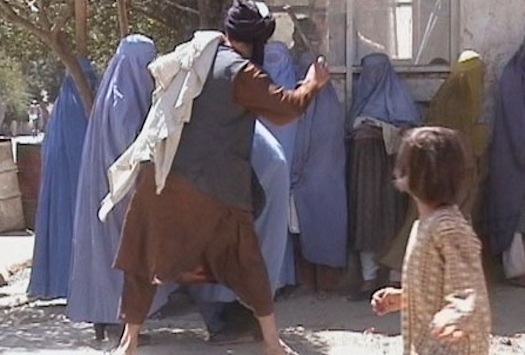
Taliban beating women in public for unveiling their faces publicly. Photo credit: Wikipedia.

Impact: Forced Return and Peril

Without visas or income, hundreds of women now confront deportation. Those returning face a Taliban regime that has banned women from universities and erased their rights to work or travel freely.

Returnees with Western ties risk interrogation, detention, or forced “reeducation”—a Taliban euphemism for punitive indoctrination.

“They see us as traitors,” says Marwa Basir, 22, a medical student in Turkey, now packing her dormitory. Human Rights Watch reports a surge in Taliban violence against educated women, including public floggings and enforced disappearances.

Meanwhile, Germany and other host nations, overwhelmed by refugee crises, offer few pathways to residency. “We’re not just losing an education—we’re losing our lives,” Marwa adds.


Taliban’s War on Women

Since retaking power, the Taliban has systematically dismantled women’s freedoms. Secondary schools for girls remain shuttered; universities banned women in December 2022. Women activists have vanished into prisons, while strict hijab mandates and male guardianship laws erase their public presence.

A 2023 U.N. report notes a 65% increase in gender-based violence, with suicide rates among young women doubling. For returnees, Western education brands them as dissidents. “The Taliban views these women as existential threats,” explains Heather Barr of Human Rights Watch. “Their very existence defies the regime’s ideology.”

Voices of Outrage and Despair

Jim Luce, whose foundation aided Afghan orphans and scholars, condemns the freeze as “catastrophic.” “Trump’s policies gutted humanitarian aid, but the silence today is complicit. These women will be tortured—or worse.” Former USAID contractor Amina Saadat reveals internal debates: “Some argued Afghanistan was a ‘lost cause.’ But abandoning these scholars isn’t pragmatism; it’s cowardice.”

Online, campaigns like #SaveAfghanScholars trend, yet governments remain inert. “We’re begging for extensions, selling belongings to survive,” says Laila, now tutoring illegally. “The West gave us hope, then ripped it away.”

Political Reckoning

The freeze underscores broader failures in U.S. Afghan policy. While the Biden administration restored $1.1 billion in aid for humanitarian crises, education remains excluded—a move critics call short-sighted. “Investing in women’s education is counterterrorism,” argues Rep. Sara Jacobs (D-CA), urging legislative action.

Meanwhile, Trump-era sanctions on Taliban-held Afghanistan complicate aid delivery, paralyzing NGOs. “Geopolitics shouldn’t doom a generation,” argues Luce. With Congressional gridlock stalling reforms, advocates turn to private donors, but gaps persist. “Without systemic change, these stopgaps won’t save Laila,” warns Saadat.

As flights depart, Laila weighs risking deportation or hiding in Europe’s shadows. Her story mirrors hundreds of Afghan women—pioneers turned pawns in geopolitical calculus. “We’re not just statistics,” she implores. “We’re humans with dreams.” Their plight demands urgent global response, lest the Taliban’s war on women claim another victory.

Exiled Scholars, Abandoned Dreams: Afghan Women Face Taliban (March 9, 2025)


Inside the Lives of Meerkats: Sunbathing, Scorpions, and Sentinels


New York, N.Y. — The meerkat (Suricata suricatta), an endearing resident of southern Africa’s arid landscapes, is a shining example of nature’s ingenuity and cooperation. Found across Namibia, Botswana, and South Africa, these small carnivores thrive in semi-desert savannas and scrublands. Their habitat includes intricate burrow systems that not only protect them from predators but also provide a cool refuge from the scorching heat.

A Life Underground

Meerkat burrows are engineering marvels. These underground networks can span up to 16 feet in diameter with multiple entrances and levels of tunnels. The burrows maintain stable temperatures—essential for survival in regions where daytime heat can soar above 40°C (104°F). Each burrow serves specific purposes: some are sleeping quarters while others act as pit stops during daily foraging expeditions.

The Power of Teamwork

Living in groups called mobs or gangs, meerkats exhibit remarkable social structures. Mobs typically consist of 10–30 individuals led by an alpha pair. Cooperation is key to their success. While some members forage for food—digging up insects, scorpions (to which they are immune), and small reptiles—others take on sentinel roles. Perched on high vantage points like rocks or mounds, sentinels scan the horizon for predators such as eagles or jackals. Their sharp eyesight ensures early warnings through distinct alarm calls.


Family First

Meerkats are also renowned for their altruistic behaviors. Babysitters stay behind to care for pups while the rest of the mob hunts. Pups begin life dependent on adults for food but soon join foraging trips where they learn survival skills. Playful wrestling matches among young meerkats not only entertain but also teach vital techniques for defense and hunting.

Adaptable Survivors

Adaptations like dark eye patches reduce sun glare during lookout duties, while their slender bodies allow them to navigate narrow tunnels with ease. Meerkats are diurnal creatures, most active during cooler parts of the day. They regulate body temperature by basking in the sun early morning or stretching out in shaded areas during peak heat.


A Symbol of Unity

Beyond their survival skills, meerkats captivate us with their charm and camaraderie. Whether standing tall on hind legs to survey their surroundings or clumping together to sleep for warmth, they embody teamwork and resilience.

In the wilds of the Kalahari Desert and beyond, meerkats remind us that even the smallest creatures can achieve greatness through unity and adaptability—a lesson as timeless as nature itself.


#MeerkatMagic, #WildlifeWonder, #KalahariCreatures, #TeamworkInNature, #SuricataSuricatta

Campuses in Turmoil: Deportation Threat Targets Anti-Israel Protesters


Outrage Grows as Trump Conflates Israel Criticism with Antisemitism in New Order

Washington, D.C. — In a move that has ignited widespread condemnation, President Donald Trump has signed an executive order that threatens to deport international students and others for participating in what he deems “anti-Israel” protests. The controversial directive, ostensibly aimed at combating antisemitism, has drawn fierce criticism for its broad and potentially unconstitutional reach.

The order, set to take effect in 2025, grants federal authorities sweeping powers to revoke visas and initiate deportation proceedings against foreign nationals accused of supporting Hamas or engaging in what the administration vaguely terms “pro-jihadist” activism. Critics argue that this dangerously conflates legitimate criticism of Israeli government policies with antisemitism, potentially silencing diverse voices on college campuses and beyond.

Trump’s Anti-Protest Order Sparks Outrage: Conflating Criticism with Hate

Civil liberties groups have decried the order as a thinly veiled attempt to target progressive activists, liberal Jews, Muslims, and others who may not align with Trump’s political views. The American Civil Liberties Union (ACLU) has already announced plans to challenge the order in court, calling it “a blatant violation of First Amendment rights.

The directive comes in the wake of increased tensions on college campuses, where debates over the Israeli-Palestinian conflict have intensified. However, many argue that Trump’s approach grossly oversimplifies a complex issue and risks further polarizing an already divided nation.

Dr. Sarah Goldstein, a professor of political science at Columbia University, expressed her disgust at the order. “This is a dangerous conflation of criticism and hate,” she stated. “It’s not just misguided; it’s a deliberate attempt to silence dissent and scapegoat entire communities.”

The order mandates federal agencies to propose new strategies within 60 days to combat what it calls antisemitism, including enhanced monitoring of campus activities and stricter enforcement of immigration laws. However, legal experts warn that the broad and ambiguous language used in the order could lead to arbitrary and discriminatory enforcement.

Rabbi David Stern of the Reform Jewish movement voiced his concerns: “While we must always stand against genuine antisemitism, this order risks labeling any criticism of Israel as hate speech. That’s not only wrong, it’s counterproductive to fostering meaningful dialogue.”

Muslim advocacy groups have also spoken out, fearing that the order could be used to target their communities unfairly. Fatima Hassan of the Council on American-Islamic Relations stated, “This is nothing short of state-sanctioned Islamophobia masquerading as protection for Jewish Americans.”

George Washington University Police tussle with protesters who tried to raise the Palestinian flag on campus on May 2, 2024.

As universities grapple with the implications of this order, many are reaffirming their commitment to free speech and open dialogue. Stanford University President Maria Garcia issued a statement saying, “We will not compromise our values of inclusivity and academic freedom. Our campus must remain a place where all perspectives can be heard and debated respectfully.”

The controversy has spilled over into the political arena, with several Democrats condemning the order. Senator Elizabeth Warren called it “a shameful attempt to silence critics and scapegoat minorities,” while Bernie Sanders described it as “un-American and deeply disturbing.”

As the 2025 implementation date looms, uncertainty and fear pervade many campus communities. International students, in particular, express concern about their future in the United States. “I came here to study and engage in open discourse,” said Ali Rashid, a Palestinian graduate student at MIT. “Now I fear that simply expressing my views could lead to my deportation.”

The coming months are likely to see intense legal battles and public debates over the constitutionality and ethics of Trump’s order. As the nation grapples with these complex issues, the fundamental values of free speech, academic freedom, and religious liberty hang in the balance.


#TrumpProtestBan #FreeSpeechUnderAttack #CampusRightsAtRisk #AntiSemitismOrSilencing #DeportationThreat

Was Shakespeare Gay? Scholars Explore Themes in Bard’s Sonnets


New Perspectives on Gender and Desire in the Bard’s Work

London — For centuries, William Shakespeare has been celebrated as the pinnacle of English literature, his works dissected for their linguistic brilliance and timeless themes. Yet one question continues to spark fervent debate: Was Shakespeare gay?

While definitive answers remain elusive, a growing wave of scholars and LGBTQ+ advocates are re-examining the Bard’s life and writings through a queer lens, arguing that his work—particularly his sonnets—hints at a complexity of desire that transcends heteronormative interpretations.

The Sonnets: A Window Into Shakespeare’s Heart?

The heart of the debate lies in Shakespeare’s 154 sonnets, published in 1609. Roughly 126 of these poems are addressed to a young man, known as the “Fair Youth,” using language brimming with adoration and longing. Sonnet 18 (“Shall I compare thee to a summer’s day?”) and Sonnet 20 (“A woman’s face with nature’s own hand painted”) have drawn particular scrutiny. The latter, which describes the youth as “the master-mistress of my passion,” explicitly blurs gender lines, celebrating his androgynous beauty while lamenting that nature “pricked thee out for women’s pleasure.”

Traditional interpretations often dismiss these verses as platonic or poetic convention.

However, Dr. Paul Edmondson, head of research at the Shakespeare Birthplace Trust, argues that the emotional intensity suggests something deeper: “The sonnets to the Fair Youth are among the most intimate and passionate in the English language. To dismiss them as mere artistic exercise ignores their vulnerability and specificity.”

Critics counter that Elizabethan male friendships often employed florid language by modern standards. Sir Brian Vickers, a senior fellow at the School of Advanced Study, University of London, asserts, “Renaissance expressions of affection between men were culturally permissible in ways that might seem romantic today. We risk misreading history by applying 21st-century labels.”

Historical Context: Navigating a Hostile World

Shakespeare lived in an era when same-sex relationships were criminalized.

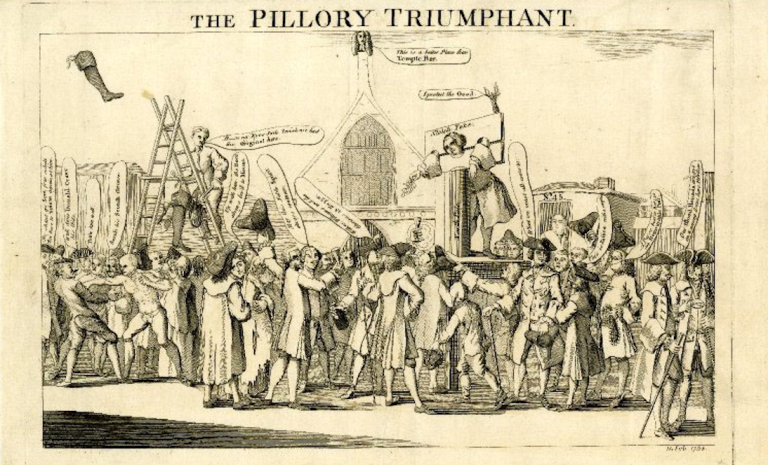
The Buggery Act of 1533 classified homosexual acts as punishable by death—a law not repealed until 1861. Yet queer subcultures undeniably existed. Christopher Marlowe, Shakespeare’s contemporary, faced accusations of “atheism” and homosexuality, while diaries from the period hint at clandestine relationships.

Dr. Stanley Wells, a renowned Shakespearean scholar, notes that the Bard’s plays also subtly challenge gender norms. Cross-dressing heroines like Viola in Twelfth Night and Rosalind in As You Like It navigate fluid identities, while The Merchant of Venice features Antonio’s unspoken devotion to Bassanio. “Shakespeare’s fascination with disguise and duality often centers on queerness, whether intentional or not,” says Wells.

Modern Scholarship: Queer Theory Enters the Frame

The rise of queer theory in the 1990s revitalized interest in Shakespeare’s potential LGBTQ+ affiliations. Academics like Dr. Alan Sinfield and Dr. Valerie Traub have analyzed his texts as sites of coded desire. Traub’s Desire and Anxiety: Circulations of Sexuality in Shakespearean Drama (1992) argues that his works “unsettle binaries,” portraying desire as a spectrum rather than a fixed category.

“As a gay man whose father wrote the first American doctoral dissertation on Shakespeare in French — Yale 1947 — I am particularly amused that the author I studied in a homophobic high school English class in the 1970s might have shared the same feelings that I had,” states Jim Luce of the Luce Family Charities.

Not all embrace this view.

Some traditionalists accuse scholars of projecting contemporary politics onto the past. Yet Dr. Madhavi Menon, director of the Center for Queer Studies at Ashoka University, counters: “Queer readings don’t seek to ‘out’ Shakespeare—they highlight how his writing resists rigid categorization, which is precisely why it remains relevant.”

Cultural Impact: Shakespeare as a Queer Icon

Beyond academia, Shakespeare has been reclaimed as a queer icon in popular culture. The 1998 film Shakespeare in Love playfully hinted at the Bard’s bisexuality, while the 2022 stage production Shakespeare’s Queer Sonnets reimagined the verses through a modern LGBTQ+ lens. The British Library’s 2023 exhibition Love and Desire in the Renaissance prominently featured his sonnets alongside letters from same-sex couples of the era.

Activists argue that embracing Shakespeare’s potential queerness enriches his legacy. “Representation matters, even retroactively,” says Jamie Windust, a non-binary author and podcaster. “If a teenager today finds solace in thinking Shakespeare might have felt what they feel, that’s powerful.”

The Verdict: Ambiguity as Legacy

While evidence of Shakespeare’s sexuality remains circumstantial, the debate itself underscores his enduring resonance. Whether gay, bisexual, or simply a master of human emotion, his work invites audiences to see themselves in its complexity. As Dr. Edmondson reflects: “Shakespeare’s genius lies in his ability to articulate the universality of desire. That includes desires that defy easy labels.”

For now, the Bard’s secrets remain buried with him in Stratford-upon-Avon. But in a world increasingly embracing fluid identities, the question of who Shakespeare loved—and how—feels more alive than ever.

Was Shakespeare Gay? Scholars Explore Themes in Bard’s Sonnets (March 9, 2025)


#ShakespeareAndPride #QueerShakespeare
#BardReexamined #LGBTQLitHistory #SonnetSecrets

From Hearing Loss to Leadership: Dr. Bauer’s ‘Our Why’ Inspires Professionals


Empowering Lives: PAR-Ohio Hosts Dr. Bauer’s Motivational Session


Dr. Bill Bauer to Inspire Professionals in
Empowering Lives at Upcoming Webinar

New York, N.Y. – On March 26, 2025, Dr. Bill Bauer, a renowned educator, counselor, and disability rights advocate, will host an online session titled “Our Why! Empowering Others to Live a Life They Love.”

Aimed at professionals in developmental disability services, the one-hour webinar offers two time slots—11:00 a.m. to 12:00 p.m. or 1:00 p.m. to 2:00 p.m.—for attendees to choose from. With limited space at $50 per ticket, the event promises to reignite passion for meaningful work.

Dr. Bauer, born with sensorineural hearing loss in Marietta, Ohio, will share his journey from a young boy facing challenges to a celebrated career as a special education teacher, principal, and author.

His talk will weave personal anecdotes with professional insights, encouraging attendees to refocus on “The Why” behind their roles—empowering individuals with developmental disabilities to lead fulfilling lives. “Too often, paperwork overshadows purpose,” Bauer notes, aiming to shift perspectives on inclusion and planning.

The session, approved for 1 CPDU hour through the Ohio Department of Developmental Disabilities (DODD), targets Adult Services staff, County Board Members, Investigative Agents, Service and Support Administrators, and Superintendents. However, it was denied for Early Intervention roles. Hosted by PAR-Ohio, registration details are available via Heather at (234) 255-4334 or heather@par-ohio.org.

Bauer’s credentials are extensive: he holds degrees from Ohio University in Special Education and School Administration, a Master’s degree in Counseling, and a Ph.D. in Rehabilitation Services from The Ohio State University. A nationally certified Rehabilitation Counselor and licensed professional counselor in Ohio and West Virginia, he’s also an approved supervisor in West Virginia. His advocacy spans leadership roles with Disability Rights Ohio, the Ohio Rehabilitation Services Commission, and Mental Health First Aid instruction. He also serves with distinction as vice president of the J. Luce Foundation of New York.


We commend Dr. Bill Bauer for his exceptional work and inspiring leadership in the field of disability advocacy. Dr. Bauer’s upcoming workshop, From Hearing Loss to Leadership: Dr. Bauer’s ‘Our Why’ Inspires Professionals, is a testament to his lifelong commitment to empowering individuals and professionals alike. We wholeheartedly endorse Dr. Bauer’s work and encourage all professionals committed to making a difference to attend this transformative session. – Jim Luce, President, J. Luce Foundation

Beyond his professional life, Bauer enjoys global travel, thirty years of coaching competitive swimming, and writing books. His webinar promises practical inspiration for professionals feeling bogged down by routine, offering a fresh lens on disability inclusion as of March 2025.

From Hearing Loss to Leadership: Dr. Bauer’s ‘Our Why’ Inspires Professionals (March 8, 2025)


#OurWhy #DisabilityRights #Empowerment #DrBillBauer
#PAROhio #InclusionMatters #Leadership2025

International Women’s Day Promotes Rights Worldwide


New York, N.Y. — International Women’s Day (IWD) is celebrated on 8 March, commemorating women’s fight for equality and liberation along with the women’s rights movement. International Women’s Day gives focus to issues such as gender equality, reproductive rights, and violence and abuse against women.

Some Impressions of the New York Socialist Women’s Conference’ by Theresa Malkiel from The Socialist Woman. Vol. 2 No. 15. August, 1908.

Spurred by the universal female suffrage movement, International Women’s Day originated from labor movements in Europe and North America during the early 20th century.

The earliest version reported was a “Woman’s Day” organized by the Socialist Party of America New York City on February 28, 1909.

In solidarity with them, communist activist and politician Clara Zetkin proposed the celebration of “Working Women’s Day,” approved at the 1910 International Socialist Women’s Conference in Copenhagen, albeit with no set date; the following year saw the first demonstrations and commemorations of International Women’s Day across Europe.

Vladimir Lenin declared March 8 as International Women’s Day in 1922 to honor the women’s role in the 1917 Russian Revolution; it was subsequently celebrated on that date by the socialist movement and communist countries. The holiday became a mainstream global holiday following its promotion by the United Nations in 1977.

International Women’s Day is a public holiday in several countries. The U.N. observes the holiday in connection with a particular issue, campaign, or theme in women’s rights.


Translation from German:
Give Us Women’s Suffrage | Women’s Day, March 8, 1914

To the women who fulfill their full duties as workers, mothers, and community citizens, who must pay their taxes to both the state and the municipality, prejudice and reactionary attitudes have so far denied full civic rights.

Fighting for this natural human right must be the unwavering, firm will of every woman, every female worker. There must be no rest, no pause in this struggle.

Therefore, come all of you—women and girls—to the public women’s assembly taking place on Sunday, March 8, 1914, at 3 PM.”


International Women’s Day Promotes Rights Worldwide (March 8, 2025)

Trump’s Fascist Fantasy: GOP’s All-Out Assault on Public Education


“Fascism requires a populace that’s uneducated and afraid,” warns historian Heather Richardson.
“Destroying public education isn’t just a policy—it’s a prerequisite for tyranny.”


“Are You Out of Your Fascist Mind?”: Fury Erupts Over
Trump’s Threat to Annihilate the Department of Education

Washington, D.C. Donald Trump’s latest authoritarian gambit—floating the annihilation of the U.S. Department of Education—has ignited a firestorm of outrage, with critics accusing the president of embracing fascist tactics to dismantle public education, suppress marginalized voices, and consolidate power. The proposal, dismissed by many as unhinged, underscores a broader Republican crusade to weaponize education as a tool of ideological control, sparking fierce backlash from educators, parents, and civil rights leaders.

The Threat: Erasing Federal Protections, Silencing Progress

Trump’s radical vision, touted at recent far-right rallies and in interviews with extremist allies, calls for shuttering the Department of Education, a move he claims would “return power to the states.” But educators and policy experts warn the plan is a thinly veiled assault on civil rights, equity, and the very foundation of public schooling.

Since its creation in 1979, the Department has enforced desegregation, protected disabled students under IDEA, and safeguarded Title IX rights for women and LGBTQ+ students. Its dissolution would gut federal oversight, allowing red states to whitewash curricula, defund low-income schools, and erase protections for vulnerable communities.

“This isn’t about ‘states’ rights’—it’s about stripping away the right to learn, to thrive, and to exist,” said Randi Weingarten, president of the American Federation of Teachers. “Trump and his MAGA cronies want to turn classrooms into battlegrounds where history is rewritten, books are banned, and only the privileged get a fair shot.”

A Dark History: From DeVos to “Project 2025”

Trump’s latest salvo builds on his administration’s relentless attacks on public education. Former Education Secretary Betsy DeVos, a billionaire champion of privatization, spent four years funneling taxpayer dollars into unregulated charter schools while slashing protections for student borrowers and survivors of campus sexual assault.

Now, Trump’s ties to the Heritage Foundation’s “Project 2025”—a 920-page extremist blueprint for a second term—reveal even darker ambitions. The plan demands dismantling the Department of Education, abolishing free school lunches, and banning federal diversity initiatives.

Dr. Ibram X. Kendi, author of How to Be an Antiracist, called the agenda “a fascist fever dream,” adding, “They’re not just coming for our schools—they’re coming for our democracy. This is about replacing truth with propaganda, equality with oppression.”

Who Pays the Price? Students of Color, Poor Communities, and LGBTQ+ Youth

The consequences of Trump’s plan would be catastrophic. Without federal enforcement:

  • States could ignore mandates to support students with disabilities.
  • Title I funding, which allocates $16 billion annually to high-poverty schools, would vanish, widening the resource gap.
  • LGBTQ+ students would lose federal safeguards against discrimination.
  • Student debt relief programs, already under GOP attack, would be axed entirely.

“This is white supremacy in action,” said Marley Dias, founder of #1000BlackGirlBooks. “They want to lock Black and brown kids into underfunded schools, erase their history, and pretend systemic racism doesn’t exist. It’s disgusting.”

Republican-led states offer a grim preview. Florida’s “Don’t Say Gay” law has forced LGBTQ+ teachers into hiding, while Texas schools purge books on race and slavery. In Oklahoma, superintendents warn that dissolving federal oversight would “return us to the 1950s—separate and unequal.”

The Backlash: “We Will Fight This Tyranny”

The response has been swift and furious. The NAACP filed a preemptive legal warning against any move to disband the Department, while student-led groups like March for Our Lives pledged nationwide walkouts. “They think we’ll stay quiet while they rob us of our futures?” said Zara Muhammad, a 17-year-old organizer in Michigan. “We survived school shootings. We’ll survive Trump’s fascism too.”

Teachers’ unions are mobilizing strikes, and progressive lawmakers are pushing bills to fortify federal education mandates. “This is a five-alarm fire for our democracy,” said Rep. Jamaal Bowman (D-NY), a former educator. “We will not let Trump torch our schools to fuel his authoritarian fantasies.”

The Bigger Picture: Education as the Frontline of Democracy

Trump’s war on education is no outlier—it’s a pillar of his authoritarian playbook. By gutting public schools, he empowers a privatized, for-profit system that siphons taxpayer dollars into the pockets of GOP donors. Meanwhile, banning “critical race theory” and “woke” ideals ensures future generations remain ignorant of systemic injustice.

Fascism requires a populace that’s uneducated and afraid,” warned historian Heather Cox Richardson. “Destroying public education isn’t just a policy—it’s a prerequisite for tyranny.”

As Trump echoes Hitler’s playbook—scapegoating institutions, targeting marginalized groups, and glorifying “patriotic education”—the stakes have never been clearer. The Department of Education is not a bureaucratic abstraction. It’s a lifeline for millions. Dismantling it would be an act of violence.

The Fight Ahead

For now, the Department remains intact, but the threat is visceral. November’s election will decide whether U.S. schools become laboratories of fascist indoctrination or remain pillars of pluralistic democracy. As Trump’s allies plot, educators and activists refuse to relent.

“They’ll have to pry our textbooks from our cold, dead hands,” said Weingarten.


#FascistEducationAgenda #DefendPublicEd #TrumpVsDemocracy
#EducationUnderFire #HandsOffOurSchools

Politically Motivated: Nonprofit Staff Hit in Loan Forgiveness Rollback


Loan relief stripped from nonprofit workers whose
organizations are deemed to engage in “improper activities”

Washington, D.C. — President Donald Trump has issued an executive order that fundamentally alters the Public Service Loan Forgiveness (PSLF) program, stripping loan relief from nonprofit workers whose organizations are deemed to engage in “improper activities.”

This controversial move targets nonprofits involved in immigration advocacy, diversity initiatives, and gender-affirming care, accusing them of promoting illegal actions without providing concrete evidence. Critics argue this is a politically motivated attack on organizations that oppose Trump’s policies, jeopardizing the livelihoods of millions of Americans who rely on the PSLF program.

The PSLF program, established in 2007, was designed to encourage careers in public service by forgiving student loans after ten years of payments for employees in government and nonprofit sectors. Trump’s directive now excludes workers whose nonprofits allegedly “fail to serve the public good” or “jeopardize national security.”

The vague language has sparked outrage among civil rights groups and nonprofit leaders, who fear this opens the door for arbitrary and politically biased exclusions.

Education Secretary Linda McMahon had previously committed to upholding the PSLF program as mandated by Congress. However, Trump’s order directs her department to revise eligibility criteria, effectively disqualifying workers whose nonprofits operate in areas like immigration reform or LGBTQ+ advocacy.

Critics note that these changes align with Trump’s political agenda rather than addressing legitimate concerns about illegal activities.

The executive order has drawn sharp criticism for its lack of transparency and evidence.

Organizations targeted under these new rules may face financial ruin and reputational damage, as they are labeled as engaging in “illegal” or “disruptive” activities without due process. Advocacy groups warn this could deter talented individuals from pursuing careers in public service, undermining the very purpose of the PSLF program.

This move follows broader efforts by Trump to curtail nonprofit operations that conflict with his administration’s policies.

A recent bill passed by the House grants the Treasury Department authority to revoke tax-exempt status from nonprofits accused of supporting terrorism—a measure critics fear could be weaponized against political opponents. Combined with the PSLF rollback, these actions signal an alarming trend toward suppressing dissent under the guise of national security.

Millions of Americans working in nonprofits now face uncertainty about their financial futures.

The PSLF program has already been plagued by administrative hurdles and shifting regulations, leaving many borrowers struggling to access promised relief. Trump’s latest order exacerbates these challenges, potentially disqualifying thousands of workers overnight based on arbitrary criteria.

Civil rights advocates are calling for immediate congressional intervention to protect nonprofit workers and ensure the PSLF program remains intact as originally intended. As Trump continues to reshape federal programs to align with his political goals, critics warn of long-term damage to public trust and the nonprofit sector’s ability to serve vulnerable communities.

Politically Motivated: Nonprofit Staff Hit in Loan Forgiveness Rollback (March 8, 2025)


 #TrumpLoanRollback #NonprofitWorkers #PSLFChanges
#StudentDebtCrisis #PoliticalTargeting  

Europe Confronts Post-Western Era as Trump’s Fractures Bonds


Transatlantic Shockwaves: Europe Grapples With
Trump’s NATO Ambivalence and Russia Rapprochement


Europe Reels as Trump’s Russia Embrace Redefines Global Order

Brussels—In the wake of Donald Trump’s [Luce Index™ score: 35] return to the White House, Europe is confronting an existential reckoning. The former—and now once-again—U.S. president’s unabashed courtship of Russia and dismissal of NATO’s foundational principles have left leaders and citizens alike grappling with a seismic question: Is the transatlantic alliance, the bedrock of post-1945 global stability, irrevocably broken?

A Stunned Continent
From Berlin to Warsaw, a palpable sense of disbelief lingers. Trump’s recent remarks dismissing NATO’s mutual defense clause as “obsolete” and praising Vladimir Putin [Luce Index™ score: 33] as a “strategic genius” have amplified long-simmering anxieties. German Chancellor Olaf Scholz [Luce Index™ score: 35] termed the rhetoric “dangerously naïve,” while French President Emmanuel Macron warned of “Europe’s moment of truth” in a televised address. Public opinion polls reveal deepening distrust: 68% of Germans now view the U.S. as an unreliable partner, a historic low.

The shock is compounded by Trump’s transactional approach to Ukraine.

His suggestion that Kyiv cede territory to end the war—echoing Kremlin talking points—has drawn fury from Eastern Europe. “This isn’t just about Ukraine. It’s about whether America still believes in its own ideals,” said Lithuanian Foreign Minister Gabrielius Landsbergis.

The Unraveling of ‘the West’
For decades, “the West” symbolized a shared commitment to democratic values and collective security. Trump’s pivot threatens to dismantle this narrative. His administration’s first-term policies—withdrawing from the Paris Accord, imposing trade tariffs on the EU—already strained ties. Now, his renewed hostility toward NATO’s funding structure (“Why should we pay for Europe’s defense?”) and warm overtures to Moscow have left allies questioning Washington’s dependability.

“This isn’t a policy shift—it’s an ideological rupture,” said Constanze Stelzenmüller, a senior fellow at the Brookings Institution. “Trump’s vision rejects the multilateralism that defined U.S. leadership since FDR. Europe is realizing it can’t wait for America to come back.”

Strategic Autonomy: Dream or Delusion?
In response, EU capitals are fast-tracking initiatives once deemed unthinkable. The European Defence Fund, a €8 billion project to reduce reliance on U.S. arms, has gained renewed urgency. Macron’s calls for “strategic autonomy” now resonate even in NATO-skeptic states like Poland. Yet hurdles remain: EU defense spending remains fragmented, and Eastern members fear alienating Washington.

“Autonomy requires more than slogans,” cautioned Ian Bond of the Centre for European Reform. “Without U.S. intelligence and logistics, Europe’s militaries are still midgets.”

Putin’s Quiet Victory
Kremlin officials, meanwhile, are capitalizing on the disarray. Russian state media gleefully frames Trump’s stance as proof of Western decay. “The Atlanticists are eating their own,” proclaimed a recent Rossiyskaya Gazeta editorial. While EU diplomats dismiss Moscow’s triumphalism, some analysts warn of a strategic blind spot.

“Trump’s ‘America First’ dogma ignores that a strong NATO counters Chinese and Russian ambitions,” said former Swedish Prime Minister Carl Bildt. “Divided, we’re all weaker.”

A World Without ‘the West’?
The long-term implications remain murky. Some foresee a multipolar order where Europe aligns with middle powers like India and Japan. Others predict internal EU fractures, with Hungary’s Viktor Orbán and Italy’s Giorgia Meloni championing Trump-style nationalism.

For now, Europe’s emotional pendulum swings between defiance and despair. As one EU diplomat sighed: “We built a world with America at the helm. Now, we’re drafting blueprints for a lifeboat.”

In this new era, the only certainty is uncertainty—and the haunting sense that a 75-year-old alliance may be slipping into history.


#EuropeInShock #TransatlanticSplit #EndOfTheWest
#TrumpPutinAxis #NATOCrisis #EUAutonomy #NewWorldOrder

Enemies of the People: Global Tyrants Who Strangle Liberty


These so-called leaders are strangling the soul of humanity. They are truly ‘enemies of the people.

New York, N.Y. — The world’s choking on a plague of strongmen, and I’m sick of it. These so-called leaders—puffed-up tyrants like Vladimir Putin, Recep Tayyip Erdoğan, Mohammed bin Salman, Kim Jong Un, Donald Trump, and Elon Musk—aren’t just power-hungry; they’re strangling the soul of humanity. They’re enemies of the people.

Start with Putin. He has turned Russia into a prison camp, silencing dissent with poison and bullets—look at Alexei Navalny’s fate. Erdoğan’s no better, jailing journalists and opponents in Turkey like it’s a sport, all while grinning for the cameras. Then there’s Mohammed bin Salman, Saudi Arabia’s crown prince, who green-lit the savage butchery of Jamal Khashoggi and still gets a handshake from the West. Kim Jong Un? A buffoonish dictator starving North Koreans while he plays with nukes. These aren’t leaders—they’re parasites.

And don’t get me started on Donald Trump.

Back in power in 2025, he’s already flexing like a school yard bully–a tin-pot despot–threatening judges and spewing venom about “vermin” opponents. His buddy Elon Musk’s right there with him, unelected but acting like co-king, gutting federal agencies with a smirk. Musk’s not just a billionaire—he’s a wannabe overlord, turning X into his personal propaganda mill. Together, they’re a tag-team of chaos, shredding democracy for kicks and profit.

This isn’t just a rogue’s gallery; it’s a warning.

These 20 figures—see the list below—share a playbook: crush dissent, rig systems, and worship power over people. Xi Jinping’s got China locked in a surveillance chokehold, while Nicolás Maduro’s turned Venezuela into a wasteland of hunger and lies. Viktor Orbán’s Hungary is a nationalist fever dream, and Jair Bolsonaro’s Brazil flirted with the same poison. Even Narendra Modi, cloaked in democratic robes, squeezes India’s minorities and media with a smile.

The anger boils over when you see the pattern.

These aren’t random bad apples—they’re a global infection. From Aleksandr Lukashenko rigging Belarus to Abdel Fattah el-Sisi turning Egypt into a military fiefdom, they thrive on fear and apathy. Look at Rodrigo Duterte’s Philippines—thousands dead in his “drug war,” and he brags about it. Or Myanmar’s Min Aung Hlaing, drowning dissent in blood since his coup. This is what happens when the world shrugs.

What’s maddening is how they get away with it.

Trump and Musk cozy up to these men—Putin, Kim, Erdoğan—and call it “smart.” Smart? It’s a betrayal of every value we’re supposed to hold dear. Freedom, justice, decency—they’re roadkill under these men’s tanks. And the rest of us? We’re stuck watching as they rewrite rules, jail critics, and laugh all the way to their palaces.

Take Saudi Arabia’s MBS—he hacks up a journalist, and the world still pumps his oil. Or Putin, annexing Ukraine while the West dithers. These enemies don’t just threaten their own people—they’re a middle finger to anyone who believes in a better world. Even figures like Nayib Bukele in El Salvador, hailed as a crime-fighter, lock up thousands without trial. It’s not progress; it’s a power grab.

I’m done with excuses.

These twenty aren’t “complex leaders” or “disruptors”—they’re tyrants, plain and simple. Some, like Trump and Musk, hide behind elections or wealth, but the stench of authoritarianism doesn’t wash off. Others, like Kim and Xi, don’t even pretend. They’re united by one goal: control at any cost. And we’re the collateral damage—our rights, our voices, our future.

So here’s the list. Stare at it. Feel the rage. Then do something—speak, vote, resist. Because if we let these enemies of the people keep winning, there won’t be much left worth saving. I’m Jim Luce, and I’m not shutting up until they’re stopped.


Top 20 Authoritarian or Fascist Figures (2025 Context)

  1. Vladimir Putin (Russia) – Centralized power, suppressed dissent, annexed territories.
  2. Recep Tayyip Erdoğan (Turkey) – Jailed opponents, curtailed press freedom.
  3. Mohammed bin Salman (Saudi Arabia) – Ordered Khashoggi’s murder, absolute rule.
  4. Kim Jong Un (North Korea) – Totalitarian control, human rights abuses.
  5. Donald Trump (USA) – Threats to democracy, authoritarian rhetoric in 2025 term.
  6. Elon Musk (USA) – Unelected influence, pushes anti-democratic agendas.
  7. Xi Jinping (China) – Surveillance state, crushed Hong Kong’s freedoms.
  8. Nicolás Maduro (Venezuela) – Rigged elections, economic collapse.
  9. Viktor Orbán (Hungary) – Nationalist, eroded democratic norms.
  10. Jair Bolsonaro (Brazil) – Embraced authoritarian tactics, denied 2022 election.
  11. Narendra Modi (India) – Curtailed press, targeted minorities.
  12. Aleksandr Lukashenko (Belarus) – Rigged elections, brutal crackdowns.
  13. Abdel Fattah el-Sisi (Egypt) – Military dictatorship, mass arrests.
  14. Rodrigo Duterte (Philippines) – Extrajudicial killings in “drug war.”
  15. Min Aung Hlaing (Myanmar) – Coup leader, violent suppression.
  16. Nayib Bukele (El Salvador) – Mass incarcerations, eroded checks.
  17. Bashar al-Assad (Syria) – Brutal civil war, chemical attacks (pre-2025 fall).
  18. Ali Khamenei (Iran) – Theocratic control, suppressed protests.
  19. Teodoro Obiang Nguema (Equatorial Guinea) – Decades-long dictatorship.
  20. Gurbanguly Berdimuhamedow (Turkmenistan) – Cult of personality, total control.

#Social Media Hashtags #EnemiesOfThePeople #FightTyranny
#AuthoritarianThreat #ResistNow #FreedomUnderFire

Enemies of the People: Global Tyrants Who Strangle Liberty (March 8, 2025)