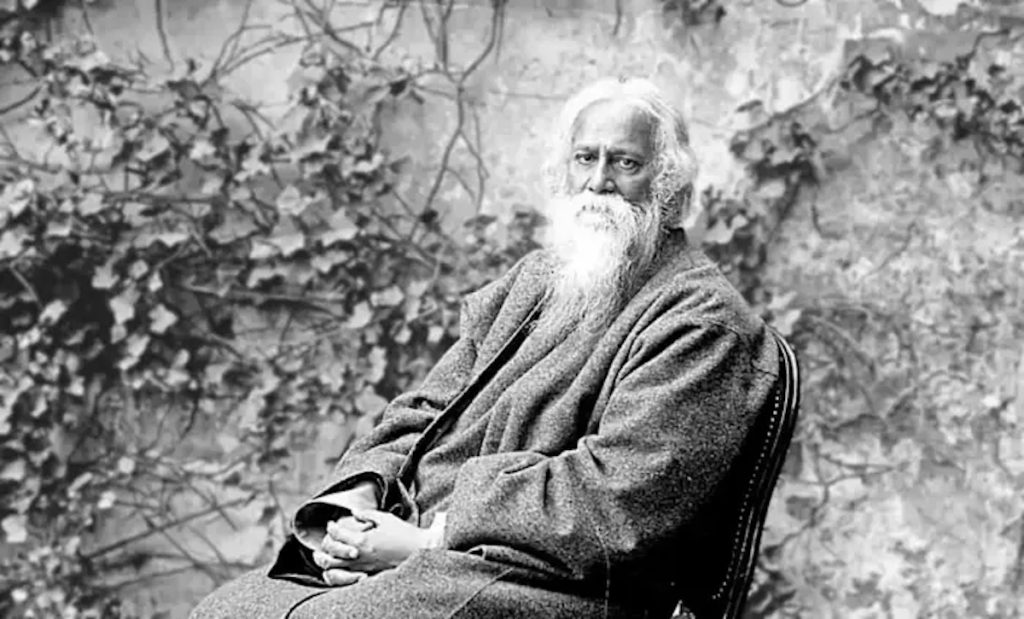
Rabindranath Tagore (July 2, 2018)
Rabindranath Tagore (July 2, 2018)
[draft]
Peking University, May 4, 2013: As Peking University is celebrating its 115th anniversary, the English term “Peking University” was not monopolized; it has been used to refer to several higher education institutions in Beijing at different times.
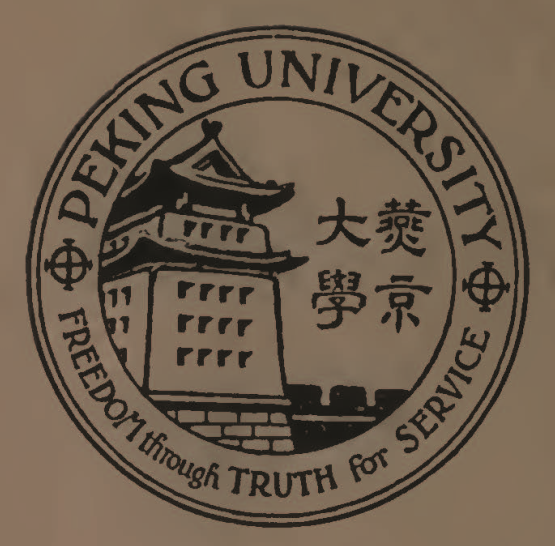
“Huiwen Daxue” (Huiwen University), or the Methodist University of Peking, was one of the precursors of Yanjing Daxue/Yenching University. Founded by the Methodist Episcopal Church in the 1880s in the Chinese capital, Huiwen called itself “Peking University” in English, which was inherited by Yenching before the latter launched its new official English title in the 1920s.
The official English appellation of today’s Beida then was the Government University of Peking (1912-1919), and the National University of Peking from 1919.
Yanjing Daxue, the then named “Peking” university, published an official English brochure in 1921 titled “Peking University.”
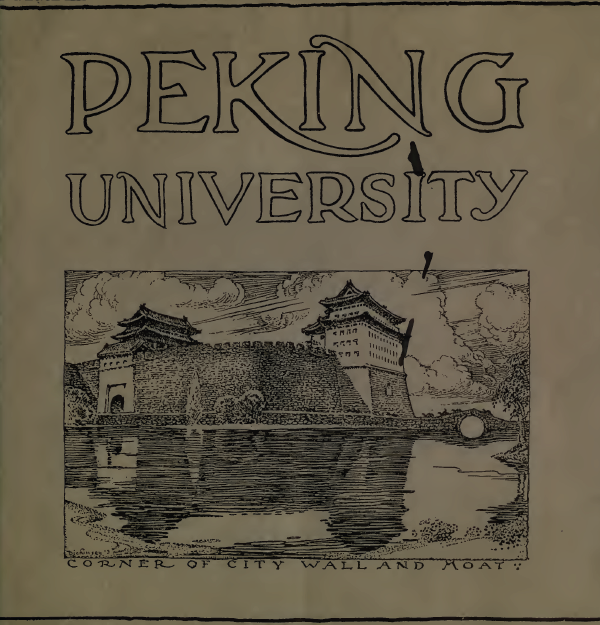
Rev. Henry Winters Luce occupied various key roles in the management and establishment of Shantung Christian
University (ca. 1897-1917), Peking University (ca. 1921-1925, later known as Yenching University), and the
China Christian Educational Association. He corresponded with hundreds of people in regards to support,
cooperation, and fundraising for university buildings and programs, and for relief programs in China.
Following his return from China, Luce served as Professor in the Chinese Department at Kennedy School of
Missions, Hartford, Connecticut.
Peking University (July 2, 2018)
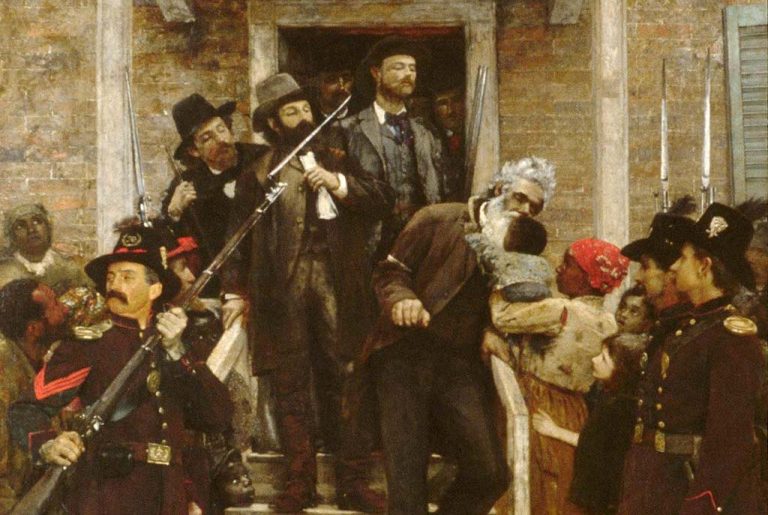
Painting: John Brown on his way to the gallows, December 2, 1859, The Last Moments of John Brown (1883). Painting by Thomas Hovenden. Credit: Metropolitan Museum of Art, New York.
New York, N.Y. xxx Abolition
[draft]
American Civil War (Wiki)
John Brown (Wiki)
Story of John Brown (June 29, 2018)

Photo: Democratic Senators including Richard Blumenthal (D-CT) addressing crowd, July 2017. Commons. Blumenthal has been historically one of the most liberal members of the Senate, along with Sen. Chris Murphy. Connecticut’s House delegation has been the fourth most liberal, according to rankings by the National Journal. Photo credit: Kelly Bell Photography/Wikimedia.
New York, N.Y. Connecticut, one of the original thirteen colonies, boasts a rich history marked by significant contributions to social change. From its early days of colonial settlement to its role in the American Revolution and beyond, the state has produced numerous figures who have championed social justice and reform. This narrative delves into Connecticut’s past, highlighting the individuals and movements that have shaped its legacy.
The Connecticut Women’s Hall of Fame includes Jane Pauley (TV anchor), Margaret Bourke-White (photographer), Carolyn Miles (Save the Children), Indra Nooyi (Pepsi), Annie Leibovitz (photographer), Dorothy Hamill (Olympic skater), Helen Keller (educator), Clare Boothe Luce (ambassador, writer), and Harriet Beecher Stowe (abolitionist).
Connecticut’s history begins in the early 1600s when Dutch explorers first navigated the region. English Puritans, seeking religious freedom, established the Connecticut Colony in 1636. Under the leadership of Thomas Hooker, who is often celebrated for his advocacy of democratic principles, the colony adopted the Fundamental Orders of Connecticut in 1639. This document, considered by many as the first written constitution in the Western tradition, laid the groundwork for self-governance and influenced the development of the United States Constitution.
Connecticut played a crucial role in the American Revolution. The state’s residents were staunch supporters of independence, and figures like Israel Putnam and Nathan Hale became legendary for their contributions. Hale, a schoolteacher turned soldier, famously declared, “I only regret that I have but one life to lose for my country,” before being executed by the British as a spy. His bravery and sacrifice have been immortalized as symbols of American patriotism and commitment to liberty.
Connecticut was a hotbed of abolitionist activity in the 19th century. The state’s residents were deeply involved in the movement to end slavery and promote civil rights for African Americans. Harriet Beecher Stowe, an author from Litchfield, Connecticut, wrote the influential novel Uncle Tom’s Cabin. Published in 1852, the book depicted the brutal realities of slavery and galvanized anti-slavery sentiment across the nation. Stowe’s work is credited with helping to lay the groundwork for the Civil War and the eventual abolition of slavery.
Another prominent Connecticut figure in the abolitionist movement was John Brown, born in Torrington. Brown is known for his radical approach to ending slavery, including his raid on the federal armory at Harpers Ferry in 1859. Although the raid was unsuccessful and Brown was executed, his actions sparked national debate and further polarized the country over the issue of slavery.
Connecticut also played a pivotal role in the fight for women’s suffrage. Katharine Houghton Hepburn, the mother of the famed actress Katharine Hepburn, was a prominent suffragist and women’s rights advocate from Hartford. She worked tirelessly to secure the passage of the 19th Amendment, which granted women the right to vote in 1920. Hepburn’s activism extended beyond suffrage; she was also a champion of birth control and reproductive rights, working alongside Margaret Sanger to establish clinics and promote women’s health education.
As the 20th century progressed, Connecticut became a center for labor activism. The state’s industrial base, particularly in cities like Hartford, New Haven, and Bridgeport, saw significant labor strikes and union organizing efforts. One notable figure in this movement was Rosa Parks, who, although primarily associated with Alabama, spent time in Connecticut during the summers of her youth. Parks’ later actions as a civil rights leader, including her pivotal role in the Montgomery Bus Boycott, were influenced by her experiences in both the North and South.
In recent years, Connecticut continues to be a site of social change and activism. The state’s residents have been involved in movements for LGBTQ+ rights, environmental justice, and racial equality. One modern figure who embodies these efforts is Dan Malloy, former Governor of Connecticut. During his tenure, Malloy was a vocal advocate for gun control, passing some of the strictest gun laws in the nation following the tragic Sandy Hook Elementary School shooting in 2012. His leadership in this area has been a model for other states grappling with gun violence.
Another contemporary activist from Connecticut is Bree Newsome, who gained national attention in 2015 when she climbed a flagpole at the South Carolina State House to remove the Confederate flag. Though Newsome is not originally from Connecticut, she moved to the state for college, attending the University of Hartford. Her bold act of civil disobedience was a powerful statement against racism and has inspired continued activism for racial justice.
The state is home to prestigious institutions like Yale University, which has been a breeding ground for intellectual and social movements. Yale graduates have gone on to become influential leaders in various fields, driving change both domestically and globally. The university’s commitment to social justice is exemplified by its numerous programs and initiatives aimed at addressing inequality and fostering civic engagement.
From the early democratic principles of the Fundamental Orders to the abolitionist efforts of Harriet Beecher Stowe and John Brown, the state’s legacy is one of advocacy and reform. The fight for women’s suffrage, labor rights, and contemporary issues like gun control and racial justice continue to shape Connecticut’s identity. As the state moves forward, its residents remain committed to the principles of equality and justice, carrying forward the torch of social change for future generations.
Connecticut’s Legacy of Social Change: From Abolition to Modern Activism (June 29, 2018)
TAGS: Connecticut, History, Social Change, Abolition, Civil Rights, Women’s Suffrage, Activism, Public Safety, Education
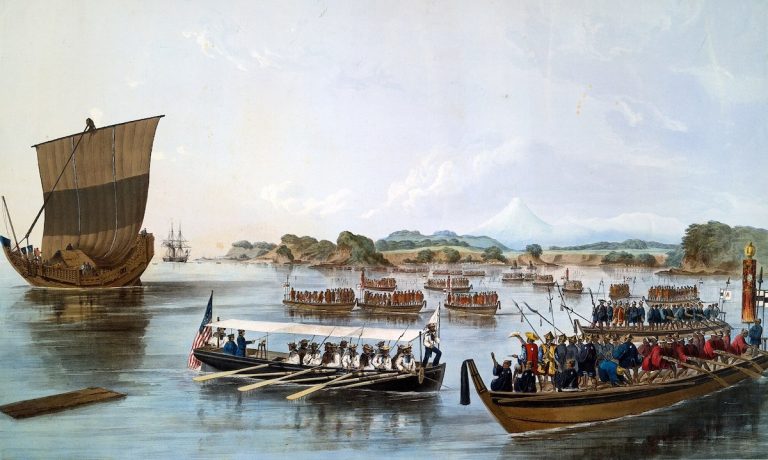
Color lithograph: Passing the Rubicon. Lieut. S. Bent in the Mississippi’s first cutter forcing his way through a fleet of Japanese boats while surveying the Bay of Yedo, Japan, July 1853.
Excerpted from Carroll Storrs Alden, Professor, Dept. of English, U. S. Naval Academy (Dec. 1924 Proceedings, Vol. 50/12/262)
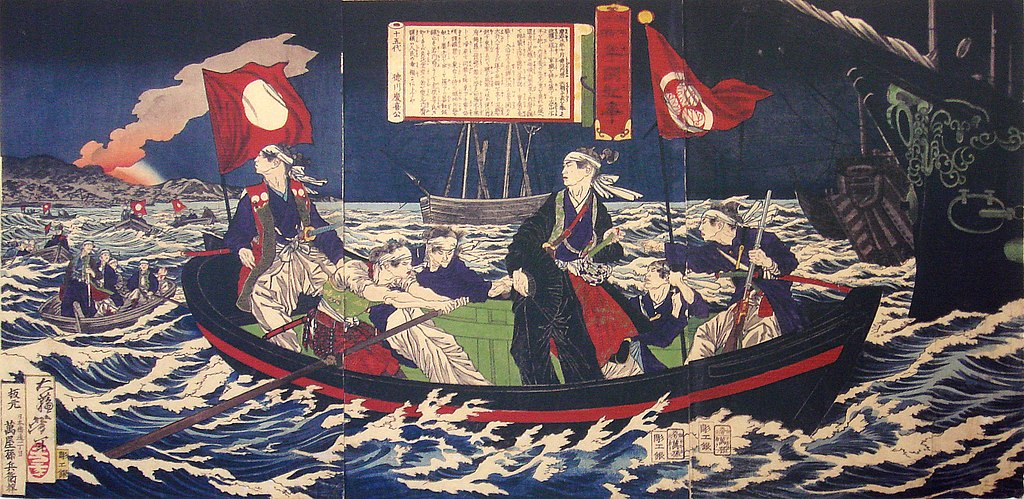
Washington, D.C. Stephen Bleecker Luce began his naval career in 1841, when at the age of fourteen he was appointed midshipman and ordered to report on the receiving ship at New York. Four years later, when attached to the Columbus, he accompanied the first expedition to Japan. The American Commissioner to China, having negotiated a treaty between the United States and China, in his enthusiasm had written to the President suggesting that the same might be done with Japan.
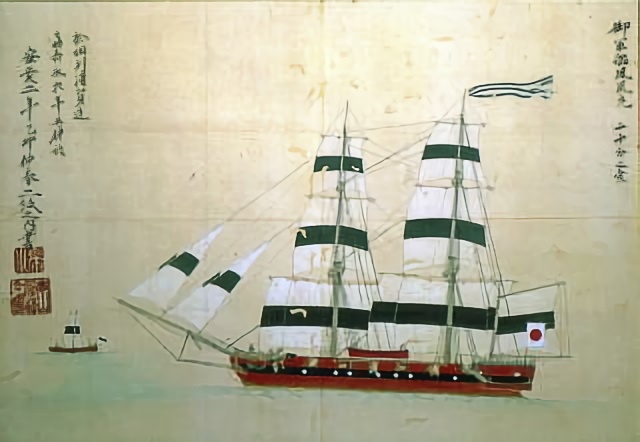
In response Commodore James Biddle was sent out in 1845 with the Columbus, eighty guns, and the Vincennes, twenty guns, under the following cautious orders: “You will take the utmost care to ascertain if the ports of Japan are accessible… yet not in such a manner as to excite a hostile feeling or a distrust of the government of the United States.”
Biddle took his force direct to the Bay of Yedo, where he would be not far from the capital Yedo (Tokio). Before his ships had come to anchor a cordon of armed boats surrounded the ships and a Japanese officer with a Dutch interpreter came on board to inquire into the object of their visit.
The Japanese showed great courtesy but, though offering supplies, prohibited any landing or communication with the shore. Meanwhile, they referred Biddle’s message to Yedo. In seven days came the answer. According to Japanese law there was to be no trade except with the Chinese and Dutch. “Concerning strange lands, all things are fixed at Nagasaki, not here in the bay; therefore, you must depart as quickly as possible and not come any more to Japan.”

Historically this expedition was not without significance, for it led seven years later to the success achieved by Matthew Calbraith Perry. Perry, like his predecessor, sailed direct to Yedo Bay to carry on negotiations, but, unlike Biddle, he adopted an extremely formal tone, allowing no Japanese except officials of considerable rank on board and refusing audience to any below the grade of cabinet minister.
Perry’s exclusiveness, his great formality, and his exhibition of force, material as well as moral, brought success; in 1854 Japan signed a treaty opening two ports to the United States.
Luce read of the various steps taken by Perry’s expedition with interest; the personal advantage that had come from his participation in Biddle’s party was a firsthand acquaintance with the hermit nation. In approximately three quarters of a century following his visit, he was to see Japan emerge from her isolation and seeming barbarism [sic] and rise to a position among the world’s greatest powers.
While Luce had been absent in the Far East, the U.S. Naval Academy [at Annapolis] was founded, and when on his return he was detached, he was ordered to the “Naval School,” as then called, to take the senior course.
Japan Closes Port to Biddle, Luce in 1845; Opens to Perry in 1854 (June 28, 2018)

Photo: Louvre Museum in Paris. Credit: Josh Withers / Unsplash.
[draft]
Paris, France. xxx
Visiting the Louvre Museum in Paris (June 26, 2018)

Photo: Summit of Machu Pichu, built in xxx. Credit Gonzalo Kenny / Unsplash.
[draft]
x
Bucket List: Machu Pichu (June 26, 2018)
Stone Pines at Sestri, 1845, John Ruskin
[draft]
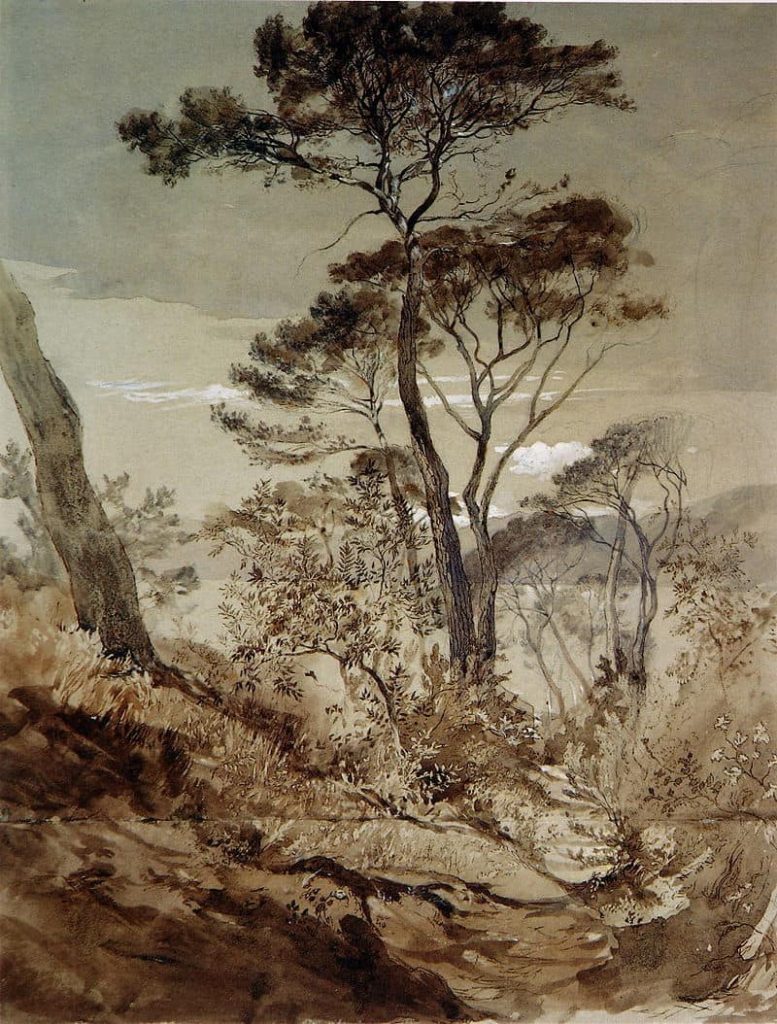
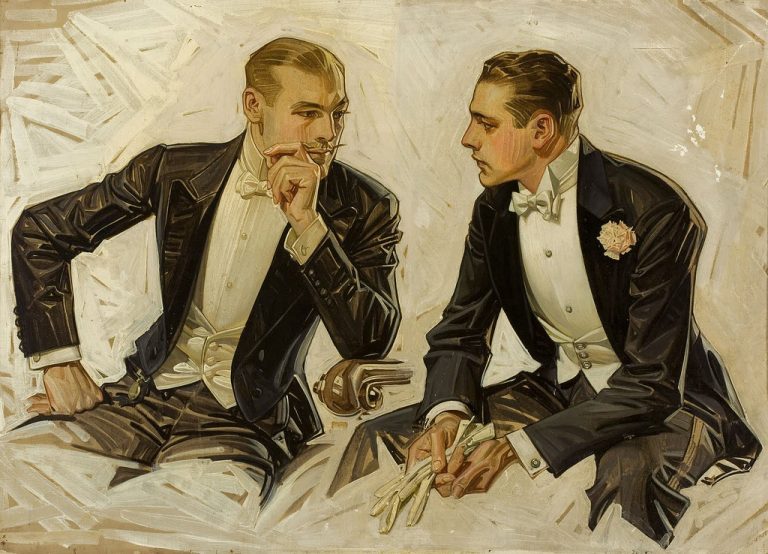
Image: Leyendecker’s distinct cross-hatch style is seen in this 1911 painting for Cluett Dress shirts, featuring a particularly intimate gaze between two gentlemen.
[draft]
New York, N.Y. xxx
The dandy lifestyle required hours devoted to shopping, styling, and pampering of the self. These behaviors were not initially associated with femininity, but rather vanity. He worshiped himself through improving his appearance. In many ways, the dandy was the object of his own affections.
It is important to note that the dandy, even as purely a movement in fashion, was revolutionary. The dandy created his own aesthetic independent of the rest of society. To dress in this way played the dandy in opposition to the rest of society. Knowing this, it is easy to see why the dandy was poised in the perfect position to challenge his world’s views on gender and sexuality.
But why is dandyism so tied to homosexuality in particular? This change began to occur in the late nineteenth century, spurred by a shift in the burgeoning psychological community. James Adams writes in Dandies and Desert Saints that deviant forms of masculinity were pathologized only after sexuality entered wider scientific discourse. In the case of the dandy, this meant the beginning of the association between effeminacy and homosexuality.
Additionally, public events that occurred during this time period enforced this now common interpretation. Oscar Wilde was famous for his flamboyant dandyism, going on lecture tours on the subject of aestheticism. His quote, “One should either be a work of Art or wear a work of Art,” quickly became emblematic of the ideology. But it was Wilde’s arrest and his very public trials in 1895 that truly forged an association between gayness, sexualization, and the dandy movement. These events solidified homosexuality both as a word as well as a concept, ever linked to Wilde’s trademark style.

New York, N.Y. Having been the only non-Jewish founding member of my college’s Jewish group, the only goyisch guy in Lexington Avenue’s Central Synagogue’s Havurah Torah study series for two years, and the only gentile on B’nai B’rith retreats in the Catskills, I know a little bit about the “Jewish Bible.”
A Look at the Torah and Talmud (June 23, 2018)

Photo: The author wearing a shirt given to him by community leaders with children in the Volta Region, 2006.

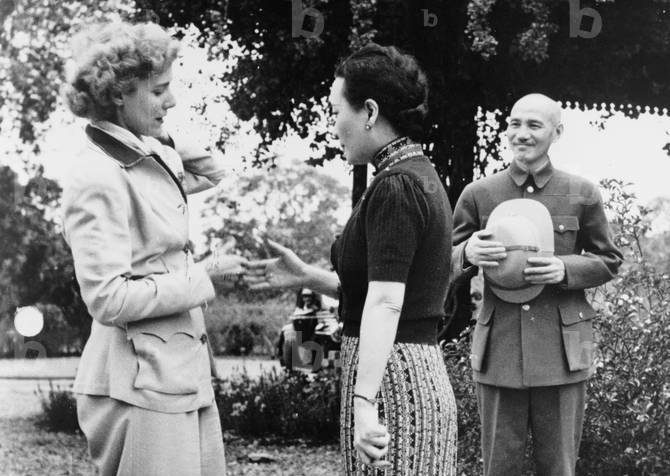
Photo: Clare Boothe Luce about to shake hands with Madame Chiang Kai-shek as General Chiang Kai-shek looks on, 1941.
[draft]

[draft]
Scott, Alexandra: Pediatric Cancer Patient, Age 4, Raising Millions for Medical Research (June 16, 2018)
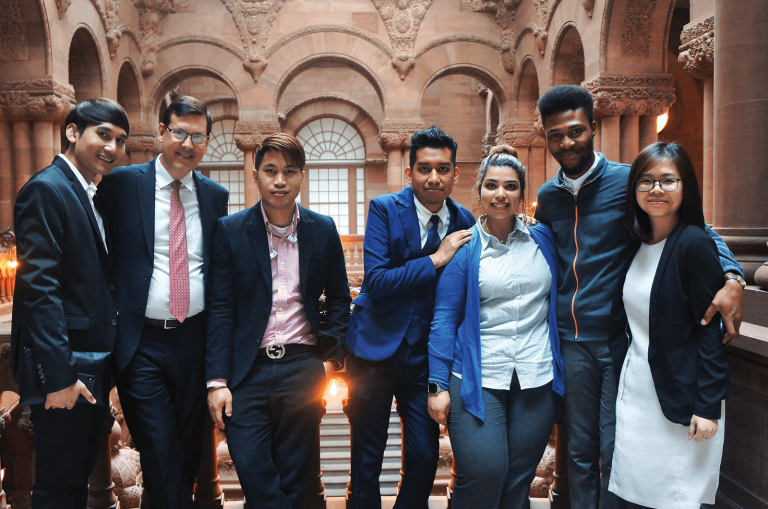
Albany, N.Y. The J. Luce Foundation traveled to New York State’s capital in Albany with our Young Global Leaders to meet Assembly-members such as Rebecca Seawright and Daniel O’Donnell.
Representing our foundation were Jim Luce (President), Bix Luce (Orphans International Exec. Dir.), Chloe Hoang (Foundation Exec. Dir.), Mathew James Tendean Luce, Valentin Camaño, Isaac Bayoh, and Lina Escobar.
Video: Our Young Global Leaders Introduced in New York State Legislature (June 15, 2018)
[draft]
The J. #LuceFoundation traveled to New York State’s capital Albany yesterday with our Young Global Leaders to meet with Assembly-members such as Rebecca Seawright and Danny O’Donnell (Rosie’s brother!). With us was my son Mathew Tendean Luce and husband Bixbix Pasathorn. Our Executive Director Chloe Khue Hoang did an excellent job coordinating the trip!
REBECCA SEAWRIGHT represents Roosevelt Island and the Upper East Side in the N.Y.S. Assembly. She is a longtime advocate for women’s rights and a proponent of the long-awaited (!) Equal Rights Amendment (ERA). She is a brave and determined fighter against discrimination and intolerance at all levels of our society. Rebecca served as the Assistant District Attorney in Kings County and later became a fundraiser for the incredible Texas Governor Ann Richards. Becky and her husband Jay Hershenson, former CUNY vice chancellor, are ardent supporters of the City University of New York.
DANNY O’DONNELL is the first openly gay man elected t…

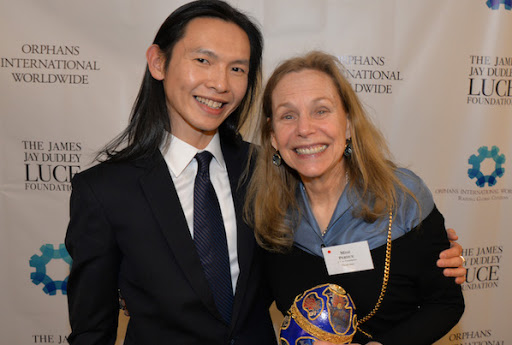
New York, N.Y. Jeremy Hu first made his mark in the world of art and fashion. Born and raised in Taiwan, Jeremy studied Graphic Design, Advertising, and Photography at Central St. Martin’s College of Art and Design in London. In his early career, he worked as a fashion model.
He then moved to New York City, where he has held many positions, including worldwide art curator, advertising executive, and an agent for artists and photographers. Recently, he is devoting his talents and energies to New York City’s luxury real estate market.
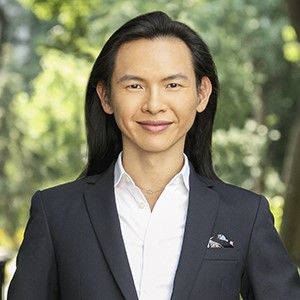
Jeremy’s commitment and service to the J. Luce Foundation (Facebook, Website) are strong, and his motivations are simple. I decided to get to know Jeremy better, and he obliged to sit down with me for a few quick questions.
I asked what he hoped to achieve with the Foundation, he said: “Simply, I hope that we could give assistance and help to more young people who are in need.”
Jeremy has taken on humanitarianism by storm by teaming up with non-profit partners, Global Advisors, and Young Global Leaders. All committed to bringing a positive social change in the fields of Art, Education and Orphan care to the U.S., Afghanistan, Cuba, Haiti, India, Indonesia, Peru, and Sri Lanka. Where inspiration can be encouraged and rebuilt for generations to come.
When asked what led him to branch out into real estate from art and fashion, Jeremy stated: “Art and fashion are my passion and hobby. However, I find conducting business in real estate is more tangible in practically.”

Jeremy also believes that his creative mindset gives him an edge in the world of high stakes real estate, because, he says, “I can give my clients advice and perspectives from very different and non-traditional angles. Jeremy believes that this edge a creative mindset gives you in the world of business applies to philanthropy as well.
Jeremy cited Jim Luce as a shining example of someone who’s philanthropy benefits from his creative outlook. When asked who has influenced him the most in his busy and successful life, perhaps heartening and indicative of his humility, Jeremy replied: “I believed that both of my parents equally impacted my life.”
With his benevolent reputation in marketing an extensive affluence in the sophistication of fine arts, Jeremy’s scholarly fondness for elegance and tact excuses a former force throughout his business experience.

Meet J. Luce Foundation Global Advisor Jeremy Hu (June 13, 2018)
[draft]



Photo: Humberto Chávez/Unsplash.

Jim Luce Writes on Migration & Immigration
© 2024 The Stewardship Report on Connecting Goodness – Towards Global Citizenship is published by The James Jay Dudley Luce Foundation Supporting & Educating Young Global Leaders is affiliated with Orphans International Worldwide, Raising Global Citizens. If supporting youth is important to you, subscribe to J. Luce Foundation updates here.

Genocide carried out by Nazi Germany during World War II, in which six million Jews were systematically murdered in Nazi concentration camps and extermination camps, along with others including sexual minorities.
Follow Jim Luce on Facebook, Instagram, LinkedIn, TikTok, and X (Twitter).
© 2024 The Stewardship Report on Connecting Goodness – Towards Global Citizenship is published by The James Jay Dudley Luce Foundation Supporting & Educating Young Global Leaders is affiliated with Orphans International Worldwide, Raising Global Citizens. If supporting youth is important to you, subscribe to J. Luce Foundation updates here.