New York, N.Y. — Indonesian Beef Rendang is a rich, slow-cooked dish from West Sumatra. This recipe simplifies the curry paste preparation using a blender, blending chilies, shallots, garlic, galangal, and ginger. The beef is tenderized in coconut milk with lemongrass and kaffir lime leaves, creating a thick, caramelized sauce. Perfect for special occasions, Rendang is best served with steamed rice or traditional dishes like lontong and ketupat.
This recipe uses a blender to make the curry paste, simplifying the process while maintaining authenticity.
Ingredients:
For the Curry Paste:
250 g large red chilies, deseeded
10 shallots, chopped
5 cloves garlic, chopped
25 g galangal, peeled and chopped
25 g ginger, peeled and chopped
4-5 candlenuts (kemiri nuts)
1 tsp turmeric powder (optional)
For the Rendang:
1 kg beef (topside or silverside), diced into 3 cm pieces
2 stalks lemongrass, bruised
5 kaffir lime leaves
2 liters thick coconut milk
2 tbsp tamarind water (1 tsp tamarind pulp soaked in 2 tbsp water)
2 tsp salt (or to taste)
1/2 cup grated coconut (for kerisik)
2 tbsp palm sugar (optional)
Instructions:
Make the Curry Paste:
Add all curry paste ingredients to a blender.
Blend until smooth, adding a little water if necessary.
Cook the Rendang:
Heat 4 tbsp coconut oil in a large saucepan or Dutch oven over medium heat.
Add the bruised lemongrass and sauté for a minute.
Add the curry paste and cook until fragrant and slightly dark, about 10 minutes.
Add the beef and stir to coat with the curry paste. Cook for another 5 minutes.
Add Coconut Milk and Spices:
Pour in the coconut milk, tamarind water, salt, and palm sugar (if using).
Stir well and bring to a boil.
Reduce heat to low and simmer uncovered for about 2 hours, stirring occasionally, until the coconut milk thickens and the beef is tender.
Finish with Kerisik:
Toast the grated coconut in a dry pan over medium heat until golden brown.
Pound the toasted coconut into a fine paste (kerisik).
Add the kerisik to the rendang and stir well.
Final Cooking:
Continue cooking for another 30 minutes to an hour, stirring frequently, until the rendang is dry and caramelized.
Serve:
Serve hot with steamed rice or nasi kuning.
Tips:
For a darker rendang, cook longer or add more kerisik.
Rendang can be made ahead and refrigerated or frozen for later use.
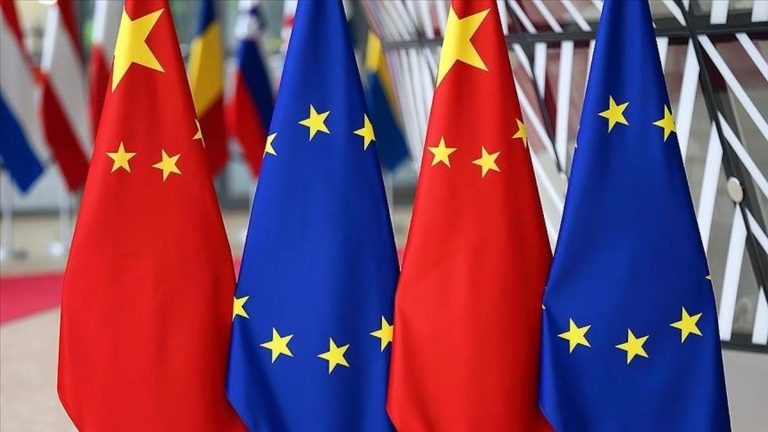
Taipei, Taiwan — China has launched a new round of diplomatic outreach to European countries amid rising tension between the United States and its European allies.
While top U.S. officials and European leaders clashed over issues such as values, democracy and Ukraine at the Munich Security Conference over the weekend, Chinese foreign minister Wang Yi held bilateral meetings with several top European officials, including EU foreign policy chief Kaja Kallas, German Chancellor Olaf Scholz, and NATO Secretary General Mark Rutte.
“There is no fundamental conflict of interest or geopolitical conflicts between China and the EU,” Wang said during his meeting with Kallas on Saturday, adding that Beijing “supports all endeavors conducive to peace and backs Europe in playing a significant role” in the peace negotiation process regarding the war in Ukraine.
The EU response was somewhat more reserved, with Kallas saying the EU was ready to “continue with dialogue and cooperate in selected areas, such as trade, economic affairs, and climate change.” She urged Beijing to halt exports of dual-use goods to Russia, which she said fuels Moscow’s ongoing war against Ukraine.
Wang’s remarks were in stark contrast to U.S. Vice President JD Vance’s criticism of European countries. Instead of highlighting the threats posed by Russia and China, Vance accused European government of censoring right-wing parties and failing to control migration.
“What I worry about is the threat from within, the retreat of Europe from some of its most fundamental values, values shared with the United States of America,” he said in a defiant speech that stunned European officials in Munich.
Several European leaders quickly rejected Vance’s remarks, with German Defense Minister Boris Pistorius saying the U.S. vice president’s characterization of European policies was “unacceptable.”
The rare open clash between the U.S. and European countries came as top U.S. officials including Secretary of State Marco Rubio, national security adviser Mike Waltz, and Trump’s Middle East envoy Steve Witkoff flew to Saudi Arabia on Sunday for talks about the Ukraine-Russia war with Russian diplomats.
To the surprise of many Marco Rubio, U.S. Special Envoy for Ukraine and Russia Keith Kellogg said in Munich that European countries wouldn’t be part of any peace talks between Russia and Ukraine, which would be mediated by the U.S.
Analysts say China’s effort to strengthen engagement with Europe is part of Beijing’s plan to take advantage of divisions between Washington and its European allies.
“China’s posture is about exploiting the perceived mistakes of any U.S. administration,” said Mathieu Duchatel, director of international studies at the French policy group Institut Montaigne.
He told VOA by phone that the current tension between the U.S. and European countries has created an opportunity for Beijing to “weaken the transatlantic alliance on China policy.”
Given that U.S. President Donald Trump has threatened to impose tariffs on European countries, other experts say the growing tension in transatlantic relations could force the EU to moderate its policies towards China.
“Since Europe can’t afford to wage two trade wars at the same time, it will be difficult for the EU and EU member states to maintain critical policies toward China,” Matej Simalcik, executive director of the Central European Institute of Asian Studies, told VOA in an interview in Taipei.
In recent weeks, European Commission President Ursula von der Leyen, who has pushed the EU to adopt more assertive policies against China, has repeatedly said the bloc is open to improving relations with China.
Europe “must engage constructively with China – to find solutions in our mutual interest,” she said during a keynote speech at the World Economic Forum in Davos last month.
While European countries may consider adjusting their China policies, some European analysts say it’s unlikely for these attempts to turn into a fundamental shift of European policies towards China and the U.S.
“The U.S. and Europe are each other’s most important trading partners, so I don’t think there will be a [complete] transatlantic break,” said Sari Arho Havren, an associate fellow at the Royal United Services Institute.
European countries “are testing the grounds and seeing what can be done, but at the same time, European officials have said whatever happens with China, it must be fair,” she told VOA by phone, adding that these factors will prevent the EU from “walking back” their earlier positions on China entirely.
Additionally, Duchatel at Institut Montaigne said Beijing’s decision to appoint former Chinese ambassador to France Lu Shaye, a prominent “wolf warrior diplomat,” as its special representative for European affairs means China is unlikely to make major concessions in its relations with the EU.
“Lu’s appointment represents inflexibility on everything that matters,” he told VOA, adding that some European diplomats said the new Chinese special envoy would “turn any diplomatic meeting into some sort of ideological confrontation that leads to no common position” between Beijing and European countries.
While China and the EU’s fundamental differences over issues such as Beijing’s partnership with Russia and the trade imbalances remain unresolved, some Chinese academics say the growing tension between the U.S. and European countries still offers an opportunity for Beijing and Europe to “increase mutual trust.”
“The growing tension in transatlantic relations has created a new environment for China to moderate relations with the EU, but it doesn’t mean European countries will reduce their criticism over Beijing’s partnership with Russia or China’s human rights record,” Shen Ding-li, a Shanghai-based international relations scholar, told VOA by phone.
Boston, MA –– Long overshadowed by its dominance in artificial intelligence and manufacturing, China is now making waves in a sector critical to global health: pharmaceuticals. Bolstered by aggressive government investment, a thriving biotech ecosystem, and a surge in cross-border partnerships, Chinese drugmakers are rapidly transitioning from producers of generic medicines to pioneers of cutting-edge therapies, challenging Western pharmaceutical giants and reshaping the global industry.
Breakthrough Therapies Redefine Global Standards
Chinese pharmaceutical firms are achieving milestones once thought unattainable. In late 2024, an experimental cancer immunotherapy developed by Akeso Inc. outperformed Merck’s blockbuster Keytruda in a late-stage trial for non-small-cell lung cancer, nearly doubling progression-free survival rates. This marked the first time a Chinese-origin drug surpassed a leading Western therapy in a head-to-head trial.
Similarly, Jiangsu Hengrui Pharmaceuticals’ trio of GLP-1 receptor agonists, licensed to U.S.-based Kailera Therapeutics in a landmark $6 billion deal, positions China at the forefront of the obesity drug market—a sector projected to exceed $150 billion by 2030. These breakthroughs underscore China’s shift from “me-too” generics to novel mechanisms of action (MoA), including bispecific antibodies, RNA interference (RNAi) therapies, and antibody-drug conjugates (ADCs).
Cross-Border Deals Fuel Global Ambitions
Chinese biotechs are increasingly licensing their innovations to Western pharmaceutical giants, with licensing-out deals surging to $46 billion in 2024—up 62% from 2022. Key trends include:
Early-Stage Risk-Taking: Over 80% of 2024’s top deals involved preclinical or Phase I assets, reflecting global confidence in China’s R&D pipeline despite geopolitical tensions.
Strategic Structures: Hengrui’s “NewCo” model—a Delaware-based joint venture with equity retention—has been replicated to mitigate geopolitical risks while securing upfront payments and long-term revenue shares.
U.S. Pharma’s Reliance: Nearly 30% of Big Pharma’s high-value deals now involve Chinese companies, up from zero five years ago. Merck, Novartis, and GSK have collectively invested over $12 billion in Chinese-developed assets since 2023.
R&D Efficiency: China’s “Secret Sauce”
China’s rise is underpinned by unparalleled R&D speed and cost efficiency. Clinical development timelines are 50–100% faster than in the West, with preclinical stages completed in as little as 18 months. Factors driving this include:
Scale: Massive science parks in Shanghai and Suzhou house integrated labs processing tens of thousands of in vivo experiments monthly.
Policy Support: The “Made in China 2025” initiative prioritized biopharma, funneling state funds into innovation hubs and talent acquisition.
Cost Arbitrage: Developing a drug candidate in China costs roughly one-third of U.S. expenses, attracting venture capital despite a downturn in local funding.
Challenges and Controversies
While China’s ascent is undeniable, hurdles remain:
Quality Concerns: Recent backlash over ineffective generics in China’s public healthcare system has prompted government censorship of drug performance data, raising transparency fears.
Regulatory Skepticism: U.S. regulators initially rejected trials conducted solely in China, though companies like Summit Therapeutics are now running global Phase III studies to meet FDA standards.
Geopolitical Risks: The U.S. Biosecure Act and potential policy shifts under the Trump administration threaten to restrict collaborations, mirroring tensions in AI and semiconductors.
Global Implications: A New Biopharma Order
China’s rise is forcing a reckoning in Western biotech:
U.S. Response: American firms are urged to focus on novel biology and target discovery while partnering with Chinese companies for cost-effective R&D execution. As Meliora Therapeutics’ CEO noted, “The days of competing with China in sheer execution speed are over.”
Market Shifts: With 110 innovative drugs approved domestically in 2024 and 20 pending in 2025, China aims to capture 10–15% of global pharma revenues by 2030.
Patient Impact: Therapies once delayed by Western bottlenecks are reaching trials faster, offering hope for diseases like obesity, oncology, and cardiovascular conditions.
Looking Ahead
As European leaders convene to discuss China’s growing influence in defense tech and AI, the biopharma sector emerges as another frontier in the Sino-American rivalry. For patients worldwide, China’s pharmaceutical surge promises faster access to breakthrough therapies—but for Western companies, the message is clear: adapt or be outpaced.
Washington, D.C. — The Trump administration has initiated the termination of hundreds of Federal Aviation Administration (FAA) employees, targeting probationary workers in a sweeping move that critics argue could exacerbate existing staffing shortages and aviation safety risks. The firings come just weeks after a fatal midair collision at Ronald Reagan Washington National Airport on January 29, which killed 67 people and highlighted systemic challenges in air traffic control.
Key Details of the Firings
Late-Night Notifications: Employees received termination emails late Friday evening, with messages continuing into the night. The notices originated from a non-governmental “exec order” Microsoft email address, raising questions about transparency and protocol.
Targeted Roles: Affected personnel include systems specialists, safety inspectors, and maintenance workers responsible for critical infrastructure such as radar, navigational aids, and landing systems. Air traffic controllers themselves were not part of the layoffs, according to union statements.
Union Response: David Spero, president of the Professional Aviation Safety Specialists (PASS) union, condemned the firings as “draconian,” emphasizing that employees were dismissed “without cause” and warning of increased workloads for an already strained workforce.
Context: A System Under Strain
The FAA has faced chronic understating and safety concerns for years, with federal officials citing uncompetitive pay, long shifts, and mandatory retirements as contributing factors.
The January crash—involving a U.S. ArmyBlack Hawk helicopter and an American Airlines passenger jet—occurred at a time when a single controller was managing both commercial and military traffic at the busy D.C. airport. While the incident remains under investigation, it underscored vulnerabilities in staffing and resource allocation.
Controversy and Allegations
Political Retaliation Claims: Charles Spitzer-Stadtlander, a fired FAA employee, alleged he was targeted after criticizing Tesla and X (formerly Twitter) on social media. Both companies are owned by Elon Musk, who leads the Department of Government Efficiency (DOGE), a Trump-backed initiative to streamline federal operations. Spitzer-Stadtlander claimed his role in national security—monitoring drone threats—should have exempted him from the layoffs.
Broader Workforce Reductions: The FAA terminations are part of a larger effort to slash federal jobs, with agencies like the CDC, Department of Energy, and Veterans Affairs also facing cuts. Over 75,000 federal workers have accepted voluntary buyouts, while probationary employees—those with fewer job protections—are being forcibly terminated.
Reactions and Legal Challenges
Transportation Secretary Sean Duffy announced collaboration with Musk’s SpaceX to “upgrade” aviation systems, but critics, including Republican senators like Lisa Murkowski, warn that abrupt layoffs risk destabilizing essential services. Legal battles are mounting over the legality of the firings, particularly whether they violate federal labor protections.
Looking Ahead
The National Air Traffic Controllers Association is assessing the firings’ impact on safety, while the FAA’s staffing crisis looms as a critical issue. With investigations into the January 2025 crash ongoing, the administration’s moves have ignited debates over the balance between government efficiency and public safety.
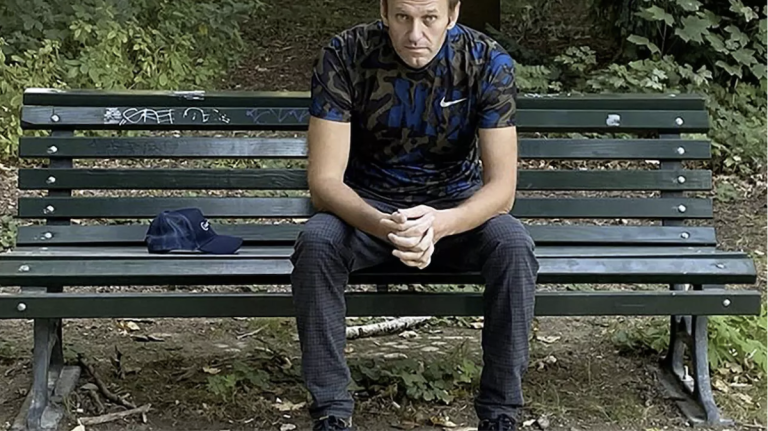
City of Light Defies Kremlin: Street Named After Alexei Navalny Near Russian Embassy
Paris, France – In a powerful gesture of defiance against the Kremlin, the city of Paris has officially named an avenue near the Russian embassy after Alexei Navalny, the late Russian opposition leader and vocal critic of Vladimir Putin. The decision, made by the Paris Council, comes on the eve of the first anniversary of Navalny’s death, marking February 16, 2024, as a day of remembrance and resistance.
The newly renamed section of Avenue de Pologne in the 16th arrondissement stands as a symbolic tribute to Navalny’s courage in challenging authoritarian rule. Paris‘ mayor stated that the renaming underscores France‘s commitment to democracy and human rights, adding that “Alexei Navalny’s fight was universal, and his memory deserves to be honored.”
Navalny, who survived a poisoning attempt in 2020, was arrested upon his return to Russia in 2021 and later died under mysterious circumstances in prison. His death sparked international outrage, with Western leaders blaming the Kremlin for silencing its most formidable opponent.
The renaming of the avenue near the Russian embassy is likely to provoke anger from Moscow, but for Navalny’s supporters, it serves as a lasting reminder of his legacy. Similar honors have been bestowed upon other dissidents in history, reinforcing Paris’ long-standing role as a defender of freedom.
As the world reflects on Navalny’s sacrifices, his name will now be etched into the streets of Paris—an enduring symbol of resistance against tyranny.
Trump Has Swallowed Democracy—And He Won’t Spit It Out
New York, N.Y. — Americans are mesmerized by the viral video of a whale off the coast of Chile swallowing a kayak whole—only to spit it back out, miraculously leaving the kayakers alive. It’s the kind of near-mythical tale we love: swallowed by the beast, only to emerge unharmed, reborn, and back on course.
But fairytales aren’t real.
The whale is Donald Trump. The kayak is American democracy. And unlike the lucky Chilean kayakers, there’s no guarantee that we will be spit back out. In fact, there’s every indication that we won’t be.
For years, Trump has consumed the institutions, norms, and values that once defined the United States as a beacon of democracy. He has taken in everything—truth, justice, the rule of law, international alliances—and twisted them beyond recognition. His appetite for power is insatiable, and yet too many Americans still believe in a fairytale ending where everything goes back to normal.
This isn’t a storybook.
Democracy doesn’t just magically reappear once it’s been swallowed whole. It takes action. It takes resistance. It takes a conscious and relentless effort to fight back.
The Chilean kayaker survived because of pure, blind luck. But we cannot rely on luck to save our country. Trump won’t spit democracy back out—so it is up to us to kill the whale before it’s too late.
Editorial: The Gulf of Mexico is the Gulf of Mexico—And Press Freedom is Not Up for Debate
New York, N.Y. — At The Stewardship Report, we stand firm on the facts: The Gulf of Mexico is, and always has been, the Gulf of Mexico. Any attempt by the White House to arbitrarily rename internationally recognized geographical locations is a dangerous overreach. This is not about politics—it’s about reality.
Geography Isn’t a Political Pawn
The renaming of landmarks and bodies of water to suit executive whims undermines the integrity of journalism, academia, and diplomacy. If we allow governments to rewrite maps at will, where does it end? Facts should not be subject to partisan influence.
We Condemn Retaliation Against the Associated Press
The White House’s reported punitive actions against AP for refusing to adopt its preferred terminology are deeply troubling. A free press cannot function under threat of retribution. The role of journalists is to report the truth, not to conform to the demands of those in power.
The Press Must Stand United
The media industry cannot afford division in the face of political pressure. We encourage all journalists, editors, and publishers to rally behind AP. Press freedom is essential to democracy, and an attack on one newsroom is an attack on all.
We urge our colleagues across the media landscape to resist political coercion and continue upholding the highest standards of journalistic integrity. The truth is not negotiable.
The New York Democrat suggested Adams is too indebted to Donald Trump to lead after the Department of Justice ordered his charges dropped
New York, N.Y. — Rep. Alexandria Ocasio-Cortez (D-N.Y.) has just called for New York City Mayor Eric Adams to “be removed” from his position if he refuses voluntarily stepping down after the Justice Department’s order for his corruption charges to be dropped prompted the resignations of several federal prosecutors.
In a letter to U.S. Attorney General Pam Bondi dated Wednesday, Manhattan U.S. attorney Danielle Sassoon said last month she attended a meeting during which Adams’ legal team “repeatedly urged what amounted to a quid pro quo” with Trump administration officials, requesting their client’s indictment be dismissed in exchange for him assisting with federal immigration enforcement. Adams’ legal team has denied Sassoon’s allegations.
Ocasio-Cortez described Sassoon’s letter as “explosive.”
“As long as Trump wields this leverage over Adams, the city is endangered,” she wrote on X, formerly Twitter. “We cannot be governed under coercion.”
“If Adams won’t resign, he must be removed,” she continued.
New York Gov. Kathy Hochul (D), the only official with the power to effectively fire Adams, she said. “This just happened, I need some time to process this and figure out the right approach,” she told MSNBC’s Rachel Maddow on Thursday evening.
Following Sassoon’s resignation, Adams’ case was transferred to the unit overseeing public integrity divisions at the DOJ, prompting the resignations of the two leaders of that team. Three other lawyers from that division also resigned shortly after, according to The New York Times.
Emil Bove, the acting deputy attorney general, on Monday ordered federal Manhattan prosecutors to dismiss the case against Adams, claiming the “pending prosecution has unduly restricted Mayor Adams’ ability to devote full attention and resources to the illegal immigration and violent crime.”
Adams praised the department’s decision without referencing Donald Trump’s name. “I thank the Justice Department for its honesty,” Adams said. “Now we can put this cruel episode behind us and focus entirely on the future of our city.”
Dear Dr. Sami – When I was 13, family friends stayed in our home, and their 16-year old son was asked to share a double bed with me. Our family is white, and their family is Black. That night, he raped me in my sleep. I was traumatized but couldn’t bring myself to tell my mom. The next night, I tried to sleep on the floor, but mom checked in on us and thought I was avoiding the bed because he was Black. She insisted I get back in bed with him, and that night, he raped me again. For years, this experience has haunted me – not just because of the trauma itself, but because I hate the idea of being seen as racist. I never refused to share the bed because of race – it was because I was trying to protect myself. Now, nearly 20 years later, l’ve worked through a lot of this in therapy, and feel more comfortable talking about it. Should I tell mom what really happened? – Hurting But Healing
Dear Hurting But Healing,
First, I want to acknowledge the incredible strength it takes to share this story. What happened to you was not your fault. You were a child, placed in a terrible situation where your voice wasn’t heard, and the trauma you experienced has understandably stayed with you. I’m deeply sorry for what you went through.
Why Tell Your Mom Now?
It sounds like a part of you wants to share this with your mother—not to blame her, but to help her understand something that has shaped your life. The fact that you’ve done work in therapy and now feel more comfortable discussing it means you are in a different place emotionally than you were as a child. This could be an important step in your healing.
Your mother may have no idea that her actions—insisting you return to the bed—had such devastating consequences. If she had known the truth back then, she likely would have reacted differently. Telling her now may help correct any false narratives she has about that time, and, more importantly, it may allow you to release the burden of holding this alone.
Will She Blame Herself?
It’s possible. Most parents, when faced with a situation where they unknowingly contributed to their child’s pain, feel deep guilt. She may struggle to process the fact that she didn’t protect you. But if your goal is simply for her to understand rather than to assign blame, you can frame the conversation with that in mind.
You might say something like:
“Mom, there’s something from my childhood that has haunted me for a long time. I don’t blame you for this, but I need you to know what happened so you can understand why I reacted the way I did back then—and why it has stayed with me.”
This way, you’re reassuring her upfront that your intention is not to hurt her but to share something meaningful.
How to Decide If You’re Ready
Before having the conversation, consider what you hope to gain from it. Are you looking for acknowledgment? An apology? A deeper understanding between you? If you feel telling her will help you heal or strengthen your relationship, then it may be the right choice. If you’re worried about her reaction or how it might affect you emotionally, it’s okay to take more time or seek guidance from your therapist on how to navigate it.
Whatever You Choose, Your Healing Matters
Whether you decide to tell her or not, the most important thing is that you are finding ways to heal. You have already taken steps to process your trauma through therapy, and that is powerful. No matter what, please know that your experience is valid, your pain is real, and you deserve to be heard and supported.
New York, N.Y. — The fight against HIV/AIDS is at a critical juncture. Decades of progress in reducing deaths and infections could be undone if the U.S. government pulls its funding from global HIV/AIDS programs. The United Nations AIDS agency (UNAIDS) has issued a stark warning this week, estimating that more than six million people could die in the next four years if these cuts go through.
Since its inception in 2003, the President’s Emergency Plan for AIDS Relief (PEPFAR) has saved millions of lives, particularly in sub-Saharan Africa. However, the Trump administration has signaled a potential withdrawal of support, putting millions at risk. Organizations relying on U.S. funding for antiretroviral treatment, prevention programs, and community outreach efforts may be forced to shut down, reversing years of progress.
“The world is at a tipping point,” said UNAIDS Executive Director Winnie Byanyima. “If the U.S. withdraws its support, we could see a resurgence.”
Right-wing social media continue to engulf the Internet with insane claims that the U.S. Agency for International Development (USAID) allocated $15 million for condoms to the Taliban, sparking significant controversy and skepticism. This assertion was notably made by Rep. Buddy Carter (R-Ga.) during an interview with CNNanchor Boris Sanchez, leading to a heated exchange.
USAID officials have categorically refuted these allegations, however, emphasizing that no direct assistance has been provided to the Taliban. The Right-wing social media made it up.
The Stewardship Report breaks this purported US$15 million down: the cost of a standard condom varies globally but averages $0.05 per unit, for 300,000,000 condoms. The Taliban comprises approximately 75,000 members. This represents 4,000 condoms per Jihadist.
Paris, France — Beginning in 2025, France now fully reimbursed disability-related expenses, fulfilling a promise made by President Emmanuel Macron in 2023. This initiative simplifies procedures and ensures people with disabilities receive financial support without bureaucratic hurdles.
The move reflects France’s commitment to inclusivity and accessibility, easing the financial burden on individuals and families. By streamlining the process, the government aims to remove barriers that have long hindered access to essential care and services.
Disability advocates have welcomed the policy, calling it a significant step toward equality. The reimbursement plan is part of broader reforms to enhance social protections and improve quality of life for disabled individuals across France.
New York, N.Y. — The repression of mass protests in Bangladesh last year that toppled longtime prime minister Sheikh Hasina left as many as 1,400 people dead in just 46 days – the vast majority shot by security forces, U.N. Human Rights chief Volker Türk said this week.
In addition to those killed by the former government’s security and intelligence services alongside Awami League party associates, a report by the U.N. Office of the High Commissioner for Human Rights (OHCHR) into the alleged crimes indicated that thousands were injured, including one youngster who was shot in the hand at point-blank range for throwing stones.
“There are reasonable grounds to believe that officials of the former government, its security and intelligence apparatus, together with violent elements associated with the former ruling party, committed serious and systematic human rights violations,” the High Commissioner for Human Rights said.
Speaking in Geneva, Mr. Türk highlighted that some of the gravest violations detailed in the report may constitute international crimes that could be heard by theInternational Criminal Court (ICC), as Bangladesh is a State party to the Rome Statute which created the tribunal in The Hague. The ICC’s foundational Statute gives it jurisdiction over genocide, crimes against humanity, war crimes, and the crime of aggression (following an amendment in 2010).
Alleged crimes in Bangladesh against the student-led protest included “hundreds of extrajudicial killings, extensive arbitrary arrest and detention and torture, and ill treatment, including of children, as well as gender based violence,” the U.N. rights chief said.
Iron grip on power
Furthermore, these violations “were carried out with the knowledge, coordination and direction of the former political leadership and senior security officials, with a specific goal of suppressing the protests and keep the former government’s grip on power”.
According to the OHCHR report, as many as 12 to 13 per cent of those killed were children. Bangladesh Police also reported that 44 of its officers were killed between 1 July and 15 August 2024.
Last summer’s protests that led Prime Minister Sheikh Hasina to step down after fifteen years in power were triggered by the High Court’s decision to reinstate a deeply unpopular quota system in public service jobs. But broader grievances were already entrenched, arising from “destructive and corrupt politics and governance” that spurred inequality, the U.N. Human Rights Office report maintained.
“I went to one of the hospitals in in Bangladesh when I visited, and I could talk to some of the survivors and some of them will be disabled for their lives. Especially young people…some of them were children,” Mr. Türk told journalists in Geneva, recounting his visit to Dhaka in September.
State killings
“The brutal response was a calculated and well-coordinated strategy by the former Government to hold onto power in the face of mass opposition,” insisted U.N. Human Rights Chief Volker Turk.
“The testimonies and evidence we gathered paint a disturbing picture of rampant State violence and targeted killings, that are amongst the most serious violations of human rights, and which may also constitute international crimes. Accountability and justice are essential for national healing and for the future of Bangladesh,” he added.
The U.N. Human Rights Office probe mission started work in Bangladesh on 16 of September 2024 with a team that included a forensic physician, a weapons expert, a gender expert and an open-source analyst. The investigators visited protest hotspots including universities and hospitals. Their work was complemented by more than 900 witness testimonies.
New York, N.Y. –– As someone who has spent a lifetime engaged in humanitarian efforts, I have seen firsthand the devastation that disease and poor public health infrastructure can bring to vulnerable populations. That’s why I am deeply alarmed by Donald Trump’s proposed cuts to the World Health Organization (WHO) and the Centers for Disease Control and Prevention (CDC).
These reckless reductions in funding threaten to cripple our ability to detect, prevent, and respond to emerging health threats. Given what we endured with COVID-19, it is unfathomable that we would so willingly set ourselves up for another pandemic.
The WHI and CDC play critical roles in global disease surveillance, vaccine distribution, and outbreak preparedness
These institutions are not just domestic safeguards; they are frontline defenses against pandemics that can spread across borders in a matter of weeks. The COVID-19 pandemic made it clear that health security anywhere is health security everywhere. Yet, rather than strengthening our defenses, Trump is slashing resources for the very agencies designed to keep us safe.
Illustration of SARS-CoV-2, which causes Coronavirus Disease 2019 (COVID-19).
History has shown us that pandemics are not once-in-a-lifetime events. In the past two decades alone, we have faced SARS, MERS, Ebola, Zika, and COVID-19. Scientists warn that it is not a question of if another deadly outbreak will occur, but when. The most effective way to mitigate such threats is through robust global cooperation, early detection, and well-funded response strategies. Gutting these programs to save a fraction of the federal budget is not just shortsighted—it is dangerous.
Beyond the public health risks, these cuts also threaten global stability
Pandemics do not just take lives; they cripple economies, destabilize governments, and widen the gaps of inequality. A well-prepared health infrastructure is not a luxury; it is a necessity for maintaining national security and global order.
The Pandemic of 2020 should have been a wake-up call
Instead, we are witnessing a return to the same ignorance and political posturing that left us vulnerable in the first place. Cutting funding for pandemic prevention is like dismantling the fire department after surviving a massive blaze. Have we learned nothing?
As a nation, we cannot afford to repeat past mistakes. We must demand that Congress block these cuts and instead invest in strengthening public health infrastructure, both at home and abroad. The cost of inaction is measured in lives lost, economies shattered, and societies upended. If we fail to act now, we will pay a far greater price when the next pandemic inevitably arrives.
History will judge us for the choices we make today. Let’s not be remembered as the generation that saw disaster coming and did nothing to stop it.
The Fourteenth Amendment, ratified in 1868, states: “All persons born or naturalized in the United States, and subject to the jurisdiction thereof, are citizens of the United States and of the State wherein they reside.”
Washington, D.C. — President Donald Trump is reigniting a fierce debate: Should everyone born on U.S. soil automatically become a citizen? This question strikes at the heart of American identity, history and law.
Trump signed an executive order last month seeking to end the right, but two federal judges have placed injunctions on the order, pausing it indefinitely.
Washington, D.C. — A U.S. deportation flight carrying Indian nationals accused of entering the U.S. illegally landed in the northern state of PunjabWednesday – the first such flight to India since the Trump administration launched a crackdown on undocumented immigrants.
The military aircraft, which landed amid tight security, brought 104 deportees, according to media reports. Authorities did not confirm the number, but said the deportees will be received in a friendly manner.
New Delhi, which does not want to make illegal immigration a contentious issue with Washington, has said that it is open to the return of undocumented Indians in the United States if their nationality is verified.
President Donald Trump said last week that Indian Prime Minister Narendra Modi had assured him that the country would “do what’s right” in taking back illegal immigrants. His comment came following a phone conversation with Modi.
In New Delhi, foreign ministry spokesperson Randhir Jaiswal told a media briefing on Friday that India and the United States are engaged in a process to deter illegal migration and “cooperation between India and the U.S. is strong and effective in this domain. This will be evident in times to come.”
Washington, D.C. — Guantánamo Bay is the oldest military enclave that the U.S. maintains outside its borders, and also the only one maintained against the will of the country where it is located. The United States first seized Guantánamo Bay and established a naval base there in 1898 during the Spanish–American War in the Battle of Guantánamo Bay. In 1903, the United States and Cuba signed a lease granting the U.S. permission to use the land as a coaling and naval station.
The base occupying a location on 45 square miles (117 km2) of land and water on the shore of Guantánamo Bay at the southeastern end of Cuba nearest Haiti. It has been leased to the U.S. with no end date since 1903 as a coaling station and naval base. The lease was $2,000 in gold per year until 1934, when the payment was set to match the value of gold in dollars; in 1974, the yearly lease was set to $4,085.
Cuba Protests Possibly Illegal U.S. Presence
Since taking power in 1959, the Cuban government has consistently protested against the U.S. presence on Cuban soil, arguing that the base was imposed on Cuba by force and is illegal under international law.
Since 2002, the naval base has contained a military prison, for alleged unlawful combatants captured in Afghanistan, Iraq, and other places during the War on Terror. Cases of alleged torture of prisoners by the U.S. military, and their denial of protection under the Geneva Conventions, have been criticized.
The base has been a focal point for debates over civil liberties, notably influenced by the landmark 2008 Supreme Court decision in Boumediene v. Bush. This ruling affirmed the constitutional right of detainees to challenge their detention through habeas corpus, highlighting the ongoing tensions between national security measures and fundamental civil liberties.
The 1903 lease has no fixed expiration date; as such, it could only be ended if the U.S. Navy decided to abandon the area or both countries agreed mutually to end the lease.
Washington, D.C. — President Donald Trump sparked global controversy this week after declaring he had left instructions for the U.S. to “obliterate” Iran if he were assassinated by operatives linked to Tehran. The remarks, made during the signing of an executive order reinstating his “maximum pressure” campaign against Iran, raised alarms about the feasibility and legality of such a posthumous directive.
The Threat and Its Context
During a press event on February 4, Trump stated: “If they did that, they would be obliterated. That would be the end. I’ve left instructions. If they do it, they get obliterated. There won’t be anything left.” He framed this as a deterrent against alleged Iranian assassination plots, referencing a 2024 Justice Department indictment of an Iranian national, Farhad Shakeri, accused of planning to survei and kill Trump on behalf of the Islamic Revolutionary Guard Corps (IRGC).
The threat comes amid heightened tensions following Trump’s 2020 drone strike that killed Iranian General Qassem Soleimani, a revered figure in Iran. Tehran has repeatedly vowed retaliation, and U.S. intelligence agencies have tracked multiple alleged Iranian plots against Trump and former officials like Mike Pompeo and John Bolton.
Executive Order and “Maximum Pressure” Strategy
Trump simultaneously signed an executive order to intensify economic sanctions, aiming to reduce Iran’s oil exports to zero and enforce a “snapback” of U.N. sanctions.
The order directs the Treasury and State Departments to target entities violating existing sanctions, including shipping and insurance sectors.
While specifics of the order remain undisclosed, Trump claimed it would “neutralize Iran’s terrorist network” and prevent nuclear weapon development.
Critics, however, note that his prior “maximum pressure” campaign during his first term failed to curb Iran’s nuclear advancements, instead accelerating uranium enrichment to near-weapons-grade levels.
Legal and Strategic Skepticism
Experts dismissed Trump’s “dead man’s switch” claim as legally unenforceable. Under U.S. law, a president cannot bind their successor to military action. If Trump were assassinated, Vice President J.D. Vance would assume office and retain sole authority over defense decisions.
Analysts compared Trump’s remarks to the U.K.’s “letters of last resort”—secret nuclear strike instructions given to submarine commanders—but emphasized that no such mechanism exists in the U.S. system.
Iranian officials dismissed the threats as “propaganda,” while state media praised Trump’s cuts to U.S. foreign aid, claiming it weakened pro-democracy activists opposing the regime.
Meanwhile, Iran’s currency plummeted to a record low of 850,000 rials per dollar, reflecting economic instability exacerbated by sanctions.
Domestic and International Reactions
Mixed Responses: Social media reactions ranged from dark humor to conspiracy theories, with figures like Alex Jones suggesting the threat could be exploited by a “deep state” to frame Iran for a hypothetical Trump assassination.
Diplomatic Signals: Despite tensions, Iran’s Supreme Leader Ayatollah Ali Khamenei has cautiously left the door open for negotiations, while reformist President Masoud Pezeshkian urged moderation in domestic crackdowns.
Regional Implications: Gulf allies like Saudi Arabia and the UAE, once staunch supporters of Trump’s sanctions, have recently pursued détente with Iran, complicating U.S. efforts to isolate Tehran.
Historical Precedent and Risks
Trump’s rhetoric echoes his 2020 vow to respond to Iranian aggression with disproportionate force.However, military action—whether conventional or nuclear—risks escalating into a broader conflict. Israel, which has destroyed much of Iran’s air defenses, could see an opening for strikes on nuclear facilities, though experts warn this might destabilize the region further.
While Trump’s threats underscore his confrontational approach to Iran, their practical impact remains dubious. The administration’s renewed sanctions may deepen Iran’s economic crisis but are unlikely to halt its nuclear program without diplomatic engagement. As one Iranian analyst noted, “The world has seen this movie before—maximum pressure failed once. Why would it work now?”
New York, N.Y. — As political and cultural divisions in the United States continue to deepen, an increasingly serious question arises: Should New England and New York break away from the U.S. and join Canada? While once a fringe idea, the notion of secession has gained traction in response to rising authoritarianism, economic instability, and social policies that conflict with the values of the Northeast.
Political and Cultural Alignment with Canada
New England and New York have long been among the most progressive regions in the U.S., embracing policies that prioritize healthcare access, climate action, and human rights.
Meanwhile, under Donald Trump and a Republican-controlled Supreme Court, the U.S. has seen rollbacks on abortion rights, LGBTQ+ protections, and environmental regulations—policies that stand in stark contrast to those supported by the majority of New Englanders and New Yorkers.
Canada, by comparison, offers universal healthcare, strong climate policies, and a government that better reflects the values of these northeastern states.
Becoming part of the Canadian Federation could ensure political stability, protect civil liberties, and allow for better governance aligned with the region’s priorities.
Economic and Trade Benefits
New York and New England represent some of the most economically powerful areas in the U.S., with industries ranging from finance and biotech to education and tourism. By joining Canada, the region could benefit from closer trade ties with an economy that is already deeply interconnected. The Canadian dollar’s relative stability compared to a potentially volatile U.S. economy under continued conservative leadership further strengthens the case for integration.
Border and Infrastructure Advantages
Geographically, New England and New York already share extensive borders with Canada, making integration more feasible. Many residents travel frequently between the two countries, and cities like Boston and New York maintain deep economic and cultural ties with Canadian cities like Toronto and Montreal. A transition could be structured similarly to Quebec’s status, allowing for some regional autonomy while benefiting from national policies.
A Peaceful and Rational Secession
Unlike other secession movements in the U.S., a Northeast-Canada union would be based on shared values rather than ideological extremism. Such a move could be negotiated diplomatically, with economic and political agreements ensuring a smooth transition. The process would require referendums, legal agreements, and international recognition—but given the region’s alignment with Canada, it is a serious proposal worth considering.
As the political divide in the U.S. grows wider, the idea of New York and New England joining Canada may no longer be a radical fantasy, but a practical solution for those seeking a government that truly represents their values.
National Council of Jewish Women Statement in Response to the Trump Administration’s Executive Order on Antisemitism
Washington, D.C. – Today, the following statement in response to the Trump administration’s Executive Order, “Additional Measures to Combat Anti-Semitism,” was released by National Council of Jewish Women CEO Sheila Katz:
“Jews in America are living in fear — afraid in their schools, their synagogues, and even walking down the street. Parents hesitate to send their children to campus, students face harassment simply for being Jewish, and Jewish women are increasingly being sexually harassed and threatened with assault. No one should have to live this way.
“National Council of Jewish Women (NCJW) appreciates the Trump administration’s willingness to address antisemitism by requiring universities and government agencies to examine and use all legal tools available to protect Jewish students and the Jewish community.
“At the same time, we know that the fight against antisemitism cannot come at the expense of fundamental rights. As the government implements this approach, we emphasize the urgent need to uphold free expression and peaceful protest while ensuring Jewish students are truly safe on campus. Our nation must foster welcoming campus environments for all — regardless of religion, gender, political affiliation, and national origin.
“We are deeply alarmed by the explicit targeting of students on foreign visas, whom the executive order refers to as “alien students,” and the emphasis on their deportation. This xenophobic rhetoric echoes historical patterns of discrimination that Jews have faced for centuries, raising profound concerns for us.
“Antisemitism exists in many forms and permeates society. Policies designed to protect Jewish communities should address antisemitism in all of its manifestations and from all corners of society. Antisemitism should never be weaponized.
“NCJW remains steadfast in our advocacy for meaningful, lasting efforts to combat antisemitism.
This includes building bridges across communities, holding universities and institutions accountable when they fail to act, and strengthening education about Jewish history, identity, and contributions. Jewish women, children, and families deserve a future where they can live without fear — and we will not stop working toward that future.
###
National Council of Jewish Women (NCJW) is the oldest Jewish feminist civil rights organization working for equity and justice for women, children, and families in the United States and Israel. Through the efforts of our 225,000 grassroots advocates and 49 local sections, NCJW combines education, direct service, and advocacy to affect lasting social change at the local, state, and national levels. We approach our work through the intersections of gender, economic, and racial justice to center those most impacted in a uniquely Jewish way. Learn more at NCJW.org, and on Facebook, Twitter, and Instagram.
Washington, D.C. — A small number of migrants were transferred from Texas to a detention facility in Guantánamo Bay, Cuba, on Tuesday via U.S. military aircraft, U.S. defense officials told VOA.
Fewer than 20 migrants, which the administration has deemed to be “high threat,” are being transported on the first C-17 flight from Fort Bliss, one defense official said, speaking to VOA on background, a method often used by U.S. officials to remain anonymous, before the flight landed in Cuba.
U.S. Homeland Security Secretary Kristi Noem on Tuesday posted photos on X of some of the migrants as they prepared to board the military cargo plane, calling them “the worst of the worst,” and warning the effort to deport them is just getting started.
The Department of Homeland Security later said all of the migrants on the military flight from Texas to Guantánamo Bay were members of Tren de Aragua, a Venezuelan street gang with transnational reach. Officials did not say when or how they were first taken into custody.
The White House has announced plans to designate Tren de Aragua as a Foreign Terrorist Organization.
Since President Donald Trump‘s executive order last month, the Pentagon has deployed 300 Marines to Guantanamo to expand the facilities to support holding operations for undocumented immigrants. According to media reports, they have set up tents to house the migrants inside a fenced area at a separate part of the naval base. Those facilities are not yet ready for migrants, according to Fox News.
“The number of service members will continue to fluctuate as additional forces are tasked to deploy and will be scaled, based on the requirements of the Department of Homeland Security, which is the lead federal agency,” U.S. Southern Command, which overseas operations in South America, Central America and the Caribbean, announced in a statement on Monday.
The migrants who arrived Tuesday will be held at the U.S. detention facility, according to a U.S. official who spoke on background. The facility is known mostly for housing military prisoners and terror suspects, including those involved in the September 11, 2001, attacks and members of the Taliban.
“If you’re a violent gang banger, and you’ve been taken out of our country, and we’re waiting to bring you to your country, we’re going to put you in a cell box built for al-Qaida,” Secretary of Defense Pete Hegseth told Fox News this week.
In his executive order last month, Trump instructed the departments of Defense and Homeland Security to prepare the U.S. naval base to hold up to 30,000 migrants.
“Some of them are so bad we don’t even trust the countries to hold them because we don’t want them coming back. So, we’re going to send them out to Guantanamo,” Trump said.
In January 2002, a Navy petty officer took pictures from Camp X-Ray of the first prisoners to arrive at Guantánamo. Photo by Petty Officer 1st class Shane T. McCoy/U.S. Navy.
Sue Hendrickson, president and C.E.O. of Human Rights First, said in a statement that sending migrants to Guantanamo would create a human rights catastrophe.
“The Trump administration may find the symbolism of sending migrants to Guantanamo darkly appealing; its practical result would be more injustice, waste and self-inflicted loss of credibility,” Hendrickson said.
At its height during the Global War on Terror, the detention facility held about 680 prisoners. As of January 6, there were just 15 detainees at the facility, according to the Pentagon.
Before being used to detain terror suspects, the U.S. naval facility was also used to house migrants from Cuba and Haiti in the early 1990s.
New York, N.Y. French President Emmanuel Macron has asked the United Nations to consider sending a peacekeeping force to Haiti. The suggestion was made in a letter Macron sent to the U.N. after meeting with Leslie Voltaire, president of Haiti’s Transitional Presidential Council at the Elysee Palace in Paris.
Members of a Haitian family return from the Dominican Republic carrying the few possessions they have.
Port-au-Prince, Haiti — Migrants who have been deported from the Dominican Republic to Haiti – the two Caribbean nations that share the island of Hispaniola – have been talking to the United Nations about the challenges of returning to a crisis-ridden country they barely know.
Mireille
Pregnant and exhausted and clutching a small bag with all that was left of her belongings, Mireille* stood under the relentless Haitian sun, not sure what to do next.
She had just been deported from the Dominican Republic, a country she had called home since she was eight years old.
Over the years she has seen Haiti, the land of her birth, overcome by gang violence as well as humanitarian, political and economic crises.
“I was deported to a country I never lived in,” she said, filled with a mix of anger and despair.
The Dominican Republic had been her home for nearly three decades. It was where she built her life, forged relationships and created memories. But overnight, she became an outsider, stripped of her dignity and forced to return to a country she didn’t know.
Mireille’s ordeal began in the early hours of the morning, five days before she crossed the border into Haiti when she was taken to a crowded and uncomfortable detention center, where she stayed for several days before being transported to the border.
“I arrived in Haiti feeling scared and unsure of what to do,” Mireille said. “I barely know this country, and I’m struggling to figure out where to start. It’s disorienting and difficult.”
Guerson and Roselène
Guerson and Roselène* had spent over a decade in the Dominican Republic, building their lives in Loma de Cabrera, not far from the border with Haiti.
Guerson worked as a mechanic at a small garage fixing cars, motorbikes, and agricultural equipment. His hands, often smeared with grease, were a source of pride. “People trusted me with their vehicles,” he said. “It was hard work, but I could provide for my family.”
Roselène, meanwhile, managed their modest home. She prepared meals and supplemented the family income by selling patés and fried plantains to neighbors.
A simple life
Their daily life was simple but stable. Their son Kenson attended a local preschool, and Roselène spoke of her pride seeing him learn to write his name.
Then the Dominican authorities arrived. “My children didn’t understand,” said Guerson. “Kenson asked if we were going on a trip. I didn’t know how to answer him.”
The family was herded onto a truck “I held my baby so tightly. I was afraid we wouldn’t survive the journey,” Guerson recalled.
Crossing the border into Haiti felt like stepping into chaos.
The town of Ouanaminthe, already struggling with a sharp increase in deportations, lacked the capacity to respond to the growing crisis.
Families stood on dusty roads, clutching bags and children, unsure of where to go.
“We stood there for hours, lost,” Roselène said. “The children were hungry. I didn’t know how to comfort them because I had nothing left to give.”
Crisis country
Mireille, Guerson and Roselène are just three of the more than 200,000 Haitians who were forcibly repatriated to their homeland in 2024, some 97 per cent of them from the Dominican Republic.
Nearly 15,000 people were returned from across the border in the first two weeks of January alone.
Armed groups now control large parts of the country, including key roads in and out of the capital, Port-au-Prince.
The years of violence have displaced over 700,000 people, forcing families into precarious shelters including abandoned schools and churches. In these places, access to food, water and healthcare is limited, leaving many extremely vulnerable.
Nearly 5.5 million people, half of Haiti’s population, require humanitarian aid to survive.
Safety net across the border
Fortunately, when migrants cross over the border into Haiti, they are not alone.
The U.N.’s International Organization for Migration (IOM) works with the Support Group for the Repatriated and Refugees (Groupe d’Appui aux Rapatriés et Réfugiés, GARR) to ensure the returnees have access to a range of services to meet their immediate needs, including psychosocial support, health referrals, for example pre-natal care, and the distribution of basic items such as clothing, hygiene products, and toiletries.
Temporary accommodation is also available for the most vulnerable, so they can rest and take stock before moving forward with their lives.
For unaccompanied children, family reunifications are organised and in cases of gender-based violence, survivors are provided with specialised care.
IOM also works with the Office National de la Migration (ONM), Haiti’s government agency for migration.
ONM leads the registration process, ensuring that each individual is accounted for and works with IOM to assess vulnerabilities and provide individual assistance.
The future remains unclear for many returnees in a country where the vast majority of people struggle to get by on a daily basis.
Guerson and Roselène remain somewhat hopeful that they will return to the Dominican Republic someday. “In the meantime, I will find a way to work,” Guerson said softly, his words conveying uncertainty. “I do this for my children.”
New York, N.Y. — Every February, the United States comes alive with vibrant celebrations, educational events, and heartfelt tributes during National Black History Month.
This annual observance, which began as a week-long event in 1926, has grown into a month dedicated to honoring the rich heritage, remarkable achievements, and enduring resilience of African Americans. It’s a time to reflect on the past, celebrate the present, and inspire a future where equality and recognition flourish.
Begun in 1926, this month is dedicated to honoring the rich heritage, remarkable achievements, and enduring resilience of African Americans
National Black History Month traces its roots to historian Carter G. Woodson, who launched “Negro History Week” nearly a century ago. Woodson chose February to coincide with the birthdays of Abraham Lincoln and Frederick Douglass, two towering figures in the fight for freedom and justice.
In 1976, this week expanded into a month-long celebration, officially recognized by the U.S. government, thanks to the tireless advocacy of the Association for the Study of African American Life and History (ASALH), which Woodson founded. Today, it’s a cornerstone of cultural awareness, embraced by schools, communities, and leaders nationwide.
Why does it matter?
National Black History Month shines a spotlight on the contributions of African Americans often overlooked in mainstream narratives.
It’s a chance to honor inventors like Garrett Morgan, who created the traffic light, and cultural icons like Maya Angelou, whose words continue to inspire.
It’s also a reminder of the struggles—slavery, segregation, and systemic inequality—that African Americans have overcome, fostering a deeper understanding of their pivotal role in shaping the nation.
In 2025, with the theme “African Americans and the Arts,” the focus is on creativity, from jazz legends to contemporary filmmakers, showcasing the boundless impact of Black talent.
The importance of this month resonates far beyond history lessons.
It’s a call to action for unity and progress. Schools host events, museums unveil exhibits, and communities gather to celebrate. It’s a time when people of all backgrounds can learn, appreciate, and amplify Black voices. According to a recent survey by the National Education Association (NEA), 78% of educators say teaching Black history fosters empathy and critical thinking in students—skills vital for a harmonious society.
Famous figures have long championed this celebration.
Former President Barack Obama, during his tenure, issued annual proclamations calling Black History Month a time to “celebrate the countless contributions of African Americans.”
Oprah Winfrey, a media mogul and philanthropist, has consistently supported events tied to the month, once saying, “Understanding our history is key to unlocking our potential.”
Musical icon Stevie Wonder has performed at commemorative concerts, while athletes like Serena Williams use their platforms to highlight its significance, often sharing messages of pride and empowerment on social media.
Hollywood has also joined the chorus.
Actor Chadwick Boseman, before his passing in 2020, spoke passionately about the need to recognize Black history year-round, but especially in February.
Modern stars like Zendaya and John Legend continue that legacy, attending galas or posting tributes that reach millions.
Even global leaders, such as Canada’s Prime Minister Justin Trudeau, have acknowledged the month, reflecting its international influence as Canada and the U.K. host their own versions in February and October, respectively.
This year’s celebrations promise to be particularly uplifting.
Cities like Atlanta and Washington, D.C., are planning art festivals, while virtual events ensure accessibility for all.
Libraries are expanding collections of Black-authored books, and organizations like the NAACP are hosting workshops to engage younger generations.
It’s a collective effort to ensure the stories of trailblazers—past and present—aren’t just remembered, but celebrated with joy and gratitude.
National Black History Month isn’t just a look back; it’s a leap forward.
It inspires future leaders, artists, and innovators by showing what’s possible when talent meets opportunity.
As Woodson once said, “If a race has no history, it has no worthwhile tradition.”This February, Americans are invited to join the festivities, learn something new, and honor a legacy that continues to shape a brighter, more inclusive tomorrow.
Join the celebration this February!
Explore African American history, attend local events, read works by Black authors, or share stories of inspiring figures on social media with #BlackHistoryMonth.
Let’s honor the past and amplify Black voices together—every step you take helps build a more inclusive future!”
Teen Dating Violence Awareness Month Shines Spotlight on Healthy Relationships in New York
One in three teens experiencing some form of dating abuse before age 18
New York, N.Y. — As April unfolds, communities across New York and the nation turn their attention to Teen Dating Violence Awareness Month (TDVAM), a time dedicated to raising awareness about the pervasive issue of dating violence among adolescents.
Observed annually in February at the national level, New York extends its focus into April to amplify efforts, educate young people, and foster healthier relationships. With one in three teens experiencing some form of dating abuse before age 18, this initiative underscores the urgency of prevention and support.
Teen Dating Violence Awareness Month, established through advocacy efforts and reinforced by the Violence Against Women Act, aims to break the cycle of abuse by equipping teens with knowledge and resources.
In New York, the Office for the Prevention of Domestic Violence (OPDV) leads the charge, offering tools like the Healthy Relationship Quiz and campaigns such as “Choose Your Own Adventure: Spot the Flags.” These initiatives help teens identify red flags—such as controlling behavior or emotional manipulation—and green flags, like mutual respect and trust, in their relationships.
Dating violence encompasses physical, emotional, sexual, or digital abuse within a romantic relationship.
According to the Centers for Disease Control and Prevention (CDC), it affects millions of U.S. teens, with girls, transgender, and gender-nonconforming youth at higher risk. Beyond immediate harm, the long-term effects can include depression, substance abuse, and patterns of violence in future relationships.
In New York, where every county has a domestic violence program, resources are readily available, yet awareness remains critical to ensuring teens know where to turn.
What should New Yorkers be aware of this month?
The signs of abuse aren’t always obvious. Physical violence, like hitting or pushing, is clear, but emotional abuse—constant criticism, isolation from friends, or threats—can be subtler.
Digital abuse, such as monitoring a partner’s phone or sharing private images without consent, has surged with technology’s role in teen lives.
OPDV emphasizes that one supportive adult can make a difference, offering a lifeline to a teen hesitant to speak out.
For teens navigating these challenges, experts share practical advice.
“Trust your instincts,” says Dr. Maria Gonzalez, a counselor with the New York State Domestic and Sexual Violence Hotline. “If something feels off, talk to someone you trust—a friend, parent, or teacher.”
Setting boundaries, communicating openly, and recognizing when to leave a relationship are key skills. Teens are also encouraged to reach out to the hotline at 800-942-6906 or text 844-997-2121 for confidential support.
The importance of TDVAM lies in its dual focus: prevention and empowerment.
Healthy relationships built on respect and equality benefit not just individuals but entire communities. Governor Kathy Hochul, in a recent proclamation, highlighted the state’s commitment to ending teen dating violence, noting that education and early intervention can stop abuse before it escalates.
With 10% of adolescents reporting physical violence from a partner annually, according to youth.gov, the stakes are high. In New York, programs like the One Love initiative empower teens to spot unhealthy dynamics and take action.
Why does this matter now?
The rise of technology-facilitated abuse—cyberstalking or coercive control via social media—adds urgency. Teens spend hours online, making them vulnerable to new forms of harm.
TDVAM’s 2025 theme, “Respect That,” chosen by the love is respect Youth Council, emphasizes dignity and autonomy in relationships, resonating with New York’s diverse youth population.
The call to action is clear: get involved.
Wear orange on February 11—extended into April in New York—to show solidarity, a tradition rooted in the state’s Wear Orange Day. Share resources on social media with hashtags like #TDVAM2025 and #RespectThatNY.
Parents, educators, and peers can start conversations about consent and boundaries.
Visit opdv.ny.gov for toolkits, or join events like OPDV’s upcoming discussion on masculinity and allyship at John Jay College. Every step counts toward safer futures.
In a state as vibrant as New York, TDVAMis more than a month—it’s a movement.
By raising awareness, offering support, and encouraging action, it aims to ensure every teen knows they deserve respect, safety, and love.
Talk to a Teen Today. Encourage adults—parents, teachers, or mentors—to start a conversation with a teen about healthy relationships, consent, and recognizing red flags. This fosters open dialogue and builds trust.
Wear Orange and Share. Urge people to wear orange on April 11 (New York’s extended Wear Orange Day) and post on social media with hashtags like #TDVAM2025 or #RespectThatNY, spreading awareness and resources.
Learn the Signs, Save a Life. Prompt individuals to visit opdv.ny.gov or loveisrespect.org to educate themselves on the signs of dating violence and share that knowledge with others, emphasizing early intervention.
Support the Hotline. Inspire people to share or use the New York State Domestic and Sexual Violence Hotline (800-942-6906 or text 844-997-2121), ensuring teens know help is available 24/7.
New York, N.Y. — In the lush plains of Colombia’s Meta department, a transformative project is underway to support indigenous communities striving to preserve their cultural heritage while securing access to essential education and infrastructure. Spearheaded by the Acacías Monarca and Villavicencio Monarca Lions Clubs, this initiative focuses on building educational and cultural facilities for three indigenous groups—the Embera Doquera, Nasa, and Pijao communities—each with unique histories, traditions, and aspirations.
The project has drawn international support, including from the New York-based James Jay Dudley Luce Foundation, known for its focus on global youth leadership and cultural preservation. The foundation’s president, Jim Luce, expressed his organization’s commitment to the project, stating, “We are enthusiastic about supporting indigenous Colombians maintain their own community and culture.”
The initiative comes at a critical time for indigenous communities in Colombia, many of whom have faced decades of displacement and marginalization. After extensive assessments and consultations with local leaders, the Lions Clubs have proposed the construction of infrastructure tailored to the needs of each community.
For the Embera Doquera in Lejanías, a preschool and primary school will serve as vital spaces to educate their children and preserve their language and traditions. In Mesetas, the Nasa community plans to establish a “Maloka of Knowledge,” a cultural and commercial center designed to promote tourism and economic self-sufficiency. Meanwhile, the Pijao community near Puerto López envisions a multi-purpose “Bohío,” combining educational, cultural, and commercial functions to revitalize their heritage and support local livelihoods.
Following careful evaluation, the Pijao community has been prioritized for the first phase of implementation due to its strategic location and accessibility.
“This project is not only about infrastructure,” said Alex and Marco, leaders of the Lions Clubs involved. “It’s about creating opportunities for these communities to flourish while preserving the traditions that make them unique.”
Jim Luce praised the Lions Club members’ dedication, saying, “We commend Alex and Marco and the Lions Club for their devotion to bring this concept to fruition.”
The project also aligns with Colombia’s broader efforts to promote peace and reconciliation in regions deeply affected by decades of armed conflict. By investing in education and cultural preservation, the initiative seeks to empower indigenous communities to rebuild their lives and contribute to the nation’s diverse cultural tapestry.
With plans now moving into the design and planning phase, the collaboration between local leaders, global organizations, and the Lions Clubs is setting an inspiring example of how community-driven initiatives can foster resilience and cultural pride.
For the Pijao, Nasa, and Embera Doquera, this project represents more than just physical structures—it is a beacon of hope for a sustainable and culturally rich future.