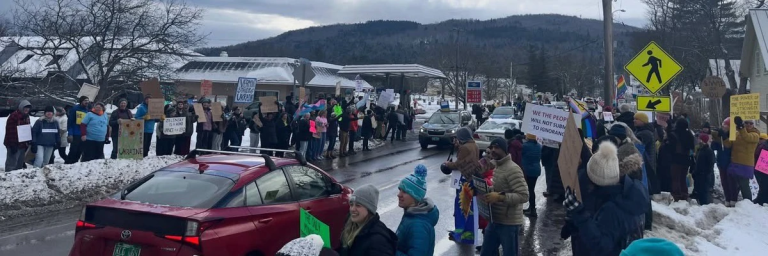
Placards reading “JD Vance Go Home,” “Love Trumps Hate,” and “Deport Billionaires” were visible among the crowd
Waitsfield, Vermont – Protesters gathered along a snowy road in Waitsfield, Vermont, on Saturday, targeting U.S. Vice President JD Vance as he and his family arrived in the area for a skiing trip. The demonstration, marked by signs and chants, came in the wake of a highly publicized and tense exchange between President Donald Trump and Ukrainian President Volodymyr Zelenskyy at the White House earlier this week.
According to reports from BBC News, the protesters lined the route Vance was expected to travel, holding up pro-Ukraine signs and expressing their discontent. Placards reading “JD Vance Go Home,” “Love Trumps Hate,” and “Deport Billionaires” were visible among the crowd, alongside a prominent transgender pride flag. The scene, captured in photographs and video, showed a determined group standing in the cold, their messages directed at Vance and, by extension, the current administration’s policies.
The protest appears to be a direct response to the recent diplomatic friction between Trump and Zelensky. During their meeting at the White House, the two leaders reportedly clashed over U.S. support for Ukraine amid its ongoing conflict with Russia. Trump’s comments, which some interpreted as critical of Ukraine’s leadership, have sparked outrage among pro-Ukraine advocates and fueled public demonstrations across the country.
Local resident and protester Maria Thompson, 45, told reporters, “We’re here to send a message that we stand with Ukraine and oppose any policies that undermine their fight for freedom. Vance’s presence here feels like a provocation after what happened in Washington.”
Vance, who has been a vocal supporter of Trump’s “America First” agenda, has not yet publicly responded to the protest. His office declined to comment when reached by BBC News. The vice president and his family were reportedly unharmed and continued with their planned activities in the area, known for its popular ski resorts
The demonstration in Waitsfield is part of a broader wave of unrest in the U.S. following the Trump-Zelenskyy meeting, with similar protests reported in other states. Critics of the administration argue that the exchange has damaged U.S.-Ukraine relations and emboldened Russia, while supporters maintain that Trump’s stance reflects a necessary reevaluation of foreign aid.
Police maintained a heavy presence at the scene in Waitsfield to ensure the protest remained peaceful, and no arrests or incidents were reported. However, the event has reignited debates about political polarization and the role of public demonstrations in holding elected officials accountable.
As the U.S. navigates its foreign policy challenges and domestic divisions, the confrontation in Vermont serves as a stark reminder of the passions ignited by the current geopolitical landscape. For many, the snowy road in Waitsfield became a symbolic battleground in the larger struggle over America’s role on the world stage.
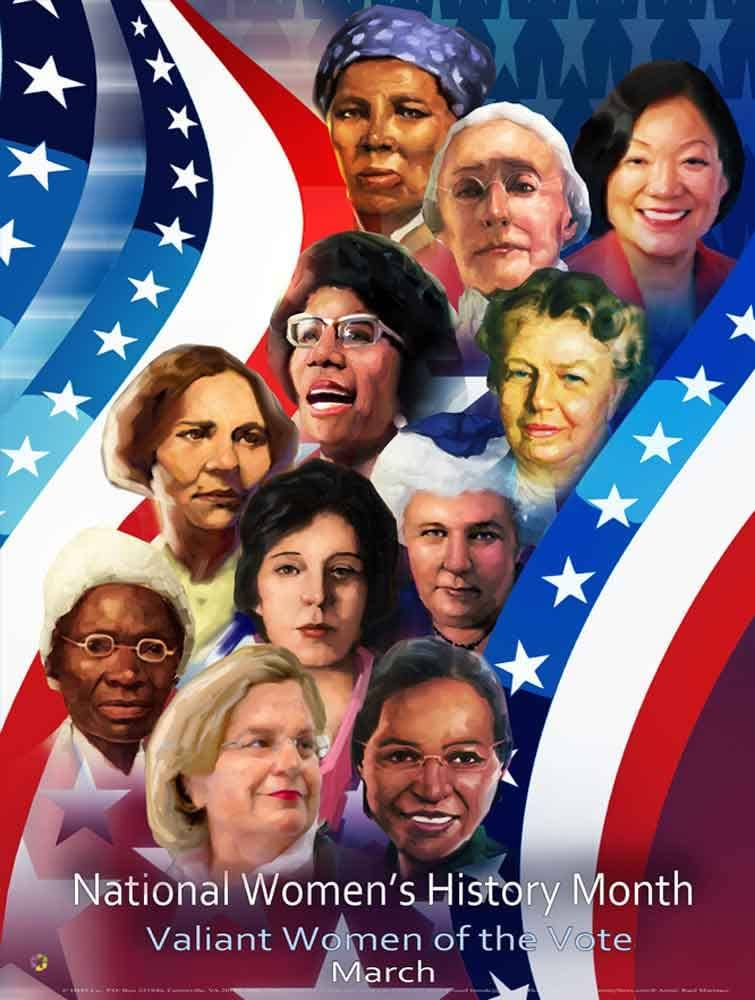
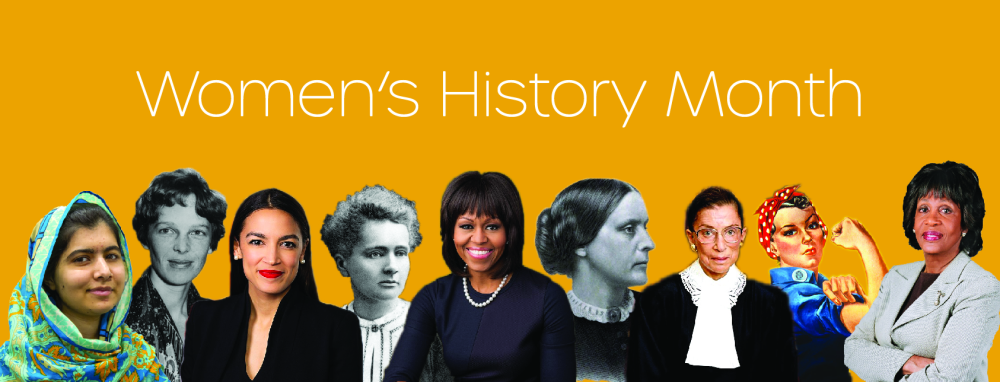
New York, N.Y. — March marks Women’s History Month, a time dedicated to honoring the achievements and contributions of women throughout history.
Officially established in 1987, this month-long observance evolved from grassroots efforts such as the first Women’s History Week in Santa Rosa, California, in 1978.
It serves as a reminder of the transformative roles women have played across fields like science, politics, arts, and activism.
Origins and Evolution – Socialist Suffragists
Women’s History Month has its roots in International Women’s Day, first celebrated on February 28, 1909, by socialist suffragists in Manhattan.
The idea to expand it into a month-long celebration gained traction in the 1970s when educators and activists sought to spotlight women’s historical contributions. In 1980, President Jimmy Carter proclaimed National Women’s History Week, which Congress later extended to the entire month of March in 1987.
Why It Matters
Women’s History Month is more than a commemoration; it is a call to action. It highlights the systemic barriers women have overcome—from suffrage and workplace discrimination to exclusion from education and professional opportunities. The month also underscores the ongoing struggle for gender equity and inclusion. Celebrating women’s achievements inspires future generations while fostering awareness of the challenges that remain.
Intersectionality: Women’s History Across Communities
Women’s history intersects with broader narratives such as LGBTQ+ history, Asian American history, and African American history:
LGBTQ+ Contributions: Figures like Billie Jean King and Alice Walker exemplify how women have championed both gender and LGBTQ+ rights, breaking barriers in sports, literature, and activism5.
Asian American Women: From immigrants who fueled family survival through labor to second-generation trailblazers challenging societal norms, Asian American women have significantly shaped their communities while advocating for racial and gender equality6.
African American Women: Leaders like Ida B. Wells-Barnett fought for suffrage and civil rights, embodying resilience against dual oppressions of race and gender4.
These stories demonstrate that women’s history is inseparable from broader struggles for justice across diverse communities.
Themes and Calls to Action
The theme for Women’s History Month 2025 emphasizes “Equity, Diversity, and Inclusion,” encouraging individuals to eliminate bias and foster an equitable future.
Assistant Secretary Alejandra Castillo underscores this as a moment for collective action—supporting women-owned businesses, mentoring young girls, and advocating for policies that empower women economically.
How to Celebrate Women’s History Month
Organizations can honor this month through initiatives like:
Hosting educational events about historical milestones.
Supporting women-led businesses.
Organizing book clubs featuring works by female authors.
Recognizing female employees’ contributions at work.
These actions not only celebrate progress but also inspire continued advocacy for equality.
Why Women’s History Month Matters Today
Women’s History Month reminds us that history is incomplete without recognizing women’s contributions. It challenges us to reflect on past inequities while motivating collective efforts toward a fairer society. By honoring trailblazers who fought for suffrage, civil rights, LGBTQ+ inclusion, and racial equity, we acknowledge that their struggles paved the way for progress—and that there is still work to be done.
Tags: Women’s History Month, women’s rights movement, suffrage, intersectionality, LGBTQ+ history, Asian American history, gender equality, African American history, equity diversity inclusion
Headlines: • Andrew Cuomo Announces Bid for NYC Mayor, Focusing on Mental Health and Homelessness • Former Governor Andrew Cuomo Enters NYC Mayoral Race, Unveils Policy Plan • Cuomo Returns to Politics with NYC Mayoral Run, Pledges to Tackle Homelessness
New York, N.Y. –– In his campaign, Andrew Cuomo emphasizes the need for effective leadership to tackle the city’s challenges. He has been actively preparing for his return to politics, securing key support and gaining an early lead in the polls despite his controversial exit from the governorship.
A cornerstone of Gov. Cuomo’s platform is his comprehensive plan to address mental health, addiction, and homelessness in New York City. Recognizing that many low-level violations and crimes on the streets and subways are linked to individuals who are seriously mentally ill or suffering from addiction, many of whom are homeless, Cuomo asserts that accepting this as a condition of urban life is neither compassionate nor effective.
He believes that fixing flaws in the current mental health and substance use disorder care system will reduce hospitalizations, homelessness, and incarceration among affected individuals, thereby improving the quality of life for all New Yorkers.
Cuomo’s plan includes several key initiatives:
• Expand access to mental health and substance use disorder services: Focus on community-based services, particularly for the homeless population.
• Address the mental health needs of children and adolescents: Prioritize schools as key access points for mental health services.
• Restructure inpatient psychiatric bed capacity: Aim to end the revolving door and enable longer stays, especially for those without housing security.
• Enforce involuntary commitment laws consistently: Codify existing standards that permit involuntarily committing individuals who are a danger to themselves because they cannot meet their basic needs. Ensure that judges, prosecutors, and defense lawyers consistently seek mental health competency exams for defendants whose offenses are related to their serious mental illness.
• Reduce chronic street homelessness: Focus on outreach to the approximately 2,000 chronically homeless individuals who need intensive mental health and addiction services to bring them in from the streets and subways.
Cuomo’s entry into the mayoral race comes at a time when incumbent Mayor Eric Adams is facing scandals and a corruption indictment, potentially impacting his reelection chances. Other Democratic candidates in the race include NYC Comptroller Brad Lander, state Assemblyman Zohran Mamdani, and former NYC Comptroller Scott Stringer, among others.
Cuomo’s campaign will likely focus on his experience and proposed policies to address the city’s pressing issues, including his detailed approach to mental health, addiction, and homelessness. As the race unfolds, voters will have the opportunity to assess his plans and leadership against those of other candidates vying to lead New York City.
Cuomo Returns to Politics with NYC Mayoral Run, Unveils Policy Plan (March 1, 2025)
We need a mayor who meets tough calls with courage and carries this city forward with grace under pressure – Governor Andrew Cuomo. Stand with me—let’s make him New York’s next mayor.
New York, N.Y. —New York City demands a leader with vision, grit, and a proven record of turning bold ideas into real progress. Andrew Cuomo is that leader. Having followed his career closely and seen his relentless dedication to justice, equality, and effective governance, I proudly endorse him for mayor.
Cuomo’s achievements speak volumes. As governor, he didn’t just lead—he transformed New York into a progressive powerhouse. His 2011 push for marriage equality redefined lives, granting LGBTQ+ New Yorkers like myself and my husband dignity and setting a national benchmark.
Long before Roe v. Wade fell, he secured reproductive rights in New York’s Constitution, making our state a bulwark for choice.
And in the depths of COVID-19, when panic loomed, Cuomo stood firm—guided by science, anchored by transparency—delivering clarity amid chaos. As my partner Bix Luce and I listened to the wailing sirens of ambulances on the FDR across the river from our home, and wallked our dogs along the deserted streets of Manhattan, we took enormous comfort in Andy’s daily briefings from Albany.
Brad Lander and Scott Stringer are capable public servants, but New York needs more than competence—it needs a fighter. Cuomo’s state and federal experience arms him to cut through Washington’s gridlock, bring resources home, and face down foes like Donald Trump. He gets the outer boroughs because he’s delivered for them: infrastructure that lasts, housing that works, jobs that sustain families.
I once met his father, Governor Mario Cuomo—a towering figure of intellect and moral force. Andrew carries that same fire, blending idealism with results. He doesn’t just preach justice—he embeds it in our systems, from the ground up.
Critics will point to past controversies. But New Yorkers don’t seek flawless saints—they want leaders who show up when it counts. Cuomo has, repeatedly, for the overlooked, the vulnerable, and this city’s future.
In 2025, we need a mayor who meets tough calls with courage and carries this city forward with grace under pressure. Governor Andrew Cuomo has the record, the resolve, and the spine to do it. Stand with me—let’s make him New York’s next mayor.
NYC demands leader with vision, grit, proven record turning bold ideas into real progress. Andrew Cuomo is that leader. As governor, he didn’t just lead—he transformed our state into progressive powerhouse. His 2011 push for marriage equality redefined lives, granting LGBTQ+ New Yorkers like myself and husband dignity, setting national benchmark. We have seen his relentless dedication to justice, equality, effective governance. I proudly endorse him for mayor.www.andrewcuomo.com
New York, N.Y. —In a move drawing fierce criticism, New York City Mayor Eric Adams has ordered increased cooperation with U.S. Immigration and Customs Enforcement (ICE), effectively prioritizing federal immigration enforcement over the city’s long-held sanctuary policies. The decision, seen by detractors as an echo of President Trump’s hardline stance, has sparked outrage among immigrant rights advocates and community leaders.
Sources reveal that the mayor’s office will now grant ICE expanded access to city resources for immigration-related operations. Critics argue that this shift risks undermining trust between law enforcement and immigrant communities while jeopardizing New York City’s reputation as a safe haven for all residents.
Photo credit: U.S. Immigration and Customs Enforcement / Flickr
“We have so many neighbors in New York City and across the country with varying immigration statuses. These are mostly good, tax-paying citizens. The percentage of U.S. citizens committing crimes in our nation is higher than those here without papers,” said Jim Luce, president of Luce Family Charities.
His remarks underscore concerns that the policy might unfairly target a vulnerable segment of the population while ignoring broader issues of crime and community safety.
Supporters of the policy contend that stronger ties with ICE are essential for enforcing immigration laws and curbing illegal activities. However, opponents warn that the increased collaboration could lead to unnecessary detentions and erode the longstanding trust between city officials and immigrant communities.
Legal experts predict potential judicial challenges and a politically charged battle in the coming weeks as community organizers mobilize against what they see as an assault on New York City’s progressive values. As the policy rolls out, the city’s future as a sanctuary is once again at the center of a heated national debate.
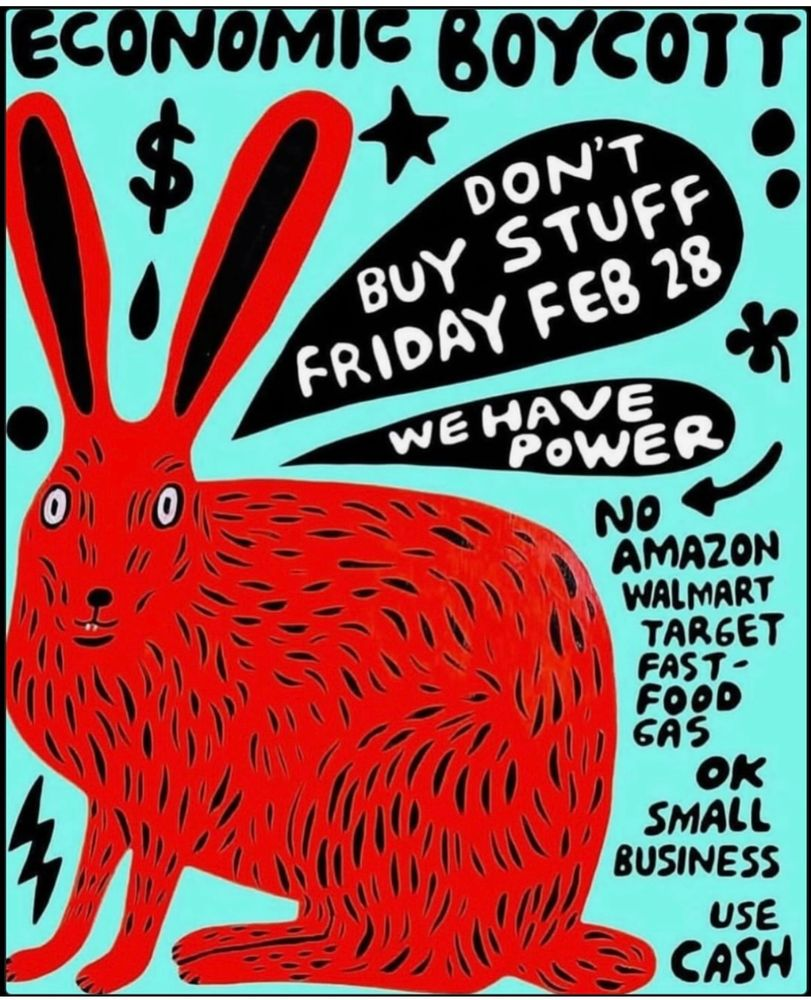
New York, N.Y. — A nationwide 24-hour “economic blackout” is currently underway, organized by the grassroots group People’s Union USA. This boycott, which began at midnight on Friday, February 28, 2025, calls on Americans to refrain from shopping for a full day.’
Key Points of the Boycott
Participants are urged to avoid all unnecessary purchases, both in-store and online, from major retailers like Amazon, Walmart, and Target.
The boycott also discourages spending on fast food, gas, and using credit or debit cards for non-essential items.
If essential purchases are necessary, people are encouraged to support small, local businesses instead of large corporations.
Reasons Behind the Boycott
The economic blackout is a response to several factors:
Rollback of diversity, equity, and inclusion (DEI) initiatives by major companies.
Protests against President Trump’s plans to reduce the federal workforce.
Concerns about corporate greed and rising prices of essential goods.
About the Organizers
The People’s Union USA, founded by John Schwarz (known as “J”), describes itself as a movement dedicated to economic resistance, government accountability, and corporate reform. The group claims no political affiliation and aims to unite Americans against perceived corruption and greed.
Impact and Support
The boycott has gained traction on social media and is being promoted outside the U.S.
Several celebrities, including Cyndi Lauper, Pearl Jam, Taraji P. Henson, John Leguizamo, and Bette Midler, have expressed support for the movement.
The actual impact on retail sales and company profits remains uncertain.
Future Plans
The People’s Union USA has announced additional boycotts:
A weeklong boycott against Amazon from March 7 to 14, 2025.
Another nationwide 24-hour economic blackout on March 28, 2025.
Targeted boycotts against specific retailers in the coming months, including Nestlé, Walmart, and Target.
The organization states that these boycotts will continue “until corporations are held accountable, billionaires pay their fair share, and the working class finally gets the freedom we deserve.
We acknowledge Ukraine’s valiant struggle against Putin’s ruthless, immoral invasion
New York, N.Y. — We write on behalf of all good Americans, WE ARE SO SORRY. We apologize to the Ukrainian people and their heroic president Volodymyr Zelenskyy and – we acknowledge Ukraine’s valiant struggle against Putin’s ruthless, immoral invasion.
During today’s disastrous Oval Office meeting, U.S. Vice President J.D. Vance had the audacity to claim that Ukrainian President Volodymyr Zelenskyy has not thanked America sufficiently for its support.
This assertion is not only misguided but profoundly backwards. It is America—and indeed all of Europe—that owes an unpayable debt of gratitude to Ukraine and its leader.
For three grueling years, Zelenskyy has stood as a bulwark against Russian aggression, sacrificing hundreds of thousands of Ukrainian lives to protect not just his own nation’s democracy, but the stability of an entire continent.
While Putin’s forces have been bogged down in Ukraine, Europe has been spared the horror of further invasions—a reprieve bought with Ukrainian blood and resilience.
Far from owing us thanks, it is we who should be thanking Zelensky every single day for his unwavering courage and for bearing a burden that shields us all.
That such a statement could come from America’s vice president in our White House in full view of the world, is a source of deep shame for those of us who recognize Ukraine’s heroism. To the people of Ukraine and President Zelenskyy, we are so deeply sorry—not just for the words spoken, but for the failure to acknowledge the magnitude of what Ukraine has done for us all.
New York, N.Y. Langston Hughes, the prolific poet, playwright, and social activist, transcends the boundaries of his time and place to stand as a potent role model for young global leaders.
While his era was marked by the specific struggles of African Americans in the early to mid-20th century, his enduring legacy speaks to universal themes of resilience, cultural pride, and the power of artistic expression as a vehicle for social change. By examining his life and work, we can glean valuable lessons applicable to the challenges and opportunities facing young leaders navigating today’s complex global landscape.
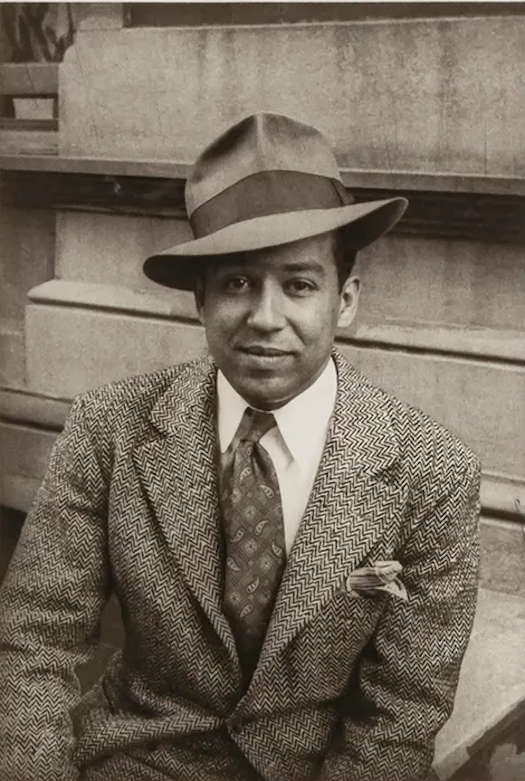
Langston Hughes circa 1939.
One of Hughes‘ most compelling qualities was his unwavering commitment to amplifying marginalized voices. As a leading figure of the Harlem Renaissance, he celebrated the beauty and complexity of Black life, challenging prevailing stereotypes and fostering a sense of collective identity.
His poetry, often infused with the rhythms of jazz and blues, gave voice to the everyday experiences, dreams, and frustrations of ordinary people. This dedication to authentic representation resonates deeply in a world grappling with issues of social justice and inequality. Young global leaders can learn from Hughes’s example by actively seeking out and elevating diverse perspectives, ensuring that their initiatives reflect the needs and aspirations of all communities.
Furthermore, Hughes demonstrated the transformative power of art as a tool for social commentary and change. He didn’t shy away from addressing difficult topics such as racism, poverty, and systemic oppression. Instead, he used his writing to expose injustices, provoke critical thinking, and inspire action.
His ability to fuse artistic expression with social activism is particularly relevant in the digital age, where social media and other platforms provide unprecedented opportunities for young leaders to engage with global audiences and mobilize support for their causes. By embracing creative approaches to communication and advocacy, they can effectively raise awareness, challenge conventional narratives, and drive meaningful change.
Hughes also exhibited remarkable resilience in the face of adversity. He encountered numerous obstacles throughout his life, including financial hardship, racial discrimination, and critical backlash. Yet, he remained steadfast in his commitment to his craft and his vision. This unwavering perseverance is an essential quality for young global leaders, who will inevitably encounter setbacks and challenges in their pursuit of ambitious goals. Hughes teaches us that resilience is not about avoiding failure, but about learning from it, adapting, and continuing to move forward with determination.
Moreover, Hughes‘ global perspective, despite the limitations of travel during his time, is noteworthy. He had a deep appreciation for the interconnectedness of human experience, demonstrated in his work that reflected the African diaspora and his travels. He recognized the shared struggles of oppressed people worldwide and sought to build bridges across cultures.
In an increasingly interconnected world, young leaders must cultivate a global mindset, embracing diversity, fostering collaboration, and working towards solutions that address transnational challenges. Hughes’s example encourages them to look beyond national borders and embrace a sense of shared humanity.
Langston Hughes‘ legacy extends far beyond the realm of literature. His life and work serve as a powerful testament to the transformative potential of artistic expression, the importance of amplifying marginalized voices, and the resilience required to navigate a world rife with challenges. Young global leaders can draw inspiration from Hughes’s unwavering commitment to social justice, his ability to bridge cultural divides, and his belief in the power of art to inspire change. By embodying these qualities, they can contribute to building a more equitable and just world for all.
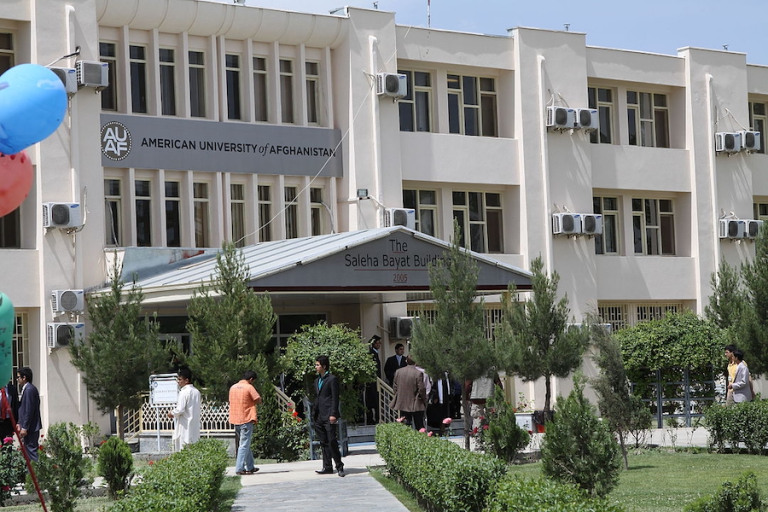
Established in 2006 with U.S. backing, the university symbolized hope for a generation of Afghan students, particularly women, who flocked to its Kabul campus to pursue degrees in law, business, and public policy. But following the Taliban’s takeover in August 2021 and the abrupt withdrawal of American forces, AUAF shuttered indefinitely—its classrooms empty, its faculty scattered, and its students thrust into exile or hiding.
The collapse of AUAF is more than an institutional failure; it is a microcosm of the broader betrayal felt by Afghans who risked everything to support America’s two-decade mission. Among the critics is Jim Luce, head of Luce Family Charities, who reflects on the university’s fragile existence even during its peak.
“I was invited to speak at the campus during the university’s heydays,” Luce recalled in an interview. “But even then, the security precautions described for me—from deplaning to reaching the campus—made me realize the deep animosity the university faced.
“Although I appreciated the president’s invitation, a fine gentleman I had met at the U.N., I could not avoid the image of a boy holding his finger in the dyke.
“It occurred to me that the Taliban could sweep into [Kabul] in a power vacuum—which is exactly what occurred when the American troops abruptly departed. Additionally, it pains me how so many Afghans who supported America’s presence there were abandoned.”
A Dream Built on Shifting Sands
AUAF’s founding was steeped in idealism. Funded by the U.S. Agency for International Development (USAID) and private donors, the university aimed to cultivate Western-style critical thinking and leadership skills. At its height, it enrolled over 1,700 students, nearly 40% of whom were women. Graduates went on to work in government, NGOs, and multinational corporations, embodying the promise of a progressive Afghanistan.
But danger loomed. The Taliban viewed AUAF as a threat, targeting it repeatedly. In 2016, a terrorist attack killed 15 people, including students and faculty. Security measures became draconian: armored vehicles, biometric checks, and blast walls. Yet students kept coming. “We believed education was our weapon,” said former student Mariam Rahimi, now a refugee in Canada. “The university was our sanctuary.”
The Fall: “They Left Us to Die”
When U.S. forces began their withdrawal in 2021, AUAF’s leadership pleaded for help. Chaos erupted as the Taliban advanced. Professors burned records to protect students from retaliation. The U.S. government evacuated some staff and students in a last-minute airlift, but hundreds were left behind.
“The emails stopped. The promises vanished,” said Ahmad Jawid, a former engineering lecturer. “One day, we were discussing post-grad plans; the next, I was deleting my LinkedIn profile to avoid execution.”
Taliban fighters seized the campus weeks later, stripping classrooms of “un-Islamic” materials and converting dormitories into military barracks. Female students, barred from education under Taliban rule, now face forced marriages or house arrest.
Global Silence, Local Suffering
The international community has done little to revive AUAF. While international NGOs scramble to support Afghan refugees, the university’s alumni network operates underground, smuggling at-risk scholars to safety. Meanwhile, the Taliban’s Ministry of Education has replaced AUAF’s curriculum with religious studies, erasing decades of progress.
Jim Luce’s metaphor of “a boy with his finger in the dyke” proved tragically prescient. “The U.S. built institutions without securing their foundations,” he said. “When the floodgates opened, everything washed away—including the people who trusted us.”
A Legacy of Abandonment
The tragedy of AUAF underscores a broader failure. Thousands of Afghan allies—interpreters, aid workers, and educators—remain trapped under Taliban rule, their lives in peril. Congressional efforts to expand visas have stalled, and humanitarian aid is sparse.
“We weren’t just abandoned—we were erased,” said former AUAF administrator Zarifa Ghafari, now in Germany. “America taught us to dream, then left us to nightmares.”
Conclusion: “Education Cannot Be Bombed Away”
Despite the devastation, AUAF’s spirit endures. Alumni in diaspora continue their studies online, vowing to rebuild. “The Taliban can close a university, but they can’t kill curiosity,” said Rahimi.
For Jim Luce, the lesson is clear: “True partnership means standing by people even when the cameras leave. Afghanistan’s scholars and students deserve more than thoughts and prayers—they deserve action.”
As the world turns its gaze elsewhere, the ruins of AUAF stand as a silent indictment of broken promises—and a testament to the unyielding resilience of those who still dare to learn.
New York, N.Y. The U.N. human rights office (OHCHR) together with refugee agency, UNHCR, on Thursday strongly condemned Thailand’s deportation of 40 Uyghurs to China, calling it a serious violation of international law and the fundamental principle of non-refoulement.
Volker Türk, U.N. High Commissioner for Human Rightssaid the forced return of the Uyghurs, who had been detained in Thailand for over 11 years, was deeply troubling.
“This violates the principle of non-refoulement for which there is a complete prohibition in cases where there is a real risk of torture, ill-treatment, or other irreparable harm upon their return,” he said.
The right to seek asylum and of non-refoulement are also enshrined in Article 13 of Thailand’s Prevention and Suppression of Torture and Enforced Disappearance Act, and Article 16 of the ASEAN Human Rights Declaration.
Detained since 2014
The deported men were part of a larger group of Uyghurs who were detained in Thailand in March 2014, after leaving China, bound for Türkiye.
For over a decade, they were held in immigration detention centres under poor conditions.
According to OHCHR, five members of the group have died in custody, while eight others remain detained in Thailand.
Halt further deportations
The UN rights chief also urged the Thai Government to halt any further deportations and ensure the protection of the remaining Uyghurs in detention.
“The Thai authorities must ensure there are no further deportations and the remaining members of the group, including potential refugees and asylum-seekers, being held in Thailand are fully protected in accordance with their obligations under international law,” he added.
UNHCR decries forced returns
UNHCR also condemned the deportation, saying it had repeatedly sought access to the detained Uyghurs and assurances they would not be forcibly returned – a request that has so far been denied.
Ruvendrini Menikdiwela, Assistant High Commissioner for Protection, reiterated that it is a “clear violation” of the non-refoulement principle and the Government’s obligations under international law.
“UNHCR calls on the Royal Thai Government to put an end to the forced return of individuals from Thailand,” she said.
Call for transparency
High Commissioner Türk also urged the Chinese authorities to reveal the whereabouts of the deported Uyghurs.
“It is now important for the Chinese authorities to disclose their whereabouts, and to ensure that they are treated in accordance with international human rights standards,” he said.
New York, N.Y. — A new report from Robin Hood and Columbia University reveals that 25% of New Yorkers—approximately 2.02 million people, including 420,000 children—are now living in poverty, nearly double the national average of 13%. Rising costs for essentials like food, housing, and utilities have driven the poverty threshold for a renting family of four to $47,000 annually in 2023, up from $43,890 in 2022.
Inflation has outpaced economic growth, pushing an additional 100,000 residents into poverty despite declining unemployment. The report, based on 2023 data, highlights that Black, Latino, and Asian communities face higher poverty rates due to systemic barriers. Even those earning up to $94,000 struggle with “material hardships,” affecting 58% of New Yorkers within 200% of the poverty line.
Robin Hood CEO Richard Buery emphasized that the “supplemental poverty measure” used in the study—factoring in income and public benefits—offers a clearer picture of hardship than traditional metrics.
While pandemic-era aid briefly lowered poverty levels before 2022, its expiration has reversed those gains. “New Yorkers are fighting to survive in this beautiful city,” Buery said on “Mornings On 1,” noting that even middle-income families face challenges affording basics.
Apple Stands Firm on Inclusion, Defeating Conservative Diversity Critique
New York, N.Y. Apple’s investors have firmly dismissed a proposal aimed at ending the company’s diversity, equity, and inclusion programs.
Spearheaded by a conservative think tank and in line with PresidentDonald Trump’s campaign against such initiatives, the measure was defeated by an outstanding 97% vote.
CEO Tim Cook reaffirmed Apple’s commitment to an inclusive workforce despite potential legal shifts. This decisive outcome mirrors similar rejections at other major corporations, underscoring the belief that diversity remains a key driver of business success.
In 2014, Cook became the first and only chief executive of a Fortune 500 company to publicly come out as gay.
Washington, D.C. Former Trump adviser Steve Bannon sparked controversy at CPACby raising his right arm in a gesture critics likened to a Nazi salute during his speech. Bannon dismissed the comparison, calling it a “wave,” but French far-right leader Jordan Bardella canceled his own CPAC speech in protest, condemning the act as referencing “Nazi ideology”.
The Anti-Defamation League criticized Bannon’s history of inciting extremism, while Bannon mocked Bardella as “a boy, not a man”. The incident drew parallels to Elon Musk’s similar gesture at Trump’s inauguration.
The Conservative Political Action Conference
CPAC is an annual gathering organized by the American Conservative Union that brings together conservative activists, elected officials, political strategists, and thought leaders to discuss policy, share ideas, and promote conservative principles.
The event typically features speeches, panel discussions, and workshops covering topics ranging from economic policy to national security, and has been a significant platform for shaping conservative discourse in the U.S. since inception in 1974.
No one ever asked us who we >> didn’t << want to be.
New York, N.Y. –– In the hallowed halls of high school, amidst the hormonal haze and the existential dread of algebra class, we were often asked the Big Question:
“Who do you want to be when you grow up?”
It was a question designed to spark dreams, to ignite ambition, to encourage us to see beyond our acne-ridden present and into a future brimming with boundless possibilities. We conjured images of ourselves as titans of industry, groundbreaking scientists, or maybe, just maybe, the next Babe Ruth. Neil Armstrong, fresh off his moonwalk, was a popular choice. A few starry-eyed classmates even dared to whisper, “President of the United States,” though most of us suspected they’d peak at student council treasurer.
But looking back, I realize there was a glaring omission in this exercise of adolescent aspiration.
No one ever asked us who we didn’t want to be.
Perhaps that would have been the more revealing inquiry. While dreaming of emulating the greats is all well and good, a healthy dose of “avoiding the abyss” can be just as powerful a motivator. After all, not everyone is destined for the White House or the Yankees dugout, but most of us have a reasonable shot at steering clear of becoming, say, the guy who has to mop up the peep show booths in Times Square.
Had we been asked to list the career paths or life outcomes we most desperately wanted to avoid, my personal list would have been short but potent. Right at the top, nestled somewhere between a telemarketer and the guy who designs those impossibly tiny airline liquor bottles, would be Jeffrey Dahmer’s father. Talk about a legacy nobody wants to inherit. Imagine the family reunions:
“Hey, Lionel, how’s your boy doing?” “…Oh, you know. Keeping busy.”
But even that pales in comparison to the sheer existential horror of being that other individual. You know the one. The individual who, through the sheer happenstance of their chosen profession, finds themselves forever linked—through no real fault of their own—to a figure of grotesque historical infamy. The individual who, despite their rigorous education, impeccable qualifications, and presumably decent moral compass, ended up in the unenviable position of having to routinely perform medical examinations on Donald Trump.
Yes, I’m talking about the unfortunate soul who, in their youthful optimism, probably once dreamed of a noble career in medicine—perhaps curing cancer or making groundbreaking discoveries in gastroenterology—only to find themselves, years later, crouched in a sterile room, wearing latex gloves, whispering a silent prayer to the gods of Clorox.
Let’s call this tragic figure “Individual No. 45’s Medical Specialist.” Donald Trump’s proctologist.
Now, I’m not saying this esteemed professional isn’t a highly skilled and dedicated practitioner. I’m sure they’ve logged countless hours studying the intricacies of the human plumbing. I’m also fairly certain they possess a level of mental fortitude that would make a Navy SEAL weep with envy. But still, let’s be real—nobody walks across the stage at medical school graduation dreaming of this fate. No one picks up their diploma thinking, “One day, I will achieve greatness by exploring the darkest, most unholy depths of an ex-president’s lower gastrointestinal tract.”
And yet, somewhere out there, this person exists. They wake up in the morning, pour their coffee, and know that in just a few hours, they will be engaged in the most thankless and viscerally unpleasant medical examination in American history. I imagine they have a dedicated stress-relief room in their office, complete with a punching bag, a shrine to Fauci, and an industrial-strength vat of Purell.
And what, pray tell, do they say at dinner parties when someone inevitably asks, “So, what do you do for a living?”
Do they dodge the question? Do they lie? Do they give a cryptic half-answer like, “I work in… public health” and then immediately excuse themselves to get another drink? Or do they just stare into the distance, eyes hollow, replaying the unspeakable horrors they have witnessed?
Whatever the case, the mere thought of their predicament makes me deeply grateful for my own life choices. Because if nothing else, I have successfully avoided becoming that person.
And maybe, just maybe, that’s a valid life goal in itself.
After all, we tend to focus so much on emulating the heroes of history—striving to be the next Einstein, the next Oprah, the next Serena Williams—that we forget how much of success is simply about steering clear of the truly terrible. The choices we make are often just as much about what we reject as what we embrace.
So while my classmates were busy practicing their baseball swings and perfecting their presidential handshakes, I was quietly vowing to stay far, far away from anything that would put me at risk of a Dahmer-adjacent family dinner or an unsolicited encounter with Donald Trump’s posterior.
And you know what? I think I’ve done alright.
Not every life needs a moon landing. Sometimes, dodging a cosmic horror is achievement enough.
At the U.N., We Cast Our Lot with North Korea, Syria, Eritrea, Hungary, Nicaragua
New York, N.Y. — In a maneuver as confounding as it is dispiriting, the United States has tethered its global standing to a cadre of nations whose reputations evoke not esteem but unease. On February 24, 2025—the third anniversary of Russia’s brazen invasion of Ukraine—the United Nations General Assembly voted on a resolution to denounce Moscow’s aggression and insist upon the restoration of Ukrainian territory.
Ninety-three nations, spearheaded by Europe’s resolute bloc, endorsed this call to justice.
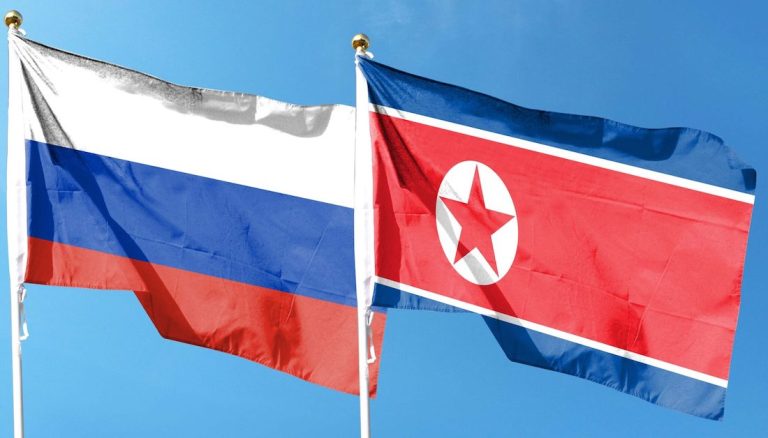
Yet under Donald Trump’s nascent administration, America did not merely demur; it cast its vote alongside Russia and an unseemly cohort: North Korea, Syria, Eritrea, Hungary, and Nicaragua. This is not a fleeting lapse in judgment—it is a deliberate reorientation of American principle.
The company we now keep is a gallery of infamy.
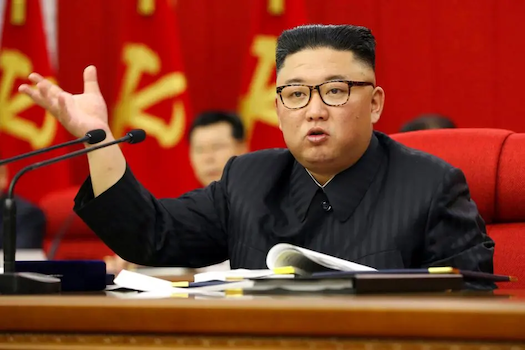
North Korea, a dynastic prison where dissent is obliterated and hunger is wielded as policy. Syria, its landscape scarred by a regime sustained through savagery and Russian patronage.
Eritrea, a repressive outpost where liberty is a distant rumor, often likened to Pyongyang’s bleak model.
Hungary, where Viktor Orbán has artfully dismantled democratic norms under the guise of European legitimacy.
And Nicaragua, where Daniel Ortega’s iron rule has extinguished opposition with chilling efficiency.
These are not exemplars of virtue; they are studies in subjugation. Yet America, rather than standing apart in measured neutrality—as 65 nations, including China, chose to do—has aligned itself with this chorus of autocrats to shield Russia from accountability.
The resolution was unequivocal: a demand to designate Russia the aggressor, to uphold Ukraine’s sovereign borders. It was a litmus test of moral clarity, and the U.S. faltered—not through reticence, but through an active embrace of the indefensible.
Even the Wall Street Journal, a bastion of conservative thought, could not stomach this pivot. On Monday, its editorial board lambasted the Trump administration’s vote as a “regrettable moment,” a stinging rebuke from a voice not prone to liberal hand-wringing. America’s siding with Russia, they wrote, marked a lamentable departure from reason. When a stalwart of the right recoils, the depth of this misadventure becomes all the more apparent.
Trump’s cadre offers little to mitigate the stain.
We are told Ukrainian President Volodymyr Zelensky is a “dictator” ensnared by Russian deceit, that Ukraine’s NATO ambitions are the true provocation. Such assertions might buttress a pragmatic bid to broker peace, but they come at the cost of legitimizing conquest.
Vladimir Putin, one presumes, observes this spectacle with a wry smile, his gamble vindicated by an American ballot. Hungary’s vote mirrors Orbán’s cozy rapport with Moscow, a calculated affront to European unity.
Nicaragua’s stance is Ortega’s perennial jab at Washington’s shadow. Eritrea’s alignment is the rote fealty of a regime thriving in obscurity. North Korea and Syria, tethered to Putin by necessity and arms, scarcely merit elaboration. But America’s presence among them defies all logic—a nation once heralded as liberty’s vanguard now complicit in tyranny’s defense.
This vote transcends mere policy; it is a renunciation.
Of Ukraine, certainly, as it endures an existential struggle, but also of the ideals that have long defined American leadership. Trump’s champions may dress this in the garb of realpolitik, a daring stroke to end a grinding war. The Wall Street Journal’s dismay suggests otherwise, and I concur: what unfolds is not boldness but capitulation, a willingness to barter principle for the mirage of influence. The United States, once a beacon for those who dared to dream of freedom, now drifts in the orbit of despots and demagogues.
This is the visage of “America First” in 2025—not a clarion call to greatness, but a muted retreat from duty. The Stars and Stripes now ripple uneasily beside the ensigns of Pyongyang, Damascus, and Asmara. It is a tableau that should stir every citizen who ever held that our nation aspired to more than the sum of its concessions.
Empathy Not Weak: Fonda Delivers Fire, Calls for Unity Against Tyranny
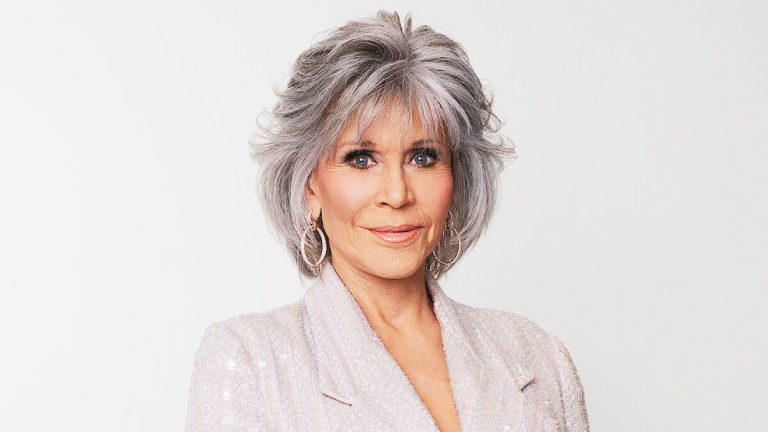
Los Angeles, CA — Jane Fonda, the iconic actress and lifelong activist, used her acceptance speech for the Life Achievement Award at the Screen Actors Guild (SAG) Awards on Sunday night to deliver a powerful rebuke of President Donald Trump and the divisive ideology she says he represents. Fonda, 87, called for empathy, unity, and collective action as antidotes to what she described as a rising tide of tyranny.
“Empathy is not weak or ‘woke,’” Fonda declared to a rapt audience. “‘Woke’ just means you give a damn about other people.”
Fonda, whose career spans over six decades, emphasized the role of actors and storytellers in fostering empathy and understanding. “Acting is about cultivating empathy,” she said. “It’s about turning toward each other, not away. And right now, a whole lot of people are going to be really hurt by what is happening — what is coming our way. Even if they’re of a different political persuasion, we need to call upon our empathy, not judge, but listen from our hearts and welcome them into our tent. Because we are going to need a big tent to resist, successfully, what’s coming at us.”
The speech was a fitting capstone to Fonda’s storied career, which has been as defined by her activism as by her acting. From her outspoken opposition to the Vietnam War in the 1970s — which earned her the derisive nickname “Hanoi Jane” — to her recent arrests for climate activism, Fonda has long used her platform to advocate for social justice.
Fonda also used her moment to highlight the importance of unions, particularly SAG, in protecting workers and fostering collective power. “Unlike most unions, which protect workers who produce tangible products, SAG protects actors, whose work is the creation of empathy,” she said.
Her speech drew parallels between the current political climate and past struggles for justice, invoking the words of Martin Luther King Jr.: “The arc of the moral universe is long, but it bends toward justice.” She urged the audience to recognize the urgency of the moment, comparing it to pivotal movements like the Civil Rights Movement, apartheid, and Stonewall.
“We don’t have to wonder anymore if we would have been brave enough to walk the bridge, take the hoses, the batons, and the dogs,” Fonda said. “Because we are in our documentary moment. This is it. And it’s not a rehearsal.”
Fonda concluded on a hopeful note, urging the audience to stay connected and fight for a better future. “We must stay in community. We must help the vulnerable. We must find ways to project an inspiring vision of the future — one that is beckoning, welcoming, that will help people believe,” she said. Quoting novelist Pearl Cleage, she added, “On the other side of the conflagration, there will still be love. There will still be beauty. And there will be an ocean of truth for us to swim in. Let’s make it so.”
The speech was met with a standing ovation, cementing Fonda’s legacy not just as an actress, but as a tireless advocate for justice and equality.
New York. N.Y. — “Woke.” Once a term of pride, signifying awareness and social consciousness, it’s now wielded as a weapon, a sneer, a shorthand for everything from overly sensitive millennials to the supposed erosion of traditional values.
But stripped of its pejorative Trumpian baggage, what does “woke” truly mean? At its core, being woke is about empathy. It’s about giving a damn.
It’s about recognizing that the world isn’t a level playing field. It’s acknowledging that systemic inequalities, historical injustices, and ingrained biases continue to shape our present.
Being woke means understanding that privilege exists, not as a personal failing, but as an unearned advantage that some people have while others do not.
It’s about seeing the world through the eyes of those who have been marginalized, silenced, and oppressed.
This empathy translates into action. Being woke isn’t just about posting an inspirational quote on Instagram; it’s about actively working towards a more just and equitable society.
It’s about challenging discriminatory practices, amplifying marginalized voices, and advocating for policies that promote inclusivity and equality.
It’s about putting your money where your mouth is, supporting businesses that align with your values, and holding institutions accountable for their actions.
Elon Musk argues that being woke is about being “too sensitive,” about policing language and stifling debate.
But genuine wokeness isn’t about enforcing ideological purity; it’s about fostering respectful dialogue and creating space for diverse perspectives.
It’s about understanding that words have power and that language can perpetuate harmful stereotypes and reinforce existing power structures.
It’s about striving to use language that is inclusive and respectful of all individuals, regardless of their race, gender, sexual orientation, or background.
Furthermore, being woke isn’t about hating anyone.
It’s not about demonizing those who hold different beliefs, although it faces the liberal’s existentialist dilemma: is it too extreme to denounce extremism? Emphatically no.
Being woke is about recognizing that everyone has biases, and that the first step towards overcoming those biases is acknowledging them.
It’s about engaging in constructive conversations, even with those who disagree with you, with the goal of understanding their perspectives and finding common ground.
The challenges facing our world – from climate change to racial injustice to economic inequality – are complex and interconnected.
Addressing these challenges requires more than just good intentions; it requires a deep understanding of the systemic forces at play.
Being woke is about equipping yourself with the knowledge and tools necessary to navigate these complexities and to contribute meaningfully to positive change.
Ultimately, being woke is not a destination; it’s a journey. It’s a continuous process of learning, growing, and evolving.
It’s about constantly questioning your own assumptions and biases, and striving to become a more informed, empathetic, and engaged citizen.
It’s about recognizing that we are all interconnected, and that the well-being of each of us is bound up with the well-being of all.
Being woke, in its truest sense, is simply about giving a damn about others, about our communities, and about the future of our planet.
And in a world that often seems indifferent, that’s something to be celebrated, not condemned.
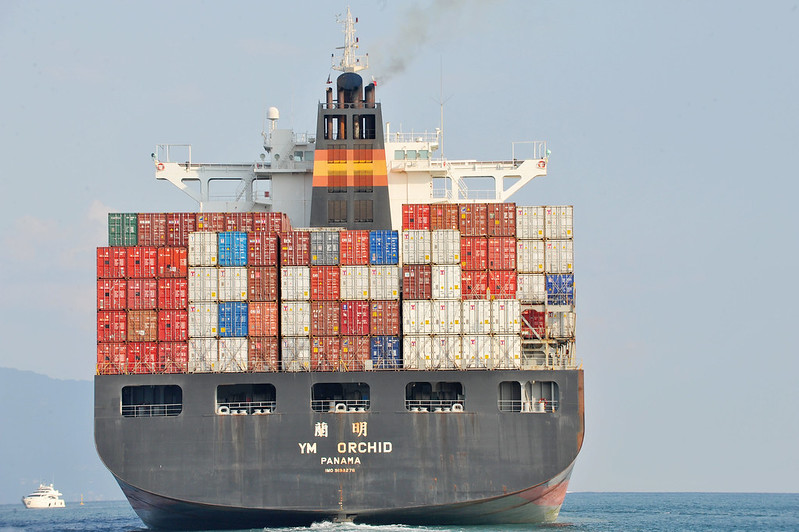
Washington, D.C. — The Trump administration has proposed punitive new fees on international shipping that would target vessels owned by Chinese companies or manufactured in Chinese shipyards, promising to dramatically alter the economics of global trade.
The new policy would charge Chinese-owned cargo ships, as well as third-country flagged vessels built in China, $1 million or more per port-of-call in the U.S.
Large container ships often make multiple stops when delivering goods to the U.S., and would face new fees at each port.
The Office of the U.S. Trade Representative (USTR) published the proposal Friday, tying it to an investigation into allegations by several U.S. labor unions that China has unfairly distorted the international shipbuilding industry.
The investigation, conducted under Section 301 of the Trade Act of 1974, determined that the Chinese government has pursued a policy of subsidizing its domestic shipbuilding industry with the aim of “targeting for dominance” the global market.
Growing market share
The investigation pointed out that over the past 25 years, China’s share of the global shipbuilding industry has exploded. China accounted for about 5% of the total tonnage of ships manufactured in 1999. By 2023, the Chinese share of the market surpassed 50%.
The USTR found that Chinese policy “burdens or restricts U.S. commerce by undercutting business opportunities for and investments in the U.S. maritime, logistics, and shipbuilding sectors; restricting competition and choice; creating economic security risks from dependence and vulnerabilities in sectors critical to the functioning of the U.S. economy; and undermining supply chain resilience.”
The results of the investigation, which began during President Joe Biden’s administration, were announced last month.
The proposal is open for public comment until March 24, at which point the administration will determine whether or not to implement it.
Chinese reaction
On Monday, Chinese Foreign Ministry spokesperson Lin Jian sharply criticized the U.S. move.
“[T]o serve its political agenda at home, the U.S. has abused Section 301 investigation[s], which seriously violated WTO [World Trade Organization] rules and further undermined the multilateral trading system,” he said. “We call on the U.S. side to respect facts and multilateral rules and immediately stop its wrongdoings.”
The China Association of the National Shipbuilding Industry (CANSI) and China Shipowner Association had previously blasted the USTR investigation as being “conclusions full of lies and distortion of facts.”
In a statement issued when the results of the investigation were released, CANSI said, “Development of China’s shipbuilding industry strictly follows the international trading rules and is the result of collaboration with global partners, as well as the tech innovation, and the hard-wording and excellent performances of Chinese industry players.”
Complex new rules
The USTR proposal contains a number of complicated elements that made it unclear precisely how any new regime of port fees would be administered.
Each ship owned by a Chinese entity would be charged a $1 million fee on entering a U.S. port, though the proposal also appears to consider a different fee calculation of $1,000 per ton of capacity, which could add up to considerably more for large ships that carry thousands of tons of cargo.
Chinese-built ships operated by non-Chinese shipowners would be subject to a $1.5 million fee, which could be adjusted, depending on the percentage of Chinese-built ships in that shipowner’s fleet. This would apply even if the ship’s cargo was not manufactured in China.
Ships owned by companies that have existing orders for new ships pending with Chinese shipbuilders could be hit with an additional $1 million fee per entry at U.S. ports.
The rule also provides for “refunds” of a similar amount each time a shipping company sends a U.S.-built cargo ship into a U.S. port.
Economic justifications hazy
Mary Lovely, a senior fellow with the Peterson Institute for International Economics, said it was difficult to find an economic justification for the proposal.
“The thing that’s really disturbing is that it’s not linked to any particular policy that would benefit American businesses or consumers,” she said.
International trade will continue to flow to the United States, but through more convoluted routes that add time and expense. For example, Lovely predicted that many shipping firms would explore the possibility of diverting their ships to ports in Mexico and Canada, and trucking the cargo into the U.S.
“It seems to me that this is just a tremendous way to reduce volume and employment at U.S. ports and basically force trade to take transportation routes and transportation modes that are clearly going to raise prices for U.S. businesses and consumers,” Lovely said. “There’s no way around it.”
In an email exchange with VOA, Joe Kramek, World Shipping Council president and CEO, echoed those concerns.
“USTR’s proposed draconian $1 million-plus per U.S. port visit fees on ships that carry the large majority of the U.S. trade, if they are Chinese-built or –operated – or on any ship operator from any country that has even a single Chinese ship in its fleet or on order – if carried forward, would cause broad economic harm across all sectors of the U.S. supply chain,” wrote Kramek, whose organization represents shipping companies.
“The fees would result in fewer U.S. port calls, higher prices for U.S. consumers, and severe impacts for exporters, particularly American farmers,” he wrote.
Unlikely to benefit US shipbuilders
Though ostensibly aimed at helping U.S. shipbuilders, the law is unlikely to have a significant impact on that industry, said Marc Levinson, a Washington-based economist and historian who has written two books about container shipping.
“This is not likely to do much for U.S. shipbuilding,” Levinson told VOA. “U.S. commercial shipbuilders are very far away from global scale. They don’t produce anything that is competitive on the international market for commercial oceangoing vessels.”
“The winners of this policy would be Japan, Korea, the Philippines, other countries where commercial shipbuilding is on a larger scale today than the United States,” Levinson said. The losers, he added, will include U.S. consumers, as the port fees are passed on in the form of higher prices for imported goods.
In an email exchange with VOA, the National Retail Federation registered its opposition to the policy, writing, “NRF strongly opposes a port fee remedy, which will do nothing to force China to change its behavior and practices. It will only increase shipping costs for retailers and further disrupt the maritime market.”
AfD’s Rise, Supported by Elon Musk, Tests Germany’s Anti-Nazi Legacy
More controversial #AfD election ads. Left: “New Germans? We make them ourselves.” Right: “Islam? Doesn’t fit in with our cuisine.”
Berlin — In the heart of Berlin, where history whispers through every cobblestone and monument, a political storm brews. The Alternative für Deutschland (AfD), a far-right party founded in 2013, has risen from obscurity to prominence, shaking the foundations of Germany’s post-war political consensus.
AdF anti-Islam political ad: “Islam? Doesn’t fit in with our cuisine.”
Once a fringe group railing against the Eurozone, the AfD has morphed into a powerful voice for nationalism, anti-immigration sentiment, and skepticism toward the European Union.
Yet, its ascent is shadowed by Germany’s stringent anti-Nazi laws, a legal framework born from the ashes of the Third Reich, designed to prevent the resurgence of extremism. This clash between a modern political movement and a nation’s resolute past forms a narrative as complex as Germany itself.
The AfD’s rise began modestly, fueled by economists and Euroskeptics frustrated with Germany’s role in bailing out struggling EU economies. But by 2015, as refugees streamed into Germany amid Angela Merkel’s open-door policy, the party pivoted. Leaders like Alexander Gauland and Björn Höcke seized the moment, amplifying fears of cultural erosion and crime.
Their rhetoric—often steeped in nostalgia for a “pure” Germany—resonated with voters in the former East, where economic stagnation and disillusionment with reunification lingered. By 2025, the AfD commands significant support, polling over 20% nationally and dominating regional parliaments in states like Thuringia and Saxony.
Yet, this success comes with a cost
Germany’s anti-Nazi laws, enshrined in the Grundgesetz (Basic Law) and the Strafgesetzbuch (Criminal Code), are a bulwark against the ghosts of 1933. Section 130 prohibits incitement to hatred, including the dissemination of Nazi propaganda, while Section 86 bans the public use of Nazi symbols like the swastika, except for art or historical purposes.
These laws reflect Germany’s Vergangenheitsbewältigung—its reckoning with the past—and are enforced with vigilance. For the AfD, this legal landscape is a minefield. Höcke, a former history teacher, faced fines in 2024 for invoking the banned Nazi slogan “Alles für Deutschland” during a rally. He argued it was a patriotic call, not a Nazi echo, but courts disagreed, citing his knowledge of its historical weight.
AdF anti-immigrant political ad: “New Germans? We make them ourselves.”
The AfD walks a tightrope
Its leaders decry these laws as stifling free speech, claiming they’re wielded as political weapons by the establishment. Supporters see the party as a defender of German identity against globalization and multiculturalism, while critics—including intelligence agencies like the Verfassungsschutz—label factions of the AfD as extremist. The Thuringian branch, under Höcke’s influence, is officially monitored as a threat to democracy, its members accused of “whitewashing” Nazi crimes. This scrutiny fuels the party’s narrative of victimhood, rallying its base even as it alienates moderates.
In a small town near Dresden, Anna Müller, a 34-year-old nurse, embodies the AfD’s appeal. Raised in the post-reunification chaos of the East, she feels forgotten by Berlin’s elite. “The AfD listens,” she says, sipping coffee in a café adorned with faded DDR-era posters. “They’re not afraid to say what we’re all thinking: too many foreigners, too little for us.” Anna dismisses Nazi accusations as overblown. “Höcke’s fined for a phrase? That’s history, not today.” Her vote, like millions of others, propels the AfD forward, even as protests erupt in cities like Munich, where students chant “Nie wieder!”—never again.
The anti-Nazi laws, however, are not relics but living tools
In 2025, a court in Leipzig sentences a low-level AfD organizer to six months in prison for distributing pamphlets denying aspects of the Holocaust—a crime under Section 130. The ruling sparks outrage online, with AfD sympathizers decrying “thought police,” while human rights groups hail it as a necessary stand. Chancellor Lisa Kaufmann, a centrist grappling with a fractured coalition, defends the laws. “Our democracy was forged in the ruins of tyranny,” she declares in a televised address. “We cannot gamble with its soul.”
Yet, the AfD’s influence grows, exploiting cracks in Germany’s social fabric. Its policies—deporting undocumented migrants, exiting the EU, prioritizing “native” Germans—ignite fierce debate. In parliament, AfD MPs clash with rivals, their speeches often skirting the edge of legality. When Gauland once mused that the Nazi era was “a speck of bird droppings” in Germany’s history, he narrowly avoided prosecution, claiming metaphor, not denial. Such moments test the boundaries of free expression versus historical responsibility.
In Berlin’s Reichstag, where b once consolidated power, the AfD’s presence feels like an irony too bitter to swallow. Lawmakers from the Greens and SPD accuse the party of undermining the very democracy that hosts it. Meanwhile, the Verfassungsschutz warns of rising far-right violence—attacks on refugee centers, synagogue vandalism—linked to rhetoric the AfD denies inspiring. The laws, though robust, strain under modern pressures: digital platforms amplify extremist voices, and enforcement struggles to keep pace.
As Germany approaches its next election, the AfD’s fate—and the resilience of its anti-Nazi framework—hangs in balance. For supporters like Anna, it’s a fight for sovereignty; for opponents, a battle against history’s repetition. In this tension lies a nation’s soul, wrestling with how to honor its past while facing an uncertain future.
Germany’s Left Reborn: Die Linke Surges Amid Political Shake-Up, Socialism Resurgent
Berlin — In a surprising twist in Germany’s political landscape, the socialist party Die Linke has emerged as an unexpected beneficiary of growing voter discontent, while the traditional center-left heavyweights, the Social Democratic Party (SPD) and the Greens, face a stark decline.
As of late February 2025, the shifting tides of public opinion have propelled Die Linke to newfound prominence, capitalizing on dissatisfaction with the outgoing coalition government and broader anxieties over immigration, economic stagnation, and international conflicts.
The SPD, led by Chancellor Olaf Scholz until the collapse of his “traffic light” coalition with the Greens and the Free Democrats (FDP) in late 2024, has seen its support plummet. Final election results from February 23, 2025, reveal the SPD slumping to a historic low of 16.4%, a drop of nearly 10 percentage points from its 2021 performance.
The Greens, once heralded as the rising stars of progressive politics, also stumbled, landing at 11.6%, down from their previous highs. Meanwhile, Die Linke surged to 8.8%, a remarkable turnaround for a party that many had written off as a relic of the past, especially after the departure of prominent figure Sahra Wagenknecht to form her own rival movement, the Sahra Wagenknecht Alliance (BSW).
Analysts point to several factors fueling Die Linke’s resurgence. The party’s sharp critique of the mainstream parties’ handling of migration and economic policy resonated with voters disillusioned by the SPD and Greens’ centrist shift. During the campaign, Die Linke positioned itself as a staunch defender of progressive values, attracting younger voters and urban dwellers—particularly in Berlin, where it emerged as the strongest party. Its opposition to German complicity in international conflicts, such as unwavering support for Israel’s actions in Gaza, further distinguished it from the SPD and Greens, who have largely aligned with the establishment line.
The election, triggered by the disintegration of Scholz’s coalition amid disputes over budget and climate policies, exposed the vulnerabilities of the ruling parties. The SPD’s tougher stance on border controls and deportations failed to win back voters who had drifted to the far-right Alternative für Deutschland (AfD), which secured a record-breaking 20.8% of the vote, placing second behind Friedrich Merz’s victorious CDU/CSU bloc at 28.5%. Meanwhile, the Greens’ focus on climate initiatives, including controversial renewable heating mandates, alienated some of their former base, particularly among younger voters who turned to Die Linke instead.
Die Linke’s gains were not just numerical but symbolic
Once considered a fringe player with roots in East German communism and dissident SPD factions, the party has undergone a quiet reinvention. Its campaign, bolstered by a late surge in the final weeks, tapped into a wellspring of frustration with rising rents, stagnant wages, and a perceived disconnect between the political elite and ordinary Germans. “We’ve become the voice for those who feel left behind,” remarked a party spokesperson, echoing the sentiment that propelled Die Linke’s unexpected success.
For the SPD and Greens, the election results signal a moment of reckoning. The SPD, Germany’s oldest political party with a proud history of resisting Nazism, now faces questions about its identity after years of drifting toward the center.
The Greens, once the darlings of the progressive youth, have lost ground among their core demographic, with their participation in a government that pushed stringent asylum policies proving a liability. “The coalition’s collapse was the final straw,” said one Berlin voter, a former Green supporter who switched to Die Linke. “I wanted a party that still stands for something.”
Die Linke’s Policy Positions: A Closer Look
Die Linke’s resurgence can also be attributed to its distinct policy platform, which sets it apart from both the centrist establishment and the rising populist right.
On Russia, Die Linke has consistently condemned the invasion of Ukraine while advocating for a nuanced stance that critiques Western escalation. The party supports sanctions against Russia but opposes military buildup, such as the €100 billion special fund for the German armed forces, arguing instead for diplomatic solutions and investments in social programs over armament. This position has drawn criticism from rivals who accuse it of being soft on Moscow, yet it has resonated with voters wary of escalating tensions and economic fallout from sanctions, such as soaring energy costs.
On immigration, Die Linke stands in stark contrast to the AfD and even Wagenknecht’s BSW, which has taken an anti-immigrant tack. The party champions an open, inclusive approach, opposing deportations and advocating for expanded rights for refugees and migrants. This stance has bolstered its appeal among urban progressives and immigrant communities, particularly in cities like Berlin, though it risks alienating some working-class voters in eastern Germany who favor stricter border controls.
Regarding nuclear energy, Die Linke remains steadfastly opposed to its expansion, pushing for an immediate and irreversible phase-out. Even as energy prices spike and Germany’s industrial base falters, the party argues that nuclear power is neither safe nor sustainable, favoring a rapid transition to renewables like wind and solar. This contrasts with calls from some quarters to reconsider nuclear power amid the energy crisis, a debate Die Linke dismisses as shortsighted.
On electric vehicles (EVs), Die Linke supports the shift to greener transport but emphasizes public over private solutions. Rather than subsidizing EV production for companies like Volkswagen, which recently announced site closures, the party calls for massive investments in free or affordable public transit powered by renewable energy. It critiques the current EV push as benefiting corporations and the wealthy while neglecting broader accessibility—a populist twist that aligns with its labor-focused agenda.
When it comes to labor, Die Linke has positioned itself as the unequivocal champion of Germany’s working class, rolling out an ambitious slate of policies that have rekindled its appeal among unions, precarious workers, and those battered by decades of neoliberal reforms. The party calls for a nationwide minimum wage hike to €15 per hour—well above the current €12.41—arguing that stagnant pay has fueled inequality and eroded purchasing power amid rampant inflation.
It also demands the reinstatement of full collective bargaining rights, weakened under past SPD-led governments, and the abolition of temporary contracts that leave workers vulnerable to exploitation. A cornerstone of its platform is the complete repeal of Hartz IV, the controversial welfare overhaul from the early 2000s that slashed benefits and forced the unemployed into low-wage jobs; Die Linke proposes replacing it with a universal basic income pilot to guarantee dignity and security.
Beyond wages and welfare, Die Linke advocates for a 35-hour workweek with no loss in pay, claiming it would boost productivity, reduce burnout, and create jobs by redistributing work hours. The party has also zeroed in on Germany’s industrial crisis, exemplified by Volkswagen’s looming layoffs, demanding nationalization of key sectors to protect jobs rather than letting corporations dictate terms. “The market has failed our workers,” a Die Linke campaign ad declared, pledging to tax corporate profits and the ultra-wealthy—proposing a 75% tax on incomes over €1 million—to fund public-sector hiring in healthcare, education, and transport.
This labor agenda has struck a chord in eastern Germany, where deindustrialization and wage stagnation have long festered, helping Die Linke claw back support from the AfD among disillusioned blue-collar voters. In cities like Leipzig and Dresden, party rallies drew crowds chanting for “work with dignity,” a sign of its growing traction.
These labor policies, rooted in Dresden’s socialist heritage, contrast sharply with the SPD’s cautious centrism and the Greens’ focus on green jobs over broader worker protections. While critics argue the proposals are fiscally unfeasible—pointing to Germany’s debt brake and budget woes—supporters see them as a bold antidote to a system that has prioritized corporate interests over human lives. “Die Linke is the only party talking about us, not just the CEOs,” said a factory worker in Thuringia, encapsulating the sentiment driving its labor-fueled resurgence.
These positions collectively paint Die Linke as a party of radical alternatives, appealing to those disillusioned with the status quo yet unwilling to embrace the far-right’s nationalism. While not without controversy—its anti-nuclear stance, for instance, clashes with Germany’s energy realities—the platform has given Die Linke a clear identity in a crowded political field.
President Donald Trump’s recent executive orders targeting DEI programs, however, signal a dangerous regression—a deliberate effort to undo progress and resegregate American society.
Executive Orders as a Blueprint for Regression
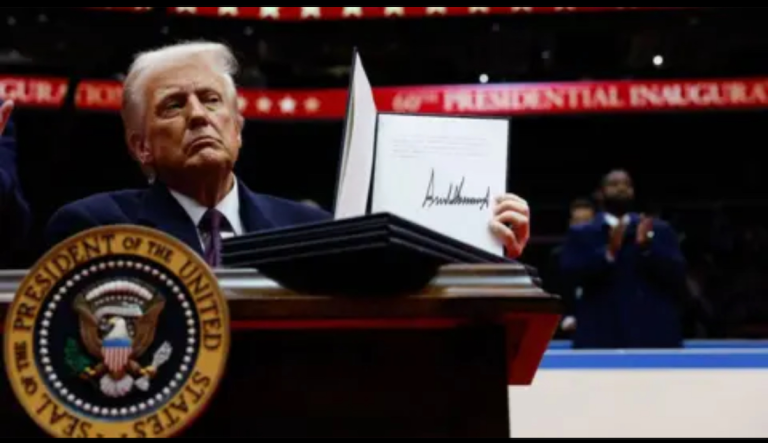
On his first day in office, Trump signed orders to eliminate federal DEI programs, calling them “radical and wasteful” and “shameful discrimination.” These directives mandate federal agencies to terminate DEI-related grants, contracts, and staff positions, effectively dismantling decades of equity-focused policies.
A second order revoked affirmative action protections and required federal contractors to certify they do not operate DEI programs that “violate federal anti-discrimination laws.” The administration claims these actions target “illegal” discrimination, but critics argue they weaponize civil rights laws to suppress diversity efforts.
Legal Pushback and the Battle for Free Speech
A federal judge in Baltimore blocked Trump’s orders, ruling they likely violate free speech protections by intimidating federal contractors and employees. Yet the damage is already done. The White House’s social media post declaring “DEI is dead” emboldens anti-DEI rhetoric, while military leaders and federal employees face purges for supporting equity initiatives. This chilling effect extends to private companies, which now face investigations for DEI programs deemed “discriminatory.”
The Private Sector’s Dilemma
Trump’s orders task federal agencies with identifying “egregious”DEI practitioners in industries like tech, healthcare, and education. Companies like Costco have reaffirmed DEI commitments, but many are retreating, fearing lawsuits or reputational harm. The administration’s framing of DEI as “immoral” shifts the narrative from equity to division, pressuring employers to abandon inclusive practices.
A Threat to Meritocracy and Democracy
Proponents of Trump’s policies argue they restore “merit-based opportunity,” but this ignores systemic barriers that DEI aims to address. By equating equity with discrimination, the administration undermines efforts to create fair access to education, employment, and leadership. The FAA crash blame on “diversity over merit” exemplifies this flawed logic, scapegoating DEI for systemic failures.
The Road Ahead: Resistance and Resilience
While courts have temporarily stalled Trump’s orders, the cultural shift is clear. DEI advocates must defend these programs as vital to democracy, not “wasteful” bureaucracy. Universities, corporations, and civil rights groups must resist federal overreach, leveraging public support (52% of workers still view DE positively) to counter anti-equity narratives.
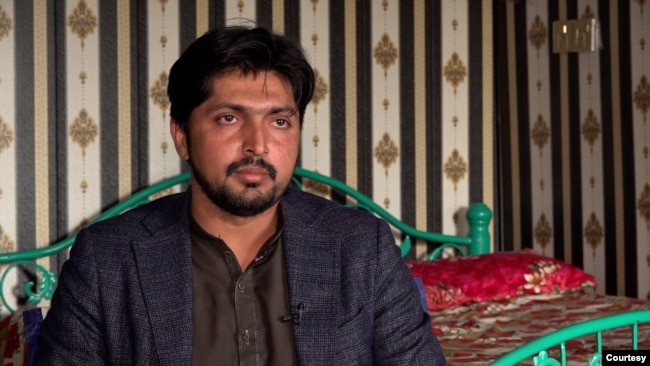
Islamabad — When Amir Ali left the narrow alleys of his village in Pakistan’s Punjab province last summer for the plazas of Spain, he thought his dream of a better life was finally coming true. The 21-year-old had failed seven times before to get a visa for countries in Europe and the Middle East.
Six months later, in mid-January, Ali was one of 22 Pakistani men whom Moroccan authorities rescued from a stranded migrant boat in the Atlantic Ocean off the coast of West Africa.
At least 43 Pakistanis were among 50 men who perished from hunger, dehydration and physical torture at the hands of human smugglers.
Limping with an injured foot in his home in Gujranwala district, Ali said he felt lucky to be alive.
“It’s not as if we survived because of some food or water,” he said. “Not at all. It’s just that God wanted to save us, so we survived.”
Since December 2024, dozens of Pakistanis have died as boats carrying migrants to Europe have run into accidents.
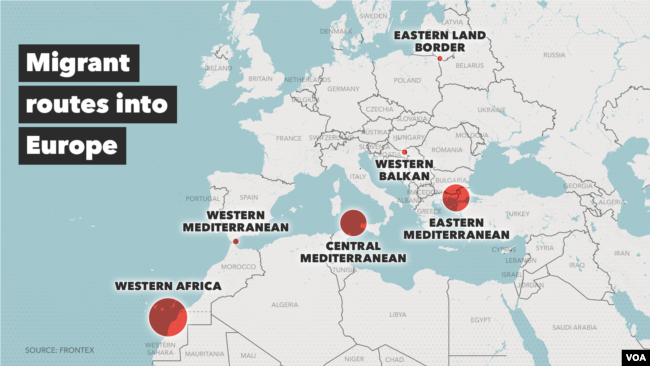
While Pakistan does not rank among the top 10 countries from which migrants attempting irregular entry into Europe come, thousands of its nationals risk their lives every year to reach the continent.
Human smugglers are becoming savvy too, officials say, as kingpins move abroad to evade an ongoing crackdown, and rely on digital currencies to transfer the proceeds of their crime.
A harrowing journey
Ali’s trip began more than 1,200 kilometers south of Gujranwala in Karachi, where he boarded a plane to Senegal on a visa that smugglers had arranged.
“I didn’t even know that a country with that name existed,” Ali told VOA.
From Senegal he obtained a visa to enter Mauritania, where he stayed in a safe house with dozens of other migrants for almost five months.
The dream journey was turning into a nightmare.
“There were so many boys in one room, there was no room to sit,” Ali said. “It was mentally very tough.”
In the wee hours of the morning on Jan. 2, he was stuffed with more than 80 others on a boat headed from Nouakchott, Mauritania, to Spain’s Canary Islands.
After a day of travel, the boat ran out of fuel. To lighten the load, Ali said, the smugglers threw away the passengers’ belongings and took away their meager rations.
“On the fourth day on the boat, a man went crazy because of hunger. He jumped into the ocean. We all got very scared thinking about what was going to happen next,” Ali said.
Smugglers, the survivor said, thrashed anyone who complained or didn’t comply.
“The smugglers told us to throw the dead bodies in the water,” said Ali. “When we refused, thinking how could we throw our brothers, they beat us up a lot.”
The ordeal ended almost two weeks later when Moroccan authorities rescued the survivors after a fishing boat spotted them.
Ali’s family sold livestock and precious agricultural land and took loans to raise nearly $10,000 to get their son to Spain. His mother is worried about the debt but delighted that her son is alive.
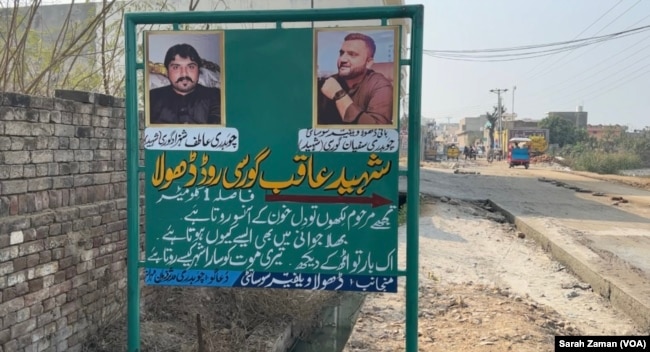
A roadside sign leading to Dhola village, Gujarat district, Pakistan, commemorates Chaudhry Atif Morsi and Chaudhry Sufyan Gorsi as martyrs, Feb. 4, 2025. The men died on a stranded boat in the Atlantic Ocean on their way from Mauritania to Spain’s Canary Islands in January.
Who is leaving?
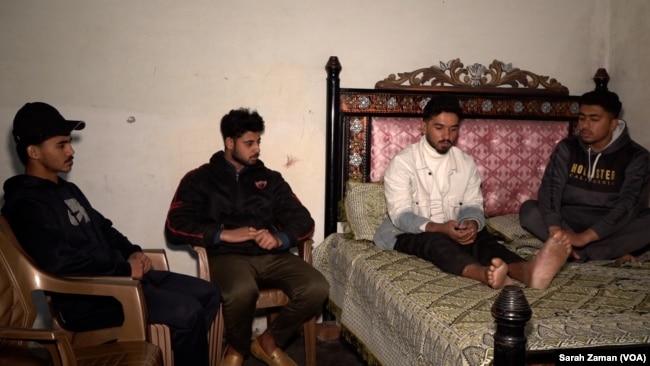
Almost two hours away in Gujrat district of Punjab, Haji Shaukat Ali is devastated. His son Chaudhry Atif Gorsi and nephew Chaudhry Sufyan Gorsi did not survive.
A roadside sign leading to their village commemorates the two as martyrs.
“We sent them because of our weakness,” said Ali, sitting among a group of mourners, some of whom had come from Europe. “The weakness is money.”
Studies conducted by Gallup Pakistan and the Pakistan Institute of Development Economics, or PIDE, in recent years show lack of jobs as the primary reason for wanting to leave a country where economic growth is barely keeping up with population growth.
According to Pakistan’s Bureau of Emigration and Overseas Employment, more than 65,000 people left legally to work abroad just in January 2025. Between 2022 and 2024, an average of roughly 800,000 nationals moved abroad for work annually. Most went to the Middle East but a few to Europe.
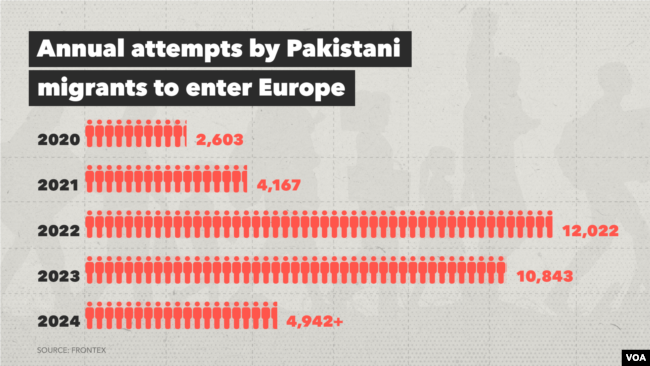
Pakistanis also made nearly 5,000 attempts to enter Europe illegally in 2024, data from the EU’s border and coast guard agency Frontex indicates.
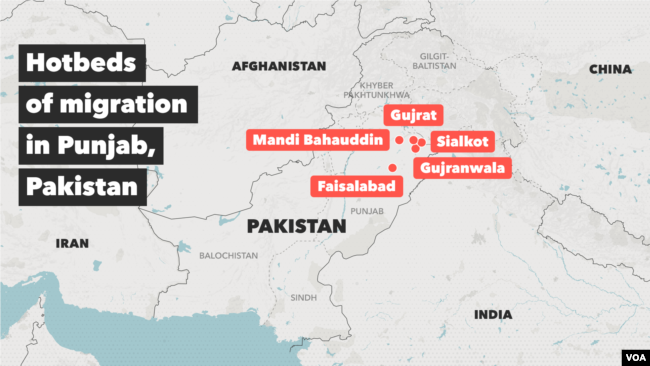
Amir Ali’s home district of Gujranwala and the Gorsi cousins’ home district of Gujrat, lead in migration trends, along with nearby Sialkot, Mandi Bahauddin and Faisalabad districts, despite being hubs of agriculture and industrial activity.
“They are not the poorest of the poor,” said demographer Durre Nayab, pointing to the ability of migrants from this region to pull together thousands of dollars to fund their journey.
“But it’s not just the financial aspect,” Nayab, who was involved in the PIDE study, told VOA. “The two other aspects that came out were lifestyle, and somehow, they thought they would gain more respect out of [the] country.”
Many Pakistanis wanting to leave felt poorly treated compared to their wealthier countrymen, Nayab explained.
“This difference made them disillusioned about the whole system,” the demographer said.
The PIDE study showed 37% of Pakistanis would leave, if given a chance.
Does life get better?
Kashif Ali, a cousin of the deceased Gorsis, spent hundreds of dollars to arrange a sponsor for a work permit to Italy a decade ago.
“In Pakistan, a middle-class laborer earns around $3 a day. For that same work, they make $20 to $25 overseas,” said Ali, who works in boat making.
His family in Pakistan now has a new home and a car.
Kashif Ali, shown in this undated photo, works in boat making in Italy. He spent hundreds of dollars to get a work permit to the European country almost a decade ago. He told VOA he earns much more there than he could in Pakistan.
Such a turn of fortune is on display across small towns and villages in central Punjab. Experts say it inspires many others to risk their lives to reach Europe.
It was a similar story of success that made Ishraq Nazir move from Mandi Bahauddin to Greece. He entered the European country after a brief stay in Turkey as a tourist in 2009.
It took Nazir a decade to get a Greek residency permit after his asylum request was rejected.
For years he worked odd jobs like herding cows and painting trees to get by. Now he works in a packaging factory earning almost $60 a day and said he finally feels settled.
“I had to face a lot of difficulties, but the fact is that if I had stayed in Pakistan, I would have not gotten anything given the type of jobs they have,” Nazir told VOA on the phone while packing disposable plates. “My friends are still where they started.”
Umar Shaid from district Sialkot arrived illegally in Greece by boat from Libya in October.
“I am struggling. It’s very hard to find work. There are very few opportunities. I don’t have any friends or relatives to seek help from,” Shaid said by phone over the sound of the Athens metro.
Shaid said he has spent around $15,000 to pay smugglers and take care of his day-to-day expenses.
“Honestly, I believed the stories people told me and took this silly decision,” said Shaid. Still, he said he was not planning to go back to Pakistan.
Pakistanis are among the top three users of Eastern Mediterranean and Central Mediterranean migrant routes.
Crackdown on smugglers
This month, Pakistan’s Senate passed three bills to toughen anti-human smuggling laws, increasing fines and jail terms.
Pakistan began cracking down on human smuggling after hundreds of its nationals died off the coast of Pylos, Greece, in June 2023 in one of the worst migrant boat disasters.
A report by Pakistan’s National Commission for Human Rights says after that disaster, authorities arrested 854 suspected human smugglers.
Frustrated by recent incidents, Prime Minister Shehbaz Sharif formed a high-level task force in January, with himself as the head, to combat human smuggling.
The Federal Investigation Agency, or FIA, has ramped up efforts, arresting dozens of alleged human smugglers and confiscating the assets of others to force them out of hiding.
“For the first time we have seen that they [smugglers] are using Bitcoin and digital currency. They have shifted away from traditional ways of money laundering.” Bilal Tanvir, FIA deputy director for the Gujrat region, told VOA.
However, he said a lack of resources and low rate of conviction of alleged criminals posed a challenge in curbing the crime.
The FIA is also facing increased scrutiny. Sharif’s government removed the agency head at the end of last month. More than 100 officials have been fired, suspended or blacklisted for alleged involvement in and insufficient action against human smuggling.
Survivor Ali told VOA his group of migrant men faced no hurdle boarding the flight for Senegal at the Karachi airport.
“Someone connected with the agents came, held our hand and told us to come after him. Wherever we went, we followed him,” Ali said. “Nobody stopped us.”
Tanvir defended his agency, saying officers focus on those entering the country more than those on their way out.
The impact of tragedies
Surrounded by friends and neighbors, Ali looked disappointed. He told VOA he would not recommend attempting to reach Europe by boat.
Others in the room felt differently.
In this image taken from video, Amir Ali, second from right, rests as friends look at his injured foot on Feb. 3, 2025, at his home in Gujranwala district, Pakistan. Despite Ali’s horrific experience, his friends say they want to try getting to Europe.
“Why should I lie?” said Tariq Bajwa, who supports his young sons’ plan to head to Europe illegally in a few years. “Looking at others, we are willing to try as well.”
Several young men in the room agreed.
Why Europe? “Just because,” said Hamza Qayyum, the son of a farmer. “There’s farming in Europe. I don’t feel like doing it here,” the 20-year-old with a sixth-grade education explained.
Asked if they would risk drowning in the sea, Muhammad Zohaib, whose brothers work in the Middle East asked, “Why not?”
“Planes crash too, so what’s the big deal if a boat sinks?” the 20-something said. “One can run into an accident right outside the house.”
“I Do Not Defend It”: Maddow Slams Network Over Firing of Non-White Hosts
New York, N.Y. – In a stunning display of solidarity, MSNBC‘s primetime star Rachel Maddow publicly criticized her own network for its recent decision to cancel the shows of two non-white hosts, Joy Reid and Alex Wagner. Maddow’s remarks came on the heels of Reid’s final broadcast of “The ReidOut” and the announcement that Wagner would not be returning to host the 9 p.m. hour on weeknights after Maddow’s show.
“That feels indefensible, and I do not defend it,” Maddow stated emphatically during her broadcast. Her comments, unexpected and pointed, immediately reverberated across social media and within the news industry.
The cancellations have sparked internal and external criticism, raising questions about MSNBC‘s commitment to diversity in its primetime lineup. Reid, who has hosted “The ReidOut” since 2020, has been a prominent voice on the network, known for her sharp commentary and insightful analysis of political and social issues. Wagner, who filled in for Maddow on several occasions and hosted her own show, was also a rising star at the network.
Maddow’s public rebuke of her employer is a rare and significant move
While the specific reasons behind the cancellations remain undisclosed by MSNBC, Maddow‘s strong words suggest a deep concern about the network’s direction. Her statement has amplified the voices of those who believe the network’s actions undermine its stated commitment to diversity and inclusion.
The timing of Maddow‘s comments, directly following Reid‘s emotional farewell to viewers, added weight to her message. Reid, during her final show, thanked her team and viewers for their support and emphasized the importance of diverse voices in media.
The future of MSNBC’sprimetime lineup and the network’s response to the criticism remain to be seen. Maddow‘s unprecedented public stance has undoubtedly put pressure on network executives to address the concerns raised and to reaffirm their commitment to showcasing a diverse range of perspectives. The incident has also ignited a broader conversation about representation and inclusivity within the media landscape.
Navigating Existentialism, Nihilism, and Absurdism
New York, N.Y. — In a world increasingly defined by rigid ideologies and polarizing labels, the search for personal meaning can feel like navigating a minefield.
Raised in the Episcopal tradition, I found myself increasingly alienated from the tenets of Judeo-Christianity. The inherent contradictions, the reliance on blind faith, and the disconnect from my own lived experience created a chasm I couldn’t bridge.
Buddhism, Hinduism, Islam – each offered a different path, yet none resonated with the core of my being.
Can Life Have Meaning?
The analogy of cats watching a play has become a touchstone for me. It encapsulates the human condition in the face of the divine: we perceive fragments, glimpses of a grander design, but the true essence remains elusive.
The sheer scale of the universe, with its unfathomable number of stars dwarfing the neurons in our brains, underscores our inherent limitations.
We are tiny observers in a cosmic drama, struggling to decipher a script written in a language we barely understand.
This realization led me down the rabbit hole of existential philosophy. In my youth, Existentialism’s emphasis on individual freedom and responsibility felt empowering.
But as time passed, the weight of that freedom, the constant need to create meaning in a seemingly indifferent universe, became burdensome. Now, I find solace in Absurdism.
Existentialism
Existentialism asks: Can life have meaning? It insists we’re free to define our purpose in a world without inherent meaning. It’s empowering but daunting—Jean-Paul Sartre called it “condemned to be free.”
Nihilism
Nihilism takes a darker turn, rejecting meaning altogether. It counters with the notion that life is inherently devoid of purpose. Friedrich Nietzsche warned of its abyss, where nothing matters, not even our despair.
Absurdism
Absurdism, my current haunt, sits between them. Albert Camus, its champion, saw life as a clash between our craving for meaning and the universe’s silence. His solution? Embrace the absurd, live defiantly, find joy in the struggle—like Sisyphus rolling his boulder with a grin.
Absurdism, with its acceptance of the inherent conflict between humanity’s search for meaning and the universe’s lack thereof, feels more authentic.
It acknowledges the inherent “bullshit” of existence, the endless cycle of rituals that define our lives, from the mundane to the monumental.
By embracing the absurd, we choose to create meaning in our everyday actions, transforming life’s inherent emptiness into an opportunity for joy and human solidarity.
Absurdism walks a middle path—acknowledging both the absence of universal meaning and the importance of creating personal significance. It suggests that even if our search for meaning is, at its core, absurd, there is still profound beauty in the human experience.
We find meaning not because it exists independently, but because we invest our lives with rituals that bind us to one another.
Birth, death, morning coffee, holidays – all are rituals, attempts to impose order on chaos. And in the face of this absurdity, we can choose to find joy, to embrace the fleeting moments of connection and beauty.
But beyond these grand gestures, we can find meaning in the small, everyday acts of kindness, in the shared laughter with friends and family, in the quiet moments of contemplation. We can find joy in the rituals that bind us, in the shared human experience that transcends belief systems and political labels.
Rituals and Revelations
These rituals, while seemingly trivial, offer us a structure to our days and a framework to share with others. They become a testament to our resilience, a shared language that conveys both our struggles and our joys.
In this light, the repetitive cycle of birth, routine, and death is transformed from an existential void into a canvas upon which we paint our personal narratives.
And we hold dear to the belief that even in a world that may seem dominated by chaos and insignificance, there remains hope.
The arc of the moral universe, as Martin Luther King Jr. famously said, bends toward justice. History is replete with examples where the forces of truth and love have ultimately triumphed over tyranny and cruelty.
While despotic figures may appear invincible for a time, their reign is invariably transient. Mahatma Gandhi’s quiet determination and unwavering faith in humanity serve as powerful reminders that even the most entrenched systems of oppression are subject to change.
In the end, whether we find solace in the structured rebellion of Existentialism, the bleak clarity of Nihilism, or the ironic liberation of Absurdism, we are united by our shared search for meaning in an incomprehensible cosmos.
We may never fully grasp the grand design of the universe—if such a design exists at all—but in our collective striving, there is hope, there is love, and above all, there is life.
The search for meaning is not a linear journey. It is a winding path, fraught with doubt and uncertainty. But in embracing the absurdity of existence, in finding joy in the present moment, we can create our own meaning, our own sense of purpose. Perhaps, in the end, that is all that truly matters.
Tags: Philosophy, Existentialism, Nihilism, Absurdism, Spirituality, Atheism, Agnosticism, Humanism, Personal Essay, Meaning of Life, Universe, Cosmos, Social Commentary, Absurdism, Existentialism, Nihilism, Zora Neale Hurston, philosophy, spirituality, human consciousness, universe scale, social justice, personal essay, New York, Trumpism, woke culture, MLK, Gandhi, philosophy, spirituality, nonbelief, existentialism, absurdism, modern thought, secular, cosmic, cultural commentary
From Diplomacy to Domination: Critics Decry Trump’s ‘Might Makes Right’ Worldview
Washington, D.C. — In his first month back in office, President Donald Trump has sparked international alarm by dismantling decades of U.S. foreign policy norms, reviving a 19th-century-style approach to global power that prioritizes military might, territorial expansion, and coercive diplomacy.
Analysts warn that Trump’s aggressive posturing—including threats to withdraw from NATO, impose sweeping tariffs on allies, and tacitly endorse territorial grabs by authoritarian regimes—marks a stark departure from the multilateral frameworks that have shaped international relations since World War I.
“This isn’t diplomacy; it’s a throwback to empire-building,” said Dr. Eleanor Chang, a historian at Georgetown University. “Trump is channeling an era where superpowers strong-armed weaker nations into submission, demanded tribute, and redrawn maps by force.”
Recent moves include publicly urging Russia to “do whatever it wants” to NATO members that fail to meet defense spending targets, a remark that drew bipartisan condemnation. Meanwhile, the administration has floated recognizing disputed territories annexed by authoritarian allies, a policy critics liken to legitimizing conquest.
The shift has rattled global leaders
European diplomats privately describe emergency meetings to counter Trump’s “transactional demands,” while Asian allies brace for renewed trade wars. Even within Trump’s party, skepticism simmers. “This isn’t ‘America First’—it’s chaos,” said Senator Mitt Romney (R-UT). “Abandoning alliances that stabilized the world for 100 years risks empowering China and Russia.”
Yet Trump’s base hails the strategy as a long-overdue rejection of globalism.
“Why should we bankroll Europe’s defense or let Mexico benefit from our markets for free?” said Mark Harris, a Trump campaign advisor. “The president’s saying what no leader’s had the guts to: power rules, and America’s done playing nice.”
Tags: U.S. Foreign Policy, Trump Administration, Global Power Dynamics, NATO, International Relations, Imperialism, Geopolitical Strategy, Multilateralism