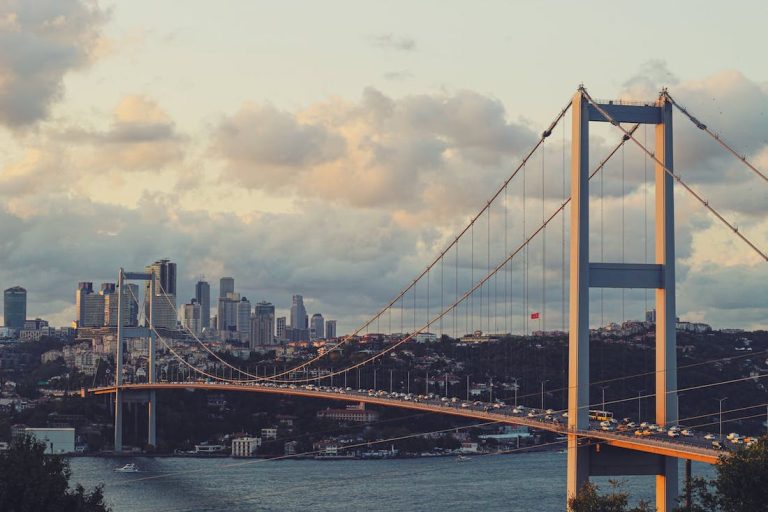
Rising from the ashes of the Ottoman Empire, modern Turkey, now Türkiye, was founded by Mustafa Kemal Atatürk, who was dedicated to creating a secular Muslim state with progressive reforms that transformed the nation into a beacon of modernization and democracy in the Muslim world. However, under the leadership of Recep Tayyip Erdoğan, Turkey has experienced a significant shift towards authoritarianism, with crackdowns on dissent, media suppression, and erosion of secular principles. Having visited Istanbul many times, I can attest to its vibrant culture, rich history, and remarkable beauty, making it one of my favorite cities in the entire world. Much like Russia, Turkey boasts a phenomenal history and culture, yet its present political climate under Erdoğan’s rule is increasingly seen as reprehensible, drawing concerns from international observers about the country’s direction and the future of its democratic institutions

Erdoğan Threatens to Invade Israel Over Gaza War (Aug. 2, 2024)
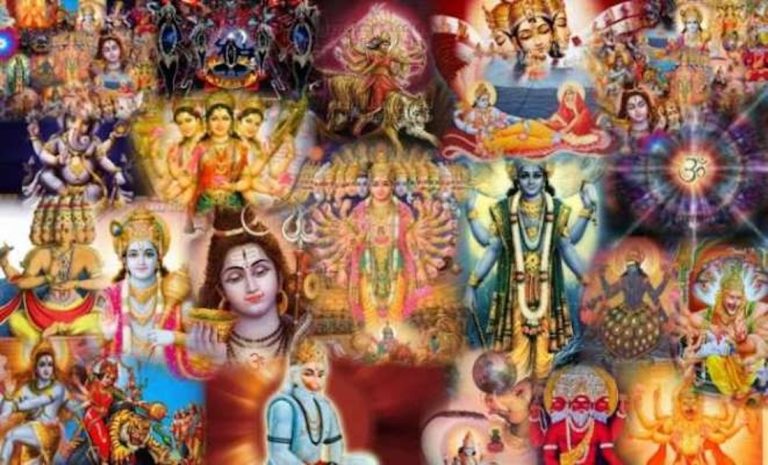
Humanity is unique in imagining anthropologic deities to guide us, calm us, and protect us. Across civilizations and centuries, these immortal beings speak to us and our fears, hopes and aspirations. These spirits help us to live and they help us to die. They help us to explain birth and they comfort us with tales of death. Like parents, they also often offer punishment and reward for good and evil.
Like in our section of Profiles & Obituaries, here we will enumerate the Gods and Goddesses, theLwa, Bodhisattvas, and all the other terms associated with the immortal. Note that The Stewardship Report does not differentiate between ‘stewards’ and ‘stewardess‘, ‘actor’ and ‘actress,’ etc. Gender is important but not defining. Ergo, we will describe gender and sexuality as needed, but not automatically ascribe testicular attributes or lack thereof to our immortals.
Many of these Gods are thought once–or proven to have been–fully human. These immortals are differentiated with an asterisk (*). Note that the terms ‘mythology‘ and ‘theology‘ are used interchangeably.
In the context of Vodou, both in Haiti and West Africa, as well as other similar spiritual traditions, the term ‘Lwa’ is commonly used to describe divine spirits or deities that act as intermediaries between humans and the supreme creator. These Lwa are often associated with specific aspects of life and nature, and they have distinct personalities, preferences, and narratives.
Note that in many cultures there is a syncretism with two belief systems, such as Vodou and Roman Catholicism in Haiti, where some Lwa are associated with Catholic saints, or between Greek and Roman gods. We will double-list those entries.
Agwe Tawoyo.Haitian Loa. Powerful spirit of the oceans is the ruler and guardian of its bounties. Often compared to Greek godPoseidon and is beloved by fishermen and sailors for his generous spirit. His mythical residence said to be hidden deep in the sea’s depths. During Vodou rituals, those possessed by Met Agwe often turn towards the sea, acknowledging his powerful presence. Married to Mambo La Sirène, the Haitian mermaid, and together they rule over a large group of spirits in the Vodou pantheon.
Amaterasu. From Shintō. Sun goddess who painted islands of Japan into existence and from whom Japanese imperial family descends.
Ammit. Egyptian demoness and goddess in the afterlife who devours the hearts of the unworthy.
Anubis. From Egyptian mythology. God of mummification and the afterlife.
Aphrodite. From Greek mythology. Goddess of love and beauty.
Apollo. From Greek mythology. God of the sun, music, and prophecy.
Ares. Greek mythology. God of war, counterpart to Mars in Roman mythology.
Athena. From Greek mythology. Goddess of wisdom, warfare, and crafts.
Avalokiteshvara. From Buddhist mythology. Bodhisattva of compassion.
Ayida Weddo (and Damballa) are the primordial male and female divine couple in Vodou, symbolized by two intertwined serpents who, according to the cosmogony of the Haitian religion, support the sky, preventing it from crumbling and falling to Earth.
Ayida.Haitian Loa. Divine power couple with Danmbala. They symbolize perfect balance and harmony of all creation, representing both masculine and feminine energies. When together, they’re often depicted as two intertwined snakes. Ayida is the rainbow, the snake of the sky. She gives rain to the earth and restores its beauty. Together, Damballa and Ayida are the source of life and wisdom. You can often spot their symbol of the intertwined snakes on Vodou drums, furniture, and even the poto mitan (the central pole of a peristyle).
Ayizan Velekete.Haitian Loa. A wise old woman who walks the roads with her trusty cane, Ayizan Velekete is more than just a simple figure. She is the guardian of commerce and economy, known for her ancient wisdom and pure spirit. Her benevolent eye watches over business activities and roads, and Vodou practitioners often call upon her for success in their ventures. Wife of Papa Loko, they work together to ensure the purity and respect of the Vodou tradition. Her favorite tree is the palm tree, symbolizing royalty, though she is often depicted as a shrewd old woman.
Bacchus. God of wine, pleasure, and festivities. Also known as Dionysus.
Brahma. From Hindu mythology. The creator god.
Buddha.* From Buddhist mythology. The enlightened one, founder of Buddhism.
Chantico. From Aztec mythology. Goddess of fires in the hearth and volcanoes.
Damballa (and Ayida Weddo) are the primordial male and female divine couple in Vodou, symbolized by two intertwined serpents who support the sky, preventing it from crumbling and falling to Earth. Divine power couple with Ayida. They symbolize perfect balance and harmony of all creation, representing both masculine and feminine energies. When together, they’re often depicted as two intertwined snakes. Damballa is the original force of creation, believed to be the inner voice of God. He’s the source of all wisdom and knowledge and represents the serpent of the earth and the horizon. Serpent Lwa associated with creation and purity.
Dionysus. God of wine, pleasure, and festivities. Also known as Bacchus.
Durga. From Hindu mythology. A warrior goddess who combats evil forces.
Erzulie Dantò.Haitian Loa. Sister of Erzulie Freda. Also known as Mami Dantò, a powerful and protective mother figure in the Vodou tradition. Often depicted holding a knife, she symbolizes justice and will forcefully fight to protect her children, who are her loyal followers. She is a single mother, a Haitian peasant who is fiercely independent and takes care of her own. She is also a guardian and protector of orphans, sick children, and those who have been abused.
Erzulie Freda.Haitian Loaof love, beauty, and prosperity. Erzulie Freda might be compared to the Greek goddessAphrodite. She is a powerful spirit known for her vanity and timid nature. Her sister is the Petwo spirit Ezili Danto.
Erzulie. A family of Lwa associated with love and femininity in Vodou, often linked with the Virgin Mary in Catholic contexts.
Frances, Saint.* Roman Catholic. From Assisi, patron saint of animals.
Freya. Norse/Scandinavian mythology. Goddess of love, fertility, and war.
Ganesha. From Hindu mythology. God with the head of an elephant and the body of a human. Son of Shiva and Parvati. Known as the remover of obstacles and is often worshiped before new endeavors. Patron of writers, students, travelers, commerce, and new beginnings.
Ghost, Holy. From Christian theology (Anglican). The third person of the Holy Trinity, representing God‘s presence in the world.
God. From Christian theology. The singular, omnipotent creator in Christianity, often referred to as the Father.
Hades. From Greek and Roman mythology. God of the underworld and the dead. Also known as Pluto.
Hanuman. Hindu mythology. Half-human and half-monkey, devotee of Rama and a symbol of strength and devotion.
Hera. From Greek mythology. Queen of the gods, goddess of marriage and family.
Hermes. From Greek and Roman mythology. Messenger god, god of travel, commerce, and thieves.Also known as Mercury.
Isadore of Seville, St. HaitianLoa.
Isis. Egyptian mythology. Goddess of magic, marriage, healing, and protection.
James, Saint. In Vodou and African Traditional Religions (ATR), associated with lwaOgou known for war and iron,
Jesus* (of Nazareth, or the Christ). From Christian theology. The Son of God and savior in Christian belief.
Juno. From Roman mythology. Queen of the gods, equivalent to Hera.
Jupiter. From Roman mythology. King of the gods, equivalent to Zeus.
Kali. Hindu mythology. Goddess of time, change, and destruction.
Kouzen Zaka. Haitian Loa. The quintessential farmer Loa, Kouzen Zaka is beloved by rural communities for his ability to ensure a bountiful harvest and prosperity in the fields. Often depicted wearing straw hat and carrying a machete and djakout (woven grass bag). He’s known to consume laziness and idleness. Often associated with Saint Isadore of Seville and loves all Haitians, living or dead. With childlike version of himself called Ti-Zaka in some lineages, this lovable Loa is all about embracing the power of hard work.
Krishna. From Hindu mythology. An avatar for the preserver god Vishnu.
Labalenn. Haitian Loa. Alternate form of the mermaid Mambo La Sirène.When angered, she can be fickle and dangerous. As the whale, she can manifest as a powerful force of unconscious strength.
Lakshmi. From Hindu mythology. Goddess of wealth and prosperity.
Legba, Papa. From Vodoutradition. A Lwa who serves as intermediary between spirit world and human world associated with St. Peter. Gateway to the spirit world and the one who unlocks the secrets of Vodou. Known as a trickster, he’s often portrayed as an older man leaning on a crutch, accompanied by one or more dogs.
Loko, Papa. Haitian Loa. Powerful guardian of Vodou temples (known as hounfour), responsible for maintaining Vodou tradition and for passing down wisdom to new initiates in roles of Vodou priests and priestesses. With his extensive knowledge of herbal medicines and natural remedies, Papa Loko is also a healing Loa who can aid those in need of physical, emotional, or spiritual healing.
Maitreya. From Buddhism. The future Buddha who will come to teach enlightenment.
Mambo La Sirène. Haitian Loa.Haitian mermaid married to Agwe Tawoyo, ruler of the seas. The mermaid goddess of the sea reigns supreme. With her alluring half-woman, half-fish form, she embodies the wealth and abundance of the ocean and is revered as a powerful Loa who can grant prosperity and good fortune to her followers.
Manjushri. From Buddhist mythology. Bodhisattva of wisdom.
Mars. From Roman mythology. God of war.
Mars. Roman mythology. God of war, counterpart to Ares in Greek mythology
Mary, Virgin.* From Christian theology. The mother of Jesus Christ associated with love and femininity in Vodou through Erzulie.
Mercury. From Greek and Roman mythology. Messenger god, god of travel, commerce, and thieves.Also known as Hermes.
Met Kafou. This formidable Loa is the master of dark magic and sorcery, and he doesn’t grant his favors lightly. However, if you can prove yourself to be worthy, Met Kafou can bestow immense power and knowledge. His gifts come at a steep price, and he won’t hesitate to exact it.
Minerva. From Roman mythology. Goddess of wisdom and war, equivalent to Athena.
Odin. Norse/Scandinavian mythology. Chief god, associated with wisdom, poetry, and death.
Ogou Feray. The mighty warrior Loa of Ogou, is the embodiment of a fighting spirit. Like the Roman war gods Mars and Jupiter, he commands respect and fear from his followers. As the protector and guardian of his people, Ogou is associated with fire, the sword and war.He is a fierce and formidable deity with multiple forms, including Ogou Feray, Ogou Batala and Ogou Badagri. Each Ogou spirit has distinct characteristics and attributes, but they all share a love for war, the sword, and forge work. Ogou is said to embody the warrior spirit of the old Oyo Empire in West Africa, and his Vèvè (religious symbol) is the totem of the emperors and kings that have followed Abiodun, King of the Oyo people.
Ogou. From Vodou and African Traditional Religions (ATR). Lwa of war and iron in Vodou, often associated with St. James.*
Orisha. From Vodou and African Traditional Religions (ATR). Known for love, fertility, and rivers in Yoruba religion.
Oshun. From Vodou and African Traditional Religions (ATR).
Osiris. Egyptian mythology. God of the afterlife, death, and resurrection.
Parvati. From Hindu mythology. Mother of Ganesha.
Peter, Saint.* A Catholic saint associated in Vodou with Papa Legba.
Pluto. From Greek and Roman mythology. God of the underworld and the dead. Also known as Hades.
Quetzalcoatl. Aztec god of wind, air, and learning.
Ra. Egyptian mythology. Sun god and a major deity in ancient Egyptian religion.
Rama. From Hindu mythology. An avatar for the preserver god Vishnu.
Rhiannon. From Welsh mythology, associated with horses and the Otherworld.
Samdi, Baron (Bawon). Leader of the Gede Loa group, the spirits of the dead in Vodou tradition. He is the guardian of the barrier between the living and the dead and is responsible for ensuring that the souls of the deceased pass into the afterlife safely. He is often depicted as a tall, dark figure dressed in a top hat, black tuxedo, and sunglasses, with a skull for a face. Bawon Samdi is known for his mischievous and playful nature, but it should not be taken lightly, as he holds the power of life and death in his hands.
Saraswati. From Hindu mythology. Goddess of knowledge, music, and arts.
Shiva. From Hindu mythology. The destroyer god, also known for his aspect as the cosmic dancer. Father of Ganesha.
Spirit, Holy. From Christian theology. The third person of the Holy Trinity, representing God‘s presence in the world.
Tara. From Buddhism. A Bodhisattva of compassion, particularly in Tibetan Buddhism.
Thor. From Norse mythology. God of thunder and lightning.
Ti-Zaka. Haitian Loa. Said to be the childlike version of Kouzen Zaka.
Tlaloc. Aztec god of rain and fertility.
Trinity, Holy. From Christian theology. Father (God), Son (Jesus), and Holy Spirit (or Holy Ghost).
Venus. From Roman mythology. Goddess of love and beauty, equivalent to Aphrodite.
Vishnu. From Hindu mythology. The preserver god, known for his avatars like Krishna and Rama.
Yahweh. From Hebrew theology. The singular, omnipotent creator in Judaism.
Zeus. From Greek mythology. King of the gods, god of the sky and thunder.
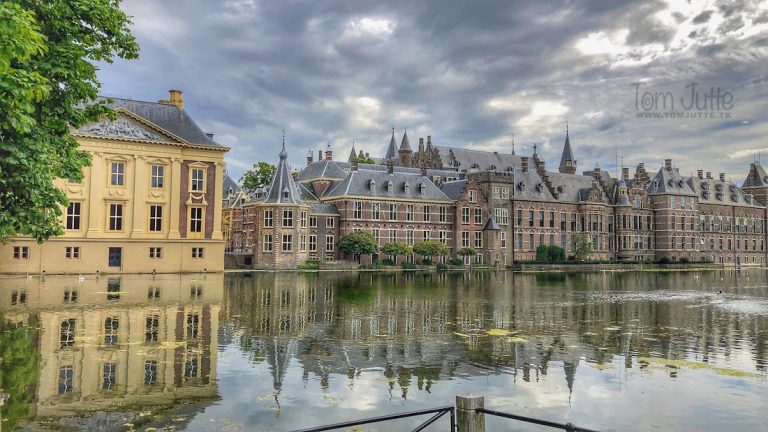
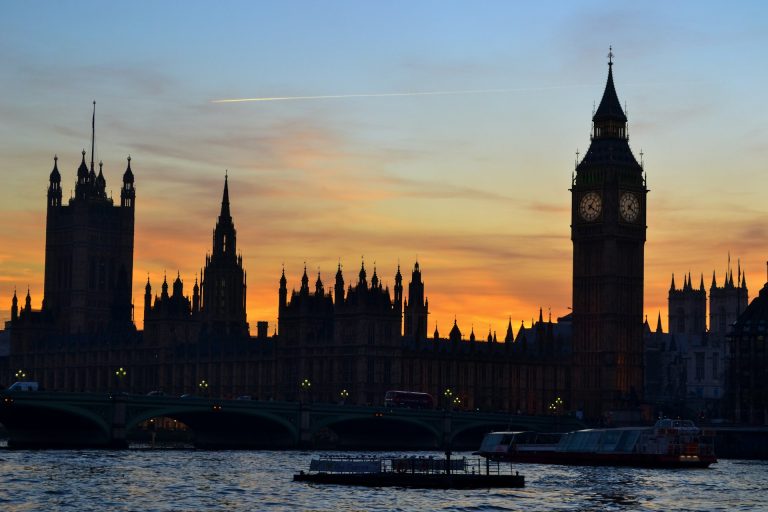
The Binnenhof is a complex of buildings in the city center of The Hague, Netherlands, next to the court pond. It houses the meeting place of both houses of the States General of the Netherlands, as well as the Ministry of General Affairs and the office of the Prime Minister of the Netherlands.
Den Haag, Nederland. The cobbled streets of Den Haag, The Hague, with their quaint cafes and vibrant energy, beckoned us. We arrived in the Netherlands with a suitcase full of curiosity and a heart overflowing with anticipation. This wasn’t just another travel destination; it was a chance to immerse ourselves in a new culture, to expand our horizons, and to discover the hidden gems that awaited us.
The Netherlands, with its canals, windmills, and charming towns, has always held a special place in our hearts. But Den Haag, the seat of government and international justice, was a new frontier. We were ready to explore its history, its art, and its people. We were ready to live the dream.
Our first impression of Den Haag was one of elegance and sophistication.
The city’s architectural grandeur, from the imposing Binnenhof to the stately Mauritshuis, spoke volumes of its rich past. We spent hours wandering through the city center, taking in the sights and sounds, and soaking in the atmosphere. The aroma of freshly baked stroopwafels and the melodic clinking of bicycle bells filled the air.
We soon discovered that Den Haag was more than just a beautiful city; it was a vibrant hub of creativity and innovation. The city’s art scene was thriving, with numerous galleries and museums showcasing both established and emerging artists. We found ourselves drawn to the Gemeentemuseum Den Haag, home to an impressive collection of modern and contemporary art, including works by Piet Mondrian and Pablo Picasso.
Food, of course, was an integral part of our experience. We savored the rich flavors of Dutch cuisine, from traditional stamppot to the delectable bitterballen. We discovered hidden gems like the cozy cafes lining the canals, where we could enjoy a cup of coffee and a piece of apple pie while watching the world go by. We learned that eating was not just about sustenance; it was a social experience, a time to connect with friends and family and to share stories.
The Netherlands, known for its progressive policies and inclusive society, embraced us with open arms.
We found that the people were friendly, welcoming, and eager to share their culture with us. We struck up conversations with locals, learned a few Dutch phrases, and gained valuable insights into the Dutch way of life.
We learned about the Dutch love for cycling, the importance of family and friends, and their appreciation for the simple things in life. We witnessed firsthand their dedication to sustainability, their commitment to social justice, and their unwavering belief in the power of community.
Our journey through Den Haag was not without its challenges.
Navigating the complex public transportation system, understanding the subtle nuances of the Dutch language, and adapting to a new culture took time and patience. But with each hurdle overcome, our sense of accomplishment grew, and our appreciation for the Netherlands deepened.
One of the most memorable experiences was our visit to the Peace Palace, the iconic headquarters of the International Court of Justice. We were moved by the sense of history and purpose that permeated the building. We learned about the court’s role in resolving international disputes and promoting peace and justice around the world. It was a reminder of the power of human cooperation and the importance of striving for a more peaceful and just world.
Our adventures in Den Haag broadened our horizons and enriched our lives.
We discovered a city that was both cosmopolitan and charming, innovative and traditional. We learned about a culture that was both progressive and pragmatic, open-minded and down-to-earth.
As we bid farewell to Den Haag, we carried with us a treasure trove of memories, a renewed sense of appreciation for the world, and a profound understanding of what it means to be a global citizen. We knew that our journey had just begun. The world was our oyster, and we were ready to explore it, one adventure at a time.
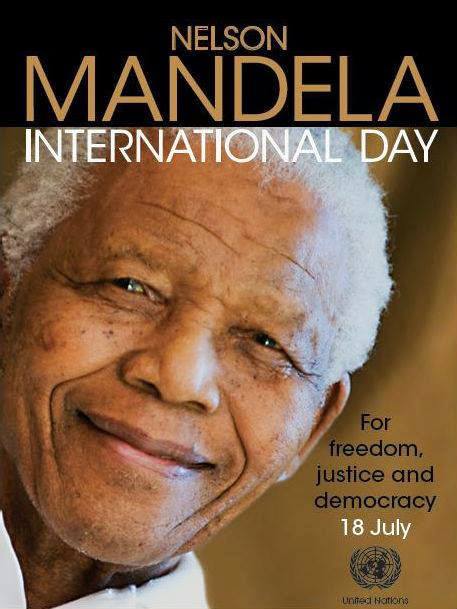
He brought his countrymen together, he achieved this after being a political prisoner for many years and to become their President at a time when his nation needed him. A true story that no one can make up. Long life!
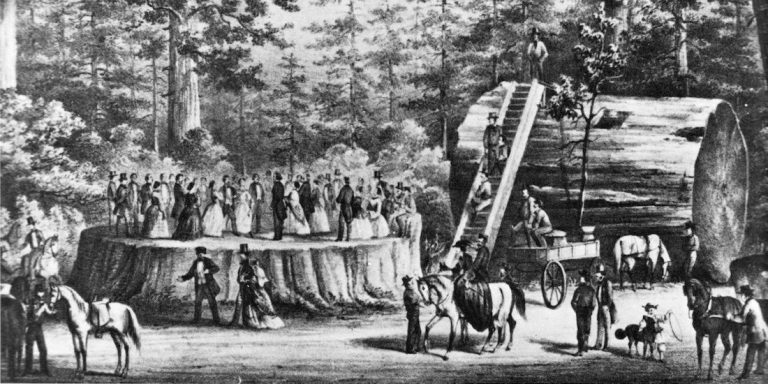
From the towering sequoias of California to the vibrant cities stretching along the Pacific coastline, Jim Luce has made the American West Coast both his subject and his stage. Through his extensive travels and engagements from San Diego to Seattle, Luce has cultivated a deep understanding of the region’s unique political landscape, cultural movements, and leadership dynamics. His work spans academic lectures with graduate students at California State University, where he shares insights on leadership and development through virtual platforms, to on-the-ground reporting at conferences and LGBTQ+ Pride events throughout major West Coast cities. Like the ancient giant sequoias that have witnessed millennia of California history, Luce’s writing captures the enduring spirit and evolving character of the West Coast, offering readers a seasoned perspective on the leaders, movements, and moments that define this influential region. His particular focus on political leadership, exemplified through his ongoing coverage of figures like Governor Gavin Newsom, reflects his commitment to documenting how visionary governance shapes the future of America’s most progressive and dynamic states.
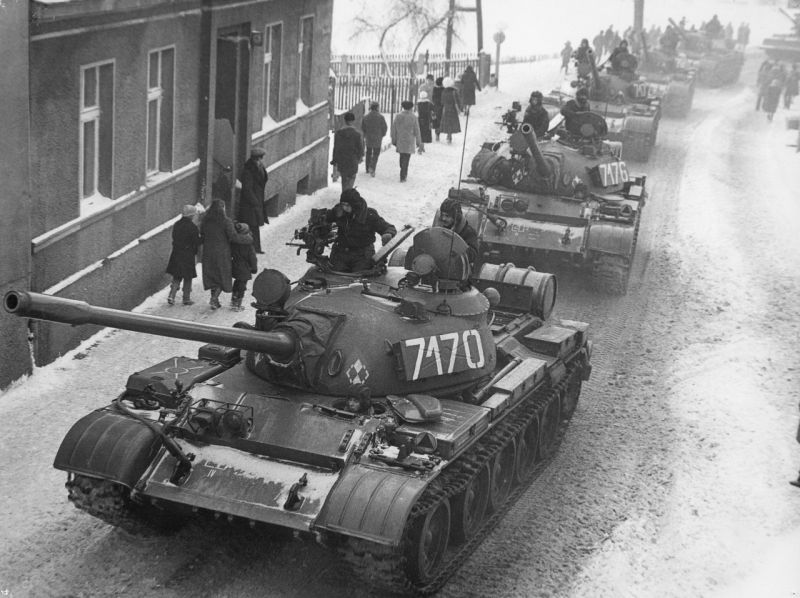
Photo: Soviet tanks roll into Poland, December 1981. J. Żołnierkiewicz/Wikimedia Commons.
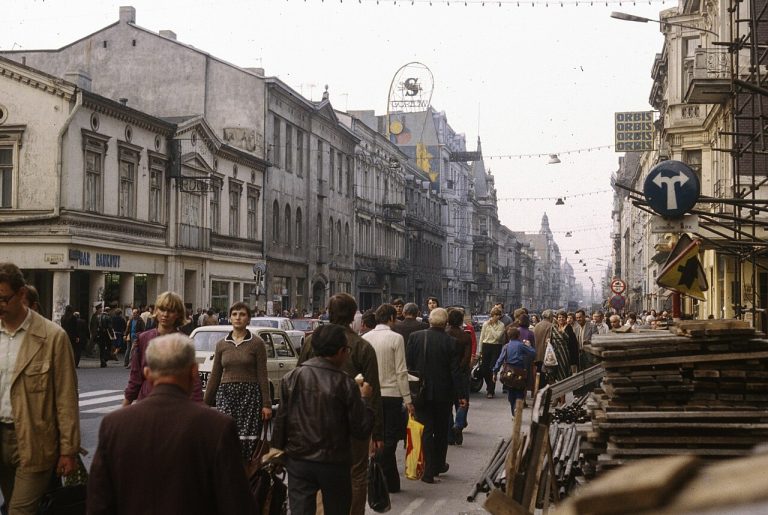
New York, N.Y. I remember when I first visited the capital of Poland in July 1981. Lech Walesa was powerful and the Soviet Union was days away from invading.
I arrived via train, having come across Siberia to Moscowen route to Berlin, returning from my junior year abroad in Tokyo. I wanted to visit my host family in Germany whom I had live with my gap year between high school and college when I attended Gymnasium through AFS.
In July 1981, the Soviets increased their military presence at their secret the military base at Borne Sulinowo, where the Red Army stationed per Warsaw Pact agreement as in all other Eastern Bloc countries.
Without notifying the Polish authorities, the Soviets unexpectedly sent over 600 tanks to Borne Sulinowo. The Soviets were worried about the explosive popularity of “Solidarity.”
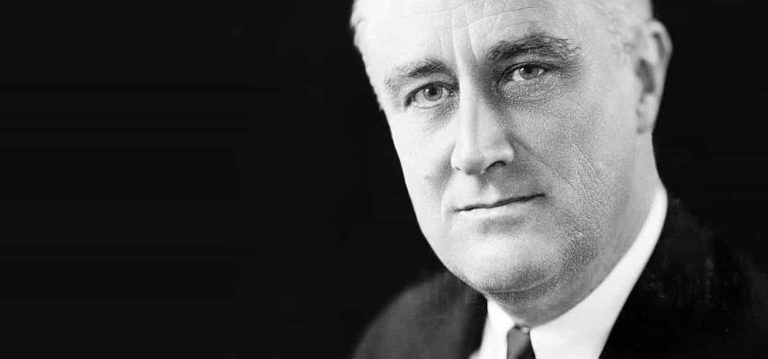
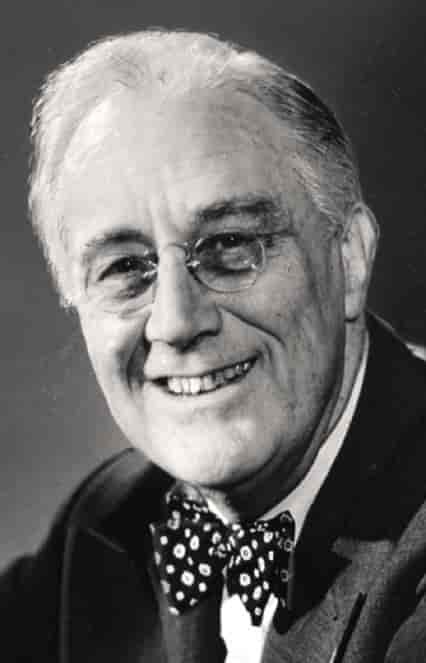
New York, N.Y. Reflecting on the leaders who have profoundly shaped the course of history, Franklin D. Roosevelt stands out as a paragon of visionary leadership and unwavering commitment to democracy. His tenure as the 32nd President of the United States is marked by transformative domestic policies and a significant impact on global affairs.FDR’s legacy as a thought leader and global citizen is a testament to his ability to navigate the nation through some of its darkest times with courage, innovation, and an unyielding commitment to the common good.
Born on January 30, 1882, in Hyde Park, New York, Franklin Delano Roosevelt came from a privileged background that afforded him a robust education and exposure to international affairs. He attended Harvard University and later Columbia Law School, where his interest in public service began to take shape. Despite the advantages of his upbringing, FDR demonstrated a profound empathy for the struggles of ordinary Americans, a quality that would define his political career.
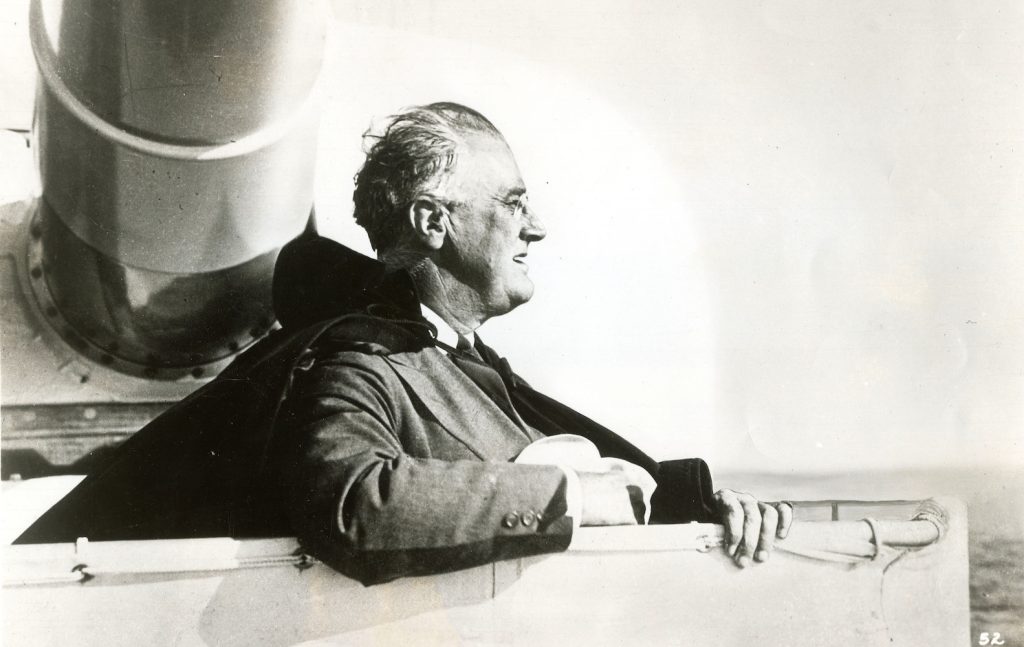
Photo: Franklin D. Roosevelt reviews the Pacific Fleet from aboard the USS Houston. San Francisco Bay, 1938.
Roosevelt’s early political career began with his election to the New York State Senatein 1910. His commitment to progressive reform quickly became evident as he fought against corrupt political machines and championed policies to improve the lives of his constituents. His dedication to public service was further demonstrated during his tenure as Assistant Secretary of the Navy under President Woodrow Wilson, where he played a key role in modernizing the U.S. Navy during World War I.
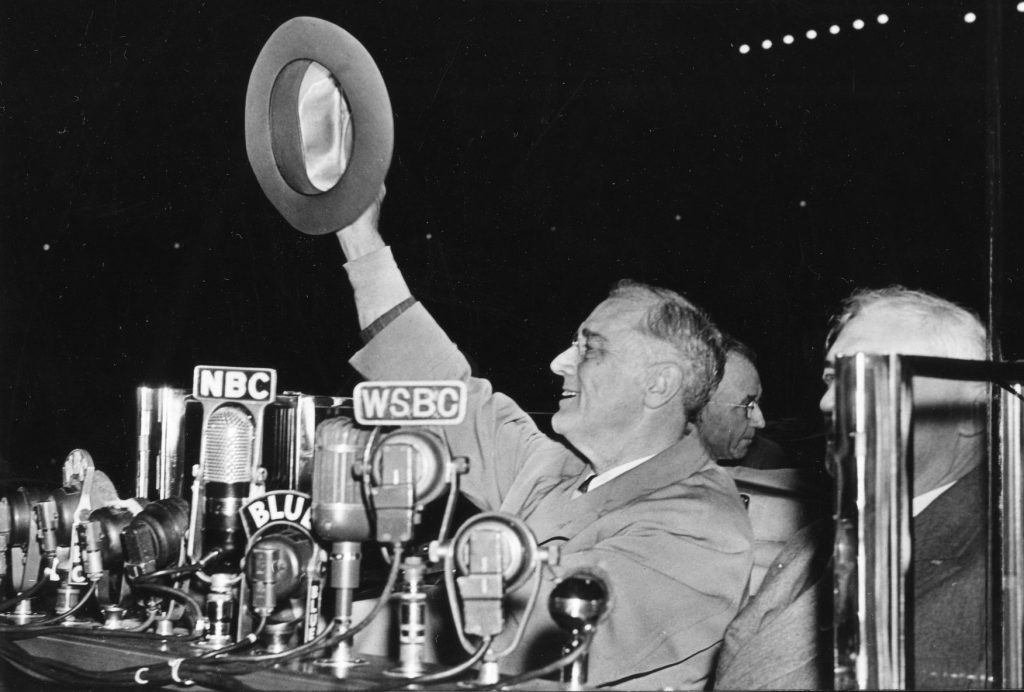
Photo: Franklin D. Roosevelt campaigns at Soldier’s Field, Chicago, 1944. Credit: FDR Presidential Library & Museum / Flickr.
In 1921, at the age of 39, Roosevelt was stricken with polio, which left him paralyzed from the waist down. Despite this life-altering challenge, FDR’s resilience and determination only grew stronger. He refused to be defined by his disability and instead used it to fuel his empathy and understanding for those facing adversity. This personal struggle forged a deeper connection between him and the American people, who admired his courage and perseverance.
FDR’s ascent to the presidency in 1932 came at a time when the United States was reeling from the Great Depression. The nation faced unprecedented economic hardship, with widespread unemployment, failing banks, and pervasive poverty. Roosevelt’s response to this crisis was nothing short of revolutionary. His New Deal, a series of bold and innovative programs and policies, sought to provide immediate relief, foster economic recovery, and implement structural reforms to prevent future depressions.
The New Deal’s impact on American society cannot be overstated.
Programs like the Civilian Conservation Corps (CCC), the Public Works Administration (PWA), and the Social Security Act transformed the lives of millions of Americans by creating jobs, improving infrastructure, and establishing a safety net for the elderly and vulnerable. Roosevelt’s vision extended beyond mere economic recovery; he sought to build a more just and equitable society where every citizen had the opportunity to thrive.
Roosevelt’s leadership during World War II further solidified his legacy as a global citizen and thought leader. As the threat of fascism and totalitarianism loomed, FDR recognized the necessity of U.S. involvement in the global struggle for democracy. His administration provided crucial support to Allied powers through initiatives like Lend-Lease, which supplied vital resources to nations fighting against Axis aggression.
FDR’s ability to unite the American people and galvanize support for the war effort was unparalleled.
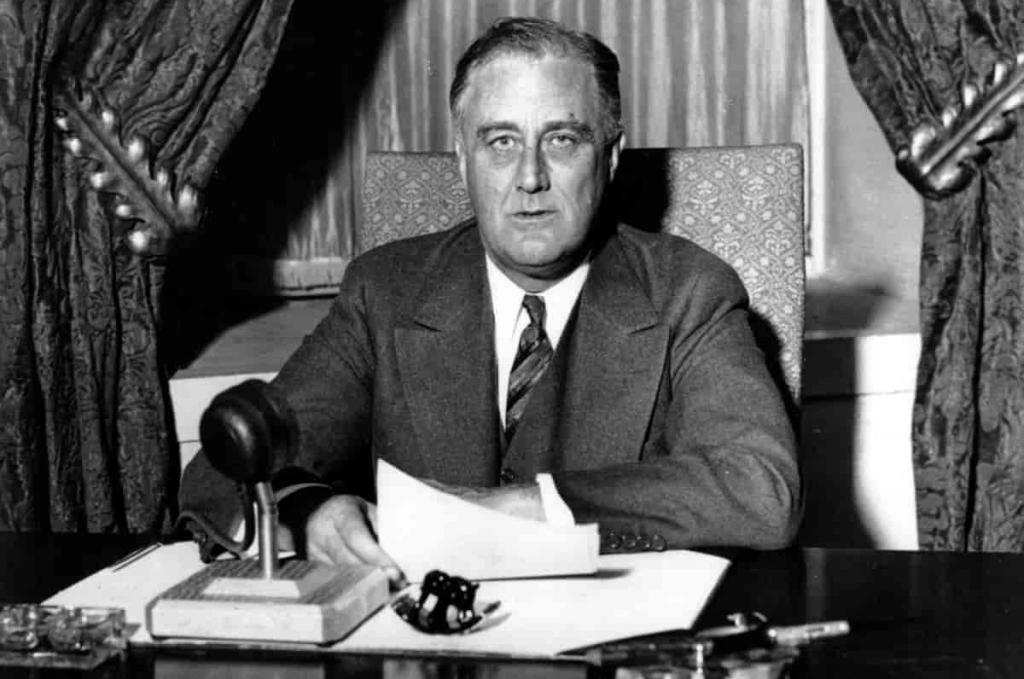
His famous “fireside chats,” a series of radio broadcasts, brought him into the homes of millions of Americans, fostering a sense of unity and shared purpose. Roosevelt’s eloquence and ability to communicate complex issues in relatable terms endeared him to the public and reinforced their trust in his leadership.
Roosevelt’s vision extended beyond the immediate crisis of the war. He was a principal architect of the post-war international order, advocating for the creation of the United Nations to promote peace, security, and cooperation among nations. His belief in the importance of collective action and international collaboration laid the groundwork for a more interconnected and cooperative world.
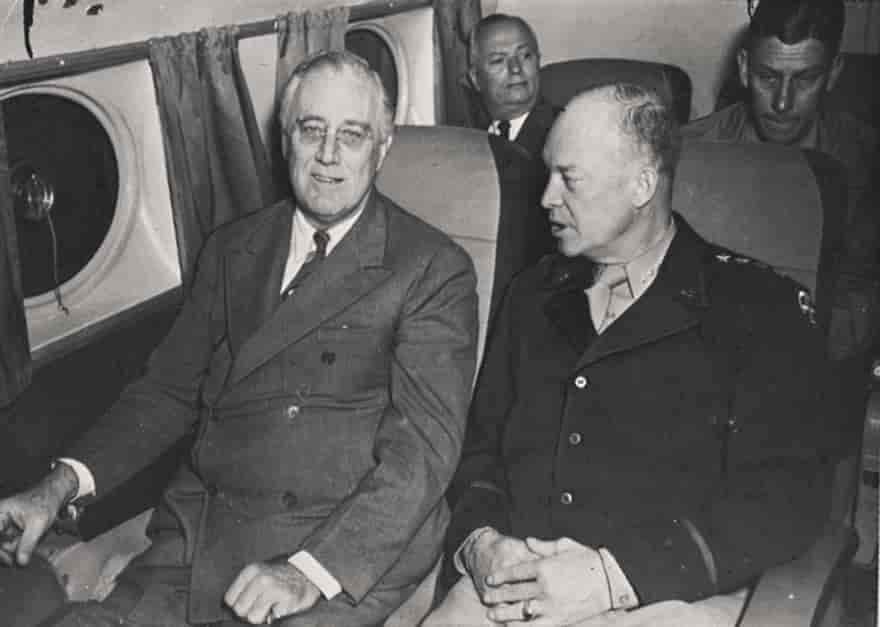
Photo: FDR with General Dwight Eisenhower.
One of the most enduring aspects of FDR’s legacy is his commitment to human rights and social justice. His “Four Freedoms” speech, delivered in 1941, articulated a vision for a world founded on four essential human rights: freedom of speech, freedom of worship, freedom from want, and freedom from fear. These principles became a cornerstone of the Allied war effort and later influenced the Universal Declaration of Human Rights.
Roosevelt’s leadership style was characterized by his ability to inspire hope and confidence in the face of adversity.
His optimism and belief in the American spirit were infectious, and he consistently sought to empower individuals and communities to contribute to the nation’s recovery and progress. FDR’s capacity to blend pragmatism with visionary thinking enabled him to implement lasting reforms that fundamentally transformed American society.
As I reflect on Franklin D. Roosevelt’s impact on the world, I am struck by his unwavering commitment to the principles of democracy, justice, and human dignity. His leadership during the Great Depression and World War II not only steered the United States through some of its most challenging periods but also set a precedent for future leaders to follow.
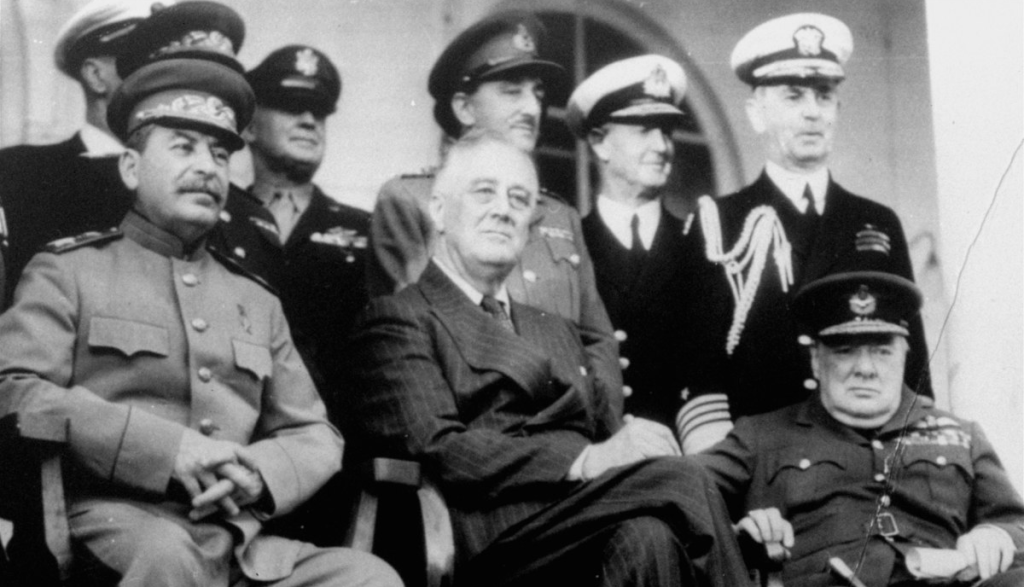
FDR (seated, center) with Joseph Stalin of the Soviet Union and Winston Churchill of the British Empire at their Yalta Conference, dividing Germany.
FDR’s legacy as a thought leader and global citizen serves as a powerful reminder of the importance of resilience, empathy, and visionary thinking in the pursuit of a better world.
Roosevelt’s life and career continue to inspire generations of leaders and citizens to engage in public service, advocate for social justice, and work towards a more inclusive and equitable society. His contributions to American politics and global affairs have left an indelible mark on history, demonstrating the profound impact that dedicated and principled leadership can have on the world.
In a time when the global community faces complex and multifaceted challenges, FDR’s example offers a beacon of hope and a blueprint for effective and compassionate leadership. His legacy reminds us that through determination, innovation, and a steadfast commitment to the common good, we can overcome adversity and build a brighter future for all.
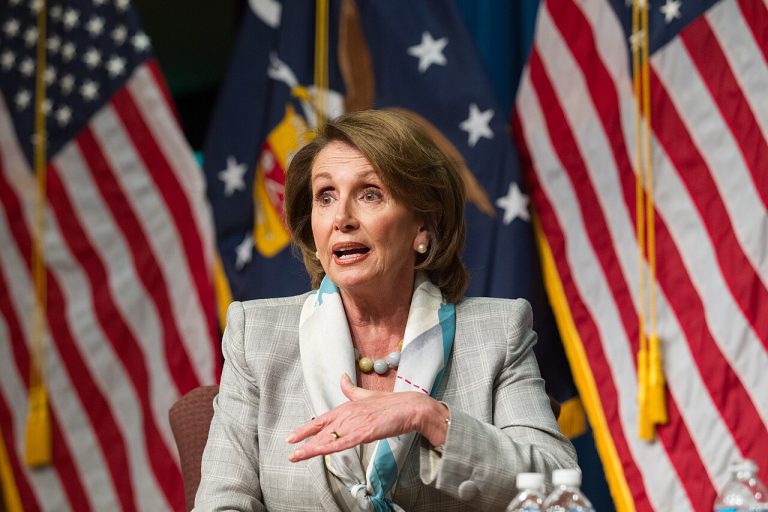
Photo: Rep. Nancy Pelosi delivering remarks in Congress, 2015. Credit: U.S. Department of Labor.
Nancy Pelosi has been a staunch advocate for women’s rights, LGBTQ+ rights, and environmental protection. She has championed legislation aimed at closing the gender pay gap, protecting reproductive rights, and combating climate change. Her leadership in these areas has not only advanced progressive values but has also inspired countless individuals to join the fight for a more just and equitable society.
Washington, D.C. When I reflect on leaders who have profoundly influenced American politics and society, Nancy Pelosi stands out as a paragon of unwavering commitment to public service, progressive values, and effective governance. Her career, marked by historic achievements and steadfast dedication, highlights her role as a thought leader and global citizen. Pelosi’s influence on policy, her ability to navigate complex political landscapes, and her dedication to representing her constituents have cemented her legacy as a transformative figure in American politics.
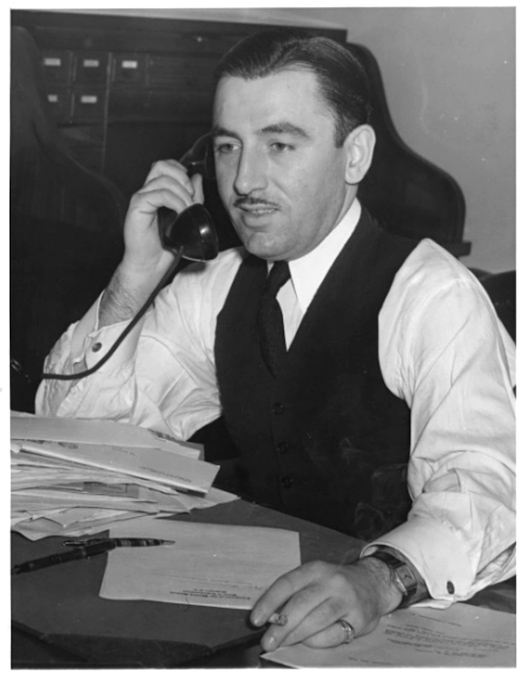
Photo: Pelosi’s father Thomas Ludwig John D’Alesandro Jr. (1903-87). Credit: Wikimedia.
Born on March 26, 1940, in Baltimore, Maryland, Nancy Pelosi grew up in a family deeply involved in politics. Her father, Thomas D’Alesandro Jr., served as Mayor of Baltimore and a U.S. Congressman. From an early age, Pelosi was immersed in the world of public service and governance. This upbringing instilled in her a passion for civic duty and a commitment to fighting for justice and equality.
Pelosi’s political career began in earnest when she was elected to the U.S. House of Representatives in 1987, representing California‘s 5th district, and later the 8th and 12th districts. From the start, she demonstrated an extraordinary ability to lead and advocate for her constituents. Her dedication to public service and her talent for building coalitions quickly earned her respect and admiration from her colleagues.
One of Pelosi’s most significant achievements is her historic tenure as the first woman to serve as Speaker of the House, a position she first attained in 2007 and held again in 2019. As Speaker, Pelosi has been a powerful force for progressive change, leading the House through some of the most challenging and consequential periods in recent history. Her leadership has been instrumental in passing landmark legislation that has profoundly impacted the lives of millions of Americans.
Pelosi’s role in the passage of the Affordable Care Act (ACA) stands as a testament to her legislative skill and unwavering commitment to expanding access to healthcare. Despite immense opposition, Pelosi’s strategic acumen and ability to galvanize support within her party were crucial in securing the ACA’s passage. The law has provided millions of Americans with affordable healthcare, reflecting Pelosi’s dedication to social justice and equity.
In addition to healthcare, Pelosi has been a staunch advocate for women’s rights, LGBTQ+ rights, and environmental protection. She has championed legislation aimed at closing the gender pay gap, protecting reproductive rights, and combating climate change. Her leadership in these areas has not only advanced progressive values but has also inspired countless individuals to join the fight for a more just and equitable society.
Pelosi’s impact extends beyond domestic issues.
As a global citizen, she has consistently advocated for human rights, democracy, and international cooperation. Pelosi has been a vocal critic of authoritarian regimes and a staunch supporter of democratic movements worldwide. Her visits to conflict zones, meetings with international leaders, and support for global human rights initiatives underscore her commitment to promoting justice and democracy on a global scale.
One of the hallmarks of Pelosi’s career is her ability to navigate and lead through adversity. Her tenure as Speaker has included guiding the House through two impeachments of President Donald Trump, managing the legislative response to the COVID-19 pandemic, and addressing the aftermath of the January 6th Capitol insurrection. Through these tumultuous times, Pelosi’s leadership has been characterized by her resilience, strategic thinking, and unwavering commitment to upholding democratic principles.
Pelosi’s dedication to her constituents and her country is evident in her tireless work ethic and her accessibility to the people she represents. Known for her hands-on approach, Pelosi frequently engages with her constituents, ensuring that their voices are heard in Washington, D.C. Her ability to connect with and advocate for her constituents has made her a beloved figure in her district and a respected leader nationwide.
In addition to her legislative achievements, Pelosi’s role as a mentor and role model for women in politics cannot be overstated. Her historic rise to the Speakership has broken barriers and paved the way for future generations of women leaders. Pelosi has been a vocal advocate for increasing the representation of women in politics, and her success serves as a powerful example of what is possible when women lead.
As I consider Nancy Pelosi’s impact on American politics and global affairs, I am struck by her unwavering dedication to her principles and her ability to effect meaningful change. Her career is a testament to the power of determined and principled leadership. Pelosi’s ability to achieve legislative victories, even in the face of significant opposition, speaks to her strategic brilliance and determination.
Pelosi’s legacy is one of transformative impact and unwavering commitment to justice and equality.
Her work has improved healthcare access, advanced civil rights, and promoted social justice, leaving a lasting mark on the United States and the world. As a thought leader and global citizen, Nancy Pelosi exemplifies the principles of effective leadership, advocacy, and a commitment to the common good.
In a time when the political landscape is often marked by division and discord, Pelosi’s leadership offers a beacon of hope and a reminder of the importance of perseverance, collaboration, and a steadfast commitment to justice. Her life and career inspire us to engage in public service, advocate for what is right, and work towards a more equitable and just society.
Nancy Pelosi’s contributions as a thought leader and global citizen have left an indelible mark on the world. Her work has shaped the course of American politics and inspired countless individuals to join the fight for justice and equality. As we look to the future, Pelosi’s legacy serves as a guiding light, reminding us of the power of dedicated public service and the enduring impact of principled leadership.
Tags: Nancy Pelosi, Thought Leader, Global Citizen, U.S. House of Representatives, Speaker of the House, Public Service, Progressive Politics, Advocacy
A Thought Leader and Global Citizen, Annabella Quintanilla Gonzalez [Luce Index™ rank 91] wasborn in Mexico City, great-grand daughter of the reformist President of Mexico, Sebastian Lerdo de Tejada.
Her father was a progressive labor leader and celebrated founder of the Faculty of Economics at the national university of Mexico. Her grandfather was ambassador to France and the family commonly spoke French. Her uncle helped found the United Nations and was ambassador to the United States and Russia. Family friends included Frida Kahlo and the young Fidel Castro. Jim Luce covered her performances for The Huffington Post.
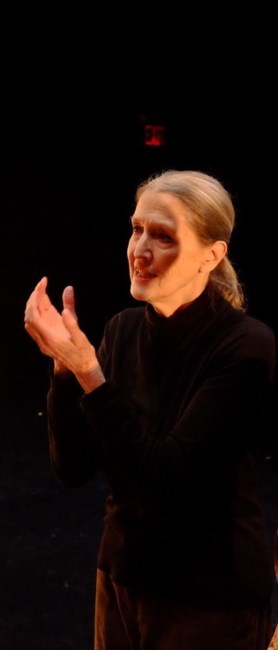
New York, N.Y. Annabella Gonzalez, the choreographer Founder and Director of Annabella Gonzalez Dance Theater (AGDT), the New York-based modern dance company continuously active since 1976, died at Mt. Sinai Hospital, Manhattan. Her husband, Richard Grimm, said she died of complications from a longstanding lung disease (COPD) possibly originating with childhood tuberculosis.
Ms. Gonzalez’s dance career spanned fifty-five years.
She studied with several of the greats, including Martha Graham and Vladimir Dougadovsky. She developed a spare, intimate well-crafted style combining a sometimes quirky ballet and modern vocabulary linked to carefully selected classical, modern classical and contemporary music. Jennifer Dunning of the New York Times said “Annabella Gonzalez approaches the artifacts of everyday life in somewhat the way that Paul Klee looked at machines.”
Her scores of dances, while largely in the New York and European modern dance traditions, sometimes reflected her Mexican roots, such as her take on the folk dance “Los Viejitos” and “Pastoral Latino.”
Ms. Gonzalez usually steered clear of “message” pieces, but recently did a prideful celebration of Mexico and Mexican-Americans in “Tribute”, set to classic Mariachi songs, and earlier created “To the Victims of Hiroshima.” Her sly comedic pieces included “White Rug,” a disastrous picnic set to Mozart.
Among the smaller dance companies in New York, she stood out for the long tenure of her AGDT dancers and other collaborators. She collaborated over the years with noted composers such as Stefania de Kennesey, Max Lifschitz and Seymour Barab.
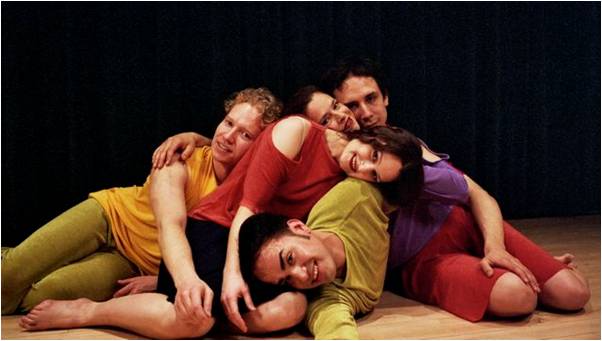
Annabella Gonzalez Dance Troup Presents Spring Series Juntos, Featuring “Unidos” (Together).
Company members, several serving for over ten years and often contributing creatively, included:
Dominique Weibel, Jim Jacobs, Juan Echazarreta, Johnny Martinez, Marcos de Jesus, Heather Pannikar, Lucia Campoy, Jenna Parker, Shannon Maynor, Jorge Fuentes, Esteban Arana, Leticia Pliego, Christopher Amato, Carolina Santos Read, Kendra Dushak and Joel Levy, among many others.
Ms. Gonzalez also collaborated with guest performer/choreographers such as Maxine Steinman, Mr. Amato, Ms. Parker, Sara Joel, Esteban Arana and Leticia Pliego.
Annabella Gonzalez Quintanilla had a multi-faceted identity reflecting her exotic international background.
She was born in Mexico City on May 23, 1941. Her mother, Lutecia Quintanilla del Valle, was the grand daughter of the reformist President of Mexico, Sebastian Lerdo de Tejada. Her father, Enrique Gonzalez Aparicio, was the progressive labor leader and celebrated founder of the Faculty of Economics of UNAM, the national university of Mexico, who died just before Annabella was born.
Her grandfather, Luis Quintanilla, was in Paris as ambassador to France for many years, and the colorful family, when back in Mexico, commonly spoke French. Her uncle Luis Quintanilla helped found the United Nations and was ambassador to the United States and Russia and was Mexican interior minister.
In Mexico, Annabella attended a French Lycée and met a number of interesting family friends such as Frida Kahlo and the young Fidel Castro. Annabella’s mother Lutecia remarried Kelly Wehnes, an American Marine officer visiting Cuernavaca who had a Distinguished Flying Cross from The Battle of Okinawa. He took the family to Minneapolis in the 1950s.
There, Annabella graduated from the University of Minnesota with an art history degree, an area she continued at Columbia University as a grad student. Later, in the 1990s she obtained a Columbia M.A. in dance education and taught a class there in traditional Mexican dance.
From the late 1960s, using her fluent French, she earned language and interpreting degrees at the University of Geneva, Switzerland. Over her nine years there, her interpreting supported her initial modern dance career with the Ballet Jeunes de Geneve and the Dance Theater Workshop of Geneva. Ever adventurous, she crossed the Sahara with a German baron, Thilo von Trotha, who remained a good friend.
Back in New York, sometimes interpreting in three languages at the United Nations, Ms. Gonzalez founded AGDT in 1976. In addition to performances at venues such as Lincoln Center Outdoors, Carnegie Hall, Central Park Festival, Manhattan Movement & Arts Center, and Brooklyn Academy of Music, AGDT has mounted hundreds of productions at schools, colleges, libraries and cultural centers in the New York area —many enabling underserved audiences to discover modern dance. It has had several residencies including at the Harkness Foundation for Dance and the National Dance Museum at Saratoga Springs.
AGDT’s Spring Series has been presented every year for forty-two years, with most choreographies by Ms. Gonzalez. Her Mexican performances were at UNAM in Mexico City, the University of Colima and appearances in festivals in Chihuahua and San Luis Potasi. AGDT has enjoyed consistent support from organizations such as the New York City Department of Cultural Affairs, the Harkness Foundation for Dance, the Mexican Cultural Institute and the Nicotra Foundation.
Ms. Gonzalez was planning AGDT activities until two days before she died. She is survived by her husband of thirty-nine years, Richard Grimm, as well as many family members in Mexico, Spain and the U.S. with whom she had fond ties.
On a personal note, my fiftieth birthday was celebrated on Annabella and Richard’s gorgeous penthouse terrace overlooking Central Park in July 2009. I will always remember their warmth, creativity and generosity. – JL
Photo: Cherry trees blossom each spring along the East River Promenade on Roosevelt Island adjacent to the United Nations. Credit: Stewardship Report/John Lee.
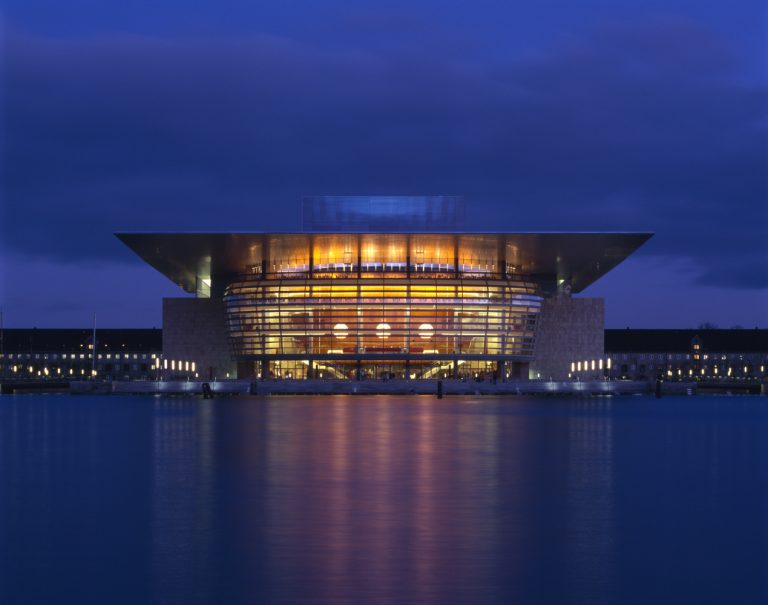
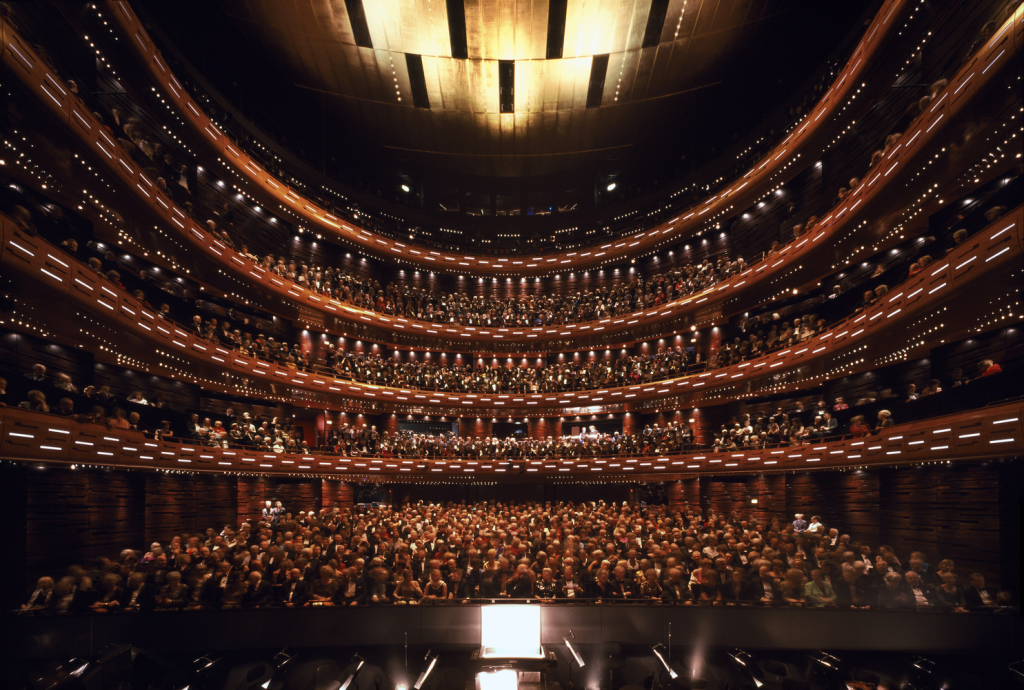
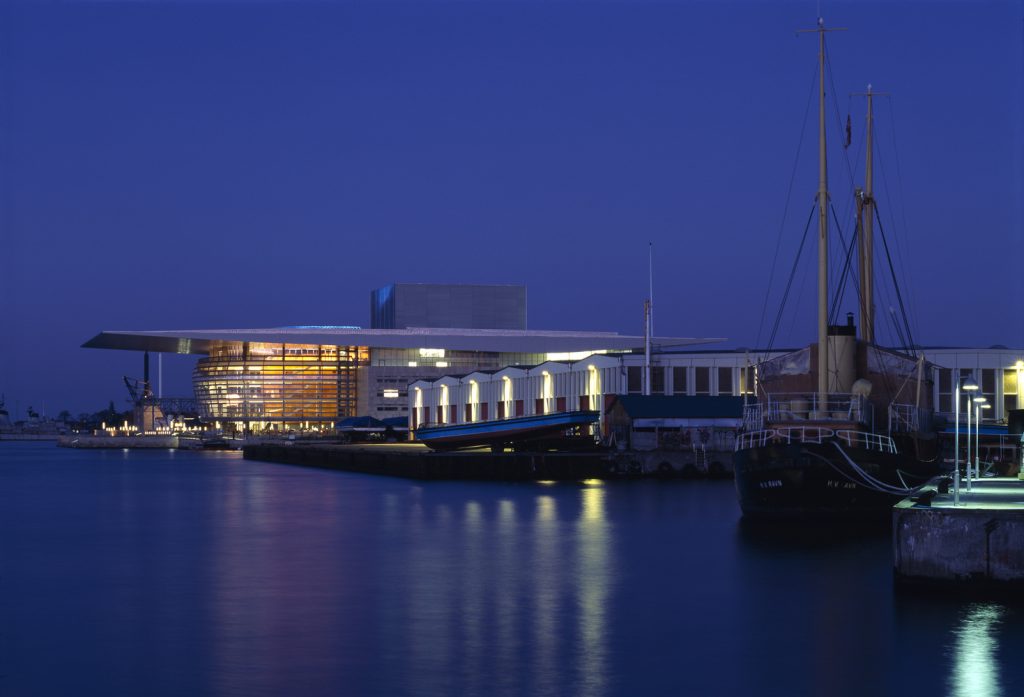
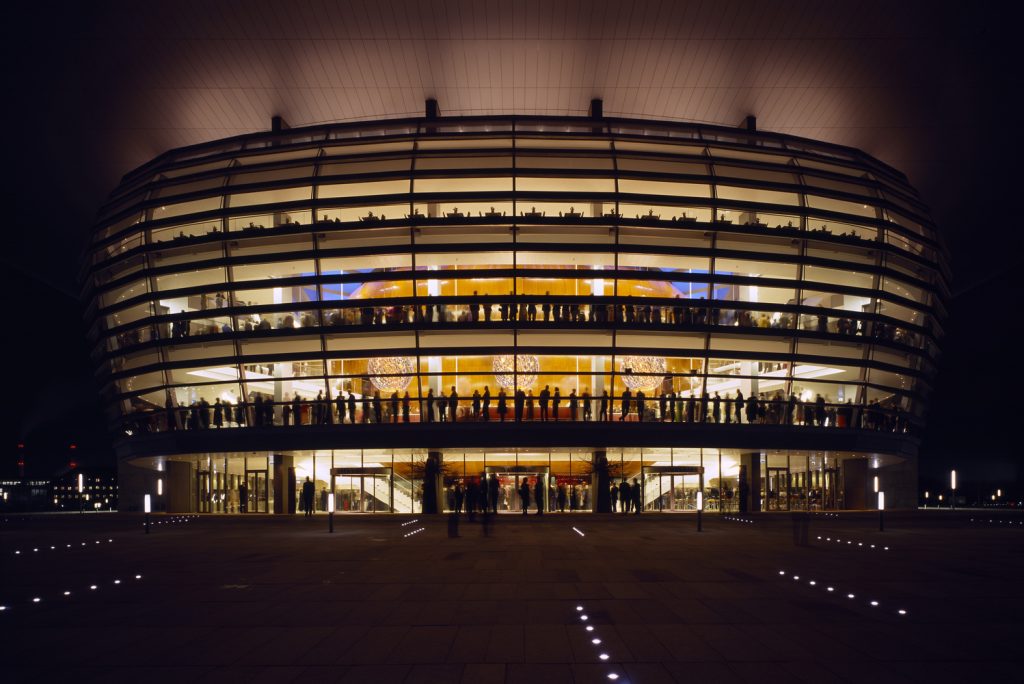
Copenhagen, Denmark. As I stand before the Royal Danish Opera House, I am struck by its breathtaking beauty and significance as a cultural beacon. Nestled on the island of Holmen in Copenhagen, this architectural marvel symbolizes Denmark’s rich cultural heritage and its commitment to the performing arts. The Opera House, known locally as Operaen, is not just a building; it is a testament to Denmark’s position as a thought leader in the global arts community.
Inaugurated on January 15, 2005, the Royal Danish Opera House was a gift from one of Denmark’s most generous benefactors, A.P. Møller, the co-founder of the Maersk shipping company. This modern architectural masterpiece was designed by the renowned architect Henning Larsen, with input from the benefactor himself, ensuring that it would be both a functional and aesthetic triumph. The structure’s sleek lines and innovative use of space reflect the contemporary yet timeless nature of Danish design.
Walking through the Opera House, I am continually amazed by the attention to detail and the grandeur of its design. The foyer, with its expansive glass facade, offers panoramic views of Copenhagen’s skyline and the historic Amalienborg Palace. This interplay between modern and historical elements symbolizes the Opera House’s role as a bridge between Denmark’s rich past and its dynamic present. The marble and maple wood interiors exude a warmth that contrasts with the building’s modernist exterior, creating a welcoming atmosphere for visitors from around the world.
One cannot discuss the Royal Danish Opera House without acknowledging its state-of-the-art facilities. The main auditorium, which seats up to 1,700 guests, is a marvel of acoustic engineering. Every seat in the house offers an unobstructed view of the stage, ensuring an immersive experience for all attendees. The orchestra pit, designed to accommodate large orchestras, enhances the auditory experience, making every performance a feast for the ears. This dedication to technical excellence underscores Denmark’s commitment to providing world-class cultural experiences.
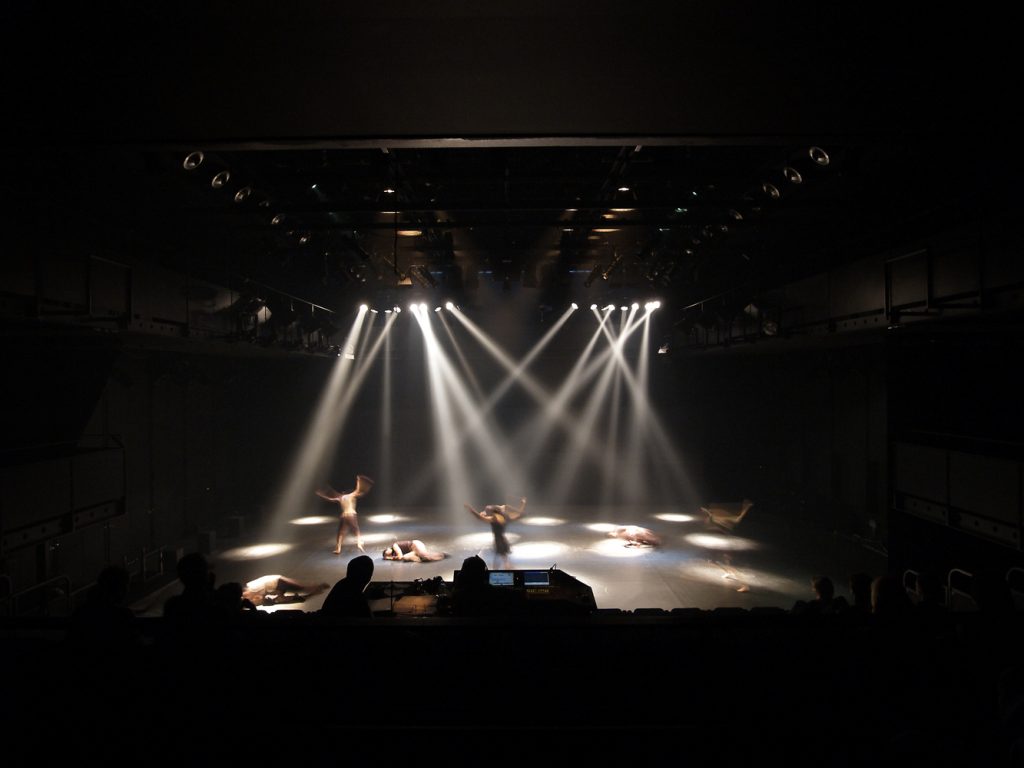
The Royal Danish Opera House is more than just a venue for performances; it is a hub of creativity and innovation. It serves as the home of the Royal Danish Opera and the Royal Danish Orchestra, one of the oldest orchestras in the world, dating back to 1448. These prestigious institutions contribute to the Opera House’s reputation as a center of artistic excellence. The repertoire is diverse, ranging from classic operas and ballets to contemporary works, reflecting Denmark’s inclusive approach to the arts. This inclusivity makes the Opera House a global stage, attracting talent and audiences from all corners of the world.
From my perspective, the Royal Danish Opera House exemplifies the idea of cultural diplomacy. By hosting international artists and productions, it fosters a spirit of global collaboration and mutual understanding. This is particularly important in today’s interconnected world, where the arts can serve as a powerful tool for bridging cultural divides. The Opera House’s commitment to cultural exchange is evident in its numerous collaborations with international opera houses and cultural institutions, further solidifying its role as a global citizen in the arts community.
The impact of the Royal Danish Opera House extends beyond its walls. It plays a crucial role in the local community by offering educational programs and outreach initiatives aimed at nurturing the next generation of artists and audiences. These programs include workshops, masterclasses, and school visits, all designed to make the arts more accessible to young people. By investing in education, the Opera House ensures that the cultural legacy of Denmark will continue to thrive for generations to come.
Standing in the Opera House, I am reminded of the transformative power of the arts. The performances here have the ability to transport audiences to different times and places, to evoke powerful emotions, and to provoke thought and discussion. This is the essence of what it means to be a thought leader in the arts. The Royal Danish Opera House not only showcases the best of Danish culture but also contributes to the global dialogue on the importance of the arts in our lives.
In reflecting on the Royal Danish Opera House, I am filled with a sense of pride and admiration for Denmark’s dedication to the arts. This magnificent building is a testament to what can be achieved when vision, generosity, and creativity come together. It stands as a symbol of Denmark’s cultural heritage and its commitment to fostering a vibrant and inclusive arts community.
I am inspired by the Royal Danish Opera House’s ability to bring people together through the universal language of music and performance. It is a place where boundaries are transcended, and the human spirit is celebrated in all its diversity. The Opera House is not just a cultural landmark for Denmark; it is a beacon of hope and inspiration for the entire world.
The Royal Danish Opera House is a shining example of Denmark’s role as a thought leader and global citizen in the arts. Its architectural beauty, commitment to excellence, and dedication to cultural exchange make it a true gem in the world of opera and performing arts. As I leave the Opera House, I am reminded of the profound impact that the arts can have on our lives and the importance of nurturing and celebrating our shared cultural heritage.
Roy Wang, also known as Wang Yuan (Chinese: 王源; pinyin: Wáng Yuán) is a Chinese singer-songwriter, television host and actor. He was named by Time as one of the 30 Most Influential Teens of 2017. Wang has been a UNICEF ambassador since 2018. He set up his own charity foundation, the Yuan Foundation, that focuses on helping the elderly and children.
Nov. 8, 2000: Roy Wang (Wang Yuan)(Chinese singer-songwriter, television host and actor; UNICEF ambassador since 2018)