The Stewardship Report

Home Blog Page 44

I Have Down Syndrome – And It’s Okay

By Dr. Bill Bauer

Tengo síndrome de Down y está bien

Por el Dr. Bill Bauer

Hello! My name is Jacob, and I have Down Syndrome.

¡Hola! Me llamo Jacob y tengo síndrome de Down.


Everyone is born with 23 pairs of chromosomes (46 total)

Todas las personas nacen con 23 pares de cromosomas (46 en total).


I was born with an extra chromosome in my 21st set of chromosomes (47 total).

Nací con un cromosoma extra en mi par número 21 de cromosomas (47 en total).

This kind of makes me special!

¡Eso me hace especial!


All of us with Down syndrome are different. But some of us have common features.

Todas las personas con síndrome de Down somos diferentes.
Pero algunas compartimos características en común.


Some of us must get surgery for our heart because it doesn’t work like it should.

Algunas personas necesitamos una cirugía en el corazón porque no funciona como debería.


Some of my friends have a short neck, small ears, a line across the palm of our hand,
a small pinky finger, and eyes shaped like almonds that slant up.

Algunos de mis amigos tienen el cuello corto, orejas pequeñas, una línea en la palma de la
mano, el dedo meñique pequeño y ojos con forma de almendra que se inclinan hacia arriba.


As soon as I was born, people came to my house to help
my family learn about me. I had lots of therapies to help me.

Cuando nací, vinieron personas a mi casa para ayudar a mi familia
a aprender sobre mí. Tuve muchas terapias para ayudarme.


My family was always with me when I had therapy.

Mi familia siempre estuvo conmigo cuando tenía terapia.


I went to a preschool where some people were like me,
and some were not. But all of them are my friends!

Fui a un preescolar donde algunos niños eran como yo
y otros no. ¡Pero todos eran mis amigos!


Now I get to go to a regular school where I see my friends and work and play beside them.

Ahora voy a una escuela regular donde veo a mis amigos y aprendo y juego junto a ellos.


When I am at school, sometimes I get special help from different teachers.

Cuando estoy en la escuela, a veces recibo ayuda especial de diferentes maestros.


I love to swim and play with my cars.

Me encanta nadar y jugar con mis carritos.


My favorite time is when I get to see my cousins and play with them.

Mi momento favorito es cuando puedo ver a mis primos y jugar con ellos.


I love going to school and riding in the bus with my friends.

Me encanta ir a la escuela y viajar en el autobús con mis amigos.


When I get older, I want to live by myself or with my friends,
get a job, and visit with my friends and family.

Cuando sea mayor, quiero vivir solo o con mis amigos,
tener un trabajo y visitar a mis amigos y a mi familia.


I like people who believe in me and accept me for who I am and can accept my differences.

My name is Jacob. I have Down syndrome. And it’s OKAY!

Me gustan las personas que creen en mí y me aceptan tal como soy y aceptan mis diferencias.

Me llamo Jacob. Tengo síndrome de Down. ¡Y está bien!


The End | El Fin


About the Author

Dr. William M. (Bill) Bauer is a licensed clinical counselor in the rural Mid-Ohio Valley area who was a former classroom teacher, principal, and college professor.  He has worked with children and adults with disabilities all of his life and hopes that this book brings an understanding to children with disabilities, their teachers, and their classmates. Dr. Bauer was born with a severe hearing impairment. 


“I have had the pleasure of working with Dr. Bauer in the professional education and mental health fields
for over two decades, and this book series is his latest outstanding work to help young people
understand and accept differences. Each title focuses on a uniqueness and assures us that “it is OKAY!”
– Dr. Stephanie Starcher, Public School Superintendent 

“Being different is OK! Every effort to erase stigma surrounding our differences is important. The earlier
we start, the better chance we have at preventing stigma from even occurring. I had the honor of meeting
Dr. Bill Bauer when I was in college, and it is no surprise his work as a mental health advocate would
transpire into this series of books. I’m thankful for his commitment to celebrating our differences.” 
– Nick Gehlfuss, MFA, Actor, film and television. Currently, Dr. Halstead, Chicago Med. 

“This book series by Dr. William Bauer – my good friend Bill – fills a niche in children’s literature that embraces
diversity and self-esteem. This series is not only important, but extremely fun. As founder of Orphans International,
I look forward to reading these stories to children of all faiths and abilities around the world. This book is
indeed a living testament to Bill’s own son. The world is a better place because of Bill Bauer! #GrantSpeed”
– Jim Luce, Founder, Orphans International Worldwide


Aloha kakou. E komo mai. Hello and welcome.

In our Pre-K classroom, you’ll find many things you would expect: a schedule, a calendar, a globe, toys, puzzles, art supplies, books, learning canters. You may be surprised, however, to discover our Diversity Center. Here, you will see posters of children of all nationalities and with all types of disabilities. You will find dolls that I altered to represent these unique children.

Kumu (Teacher) Michelle and Pre-K students, Volcano, Hawai’i. Photo credit: Michelle Buck.

We have a doll with glasses, a doll with a hearing aid, a doll on crutches, a doll with one arm, and a doll in a wheelchair. We have books written in different languages: Hawaiian, Spanish, French, Japanese, Chinese, English, Braille. We have books written about all sorts of families from all over the world.

Our prize possessions, however, are our books written by Dr. Bauer.

My students choose to visit the Diversity Center so they can cuddle up with one of our dolls and Dr. Bauer’s books. They have so many questions about the children in the books… leading to countless discussions and even more questions. When we have story time outdoors, students request that we sit together and read one of these books.

I truly believe that “Anakala (Uncle) Bill’s Books,” as we fondly call them, have been instrumental in teaching us about compassion, caring, and empathy towards all human beings. What a beautiful gift to our classroom! What a beautiful gift to our keiki (children)! What a beautiful gift to our future! “Anakala Bill” knows the meaning of ALOHA (love, peace, compassion, affection) and has shared that with us all.

Mahalo nui loa (thank you very much) for making such a difference in our lives! – Kumu Michelle and Pre-K students, Volcano, Hawai’i


More Stories in the ‘And It’s Okay‘ Series

Series I

  1. Attention Deficit Disorder
  2. Autism
  3. Cerebral Palsy
  4. Epilepsy
  5. Hearing Loss
  6. Learning Disability
  7. Muscular Dystrophy
  8. Spina Bifida
  9. Stoma
  10. Vision Loss

Series II

  1. Asthma
  2. Congenital Heart Defect
  3. Crohn’s Disease 
  4. Cystic Fibrosis 
  5. Down Syndrome
  6. Family Cancer Journey
  7. Juvenile Diabetes – DONE
  8. Juvenile Idiopathic Arthritis
  9. Sickle Cell Disease
  10. Spina Bifida – DONE

Series III

  1. Amputee
  2. Cleft Palate
  3. Depression – DONE
  4. Fragile X Syndrome
  5. HIV & AIDS
  6. My Fragile Bones
    (Osteogenesis Imperfecta)
  7. Severe Allergies
  8. Tourette’s Syndrome
  9. Trauma (PTSD)
  10. Wheelchair User /
    I Use a Wheelchair

Series IV

  1. I’m Adopted
  2. I’m In Foster Care
  3. I’m Not A U.S. Citizen
  4. My Dad’s In A Wheelchair
  5. My Dad’s In Prison
  6. My English Isn’t Perfect Yet
  7. My Family Is Moving
  8. My Mom’s In Prison
  9. My Parents Are Divorced
  10. My Parents Are Getting Divorced

Series Language Policy:
All Stewardship Report children’s titles are published in English, with Spanish included as the secondary language where appropriate. Additional languages may be published as separate editions.


#AndItsOkay   #FamilyCancerJourney   #ChildrensBooks   #BilingualBooks  
#CancerAwareness   #FamilyLove   #EmotionalLiteracy #LucePubllications
#DrBillBauer #MentalHealthForKids   #DisabilityInclusion   #StewardshipReport

TAGS: Dr. Bill Bauer, children’s literature, family cancer, bilingual children’s book,
emotional health, disability inclusion, And It’s Okay series, cancer education for kids,
mental health awareness, family resilience, storytelling for healing, Luce Publications

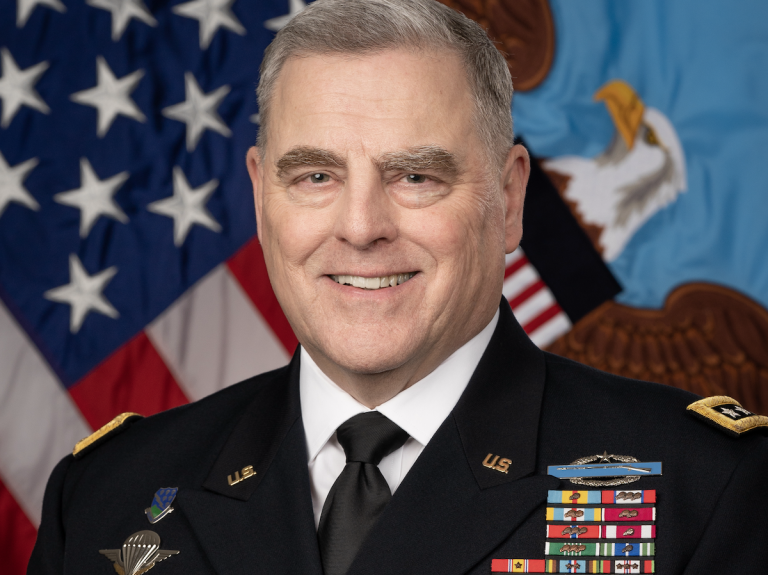
Hegseth Moves Against Retired General Milley, Stripping Security Detail


Pete Hegseth Moves Against Retired General Mark Milley,
Stripping Security Detail and Ordering Investigation

Washington, D.C. — In one of his first major acts since taking office, new Defense Secretary Pete Hegseth has moved against retired General Mark A. Milley, the former chairman of the Joint Chiefs of Staff, revoking his security detail and ordering an inspector general investigation into his conduct. The decision, confirmed by a senior defense official, signals a sharp shift in the Pentagon’s leadership under the new administration.

Milley, who served as the nation’s top military officer from 2019 to 2023, frequently found himself at odds with President Donald J. Trump, particularly in the aftermath of the 2020 election and the January 6 attack on the Capitol. His tenure was marked by tensions with Trump allies, especially over his public statements regarding civilian control of the military and his warnings against political interference in military affairs.

The official, who spoke on the condition of anonymity to discuss internal deliberations, said that Milley’s security detail—provided due to concerns over threats against him—would be withdrawn immediately. The official also confirmed that the Department of Defense’s inspector general has been tasked with reviewing Milley’s actions during and after his tenure. While the precise focus of the investigation remains unclear, it follows years of criticism from Trump and his allies, who have accused Milley of overstepping his authority.

A Politicized Reckoning

The move comes amid broader efforts by the new administration to reshape the Pentagon and reassert control over military leadership. Hegseth, a former Fox News host and a longtime supporter of Trump, was confirmed as Defense Secretary earlier this month in a highly contentious Senate vote. His appointment signaled a sharp ideological turn for the Department of Defense, as he has been vocal about purging what he calls the Pentagon’s “woke” culture and restoring loyalty to the commander in chief.

Milley’s clashes with Trump were well-documented. In 2021, Milley confirmed that he had made backchannel reassurances to China in the final months of Trump’s presidency, a move he later defended as an effort to maintain stability and prevent misunderstandings that could have led to conflict. Trump and his allies have called those actions tantamount to treason.

In his farewell speech in 2023, Milley warned against efforts to politicize the military, stating, “We don’t take an oath to a wannabe dictator. We take an oath to the Constitution.” His remarks were widely seen as a rebuke of Trump’s attempts to assert greater control over the military.

Implications for Military Independence

Critics argue that Hegseth’s actions against Milley amount to political retribution and could have a chilling effect on military leaders who seek to maintain independence from partisan influence. “This sets a dangerous precedent,” said a former senior Pentagon official who worked under multiple administrations. “Punishing retired military leaders for perceived disloyalty is the kind of thing we see in authoritarian regimes, not in the United States.”

Supporters of the move, however, argue that Milley had overstepped his authority and that an investigation is necessary to ensure military leaders remain accountable. “Milley acted as though he was above civilian leadership,” said a senior Republican aide on Capitol Hill. “This is about restoring order and ensuring that no one undermines the commander in chief.”

As the investigation unfolds, the decision to revoke Milley’s security protection raises concerns about his personal safety. The retired general has faced threats in the past, particularly after becoming a target of right-wing criticism. It remains unclear whether he will seek alternative protection.

The developments mark a dramatic escalation in the ongoing struggle over the future of the U.S. military’s role in politics. As the new administration consolidates power, the treatment of Milley could serve as a litmus test for how far it is willing to go in reshaping the defense establishment—and whether political retribution will become a new norm in civil-military relations.


#MarkMilley #PeteHegseth #Pentagon #MilitaryPolitics #Trump #CivilMilitaryRelations #NationalSecurity #PoliticalRetaliation #DefensePolicy


Wong Kim Ark: The Case That Defined American Citizenship

How a Young Chinatown Cook Helped Establish Birthright Citizenship in the USA

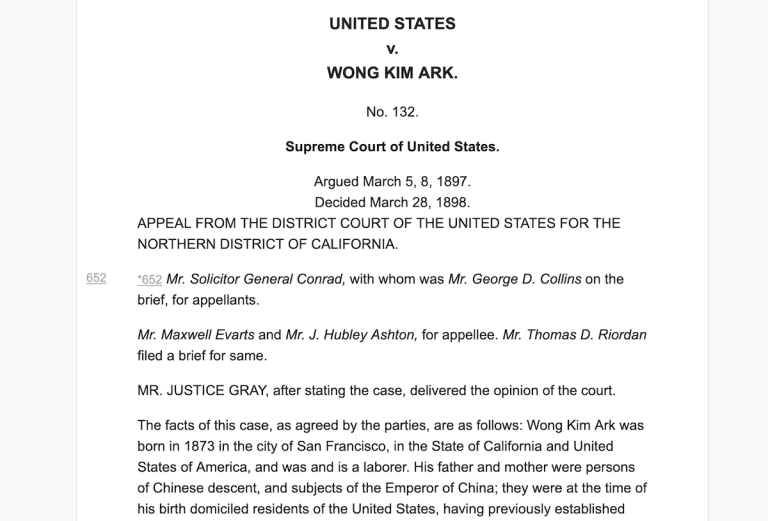
New York, N.Y. — In the 19th century, a landmark Supreme Court case involving Wong Kim Ark, a young Chinese American cook, forever shaped the future of citizenship in the United States.

In the late 1800s, Wong Kim Ark, born in San Francisco to Chinese immigrant parents, found himself at the heart of a historic legal battle. Despite being born in the U.S., Wong’s citizenship was questioned under the Chinese Exclusion Act—a federal law that severely restricted immigration and discriminated against Chinese immigrants.

In 1895, after a trip to China, Wong was denied reentry to the U.S., with officials claiming that his parents’ Chinese nationality disqualified him from being a U.S. citizen. Wong, however, fought back, taking his case all the way to the Supreme Court.

The court’s 1898 decision in United States v. Wong Kim Ark affirmed the principle of birthright citizenship under the 14th Amendment. The ruling clarified that anyone born on U.S. soil—regardless of their parents’ nationality—is a citizen, barring specific exceptions such as children of foreign diplomats. This precedent not only cemented Wong’s citizenship but also safeguarded the rights of countless others, particularly immigrant families and their children.

Wong’s legacy endures as a pivotal moment in American civil rights history. His courage in challenging the government’s discrimination ensured that the Constitution’s promise of equal citizenship applied to all, regardless of race or heritage.

Wong Kim Ark: The Case That Defined American Citizenship (Jan. 28, 2025)


#BirthrightCitizenship, #WongKimArk, #14thAmendment, #ImmigrantHistory, #CivilRights, #ChineseExclusionAct

@HistoryChannel, @ACLU, @ImmigrationPolicy, @CivilRightsOrg, @NationalArchives

RFK Jr.’s Conspiracy Theories: A Threat to Public Health

0

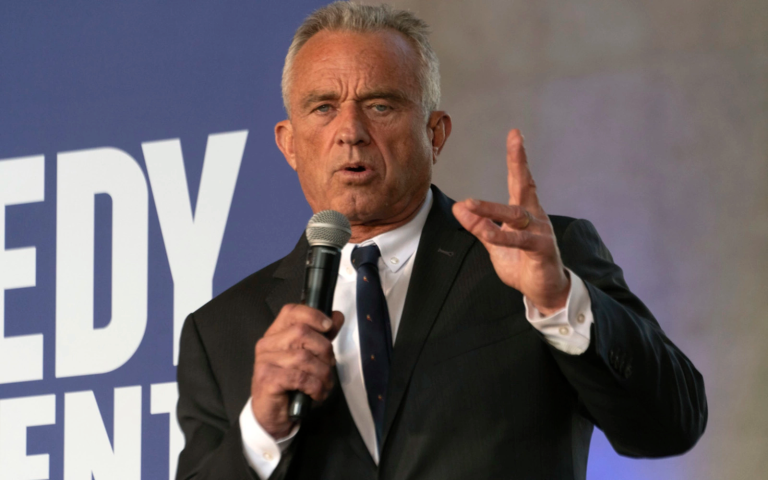
Washington, D.C.Robert F. Kennedy Jr.’s rise from environmental advocate to a figurehead of conspiracy theories and misinformation is emblematic of a troubling trend in American politics.

His promotion of discredited vaccine-autism links, claims about COVID-19 as a bioweapon targeting specific ethnic groups, and baseless theories on antidepressants and school shootings showcase a pattern of dangerous pseudoscience.

Even his family has disavowed him, labeling his actions as embarrassing and harmful. His nomination to lead the Department of Health and Human Services by President Trump raises grave concerns about public health, given his history of undermining scientific consensus.

RFK Jr.’s Conspiracy Theories: A Threat to Public Health (Jan. 28, 2025)


#RejectRFKJr #ScienceOverConspiracies #SayNoToRFKJr @RFKJrUnfit

Eighty Years Since Liberation: World Remembers Auschwitz


New York, N.Y. –– Today marks the solemn 80th anniversary of the liberation of Auschwitz-Birkenau, the largest Nazi concentration and extermination camp, located in occupied Poland. Ceremonies across the globe pay tribute to the victims of the Holocaust and serve as a poignant reminder of the enduring need to combat hatred, intolerance, and prejudice.

Auschwitz: A Symbol of Human Tragedy
Auschwitz-Birkenau stands as a chilling testament to the atrocities committed during the Holocaust. Between 1940 and 1945, over 1.1 million people perished within its barbed-wire fences. The majority were Jewish men, women, and children, but the victims also included Roma, Soviet prisoners of war, political dissidents, and others whom the Nazi regime deemed undesirable.

Key Events Commemorating the Anniversary
    •    Ceremony at Auschwitz-Birkenau Memorial:
A central ceremony is taking place at the Auschwitz-Birkenau Memorial and Museum, attended by Holocaust survivors, world leaders, and dignitaries. Survivors are sharing their personal stories of resilience and loss, reminding the world of the human cost of hatred. Many participants lay wreaths at the camp’s infamous “Death Wall,” where thousands were executed by firing squad.
    •    Global Observances:
Across continents, Holocaust museums, schools, synagogues, and public spaces are hosting commemorative events. Countries are holding vigils, educational seminars, and exhibitions to honor the victims and ensure that their stories remain alive for future generations.
    •    Focus on Education:
This anniversary highlights the critical role of Holocaust education in fighting antisemitism, racism, and bigotry. Institutions worldwide are renewing efforts to integrate Holocaust studies into school curricula, emphasizing lessons about human rights, tolerance, and the dangers of unchecked hatred.

A Sobering Reminder for Future Generations
As the number of Holocaust survivors continues to dwindle, the responsibility of remembrance increasingly falls on younger generations. Survivor testimonies are being preserved through digital archives, documentaries, and AI-driven technologies, ensuring that their voices endure.

The anniversary serves as a powerful reminder of the fragility of democracy and the catastrophic consequences of ignoring prejudice and systemic hatred. Auschwitz’s liberation by Soviet forces on January 27, 1945, marked a turning point in the world’s understanding of the Holocaust and its horrors, but it also underscored the global responsibility to prevent such atrocities from ever happening again.

Calls to Action
World leaders and human rights organizations are using this occasion to call for vigilance against rising antisemitism, xenophobia, and extremism. With hate crimes and discriminatory rhetoric on the rise in many parts of the world, the anniversary underscores the urgency of upholding the principles of equality and human dignity.

Survivor Testimonies: Stories of Pain and Hope
Many survivors attending today’s events shared their harrowing memories of the camp’s inhumane conditions, the loss of their loved ones, and the resilience that helped them endure. Others spoke of the hope they found in liberation and their determination to build lives of meaning and purpose after the war.

The Ongoing Fight Against Hatred
The Auschwitz anniversary is not only a moment for reflection but also a call to action. Holocaust remembrance is a cornerstone in the fight against modern-day antisemitism, racism, and genocide denial. Educational initiatives and remembrance events aim to foster empathy, understanding, and unity in an increasingly divided world.

As the world remembers the liberation of Auschwitz-Birkenau, it honors the victims of the Holocaust and recommits to the promise of “never again.”


Tags: @AuschwitzMuseum, @HolocaustMuseum, @UNESCO, @UnitedNations, @HumanRightsWatch
Hashtags: #HolocaustRemembranceDay, #NeverAgain, #Auschwitz80, #HumanRights, #FightAntisemitism

China’s Giant Pandas Bao Li, Qing Bao Debut at National Zoo


Washington, D.C. –– The buzz began early one crisp January morning as news spread through Washington, D.C.: the National Zoo was welcoming a new pair of giant pandas, Bao Li and Qing Bao, on loan from China as part of an international conservation program. It was a joyous moment for a city that had long embraced its role as a global center of culture, diplomacy, and now, panda charm.

Families flocked to the zoo to catch the first glimpse of the furry ambassadors. Cameras clicked as Bao Li, a serene and curious female, ventured gracefully into the outdoor habitat, her black-and-white coat a stark contrast against the light dusting of snow. Tian Ming, her playful male counterpart, followed close behind, immediately tumbling into a pile of bamboo with boundless energy.

“They’re even cuter in person!” a child exclaimed, clutching a panda-shaped balloon.

For the zookeepers, the pandas’ arrival was the culmination of months of preparation. Bao Li and Qing Bao had traveled from Sichuan, China, in climate-controlled luxury, accompanied by a dedicated team of caretakers and veterinarians. Now they were adjusting to their new home in the zoo’s state-of-the-art panda enclosure, complete with climbing structures, a flowing stream, and plenty of bamboo imported from around the country.

But Bao Li and Qing Bao were more than just adorable attractions. They symbolized hope in the ongoing fight to protect their species, which had been teetering on the edge of extinction just decades ago. At a ceremony held to celebrate their arrival, dignitaries from China and the United States spoke of the importance of their partnership.

“Bao Li and Qing Bao remind us of the beauty of collaboration,” the zoo’s director said. “They are not just animals in our care; they are teachers, reminding us of the fragile balance of our natural world.”

Over the next few months, the pandas became local celebrities. Social media buzzed with updates on their antics—Bao Li delicately scaling a tree to get a better view of the crowds, Qing Bao gleefully rolling down a grassy hill like a clumsy furball. A live webcam set up in their enclosure attracted viewers from around the globe, who tuned in to watch the pair nap, munch bamboo, and occasionally playfully swat at each other.

Meanwhile, schools incorporated lessons on pandas into their curriculums, teaching students about conservation and the importance of preserving natural habitats. Local artists created panda-inspired murals, and bakeries sold panda-themed pastries, turning the city into a celebration of black-and-white joy.

As the months went on, Bao Li and Qing Bao’s presence had a ripple effect, drawing attention to other conservation efforts at the zoo. Visitors left inspired not only by the pandas but by the broader message they represented: the possibility of a world where humans and wildlife could thrive together.


Global Backlash Over Proposal to Relocate Palestinians from Gaza


Washington, D.C. — A proposal to relocate large numbers of Palestinians from Gaza has been met with strong opposition from regional allies, legal experts, and activists who have criticized it as impractical, illegal, and harmful.

The controversial idea suggests that hundreds of thousands of residents could be moved to neighboring countries, either temporarily or permanently. Potential destinations mentioned include Jordan, which already hosts over 2.7 million Palestinian refugees, and Egypt. The aim, according to the proposal’s supporters, is to build housing in other areas where displaced Palestinians could “live in peace.”

The proposal has sparked immediate backlash from countries in the region. On Sunday, Jordan’s foreign minister, Ayman Safadi, reaffirmed his country’s firm opposition to any displacement of Palestinians, labeling such actions as unacceptable. Egypt has also voiced its resistance to taking in refugees from Gaza, emphasizing the humanitarian and political challenges such a move would entail.

Gaza, home to approximately 2.3 million people before the ongoing conflict, is already suffering a dire humanitarian crisis. Displacement on the proposed scale has been denounced by international observers as unworkable, with experts warning of the long-term consequences for both the refugees and the host nations.

Critics argue that the focus should remain on sustainable solutions within Gaza, rather than large-scale displacement that risks further destabilizing the region. As tensions rise, the international community continues to call for restraint, humanitarian aid, and long-term strategies for peace.

Global Backlash Over Proposal to Relocate Palestinians from Gaza (Jan. 26, 2025)


Far-Right Groups Seize Momentum Under Trump Administration

0

Washington, D.C. — One week into a new presidential administration, far-right activists and white nationalist groups have expressed optimism about their prospects for the coming years. In online forums and private chat rooms, extremist groups have called this a time to regroup, expand, and push their agendas further into the public sphere.

“Now is the time to build,” read one post on a Telegram channel associated with a white nationalist network. “We have the chance to organize, create institutions, and dismantle anything leftist.”

The previous administration had focused heavily on cracking down on domestic extremist groups, with law enforcement initiatives leading to arrests and dismantling several high-profile organizations. However, shifts in leadership at the federal level have created an opening that far-right groups see as an opportunity to advance their platforms without the same level of scrutiny.

Social media platforms, once quick to ban extremist accounts, now see a quieter resurgence of far-right rhetoric. Some tech companies appear less inclined to report extremist activity, and fringe platforms like encrypted apps or international social media sites have become hubs for their communication.

Groups once considered on the decline are now showing signs of revival.

Far-Right Groups Seize Momentum Under Trump Administration (Jan. 26, 2025)


Trump Maliciously Ends Fauci’s Federally Funded Protection


Washington, D.C. — Former pandemic response leader Dr. Anthony Fauci, who faced significant public backlash and death threats during the COVID-19 crisis, has maliciously lost his federally funded security detail under President Donald Trump’s administration.

Sources close to the situation disclosed the decision to multiple media outlets, stating that Fauci’s protection was initially provided by federal marshals and later transitioned to a private contractor funded by the federal government. The sudden withdrawal has raised concerns about Fauci’s safety, particularly given the ongoing hostility directed toward him by some segments of the public.

Dr. Fauci became a polarizing figure during the pandemic, lauded by some as a voice of science and reason, while others criticized his recommendations as overly restrictive. Threats to his safety became so severe during his tenure that government-funded protection was deemed necessary.

The administration’s decision to terminate this security detail has drawn scrutiny from some observers, who argue that such measures could jeopardize the safety of high-profile public figures facing credible threats. Critics see it as another example of political divisions influencing decisions about personal safety.

As of now, it remains unclear whether Fauci will seek alternative private security arrangements or whether additional measures will be taken to ensure his safety moving forward. Advocates and public figures have called for continued vigilance against threats targeting former officials who played critical roles in managing the pandemic.

Trump Maliciously Ends Fauci’s Federally Funded Protection (Jan. 21, 2025)


When Borders Close: Global Fallout of Trump’s Migrant Crackdown


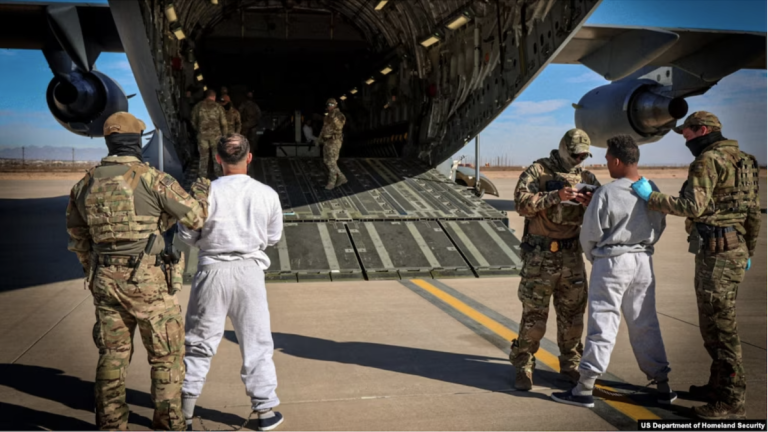
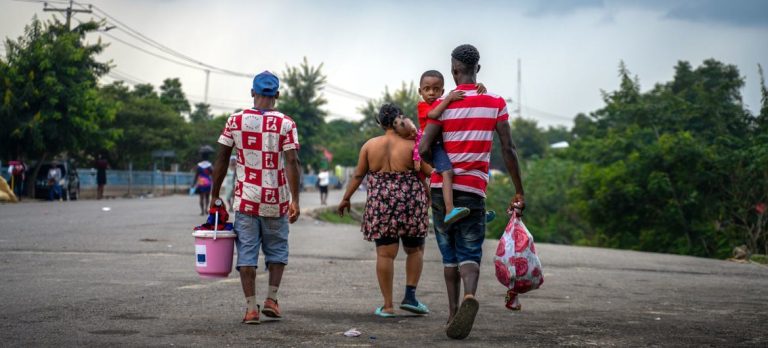
New York, N.Y. — It was a cold January morning when the first U.S. planes carrying migrants arrived at Mexico City International Airport. The Mexican government, having been briefed just 24 hours earlier, issued a stark refusal: “We will not accept any individuals deported under these terms.” The president of Mexico addressed the press, calling the policy “inhumane” and asserting that the U.S. administration had failed to provide adequate documentation of the individuals’ origins. “We are not a dumping ground for displaced people,” he declared, his tone sharp with defiance.

The Northern Triangle Pushes Back

In Honduras, the president faced a delicate balancing act. U.S. aid constituted a substantial portion of his country’s budget, but the deportation flights presented an unprecedented crisis. His government released a statement rejecting the planes on humanitarian grounds, arguing that the U.S. policy exacerbated the hardships his nation was already facing. El Salvador and Guatemala quickly followed suit, with leaders framing their refusals as a stand against the violation of international norms.

Venezuela and Nicaragua Unite

President Daniel Ortega of Nicaragua, long critical of U.S. policies, seized the moment to denounce the deportations as “imperial overreach.” He refused to accept any planes, stating, “These are not our people. We do not even have the capacity to house the citizens currently within our borders.” Similarly, Venezuela’s President, embattled by economic sanctions, called the deportations a “humanitarian atrocity” and threatened to escalate tensions by closing the Venezuelan airspace to U.S. aircraft.

The Caribbean’s Bold Move

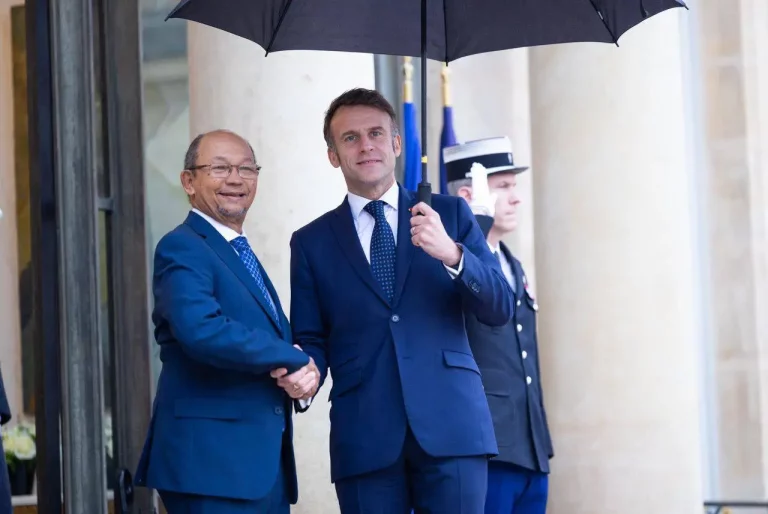
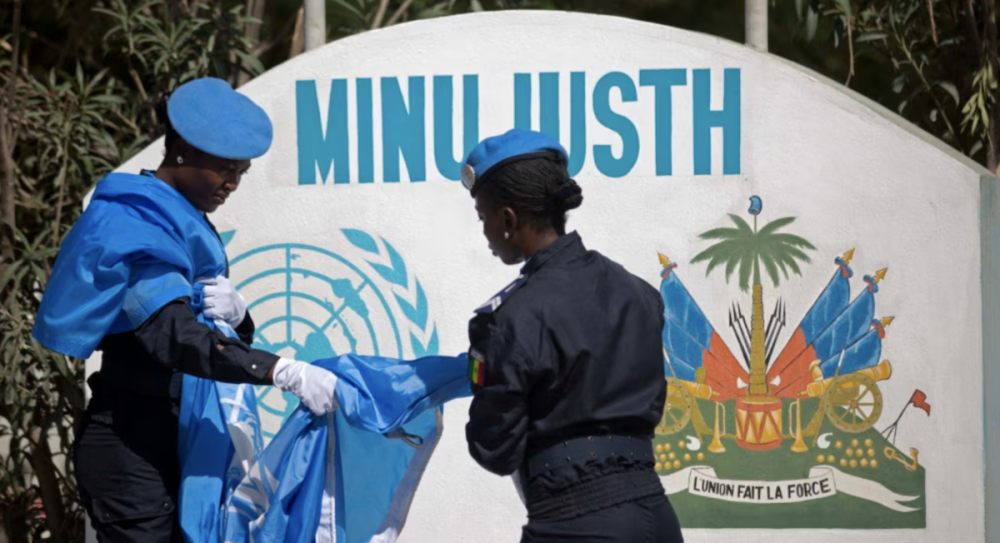
In Haiti, where migrants were often forcibly returned, Prime Minister Laurent faced mounting domestic unrest. “We cannot bear the burden of returning citizens who left decades ago in search of a better life,” Laurent said. The government issued an official rejection of deportation flights, citing a lack of resources and the deep trauma inflicted on those being forcibly removed. Cuba’s leadership joined in solidarity, refusing entry to any deported individuals without ironclad proof of their Cuban nationality.

Africa and Asia Push Back

From Nigeria to Senegal, African leaders voiced their disapproval. Nigeria’s President argued that the U.S. was shirking its responsibility under international law, stating, “This policy treats human beings as pawns in a geopolitical game.” Senegal, a long-time ally of international human rights organizations, refused to accept any deportees, citing the lack of due process in the U.S. removals.

In Asia, India and China—geopolitical giants often at odds—unexpectedly aligned on the issue. India’s Ministry of External Affairs declared that the deportations violated global norms on the treatment of migrants. China’s Foreign Ministry took a harder stance, accusing the U.S. of “shifting blame for its domestic challenges onto other nations.”

Indonesia, meanwhile, was the most surprising addition to the list of dissenting nations. With its vast archipelago and growing migrant communities abroad, Jakarta rejected the flights outright, citing logistical challenges and concerns over the authenticity of deportation claims.

The Global Impasse

As the deportation planes remained grounded at U.S. military bases, the Trump administration faced mounting criticism. Domestic protests erupted, with activists denouncing the human rights violations tied to mass deportations. International organizations like the United Nations and Amnesty International condemned the U.S. policy as a violation of human dignity, with the Secretary-General calling for an emergency session of the U.N. General Assembly.

In Washington, political allies of the administration scrambled to justify the policy. U.S. officials attempted to broker bilateral agreements, offering aid packages and trade concessions in exchange for cooperation. Yet, the refusals from foreign governments were resolute. Even U.S.-friendly nations, fearing backlash from their citizens, refused to bend.

A Turning Point

As the weeks stretched into months, the crisis deepened. The sight of grounded planes and displaced migrants became a visual symbol of international defiance against unilateral action. The issue underscored the limits of U.S. power in a multipolar world and revealed the strength of global solidarity against perceived injustice.

In the end, the deportation policy faltered under its own weight. International pressure, combined with domestic opposition, forced the administration to scale back its ambitions. The episode became a case study in the complexities of migration and sovereignty, leaving behind a sobering lesson: borders may define nations, but humanity transcends them.

When Borders Close: Global Fallout of Trump’s Migrant Crackdown (Jan. 20, 2025)


The Proud Boys: A Growing Threat to America’s Ideals


New York, N.Y. — It was a late October evening in Portland when the Proud Boys descended on the city, waving flags, chanting slogans, and flashing their signature black-and-yellow insignia. Officially labeled as a “Western chauvinist” organization, the group had grown emboldened in recent years, leveraging political polarization and misinformation to position themselves as defenders of American values. But beneath their patriotic veneer lay a dangerous ideology, one that directly threatened the very principles of freedom, equality, and democracy that define America.

The Roots of Their Hatred

At its core, the Proud Boys are fueled by a toxic mix of white supremacy, hypermasculinity, and anti-democratic beliefs. While they deny being a hate group, their rhetoric and actions tell a different story. Inflammatory statements against immigrants, minorities, and LGBTQ+ individuals have become commonplace in their gatherings and online forums.

One particularly troubling aspect of their ideology is their overt hostility toward the LGBTQ+ community. Members have been documented promoting homophobic slurs and supporting discriminatory policies. During a rally in Orlando, Florida—just miles from the site of the Pulse nightclub massacre—the Proud Boys openly mocked the LGBTQ+ community, holding signs that read, “No More Gay Agenda” and chanting hateful slogans. Their actions were a chilling reminder of the violence and intolerance that the LGBTQ+ community continues to face.

From Words to Violence

The danger posed by the Proud Boys goes far beyond words. Time and again, the group has demonstrated its willingness to resort to violence to achieve its goals. They played a central role in the January 6th insurrection at the U.S. Capitol, with several members later convicted of seditious conspiracy. The group’s coordinated attacks on law enforcement and elected officials that day revealed their anti-American core: an outright rejection of democratic processes and the rule of law.

In their minds, America isn’t a land of diverse people and ideas—it’s a battlefield where only their vision of dominance and exclusion should prevail. This perspective not only endangers marginalized communities but also threatens the stability of the nation itself.

The LGBTQ+ Community as a Target

The Proud Boys have increasingly targeted drag shows, pride events, and LGBTQ+ gatherings under the guise of protecting children or promoting traditional values. These actions, often organized online, have resulted in violent confrontations and created an atmosphere of fear for LGBTQ+ individuals and their allies.

In one widely publicized incident in 2024, a group of Proud Boys disrupted a drag story hour at a public library in San Francisco, hurling insults and attempting to intimidate attendees. Although local police intervened, the event left many questioning how such open hostility could persist in a nation that claims to value freedom and equality.

This isn’t just about ideological opposition—it’s about creating a climate of fear. For LGBTQ+ Americans, the Proud Boys’ actions serve as a stark reminder that hate remains a potent and dangerous force, one that seeks to undo decades of progress.

An Existential Threat to Democracy

What makes the Proud Boys uniquely dangerous isn’t just their hatred but their explicit goal of dismantling democratic institutions. They actively recruit disillusioned Americans, preying on economic anxiety and cultural grievances to swell their ranks. With their penchant for violence and disdain for democratic norms, they represent a clear and present danger to the United States.

Former FBI agents have warned that groups like the Proud Boys are leveraging online platforms to spread conspiracy theories and recruit young men. Their rhetoric often mirrors that of authoritarian movements, blending nationalism with a rejection of pluralism.

Confronting the Threat

Addressing the threat posed by the Proud Boys requires a multifaceted approach. First, law enforcement agencies must continue to treat domestic extremism as a top priority, investigating and prosecuting violent actors within the group. Second, policymakers and community leaders must work to counter the narratives of hate and division that fuel the Proud Boys’ ideology.

Education also plays a critical role. Teaching young Americans about the dangers of extremism, the value of inclusivity, and the importance of democratic institutions can help inoculate future generations against the group’s toxic message.

A Call to Action

The Proud Boys represent the antithesis of what America aspires to be: a nation of liberty, equality, and justice for all. Their actions and beliefs are not just anti-LGBTQ+ or anti-minority—they are fundamentally anti-American.

If left unchecked, the group’s influence will continue to grow, undermining the country’s democratic foundations and jeopardizing the safety of marginalized communities. But by standing united against hate and extremism, Americans can ensure that the values of freedom and equality prevail, safeguarding the nation’s future for generations to come.

The Proud Boys: A Growing Threat to America’s Ideals (Jan. 25, 2025)

MAGA Threat to LGBTQ+ Rights and Marriage Equality


New York, N.Y. –– In 2015, the landmark Supreme Court decision in Obergefell v. Hodges legalized same-sex marriage nationwide, a moment many hailed as a definitive victory for equality. Yet, a decade later, the hard-fought progress achieved by LGBTQ+ Americans faces mounting threats, particularly from a resurgent MAGA movement that has woven anti-LGBTQ rhetoric and policy into its political platform.

Donald Trump’s return to the forefront of American politics has brought with it a wave of renewed culture wars, and LGBTQ rights have become a primary target. While some of his rhetoric on LGBTQ issues has been muted compared to his predecessors, his base has aggressively pushed for a rollback of rights and protections, painting marriage equality and gender inclusivity as symbols of a country losing its moral foundation.

Targeting Marriage Equality

At the heart of the MAGA agenda is a quiet but deliberate campaign to undermine Obergefell. While a direct repeal seems unlikely in the short term, MAGA-aligned lawmakers have sought to chip away at marriage equality through legal challenges, state-level restrictions, and federal legislation aimed at “protecting religious freedom.”

Earlier this year, a coalition of Republican lawmakers introduced the so-called “Faithful Families Act,” which would allow businesses and public officials to refuse services to same-sex couples based on religious beliefs. Supporters claim the law defends freedom of religion, but critics argue it is a thinly veiled attempt to relegate LGBTQ+ Americans to second-class citizenship.

Even more alarming, some states have begun to openly question whether Obergefell should be treated as binding precedent. In Texas, Republican legislators have floated proposals that would declare the state’s marriage laws immune from federal oversight, potentially igniting a constitutional showdown.

The potential for the Supreme Court to revisit marriage equality is no longer unthinkable. With a conservative supermajority on the bench, including justices who have expressed skepticism about LGBTQ+ rights, the risk of a legal rollback has become a rallying cry for activists.

A Broader Assault on LGBTQ Rights

Marriage equality is only one front in the MAGA movement’s broader campaign against LGBTQ+ rights. Transgender Americans, in particular, have borne the brunt of this backlash. Across the country, MAGA-aligned state legislatures have introduced a wave of bills targeting transgender individuals, from bans on gender-affirming care for minors to restrictions on bathroom access and participation in sports.

The rhetoric accompanying these measures has been equally troubling. Right-wing media outlets have amplified baseless claims that LGBTQ+ advocacy endangers children, using fearmongering language like “grooming” to stoke public outrage. This demonization of LGBTQ+ individuals has created a climate of hostility, leading to increased harassment and violence against the community.

Even public education has not been spared. The so-called “Don’t Say Gay” laws, first championed in Florida, have spread to other states, effectively erasing LGBTQ+ identities from classrooms. By censoring discussions of sexual orientation and gender identity, these policies send a clear message: LGBTQ+ people do not belong.

A Threat to American Democracy

The MAGA movement’s crusade against LGBTQ+ rights is not merely a social or cultural issue—it is a direct threat to American democracy. The targeting of marginalized groups undermines the nation’s founding promise of equality under the law. It normalizes discrimination and encourages authoritarian tendencies, as leaders scapegoat vulnerable populations to consolidate power.

The parallels to past struggles for civil rights are undeniable. Just as segregationists resisted desegregation under the guise of “states’ rights,” MAGA politicians now seek to justify anti-LGBTQ policies as a defense of “religious freedom” and “parental rights.” The underlying goal is the same: to deny a group of Americans their full humanity and equal protection under the law.

The Road Ahead

Despite these challenges, there is reason for hope. Public support for marriage equality remains high, with polls consistently showing that a majority of Americans—across political lines—support the right of same-sex couples to marry. This broad consensus offers a powerful counterweight to the MAGA agenda.

LGBTQ+ advocates and allies must remain vigilant and organized, using every tool available to defend the progress of the past decade. From grassroots activism to strategic litigation, the fight for equality is far from over.

Elected officials, too, have a responsibility to stand against the MAGA movement’s assault on LGBTQ+ rights. This is not a partisan issue—it is a matter of basic human decency. By enshrining protections like the Respect for Marriage Act and expanding anti-discrimination laws, lawmakers can ensure that LGBTQ+ Americans are not left vulnerable to the whims of political extremism.

A Nation at a Crossroads

The battle over LGBTQ+ rights is a test of America’s commitment to its founding ideals. Will the nation uphold the principles of liberty and equality, or will it succumb to the forces of division and intolerance?

As history has shown, progress is never guaranteed. It must be fought for, defended, and renewed by each generation. The MAGA movement’s threat to LGBTQ+ rights is a stark reminder that the fight for equality is far from over—and that the stakes could not be higher.

America’s future depends on which path we choose.

MAGA Threat to LGBTQ+ Rights and Marriage Equality (Jan. 25, 2025)
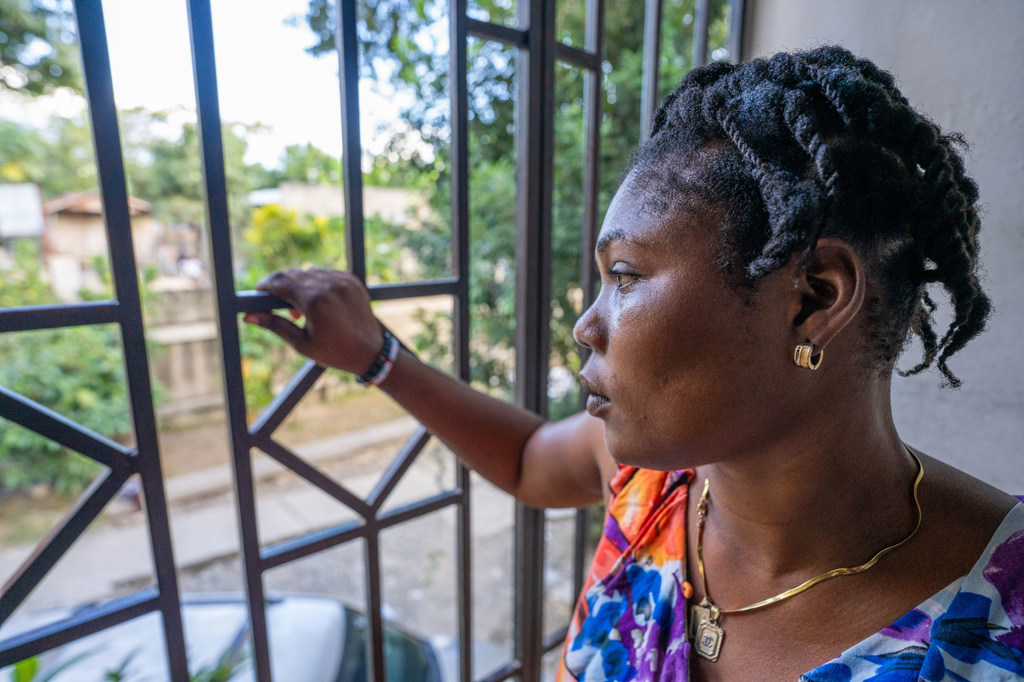

Orphans International Sets Global Standards for Orphan Care


Orphans International Worldwide Sets Global Standards for Orphan Care:
A Personal Mission Turned Global Movement

New York, N.Y.Orphans International Worldwide (OIW), founded in 1999, has announced the launch of its Global Standards certification program, a transformative effort to raise the quality of care for orphans worldwide. Drawing on over 25 years of hands-on experience, the organization has developed these standards to address every aspect of orphan care, ensuring that children receive the support they need to thrive.

The impetus for these standards comes from a deeply personal place: OIW’s founder is an adoptive parent whose experiences inspired what is now called “Mathew’s Rule.” Named after the founder’s son, the rule asks: Are the facilities adequate for my own child? This guiding principle leads to questions that lie at the heart of OIW’s standards:

    •    Is the bed clean enough?
    •    Is the food adequate and nutritious?
    •    Is the home lighting sufficient?
    •    Are the bathrooms sanitary?
    •    Are the kitchens appropriate?
    •    How are the laundry facilities?

OIW also evaluates policies on child adoption—whether international, domestic, or both—and places a strong emphasis on protecting children from exploitation.

“We must ask ourselves: Are these children treated with the same dignity and care we would demand for our own?” said Jim Luce.

Ending Exploitation in Orphanages

Orphans International Worldwide (Wikipedia) has a zero-tolerance policy for practices that exploit children. The organization opposes the common practice of having orphans sing and dance to entertain tourists as a means of raising funds. These performances can demean children and rob them of their dignity.

Additionally, OIW advocates for strict measures to prevent forms of child exploitation such as servitude (known as restavek in Haiti and prevalent in Indonesia) and sexual exploitation. The certification process requires orphanages to demonstrate robust policies to safeguard children and to educate communities on ethical standards of care.

A Comprehensive Certification Program

Orphanages seeking OIW certification can apply directly by contacting info@orphansinternational.org. The certification program offers two levels:
    1.    Global Standards Certification
    •    Cost: US$100
    •    Process: Orphanages complete a 100-point questionnaire addressing every aspect of care, from sanitation and nutrition to policies on adoption and protection against exploitation.
    2.    Field Inspection and Top Approval
    •    Cost: US$1,000
    •    Process: Local service organizations, such as Lions, Rotary, and Kiwanis clubs, conduct on-site inspections using a detailed 100-point checklist. These inspections verify conditions and evaluate practices, ensuring that the standards are upheld in practice.

Building on Decades of Experience

Since its founding, OIW has operated its own orphanages or provided support in countries including Haiti, Indonesia, Sri Lanka, Peru, Guyana, the Dominican Republic, Ghana, Togo, and Tanzania. This work has shaped OIW’s standards, ensuring they reflect the challenges and best practices of orphan care worldwide.

Orphans International Worldwide has also been recognized for its efforts by the U.S. Congress and the governments of India and Indonesia. Its Global Standards certification builds on this legacy of trust and innovation, offering a path for orphanages everywhere to improve their practices and demonstrate accountability.

Mathews Rule in Action

Mathew’s Rule,” inspired by the founder’s son, encapsulates OIW’s mission. It asks care providers to look at their facilities through the eyes of a parent:
    •    Are the spaces where children sleep, eat, and play safe and sufficient?
    •    Are the children treated with dignity and respect?
    •    Are policies in place to prevent abuse or exploitation?

These questions form the foundation of OIW’s Global Standards, ensuring that no child is subjected to substandard care or unethical practices.

Transparency and Accountability

Certified orphanages are listed in OIW’s Global Registry of Orphan Care Excellence, an online resource for donors, governments, and communities. Each certified orphanage receives a grade (e.g., A, B, or C), which is displayed on a locally produced plaque. The plaque includes the inspection date, the name of the inspecting service club, and the OIW seal of approval.

A Movement for Change

“By asking the hard questions and setting the highest standards, we’re ensuring that no child is left behind,” said Luce. “This is about building a future where every orphan has a chance to thrive.”

Orphanages worldwide are encouraged to apply for certification, which includes:
    1.    Submitting the US$100 application fee and completing the Global Standards questionnaire.
    2.    Requesting an annual field inspection for US$1,000, which includes a locally produced plaque of certification.

To apply, orphanages can contact info@orphansinternational.org.

A Vision for the Future

OIW’s Global Standards certification is more than a checklist—it’s a movement to transform orphan care. Inspired by a parent’s love and backed by decades of experience, it ensures that the world’s most vulnerable children are cared for with the dignity they deserve.

With recognition from the U.S. Congress and international governments, as well as a listing on Wikipedia, OIW is positioned as a global leader in orphan care. Its partnerships with local service organizations and innovative use of artificial intelligence make the program accessible and impactful.

Through its Global Standards program, Orphans International Worldwide is setting a new precedent for orphan care—one rooted in compassion, accountability, and a commitment to every child’s future.

Orphans International Sets Global Standards for Orphan Care (Jan. 24, 2025)
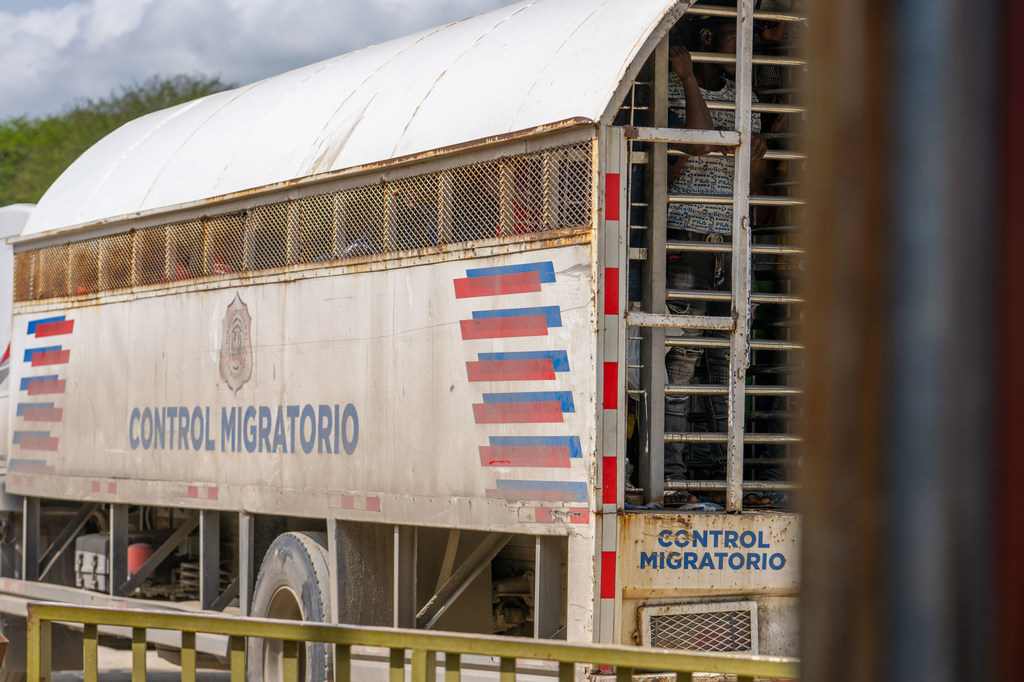

Genocide or Criticism? Distinction of Condemning Violence, Antisemitism


New York, N.Y. — Over the past year and a half, as I’ve watched the horrors unfolding in Palestine, a profound sense of sorrow and disbelief has taken hold of me. Day by day, the reports come in—images of innocent children and women, the most vulnerable of society, lying lifeless in the streets of Gaza. The human toll of this ongoing conflict, roughly 50,000 lives lost, is an unbearable tragedy that weighs heavily on anyone who values human life. As someone who firmly supports peace and justice on all sides, I find myself grappling with an uncomfortable, but necessary question: Since when did revulsion at the genocide of innocent civilians become synonymous with antisemitism?

This question has become all the more pressing as I witness how criticism of Israel’s military actions in Gaza is often met with accusations of antisemitism. It is a rhetorical device that deflects from the reality of what is happening on the ground. And yet, in a world that claims to uphold human rights, I cannot reconcile the silence in the face of the staggering loss of life. Shouldn’t our humanity compel us to speak out against such atrocities, regardless of where they take place or who is responsible?

The conflation of criticism of a country with attacks on a religion or ethnicity has become an alarming trend, not only in the current context of the Israel-Palestine conflict but in many other political and military crises worldwide. The idea that one cannot denounce the actions of a government without being accused of targeting its people is an intellectually dangerous simplification. A country’s government, its military policies, and its leaders are separate from the faith or ethnicity of its people. To criticize Israel’s military operations—whether in Gaza or the West Bank—is not to denounce Jews as a people or Judaism as a religion. Yet this is how it is often portrayed, as if any criticism of Israel automatically aligns one with hate against all Jewish people.

This misunderstanding diminishes the very real suffering that both Israelis and Palestinians face. It clouds the necessary debate about human rights and justice, transforming what should be an examination of military and political choices into an issue of identity. We must ask ourselves: How did we reach a point where expressing concern for the loss of innocent lives, the targeting of women and children, and the destruction of communities has become so politically charged that it risks being misinterpreted as hate speech?

I am a firm believer in peace on all sides. I cannot, in good conscience, ignore the suffering of Palestinians, nor can I ignore the suffering that Israel has endured, particularly in the context of security threats and violence against its civilians. Both peoples have a right to live in peace, and both have endured unimaginable trauma. The situation is complex, deeply entrenched in history, and rooted in geopolitical factors far beyond the scope of any single individual’s understanding. But that does not excuse us from questioning the actions of a government when it leads to mass civilian casualties.

We must be careful not to allow the narrative of political discourse to be hijacked by tactics that shut down dialogue. Criticizing the military tactics used by Israel does not equate to antisemitism any more than criticizing the actions of the Palestinian Authority or Hamas would make one anti-Arab. Our focus should be on the actions of governments and not on entire groups of people based on religion, ethnicity, or nationality. There is a profound difference between condemning actions and spreading hatred, and we must guard against conflating the two.

In the midst of this conflict, where 50,000 lives have already been lost, we are called to examine our collective moral compass. The world cannot turn a blind eye to the suffering of the Palestinian people, just as it cannot ignore the trauma that Israeli civilians face in the wake of ongoing violence. But we must also refuse to be swept into the false dichotomy that asks us to choose between condemning genocide and defending one group at the expense of another. It is not a matter of choosing sides—it is a matter of choosing humanity.

We must challenge ourselves to ask uncomfortable questions and have hard conversations about the tactics used by all sides in this conflict. As a supporter of peace, I feel a deep responsibility to question the normalization of violence and to ask how we can, as a global community, prevent further destruction. We are witnessing a tragedy in Gaza, and in the process, we should never lose sight of the need to protect all human life—Palestinian, Israeli, and beyond.

The time has come for a new approach: one that recognizes the suffering of both sides without resorting to oversimplified or divisive narratives. We must look beyond religion, ethnicity, and national borders to see the shared humanity of all those caught in the crossfire of this horrific conflict. And in doing so, perhaps we can find a way forward—a path to peace that transcends division and brings true justice to those who have lost so much.

Genocide or Criticism? Distinction of Condemning Violence, Antisemitism (Jan. 24, 2025)


Quiet Legacy of French Americans: Cultural Identity Faded into Background


New York, N.Y. When Americans think of their nation’s cultural melting pot, Irish and Italian influences often take center stage. From St. Patrick’s Day parades to Italian American cuisine like pizza and pasta, these groups have cultivated a prominent cultural presence in the United States. French Americans, however, tell a quieter story—one of widespread yet understated influence. Despite being the fourth-largest ancestry group in the country, with 25.8 million Americans reporting French heritage, their cultural footprint has become far less visible in modern discourse.

The relative obscurity of French American identity can be traced to several factors. Historically, the French were among the earliest European settlers in North America, establishing colonies in places like Louisiana, Quebec, and the Midwest. As a result, French culture was deeply woven into the fabric of early American society. However, over time, this integration led to significant assimilation. Unlike later immigrant groups who arrived en masse in the 19th and early 20th centuries and faced cultural resistance that solidified their communal identity, French Americans often blended seamlessly into broader American culture.

This assimilation was particularly evident in Louisiana, where French influence was initially dominant. The Cajun and Creole cultures of the region—while still vibrant—represent a fraction of the French-American experience. Outside Louisiana, French cultural markers have faded or been absorbed into the mainstream, often leaving little trace of their origins. For instance, French cuisine is highly regarded in the U.S., but it is often associated with France itself rather than French-American traditions.

In contrast, Irish and Italian Americans have maintained visible cultural identities due to their concentrated immigration waves, religious practices, and community-building in urban centers. Irish Americans, for instance, solidified their cultural presence through their Catholic faith, labor organizing, and the iconic celebration of St. Patrick’s Day. Italian Americans similarly cultivated strong communal ties, celebrated through food, festivals, and pop culture portrayals.

French Americans, however, lack such widely recognized cultural touchstones. Although Bastille Day is celebrated in cities like New Orleans and New York, it pales in comparison to the nationwide fanfare of St. Patrick’s Day. French-American cuisine, such as tourtière (a meat pie popular in French-Canadian communities) or beignets, is often overshadowed by its more internationally renowned French counterparts.

Additionally, the linguistic erosion of French in America has played a significant role in diminishing its cultural visibility. While French was once widely spoken in parts of Louisiana, New England, and the Midwest, it has largely been replaced by English. In contrast, the preservation of the Italian and Irish languages, even in limited forms, has reinforced a sense of cultural identity among those groups.

Despite its quiet decline, French-American culture continues to influence the United States in subtle ways. From the architecture of New Orleans’ French Quarter to the many towns and cities bearing French names—St. Louis, Baton Rouge, and Detroit, to name a few—the legacy of French Americans is etched into the nation’s landscape. Moreover, the emphasis on fine dining, fashion, and art in American culture owes much to French ideals.

In recent years, efforts have been made to revive and celebrate French-American heritage. Cultural organizations, festivals, and online communities have sought to reconnect Americans with their French roots. However, the challenge remains: how can a group whose identity has been largely assimilated regain its cultural prominence in a society that celebrates distinctiveness?

The story of French Americans is not one of failure but of integration. Their influence is everywhere, even if it is not immediately apparent. From the Louisiana bayous to the rolling hills of New England, French Americans have shaped the United States in ways that are quieter but no less profound than their Irish and Italian counterparts. In doing so, they remind us that cultural identity is not always about visibility—it can also be about the enduring, if understated, legacy of a people.

Quiet Legacy of French Americans: Cultural Identity Faded into Background (Jan. 23, 2025)
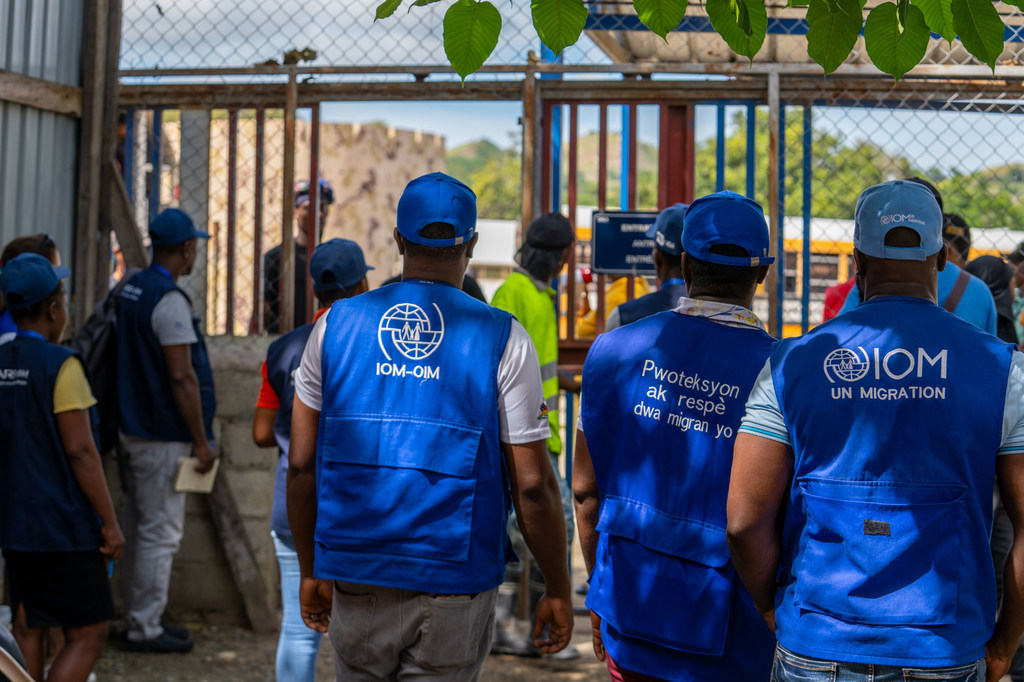

“Gulf of America,” Other Bold Rebranding Ideas from Trumpiverse


Washington, D.C. In a move that’s as audacious as it is geographically puzzling, President Donald Trump has reportedly suggested renaming the Gulf of Mexico to the “Gulf of America.” While critics were quick to point out that it’s not exactly America’s exclusive gulf to rename, Trump insisted, “It’s the best gulf. Everyone says so. The Mexicans can have a gulf, but this one? This one’s ours. Believe me.”

This bold rebranding effort has inspired speculation about what other iconic names Trump might seek to “improve.” After all, why stop at bodies of water when there’s a whole world of things that could use the Trump touch? Let’s explore the possibilities:

  1. The Atlantic Ocean → The Trump Ocean

Who needs a name that references an entire continent? The Atlantic is far too generic. Trump would likely argue, “It’s huge. It’s the ocean everyone loves to cross to come to America. We deserve to name it after someone great.” Bonus: Mar-a-Lago could be retroactively declared the capital of the Trump Ocean, complete with gold-plated dolphins.

  1. Mount Rushmore → Mount Trumpmore

Trump has long hinted at his dream of joining the ranks of Washington, Jefferson, Roosevelt, and Lincoln. Why not go further and give the whole mountain a glow-up? Picture the iconic faces replaced by one enormous Trump likeness with perfect hair, gazing into the horizon. “It’s not vanity,” he might say. “It’s history—tremendous history.”

  1. The Grand Canyon → Trump’s Tremendous Canyon

Sure, the Grand Canyon has been awe-inspiring for millions of years, but does it have a five-star golf resort? Under Trump’s plan, the canyon would feature luxury condos carved into its walls and a golden suspension bridge—because “America deserves a grander Grand Canyon.”

  1. The Statue of Liberty → Lady Liberty Sponsored by Trump Tower

The Statue of Liberty is iconic, but wouldn’t it look better in gold? And maybe holding a champagne flute instead of a torch? Trump’s redesign would include a 24-hour rotating billboard featuring his campaign slogans. “Liberty is great, but Liberty brought to you by Trump is even greater.”

  1. Yellowstone National Park → Goldstone National Park

Nature is nice, but it could use a little more flair. Under Trump’s vision, Yellowstone would get a glitzy makeover, complete with Trump-branded geysers that shoot out champagne instead of water. Old Faithful? Outdated. “Make Geysers Great Again” would be the new slogan.

  1. The White House → The Gold House

Why stick with boring white paint when you could opt for something more luxurious? A complete rebrand of the White House would include gold accents, a diamond-encrusted fence, and a Trump-branded water fountain shaped like, well, Trump. “It’s what America deserves—a home as great as its leader.”

  1. The North Pole → Trump Pole

Santa has had a good run, but Trump would likely claim, “I’ve done more for Christmas than anyone else. The North Pole? It’s mine now.” The elves could be rebranded as “Trump Workers,” and every gift would include a MAGA hat and a copy of The Art of the Deal.

  1. The United Nations → The United Trumps

Why have an organization that represents all nations when you can have one that represents just Trump? Delegates would be required to stay in Trump-branded hotels, and all resolutions would be stamped with his signature catchphrase, “You’re fired.”

  1. Earth → Planet Trump

Ultimately, why stop at regional or national changes when you can aim for planetary rebranding? Trump would argue, “The Earth is part of the universe, but let’s be honest, it’s my universe.” Global landmarks could be rebranded with Trump logos visible from space, ensuring future alien visitors know exactly who’s in charge.

The Genius of Renaming

While some might view these ideas as over-the-top, Trump’s approach has a certain… consistency. By rebranding familiar places and monuments, he’s creating a world that’s undeniably his. Critics may laugh (and they will), but fans would no doubt cheer for a Gulf of America, a Trump Ocean, and a Statue of Liberty with a little more pizzazz.

One thing is clear: under the Trump naming strategy, no corner of the world—or galaxy—would remain untouched. Whether you love or loathe the idea, you’d certainly never forget it. After all, Trump’s version of history isn’t written in stone—it’s etched in gold.

“Gulf of America,” Other Bold Rebranding Ideas from Trumpiverse (Jan. 23, 2025)

Episcopal Church Call: Prayer, Resistance in Age of Trump


Opinion | The Episcopal Bishop of Washington’s Prayers for Donald Trump

New York, N.Y. As I read the recent headlines about the Episcopal Bishop of Washington offering prayers for Donald Trump, I was struck by the profound, and deeply Episcopalian, act of intercession for someone whose public persona and political actions embody the antithesis of the Church’s commitment to social justice.

In the 1980s, Bishop Paul Moore mentored me during a formative period of my life. Moore, a towering figure both literally and spiritually, was the Episcopal Bishop of New York and an outspoken advocate for the poor, the marginalized, and the voiceless. He taught me that faith is not a passive act but an active engagement with the world’s injustices.

From his leadership in supporting AIDS patients at the height of the crisis to his unwavering commitment to racial equality, Bishop Moore exemplified a Church rooted in compassion, courage, and conviction.

The Episcopal Church, historically referred to as the “Church of Presidents,” is paradoxically known for its high-church traditions and its gritty engagement with social issues.

Its liturgies and creeds speak of grace and redemption, but its actions often challenge the powers that perpetuate injustice. This duality—offering prayers for Donald Trump while simultaneously confronting his grandiose and dangerous plans—is emblematic of the Episcopal ethos.

To pray for someone, as the Rt. Rev. Mariann Edgar Budde has done, is not to condone their actions. Instead, it is to acknowledge their humanity and, in so doing, remind them—and us—of the moral standards to which we are all accountable. Prayers for someone like Donald Trump are not a concession but a call for transformation. They reflect the hope that even the most powerful figures, with their seemingly unshakable egos and destructive ambitions, can be moved toward repentance.

Yet, as a Church, we must not stop at prayers.

The Episcopal Church’s deep commitment to social justice demands that good people continue to speak out against Trump’s extraordinary and dangerous vision for America. His actions—from stoking divisions to dismantling critical protections for the vulnerable—are not merely political missteps but moral failings that contradict the very tenets of love, justice, and dignity for all people.

Trump’s grandiosity often cloaks his intentions in a veneer of inevitability.

But as Bishop Moore taught me, the Gospel calls us to resist despair and apathy. We must call out injustice wherever it arises, whether in policies that harm immigrants, rhetoric that fuels hatred, or actions that threaten the environment. Silence, Moore often reminded me, is complicity.

As Episcopalians, we stand in a lineage of prophets and advocates, from the Rev. Pauli Murray, the first Black woman ordained as an Episcopal priest and a pioneering civil rights activist, to Bishop Barbara Harris, the first woman consecrated as a bishop in the Anglican Communion. These leaders understood that prayer and action are not mutually exclusive; they are two sides of the same coin.

To pray for Donald Trump is to acknowledge the image of God in him, however obscured it may be by his choices and actions. To act against his grandiose plans is to fight for the image of God in those he seeks to harm. The two acts are not in tension—they are inseparably linked.

In this challenging moment, the Episcopal Church has a unique role to play. By holding fast to its commitment to justice, by calling out evil even when it is cloaked in power, and by praying for transformation where it seems least likely, the Church offers a blueprint for moral leadership in an age of division.

Episcopal Church Call: Prayer, Resistance in Age of Trump (Jan. 23, 2025)

Musk’s Gesture Highlights Danger of Flirting with Fascist Imagery

0

New York, N.Y.Elon Musk’s decision to make a gesture during Donald Trump’s inauguration rally that many have compared to the Nazi salute has ignited a firestorm of criticism—and rightly so. In a nation that prides itself on democratic principles and freedom, the imagery of an extended right arm, closely resembling the infamous salute of Hitler’s regime, is not just provocative; it’s an affront to the collective memory of the millions who suffered under fascist oppression.

This gesture cannot be dismissed as trivial or accidental. The Nazi salute is not merely a historical artifact; it is a symbol of totalitarianism, white supremacy, and genocide. Its modern use serves as a rallying cry for extremist ideologies that undermine democracy and human rights. By performing such a gesture, Musk, intentionally or not, taps into these dark undercurrents, giving a veneer of legitimacy to those who would seek to resurrect them.

Defenders of Musk may argue that the outrage is overblown, with some claiming he was misunderstood or simply being provocative in a playful way. Musk himself has taken to X (formerly Twitter) to dismiss the backlash as baseless attacks, an all-too-familiar tactic in an era where accountability is often reframed as victimhood. But gestures carry meaning, especially from public figures who wield immense influence. Musk’s position as a tech magnate and cultural figurehead means that his actions resonate far beyond a single rally.
The United States, like many democracies, is not immune to the creeping normalization of extremist ideologies. Incidents like this are not isolated; they exist within a broader context of rising authoritarian sentiment and disinformation. When someone of Musk’s stature flirts with symbols that evoke fascist regimes, it emboldens those who subscribe to such ideologies. It also erodes the boundaries that keep extremism at bay.

To dismiss the gesture as harmless or unintentional is to ignore the historical weight of the Nazi salute. The gesture represents more than just a hand movement; it symbolizes oppression, violence, and the rejection of diversity and equality. For Holocaust survivors and their descendants, for communities that continue to fight against neo-Nazism and white supremacy, such imagery is a painful reminder of past atrocities and a chilling harbinger of what could resurface if vigilance falters.

Musk’s actions—and his subsequent dismissal of criticism—underscore a dangerous trend where powerful individuals exploit symbols of hate for attention or to galvanize a specific audience. While Musk has positioned himself as a disrupter and provocateur, there is a line between innovation and irresponsibility. In this case, he has crossed it.

Public figures have a responsibility to recognize the power of their actions and the influence they wield. Musk’s gesture is not an isolated act but a reflection of how dangerous rhetoric and imagery can seep into the mainstream. If we fail to hold leaders accountable for such actions, we risk allowing these symbols to gain a foothold in public discourse, normalizing hatred and authoritarianism.

At a time when democracy faces threats from within and without, the casual invocation of fascist imagery cannot be ignored. Elon Musk’s gesture may have been dismissed as a trivial stunt by some, but its implications are anything but trivial. It is a stark reminder that vigilance against the normalization of extremism must remain steadfast, and that symbols of hate, no matter the context, have no place in our society.

Musk’s Gesture Highlights Danger of Flirting with Fascist Imagery (Jan. 22, 2025)


Biden Pardons Marcus Garvey, Honoring a Visionary Legacy


Celebrating Marcus Garvey’s Legacy: A Visionary of Black Empowerment

Washington, D.C. President Joe Biden on Sunday posthumously pardoned Black nationalist Marcus Garvey, whose advocacy for racial pride and economic independence inspired leaders such as Malcolm X and other civil rights pioneers. Garvey, convicted of mail fraud in the 1920s, was deported to his native Jamaica following his imprisonment. He passed away in 1940. Alongside Garvey, Biden also pardoned other prominent figures, including a Virginia lawmaker and advocates for immigrant rights, criminal justice reform, and gun violence prevention.

Congressional leaders had long pushed for Garvey’s pardon, asserting that his conviction was politically motivated and aimed at silencing a rising leader who challenged systemic racism. Garvey’s message of Black unity and self-reliance, embodied by his founding of the Universal Negro Improvement Association (UNIA) and initiatives like the Black Star Line, resonated with millions worldwide.

The J. Luce Foundation has added its voice to those honoring Marcus Garvey’s enduring legacy. Known as one of the most influential Black leaders of the 20th century, Garvey’s work continues to inspire movements for racial justice and equality.

Jim Luce, president of the J. Luce Foundation and former professor at Caribbean Maritime University in Jamaica, spoke to Garvey’s lasting impact: “As a past senior adjunct professor at Caribbean Maritime University in Jamaica, I know firsthand the impact and importance of Marcus Garvey. He was a great visionary who the White Establishment destroyed to keep Black Nationalism from thriving.”

Garvey’s powerful vision of racial equality and economic empowerment remains a cornerstone of his legacy, influencing generations of civil rights leaders. His initiatives, such as the Black Star Line, aimed to create economic opportunities for African descendants and foster pride in their heritage.

The J. Luce Foundation’s dedication to preserving Marcus Garvey’s legacy aligns with a broader call to educate younger generations about his achievements and the systemic challenges he faced. His posthumous pardon serves as a reminder that Garvey’s vision of unity and equality is as relevant today as it was nearly a century ago.


Trump Revives ‘Manifest Destiny,’ 19th-Century American Imperialism


Washington, D.C. In the 19th century, the idea of Manifest Destiny captured the American imagination. It was a belief that the United States of America was divinely destined to expand across the North American continent, bringing civilization, democracy, and freedom. For its proponents, this ideology justified westward expansion, territorial acquisitions, and military interventions.

U.S. naval historian and strategist Alfred Thayer Mahan wrote on sea power and its influence on history. His work contributed indirectly to the expansionist ideas leading to ‘Manifest Destiny’ by emphasizing the strategic importance of naval power and overseas territories. My forebear Rear Admiral Stephen Bleecker Luce pushed this concept even further.

Mahan’s most famous work, The Influence of Sea Power upon History, 1660–1783 (published in 1890), argued that national greatness and economic prosperity depended on maritime supremacy. This perspective supported the late 19th-century American expansionist agenda, which included acquiring overseas territories like Panama, the Philippines, Guam, and Puerto Rico. It was, they argued, the God-ordained fate and even duty of the to roll out democracy under our flag to our, in the words of Teddy Roosevelt, ‘little brown brothers‘ around the world.

These ideas influenced the broader extension of the concept into American maritime and global ambitions during the Age of Imperialism. In the 21st century, such a framework is increasingly scrutinized as the world moves toward a global order rooted in mutual respect, interdependence, and cooperation. Although Henry Luce of Time-Life had declared the 1900s to be “The American Century,” most enlightened people felt Manifest Destiny was dead and buried in the 2000s by global rule.

Yet the new president of the United States today declared in his Inaugural Address that ‘Manifest Destiny‘ is alive and well. He stated:

“The United States will once again consider itself a growing nation, one that increases our wealth, expands our territory, builds our cities, raises our expectations, and carries our flag into new and beautiful horizons. And we will pursue our Manifest Destiny into the stars, launching American astronauts to plant the stars and stripes on the planet Mars.”

For me, as a descendant of Rear Admiral Stephen Bleecker Luce, the father of modern American naval education, this evolution in perspective carries personal resonance. While I respect Commander Luce’s contributions to America’s naval tradition and the geopolitical thinking of his time, I firmly believe that his worldview was shaped by an era in which American expansionism was celebrated. That mindset, rooted in Manifest Destiny, served the 19th century, but it is ill-suited for the challenges and realities of the 21st century.

The Historical Legacy of Stephen Bleecker Luce

Stephen Bleecker Luce (1827–1917) was a towering figure in U.S. naval history. As the founding president of the U.S. Naval War College in 1884, Luce played a critical role in institutionalizing naval education. He believed that a strong navy was essential for the U.S. to protect its interests and extend its influence globally. His thinking aligned closely with the principles of Manifest Destiny, reflecting a belief in American exceptionalism and the necessity of territorial and ideological expansion.

Luce’s contributions to naval strategy inspired contemporaries like Captain Alfred Thayer Mahan (1840–1914), another giant in naval history. Mahan’s seminal book, The Influence of Sea Power Upon History, 1660–1783, argued that national greatness depended on naval dominance and control of global trade routes. Mahan’s ideas influenced U.S. foreign policy at the turn of the century, helping to justify the acquisition of overseas territories such as Hawaii, the Philippines, and Puerto Rico following the Spanish-American War. These strategies reinforced the belief that American expansionism was both a moral obligation and a geopolitical necessity.

The Myth of Manifest Destiny

Manifest Destiny, a term coined in 1845 by journalist John L. O’Sullivan, framed westward expansion as inevitable and divinely ordained. It served as a justification for policies such as the annexation of Texas, the Oregon Trail migrations, and the Mexican-American War (1846–1848). However, this ideology also had devastating consequences, particularly for Indigenous peoples, whose lands were taken, cultures suppressed, and populations decimated.

In retrospect, Manifest Destiny was less about divine destiny and more about territorial ambition, driven by economic interests, racial superiority, and a desire for political dominance. By the early 20th century, the ideology began to extend beyond North America, influencing policies like the construction of the Panama Canal and interventions in Latin America under the guise of the Monroe Doctrine.

A Modern Perspective on American Expansionism

As we confront the complexities of the 21st century, it is clear that the mindset of Manifest Destiny no longer serves a world that is interconnected and interdependent. My perspective, deeply shaped by my experience as president of the J. Luce Foundation and my commitment to global education and cooperation, rejects the outdated notions of American exceptionalism and unilateralism.

While I honor my forbear, Stephen Bleecker Luce, for his contributions to naval education, I see his worldview as a reflection of his time, not a template for the future. The expansionist policies of the 19th and early 20th centuries often prioritized power over principle, leading to significant human and environmental costs.

Today, we advocate for a global order that emphasizes collaboration over domination, mutual respect over unilateralism, and shared responsibility over imperial ambitions. This perspective stands in stark contrast to the rhetoric of Donald Trump and other proponents of “America First” policies. Such an inward-looking and adversarial approach undermines the very principles of international cooperation that are essential for addressing global challenges like climate change, public health, and economic inequality.

Learning from History

As we navigate a rapidly changing world, the lessons of history stay vital. The legacy of figures like Stephen Bleecker Luce and Alfred Thayer Mahan offers valuable insights into the power dynamics of their time, but it also underscores the need for a more inclusive and equitable vision for the future.

Manifest Destiny, once used to justify expansion and conquest, can now serve as a cautionary tale—a reminder of the perils of unchecked ambition and the importance of humility in global leadership. By embracing a mindset of cooperation and respect, we can honor the best of our past while building a better future.

We are enthusiastic about supporting indigenous peoples, preserving cultures, and fostering global unity. Our world is strongest when we learn from each other and work together—not when one nation dominates others. This vision, rooted in global interdependence, is the antithesis of Manifest Destiny and a necessary evolution for the 21st century.


Trump Revives ‘Manifest Destiny,’ 19th-Century American Imperialism (Jan. 20, 2025)


Xi Jinping and Dissanayake Strengthen China-Sri Lanka Ties


Beijing Summit Highlights Growing Strategic Partnership Between Asian Nations During Historic State Visit


New York, N.Y.Chinese President Xi Jinping welcomed Sri Lankan President Anura Kumara Dissanayake to Beijing on Wednesday, January 15, 2025, for high-level diplomatic talks that underscore the deepening relationship between the two Asian nations. The state visit, marked by ceremonial grandeur at the Great Hall of the People, represents a significant milestone in China-Sri Lanka relations as both countries seek to expand their strategic partnership across multiple sectors.


Ceremonial Welcome Marks Diplomatic Significance

Chinese President Xi Jinping holds a welcome ceremony for Sri Lankan President Anura Kumara Dissanayake in the Northern Hall of the Great Hall of the People prior to their talks in Beijing, capital of China, Jan. 15, 2025. Xi held talks with Dissanayake, who is on a state visit to China, in Beijing on Wednesday. (Xinhua/Yao Dawei)

The formal welcome ceremony took place in the Northern Hall of the Great Hall of the People, where President Xi extended traditional Chinese hospitality to his Sri Lankan counterpart.

The elaborate protocol, captured in official photographs showing both leaders exchanging handshakes and participating in ceremonial proceedings, emphasized the importance both nations place on this diplomatic engagement.

President Dissanayake, who assumed office as Sri Lanka’s leader following recent elections, undertook this state visit as part of his administration’s broader foreign policy initiative to strengthen ties with key regional partners. The timing of the visit reflects Sri Lanka’s strategic interest in deepening cooperation with China, particularly as the island nation continues to navigate economic recovery and regional security challenges.


Economic Cooperation Takes Center Stage

The bilateral discussions focused heavily on expanding economic cooperation between China and Sri Lanka.

Both leaders explored opportunities for increased trade, investment partnerships, and collaborative development projects that could benefit their respective economies.

China’s Belt and Road Initiative featured prominently in the talks, with discussions centering on how Sri Lanka can further integrate into this ambitious infrastructure and connectivity framework.

The economic dimension of the partnership holds particular significance for Sri Lanka, which has been working to diversify its international partnerships and attract foreign investment to support its development goals. China’s role as a major economic partner provides Sri Lanka with opportunities for infrastructure development, technology transfer, and access to Chinese markets for Sri Lankan products.


Infrastructure Development and Regional Connectivity

Infrastructure development emerged as a key theme during the Beijing summit, with both leaders discussing projects that could enhance regional connectivity and support economic growth.

The Colombo Port City project and other major infrastructure initiatives were likely topics of discussion, as these projects represent tangible examples of China-Sri Lanka cooperation in action.

The focus on infrastructure aligns with both countries’ broader strategic objectives. For China, supporting infrastructure development in Sri Lanka contributes to regional connectivity goals and strengthens economic ties. For Sri Lanka, Chinese investment in infrastructure provides crucial support for modernizing the country’s transportation, energy, and telecommunications networks.


Strategic Partnership in Regional Context

The Xi-Dissanayake summit takes place against the backdrop of evolving geopolitical dynamics in the Indo-Pacific region.

Both leaders addressed the importance of maintaining regional stability and promoting multilateral cooperation among Asian nations.

The discussions reflected shared interests in peaceful development and economic integration within the broader Asian framework.

Sri Lanka’s strategic location in the Indian Ocean makes it a valuable partner for China’s regional initiatives.

The country serves as an important node in maritime trade routes and offers opportunities for enhanced cooperation in areas ranging from maritime security to environmental protection.


Future Cooperation Frameworks

The state visit established frameworks for future cooperation across multiple sectors, including technology, education, and cultural exchange.

Both leaders expressed commitment to strengthening people-to-people connections between their nations, recognizing that sustainable partnerships require engagement beyond government-to-government relations.

Educational exchanges, cultural programs, and technology partnerships were identified as areas with significant potential for growth.

These initiatives could help build lasting foundations for the China-Sri Lanka relationship while providing benefits to citizens of both countries.


The successful completion of President Dissanayake’s state visit to Beijing demonstrates the mutual commitment of both nations to building a comprehensive strategic partnership. As both countries continue to navigate complex regional and global challenges, their enhanced cooperation provides a foundation for addressing shared concerns and pursuing common opportunities.

The diplomatic engagement between Presidents Xi and Dissanayake represents more than bilateral cooperation – it exemplifies the potential for Asian nations to work together in addressing regional challenges while pursuing sustainable development and prosperity for their peoples.


Audio Summary

Chinese President Xi Jinping hosted Sri Lankan President Anura Kumara Dissanayake in Beijing for crucial diplomatic talks on January 15, 2025. The state visit strengthened bilateral ties between China and Sri Lanka, focusing on economic cooperation, infrastructure development, and regional stability. The meeting at the Great Hall of the People demonstrated both nations’ commitment to enhanced partnership and mutual prosperity in the Indo-Pacific region.


#ChinaSriLanka #XiJinping #Dissanayake #Beijing #Diplomacy
#AsianCooperation #BeltAndRoad #StateVisit

TAGS: China, Sri Lanka, Xi Jinping, Anura Kumara Dissanayake, Beijing, diplomacy, state visit, bilateral relations,
economic cooperation, Belt and Road Initiative, Great Hall of the People, Indo-Pacific, regional partnership

Friend, Boyfriend? Navigating Sensitive Areas with Your Adult Child


Dear Dr. Sami –

Our son has brought back the same male friend from college for Thanksgiving and Christmas, and never mentions dating any girls. In high school he took a girl to the senior prom, but they seemed to have had a bad evening and he never discusses it. He is now asking if his friend can summer with us on the Vineyard. If it is just a friend, I don’t think it’s appropriate. It’s actually rather expensive to host for such an extended time. But I am open-minded and if this is my son‘s boyfriend, I think I should. How can I broach the conversation?

– A Modern Mom

Dear Modern Mom,

It sounds like you’re approaching this with both sensitivity and a desire to respect your son’s choices, which is wonderful. It’s natural to want clarity before making a decision that affects your home and finances, but it’s also important to create space for your son to share openly—without feeling like he’s being interrogated or pressured.

Creating a Comfortable Opening

Rather than directly asking if this is his boyfriend, consider a more open-ended approach. The goal is to make him feel safe expressing himself, whether or not he’s ready to label the relationship.

You might start with something casual:

“I’ve noticed that [friend’s name] has become a big part of your life—you’ve invited him for the holidays, and now you’re hoping to have him with us for the summer. I’d love to understand more about your friendship and what makes it so special to you.”

This gives him the chance to share without feeling like you’re making assumptions. If he’s comfortable, he might naturally clarify whether they’re just close friends or in a romantic relationship.

Reading Between the Lines

If he sidesteps the question or gives a vague answer, it might mean he’s not ready to discuss it, or he may not even have fully defined the relationship himself. That’s okay. If you suspect he’s hesitant because he’s unsure of your reaction, a simple reassurance—“I just want to make sure I’m being thoughtful about our plans and supportive of you”—can go a long way in making him feel safe to open up.

Considering the Hosting Aspect

Regardless of their relationship status, it’s fair to discuss the practical implications of hosting his friend for the summer. You could say something like:

“We love having your friends visit, and I want to be sure we plan in a way that’s comfortable for everyone. Hosting someone for an entire summer is a big commitment—financially and logistically. Can we talk about how this would work?”

This allows you to address your concerns without making it about his sexuality. If he insists they’re just friends, you can express that hosting someone for such a long period feels like a different level of commitment than a short visit.

Letting the Relationship Unfold

If he does confirm that they’re in a relationship, your response sets the tone for how safe he feels being open with you moving forward. A simple, “I appreciate you sharing that with me. You know I love you, and I just wanted to understand where things stand,” helps keep the conversation warm and nonjudgmental.

No matter the outcome, your willingness to approach this with an open mind and a loving heart will strengthen your relationship with your son. And whether his friend is a best friend or a boyfriend, the most important thing is that your son knows he is accepted and supported.

Warmly,
Dr. Sami Milan


#ParentingAdvice #LGBTQConversations #FamilySupport #UnderstandingYourChild #NavigatingRelationships #SummerPlans #DrSamiMilan

Appalachian Resilience Fund: Supporting the Ohio Valley


New York, N.Y. –– The  James Jay Dudley Luce Foundation is proud to announce the creation of the Appalachian Resilience Fund, a transformative initiative designed to tackle a range of unique challenges faced by individuals living in northern Appalachia along the Ohio Valley. From access to basic necessities to mental health care, this fund aims to support the holistic needs of underserved communities, fostering resilience and hope in a historically vibrant but struggling region.

The Ohio Valley is known for its strength, perseverance, and rich traditions. However, its residents face complex and intertwined social and economic challenges. The region has been particularly hard hit by the opioid crisis, poverty, and lack of access to quality healthcare. Food insecurity, housing instability, and educational barriers compound these issues, creating a cycle of hardship that is difficult to break. At the root of this crisis lie suicide and depression, which have paved the way for substance abuse and addiction.

The city of Huntington, West Virginia., has about 50,000 residents. Up to 1 in 10 use opioids improperly, officials fear.

These issues are compounded by a cultural reluctance to acknowledge and tackle mental health as a normal and essential aspect of well-being. In Appalachia, seeking help for mental health concerns has often been stigmatized, creating barriers to treatment and perpetuating cycles of suffering.


The Appalachian Resilience Fund seeks to address these interconnected challenges by partnering with local nonprofits and organizations to provide vital resources. While mental health support remains a key focus, the fund also prioritizes housing, food security, and education. By fostering collaboration and innovation, it aims to deliver comprehensive assistance to families and individuals who are often overlooked.


The fund is particularly meaningful to Dr. William Bauer, vice president of the J. Luce Foundation, and Jim Luce, president of the foundation. Both are 1977 graduates of Marietta High School, a connection that underscores their deep personal ties to the Ohio Valley. Their personal connection to the Ohio Valley underscores the significance of this initiative, which builds upon the foundation’s decade-long advocacy for mental health through the Bauer Fund.

“The fund’s mission is to address the full spectrum of needs in the Ohio Valley, including but not limited to mental health,” said Dr. William Bauer, vice president of the J. Luce Foundation. “We aim to collaborate with local nonprofits to provide lodging, food, supplies, and other critical support to underserved populations.”

Launched ten years ago, the Bauer Fund has raised over $100,000 to support mental health and suicide prevention efforts for young adults in Ohio and around the world. This impressive legacy serves as both an inspiration and a foundation for the Appalachian Resilience Fund’s ambitious goals.

Caleb Darling, a licensed professional counselor in West Virginia and co-director of the fund, emphasized the importance of a comprehensive approach to supporting Appalachian communities. “Throughout our careers, Dr. Bauer and I have worked to help individuals overcome barriers unique to living in Appalachia. This fund is an extension of that passion and commitment.”

Darling, who previously received The Bauer Fund Stipend to further his education at Ohio University in Athens, Ohio, brings a deep understanding of the region’s needs. He added, “Our goal is to create a long-term avenue for giving back to a community that has given so much to us.”

“Both Dr. Bauer and I have deep-rooted community and cultural connections to the Mid-Ohio Valley as it is a place we have chosen to call home,” Caleb told The Stewardship Report.

“Throughout our personal and professional careers, we have passionately focused on assisting individuals to overcome the barriers related to living in Appalachia. We hope this non-profit can be an extension of our passion and continue to help foster and bolster access to mental health services and supports Our goal is to continue to offer a long-term avenue of giving back to a community that has given so much to us,” he added.

The Appalachian Resilience Fund has been established to deal with mental health issues in the Ohio Valley where social conditions have created an enormous need for social services, yet reflective of the enduring spirit of the people over generations as symbolized in the sternwheelers that have churned the waters there for centuries.

The Appalachian Resilience Fund not only provides essential services but also reflects the enduring spirit of the Ohio Valley. From its focus on mental health to its commitment to addressing broader social conditions, the fund seeks to honor the resilience of the region’s people while building a stronger foundation for the future.

By fostering collaboration, education, and access to resources, the James Jay Dudley Luce Foundation is committed to empowering Appalachia—one family, one community, and one step at a time.

Through collaboration, education, and unwavering support, the James Jay Dudley Luce Foundation is committed to fostering a healthier, stronger Appalachia—one where mental well-being is not only acknowledged but celebrated as an essential part of a thriving community.


To donate to the Appalachian Resilience Fund of the J. Luce Foundation via PayPal, click here. Kindly note “Appalachia Fund.”

U.N. Rights Chief: Not Censorship To Stop Hateful Online Content


New York, N.Y.Social media posts inciting hate and division have “real world consequences” and there is a responsibility to regulate content, the U.N. High Commissioner for Human Rights, insisted on Friday, following Meta’s decision to end its fact-checking programme in the United States.

“Allowing hate speech and harmful content online has real world consequences. Regulating this content is not censorship,” Volker Türk wrote on X.

In a longer LinkedIn post on the same theme, Mr. Türk maintained that labelling efforts to create safe online spaces as “censorship…ignore[s] the fact that unregulated space means some people are silenced – in particular those whose voices are often marginalized. At the same time, allowing hatred online limits free expression and may result in real world harms.”

Meta chief Mark Zuckerberg announced last Tuesday that the company would cease its fact-checking programme in the United States, stating that fact-checkers ran the risk of appearing politically biased, with self-regulation resulting in too much censorship. He called for a return to freer speech on Meta’s platforms, adding that user’s trust had been eroded.

The International Fact-Checking Network (IFCN) has reportedly rejected Mr. Zuckerberg’s “false” argument and warned it could cause harm.

Digital potential

Mr. Türk highlighted that social media platforms have a tremendous ability to shape society positively by connecting people. But they can also fuel conflict, incite hate and threaten people’s safety.

At its best, social media is a place where people with divergent views can exchange, if not always agree,” he said.

The UN human rights chief noted that he would continue to call for “accountability and governance in the digital space, in line with human rights. This safeguards public discourse, builds trust, and protects the dignity of all.”

When asked about the impact of Meta’s recent decisions on the social media policy of the United Nations, a UN spokesperson in Geneva emphasized that the global organization continually monitors and evaluates the online space.

It remains crucial for us to be present with fact-based information,” said Michele Zaccheo, Chief of TV, Radio and Webcast. He added that the UN remained committed to providing evidence-based information on social media platforms.

The World Health Organization (WHO) also reaffirmed its commitment to providing quality, science-based health information, maintaining a presence across various online platforms.

In response to the growing crisis fueled by digital misinformation, the UN Department of Global Communications (DCG) has been actively working to combat false narratives.

This includes developing a code of conduct for information integrity, known as the UN Global Principles for Information Integrity.


Final Report of the Special Counsel re: Donald J. Trump

Submitted by Jack Smith, Special Counsel, U.S. Dept. of Justice

“…But for Mr. Trump’s election and imminent return to
the Presidency, the Office assessed that the admissible evidence
was sufficient to obtain and sustain a conviction at trial
.”

Washington, D.C. Former President Donald J. Trump was a subject of two separate criminal investigations by the Department of Justice. The first was an investigation into whether any person violated the law in connection with efforts to interfere with the lawful transfer of power following the 2020 presidential election. The second investigation focused on the possession of highly classified documents at Mr. Trump’s Mar-a-Lago social club following his presidency.

On November 15, 2022, Mr. Trump declared his candidacy to unseat President Joseph R. Biden, Jr., who had previously stated his intention to stand for reelection. Mr. Trump’s announcement created a highly unusual situation, in which the Department, an agency within the Executive Branch headed by President Biden, was conducting criminal investigations regarding his newly declared challenger.

Based on a longstanding recognition that “in certain extraordinary cases, it is in the public interest to appoint a special prosecutor to independently manage an investigation and prosecution,” you, as the Attorney General, promptly did so here to “underscore the Department’s commitment to both independence and accountability in particularly sensitive matters.” Attorney General Merrick B. Garland, Remarks on the Appointment of a Special Counsel, Washington, D.C. (Nov. 18, 2022).

On the day that I was appointed, I pledged that I would exercise independent judgment, follow the best traditions of the Department of Justice, and conduct my work expeditiously and thoroughly to reach whatever outcome the facts and law dictated. With the aid of an outstanding team, that is what I did. Upon my appointment, I organized a staff of experienced career federal prosecutors, and together we conducted the investigations and subsequent prosecutions under our mandate, consistent with the Department’s traditions of integrity and nonpartisanship that have guided all of us throughout our careers.

On remand from the Supreme Court’s decision in Trump, the district court set a litigation schedule whereby the parties would submit briefs regarding whether any material in the superseding indictment was subject to presidential immunity. ECF No. 233. The parties were in the middle of that process when the results of the presidential election made clear that Mr. Trump would be inaugurated as President of the United States on January 20, 2025.

As described above, it has long been the Department’s interpretation that the Constitution forbids the federal indictment and prosecution of a sitting President, but the election results raised for the first time the question of the lawful course when a private citizen who has already been indicted is then elected President. The Department detem1ined that the case must be dismissed without prejudice before Mr. Trump takes office, and the Office therefore moved to dismiss the indictment on November 25, 2024. See ECF No. 281. The district court granted the motion the same day.

The Department’s view that the Constitution prohibits the continued indictment and prosecution of a President is categorical and does not tum on the gravity of the crimes charged, the strength of the Government’s proof, or the merits of the prosecution, which the Office stands fully behind. Indeed, but for Mr. Trump’s election and imminent return to the Presidency, the Office assessed that the admissible evidence was sufficient to obtain and sustain a conviction at trial.