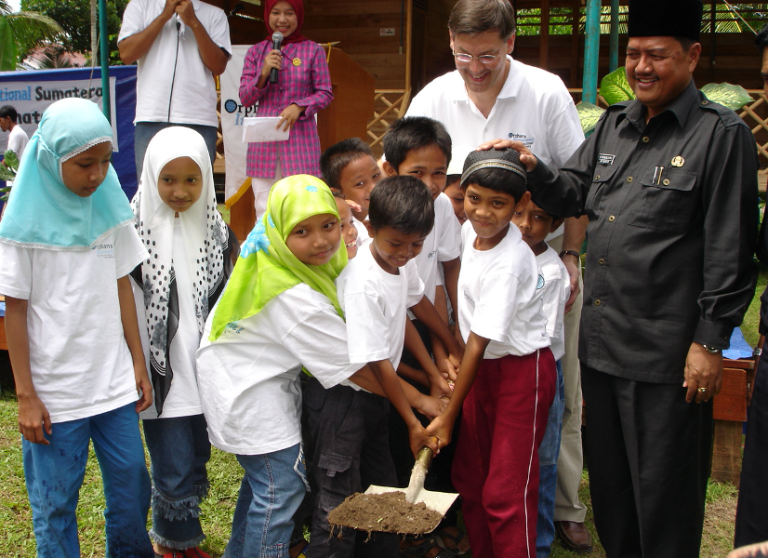
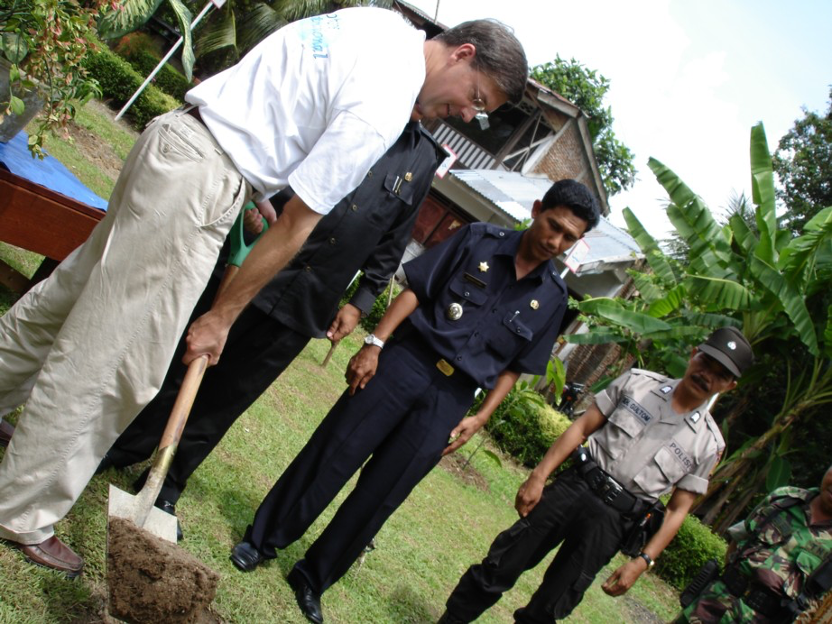
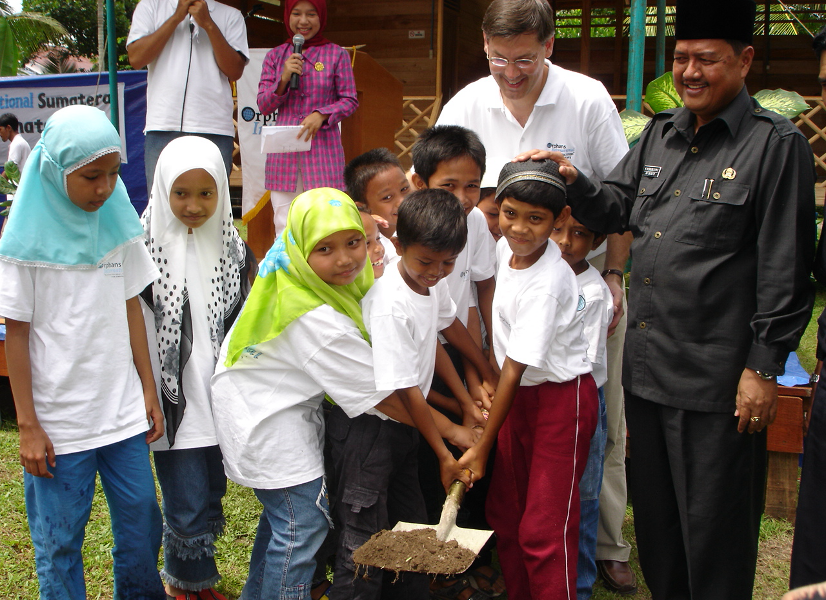
Finally, we break ground for Roosevelt Island House, with government officials looking on…
In the Wake of the Great Indian Ocean Tsunami of 2004, with 250,000 Washed Away
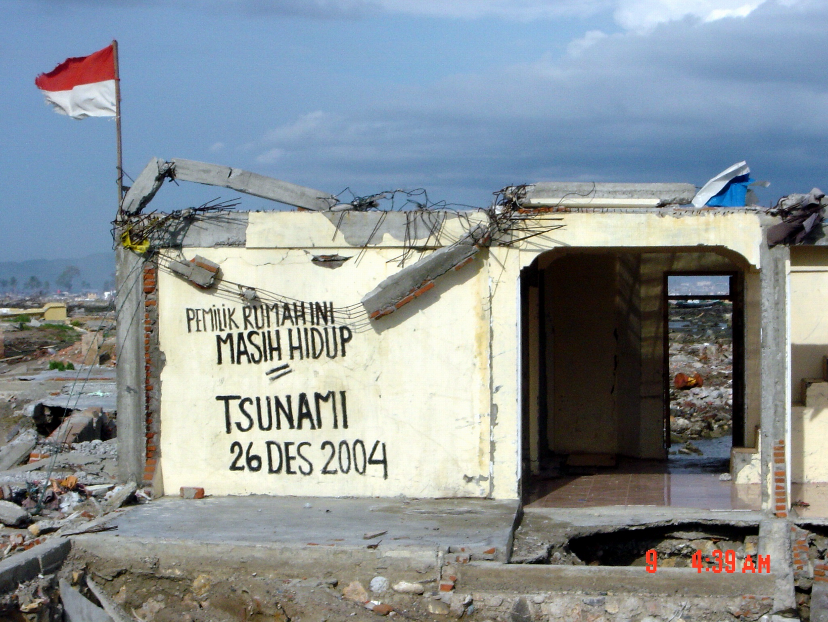
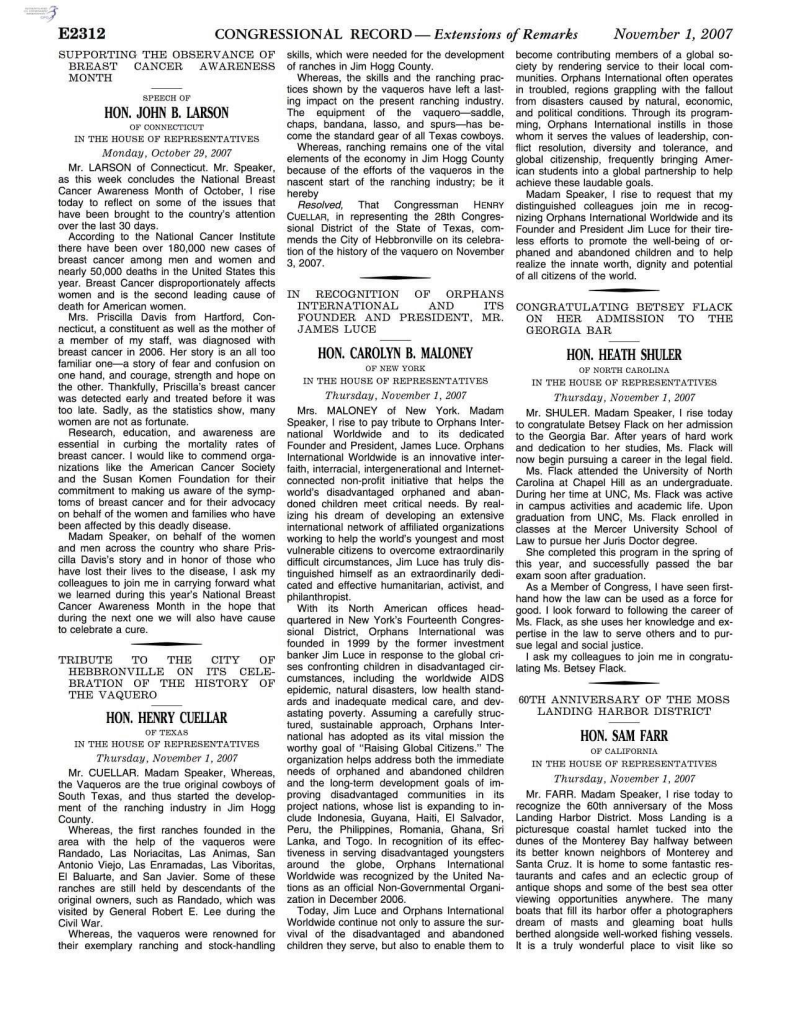
Tsunami menghantam Aceh pada 26 Desember 2005, meninggalkan kehancuran…
December 26, 2004, the Tsunami hit, leaving behind devastation in its wake…
Yang menghancurkan rumah-rumah dan dunia bisnis – serta sekitar 250.000 nyawa…
And destroying many homes and businesses – and up to a possible 250,000 lives…
Namun banyak rakyat Aceh termasuk anak-anak selamat di perbukitan…
Many Acehenese survived in the mountains …
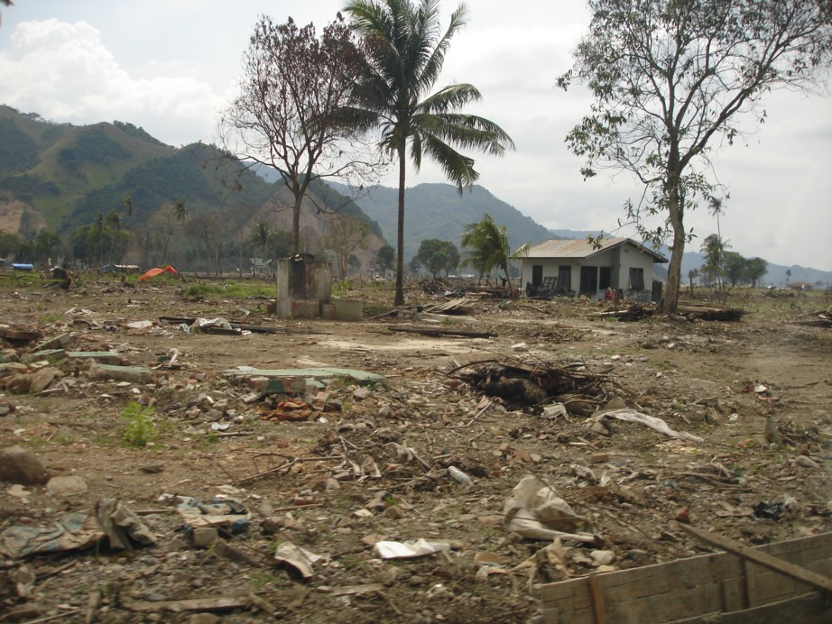
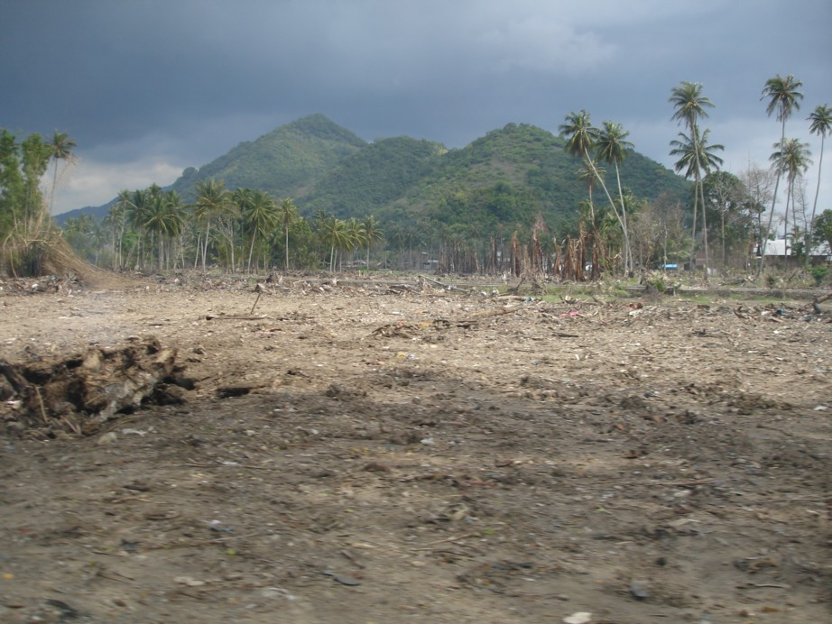
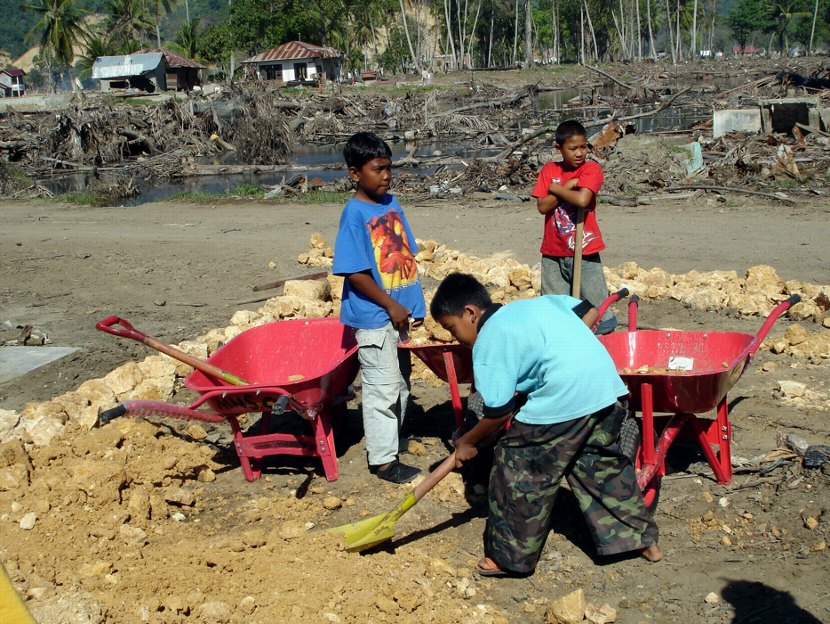
…sementara tsunami merubah wilayah yang tadinya padat menjadi kosong dan terisolasi.
…while the wave left the area that was once heavily populated barren and desolate.
At the direction of Orphans International Worldwide, our Indonesian director came to Aceh to see how OIW could help the Acehenese children. He saw the death and destruction first hand, and conveyed it’s enormity to our board of directors.
Dengan arahan “Orphans International Worldwide,” Ramdani Sirait tiba di Aceh dan mencari tahu apa yang bisa dilakukan OIW untuk anak-anak Aceh.…dan dia menyaksikan langsung kematian dan kehancuran, dan menyampaikan kedahsyatan itu kepada para pengurus OIW.
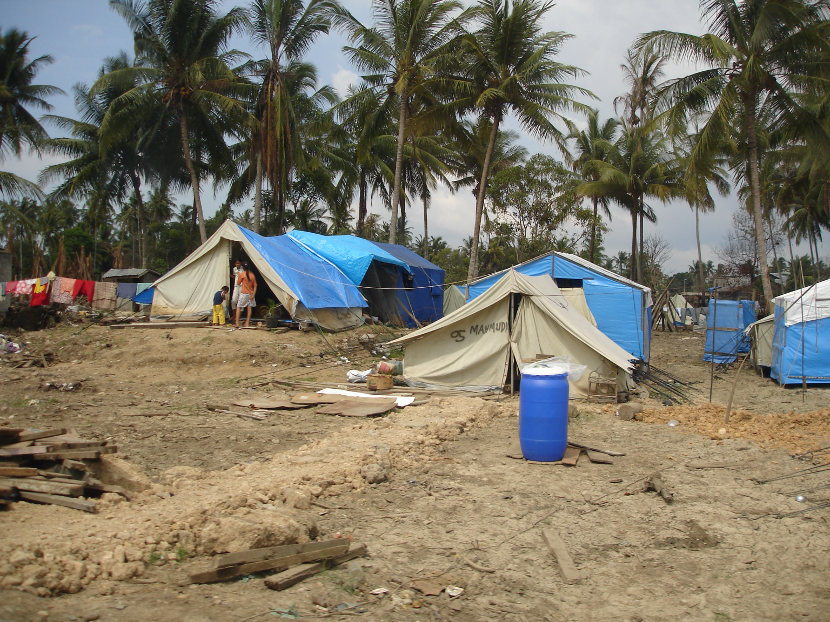
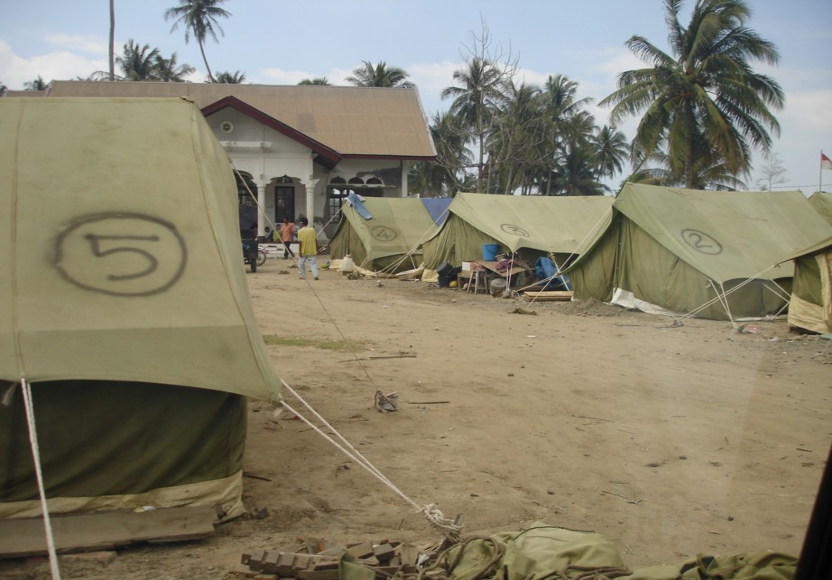
Orang-orang yang selamat harus tinggal di kamp-kamp pengungsi yang sangat sederhana.
People were left to live in primitive refugee camps after the quake.
Tapi harapan mereka untuk terus hidup jauh lebih besar dari duka yang dialami, sehingga mereka mampu memulai hidup dengan hal-hal kecil yang tersisa.
But their hopes of a new beginning were stronger than their grief, so they began recuperating what little was left.
Dani kemudian menemukan jembatan panjang menuju Desa Lubuk Sukon di pinggiran Banda Aceh…
Our director discovered the bridge to the Village of Lubuk Sukon outside Banda Aceh…
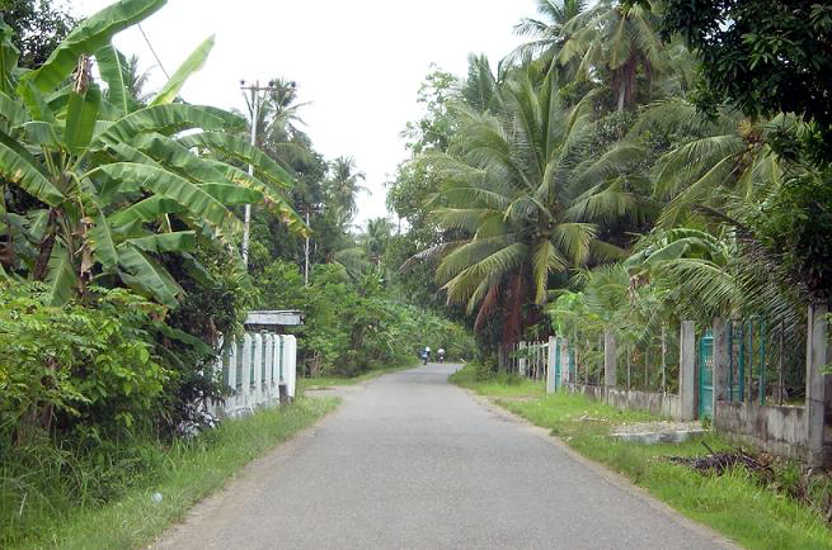
Dan di antara jalanan yang lengang, sebuah hidup baru telah menunggu bagi 240 anak – rencana yang akan dilakukan dalam dua tahun mendatang.
And down a quiet street, a new life was awaiting to begin for 240 kids – our goal over the next two years.
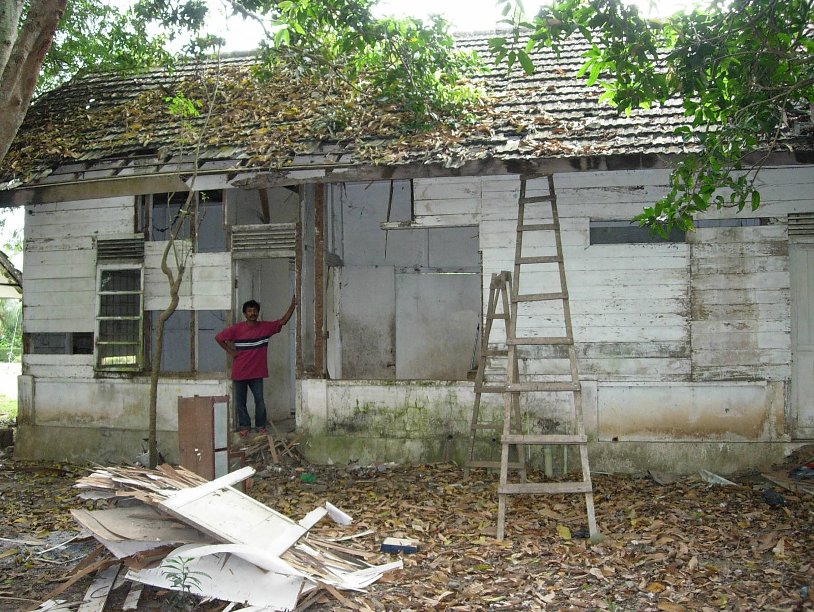
Rumah dan Klinik Kesehatan di tanah yang kami temukan, memerlukan perbaikan sebelum anak-anak datang.
The house and health clinic needed much repair before the children could move in.
…dan perbaikanpun dimulai yang kemudian menghasilkan rumah pertama dari OI Sumatera…
…and the process began that led to our first home of OI Sumatera today…
MISSING PICTURE
And with supplies trucked in from over the mountains m Medan, coordinated by our international director.
Di awalnya, semua kebutuhan harus di beli di Medan, dikirim dengan truk ke Aceh yang dikoordinir oleh Dani Sirait.
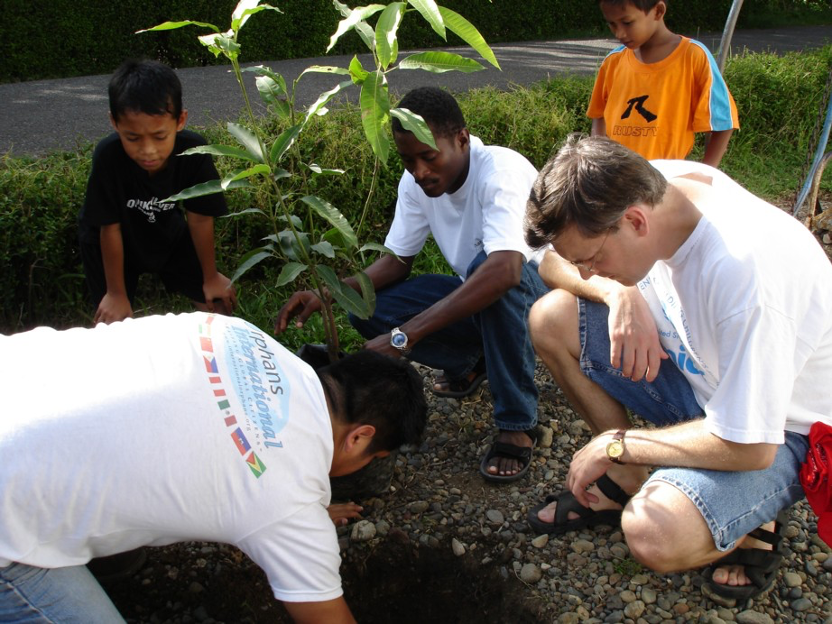
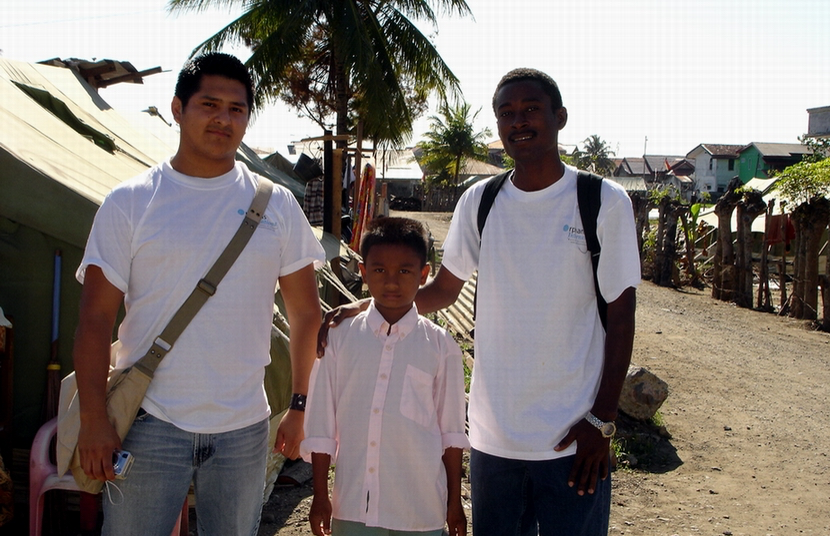
Sementara Staff OI dari Peru (Yuri Guanilo), dari Haiti (Jacques Apricot),Presiden OIWW Jim Luce dari hadir di lokasi dengan menanam pohon mangga…
While staff from Haiti, Peru and America planted mango trees…
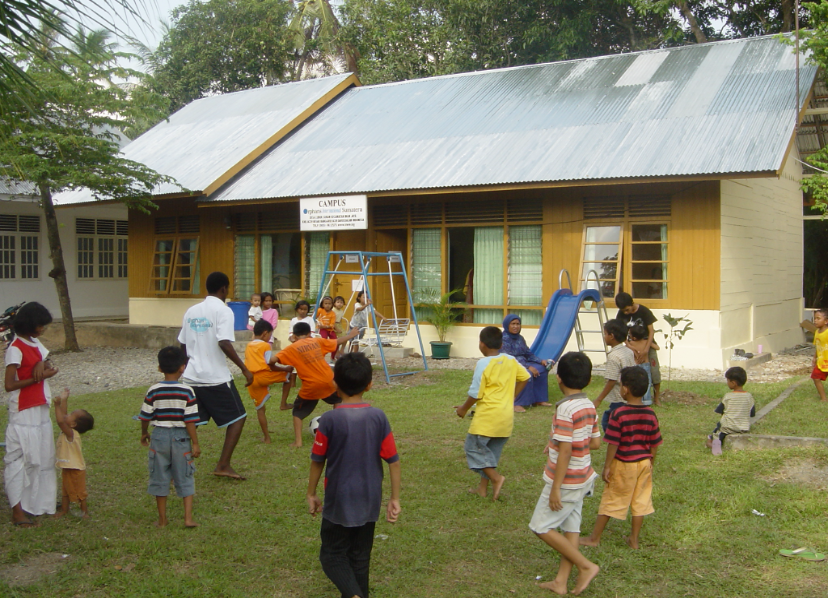
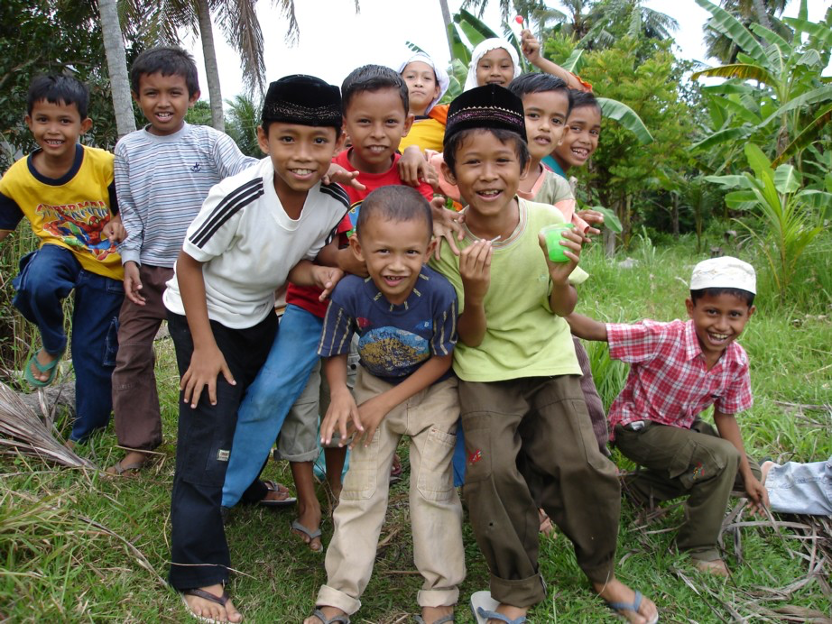
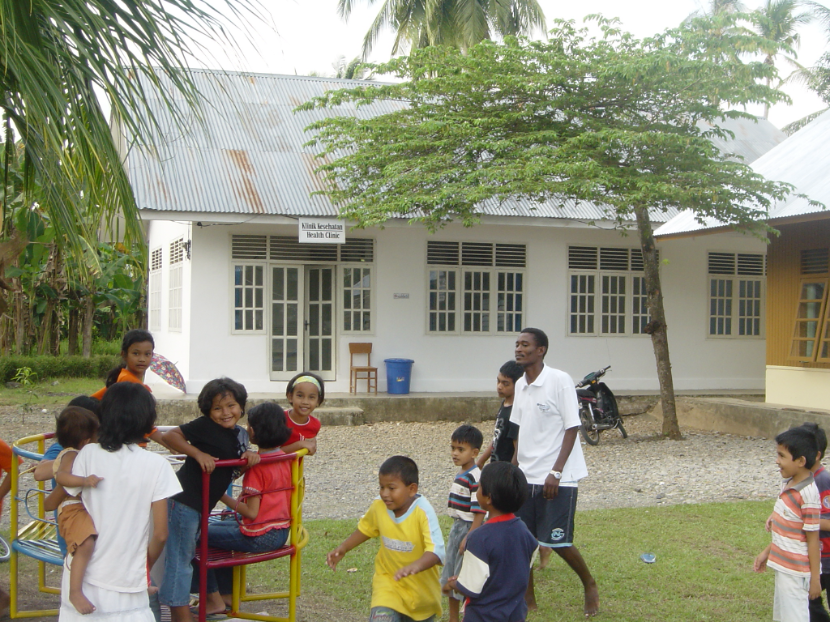
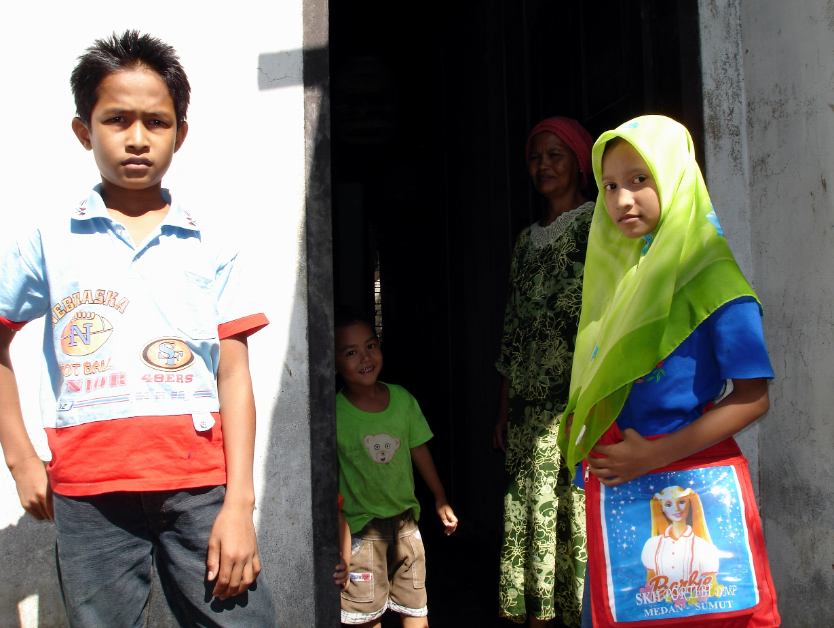
Anak-anak di sekitar lokasi OI Sumatera datang melihat apa yang kami lakukan…
The neighborhood children came to see what we were doing…
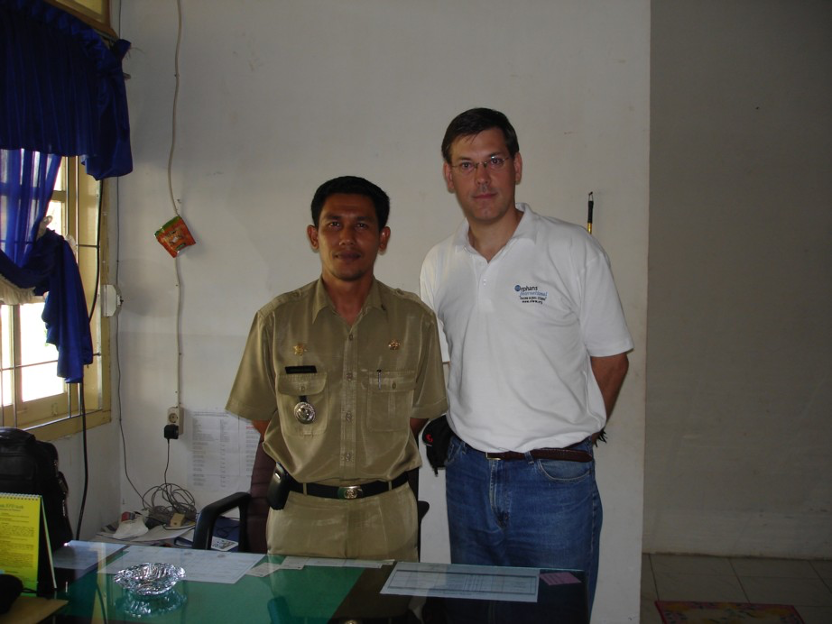
Lalu, Pendiri dan Presiden OIWW, Jim Luce meneruskan apa yang telah dimulai Dani Sirait dengan bertemu Pejabat Pemerintah…
Meanwhile, I continued the work begun by our international director, meeting with local officials…
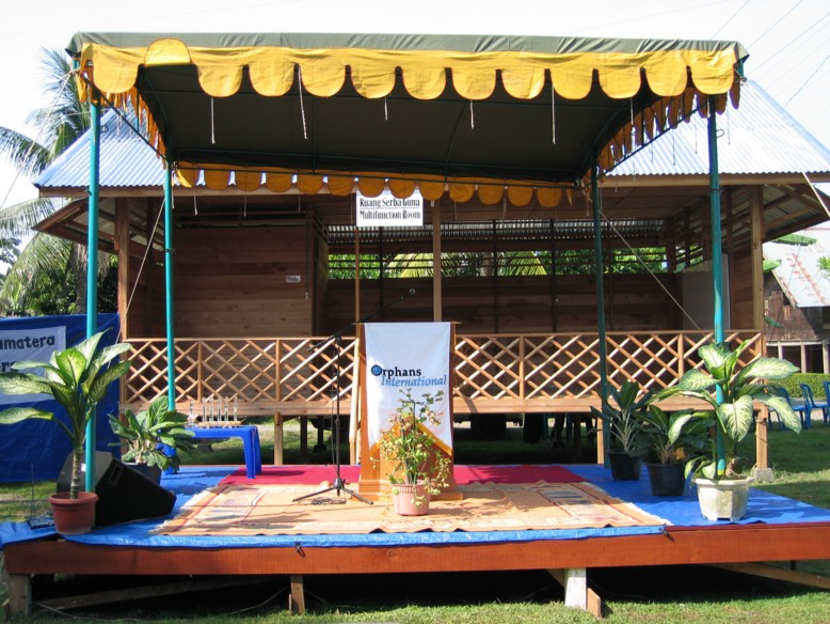
Sebuah bangunan serba guna dengan gaya tradisional Aceh kemudian berdiri di lokasi.
And our wonderful, Achenese-style Multifunction Room opens.
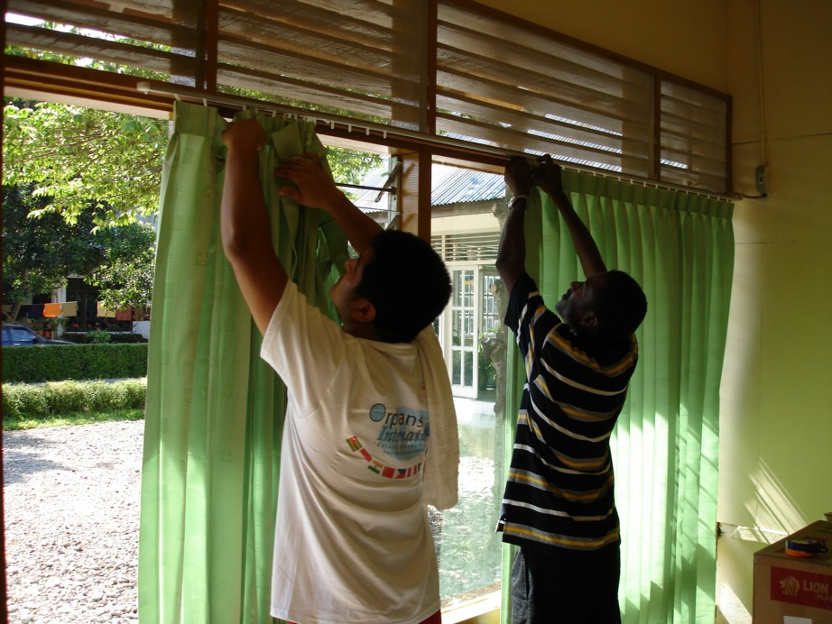
Yuri Guanilodan Jacques Africot turun tangan membantu persiapan rumah…
Yuri Guanilo and Jacques Africot, heads of our projects in Peru and Haiti, hang curtains in preparation…
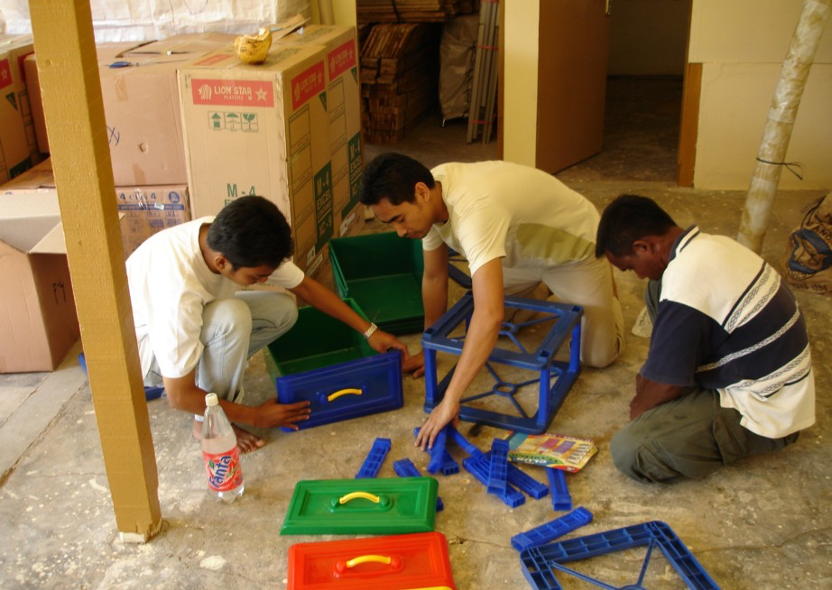
Koordinator OI Sumatera, Eddi Saputra, Direktur OI Bali, Agus Helly dan staff serba guna Bang Nuri pun juga ikut bekerja…
Sumatera Coordinator Eddi Saputra, Bali Director Agus Helly and handyman Bang Nuri set up home…
Untuk Klinik Kesehatan, kami yakin sebuah organisasi kesehatan Perancis akan bekerjasama dengan kami untuk mengelolanya.
We believe a French medical agency may work with us to run our Public Health Clinic.
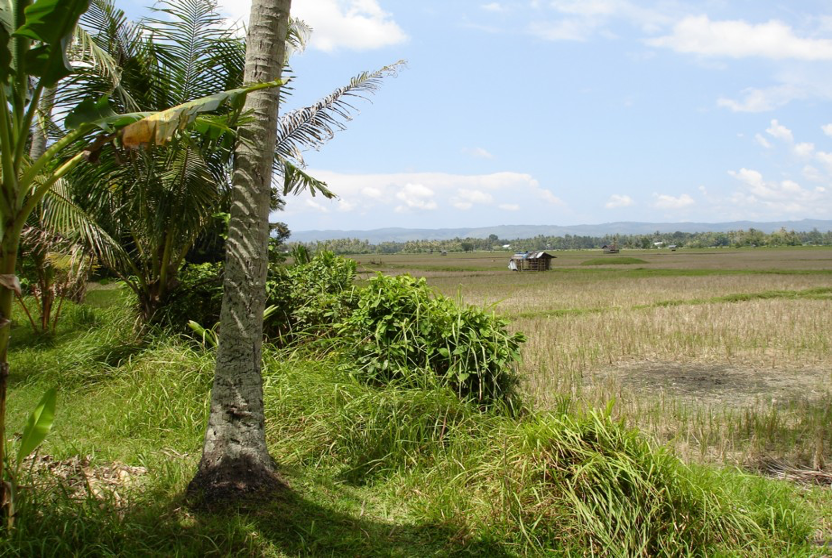
Di bagian belakang Klinik Kesehatan, sebuah pemandangan sawah membentang yang dikeliling perbukitan.
View from behind our public health clinic: rice fields surrounded by mountains.
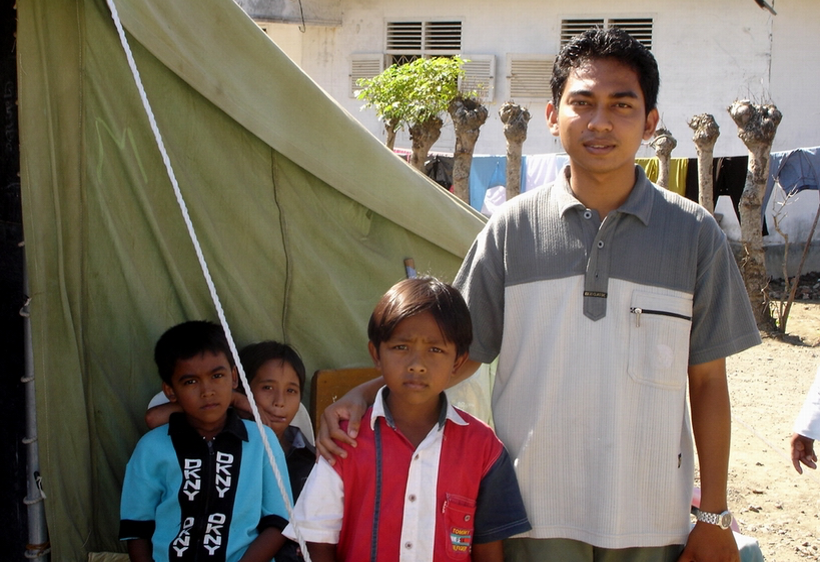
Banyak sekali anak-anak kehilangan keluarga dan rumah, dan harus hidup dalam situasi yang sangat minim.Namun kemudian lega karena OI segera menyediakan apa yang mereka butuhkan. Eddi kemudian menjemput anak-anak tersebut dari kamp-kamp pengungsi tempat mereka tinggal.
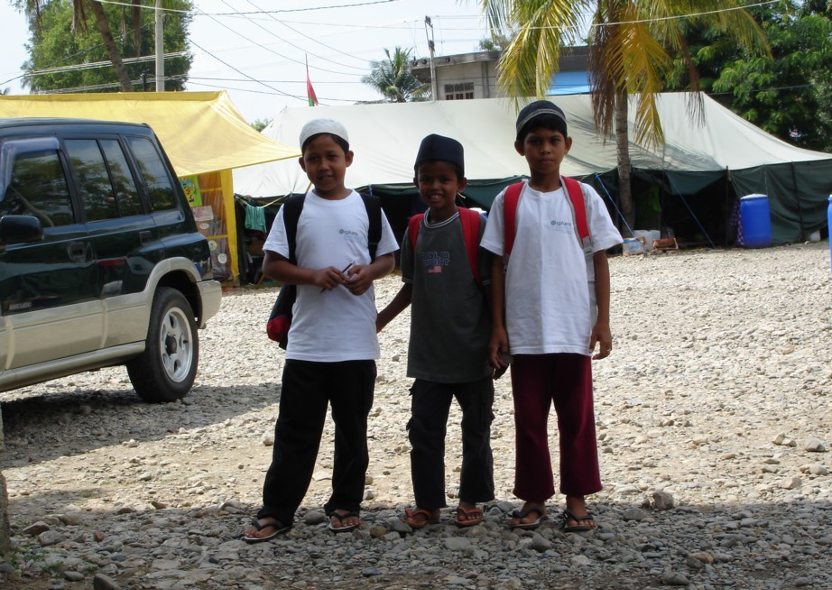
Many children were left without a home or family, and had to survive the first few days on their own.Thanks to Orphans International, many were given a new start.Eddi, our staff coordinator, picks up one of our children from a refugee camp
Anak-anak seperti Wahyu Wijaya sangat bahagia karena dapat segera meninggalkan kamp pengungsian itu…
The children, such as Wahyu, were happy to leave the camps…
Bahrizal dan Rahmyanapun bersiap untuk juga pindah…
As two of our children prepare to leave the refugee camp for our home, a look of fear and relief…
Bahrizal dan Rahmyanapun bersiap untuk juga pindah…
Begitu juga dengan Fahrrul Rozi, Makrifatullah dan Maksalminah membawa semua yang mereka miliki untuk pindah ke OI Sumatera…
Wearing the backpacks we have already given them, they carry everything they own with them…
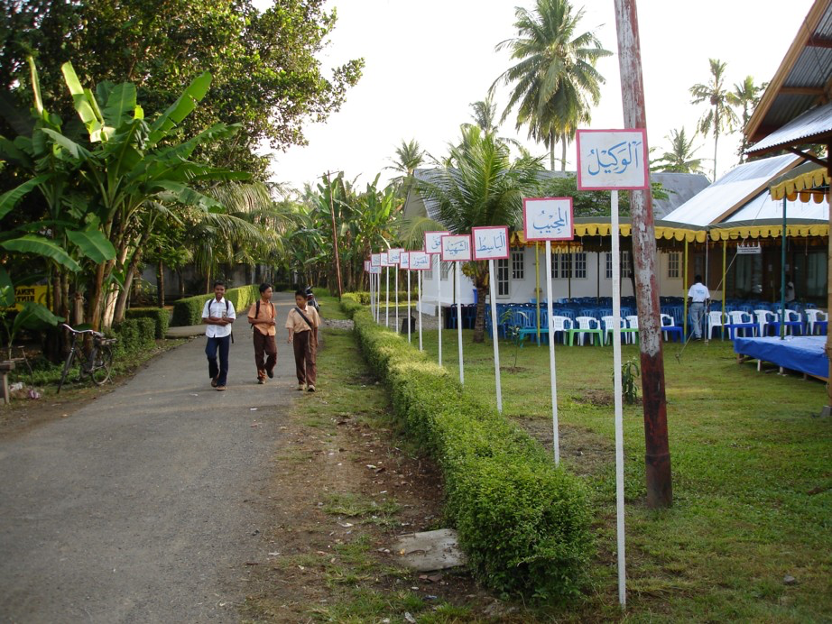
Sementara kami menyiapkan Acara Peresmian, sejumlah anak-anak melintas di depan Kampus OI Sumatera.
As we prepare the complex for our Grand Opening, local students pass by on the way to school…
Panggung dan podiumpun disiapkan untuk acara peresmian itu.
The stage is set for the Opening of our Campus for Tsunami Orphans in Greater Aceh, Sumatera.
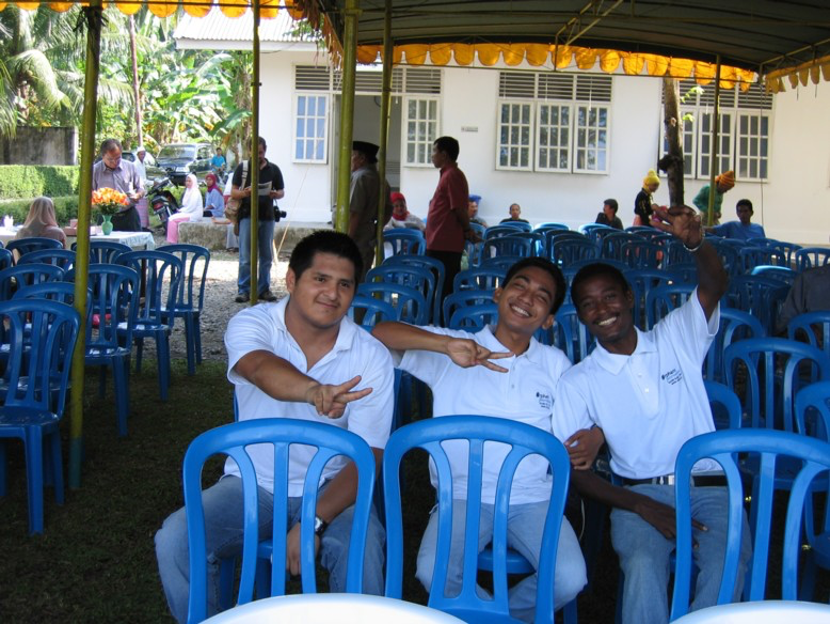
Sedangkan Yuri, Eddi dan Jacques berupaya mendapatkan tempat duduk terbaik…
Yuri Guanilo (Peru), Eddi Saputra (Aceh) and Jacques Africot (Haiti) are sure to get good seats!…
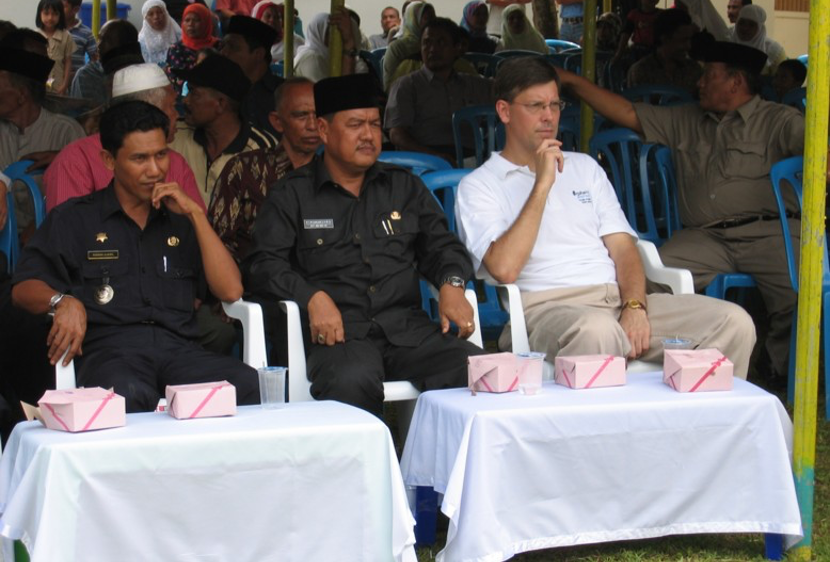
Sedangkan para tamu VIP duduk di deretan depan, siap berbagai pandangan tentang pentingnya membantu anak-anak
While speakers sit in the front row, ready to share thoughts on the importance of helping children.
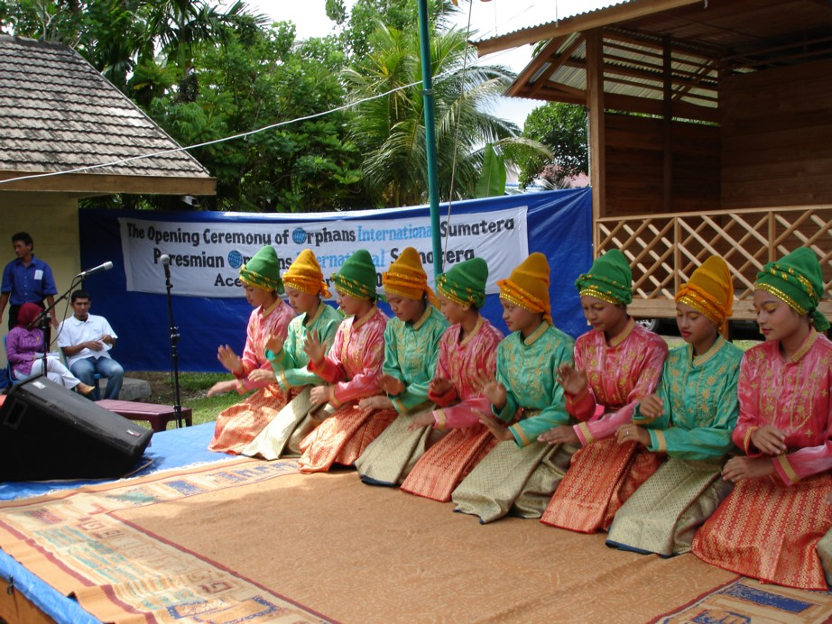
Tari Saman yang sangat terkenalpun ditampilkan oleh para penari remaja…
And traditional Acehenese dancers perform a welcome dance to the delight of the crowd…
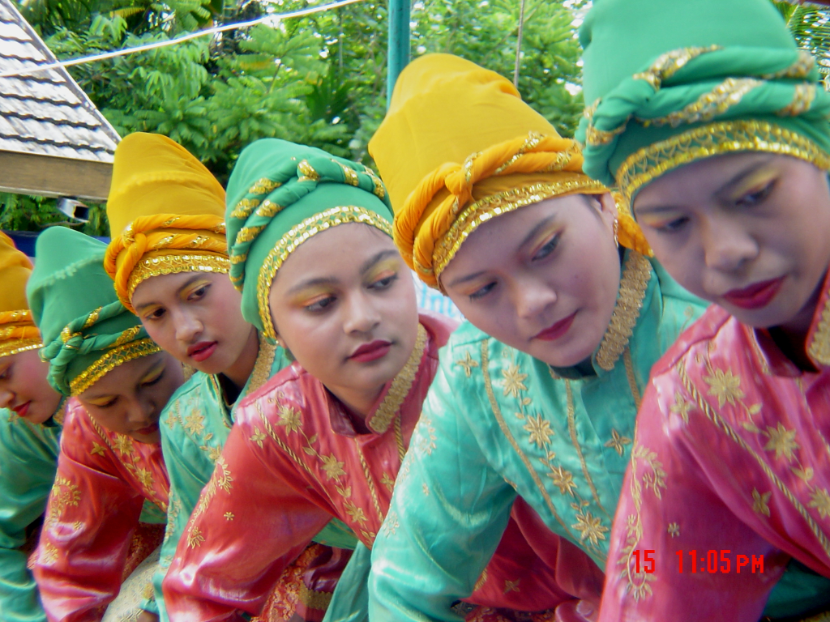
Dengan konstum sangat menawan yang memukau mereka yang datang.
The beautiful costumes awe the crowd.
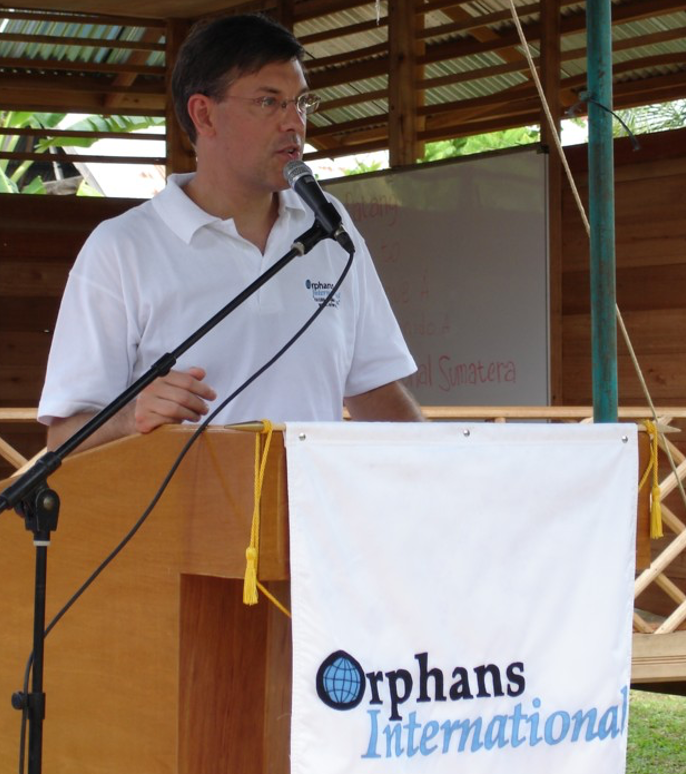
Sementara Jim Luce berbagai filosopi OIWW kepada para undangan.
While I share our Orphans International philosophy with those gathered.
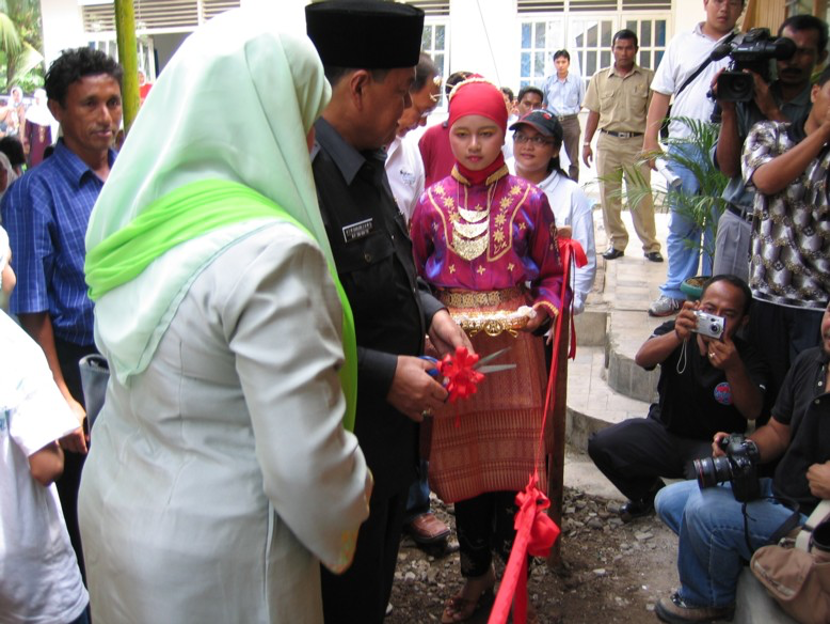
Akhirnya, utusan Pemerintah menggunting pita untuk meresmikan rumah pertama yang disponsori oleh Keluarga Grodzins dan Rotary Club dari New York, AS.
Finally we are ready for government officials to cut the red ribbon to Grodzins & Rotary Houses…
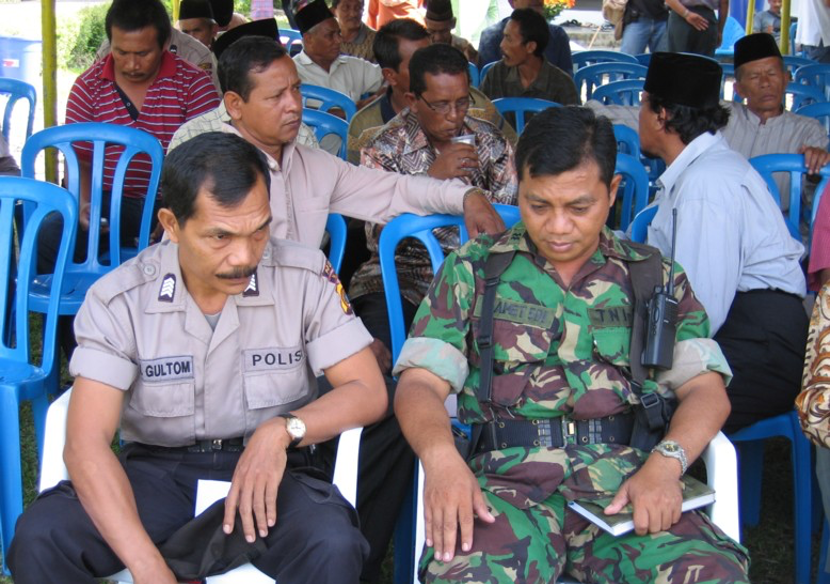
Pihak Kepolisian dan Militer datang, begitu juga para tokoh masyarakat dan agama…
Police and Indonesian Army brass attend the Opening, as well as local and religious leaders…
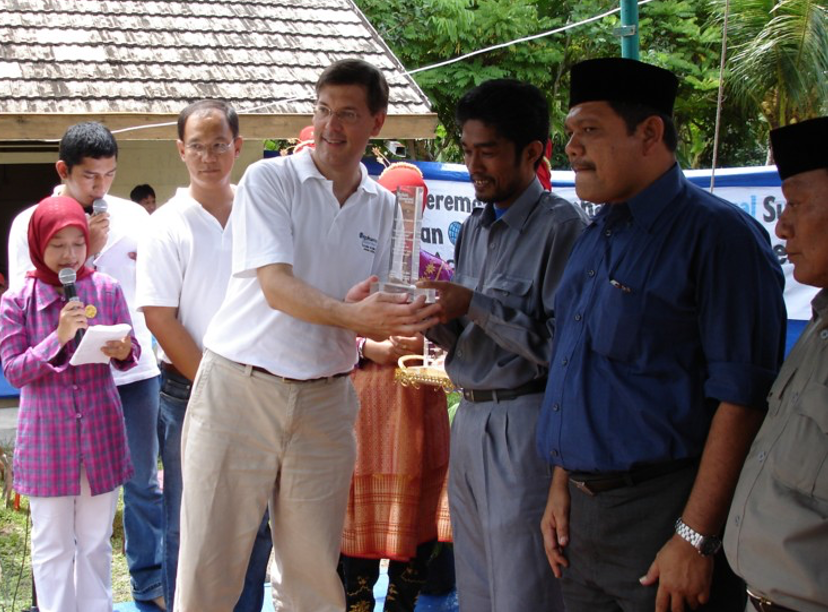
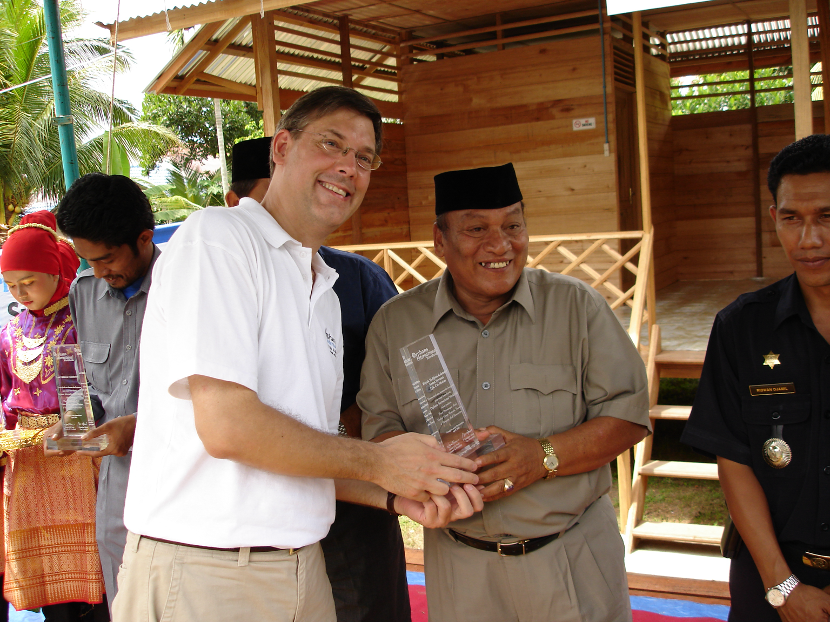
Jim dan Dani kemudian menyerahkan penghargaan kepada mereka yang telah membantu…
Then Jim and our international diector hand out awards of appreciation for their cooperation to local leaders…
Terutama kepada Pak Djoni Rahmany, Ketua Yayasan Tengku Cot Malem.
Especially to Pak Djoni, leader of the local village foundation with whom we cooperate.
Jim Luce kemudian memulai pembangunan pertama rumah kedua yang disponsori oleh masyarakat AS yang tinggal di Pulau Roosevelt, New York.
Finally, we break ground for Roosevelt Island House, with government officials looking on…
Anak-anakpun kemudian bergabung untuk ikut memulai pembangunan rumah kedua mereka.
But the children seem to be much more excited by the prospect of another home – or at least playing in the dirt!
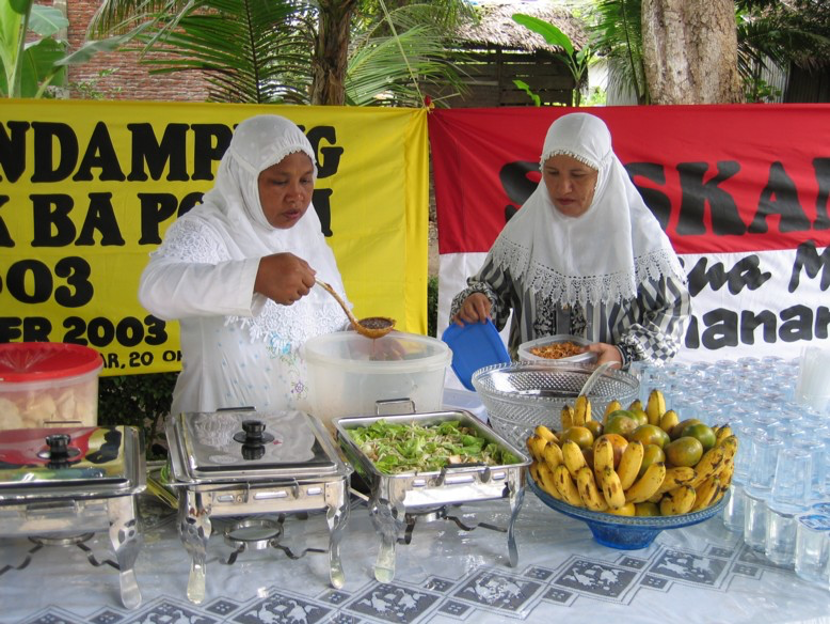
Makanan tradisional Acehpun disediakan oleh para ibu-ibu.
The local women cooked enough Acehenese traditional food for the village, it seemed…
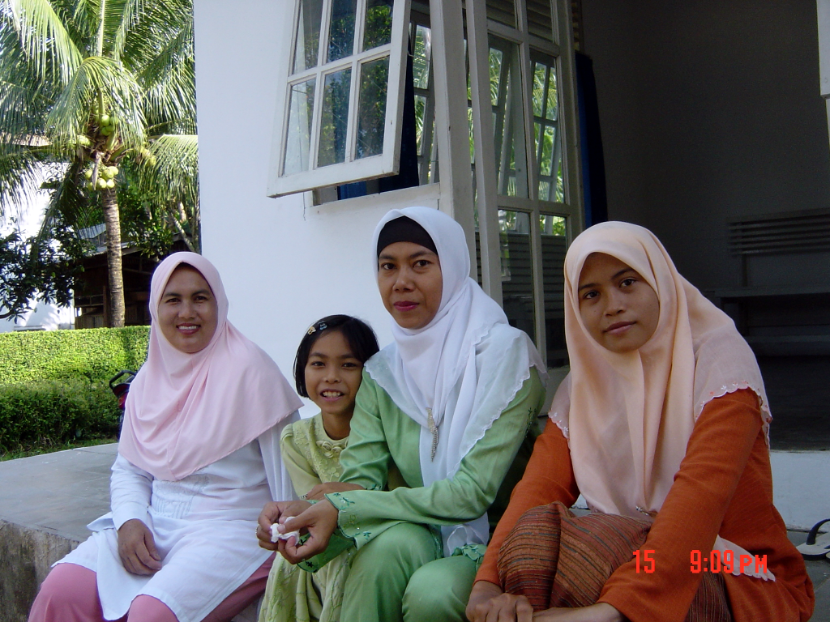
Di hari yang sama, staff Klinik Kesehatan menikmati hari pertama bekerja dengan OI Sumatera.
While the current health clinic staff enjoyed the events of the day while sitting in the shade.
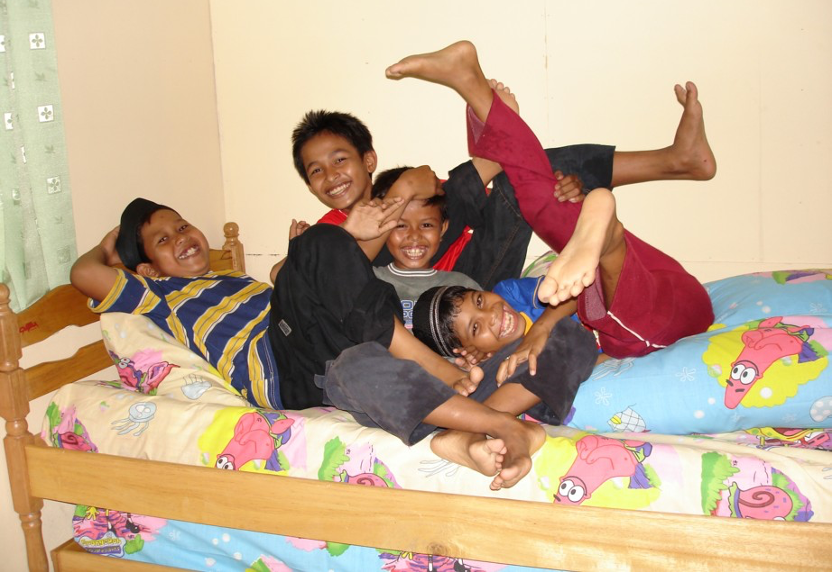
Dan di dalam rumah, anak-anak bergembira.
After Grodzins House opens, it’s time to have some fun – let’s wrestle on our new beds!
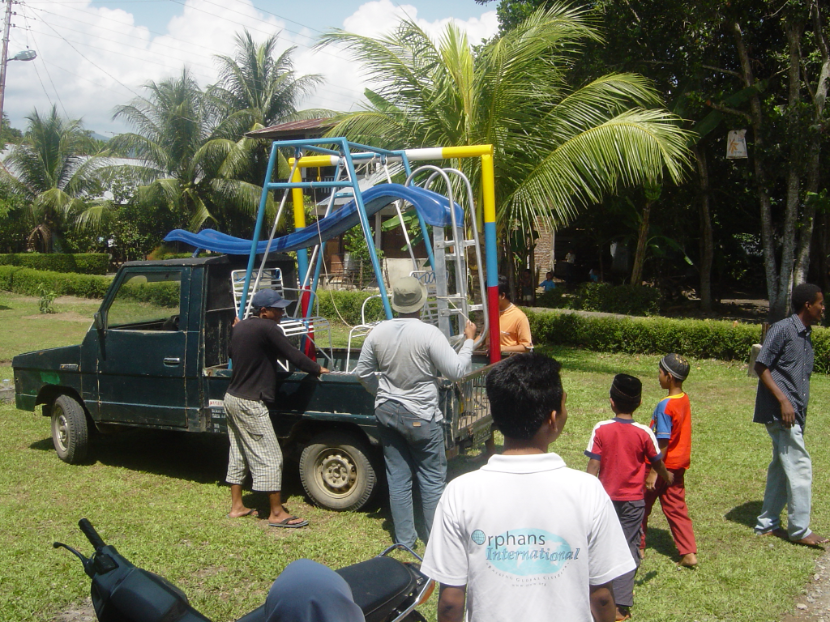
Dan di tengah siang yang menyengat, kejutan datang dari Organisasi Auxiliaris asal Puerto Rico, perlengkapan bermain!
The very next day, a surprise from Auxiliaris Foundation of Puerto Rico, new playground equipment!
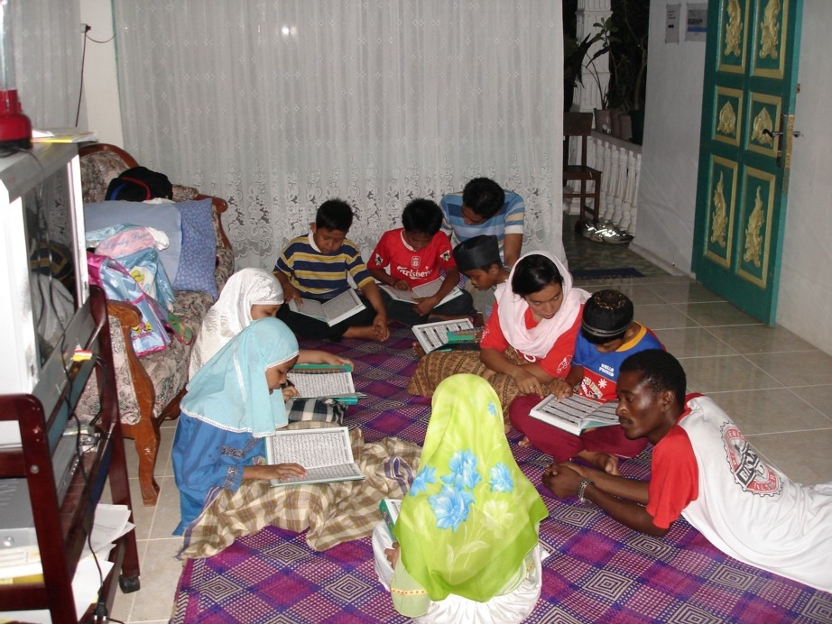
Di suatu sore, pengajian dilakukan.
Followed by Afternoon Prayers, observed by Haitian Director Jacques Africot.
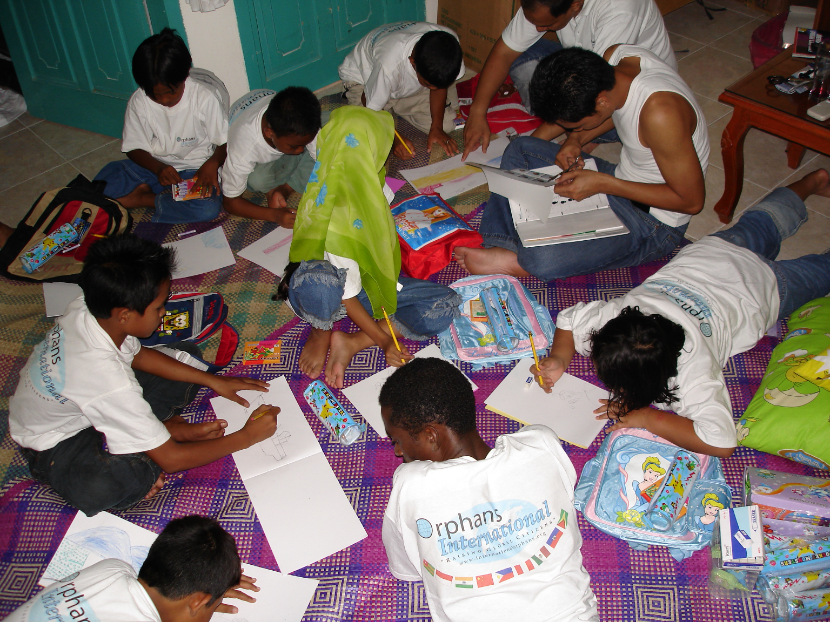
Di saat lain, menggambar bersama juga dilakukan anak-anak.
And arts and crafts to wind down a long day of excitement.
Di sebuah rumah sewaan, Staff OI tinggal untuk terus bekerja keras.
The staff, of course, stay in the OI Staff House down the street from our campus…
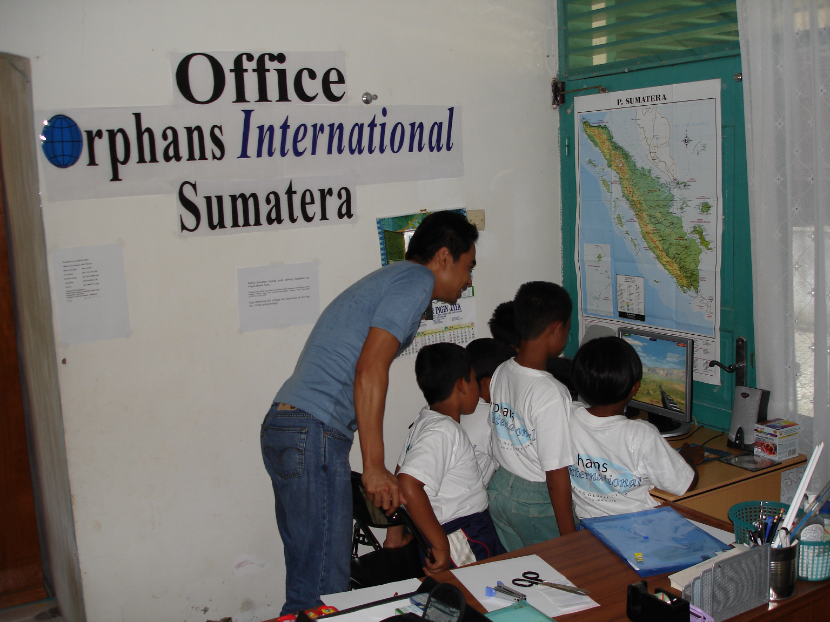
…di dalam rumah itu, terdapat kantor sementara OI dimana anak-anak dapat bermain computer.
…which is where we have established our temporary office, where the children can play with the computer.
Post Script: Our funding ran out in the fourth year of the program but the children had not yet been united with their extended families; we needed a little longer for the families to recover and come forward. So I cashed out my 401-k and kept the children’s village alive for an additional year – just long enough so that every child found a home with a long-lost aunt, uncle or even older sibling.
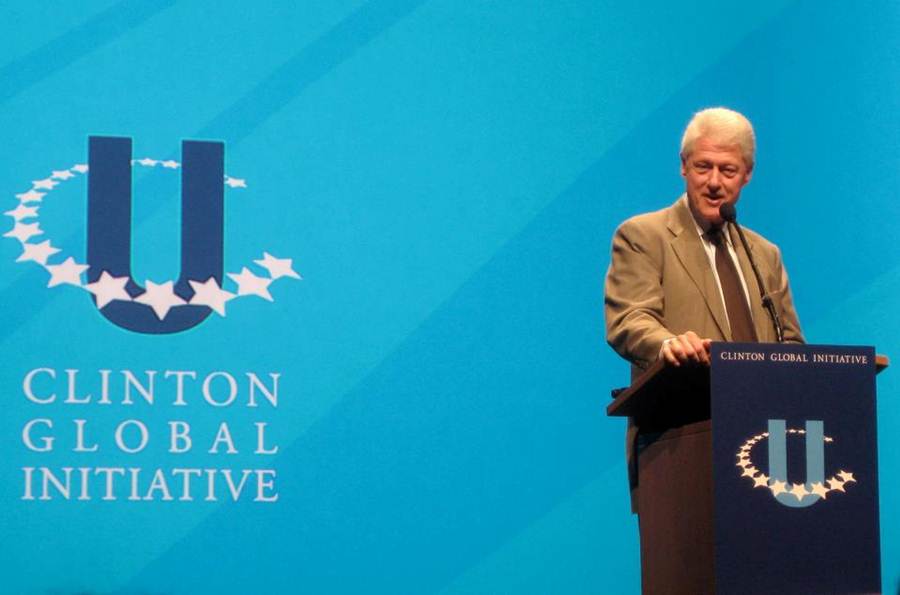
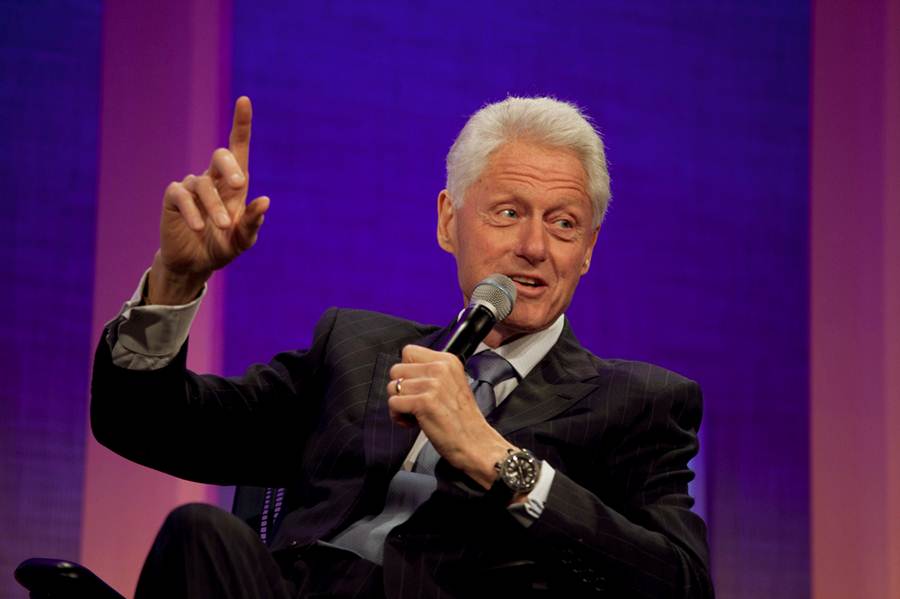
We appreciate President Clinton’s support for Orphans International, his involvement in the Clinton Global Initiative, and his consistent advocacy for social justice exemplify his commitment to making a difference. His ability to inspire, mobilize, and lead with compassion is unparalleled.
Bill Clinton: A Visionary Leader and Global Humanitarian
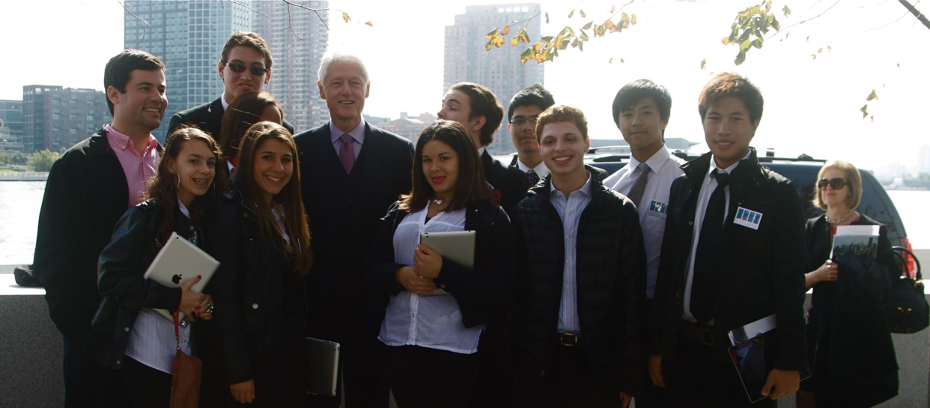
Bill Clinton, the 42nd President of the United States, has left an indelible mark on American politics and global humanitarian efforts. His leadership, both during and after his presidency, has been characterized by a commitment to social justice, economic equality, and international cooperation. I have had the privilege of engaging with President Clinton on several occasions at the Clinton Global Initiative, discussing Haiti and Indonesiawith him and witnessing firsthand his dedication to making the world a better place.
Presidency and Legacy
Bill Clinton’s presidency (1993-2001) is remembered for its significant economic achievements, including record job creation, budget surpluses, and a period of sustained economic growth. Under his administration, the U.S.saw welfare reform, the passage of the North American Free Trade Agreement (NAFTA), and significant advancements in healthcare and education.
However, Clinton’s influence extends far beyond his tenure in office. His ability to connect with people and his relentless drive to address global challenges have defined his post-presidential career. The Clinton Foundation, founded by Bill, Hillary, and Chelsea Clinton, exemplifies his commitment to public service, focusing on issues such as global health, economic development, and climate change.
Clinton Global Initiative: A Platform for Change
The Clinton Global Initiative (CGI) has been a transformative platform for global change, bringing together leaders from various sectors to address pressing global issues. It was at CGI where I had the distinct honor of conversing with President Clinton on multiple occasions. These interactions were not just moments of dialogue but profound exchanges that underscored his deep commitment to collaborative problem-solving and innovative solutions.
Through CGI, President Clinton has galvanized a network of individuals and organizations to make concrete commitments to improve lives worldwide. His ability to inspire and mobilize others is a testament to his enduring influence and leadership.
Support for Orphans International
One of the most personal and impactful connections I have had with President Clinton was his support for Orphans International, an organization dedicated to improving the lives of orphaned children around the world. President Clinton’s letters of support were instrumental in advancing our mission, providing both moral and tangible support that helped us expand our reach and effectiveness.
His endorsement not only highlighted the importance of our work but also demonstrated his genuine concern for vulnerable populations. Clinton’s advocacy for children’s rights and his efforts to address poverty and inequality have been consistent themes throughout his career, reflecting his broader commitment to social justice.
A Near Miss at the Americas Society Gala
In the spirit of fostering community and collaboration, Orphans International hosted its annual gala at the Americas Society on Park Avenue. We were eagerly anticipating President Clinton’s attendance, an event that promised to be a highlight of our efforts to engage supporters and raise awareness. Unfortunately, due to unforeseen circumstances, President Clinton had to cancel at the last moment. Despite his absence, his support was deeply felt, and his commitment to our cause remained unwavering.
A Global Citizen
Bill Clinton’s work transcends national borders, embodying the principles of global citizenship. His initiatives have improved healthcare access, fought the HIV/AIDS epidemic, promoted economic development in underserved regions, and addressed climate change with actionable strategies. Clinton’s vision of a more interconnected and compassionate world continues to inspire leaders and activists globally.
His ability to navigate complex global issues with empathy and pragmatism has set a standard for humanitarian leadership. Clinton’s dedication to fostering dialogue, building partnerships, and empowering individuals underscores his belief in the power of collective action to create positive change.
We recognize a leader whose impact on the world is profound and far-reaching. His presidency laid the groundwork for economic prosperity and social progress in the U.S., while his post-presidential initiatives have addressed some of the most critical global challenges of our time.
Bill Clinton’s legacy is one of hope, resilience, and unwavering dedication to creating a better world. His vision and leadership continue to guide us toward a future where opportunity, justice, and dignity are available to all. It is an honor to have worked with him and to continue supporting the causes he champions.
TAGS: Bill Clinton, Clinton Global Initiative, Orphans International, Americas Society, Humanitarian Leadership, Social Justice, Global Health, Economic Development, Climate Change
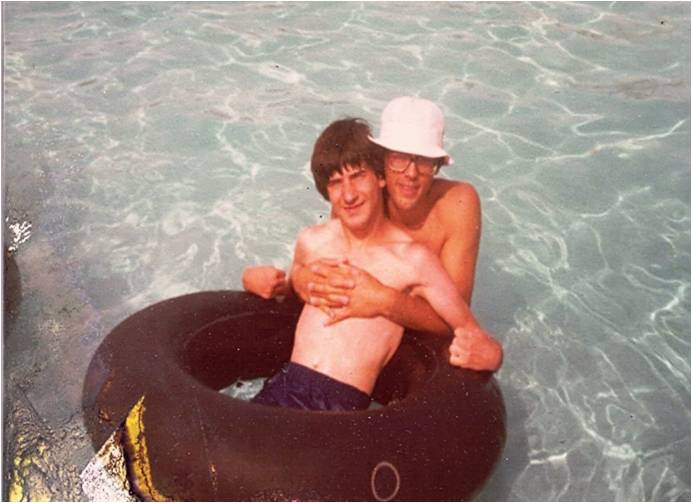
Author counsels and instructs a camper with MS at an Easter Seals camp in 1979.
Working with children with physical disabilities in Pennsylvania
[draft]
For parents of a child with a disability, caregiving can be 24 hours a day, seven days a week. It’s emotionally and physically demanding, with many different pieces that go into planning and maintaining care.
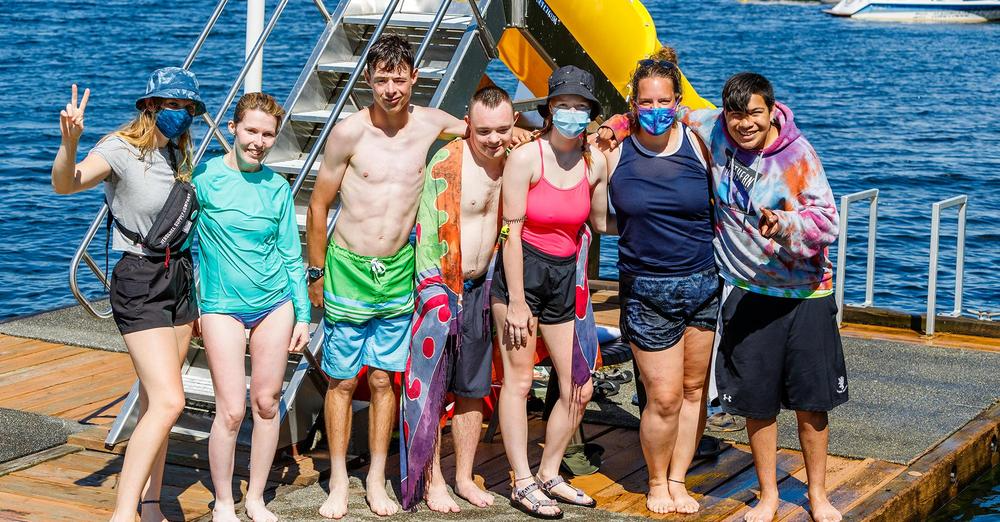
Now imagine a child who couldn’t go to summer camp because of the challenges of caregiving. At Easter Seals Camps, that’s not the case.
“The quality of care, the compassion and the kindness of the staff that they have at Easter Seals camps is absolutely incredible,” says Nansey, mother of Tina who has Cerebral Palsy and has been attending camps for more than ten years. “They select and hire the most capable, dedicated, and enthusiastic bubbly personalities.”
Easter Seals camps have a three-to-one camper-to-staff ratio, a 24-hour medical team on-site, and camp counsellors trained specifically to work with persons with physical and cognitive disabilities between the ages of six to 49. Disabilities vary from autism, development delays, anxiety disorders, Down Syndrome, Cerebral Palsy, epilepsy, and ADHD, among others.
“Over my years I’ve seen staff arrive wondering how they can impact the lives of each camper and leave changed forever from the experience,” says James Gagnon, Director of Camp Programs and Facilities at Easter Seals. “There’s something bigger than all of us at camp. There’s a magic in the air.”
“As soon as you come through the gate to the property you feel welcome and you can just feel the energy throughout the camp. The first time we arrived we were excited and nervous at the same time, but you leave knowing that everyone is going to have a wonderful time,” says Nansey.
That’s when the magic happens. A combination of training, experience, love, fun, friendship, and independence turns one week of camp into the best time of campers’ lives.
“Campers and families understandably arrive at camp with some anxiety and trepidation. No one can predict what is involved or how things will turn out in any new situation. Now add to that a disability and a camper who may have never been away from their primary caretaker, and that uncertainty is intensified,” explains Gagnon.
Easter Seals camps are fully inclusive and accessible, so any child or adult with a disability can attend and participate in any activity.
INTERVIEW with Jim Luce on the origins of both his family Foundation (www.lucefoundation.org, 2008) and Orphans International Worldwide(www.orphansinternational.org, 1999), the first Supporting Young Global Leadership and the second Raising Global Citizens. Video produced by Joey Vaughan for Stewardship TV. Music: Jingle Punks.
The film delves into the psychological and emotional struggles of Jesus, portraying his temptations and doubts with a level of intimacy that is rarely seen in religious narratives. This humanization of Jesus made his ultimate sacrifice even more poignant and relatable. For us, this portrayal did not diminish his divinity but rather enhanced our appreciation of his humanity.
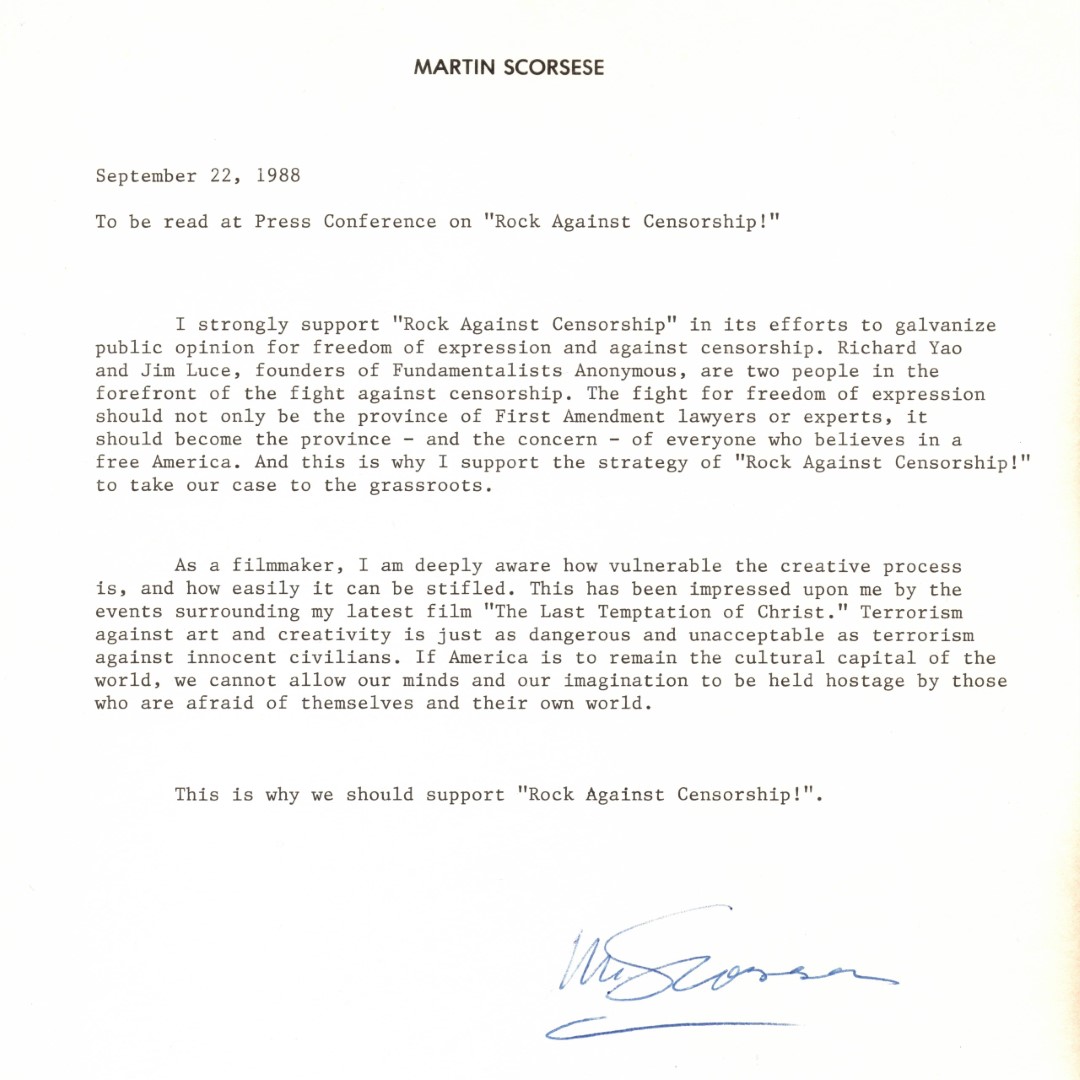
New York, N.Y. I first met Martin Scorsese when his publicist Josh Baran askedFundamentalists Anonymouswhich I had co-founded to take a stand on Marty’s film,The Last Temptation of Christ with Willem Dafoe. At the private opening, at a theater on 23rd Street in Manhattan, Marty jotted me a thank you note/autograph. The film was not offensive at all, and my partner Richard Yao and I spoke widely on how, as Christians, we found the film to be sensitive and important.
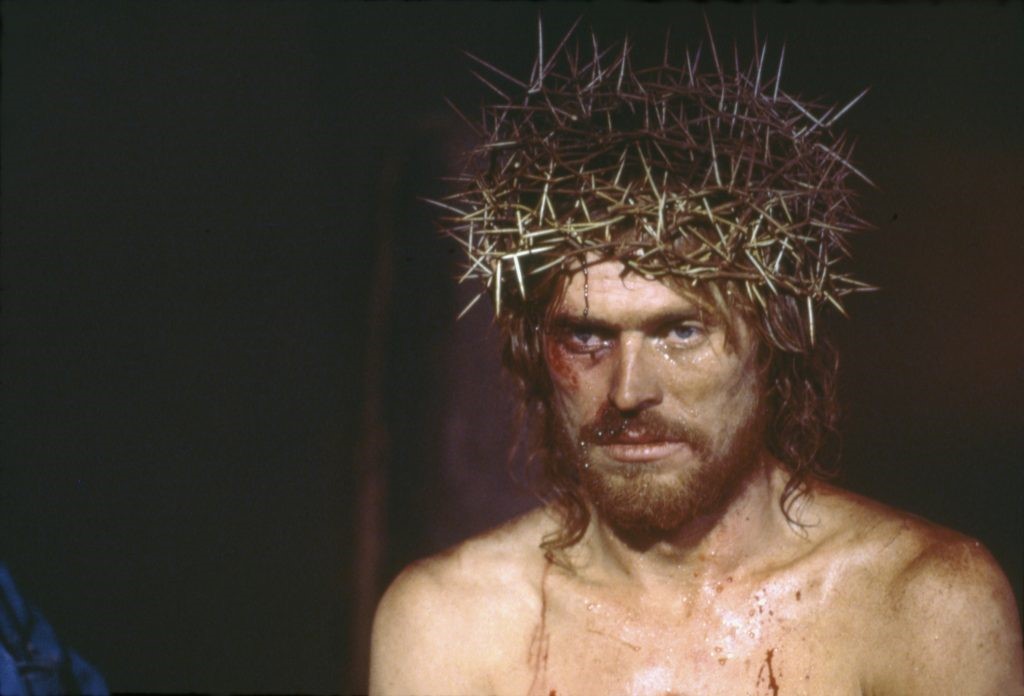
American actor Willem Dafoe on the set of The Last Temptation of Christ, based on the novel by Nikos Kazantzakis and directed by Martin Scorsese. Photo by Universal Pictures.
Meeting Marty and engaging with his work on The Last Temptation of Christ was a significant moment for me, both personally and professionally. The film, based on the novel by Nikos Kazantzakis, explores the human aspects of Jesus Christ’s life and the struggles he faced.
For many, this portrayal was controversial, but for me, it was a profound exploration of faith and humanity. Marty’s depiction of Jesus as a man grappling with his divine mission resonated deeply with my Episcopal understanding of Christian faith, which acknowledges the complexities and trials of the human experience.
The uproar surrounding The Last Temptation of Christ largely stemmed from a misunderstanding of its intent. Fundamentalist groups protested the film, viewing it as blasphemous and offensive.
However, my partner Richard Yao and I recognized it as a respectful and thought-provoking piece that invited viewers to contemplate the duality of Jesus Christ as both human and divine. This perspective aligned with our mission at Fundamentalists Anonymous, which aimed to promote a more nuanced and compassionate understanding of faith, moving away from rigid dogmatism.
Our advocacy for the film involved speaking at various forums and engaging with the media to articulate why we, as Mainline Christians, did not find the film offensive. Instead, we emphasized how The Last Temptation of Christ opened a dialogue about the nature of Jesus’ sacrifice and the essence of Christian faith. Scorsese’s work encouraged believers to reflect on their own spiritual journeys and the personal challenges they face in living out their faith.
Meeting Marty Scorsese in person was an enlightening experience. His genuine gratitude for our support and his passion for the project were evident. The thank-you note and autograph he gave me at the film’s opening symbolized more than just a memento; it was a testament to our shared belief in the importance of honest and heartfelt storytelling. Marty’s approach to filmmaking, characterized by its depth and authenticity, mirrored our approach to faith—open, inquisitive, and deeply personal.
Marty wrote a letter of support for our continued efforts to thwart Religious Right censorship of the arts.
The Last Temptation of Christ was not just a film; it was a cultural touchstone that sparked important conversations about religion, art, and interpretation.
By defending the film, Richard and I positioned ourselves as advocates for a more inclusive and empathetic Christianity. We argued that faith should not be threatened by artistic exploration but should instead embrace it as an opportunity for growth and understanding.
Scorsese’s work has always been marked by its exploration of complex themes and characters, and The Last Temptation of Christ is no exception.
The film delves into the psychological and emotional struggles of Jesus, portraying his temptations and doubts with a level of intimacy that is rarely seen in religious narratives.
This humanization of Jesus made his ultimate sacrifice even more poignant and relatable. For us, this portrayal did not diminish his divinity but rather enhanced our appreciation of his humanity.
The collaboration with Marty and the support for his film were pivotal in challenging the monolithic interpretations of Christianity that often dominate public discourse.
We believed that faith could withstand scrutiny and that questioning and exploring one’s beliefs were vital to a vibrant spiritual life. The Last Temptation of Christ provided a platform for such exploration, encouraging believers to engage with their faith on a deeper level.
My experience with Martin Scorsese and The Last Temptation of Christ was profoundly impactful. It reaffirmed my belief in the power of art to challenge, inspire, and deepen our understanding of complex subjects like faith.
By standing up for the film, Richard Yao and I championed a vision of Christianity that is open, compassionate, and willing to engage with difficult questions. Scorsese’s film remains a testament to the enduring power of thoughtful storytelling and its ability to illuminate the human condition.
Tags: Martin Scorsese, Last Temptation of Christ, Film And Faith, Christianity, Art And Religion, Faith Exploration, Cinematic Art, Religious Dialogue, Willem Dafoe, Film Advocacy, Cultural Touchstone, Spiritual Journey, Inclusive Faith
Nobel-prize winner Professor Muhammad Yunus, founder of the microfinance pioneer Grameen Bank of Bangladesh, addressed our breakfast at the Clinton Global Initiative (CGI) kick-off.
New York, N.Y. Nobel-prize winner Professor Muhammad Yunus, founder of the microfinance pioneer Grameen Bank of Bangladesh, addressed our breakfast at the Clinton Global Initiative (CGI) kick-off. Introduced by Hikmet Ersek, the C.E.O. of Western Union – the corporation that hosted this event – Muhammad was as inspiring as ever.
Western Union, “Moving Money for Better,” is the leader in corporate social responsibility (CSR) that I wrote about last year (HuffPo). Today was the first time I had ever met either of these iconic thought leaders.
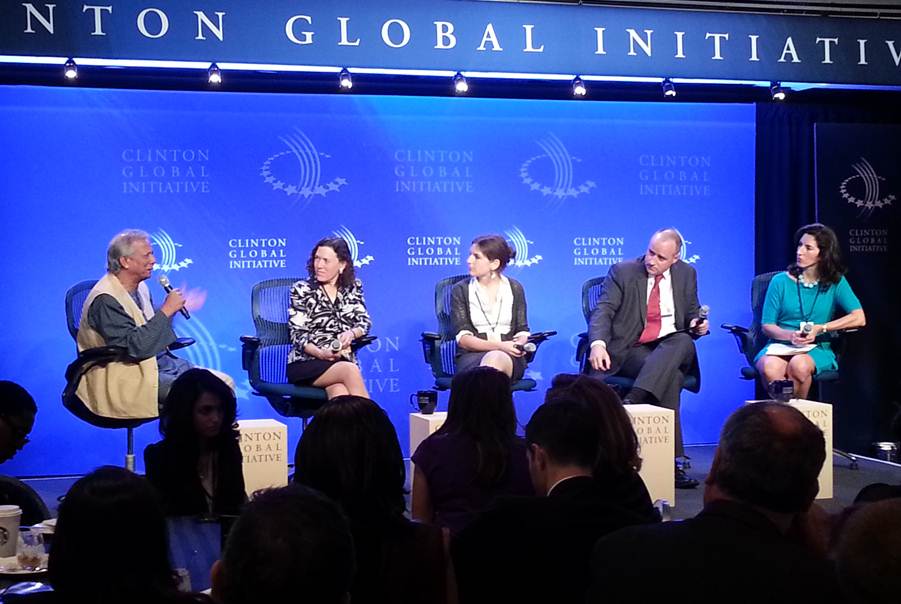
Panelists joined Professor Muhammad Yunus at the Western Union breakfast at CGI. Credit: CGI.
Grameen, founded in 1976, has set the standard for microfinance. During the breakfast I chatted with Anne Hastings, director of Haiti’s premier microfinance institution Fonkoze. Anne sat on our Orphans International Worldwide Haiti (OIWW) board over a decade ago. Fonkoze, like most micro-financial institutions around the world, is based on Muhammad’s work.
Muhammad’s general concept was to empower women in local communities, usually in groups, to lift themselves and their families out of poverty. I have seen it work all over the world. The professor spoke of microfinance as being the banking system of the world’s poor, and stated that big banks are ill-prepared to enter the field without becoming loan sharks. He feels strongly that microfinance should be a social enterprise, not a profit-making venture of more than 10% profit.
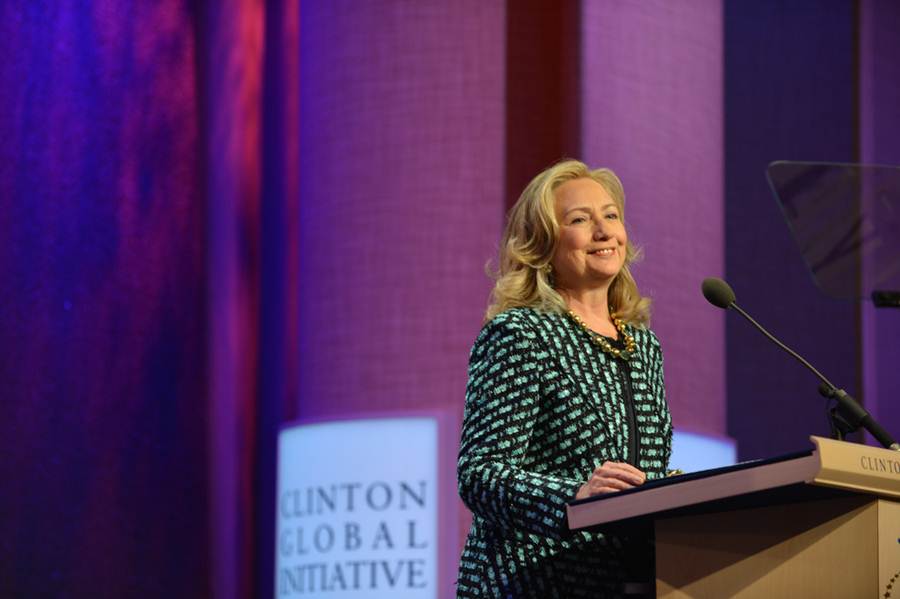
U.S. Secretary of State Hillary Rodham Clinton addressed the Clinton Global Initiative 2012. Credit: CGI (Barbara Kinney).
I congratulated Muhammad after the breakfast panel, commenting to him on my own post-Wall Street appreciation of financial institutions for the poor and not the rich. My own epiphany that led to leaving finance was in a garbage dump in Denpasar, Indonesia in 2004. I realized in that moment that many of the dirty children living there had as much if not more dignity than any of the high-net worth individuals my investment firm served.
Western Union’s C.E.O. Hikmet spoke at the breakfast of the need of multi-nationals to make a profit providing goods and services even to the world’s poorest. I agree that multi-nationals must profit to sustain their efforts and please shareholders but encourage them to remain vigilant in their efforts to better humanity. I also agree with Muhammad that micro-financial institutions should not strive to be highly profitable multi-national corporation, keeping profits over expenses under 10%.
The best multi-nationals, like most microfinance institutions, are focused on social responsibility.
Hikmet Ersek is of Turkish origin who migrated to Austria and has relocated to the U.S. He learned of the need of transferring funds to his father decades ago. Deeply sensitive to the needs of the world’s poor, he is also aware of corporate shareholder’s desire for profit. Balancing both, Western Union and its foundation provide a bridge between haves and have-nots.
I was particularly impressed to learn of Western Union’s 2012 GCI commitment: Global Pay. This new financial product will help NGOs overcome the ‘last mile’ and bridge the gap between funds that need to be disbursed and the people who need them in the field. Having run orphan care projects post-Tsunami in Indonesia and Sri Lanka, and post-earthquake in Haiti, I understand how critical this is. Western Union’s end-to-end platform will help NGOs manage and deliver funds into the field safely and securely, leveraging the company’s 510,000 physical locations to help connect NGOs to the people they serve in over 200 countries and territories around the world. Incredible.
President Bill Clinton, 42nd President of the U.S and founder of the Clinton Global Initiative, at the CGI Annual Meeting 2012 Opening Plenary. Credit: CGI.
Western Union is working with NGO partners, including the International Children’s Fund and Peace International, to design financial products that will promote efficient and transparent payments. Current partners include Architecture for Humanity, Islamic Relief Worldwide, Save the Children International, and the World Children’s Fund.
Muhammad is a purist and despairs of both the multi-nationals taking advantage of the poor and micro financial institutions earning more than 10% over expenses from the same population. Multi-nationals and micro financial institutions are both highly involved with remittances, but as Muhammad stated, “finance is like football.” An American football referee cannot oversee a British football (soccer) match, he explained. Regulations for the two loan models need to differ.
Her Majesty Queen Rania Al Abdullah of the Hashemite Kingdom of Jordan at the Opening Plenary. Credit: CGI.
It was fabulous to re-connect at the breakfast with the head of the Western Union Foundation, Luella Chavez D’Angelo. I had met Luella several years ago and we made plans to meet this fall to discuss my own foundation’s efforts on supporting young global leadership (link).
Western Union, as well as multi-national corporations such as BASF, Adidas, Dannon, and UniQlo, are all involved in “social business” – investing funds to impact social change over making a personal profit. Adidas’ efforts to provide shoes to barefoot children in the Developing World at-cost – ‘social goods’ – is but one example. Yunus, active in Bangladesh as well as Haiti and many other countries, says multi-nationals should use corporate social responsibility and/or corporate foundation funds to finance their social enterprise approaches – including microcredit programs.
Virtually every sector of society from every corner of the world meet under Bill Clinton’s big tent. Credit: CGI.
Muhammad stressed that in all solutions, culture needed to be the foundation of social change. “Culture is the running shoes,” he explained. “The shoes need to support me in running, not be so rigid as to prevent me from running. There needs to be a counter-culture to guard against rigidity. Staid culture belongs in a museum. Dynamic culture is needed to help us move forward.”
At the end of the day, the goal of both micro financial institutions and multi-national financial corporations should be full financial inclusion. As Western Union’s C.E.O. Hikmet Ersek said, and professor Muhammad Yunus has dedicated his life to, it is a matter of financial dignity. In short, the goal of the Clinton Global Initiative, meeting here in New York for the seventh year, is to award all human beings anywhere in the world their inherent human dignity.
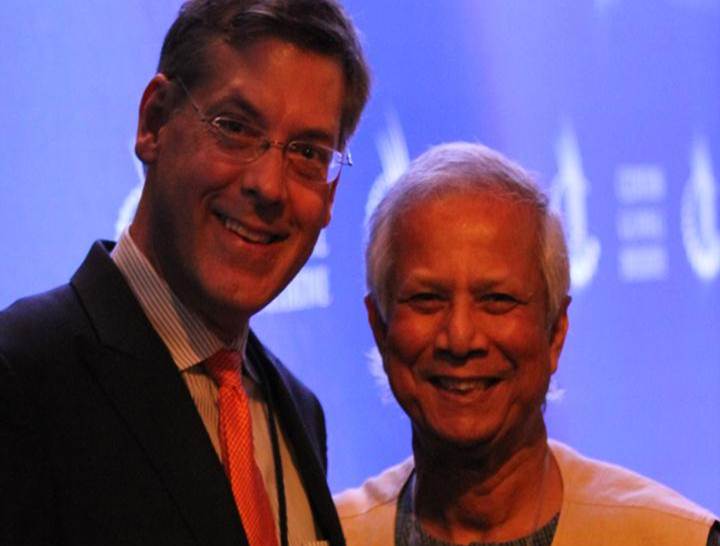
The author with one of his heroes, Professor Muhammad Yunus, founder of the Grameen Bank. Credit: Rahim B. Kanani (www.rahimkanani.com).
John and I attended a fabulous wedding in New York City Sept. 8, 2012 for Emily & Elizabeth McLintock-Perea! What a beautiful couple in so many ways. Our congratulations to them – and wishes for decades of love!
Same-sex marriage became legal in New York State on June 24, 2011, when Governor Andrew Cuomo signed the Marriage Equality Act into law. The law went into effect on July 24, 2011, making New York the sixth state in the United States to legalize same-sex marriage.
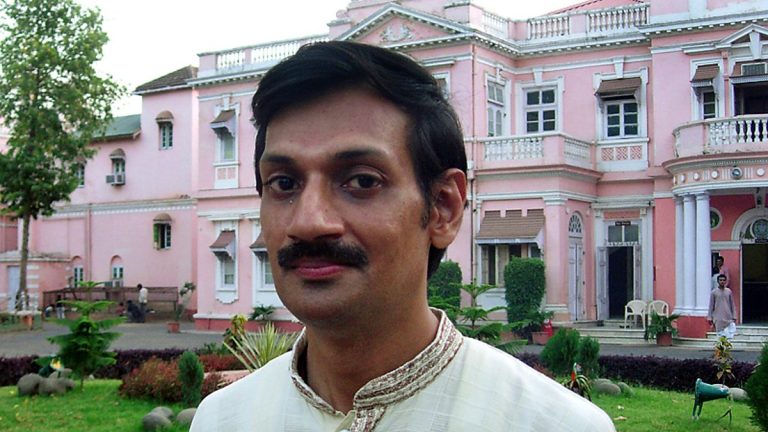
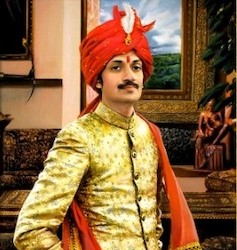
Manvendra’s homosexuality was revealed to his family by doctors in 2002 following his hospitalization for a nervous breakdown. However, it was when he talked publicly about his sexual orientation in 2006 that his family took action and accused him of bringing dishonor to the clan.
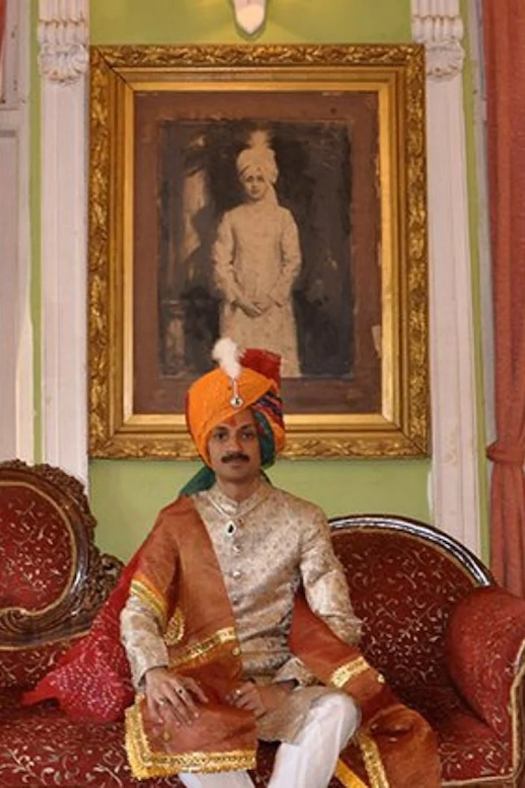
Delhi, India — Manvendra was born at Ajmer, 23 September 1965, as the son of Maharana Shri Raghubir Singhji Rajendrasinghji Sahib, who inherited the title of Maharana of Rajpipla in 1963.
The princes were derecognized by the Republic of India in 1971. Therefore their residence Rajvant Palace has been converted into a resort (Several Royal Palaces have been converted into Resorts, Universities and Government buildings after the derecognition by the Republic of India).
Manvendra had a traditional and conservative upbringing. He was educated at Bombay Scottish School and at Amrutben Jivanlal College of Commerce and Economics, Vile Parle, Bombay.
In January 1991, he married Chandrika Kumari from Jhabua, Madhya Pradesh, because, he claims, “I thought after marriage I would be alright because I never knew and nobody told me that I was gay and this is normal. Homosexuality is not a disease. I tremendously regret for ruining her life. I feel guilty.” The marriage ended in divorce when Manvendra revealed his homosexuality to his wife.
“It was a total disaster. A total failure. The marriage never got consummated. I realized I had done something very wrong”.
Several years after his divorce in 1992, he became involved in a social network to help gays in Gujarat.
“It was difficult to be gay in my family. The villagers worship us and we are role models for them. My family didn’t allow us to mix with ordinary or low-caste people. Our exposure to the liberal world was minimal. Only when I was hospitalized after my nervous breakdown in 2002, my doctor informed my parents about my sexuality.
“All these years I was hiding my sexuality from my parents, family and people. I never liked it, neither wanted to face the reality. When I came out in the open and gave an interview to a friendly journalist, my life was transformed. Now, people accept me.”
Manvendra’s homosexuality was revealed to his family by doctors in 2002 following his hospitalization for a nervous breakdown. However, it was when he talked publicly about his sexual orientation in 2006 that his family took action and accused him of bringing dishonor to the clan.
The disowning, however, is likely to remain a symbolic act rather than legally enforceable disinheritance, given India’s modern inheritance laws. He has since been reunited with his father.
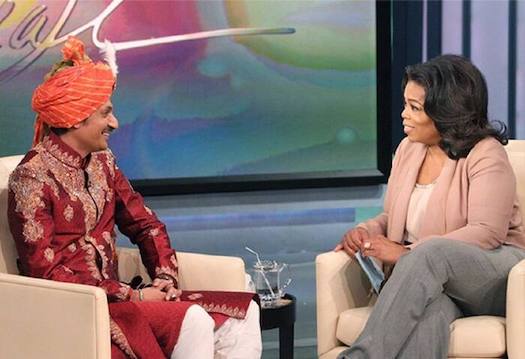
Manavendra appeared as a guest on the Oprah Winfrey Show on October 24, 2007. He was one of three persons featured in the show entitled ‘Gay Around the World.’
in March 2006, the story of Manvendra’s coming out made headlines in India and around the world. His effigies were burnt in Rajpipla, where the traditional society was shocked.
Manavendra appeared as a guest on the Oprah Winfrey Show on October 24, 2007. He was one of three persons featured in the show entitled ‘Gay Around the World.’
He expressed that he has no regrets about coming out, and that he believes the people of his state respect him for his leadership in preventing and educating on HIV/AIDS.
“I knew that they would never accept me for who I truly am, but I also knew that I could no longer live a lie. I wanted to come out because I had gotten involved with activism and I felt it was no longer right to live in the closet.”
“I came out as gay to a Gujarati daily because I wanted people to openly discuss homosexuality since it’s a hidden affair with a lot of stigma attached.” – Manvendra
He inaugurated the Euro Pride gay festival in Stockholm, Sweden, on 25 July 2008 and featured in a BBC Television series, Undercover Princes, screened on BBC Three in the UK in January 2009 which documented his search for a British boyfriend in Brighton.
In June of 2009, invited by Douglas Drumond, President of Casarão Brasil, a GLS Association, Manvendra went to one of the world’s biggest parties: São Paulo gay pride parade. He was one of the main speakers along with ministers and other officials of various governments around the world.
The prince used his presence at the largest gay pride parade to advocate safe sex and create awareness about HIV and AIDS. He was also interested in the programs being implemented in Brazil to fight diseases like AIDS. He also participated in a group discussion on making homosexuality legal in India by studying the norms that helped in making homosexuality legal in Brazil.
In 2000, Manvendra started the Lakshya Trust, which he is the chairman, a group dedicated to HIV/AIDS education and prevention. A registered public charitable trust, Lakshya is a community-based organization working for HIV/AIDS prevention among men who have sex with men (MSMs). It provides counseling services, clinics for treatment of sexually transmitted infections, libraries, and condom-use promotion. Lakshya won the Civil Society Award 2006 for its contribution in preventing HIV/AIDS among homosexual men.
The trust also creates employment opportunities for gay men and support for other organizations for MSMs, and plans to open a hospice/old age home for gay men.
Lakshya is a member of the India Network For Sexual Minorities (INFOSEM) and a founding member of the Sexual Health Action Network (SHAN). He serves as India Community Representative on behalf of INFOSEM, the India MSM and HIV network. APCOM is one of the best mediums to bring together different nationalities and develop linkages with others working for HIV and MSM/TG.
“In India, it will be an important tool to influence authorities to change thinking and broaden outlooks for the betterment of society. APCOM demonstrates the essence of unity and solidarity within diversity.” – Manvendra
In 2007, Manvendra joined the Interim Governing Board of the Asia Pacific Coalition on Male Sexual Health, known as APCOM, a regional coalition of MSM and HIV community-based organizations, the government sector, donors, technical experts and the U.N. system.
An English-born New England Puritan minister, theologian, and author who founded Providence Plantations, which became the Colony of Rhode Island and Providence Plantations and later the State of Rhode Island. He was a staunch advocate for religious freedom, separation of church and state, and fair dealings with the Native Americans. With slavery, not so much.
New York, N.Y. Rev. Roger Williams was expelled by the Puritan leaders from the Massachusetts Bay Colony for heresy, and he established Providence Plantations in 1636 as a refuge offering what he termed “liberty of conscience.” In 1638, he founded the First Baptist Church in America in Providence. Williams studied the language of the New England Native Americans and published the first book-length study of it in English.
He did not object to the enslavement of captured enemy combatants for a fixed duration, a practice that was the normal course of warfare in that time
Roger Williams was born in London, probably in 1603; his birth records were destroyed during the Great Fire of London. From an early age, Williams had a spiritual conversion of which his father disapproved. Williams later attended Pembroke College, Cambridge, where he received a B.A. in 1627. He demonstrated a facility with languages, acquiring familiarity with Latin, Hebrew, Greek, Dutch, and French at an early age. Years later, he tutored John Milton in Dutch and Native American languages in exchange for refresher lessons in Hebrew and Greek.
Williams took holy orders in the Church of England in connection with his studies, but he became a Puritan at Cambridge and thus ruined his chance for preferment in the Anglican church. Williams knew that Puritan leaders planned to immigrate to the New World. He did not join the first wave of settlers but later decided that he could not remain in England under the administration of Archbishop William Laud. Williams regarded the Church of England as corrupt and false, and he had arrived at the Separatist position by 1630. He and his wife boarded the Boston-bound Lyon in Bristol shortly thereafter.
On February 5, 1631, the Lyon anchored in Nantasket outside of Boston. The church of Boston offered him the opportunity to serve, but he declined the position on grounds that it was “an unseparated church.” As a Separatist, Williams considered the Church of England irredeemably corrupt and believed that one must completely separate from it to establish a new church for the true and pure worship of God.
The Salem church was also inclined to Separatism, and they invited him to become their teacher.
In response, leaders in Boston vigorously protested, leading Salem to withdraw its offer. As the summer of 1631 ended, Williams moved to Plymouth Colony, where he was welcomed and informally assisted the minister. At Plymouth, he regularly preached. Plymouth Governor William Bradford wrote that “his teachings were well approved.”
After a time, Williams decided that the Plymouth church was not sufficiently separated from the Church of England. Furthermore, his contact with the Narragansett Native Americans had caused him to question the validity of colonial charters that did not include legitimate purchase of Native American land. Governor Bradford later wrote that Williams fell “into some strange opinions which caused some controversy between the church and him.”
In 1632, Williams wrote a lengthy tract that openly condemned the King’s charters and questioned the right of Plymouth to the land without first buying it from the Native Americans. He even charged that King James had uttered a “solemn lie” in claiming that he was the first Christian monarch to have discovered the land. Williams moved back to Salem by the fall of 1633 and was welcomed as an unofficial assistant.
The Massachusetts Bay authorities were not pleased at Williams’s return.
In 1633, they summoned him to appear before the General Court in Boston to defend his tract attacking the King and the charter. The issue was smoothed out, and the tract disappeared forever, probably burned. In 1634, Williams became acting pastor of the Salem church, the minister there having died. In March 1635, he was again ordered to appear before the General Court, and he was summoned yet again for the Court’s July term to answer for “erroneous” and “dangerous opinions.” The Court finally ordered that he be removed from his church position.
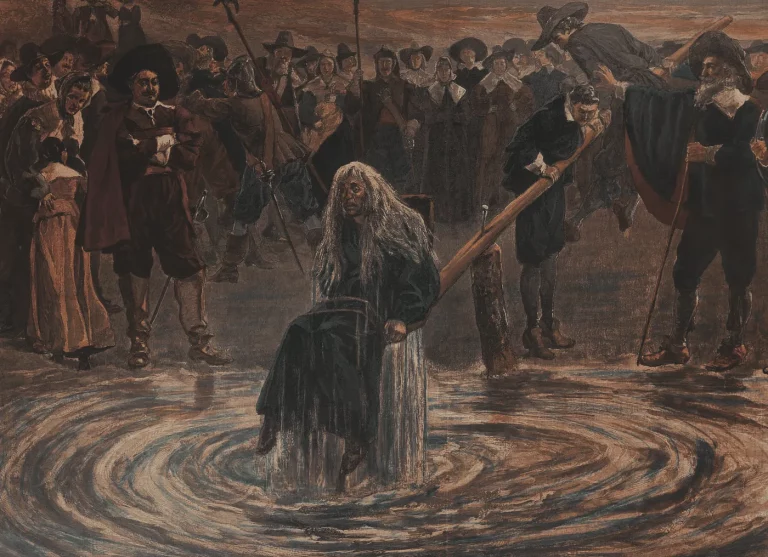
Finally, the General Court tried Williams in October 1635 and convicted him of sedition and heresy.
They declared that he was spreading “diverse, new, and dangerous opinions” and ordered that he be banished. The execution of the order was delayed because Williams was ill and winter was approaching, so he was allowed to stay temporarily if he ceased publicly teaching his opinions.
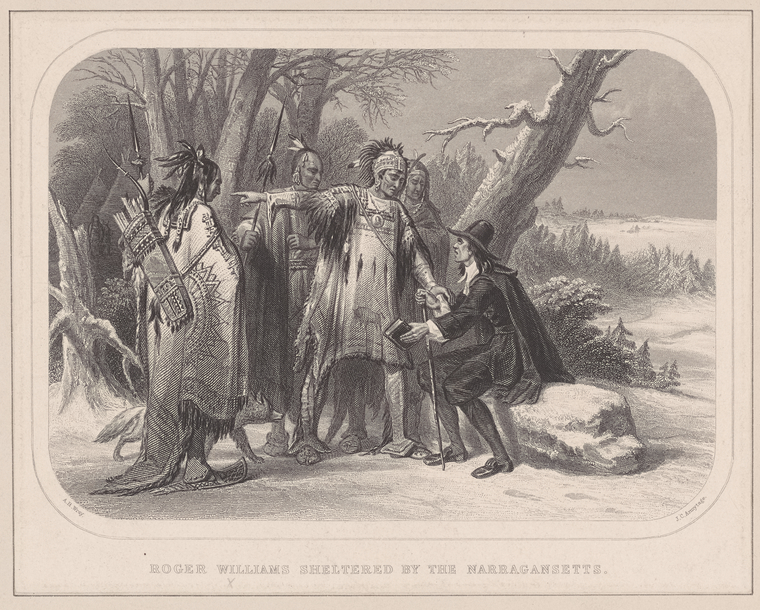
He did not comply with this demand, and the sheriff came in January 1636, only to discover that he had slipped away three days earlier during a blizzard. He traveled over fifty miles on foot through deep snow, from Salem to Raynham, Massachusetts, where the local Wampanoags offered him shelter at their winter camp. Sachem Massasoit hosted Williams there for the three months until spring.
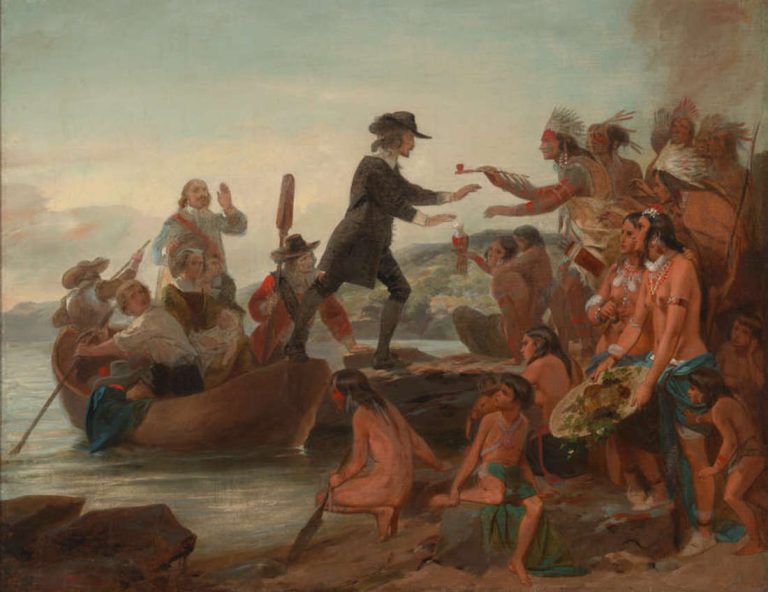
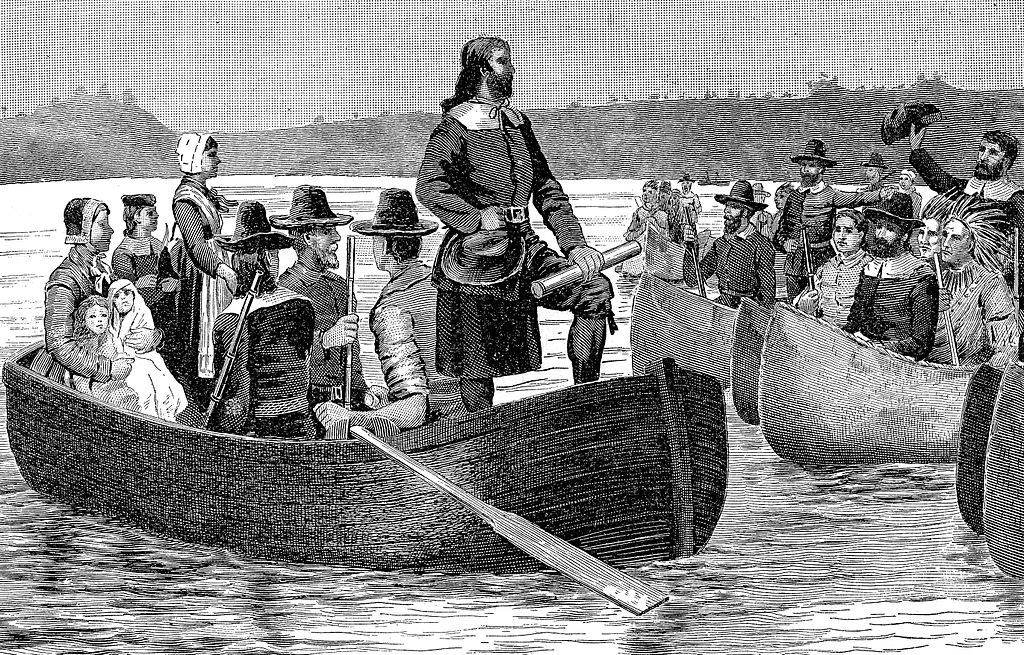
Williams crossed the Seekonk River in search of a new location suitable for settlement. Upon reaching the shore, Williams was met by Narragansett people who greeted them with the words “What cheer, Netop” (transl. Hello, friend).
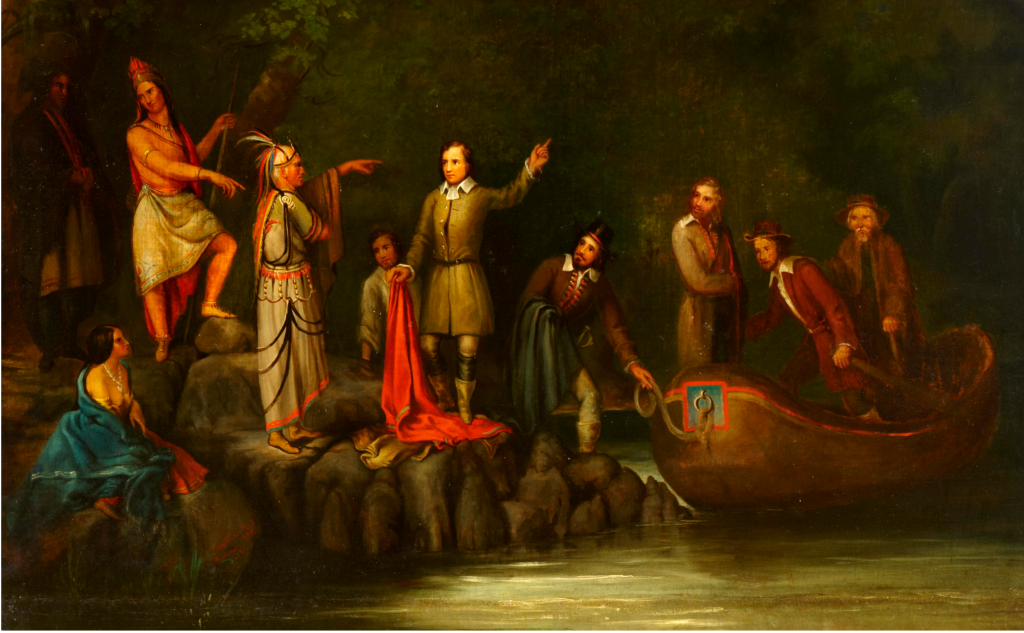
The settlers then continued eastward along the Providence River, where they encountered a cove and freshwater spring. Finding the area suitable for settlement, Williams acquired the tract from the Native Americans.
Here, Williams and his followers established a new, permanent settlement, convinced that divine providence had brought them there. They named it Providence Plantations.
Williams wanted his settlement to be a haven for those “distressed of conscience,” and it soon attracted a growing number of families who did not see eye-to-eye with the leaders in Massachusetts Bay. From the beginning, a majority vote of the heads of households governed the new settlement, but only in civil things. Newcomers could also be admitted to full citizenship by a majority vote. In August 1637, a new town agreement again restricted the government to civil things.
In 1640, 39 freemen (men who had full citizenship and voting rights) signed another agreement that declared their determination “still to hold forth liberty of conscience.” Thus, Williams founded the first place in modern history where citizenship and religion were separate, providing religious liberty and separation of church and state. This was combined with the principle of majoritarian democracy.
In November 1637, the General Court of Massachusetts exiled a number of families during the Antinomian Controversy, including Anne Hutchinson and her followers.
In the meantime, the Pequot War had broken out. Massachusetts Bay asked for Williams’s help, which he gave despite his exile, and he became the Bay colony’s eyes and ears, and dissuaded the Narragansetts from joining with the Pequots. Instead, the Narragansetts allied themselves with the colonists and helped to defeat the Pequots in 1637–38.
Painting: The Landing of Roger Williams at Slate Rock. Credit: Charles Hitchcock.
Williams formed firm friendships and developed deep trust among the Native American tribes, especially the Narragansetts. He was able to keep the peace between the Native Americans and the Colony of Rhode Island and Providence Plantations for nearly forty years by his constant mediation and negotiation. He twice surrendered himself as a hostage to the Native Americans to guarantee the safe return of a great sachem from a summons to a court. The Native Americans trusted Williams more than any other Colonist, and he proved trustworthy.
Williams returned to London in the midst of the English Civil War.
Puritans held power in London, and he was able to obtain a charter through the offices of Sir Henry Vane the Younger despite strenuous opposition from Massachusetts’ agents. His book A Key into the Language of America proved crucial to the success of his charter, albeit indirectly. It was published in 1643 in London and combined a phrasebook with observations about life and culture as an aid to communicate with the Native Americans of New England. It covered everything from salutations to death and burial. Williams also sought to correct the attitudes of superiority displayed by the colonists towards Native Americans:
“Boast not proud English, of thy birth & blood; Thy brother Indian is by birth as Good. Of one blood God made Him, and Thee and All, As wise, as fair, as strong, as personal.”
Engraving: Return of Roger Williams from England with the First Charter, 1644. From a painting by C.R. Grant. Engraving from The Providence Plantations for 250 Years, Welcome Arnold Greene, 1886.
Williams soon returned to the New World.
It took him several years to unify the settlements of Narragansett Bay under a single government. The settlements of Providence, Portsmouth, Newport, and Warwick finally united in 1647 into the Colony of Rhode Island and Providence Plantations.
Freedom of conscience was again proclaimed, and the colony became a haven for people who were persecuted for their beliefs, including Baptists, Quakers, and Jews.
Williams did not write extensively about slavery.
He consistently expressed disapproval of it, though generally he did not object to the enslavement of captured enemy combatants for a fixed duration, a practice that was the normal course of warfare in that time. Williams struggled with the morality of slavery and raised his concerns in letters to Massachusetts Bay Governor John Winthrop concerning the treatment of the Pequots during the Pequot War.
In these letters, he requested Winthrop to prevent the enslavement of Pequot women and children, as well as to direct the colonial militia to spare them during the fighting. In another letter to Winthrop written on July 31, 1637, Williams conceded that the capture and indenture of remaining Pequot women and children would “lawfully” ensure that remaining enemy combatants were “weakned and despoild,” but pleaded that their indenture not be permanent.
Despite his reservations, Williams formed part of the colonial delegation sent to conduct negotiations at the end of the Pequot War, where the fates of the captured Pequots were decided upon between the colonists of New England and their Native American allies the Narragansetts, Mohegans, and Niantics.
In 1637, Winthrop gave Williams a Pequot boy as an indentured servant.
The child had been captured by Israel Stoughton in Connecticut. Williams renamed the child “Will.”
Some of the Native American allies aided in the export of enslaved Pequots to the West Indies, while others disagreed with the practice, believing that they should have been given land and provisions to contribute to the well being of colonial settlements. Many enslaved Pequots frequently ran away, where they were taken in by surrounding Native American settlements.
Williams aided colonists in distributing and selling Pequot captives and fielded requests from colonists to track down and return runaways, using his connections with Native leaders to find escapees. Williams recorded experiences of abuse and rape recounted by the Natives he apprehended, it is speculated that Williams’s letters encouraging Winthrop to limit terms of servitude were informed by his acquaintance with escapees.
As the demand for labor in the West Indies grew with the cultivation of sugarcane, Europeans exported enslaved Native Americans to the “sugar islands.” Historian Alan Gallay estimates that between 1670 and 1715, 24,000 to 51,000 captive Native Americans were exported through Carolina ports, of which more than half, 15,000-30,000, were brought from then-Spanish Florida. These numbers were more than the number of Africans imported to the Carolinas during the same period. Gallay also says that “the trade in Indian slaves was at the center of the English empire’s development in the American South. The trade in Indian slaves was the most important factor affecting the South in the period 1670 to 1715;” intertribal wars to capture slaves destabilized English colonies, Florida and Louisiana. Additional enslaved Native Americans were exported from South Carolina to Virginia, Pennsylvania, New York, Rhode Island and Massachusetts. Starting in 1698, Parliament allowed competition among importers of enslaved Africans, raising purchase prices for slaves in Africa, so they cost more than enslaved Native Americans.
In 1641, the Massachusetts Bay Colony passed laws sanctioning slavery.
In response, under Williams’s leadership, Providence Plantations passed a law in 1652 restricting the amount of time for which an individual could be held in servitude and tried to prevent the importation of slaves from Africa. The law established terms for slavery that mirrored that of indentured servitude; enslavement was to be limited in duration and not passed down to children.
Tensions escalated with the Narragansetts during King Philip’s War, despite Williams’s efforts to maintain peace, during which his home was burned to the ground. During the war, Williams led the committee responsible for processing and selling Rhode Island’s Native American captives into slavery. Williams’s committee recommended that Providence allow residents to keep Native American slaves despite earlier municipal statutes.
The committee appraised the prices of various Native American captives and brokered their sale to residents. Williams’s son transported additional captives to be sold in Newport. Williams also organized the trial and execution of a captured Native American man who had been a ringleader in the war.
King Philip’s War (1675–1676) pitted the colonists against the Wampanoags, along with some of the Narragansetts with whom Williams had previously maintained good relations. Williams was elected captain of Providence’s militia, even though he was in his 70s. On March 29, 1676, Narragansetts burned Providence; nearly the entire town was destroyed, including Williams’s home.
Williams died sometime between January 16 and March 16, 1683 and was buried on his own property. Fifty years later, his house collapsed into the cellar and the location of his grave was forgotten.
The Boston Massacre serves as a poignant reminder of the fragility of peace and the potential for violence when tensions run high. It underscores the importance of open dialogue, understanding, and diplomacy in resolving conflicts. As global citizens, we see parallels in modern-day protests and confrontations between authorities and civilians worldwide.
Boston, MA. The Boston Massacre of 1770 stands as a pivotal moment in American history, igniting the flames of revolution and shaping the course of a nation yet to be born. As we delve into this significant event, we’re struck by the complexity of emotions and tensions that led to that fateful night on March 5, 1770.
On a cold winter evening in Boston, a confrontation between British soldiers and colonial civilians escalated into a deadly clash that would forever change the relationship between the American colonies and Great Britain. The streets of Boston, already simmering with resentment towards British rule, became the stage for a tragedy that would galvanize the revolutionary spirit.
The incident began innocuously enough, with a group of colonists taunting British soldiers stationed in the city. However, the situation quickly spiraled out of control.
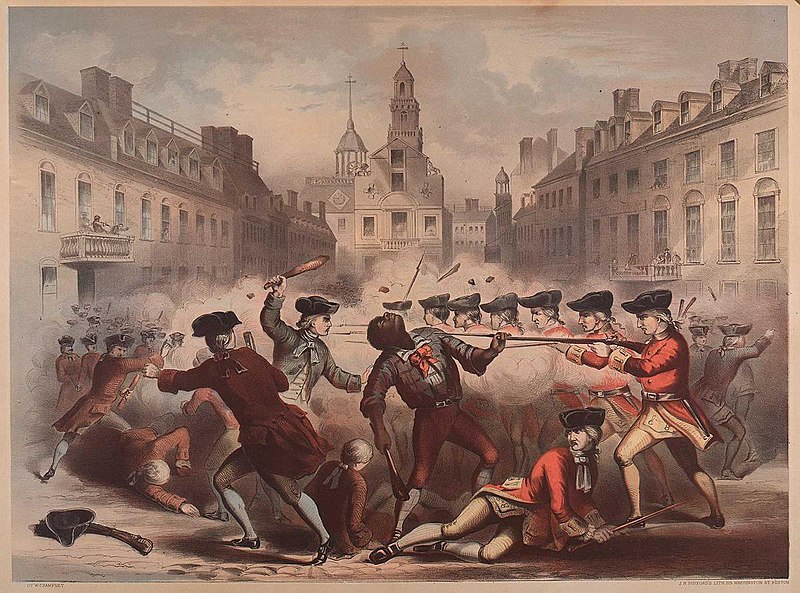
As tensions rose, the crowd grew larger and more hostile. Snowballs and sticks were hurled at the soldiers, who found themselves increasingly cornered and outnumbered.
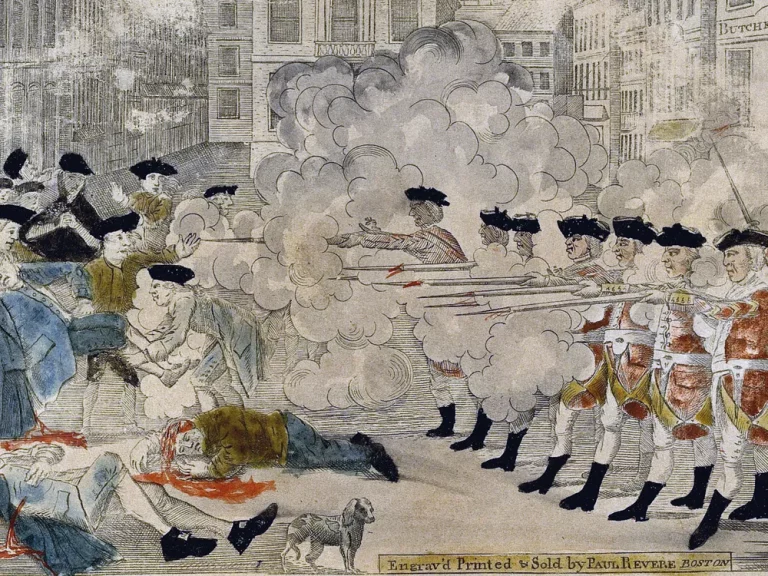
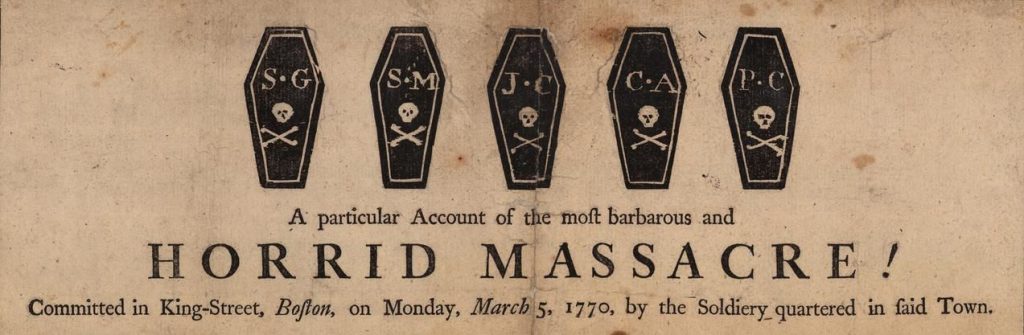
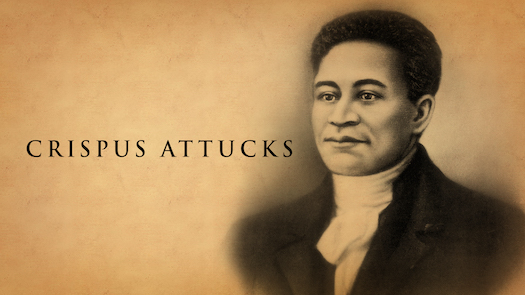
In the chaos that ensued, shots were fired. When the smoke cleared, five colonists lay dead or mortally wounded: Crispus Attucks, Samuel Gray, James Caldwell, Samuel Maverick, and Patrick Carr.
One of the musket balls that hit Attucks apparently didn’t do too much damage, but the other, which tore an inch-wide hole in his chest, inflicted lethal injuries, according to the transcript of the British soldiers’ trial; the shot “goring the right side of his lungs, and a great part of the liver most horribly.”
Crispus Attucks, a sailor of African and Native American descent, is often remembered as the first casualty of the American Revolution.
The aftermath of the Boston Massacre was as dramatic as the event itself.
The colonial response was swift and passionate. Paul Revere, the famed silversmith and revolutionary, produced an engraving of the event that spread like wildfire throughout the colonies. This powerful piece of propaganda depicted the British soldiers as cold-blooded murderers, firing into a peaceful crowd.
What fascinates us most about this event is the role of John Adams, future president of the United States, who chose to defend theBritish soldiers in court. Despite the intense public anger, Adams believed in the principle of justice and the right to a fair trial. His defense resulted in the acquittal of six of the eight soldiers, with two found guilty of manslaughter.
The Boston Massacre served as a rallying cry for the revolutionary cause, intensifying colonial resentment towards British rule. It became a symbol of British oppression and tyranny, fueling the growing desire for independence. The event was skillfully used by colonial leaders to stir up anti-British sentiment and unite the colonies in their struggle for freedom.
As we reflect on this watershed moment, we’re struck by how a single incident can have such far-reaching consequences. The Boston Massacre didn’t just change the lives of those directly involved; it altered the course of history. It reminds us of the power of public perception and the role of media in shaping narratives.
The event also highlights the complexities of leadership in times of crisis.
The British soldiers, led by Captain Thomas Preston, found themselves in an impossible situation. Their actions, whether justified or not, had consequences that reverberated far beyond that night in Boston.
The Boston Massacre serves as a poignant reminder of the fragility of peace and the potential for violence when tensions run high. It underscores the importance of open dialogue, understanding, and diplomacy in resolving conflicts. As global citizens, we see parallels in modern-day protests and confrontations between authorities and civilians worldwide.
This historical event also prompts us to reflect on the nature of revolution and the price of freedom. The colonists who lost their lives that night became martyrs for a cause larger than themselves. Their sacrifice, whether intentional or not, became a catalyst for change.
As we continue to grapple with issues of justice, freedom, and governance in our modern world, the lessons of the Boston Massacre remain relevant. It reminds us of the power of public opinion, the importance of fair trials, and the potential for single events to spark monumental change.
The Boston Massacre stands as a testament to the complex tapestry of human emotions, political tensions, and societal changes that shape our history. It serves as a powerful reminder that the path to freedom and justice is often paved with sacrifice and struggle.
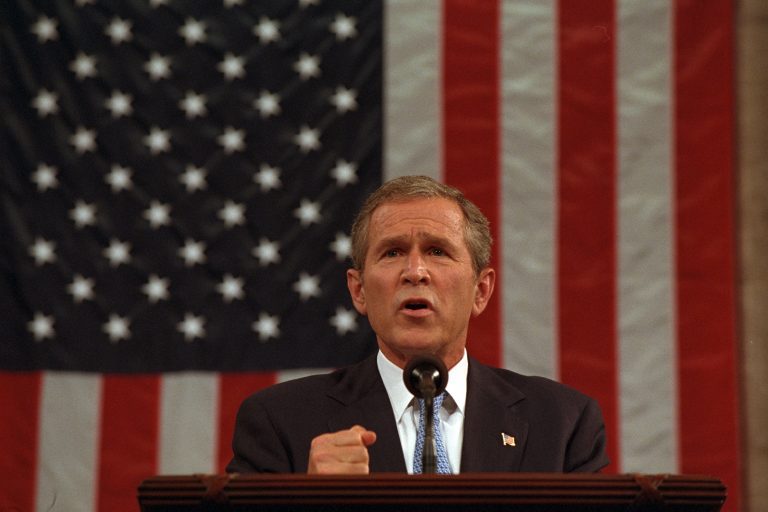
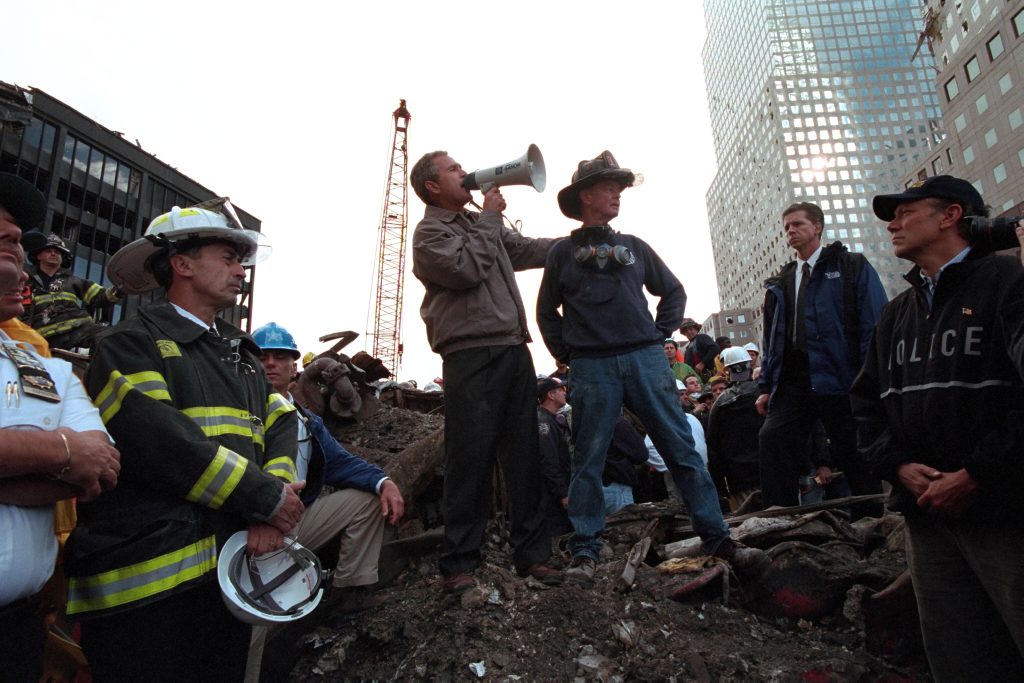
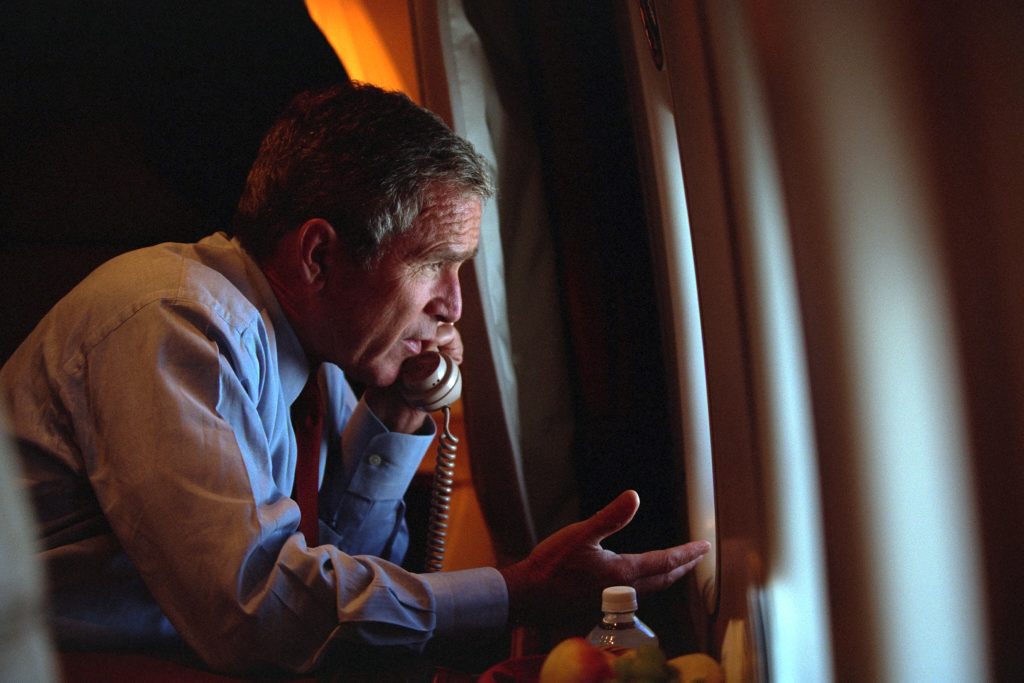
911: President George W. Bush Visits New York, 09/14/2001. Original public domain image from FlickrAfter departing Offutt Air Force Base in Nebraska for Washington, D.C. Tuesday, Sept. 11, 2001, President George W. Bush talks on the phone with Vice President Dick Cheney from Air Force One, 09/11/2001. Original public domain image from Flickr
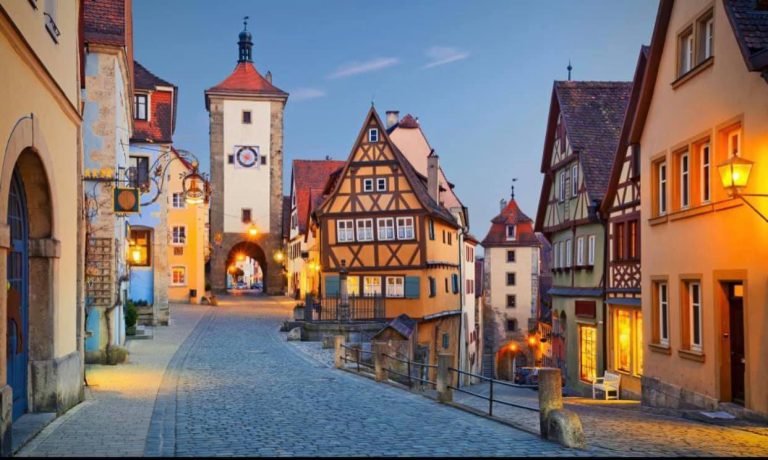
Rothenburg ob der Tauber, Germany. I visited this fortified hilltop city known as Rothenburg ob der Tauber in high school and the sense of awe walking its cobbled streets has never left me. It is not just a beautiful place to visit but one of Germany’s most significant historical centers.
Ringed by a huge defensive wall punctuated by towering city gates, the enclosed warren of narrow streets, lanes and alleyways are a delight to wander.
Lush parks and gardens are to be stumbled across among the quintessentially German medieval architecture of half-timbered and brightly painted and decorated buildings.
Cafes, restaurants and beer halls abound, as do museums, not least the glittery Christmas Museum, the Medieval Crime and Justice Museum and the Imperial City Museum, celebrating the town’s long and prestigious history.