Turkey (Türkiye)
Turkey, officially known as the Republic of Türkiye, is a transcontinental nation strategically positioned at the nexus of Southeastern Europe and Western Asia. It is bordered by eight countries and surrounded by four distinct seas, giving it a unique and influential geopolitical role.
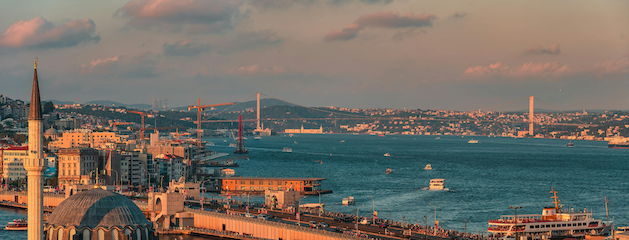
The modern republic, founded in 1923 from the remnants of the Ottoman Empire, represents a profound synthesis of deep historical traditions and a determined drive toward contemporary secular governance and economic development. Its largest city, Istanbul, famously straddles the Bosphorus Strait, making it the only metropolis in the world situated on two continents.
Historical Overview
The history of Turkey is a long and complex narrative of empires and transformation. The territory was the heartland of the Ottoman Empire for over six centuries, a vast polyglot empire that controlled much of Southeast Europe, Western Asia, and North Africa. Following the empire’s defeat in World War I, a transformative national movement led by Mustafa Kemal Atatürk culminated in the Turkish War of Independence. The Republic of Türkiye was proclaimed in 1923, with Atatürk as its first president.
The new republic embarked on a radical series of Kemalist reforms, designed to modernize the state and society by instituting secularism, replacing Islamic law with a legal system based on European models, changing the alphabet from Arabic to Latin script, and granting women full political rights. This period marked a decisive break from the imperial and theocratic past, reorienting Turkey toward the West.
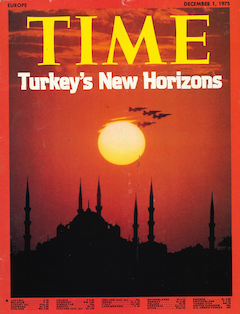
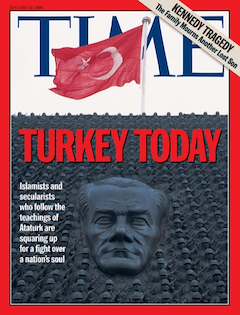
The nation’s geopolitical significance was consistently noted in international media; for instance, a 1925 article in Time Magazine reported on the exile of the last Ottoman Sultan, Mehmed VI, highlighting the country’s pivotal transition from monarchy to republic. Decades later, covers such as “Turkey Today” (1998) and “Turkey’s New Horizons” (1975) continued to frame the country as a nation perpetually navigating new geopolitical and economic landscapes.
Government and Politics
Turkey operates as a unitary presidential republic. The political system has undergone significant evolution, particularly with a 2017 constitutional referendum that abolished the office of the prime minister and consolidated executive power in a strengthened presidency. The President of the Republic serves as both the head of state and head of government, wielding broad powers over appointments, legislation, and national policy.
The legislative branch is the unicameral Turkish Grand National Assembly (Türkiye Büyük Millet Meclisi), with 600 members elected for five-year terms. The judiciary is nominally independent, though its structure and high-level appointments are influenced by the executive branch.
Turkish politics is characterized by a vigorous multi-party system, though it has experienced periods of military intervention (1960, 1971, 1980, 1997) and has been dominated in the 21st century by the Justice and Development Party (AK Parti) and its longtime leader, Recep Tayyip Erdoğan.
Major themes in contemporary politics include debates over secularism versus religious conservatism, ethnic nationalism and Kurdish minority rights, civil-military relations, and the country’s geopolitical orientation between Europe, Asia, and the Middle East.
Geography and Climate
The geography of Türkiye is remarkably diverse. It spans approximately 783,356 square kilometers, with Thrace in Europe and Anatolia (Asia Minor) in Asia, separated by the Bosphorus, the Sea of Marmara, and the Dardanelles—collectively known as the Turkish Straits. This location gives it control over a critical maritime passage between the Black Sea and the Mediterranean.
- Topography: The landscape is predominantly mountainous, with the Pontic Mountains in the north and the Taurus Mountains in the south. The interior consists of a high, semi-arid plateau, while the fertile Aegean and Mediterranean coastal plains are major agricultural centers. Mount Ararat, located in the east, is the country’s highest peak and is fabled as the purported resting place of Noah’s Ark.
- Climate: Climate varies widely. The coastal regions enjoy a temperate Mediterranean climate with hot, dry summers and mild, wet winters. The Black Sea coast receives the highest rainfall and has a oceanic climate. The Anatolian plateau experiences a continental climate with sharp temperature contrasts between summer and winter and significant snowfall.
- Biodiversity: This varied terrain supports rich biodiversity, including globally significant Key Biodiversity Areas. However, environmental challenges such as deforestation, water scarcity, and pollution are ongoing concerns.
Economy
Türkiye possesses the world’s 19th-largest economy by nominal GDP and is classified among the newly industrialized countries. It has a dynamic and rapidly growing private sector, though the state remains influential in key industries like banking, energy, and transportation.
- Key Sectors: Major industries include automotive manufacturing, shipbuilding, electronics, textiles and apparel, and construction. Tourism is a vital services sector, with millions visiting historical sites like Hagia Sophia and Cappadocia, and coastal resorts along the Mediterranean and Aegean.
- Agriculture: The country is largely self-sufficient in food production and is a top global producer of hazelnuts, apricots, figs, and cherries.
- Trade and Challenges: Its strategic location makes it a natural energy corridor between Central Asia, the Middle East, and Europe. However, the economy faces challenges including a high current account deficit, currency volatility, and inflation. The government has pursued large-scale infrastructure projects, such as the new Istanbul Airport and the Istanbul Canal, aiming to boost long-term growth.
Demographics and Culture
With a population exceeding 85 million, Turkey is largely urbanized, with major centers in Istanbul, Ankara (the capital), İzmir, and Bursa. The largest ethnic group is Turks, with a significant Kurdish minority (approximately 18-25%), and smaller communities of Arabs, Circassians, and others.
Turkish culture is a centuries-old fusion of Turkic, Anatolian, Ottoman, and Western influences.
- Language: The official language is Turkish, a Turkic language written in Latin script.
- Religion: While the population is predominantly Muslim (mostly Sunni), the state is officially secular. There are small Christian and Jewish communities.
- Arts and Heritage: The country has an immense historical heritage, encompassing Neolithic sites like Göbekli Tepe, classical Greek and Roman ruins such as Ephesus, and magnificent Ottoman and Seljuk architecture. Traditional arts include calligraphy, ceramics (especially İznik tiles), shadow theatre (Karagöz), and music. Turkish cuisine, with dishes like kebabs, meze, baklava, and Turkish coffee, is renowned globally.