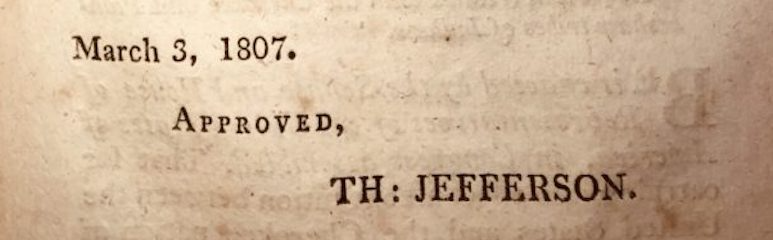
Insurrection Act. A group of U.S. federal statutes that authorize the president to deploy military forces domestically in limited emergencies involving rebellion, violence, or obstruction of federal law. These provisions, enacted between 1792 and 1871 and now codified primarily at 10 U.S.C. §§ 251–255, sit at the intersection of civil‑military relations and constitutional protections for civil liberties.
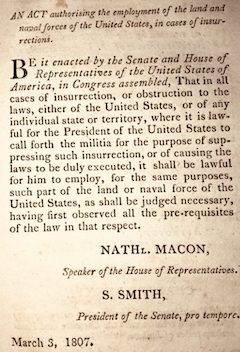
In modern form, the Insurrection Act allows a president to use federal troops or to federalize state National Guard units when ordinary law‑enforcement tools are deemed inadequate to restore order or ensure execution of federal law.
Under Section 251, a governor or state legislature must request assistance, but Sections 252 and 253 permit unilateral presidential deployment if unlawful obstructions or domestic violence make it impracticable to enforce federal law through normal judicial processes.
Historically, presidents have invoked Insurrection Act sparingly, often in the context of enforcing civil rights protections when state officials refused to comply with federal court orders.
Notable examples include President Dwight Eisenhower‘s 1957 intervention in Little Rock, Arkansas, to enforce school desegregation and President John F. Kennedy’s 1962 and 1963 deployments to protect Black students integrating universities in Mississippi and Alabama.
The statute’s broad language has periodically raised fears that a determined executive could stretch Insurrection Act beyond its intended scope, using troops to suppress peaceful dissent or to bypass local authorities for political reasons. Civil liberties advocates warn that domestic military deployments risk blurring the line between war‑fighting and policing, undermining the Posse Comitatus Act’s longstanding limit on direct military participation in routine civilian law enforcement.
Debates over the Insurrection Act resurfaced when presidents considered invoking it in response to large‑scale protests, urban unrest, or challenges to federal authority. Legal scholars generally agree that any such use must meet stringent necessity and proportionality standards, and that courts could review whether the factual basis for an invocation satisfies statutory requirements.
In the context of contemporary politics, calls to employ the Insurrection Act in response to immigration‑related demonstrations or racial‑justice protests highlight the statute’s potential to shift power from states and municipalities to the federal executive. Critics contend that normalizing such deployments would chill First Amendment activity and concentrate coercive power in the presidency, while supporters argue that the law provides an essential emergency tool when local governments allegedly refuse to maintain public order.