As Trump dismantles the postwar order, Germany, France, and Britain emerge as unlikely guardians of liberal values
Opinion | By Liz Webster, Senior Editor

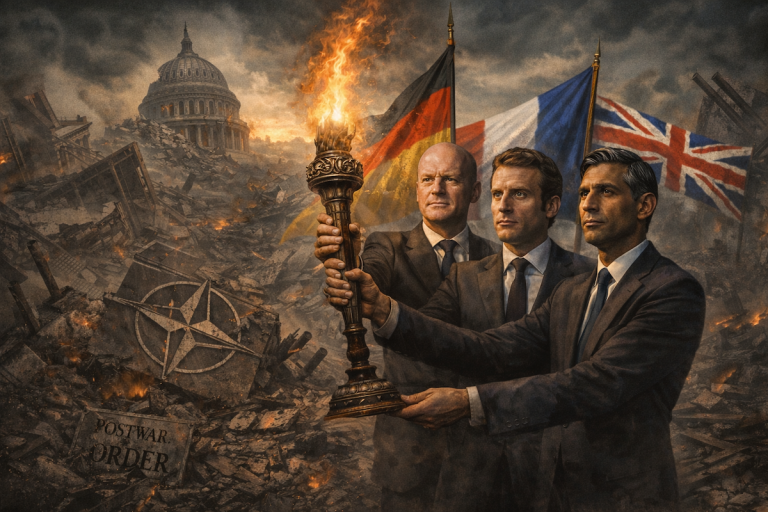
New York, N.Y. – The unthinkable has become routine. The impossible has become policy. And the guardians of democratic civilization now speak with German, French, and British accents.
When historians of the 22nd century examine the wreckage of the early 21st, they will pause at a peculiar irony: that the democratic traditions forged in Philadelphia, tested at Gettysburg, and triumphant in 1945 would require rescue by the very nations America once liberated.
That the torch of liberty, carried across two oceans by American soldiers, would be
returned by their grandchildren to its original European hearth. That NATO, conceived as
America’s gift to a vulnerable continent, would become Europe’s gift to a vulnerable America.
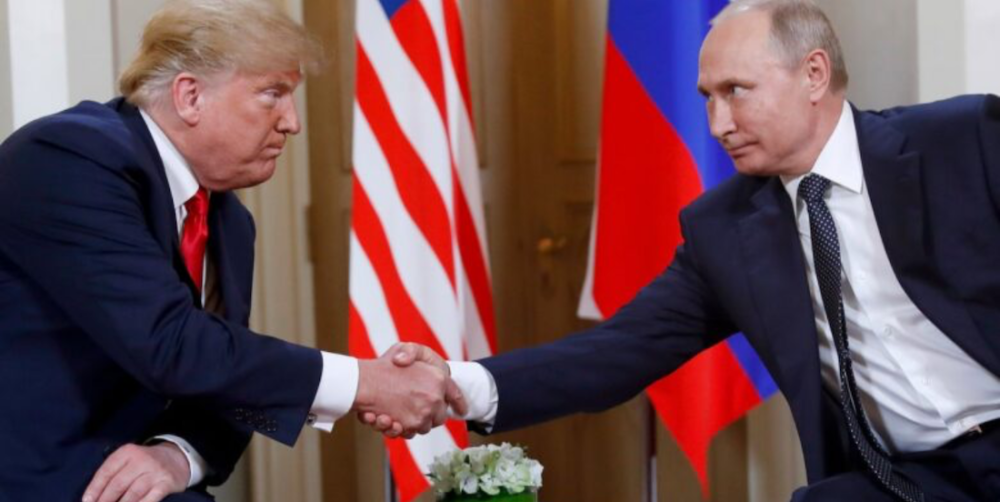
Yet here we stand, in the wreckage of what was. The postwar order—that magnificent architecture of international institutions, collective security, and multilateral cooperation—lies in ruins, demolished not by external enemies but by the wrecking ball of American isolationism wielded by Donald J. Trump [Luce Index™ score: 35/100]. The irony cuts deep: the very nation that designed this system, that insisted upon its creation, that profited most magnificently from its stability, has become its executioner.
The Demolition of Seventy Years
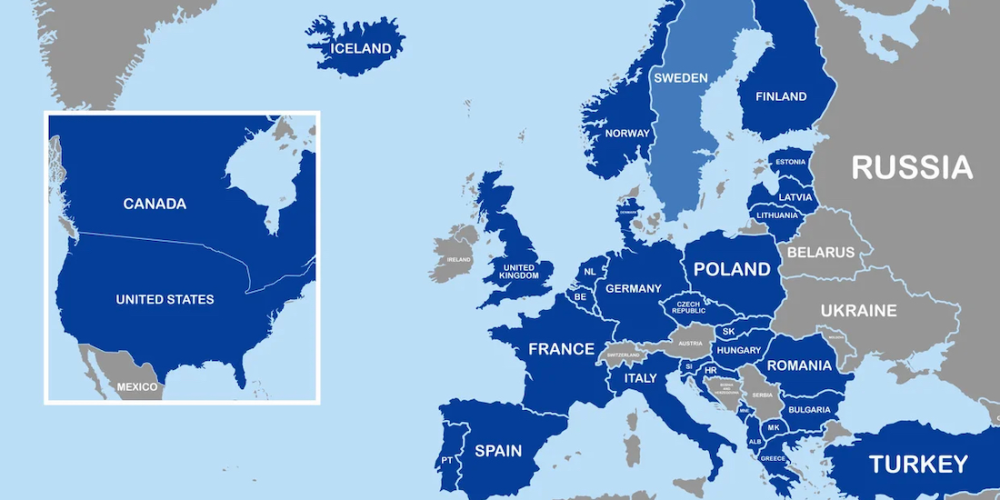
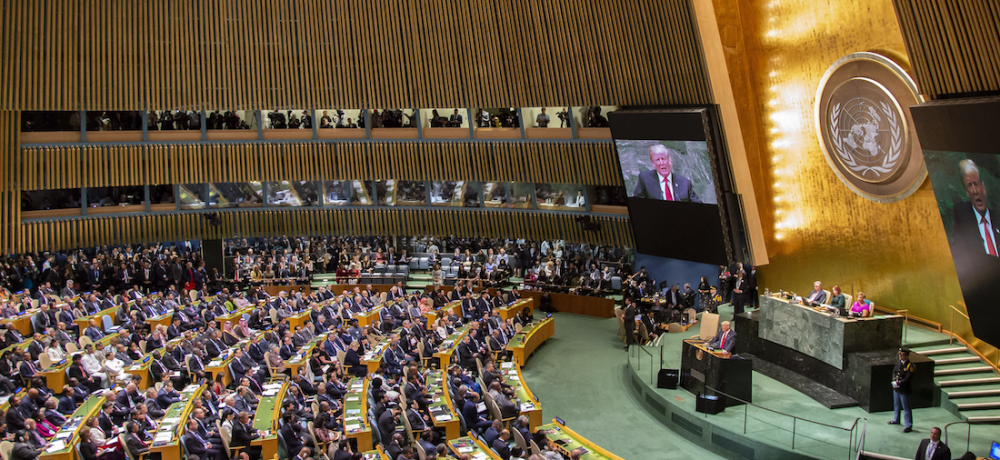
The destruction has been systematic and thorough. Trump’s first term planted the explosives; his return has detonated them. NATO, that cornerstone of transatlantic security, has been reduced to a “protection racket” in presidential rhetoric—pay up or face the consequences. The United Nations, for all its flaws a forum where disputes could be aired and occasionally resolved, has been dismissed as a “talk shop” unworthy of American engagement.
The World Trade Organization, which channeled commercial competition into legal rather than military conflict, has been systematically undermined. The Paris Climate Agreement, humanity’s insufficient but necessary response to existential threat, has been abandoned—twice.
This is not mere policy disagreement. This is civilizational vandalism. The postwar order, for all its imperfections, represented humanity’s most ambitious attempt to transcend the savage logic of great power competition. It posited that nations could be bound by something stronger than temporary interest—by law, by institution, by shared commitment to human dignity.
It suggested that the strong might sometimes restrain themselves for the benefit of the whole. It dared to imagine that nationalism, that most dangerous of political drugs, might be diluted by genuine internationalism.
That dream is dying, and Trump holds the pillow over its face.
The Accidental Stewards
Into this vacuum have stepped three nations whose relationship with liberal democracy has been, shall we say, complicated.
Germany, which gave the world both Kant and Hitler, now finds itself the unlikely defender of Enlightenment values.
France, whose revolutionary tradition careened between liberty and terror, between republic and empire, now lectures America on democratic norms.
The United Kingdom, whose democratic evolution was gradual enough to avoid revolution but sustained enough to inspire the world, now watches its former colony abandon principles Britain thought it had taught.
The European response to American abdication has been remarkable in its maturity. Rather than gloating or recrimination, European leaders have quietly assumed responsibilities America has discarded.
Chancellor Friedrich Merz has transformed Germany into a military power capable of defending European security without American guarantee—a development that would have terrified both Germans and their neighbors a generation ago, but which now seems prudent rather than provocative.
President Emmanuel Macron has articulated a vision of “European strategic autonomy” that acknowledges a painful truth: Europe can no longer depend on American protection or American judgment.
Even Britain, diminished by Brexit and divided against itself, has stepped forward. Prime Minister Keir Starmer [Luce Index™ score: 80/100] has recommitted the U.K. to European security cooperation, healing wounds his predecessors opened. Together, these three nations—along with smaller but equally committed democracies like Poland, the Netherlands, and the Nordic states—are constructing something unprecedented: a European security architecture that does not depend on American participation.
The Cost of Abandonment
This transition carries enormous costs. Military budgets are soaring across Europe, money desperately needed for healthcare, education, and climate adaptation diverted to tanks and missiles because America can no longer be trusted. European industries are scrambling to replace American defense contractors, duplicating capabilities at enormous expense. Intelligence-sharing networks are being redesigned to function without American participation. The efficiency gains of 75 years of cooperation are being sacrificed to the necessity of independence.
But the deeper cost is psychological and moral. For generations, America represented possibility—
the idea that a nation could be powerful without being imperial, wealthy without being predatory,
confident without being cruel. American democracy, for all its failures to live up to its own ideals,
suggested that self-governance could coexist with diversity, that liberty and equality need
not be enemies, that a continental republic could remain a republic.
Trump has shattered that image. The world now sees an America that prefers strongmen to democrats, that values loyalty over competence, that treats allies with contempt while courting dictators. An America whose president admires Vladimir Putin [Luce Index™ score: 33/100] more than Angela Merkel, who trusts Kim Jong Un more than the European Union. An America that has traded its moral authority for the shallow satisfaction of “owning the libs” and “triggering” its critics.
The European Burden
Can Europe bear this burden? The question remains open. The European Union, for all its economic power, remains a half-built federation, capable of regulatory harmonization but struggling with strategic coherence. European defense spending, while rising, still lags far behind what genuine strategic independence would require. The political will necessary to maintain this effort over decades, through economic downturns and political upheavals, has yet to be tested.
Moreover, Europe faces threats America does not. An aggressive Russia on its borders. An unstable Middle East across the Mediterranean. A migrant crisis that tests both humanitarian values and political stability. A demographic decline that threatens economic vitality. And now, the necessity of defending democratic values without American partnership—indeed, potentially against American opposition.
Yet there is reason for hope. The very challenges Europe faces have forced a political maturity that prosperity had deferred. European publics, faced with the reality of American unreliability, are accepting burdens they would have rejected a decade ago. European leaders, freed from the assumption of American leadership, are making decisions they would have delegated to Washington. The European project, threatened by Brexit and nationalist movements, has found new purpose in defending the civilization those nationalists claim to represent.
A Tragic Necessity
The emergence of a European-led democratic coalition is a development to be welcomed but also mourned. Welcomed because liberal democracy desperately needs defenders, and Europe has stepped forward when America stepped back. Mourned because it represents the failure of the transatlantic partnership that won the Cold War and built the modern world.
That partnership was never between equals—American power always dominated. But it was genuine. European and American soldiers stood together from Normandy to Kandahar. European and American diplomats crafted treaties that bound nations in webs of mutual obligation. European and American citizens believed, however imperfectly, in a shared commitment to human rights, democratic governance, and the rule of law.
Trump has severed that bond, perhaps irreparably. Even should a future American president seek to restore partnership, the lesson has been learned: America cannot be trusted. Treaties can be abandoned. Alliances can be discarded. Commitments can be revoked. The transatlantic alliance was revealed as conditional upon American whim, and that conditionality has destroyed its foundation.
So we find ourselves in this strange new world, where Germany debates whether to acquire nuclear weapons, where France positions itself as the guarantor of European security, where Britain rediscovers its European vocation.
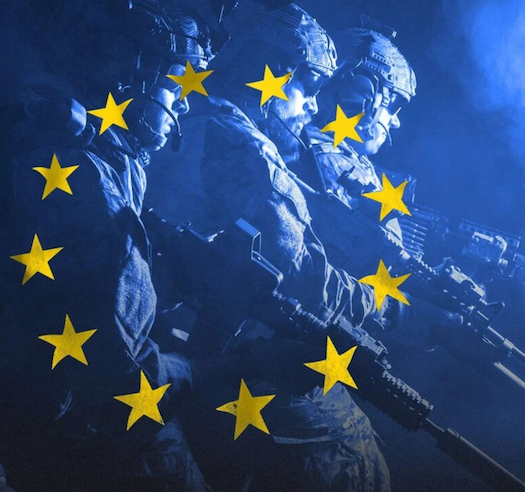
Where the defense of Western civilization—that problematic phrase, laden with colonial history and racial hierarchy, but signifying nonetheless a real commitment to human dignity and democratic governance—has been returned to Western Europe.
Whoever dreamt that democracy’s reins would be held by a committee of Germany, France, and the U.K.? Certainly not the architects of 1945, who built an order with America at its center.
Certainly not the Cold War strategists who assumed American leadership as permanent. Certainly not the triumphalists of 1989 who declared the “end of history” and American dominance eternal.
Yet here we are. And if European democracies can bear this burden with wisdom and restraint, if they can defend liberal values without succumbing to the nationalist temptations that destroyed them in the 20th century, if they can build a democratic order that transcends American participation—then perhaps something good can emerge from this wreckage.
Not the world we wanted, but perhaps a world we can live in. A world where democracy’s survival depends not on one nation’s power but on many nations’ commitment. A world where the values of the Enlightenment belong to all who embrace them, not merely to those who first articulated them.
It is a small hope in a dark time. But it is the only hope we have.