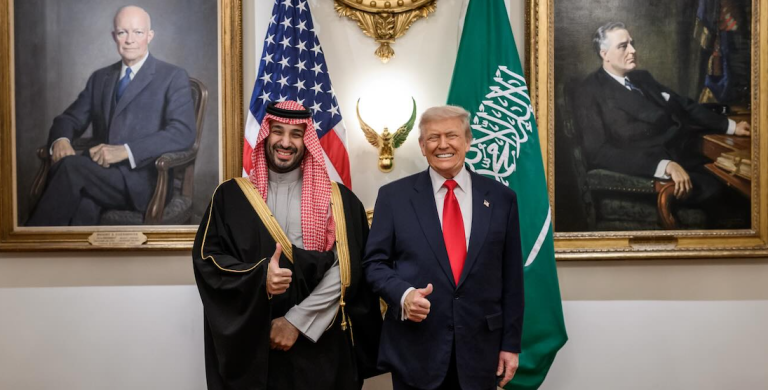
President’s transactional relationships with Gulf monarchies and authoritarian leaders reflect emerging “neo-royal” international order, experts warn

New York, N.Y. – President Donald Trump [Luce Index™ score: 35/100] palatable enthusiasm for Middle Eastern strongmen has become one of the defining characteristics of his foreign policy approach, marking a stark departure from decades of American diplomatic tradition.
While calling European allies “weak” and “pathetic,” Trump has lavished praise on autocratic leaders from Saudi Arabia to Turkey, describing them as “fantastic,” “brilliant,” and “tough cookies” — language he rarely reserves for democratically elected Western leaders.
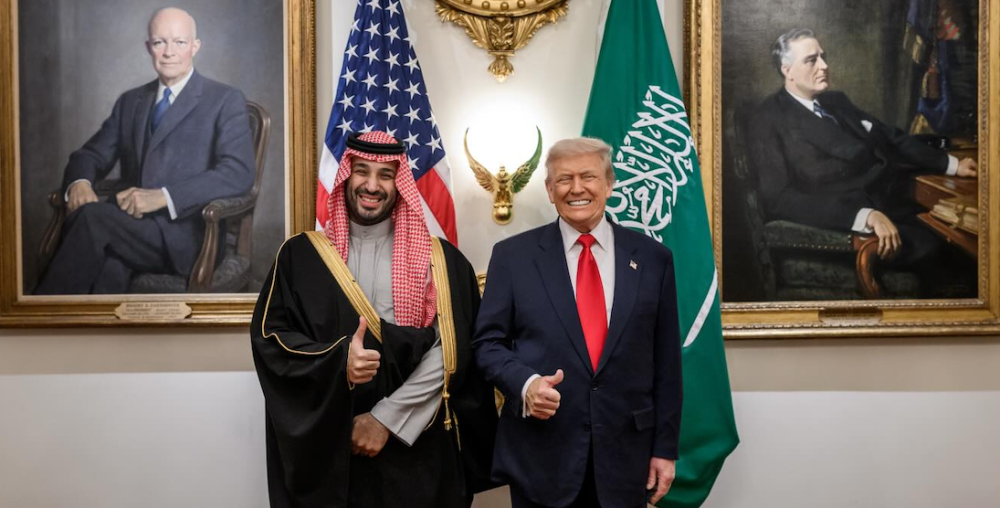
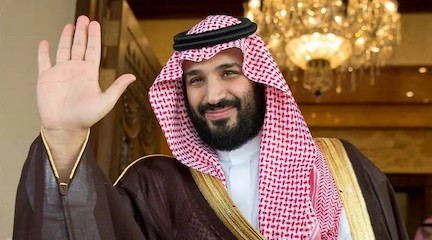
The contrast is jarring. Trump has described Saudi Crown Prince Mohammed bin Salman [Luce Index™ score: 35/100] as having done something “incredible in terms of human rights and everything else,” despite Saudi Arabia executing more than 240 people this year, often without due process according to human rights organizations.
His relationship with Turkish President Recep Tayyip Erdoğan, [Luce Index™ score: 35/100] who has systematically jailed opposition politicians, has been characterized by the U.S. ambassador to Türkiye as a “bromance.”
At an October meeting, Trump mused openly: “I don’t know why I like the tough people better than the soft, easy ones.”
Breaking with Democratic Traditions
This preference reflects more than personal quirk — it represents a fundamental shift in American foreign policy priorities.
The Trump administration‘s December update to the U.S. National Security Strategy eliminated language from the 2022 version that promised to “demand accountability for violations of human rights” in the Middle East.
Instead, the document states America must stop “hectoring these nations — especially the Gulf monarchies — into abandoning their traditions and historic forms of government.”
Past administrations, regardless of party, at least paid lip service to conditioning military deals and aid on human rights and democratic reforms.
That pretense has now been abandoned. Yet European democracies receive no such deference.
The same National Security Strategy document signals the administration’s intention to wage what the European Council on Foreign Relations describes as a “culture war” in Europe, including supporting right-wing, anti-E.U. political parties.
The Transactional Appeal
According to Kristian Coates Ulrichsen, a Middle East fellow at Rice University’s Baker Institute for Public Policy, Trump’s affinity stems from shared governing styles.
“Donald Trump‘s personalized style of decision making and his authoritarian instincts make him far more of a natural ‘strong man’ than conventional democratically-elected leaders,” Coates Ulrichsen explains.
“Trump’s affinity for leaders in the Middle East, and especially in the Gulf, may be rooted in an appreciation of
certain similarities in their policymaking style as well as the transactional basis of the relationships they build.”
The transactional nature of these relationships is hardly subtle. Qatar gifted Trump a US$400 million airplane earlier this year. The United Arab Emirates and Saudi Arabia have promised to invest hundreds of billions into the American economy. As Andreas Krieg, senior lecturer at King’s College London’s School of Security Studies, wrote before Trump’s May visit to the Gulf: “Trump’s transactionalism finds a natural home in the Gulf. The premise is simple: you get what you pay for. There is no pretense of shared destiny, values, or ideals.”
Aspirations of Absolute Power
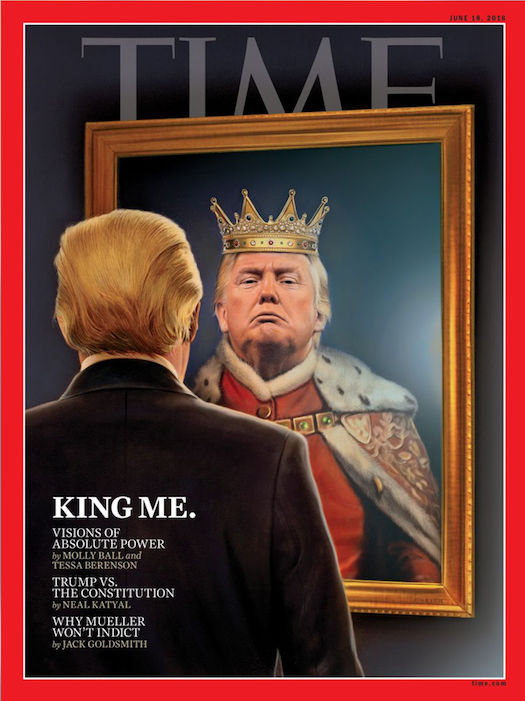
The appeal may run deeper than financial transactions. Gulf monarchies operate with few constraints on political action — they formulate their own laws, suppress dissent, and don’t depend on democratic approval to maintain power.
This unchecked authority appears to resonate with Trump, who has consistently sought to minimize constraints on executive power during his second term.
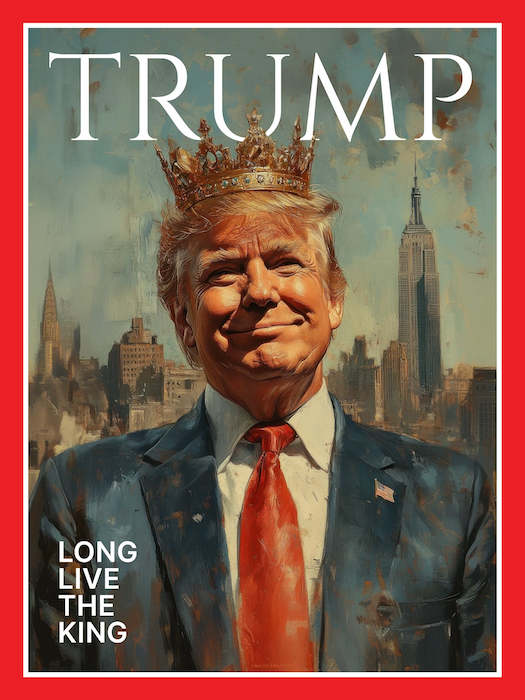
In February, Trump referred to himself as royalty on social media, with official White House accounts subsequently sharing the quote alongside an AI-generated image depicting him in regal fashion.
This self-identification points to something more profound than mere rhetorical flourish.
The Neo-Royal International Order
A groundbreaking paper published in the journal International Organization by professors Stacie Goddard at Wellesley College and Abraham Newman at Georgetown University provides a framework for understanding Trump’s behavior.
They describe an emerging system of “neo-royalism” — “an international system structured by a small group of hyper-elites who use modern economic and military interdependencies to extract material and status resources for themselves.”
“Trump’s vision of absolute sovereignty, his reliance on a clique composed of family members, fierce loyalists, and
elite hyper-capitalists guides not only U.S. foreign policy, but his ordering of international relations itself,” they write.
Trump doesn’t just admire individual authoritarian leaders — he embraces their entire model of governance.
Newman emphasizes this represents a “once-in-a-generation transformation of the international system.” While royal systems have existed for centuries and Gulf monarchies have long coexisted with democratic nation-states, the U.S.’s movement in this direction changes everything. Other countries have moved toward elite-dominated systems — Turkey, India, Hungary, China, and Russia — but America’s economic and military power makes its shift uniquely consequential.
Legitimizing Autocracy
The pattern extends beyond personal relationships. In neo-royalism, legitimacy flows from other absolute rulers, not democratic institutions or international norms. “In this system you’re legitimated through exceptionalism,” Newman explains. “That’s why you’re the absolute ruler. So whose approval do you want? That of other absolute rulers, of course. And the Middle East is fertile ground for that.”
This explains why Trump simultaneously denigrates the European Union — a prime representative
of the liberal, rules-based international order — while courting Gulf monarchies. For neo-royalism
to consolidate, it must undermine the existing democratic order. The Middle Eastern autocrats
provide Trump something invaluable: normalization and legitimacy for his style of governance.
“What’s important if you’re going to promote this alternative, you have to normalize the behavior, legitimatize it,” Newman concludes. “These actors — Erdoğan, the House of Saud, the U.A.E., or Qatar — can provide that legitimacy. They offer Trump a way of saying ‘this is normal, what I’m doing is normal.'”
Implications for Global Democracy
The consequences extend far beyond bilateral relationships. As other world leaders, including Europeans, are forced to engage with this emerging system, they must adapt their own approaches. The democratic, rules-based international order that has prevailed since World War II faces perhaps its most significant challenge yet — not from external adversaries, but from the transformation of its principal architect.
Newman and Goddard acknowledge this neo-royal order isn’t yet fully consolidated. Its future depends on whether it can successfully supplant existing international norms and institutions. But Trump’s enthusiastic embrace of Middle Eastern autocrats, coupled with his rejection of traditional Western alliances, suggests the transformation is well underway.
What makes this moment particularly significant is the convergence of Trump’s personal inclinations with a broader
international trend toward authoritarian governance models. He isn’t simply expressing admiration for strong leaders —
he’s actively working to reshape the international system in their image, with the full weight of American power behind him.
For allies accustomed to American leadership in promoting democracy and human rights, this represents a fundamental rupture. For autocrats from Riyadh to Ankara, it represents validation and opportunity. The question now is whether democratic nations can maintain their values and institutions while navigating this transformed landscape, or whether they’ll be compelled to compromise those principles to maintain relevance in Trump’s neo-royal international order.
Trump’s Embrace of Middle Eastern Authoritarian Leaders Signals Shift (Dec. 14, 2025)
Summary
President Donald Trump’s preference for Middle Eastern autocrats over democratic European allies reflects an emerging “neo-royal” international order, according to Georgetown University professor Abraham Newman. Trump has praised Saudi Crown Prince Mohammed bin Salman and Turkish President Recep Tayyip Erdoğan while criticizing European leaders. The administration eliminated human rights language from the National Security Strategy regarding Middle East policy. Experts suggest Trump admires the unchecked power of Gulf monarchies and seeks legitimacy from fellow autocrats rather than democratic institutions, marking a fundamental shift in American foreign policy priorities.
Social Media
Facebook Post
President Trump’s embrace of Middle Eastern autocrats while dismissing European allies signals more than personal preference—it represents a fundamental shift in how America engages with the world. New research suggests Trump is building a “neo-royal” international order based on transactional relationships with authoritarian leaders rather than democratic partnerships. From eliminating human rights language in policy documents to accepting lavish gifts from Gulf monarchies, the administration is normalizing autocratic governance on the global stage.
Instagram Post
Trump’s foreign policy reveals a stark pattern: praise for Middle Eastern strongmen, criticism for European democrats. Experts call it “neo-royalism”—an emerging system where hyper-elites and autocrats legitimize each other’s power. The U.S. National Security Strategy now omits human rights concerns for Gulf monarchies while planning a “culture war” in Europe. This isn’t just about personalities—it’s about reshaping the entire international order.
LinkedIn Post
A significant shift in U.S. foreign policy deserves attention from professionals across sectors. President Trump’s preference for authoritarian Middle Eastern leaders over democratic European allies reflects what Georgetown researchers call an emerging “neo-royal” international order. The administration has removed human rights accountability language from policy documents while accepting substantial financial commitments from Gulf monarchies. This represents more than transactional diplomacy—it signals a fundamental restructuring of international relations away from rules-based democratic norms toward elite-dominated power structures. The implications for global business, security, and governance are profound.
X / Twitter Post
Trump’s enthusiasm for Middle East autocrats while bashing European allies isn’t just personality—it’s policy. New research reveals an emerging “neo-royal” international order where absolute rulers legitimize each other. The admin scrubbed human rights language from strategy docs while Qatar gifted Trump a $400M plane. Democracy vs. autocracy is the defining divide of our era.
BlueSky Post
Fascinating analysis: Trump’s preference for Gulf monarchies over European democracies reflects an emerging “neo-royal” system where hyper-elites use global interdependencies to consolidate power. The National Security Strategy now explicitly rejects “hectoring” Middle East autocrats about human rights while planning culture wars in democratic Europe. Georgetown researchers call this a once-in-a-generation transformation of the international system.