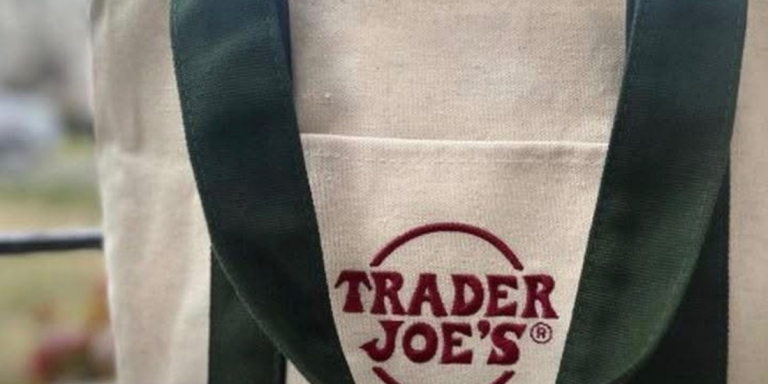
Quirky American grocery chain’s reusable bags fetch astronomical prices in international resale markets as fashion phenomenon spreads worldwide
By Liz Webster, Senior Editor

New York, N.Y. — In what may be the most unexpected luxury fashion trend of the decade, Trader Joe’s reusable shopping bags—originally priced at a modest US$3 (€2.85)—are commanding prices as high as US$50,000 (€47,500) in international resale markets. The phenomenon has transformed the humble canvas totes into coveted status symbols, particularly across Asia and Europe, where the California-based grocery chain has no physical presence.
The bags, which feature various designs ranging from the classic “mini” canvas tote to limited-edition city-specific collections, have become the latest manifestation of what fashion analysts are calling “accessible luxury” gone viral.
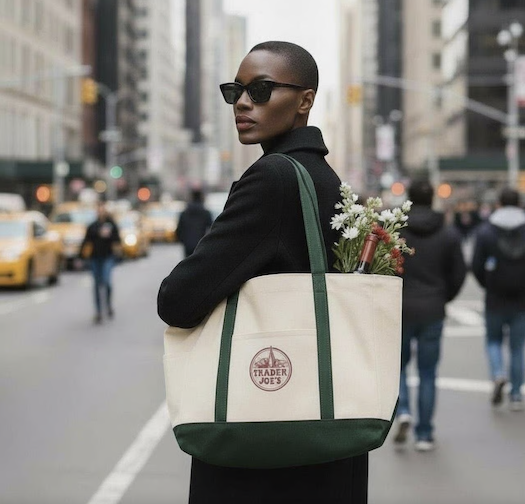
What began as a practical shopping solution for environmentally conscious consumers has evolved into a global cultural phenomenon that speaks to broader themes of American consumerism, social media influence, and the increasingly blurred lines between utility and haute couture.
The Rise of Grocery Store Chic
The transformation of Trader Joe’s tote bags from grocery accessory to fashion statement didn’t happen overnight. The trend gained momentum on social media platforms, particularly Instagram and TikTok, where influencers began showcasing the bags as part of their daily outfits.
The appeal lies partly in the bags’ understated aesthetic—simple canvas construction, minimal branding, and unpretentious design—which paradoxically makes them stand out in an era of logo-heavy luxury goods.
“What we’re seeing is a fascinating inversion of traditional luxury markers,” explains Dr. Sarah Chen, professor of consumer behavior at Columbia Business School. “These bags signal that the owner has access to something authentically American and culturally specific, which holds tremendous cache in markets where Trader Joe’s doesn’t operate.”
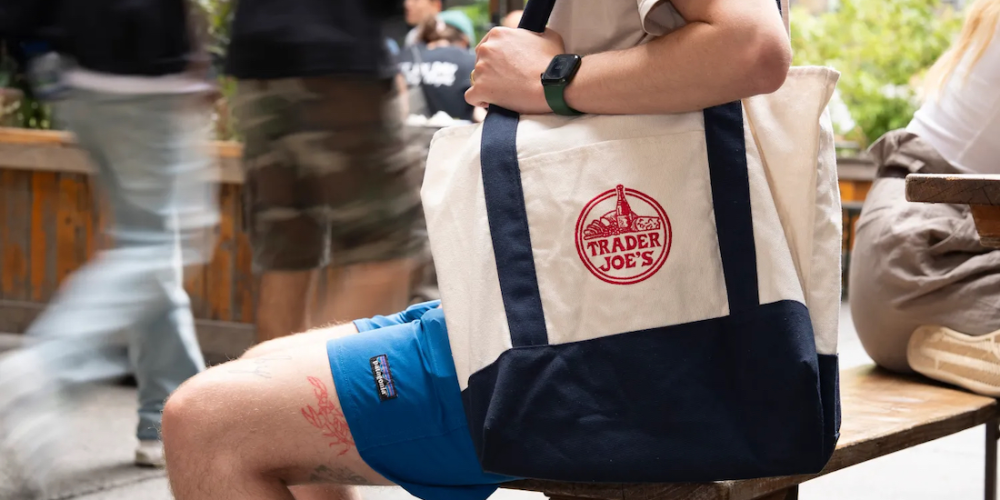
The grocery chain, which operates approximately 560 stores exclusively in the United States, has inadvertently created artificial scarcity in international markets. This scarcity, combined with the bags’ Instagram-friendly aesthetics and association with American lifestyle culture, has fueled demand among collectors and fashion enthusiasts from Tokyo to Paris to Seoul.
The Resale Market Explodes
Online marketplaces have become the primary venues for this unprecedented markup.
On platforms like eBay, Mercari, and specialized resale sites, prices vary dramatically based on design rarity, condition, and cultural moment.
While standard canvas totes might fetch US$15 to US$50 (€14 to €47), limited-edition designs—such as discontinued city-specific bags or special collaboration pieces—have sold for hundreds or even thousands of dollars.
The US$50,000 figure, while representing the extreme upper end of the market, isn’t entirely apocryphal.
Several vintage or exceptionally rare Trader Joe’s bags, particularly those from discontinued lines or special promotional events, have been listed at five-figure prices.
While it’s unclear whether such transactions have been completed, the mere existence of these listings demonstrates the perceived value among certain collector circles.
Rebecca Martinez, a resale market analyst at Retail Economics Group, notes that the phenomenon mirrors other unexpected collectible crazes.
“We’ve seen this pattern before with Supreme bricks, McDonald’s sauce packets, and limited-edition sneakers,” she explains.
“The difference here is that Trader Joe’s never intended to create a collectible product. The scarcity and desirability emerged organically through consumer behavior and social media amplification.”
Cultural Currency and the American Brand
The international obsession with Trader Joe’s merchandise extends beyond mere fashion. The bags have become symbols of American lifestyle culture, representing access to a retail experience that many international consumers view as quintessentially American. Trader Joe’s, with its quirky product names, Hawaiian-shirted employees, and affordable organic options, embodies a particular vision of accessible, health-conscious American living.
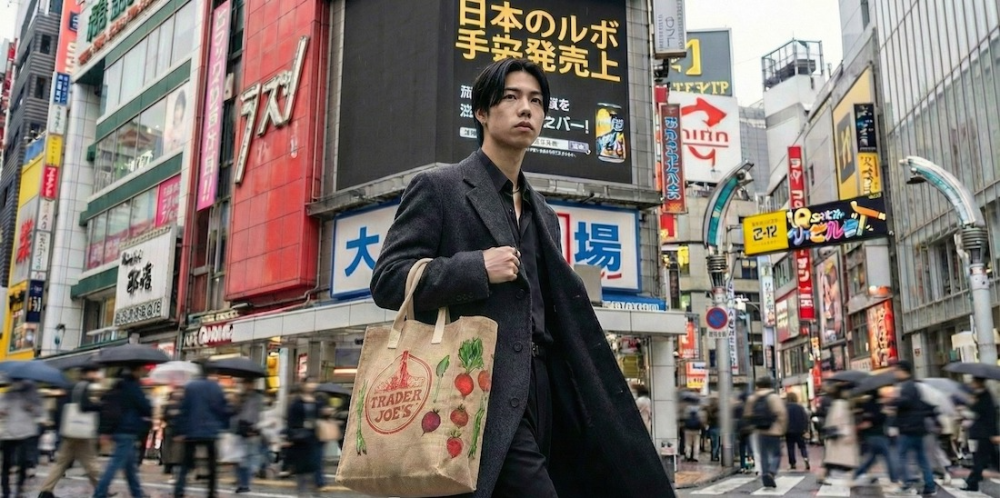
In countries like Japan and South Korea, where American pop culture holds significant influence, carrying a Trader Joe’s bag signals cultural awareness and connection to American trends. The bags have appeared in street style photography from Harajuku to Gangnam, often paired with high-end designer clothing in deliberate juxtaposition.
“It’s similar to how American tourists might carry a Harrods bag from London or a Galeries Lafayette bag from Paris,” observes James Liu, a cultural anthropologist specializing in transnational consumer culture. “These items serve as tangible proof of travel and cultural experience. But in the case of Trader Joe’s, the accessibility of the original product makes the phenomenon even more intriguing.”
The Environmental Irony
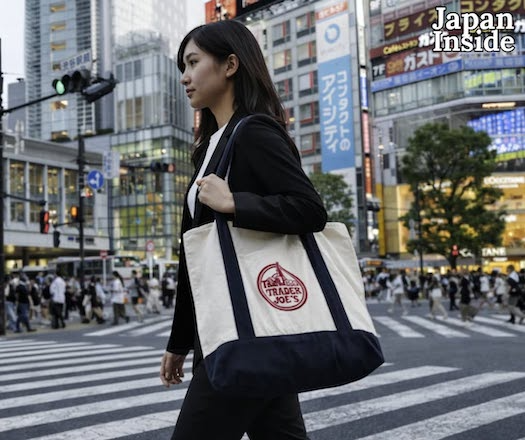
The situation presents a curious environmental paradox. Trader Joe’s introduced its reusable bags as part of broader sustainability efforts to reduce single-use plastic consumption. The company has long positioned itself as environmentally conscious, with initiatives ranging from reduced packaging to sustainable sourcing practices.
However, the international resale market has created a carbon footprint that contradicts the bags’ original eco-friendly purpose. Bags purchased in California or New York are being shipped via air freight to Shanghai, London, or Dubai, often in individual transactions that multiply shipping impacts.
Some entrepreneurial resellers have even established systematic purchasing operations, buying dozens of bags at a time for international distribution.
Environmental economists have noted this irony, pointing out that the bags’ transformation into luxury goods effectively negates their environmental benefits.
“When a reusable bag requires international air shipping and changes hands multiple times, its carbon footprint can exceed that of the plastic bags it was meant to replace,” notes Dr. Elena Rodríguez, an environmental studies professor at University of California, Berkeley.
Trader Joe’s Response and Market Impact
Trader Joe’s has maintained its characteristically low-key response to the phenomenon. The company has not artificially restricted supply or attempted to capitalize on the international demand through official expansion. Instead, it continues to sell the bags at their original US$3 price point, maintaining the accessibility that partly drives their desirability.
In a brief statement, a Trader Joe’s spokesperson said, “We’re delighted that customers enjoy our reusable bags. They’re designed to be practical, affordable, and environmentally friendly. We’ll continue offering them to our shoppers at the same great value.”
This restraint may enhance the bags’ appeal. By refusing to commercialize the trend or artificially inflate prices, Trader Joe’s maintains the authenticity that makes the bags desirable in the first place. The company’s apparent indifference to the resale market preserves the bags’ status as “discovered” fashion items rather than manufactured luxury goods.
The phenomenon has had ripple effects throughout the grocery retail sector. Other chains have attempted to replicate the success with their own designer collaborations and limited-edition bags, though none have achieved comparable cult status. Whole Foods, Aldi, and even international chains have launched premium tote bag collections, hoping to capture similar cultural momentum.
The Future of Accidental Luxury
As the Trader Joe’s bag phenomenon continues, questions arise about its longevity and implications for consumer culture. Fashion trends are inherently ephemeral, and what seems invaluable today may be forgotten tomorrow. However, the bags’ practical utility combined with their cultural significance suggests the trend may have more staying power than typical fashion fads.
The situation also raises broader questions about value, authenticity, and cultural capital in an increasingly globalized marketplace. When a US$3 utilitarian object can command prices rivaling luxury handbags, traditional hierarchies of value are disrupted. This democratization—or perhaps confusion—of luxury reflects larger cultural shifts in how we assign worth to objects and experiences.
For now, the humble Trader Joe’s tote bag continues its unlikely journey from grocery store checkout to international fashion runways, proving that in the age of social media and global connectivity, even the most mundane objects can achieve extraordinary cultural significance. Whether this represents the future of fashion or merely a temporary curiosity remains to be seen, but the phenomenon has undeniably secured Trader Joe’s an unexpected place in contemporary style history.
#TraderJoes #ToteBags #LuxuryFashion #ResaleMarket #FashionTrends #StreetStyle
#ConsumerCulture #SustainableFashion #AmericanBrands #CollectibleFashion
Tags: Trader Joe’s, resale market, fashion trends, luxury goods, consumer behavior,
social media influence, sustainable fashion, retail economics, international markets,
tote bags, collectibles, American brands, street style, Instagram fashion, TikTok trends
LucePedia Entry: Trader Joe’s
Trader Joe’s is an American chain of neighborhood grocery stores headquartered in Monrovia, California. Founded in 1967 by Joe Coulombe (b. 1930), the company has become a cultural phenomenon in American retail, known for its distinctive approach to grocery shopping that combines affordable prices, unique private-label products, quirky marketing, and a carefully curated selection that eschews the overwhelming variety of traditional supermarkets. The chain operates approximately 560 stores exclusively in the United States, with locations spanning from coast to coast but notably absent from international markets. This geographic limitation has inadvertently contributed to the brand’s mystique and appeal beyond American borders. [Luce Index™ score: 78]
History and Business Model
Coulombe founded the first Trader Joe’s store in Pasadena, California, after recognizing a market opportunity created by well-educated, well-traveled consumers seeking affordable, interesting food products. The name and nautical theme were inspired by the Tiki culture popular in California during the 1960s, and this whimsical aesthetic has remained central to the brand identity. Employees wear Hawaiian shirts, stores feature hand-painted signs, and product names often employ playful puns and cultural references.
The Trader Joe’s business model differs significantly from conventional supermarkets. Rather than stocking 50,000 items like typical grocery stores, Trader Joe’s maintains approximately 4,000 stock keeping units (SKUs), focusing on high-turnover products that meet strict quality standards. Approximately 80% of the products sold are private-label items bearing the Trader Joe’s name or one of its whimsical variations like “Trader José’s” for Mexican products or “Trader Ming’s” for Asian foods.
This curated approach allows Trader Joe’s to maintain lower prices while ensuring quality control. The company purchases products directly from suppliers, often working with manufacturers to create exclusive formulations. This direct relationship, combined with the elimination of slotting fees and reduced marketing costs, enables Trader Joe’s to offer premium products at competitive prices.
Corporate Structure and Ownership
In 1979, Coulombe sold Trader Joe’s to the Albrecht family of Germany, owners of the ALDI Nord supermarket chain. However, Trader Joe’s operates independently from ALDI and maintains complete autonomy over its business decisions, product selection, and brand identity. This operational independence has allowed Trader Joe’s to maintain its distinctive culture while benefiting from the resources of a major international grocery conglomerate.
The relationship with ALDI Nord remains somewhat opaque to consumers, as Trader Joe’s does not prominently advertise its ownership structure. This strategic ambiguity helps preserve the brand’s image as a quirky, independent California grocery chain rather than a subsidiary of a German retail giant.
Company Culture and Employment Practices
Trader Joe’s has cultivated a reputation as a desirable employer in the retail sector. The company offers competitive wages, comprehensive benefits including health insurance for part-time employees, and retirement plans with company contributions. This investment in employee welfare translates to lower turnover rates and higher employee engagement compared to industry averages.
The company’s approach to customer service emphasizes genuine interaction over scripted responses. Employees, called “crew members,” are encouraged to open products for customers to sample, offer cooking suggestions, and engage in authentic conversation. Store captains (managers) maintain significant autonomy in ordering and store operations, fostering entrepreneurial thinking at the local level.
Product Innovation and Cult Favorites
Trader Joe’s has become famous for creating cult-favorite products that generate devoted followings. Items like Everything But the Bagel Seasoning, Mandarin Orange Chicken, Cookie Butter, and Two-Buck Chuck wine have achieved cultural status beyond their utilitarian purpose. The company strategically introduces and discontinues products based on sales performance, creating a dynamic shopping experience where discovery is part of the appeal.
The discontinuation policy, while frustrating for fans of particular products, serves multiple business purposes. It keeps inventory fresh, maintains customer interest through novelty, and prevents the product line from becoming bloated. Trader Joe’s has developed a sophisticated system for evaluating product performance, and items that don’t meet sales thresholds are quickly removed regardless of vocal customer support.
Marketing and Brand Strategy
Trader Joe’s employs a distinctly anti-conventional marketing approach. The company does not advertise through traditional media, instead relying on word-of-mouth, its quirky Fearless Flyer newsletter, and organic social media buzz generated by customers. This grassroots marketing strategy has proven remarkably effective in the age of social media, where customers enthusiastically share product discoveries and create content around Trader Joe’s offerings.
The company’s refusal to establish an e-commerce platform or offer delivery services (except during pandemic-related exceptions) reinforces its focus on the in-store experience. This resistance to industry trends toward online shopping has not hindered growth, suggesting that Trader Joe’s has successfully created a shopping experience that customers find worth visiting in person.
Cultural Impact and Social Phenomena
Beyond its role as a grocery retailer, Trader Joe’s has achieved significant cultural influence. The brand has become associated with a particular lifestyle and demographic, often referenced in discussions of gentrification, millennial consumer habits, and urban food culture. The arrival of a Trader Joe’s store in a neighborhood is frequently cited as an indicator of demographic change and rising property values.
The recent phenomenon of Trader Joe’s merchandise, particularly reusable tote bags, becoming coveted fashion items in international markets where the chain doesn’t operate represents an unprecedented example of utilitarian grocery store products achieving luxury status. This development has prompted discussions about consumer behavior, cultural capital, and the mechanisms by which ordinary objects acquire extraordinary value in globalized markets.
The company’s consistent ranking in customer satisfaction surveys and its inclusion in lists of best places to work demonstrates Trader Joe’s success in creating value for multiple stakeholders. However, the company has also faced criticism regarding labor practices, environmental impact of packaging, and the carbon footprint of its supply chain, particularly given its emphasis on importing specialty products from around the world.
Future Trajectory
As of 2026, Trader Joe’s continues expanding within the United States, opening new stores in underserved markets while maintaining its core business model. The company has resisted pressure to expand internationally, franchise operations, or fundamentally alter its approach despite the demonstrated international appetite for its products and brand. This strategic restraint may ultimately enhance the brand’s desirability by maintaining the exclusivity and authenticity that drive consumer devotion.
The Trader Joe’s phenomenon illustrates how a regional grocery chain built on simple principles—quality products, fair prices, engaged employees, and genuine customer relationships—can achieve cultural significance that transcends its utilitarian purpose. Whether the brand can maintain its distinctive identity while continuing to grow remains one of the compelling questions in contemporary retail analysis.
#TraderJoes #GroceryRetail #AmericanBrands #ConsumerCulture #RetailInnovation #PrivateLabel #CustomerExperience #CompanyCulture #FoodRetail #CaliforniaBusiness
Tags: Trader Joe’s, grocery retail, Joe Coulombe, ALDI Nord, private label products, consumer behavior, retail innovation, California business, American brands, company culture, customer service, food retail, specialty grocery, cult brands
Yoast SEO Focus Key Phrase
Trader Joe’s grocery chain history
Yoast Meta Description
Trader Joe’s is an American neighborhood grocery chain founded in 1967, known for affordable private-label products, unique company culture, and distinctive shopping experience that has created devoted customer following and cultural phenomenon.