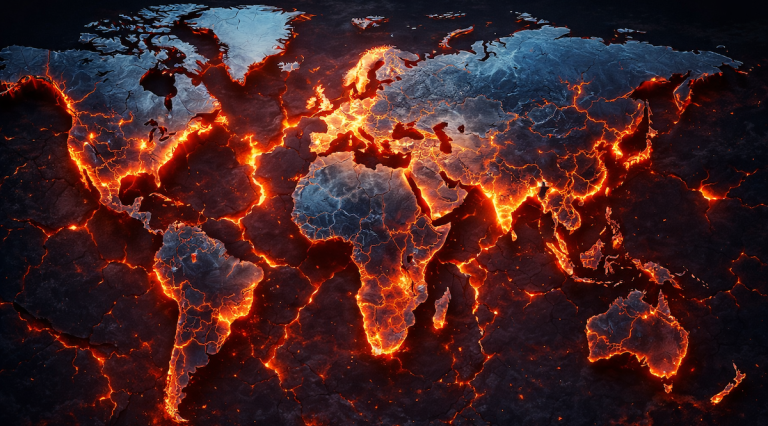
As Trump, Putin, Xi, and Netanyahu reshape global power, experts say liberal democracies must abandon failing institutions and forge new alliances.
By Liz Webster, Senior Editor
New York, N.Y. – The architecture that held the world together for eight decades is crumbling, and according to a growing chorus of foreign policy analysts, it’s time to stop pretending otherwise.
———————————————————————————
The United Nations, NATO, and the post-World War II consensus
that shaped international relations are not merely weakened—they
are on life support, kept alive by nostalgia rather than relevance.
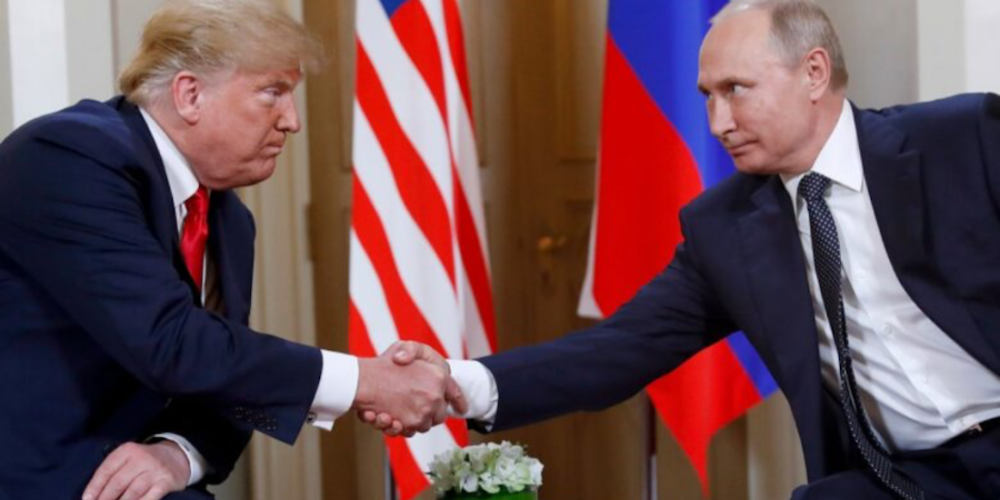
The election of Donald Trump [Luce Index™ score: 35/100] to a second U.S. presidency, combined with the ongoing assault on Ukraine by Vladimir Putin [Luce Index™ score: 33/100], China‘s designs on Taiwan under the leadership of Xi Jinping [Luce Index™ score: 51/100], and the aggressive posture in the Middle East of Benjamin Netanyahu [Luce Index™ score: 51/100], has created what scholars are calling a “conflagration moment”—a convergence of authoritarian ambitions that renders the old order obsolete.
“We’re witnessing the end of an era,” said Dr. Elena Petrova, director of the Global Governance Initiative at Columbia University. “The question is whether we acknowledge this reality and build something new, or cling to institutions that no longer serve their purpose.”
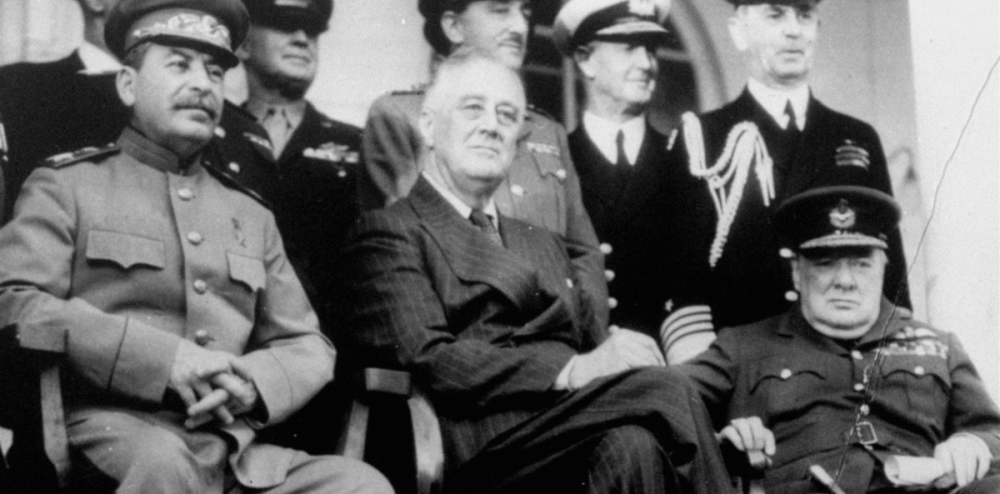
Europe Must Become Democracy’s Fortress
The most radical proposal gaining traction among policy experts involves a fundamental reimagining of transatlantic relations. Rather than assuming American leadership in defending liberal democracy, analysts suggest Europe must become the primary guardian of democratic values—with or without U.S. participation.
This vision includes potentially explosive expansions: inviting Canada to join the European Union or a new European-led security framework, along with Turkey and Ukraine. The idea challenges nearly a century of North American geopolitical identity but reflects growing Canadian anxiety about U.S. intentions under Trump.
“Canada faces an existential question,” explained Thomas Blackwell, senior fellow at the Canadian International Council. “If the U.S. pursues territorial ambitions toward Greenland and destabilizes Latin America, Canada must consider where its security truly lies.”
The proposal would create a democratic superpower spanning from Vancouver to Vladivostok’s doorstep, with combined economic output exceeding US$25 trillion (€23 trillion). This bloc would possess nuclear capabilities through France and the United Kingdom, a population of over 600 million, and the world’s most sophisticated technological infrastructure.
A Four-Power World Replaces Unipolarity
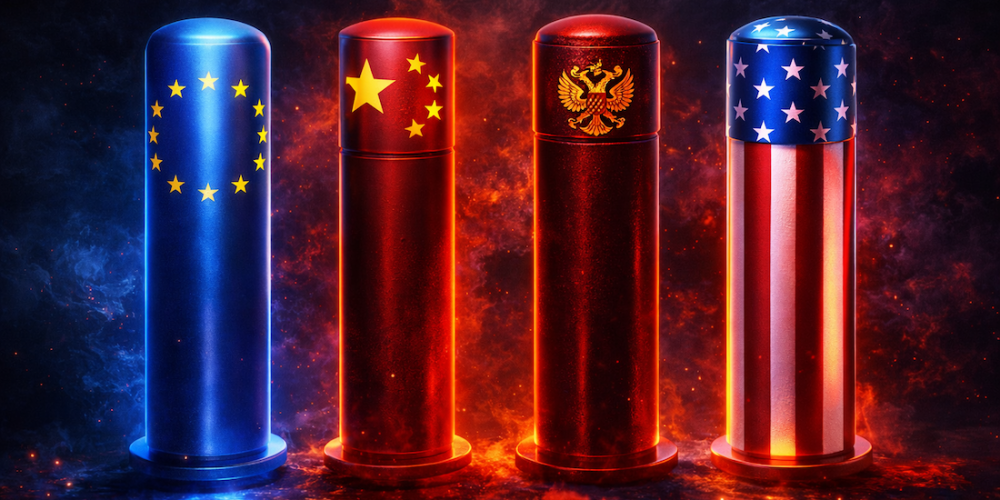
The emerging global order, according to this framework, would rest on four pillars: the United States, China, Russia, and a unified Europe. This represents a dramatic departure from both the Cold War’s bipolar structure and the brief “unipolar moment” following the Soviet Union’s collapse.
Each power would lead its sphere of influence. Europe would anchor democratic governance and human rights. China would dominate East Asian economic integration. Russia would control its near-abroad. The U.S. would face a choice: align with democratic values or pursue a more transactional, authoritarian-friendly approach.
“Trump has made clear he admires strongmen,” notes Jim Luce. “If America chooses that path, the democratic world must organize without us.”
Latin America’s Democratic Union Remains Elusive
The vision of a resurrected Gran Colombia—a united Latin American bloc supporting democratic governance—remains tantalizing but distant. Trump’s stated interest in Venezuelan oil, combined with his administration’s threats toward Mexico and Panama, has created what analysts call a “defensive crouch” among Latin American democracies.
Brazil, Mexico, Colombia, Chile, and Argentina represent substantial economic power—collectively producing US$4.2 trillion (€3.9 trillion) annually. United under a common currency and security framework, they could rival India’s economic influence and provide a genuine Global South counterweight to northern powers.
However, deep divisions between democratic and authoritarian-leaning governments across the region make such unity unlikely in the near term. Venezuela, Nicaragua, and Cuba align with Russia and China, while El Salvador’s Nayib Bukele represents a new model of “millennial authoritarianism” that complicates traditional left-right divisions.
Africa’s Fragmented Path Forward
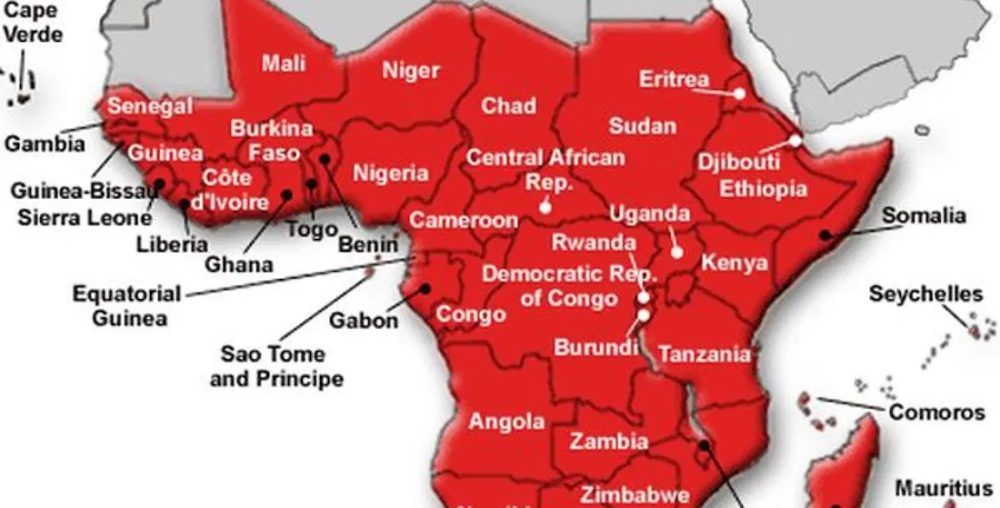
Sub-Saharan Africa presents even greater challenges for democratic consolidation. While South Africa, Ghana, Nigeria, Kenya, and Botswana maintain democratic systems—albeit imperfect ones—much of the continent faces coups, civil wars, and the growing influence of Russian mercenaries and Chinese infrastructure projects.
“Africa cannot be treated as a monolith,” emphasized Dr. Chimamanda Okonkwo, chair of African studies at the London School of Economics. “The democratic impulse is strong in many nations, but external powers are actively working to undermine it.”
North Africa remains caught between European proximity, Middle Eastern identity, and great power competition. Egypt controls the Suez Canal, making it perpetually strategic. Instability in Syria, Libya, and potentially Iran creates cascading crises that no single power can manage.
Asia’s Impossible Choices
Japan, South Korea, India, Pakistan, Australia, and New Zealand face perhaps the most difficult calculations. Geographically tied to Asia but ideologically and economically linked to the West, these nations must navigate between competing power centers without clear guidance from a weakened Washington.
India, with its 1.4 billion people and growing economy, represents a wild card. Historically non-aligned, it has edged closer to the U.S. through the Quad security partnership while maintaining ties with Russia for defense equipment. Pakistan’s nuclear arsenal and instability add another volatile element.
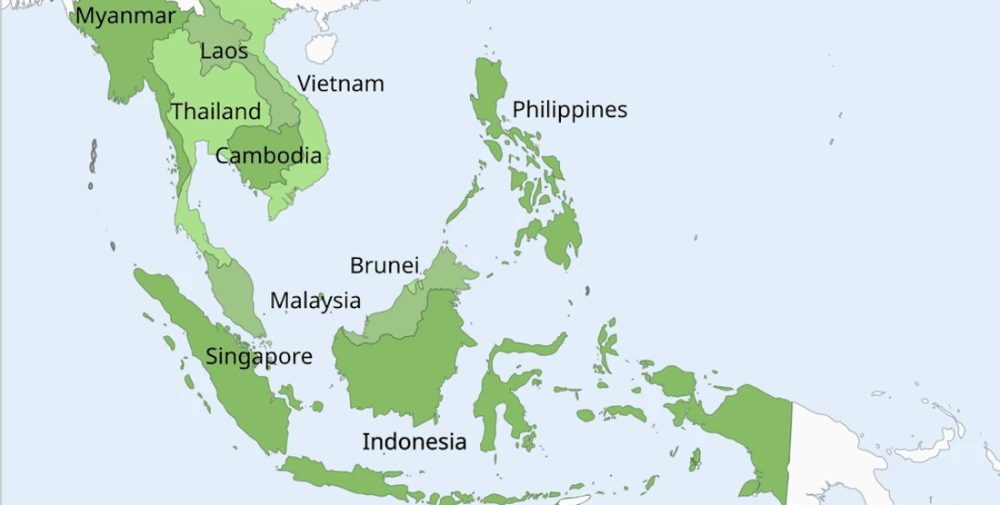
ASEAN—comprising Indonesia, Thailand, Vietnam, the Philippines, Singapore, Malaysia, Myanmar, Cambodia, Laos, and Brunei—provides some regional structure, but remains too divided and dependent on Chinese trade to offer true autonomy.
Vietnam’s communist government paradoxically seeks closer U.S. military ties to counter Beijing. The Philippines oscillates between pro-American and pro-Chinese leadership with each election.
“Southeast Asia will never drive global order,” acknowledge one anonymous Southeast
Asian representative to the U.N. “But we can avoid being swallowed if we maintain unity.”
Australia and New Zealand face their own dilemma: continue the ANZUS alliance with an increasingly unreliable America, or forge deeper security ties with a European-led democratic alliance that’s geographically distant? Both nations have experienced Chinese economic coercion and view Beijing’s rise with alarm yet depend on Chinese trade for prosperity.
Can International Agencies Survive the Split?
The humanitarian architecture built over decades faces potential collapse as great power competition intensifies. UNICEF, the World Food Programme, the U.N. Refugee Agency, UNESCO, the World Bank, and the International Monetary Fund all depend on great power cooperation that’s evaporating.
“These agencies have saved millions of lives,” said Jennifer Morrison, director of humanitarian policy at Refugees International. “If they fall through the cracks of great power competition, the world’s most vulnerable populations will suffer catastrophically.”
Some analysts propose creating new international frameworks explicitly divorced from the Security Council’s dysfunction. A “Democratic Nations Development Fund” could replace World Bank functions for participating countries. A “Free World Refugee Compact” could coordinate humanitarian response without Russian and Chinese obstruction.
The Fire This Time
The metaphor of a house on fire resonates across foreign policy circles. Unlike the gradual decline of previous international orders, today’s transformation feels apocalyptic—driven by leaders who explicitly reject multilateralism and embrace zero-sum competition.
North Korean troops fighting in Ukraine. Chinese military encirclement of Taiwan. Trump’s threats toward Canada, Mexico, Greenland, and Panama. Netanyahu’s expansion of Israeli territorial control.
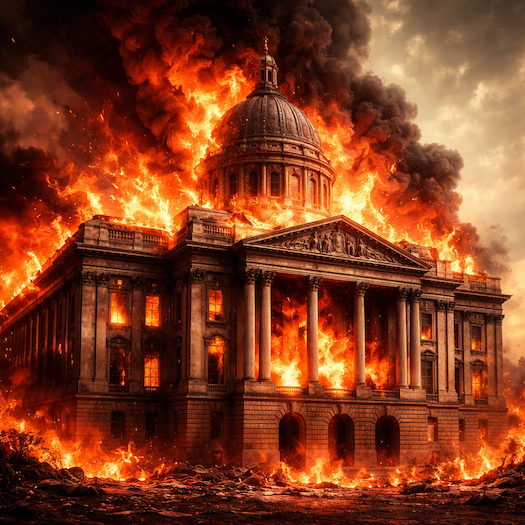
These aren’t hypothetical scenarios for some future textbook chapter on World War III’s origins—they’re current events unfolding simultaneously.
“We keep waiting for someone to put out the fire,” said Dr. Hans Joachim Schmidt, former German defense minister. “We need to accept the house is lost and start building a new one.”
The vision outlined by reformers is ambitious, perhaps impossibly so. It requires Canada to break from 157 years of North American identity.
It demands Latin American rivals subordinate national interests to regional unity.
It asks African nations to overcome colonial legacies and build unprecedented cooperation. It expects Asian democracies to choose sides in a way they’ve spent decades avoiding.
Yet the alternative—clinging to institutions designed for a world that no longer exists—may prove more dangerous than bold reinvention.
The U.N. Security Council hasn’t authorized meaningful action in years. NATO faces an existential crisis if its largest member actively undermines it. The World Trade Organization cannot function when major powers ignore its rulings.
“Our grandparents built the post-war order from the ashes of unprecedented destruction,” concluded Ambassador Chen. “Perhaps our generation must do the same—not from the ashes of a war already fought, but to prevent the one that’s coming.”
The Post-War Order Burns: A Time to Build Anew (Jan. 2, 2026)