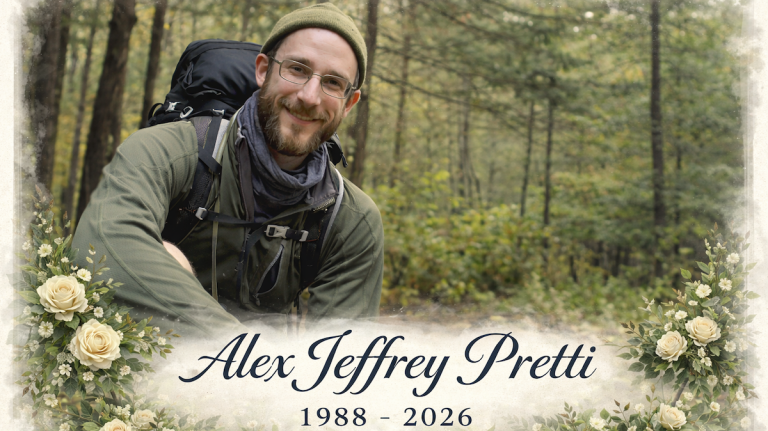
Humanitarian Shoot Down By American Gestapo in Minneapolis
By John Laing, Editor
New York, N.Y. — Alex Jeffrey Pretti lived his life with a rare combination of curiosity, gentleness, and quiet courage. Born in 1988, he grew into the kind of person who made the world feel more humane and more possible—someone who approached each day with intention, humor, and a deep appreciation for both people and place. To know Alex was to encounter steadiness, thoughtfulness, and a moral clarity that never needed to announce itself.

A registered nurse and intensive care caregiver, Alex devoted his professional life to serving some of the most vulnerable patients in our society: critically ill military veterans at the Minneapolis Veterans Affairs Medical Center.
After earning his degree from the University of Minnesota and obtaining his nursing license in 2021, he worked in the ICU, where he was known for his calm presence under pressure, his technical skill, and his insistence on treating every patient as a whole person rather than a diagnosis. Colleagues and former patients consistently described him as kind, funny, deeply compassionate, and unwavering in his commitment to dignity and care.
For Alex, nursing was not merely a profession—it was an ethical practice rooted in the belief that health, safety, and human dignity are fundamental rights. He understood caregiving expansively: as something that extended beyond hospital walls and into the civic life of a community. When policies or systems endangered vulnerable people, Alex believed that silence itself could become a form of harm.
Guided by conviction, he participated in community efforts to defend rights of immigrants and other marginalized
groups. His activism mirrored his nursing style—quiet, steady, and grounded in care rather than confrontation.
He showed up not to provoke, but to protect; not to dominate, but to witness. In doing so, he joined a long
tradition of health professionals who recognize that defending human rights is inseparable from the duty to heal.
On January 24, 2026, Alex was killed in Minneapolis, Minnesota, during a protest against a federal immigration enforcement action. According to witnesses and video evidence, Alex was filming law enforcement activity and helping redirect traffic away from the protest area when he was pepper-sprayed, forced to the ground, and fatally shot by U.S. Border Patrol agents.
He did not pose a lethal threat. His death followed the killing of another protester earlier that month and has since sparked grief, outrage, and widespread calls for accountability from nursing organizations, civil rights advocates, elected officials, and communities across the country.
Those who loved Alex have been clear in how they wish him to be remembered: not as a statistic or a controversy, but as a caregiver, a neighbor, and a person who believed—deeply and sincerely—that no one should face violence for standing up for others.

Beyond his public work, Alex was a devoted outdoorss.man who felt most at home under an open sky. He found joy and meaning in forests and trails, in long hikes and quiet pauses, in the simple act of paying attention to the natural world.
Friends often said that Alex didn’t just walk through the woods—he listened to them.
He was also known for his generosity of spirit. Alex had an uncommon ability to make others feel seen and valued, whether through thoughtful advice, a steady presence in difficult moments, or a perfectly timed laugh. His relationships were built on sincerity and trust. He showed up for people, consistently and without fanfare.
Endlessly curious, Alex approached life with a learner’s mindset. He read widely, asked deep questions, and delighted in conversations that moved beyond the surface. Even ordinary moments felt richer in his company, shaped by his attentiveness and his genuine interest in the world and the people around him.
Alex is survived by family, friends, colleagues, and countless patients whose lives he touched. They will carry forward his warmth, his sense of wonder, and his belief that the world is something to be explored and improved with both humility and joy. His absence leaves a profound ache, but his legacy endures—in the lives he helped save, the values he embodied, the trails he walked, and the many quiet acts of kindness he offered without ever expecting recognition.
May his memory be a blessing. May it live on in acts of care, in the struggle for justice, and in the places he loved most.