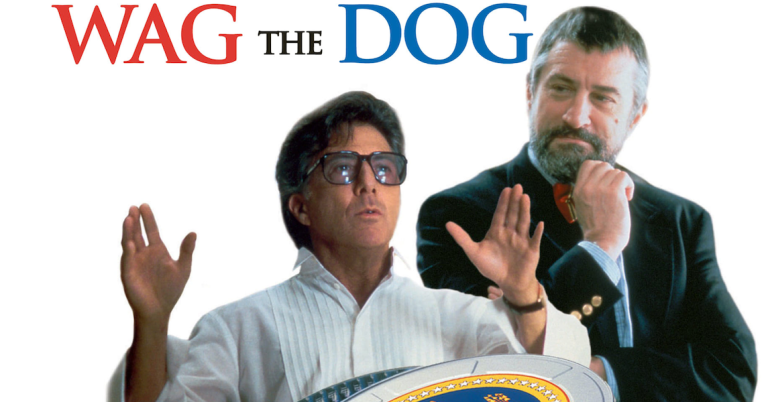

New York, N.Y. — In the 19th century, the United States developed a powerful ideological engine for expansion: Manifest Destiny. What began as a belief that the young republic was destined to stretch from sea to shining sea soon evolved into something far more ambitious. Naval strategist Alfred Thayer Mahan, encouraged by Rear Admiral Stephen Bleecker Luce, reframed the doctrine for a global age. Mahan argued that American greatness required control of sea lanes, strategic outposts, and the projection of power far beyond North America.
That intellectual framework helped justify the Spanish–American War, the annexation of overseas territories, and the rise of the United States as a global maritime power.
More than a century later, echoes of that thinking appear again in modern American politics.
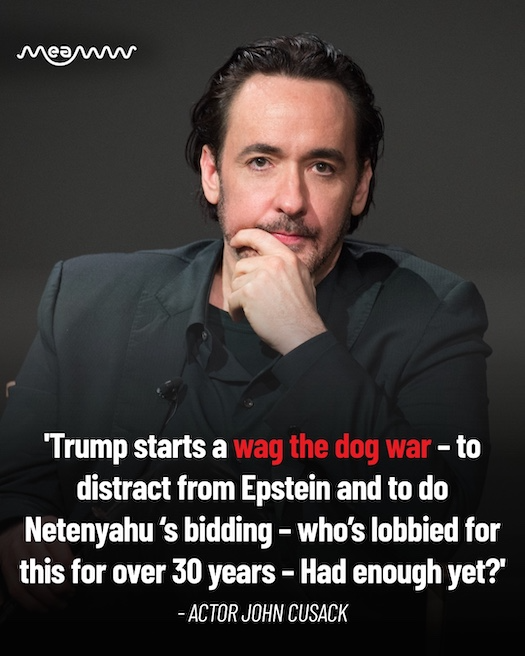
Today’s geopolitical rhetoric—from speculation about Greenland’s strategic value to escalating tensions involving Venezuela, Cuba, and Iran—suggests not simply routine foreign policy debate but a revival of the expansionist mindset that once animated Manifest Destiny.
These locations are not random. Each sits at a strategic hinge of American power: Arctic resources and shipping routes, Caribbean influence, hemispheric ideology, and Middle Eastern energy corridors.
Yet there is another lens through which this moment can be viewed—one borrowed not from history books but from Hollywood.
In the 1997 film “Wag the Dog,” a president facing a potentially career-ending scandal hires a political spin doctor and a Hollywood producer to fabricate a foreign war.
The fictional conflict becomes a carefully staged media event designed to dominate headlines and distract the public from domestic turmoil.
The phrase “wag the dog” has since become shorthand for diversionary politics—when leaders amplify external conflicts to shift attention away from internal crises.
The parallels with contemporary politics are difficult to ignore.
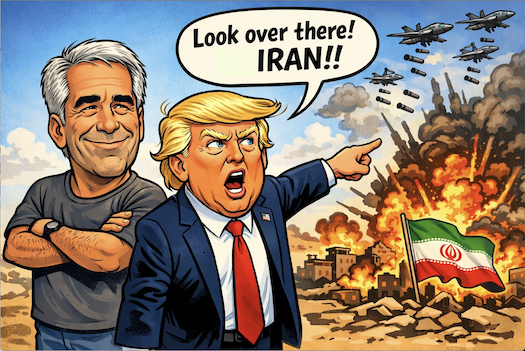
The United States today faces a cascade of domestic controversies and structural challenges: fierce immigration battles, persistent economic anxiety, and political investigations.
Not to mention the lingering shadow of the Epstein scandal, which continues to raise troubling questions about elite networks of influence and accountability.
In such an environment, foreign crises can become powerful political theater.
Each new geopolitical flashpoint creates dramatic headlines. Each international confrontation reshapes the news cycle.
Each security narrative offers a rallying point that reframes domestic debate in terms of patriotism and national defense.
But there is a second script shaping the current political moment: Project 2025.
Project 2025 is a sweeping conservative policy blueprint developed by the Heritage Foundation and allied organizations, designed to prepare a Republican administration to rapidly restructure the federal government. The plan proposes dramatically expanding presidential authority, replacing thousands of career civil servants with ideological loyalists, and reshaping agencies to reflect a nationalist and executive-centered vision of governance.
Critics argue that the document functions as a governing playbook for a second Trump presidency, offering a detailed roadmap for consolidating power within the executive branch.
Whether formally adopted or not, the themes of Project 2025—centralized authority, ideological restructuring of government institutions, and a nationalist redefinition of American policy—align closely with the rhetoric emerging from Donald Trump’s political orbit.
Taken together, the dynamics resemble a two-script presidency.
One script comes from Project 2025, which provides the structural framework for reshaping the machinery of government.
The other script resembles “Wag the Dog,” in which external crises dominate public attention while deeper transformations occur within the domestic political system.
Meanwhile, the language of Manifest Destiny—modernized through Mahan’s strategic worldview—lurks quietly in the background, framing international confrontation as both inevitable and necessary for American strength.
This combination is historically combustible.
The original Manifest Destiny fueled continental expansion and war with Mexico. Mahan’s theories helped justify overseas empire and naval dominance. The Cold War extended that logic into a global ideological struggle.
History shows that when domestic political stress intersects with expansionist thinking, the result is rarely stability. Instead, the nation often finds itself drawn into conflicts that begin as strategic abstractions and end in human consequences.
Hollywood satire works because it exaggerates reality just enough to reveal uncomfortable truths.
“Wag the Dog” was meant to be a dark comedy. Yet its warning now feels less fictional than prophetic: in the modern media environment, political narratives can be staged as carefully as movie scenes.
The United States now faces a defining choice.
It can confront its domestic challenges openly—repairing institutions, addressing economic insecurity, and restoring public trust in democratic governance.
Or it can follow a script in which global confrontation becomes political spectacle, strategic theory becomes justification for expansion, and the machinery of government is quietly rewritten behind the scenes.
When politics begins to resemble both imperial history and Hollywood fiction, citizens must ask a simple question:
Who, exactly, is writing the script?