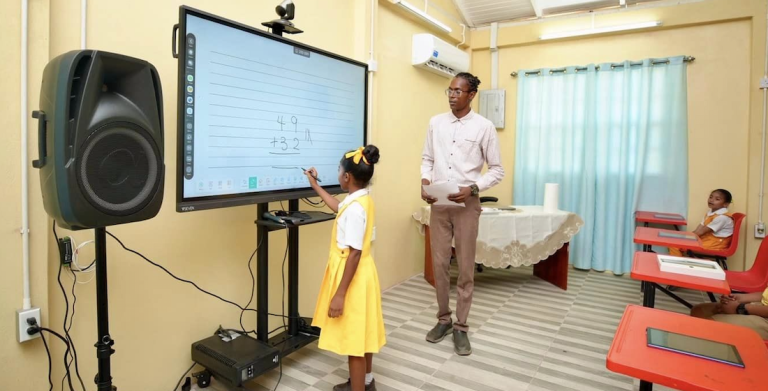
President Irfaan Ali launches digital school as nation leverages petroleum revenues for regional educational advancement
Forty years ago, Guyana’s president Cheddi Jagan asked me to bring computers and
experts to its capital Georgetown. Today, they are leading the Caribbean — and India.

New York, N.Y. — The transformation of Guyana from a struggling former British colony to an oil-rich regional power has taken another significant turn with the December 6, 2025 launch of the Guyana Digital School, a free online platform designed to expand educational access throughout the Caribbean and beyond.
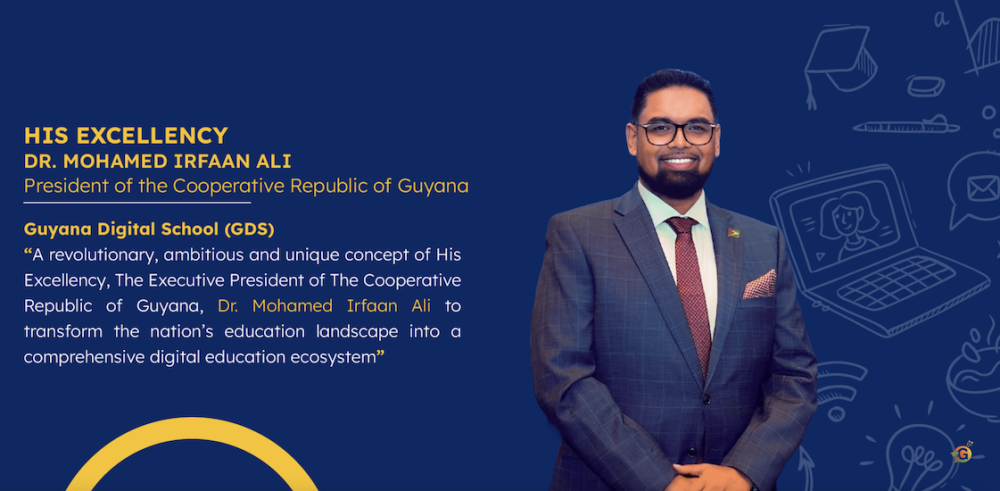
President Irfaan Ali announced the initiative late Friday, marking a watershed moment for a nation that has experienced dramatic economic change since major offshore petroleum discoveries.
For those who have followed Guyana’s trajectory over decades, the contrast is striking. The nation that once required international charitable assistance now channels nearly US$10 million daily from its oil sector into ambitious public programs, including the restoration of free university education earlier this year and this new digital educational platform. The Guyana Digital School represents more than technological innovation—it embodies the aspirations of a nation seeking to leverage its newfound wealth for lasting social transformation.
From Petroleum Revenues to Educational Investment
The economic foundations supporting this educational initiative rest on Guyana’s remarkable petroleum development. Since ExxonMobil and partners discovered substantial offshore reserves in 2015, the nation has witnessed unprecedented growth. The South American country’s economy expanded by more than 60% in recent years, fundamentally altering its fiscal landscape and enabling investments previously impossible.
Deputy Chief Education Officer Ritesh Tularam characterized the digital school launch as a “game changer,” reflecting official optimism about the platform’s potential impact. The initiative addresses longstanding challenges in Amazonian regions where geographic isolation has historically limited educational access. By providing high-quality digital instruction, officials hope to overcome barriers that traditional brick-and-mortar schools cannot easily surmount in remote areas.
The enrollment figures demonstrate substantial initial interest, with more than 30,000 students already registered. The platform currently offers high-school level courses with plans to expand its curriculum in the coming year. Significantly, Guyana has opened access to neighboring Caribbean nations and users in India, positioning the platform as a regional rather than purely national resource.
Caribbean Integration and Regional Leadership
The response from Caribbean leadership suggests the initiative addresses broader regional needs. Dickon Mitchell, Grenada’s prime minister, instructed active participation while officials emphasized that the digital platform would complement rather than replace traditional classroom instruction. This clarification appears designed to address concerns about educational quality and the irreplaceable value of in-person teaching.
The regional approach reflects Guyana’s evolving role within Caribbean affairs. Once among the poorest nations in the hemisphere, Guyana now possesses resources enabling it to provide public goods benefiting neighboring states. This shift in relative economic power carries implications for regional dynamics and Guyana’s diplomatic influence.
The decision to extend free access to Caribbean nations acknowledges historical and cultural ties while potentially strengthening regional cooperation. Education has long represented a cornerstone of Caribbean development strategies, with islands like Barbados and Jamaica establishing strong traditions of educational achievement despite limited resources. Guyana’s contribution adds a new dimension to regional educational infrastructure.
Digital Economy Preparation And Workforce Development
Officials have framed the Guyana Digital School within broader economic development objectives, emphasizing preparation for digital economy participation. This rationale connects educational policy to national economic strategy, recognizing that petroleum wealth, while substantial, requires complementary human capital development for sustainable prosperity.
The focus on digital skills aligns with global employment trends and reflects awareness that resource-dependent economies face particular challenges in diversifying their economic bases.
By investing in education emphasizing technological competency, Guyana seeks
to avoid the “resource curse” that has afflicted other petroleum-exporting nations,
where natural resource wealth failed to translate into broad-based development.
The platform’s design reportedly emphasizes interactive learning and skills directly applicable to contemporary workplace demands. This practical orientation distinguishes it from purely theoretical academic approaches, though the specific pedagogical methods and content quality will ultimately determine the initiative’s educational effectiveness.
Historical Context And National Transformation
Understanding Guyana’s current position requires historical perspective. The nation gained independence from Britain in 1966, embarking on a challenging post-colonial journey marked by political tensions, economic difficulties, and periodic social unrest.
The governments of Cheddi Jagan, Janet Jagan, and Bharrat Jagdeo navigated these challenges with varying degrees of success, maintaining national unity despite limited resources.
President Ali, who assumed office in August 2020, leads a nation transformed by circumstances his predecessors could scarcely have imagined. The petroleum discoveries occurred during the Jagdeo administration but production began reaching significant levels only recently. Ali has inherited the complex task of managing newfound wealth while avoiding the pitfalls that have undermined development in other resource-rich nations.
The emphasis on education represents a strategic choice about how to deploy petroleum revenues. Rather than focusing exclusively on infrastructure or immediate consumption, the government has prioritized investments with potentially transformative long-term impacts. Free university education, restored earlier in 2025, complements the digital school initiative in creating a comprehensive educational support system.

Challenges and Considerations
Despite the optimistic framing, significant challenges remain. Digital education platforms have produced mixed results globally, with effectiveness varying based on implementation quality, technological infrastructure, and student circumstances. Questions about internet access, device availability, and home learning environments will influence actual educational outcomes.
The platform’s sustainability beyond initial petroleum revenues also merits consideration. Building institutional capacity and ensuring quality standards requires ongoing commitment and resources. The temptation to treat the digital school as a completed achievement rather than an ongoing project requiring continuous improvement could undermine long-term effectiveness.
Additionally, the regional dimension introduces complexity. Different Caribbean nations possess varying technological infrastructure and educational systems, potentially complicating efforts to create genuinely useful content for diverse audiences. Balancing Guyanese national priorities with regional needs will require careful management.
Nevertheless, the Guyana Digital School represents a significant commitment to educational advancement funded by resource wealth. Whether it achieves its ambitious objectives will depend on sustained implementation efforts and willingness to adapt based on results. For now, it stands as evidence of how dramatically Guyana’s circumstances have changed and how the nation seeks to use its transformed position for lasting benefit.

Guyana’s Oil Wealth Transforms Education Across The Caribbean (Nov. 5, 2025)
#GuyanaDigitalSchool #CaribbeanEducation #DigitalLearning #EducationalAccess #PetroleumRevenues
#RegionalDevelopment #OnlineEducation #IrfaanAli #CaribbeanIntegration #EducationInvestment
Tags: Guyana, Caribbean education, digital school, Irfaan Ali, petroleum revenues, India,
Grenada, online learning, educational access, Amazonian regions, regional development,
Ritesh Tularam, ExxonMobil, Dickon Mitchell, digital economy, workforce development,
educational technology, Caribbean integration, free education, high school courses
Summary
Guyana has launched the Guyana Digital School, a free online platform offering high-school courses to more than thirty thousand enrolled students across the Caribbean. President Irfaan Ali announced the initiative December sixth, leveraging nearly ten million U.S. dollars flowing daily from the petroleum sector. The platform aims to expand educational access in Amazonian regions while providing free instruction to Caribbean neighbors and users in India. Officials characterize the launch as preparing students for digital economy participation, complementing rather than replacing traditional classrooms. The initiative reflects Guyana’s transformation from a nation requiring charitable assistance to a regional power investing oil revenues in educational advancement.
Social Media
Facebook: Guyana has launched the Guyana Digital School, offering free online high-school education to students throughout the Caribbean. More than 30,000 students have enrolled in the platform, which President Irfaan Ali announced on December 6. The initiative is funded by petroleum revenues generating nearly US$10 million daily and represents the nation’s commitment to educational advancement. Caribbean leaders including Grenada’s Prime Minister Dickon Mitchell have welcomed the platform, which officials say will complement traditional classroom instruction while preparing students for the digital economy.
Instagram: Guyana launches free digital high school for Caribbean students. President Irfaan Ali announced the Guyana Digital School on December 6, with over 30,000 students already enrolled. The platform offers high-school courses and plans curriculum expansion next year. Funded by petroleum revenues generating nearly US$10 million daily, the initiative extends free access to Caribbean neighbors and users in India. Officials call it a game changer for educational access in Amazonian regions while preparing students for digital workforce participation.
LinkedIn: Guyana’s launch of the Guyana Digital School represents a significant development in Caribbean educational infrastructure. President Irfaan Ali announced the free online platform on December 6, attracting more than 30,000 enrolled students. The initiative leverages petroleum sector revenues generating approximately US$10 million daily to provide high-school level instruction with planned curriculum expansion. Deputy Chief Education Officer Ritesh Tularam characterizes the platform as a game changer, emphasizing digital economy preparation while Grenada’s Prime Minister Dickon Mitchell has instructed active participation, noting the platform will complement rather than replace traditional classrooms.
X / Twitter: Guyana launches free digital high school for Caribbean students. President Ali announced December 6 the Guyana Digital School has enrolled 30,000+ students. Platform funded by US$10M daily petroleum revenues offers high-school courses with planned expansion. Caribbean leaders welcome initiative as game changer for regional education access.
BlueSky: Guyana’s new digital school offers free high-school education across the Caribbean. President Irfaan Ali announced the platform December 6 with 30,000+ enrolled students. Petroleum revenues of nearly US$10M daily fund the initiative providing courses to Amazonian regions, Caribbean neighbors, and users in India. Officials emphasize digital economy preparation while maintaining traditional classroom instruction.