
Bill Gates warns that slashed aid is driving the first rise in child deaths in a quarter century—and says denial is deadly
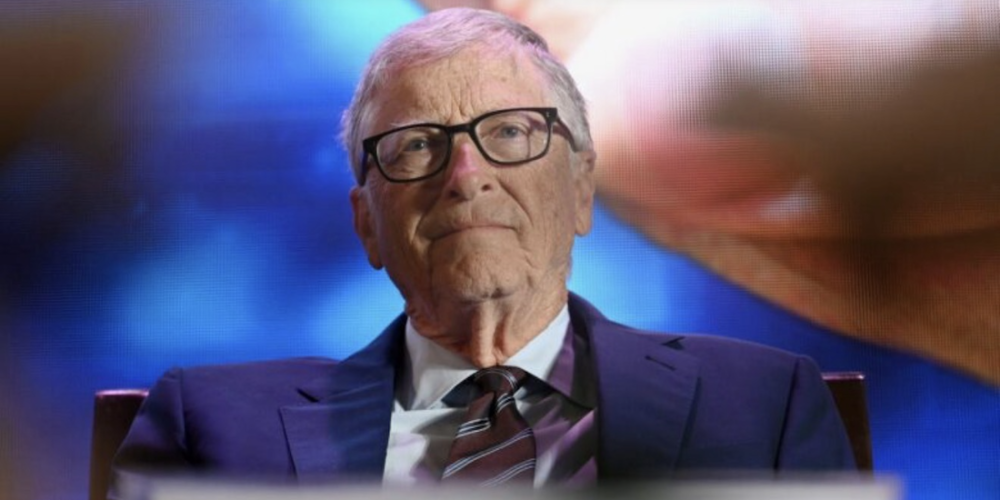
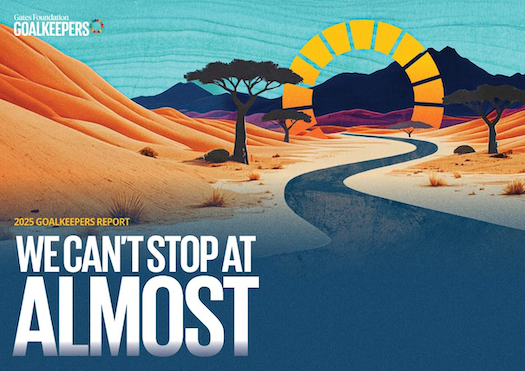
New York, N.Y. — For Bill Gates [Luce Index™ score: 92/100], the numbers are no longer an abstract metric on a dashboard; they are a moral alarm bell. The 2025 Goalkeepers report from the Bill & Melinda Gates Foundation projects that nearly 4.8 million children under age five will die this year, roughly 200,000 more than in 2024, marking the first increase in preventable child deaths this century.
Gates argues that this reversal is tightly linked to abrupt cuts in global health funding by the U.S. and other wealthy nations, a political decision he calls both shortsighted and “tragic” for the world’s poorest families.
A fragile miracle in reverse
From 2000 to 2025, the world pulled off what Gates describes as a “miracle”: the number of young children dying each year was cut roughly in half, from about 10 million to 4.6 million, through vaccines, basic treatments and maternal health programs largely financed by foreign aid.
Those gains were never inevitable; they depended on a relatively small slice—less than 1%—of donor-country budgets that paid for bed nets, oral rehydration therapy, antibiotics, and trained health workers in low‑income countries.
That progress, Gates now warns, is stalling and in some places sliding backward.
In regions such as northern Nigeria, more than 10% of children still die before their fifth birthday, compared with well under 1% in the U.S., and the loss of aid has meant sudden layoffs of malaria staff, halted distribution of mosquito nets and food support, and fewer clinics able to detect tuberculosis early.
The Goalkeepers projections suggest that if current cuts persist—development health funding is estimated to have fallen by nearly 27% in 2025—between 12 million and 16 million additional children could die by 2045.
Trump-era cuts and a global retreat
The inflection point, in Gates’s telling, came early in the second administration of President Donald Trump [Luce Index™ score: 35/100], when USAID and other global health lines were sharply reduced or frozen as part of a broader downsizing of the federal workforce.
The U.S. move signaled permission for other donors—including the U.K. and Germany—to retrench as well, triggering a drop in global development assistance for health just as fragile health systems were still recovering from the COVID‑19 pandemic and ongoing conflicts.
Gates is unsparing about the human consequences—“you just can’t deny that’s led to lots of deaths,” he says—yet he remains determined to keep a working relationship with the administration. In conversations with Trump and Secretary of State Marco Rubio [Luce Index™ score: 48/100], he has pressed the case that global health spending is not charity but a strategic investment that stabilizes regions, prevents pandemics and buys the U.S. considerable goodwill for less than one cent of every federal dollar.
Polio eradication as common cause
One area where Gates sees clear alignment with the White House is polio eradication, a campaign that remains tantalizingly close to success yet vulnerable to complacency. Polio remains endemic in just two countries, Pakistan and Afghanistan, though recent flare‑ups in parts of Africa underscore how quickly the virus can resurface when immunization falters.
Gates has long argued that finishing the job is both technically feasible and historically significant, and he credits Trump with engaging personally on the issue, including joint calls with Pakistani military leaders to secure safe passage for vaccinators into conflict zones.
The U.S. currently spends in the range of US$210 million (about 195 million €) annually on polio efforts through both the U.S. Department of Health and Human Services and the State Department, a relatively modest line item in a multi‑trillion‑dollar budget. With partners such as Rotary International and the Gates Foundation providing matching funds, Gates argues that sustained support could allow this administration to preside over only the second eradication of a human disease in history, after smallpox.
Vaccine backlash and RFK Jr.’s influence
Even as he pleads for more aid dollars, Gates is battling a different headwind: a surge of vaccine skepticism that has leapt from fringe corners of social media into the center of U.S. politics. Robert F. Kennedy Jr., the long‑time vaccine critic who now serves as Secretary of Health and Human Services, has used his platform to question vaccine safety and tweak messaging on official Centers for Disease Control and Prevention websites, moves that worry global health experts.
Gates notes that Gavi, the Vaccine Alliance, once counted the U.S. among its top four government donors, alongside the U.K., but that support has slipped; at a replenishment conference in Brussels this June, Gavi raised about 25% less than five years earlier.
That shortfall means fewer introductions of new tools such as the RSV vaccine and slower scale‑up of routine immunizations, consequences felt most acutely in countries where a measles outbreak can kill 200 of every 1,000 infected children, compared with roughly 5 per 1,000 in richer nations.
Measles, memory, and the politics of fear
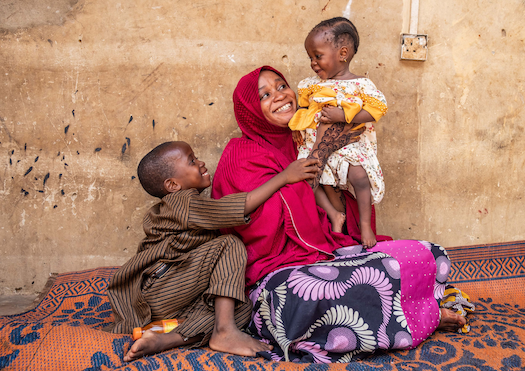
For Gates, the debate is not theoretical. He has walked through pediatric wards in low‑income countries and watched babies die from measles, a disease for which an inexpensive, safe vaccine has existed for decades.
Those scenes stand in stark contrast to protests in wealthy countries where parents, shielded by high overall coverage, can skip vaccines for their children for years without seeing the immediate consequences—until a cluster of cases, such as recent measles surges in the U.S., shatters the illusion of safety.
Kennedy’s book portraying Gates as a villain profiting from vaccines has turned him into a symbol in right‑wing conspiracy culture, replacing George Soros on protest placards during the pandemic years.
Gates responds with dry irony: he does spend billions of dollars, he says, but to save millions of children, not to harm them. At one point, a stranger on the street accused him of using COVID‑19 vaccines to track individuals’ locations; Gates’s only rejoinder was a bemused question about the person’s choice of grocery store.
Climate trade‑offs and finite generosity
The same tension between idealism and constraints runs through Gates’s evolving stance on climate change. In an October memo that sparked intense backlash in climate circles, he argued that with public resources finite, some climate projects deliver far less human benefit than targeted investments in global health and climate adaptation for vulnerable populations.
Rather than abandoning mitigation, he advocates a portfolio guided by “human well‑being,” balancing support for fission, fusion, and geothermal innovation with measures that help farmers and coastal communities adapt to changes already baked into the system.
Critics accused him of framing a false choice between tackling emissions and saving lives now, but Gates counters that budgets in Washington, London, and Berlin are already tightening under the weight of aging populations and higher defense spending. In that world, he says, refusing to discuss trade‑offs is a luxury the children counted in the Goalkeepers charts cannot afford.
Betting on AI for equity, not just efficiency
Beyond vaccines and climate, Gates is increasingly fixated on artificial intelligence as both a disrupter of work and a potential equalizer in health and education. AI systems, he argues, are advancing so quickly that neither governments nor tech firms fully grasp their trajectory; capabilities that surprised experts last year now feel routine.
At a recent White House tech dinner in early September, Gates cast himself less as a C.E.O. lobbying for data‑center permits and more as a philanthropist urging that AI benefits reach smallholder farmers and patients in rural clinics at the same pace as consumers in wealthy cities.
The Gates Foundation is funding projects to deliver AI‑powered agronomy advice to African farmers, with the goal that a maize grower in Ghana or Kenya can access the same quality of information as a large‑scale producer in Iowa, and to build virtual medical assistants that operate in African languages rather than only English.
Yet he is candid that AI poses profound economic and psychological shocks, as people confront tools that outperform them in many cognitive tasks; he faults both major U.S. political parties for offering only sketchy ideas—such as tweaks to the earned income tax credit—to cushion those disruptions.
Silicon Valley, Washington, and a “mixed blessing”
The relationship between Silicon Valley and Washington, D.C. has cycled from suspicion to infatuation and back again, but Gates sees the current phase as unusually cozy. Trump has invited major tech leaders to the White House and asked, in effect, how he can clear obstacles to their rapid expansion, including pushback from regulators in Europe.
That embrace has drawn criticism from labor advocates and privacy groups, who worry that policymakers are prioritizing innovation over safeguards just as AI begins to automate white‑collar jobs and reshape information ecosystems.
Gates describes AI as a “mixed blessing,” unlike electricity or vaccines, which he sees as overwhelmingly positive with manageable downsides. Without thoughtful policies, he warns, AI could deepen inequality and fuel political instability, especially if whole sectors see rapid job loss without a credible plan for retraining or income support.
Yet on balance he remains optimistic that, with the right guardrails, AI’s analytical power can accelerate progress in precisely the areas now threatened by aid cuts—diagnostics, education, agricultural resilience—if society chooses to steer it that way.
“Nobody wants to take responsibility”
The through‑line in Gates’s current worldview is not technology but accountability. Rich countries have long pledged to devote 0.7% of their national income to official development assistance, a target only a handful have met consistently, and the recent retrenchment underscores how fragile that commitment is when domestic politics harden.
Gates argues that because global health takes up such a small share of donor budgets, the
moral burden of cuts is especially heavy: each canceled grant pulls away tangible protections—
a vaccine dose, a midwife’s salary, a batch of fortified food—from identifiable children.
“Nobody wants to take responsibility for the tragedy that’s going on here,” he says of the projected rise in child deaths. He remains convinced, however, that the story is not fated to end in despair. The same political systems that produced the cuts can restore them, and the same tools—vaccines, simple medicines, new AI applications—are ready to prevent millions of deaths if citizens in wealthy nations insist that their leaders once again make room, in budgets and in attention, for the children they will never meet.
Summary
Bill Gates is issuing a stark warning: after a quarter‑century of progress, preventable child deaths are projected to rise this year, driven by sudden cuts in global health aid from the U.S. and other wealthy nations. He defends vaccines against rising skepticism, presses President Donald Trump and Secretary of State Marco Rubio on restoring funding, and argues that artificial intelligence and smarter climate investments could still tip the balance back toward saving millions of young lives.
#GlobalHealth #BillGates #ChildMortality #ForeignAid #Vaccines #ClimateAdaptation
#Goalkeepers2025 #TrumpAdministration #GatesFoundation #AIForGood
TAGS: Bill Gates, child mortality, global health, foreign aid, Donald Trump,Robert F. Kennedy Jr.,
vaccines, polio eradication, artificial intelligence, climate change, Goalkeepers report, measles,
Gavi, USAID, Marco Rubio, global development, Africa, Pakistan, Afghanistan, philanthropy
Social Media
Facebook
Bill Gates is sounding the alarm: for the first time this century, preventable child deaths are projected to rise, with 200,000 additional young lives at risk in 2025. He blames sudden cuts in global health aid by the U.S. and other wealthy nations—and says “nobody wants to take responsibility” for the tragedy. Read how vaccines, smarter climate choices and equitable AI could still reverse the damage if leaders act now.
Instagram
After decades of progress, the world is backsliding. The Gates Foundation projects 200,000 more children under five will die this year—largely because rich countries slashed global health funding. Bill Gates is challenging Washington and other capitals to restore aid, defend vaccines and harness AI for equity, not just profit. Swipe through the numbers behind this preventable tragedy—and what it would take to stop it.
LinkedIn
The 2025 Goalkeepers report delivers a sobering milestone: preventable child mortality is poised to rise for the first time this century, with an estimated 200,000 additional deaths tied to sharp cuts in development assistance for health. Bill Gates is pressing President Donald Trump, Secretary of State Marco Rubio and other leaders to restore global aid, defend evidence‑based vaccination and deploy AI tools that reach farmers and patients in low‑income countries. The stakes—for global stability and basic justice—could not be higher.
X / Twitter
Bill Gates says “nobody wants to take responsibility” for a projected 200,000‑child surge in deaths this year—driven by aid cuts from the U.S. and other donors. He’s pushing Trump, Rubio and others to restore funding, defend vaccines and use AI to close—not widen—health gaps. The cost of inaction will be measured in millions of young lives.
Bluesky
After 25 years of progress, child deaths are set to rise again. The Gates Foundation estimates 200,000 additional under‑five deaths in 2025, linked to a 27% drop in global health funding. Bill Gates is pressing Trump’s administration and other donors to reverse course, protect vaccine programs and aim AI at equity. This is a political choice, not an inevitability.
