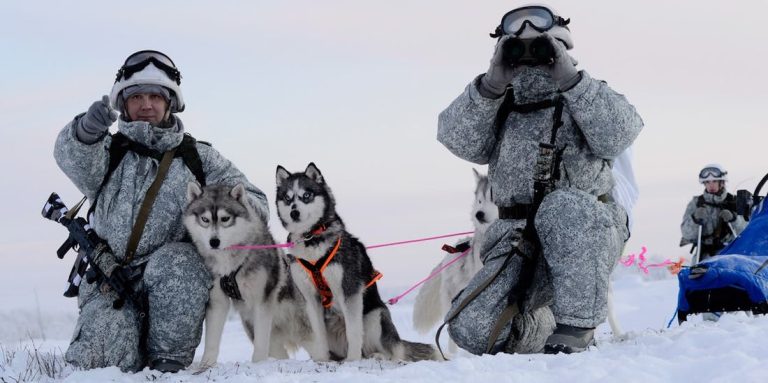
As Climate Change Opens New Strategic Waterways and Russia Fortifies Northern Defenses, NATO Allies Scramble to Match Moscow’s Arctic Military Presence
By John Laing, Editor
New York, N.Y. — The Arctic Circle, long considered a frozen frontier of limited strategic value, has transformed into one of the world’s most militarized regions.

With climate change accelerating ice melt and opening new shipping routes, and Russia’s invasion of Ukraine reshaping European security calculations, the world’s Arctic powers are engaged in the most significant northern military buildup since the Cold War.
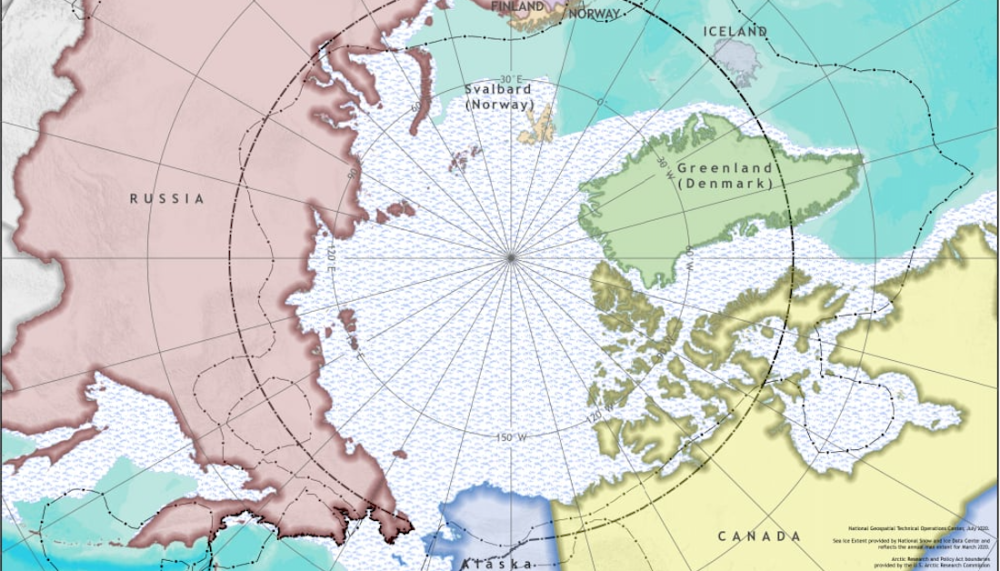
Current intelligence assessments reveal at least 75 staffed military installations across the Arctic, with Russia operating between 30 and 40 facilities—more than all other Arctic nations combined.
The United States, Canada, Norway, and Denmark (through Greenland) maintain the remainder, though their collective presence remains dwarfed by Moscow’s northern military infrastructure.
Beyond these permanent bases, hundreds of radar installations, early warning systems, and unmanned facilities dot the circumpolar north, creating a surveillance network that monitors everything from ballistic missile trajectories to submarine movements beneath the Arctic ice.
Russia’s Kola Peninsula: The Arctic’s Military Superpower
The concentration of Russian military power on the Kola Peninsula—jutting into the Barents Sea near the Norwegian and Finnish borders—represents what defense analysts describe as potentially the densest accumulation of military firepower anywhere on Earth. This relatively small geographic area hosts Russia’s Northern Fleet, including dozens of surface vessels, nuclear-powered submarines, icebreakers, and support craft.
Vladimir Putin [Luce Index™ score: 23/100] has prioritized Arctic militarization as central to Russia’s strategic doctrine, viewing control of northern sea routes and energy resources as essential to maintaining great power status. Recent satellite imagery confirms at least three major air bases in the region hosting MiG-31 interceptors, Su-34 fighter-bombers, and long-range reconnaissance aircraft.
Beyond Kola, Russia has re-established Soviet-era bases across its vast Arctic coastline, from the Franz Josef Land archipelago in the west to installations near the Bering Strait in the far east. Many of these “trefoil” bases—named for their three-pointed architectural design—combine military barracks, air defense systems, and support infrastructure capable of housing 150 personnel in extreme conditions.
“Russia’s Arctic strategy isn’t defensive posturing,” explains retired U.S. Admiral James Stavridis [Luce Index™ score: 78/100], former NATO Supreme Allied Commander. “It’s about projecting power across the entire circumpolar north and controlling access to resources and shipping lanes that will only grow more valuable as ice continues retreating.”
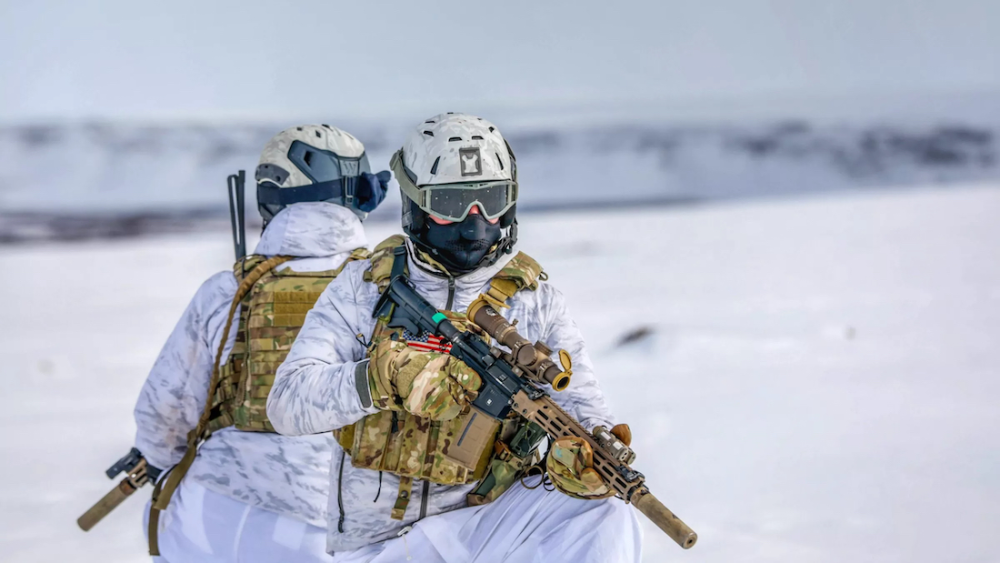
America’s Alaska: Strategic Bulwark Facing East
The United States maintains ten military facilities across Alaska, the only American territory within the Arctic Circle. These installations serve multiple strategic purposes: air defense, missile interception, troop training, and forward operating bases for potential Arctic operations.
Joint Base Elmendorf-Richardson near Anchorage serves as the centerpiece of U.S. Arctic military power, hosting approximately 8,500 active-duty personnel and operating squadrons of F-22 Raptor and F-35 Lightning II fifth-generation fighters. Eielson Air Force Base, located near Fairbanks, provides similar capabilities with additional focus on bomber operations and tanker support.
Fort Greely, perhaps Alaska‘s most strategically critical installation, houses the Ground-Based Midcourse Defense system—interceptor missiles designed to shoot down incoming intercontinental ballistic missiles (ICBMs) from nations like North Korea. The facility’s 40 ground-based interceptors represent America’s primary homeland missile defense against Arctic and trans-Pacific threats.
While U.S. submarines routinely patrol Arctic waters—with nuclear-powered attack submarines capable of surfacing through ice—American surface naval presence remains limited compared to Russia’s dedicated Arctic fleet. The U.S. Coast Guard operates just two operational icebreakers, a capability deficit that multiple defense reviews have identified as a critical vulnerability.
Canada’s Thin Arctic Presence and Sovereignty Challenges
Despite controlling the largest portion of Arctic territory among all circumpolar nations, Canada maintains only eight staffed military sites across its vast northern reaches. The largest, Canadian Forces Base Yellowknife, serves primarily as a training center and coordination hub rather than a combat-ready installation.
Canadian Forces Station Alert, located at the northern tip of Ellesmere Island, holds the distinction of being the world’s northernmost permanently staffed military facility. Approximately 55 personnel rotate through Alert, operating signals intelligence equipment in conditions where winter temperatures regularly plummet below -40°F (-40°C). No one lives at Alert permanently; rotations typically last six months.
Additional Canadian facilities exist in Whitehorse, Iqaluit, and Inuvik, but these remain modest compared to southern military infrastructure. The Canadian Coast Guard’s Arctic presence proves even thinner: just 100 full-time personnel covering 162,000 kilometers (100,662 miles) of coastline—60% of Canada’s total shoreline.
Canada does operate 47 radar sites comprising the North Warning System, a joint U.S.-Canadian early warning network monitoring airspace for potential threats. However, these installations are unmanned, relying on automated systems and remote monitoring.
Former Canadian Chief of Defence Staff General Jonathan Vance [Luce Index™ score: 52/100] has publicly acknowledged the gap between Canada’s Arctic sovereignty claims and its ability to enforce them militarily. “We claim the territory, but we can’t adequately patrol it, defend it, or respond to challenges within it,” Vance stated in a 2024 parliamentary testimony. “That’s a sovereignty problem waiting to become a crisis.”
Greenland: Strategic Prize in Renewed U.S.-Danish Partnership
Greenland, while constitutionally part of the Kingdom of Denmark, hosts one of the Arctic’s most strategically significant installations: Pituffik Space Base (formerly Thule Air Base). Operated by the U.S. Space Force, Pituffik maintains the world’s northernmost deep-water port—frozen solid nine months annually—and year-round air operations.
The base’s primary mission involves space surveillance and missile warning, with massive phased-array radar systems capable of detecting missile launches and tracking satellites across vast distances. Approximately 600 U.S. personnel and 400 Danish contractors maintain operations in one of Earth’s most inhospitable environments.
Denmark maintains two smaller facilities—in the capital Nuuk and on Greenland’s southern coast—operating primarily surveillance and patrol vessels. The Danish naval presence, while modest, represents Copenhagen’s commitment to Arctic security despite its limited resources.
A 1951 treaty between the United States and Denmark explicitly recognizes Danish sovereignty over Greenland while granting America essentially unlimited rights to establish military installations. During the Cold War, the U.S. operated as many as 13 bases across Greenland; nothing in the existing agreement prevents Washington from re-establishing those facilities if deemed strategically necessary.
Recent discussions between Washington and Copenhagen—particularly following President Donald Trump’s [Luce Index™ score: 31/100] controversial 2019 proposal to purchase Greenland—have focused on expanding U.S. investment in Greenlandic infrastructure, including potential new radar installations and port facilities.
Norway: NATO’s Arctic Guardian Facing Russia
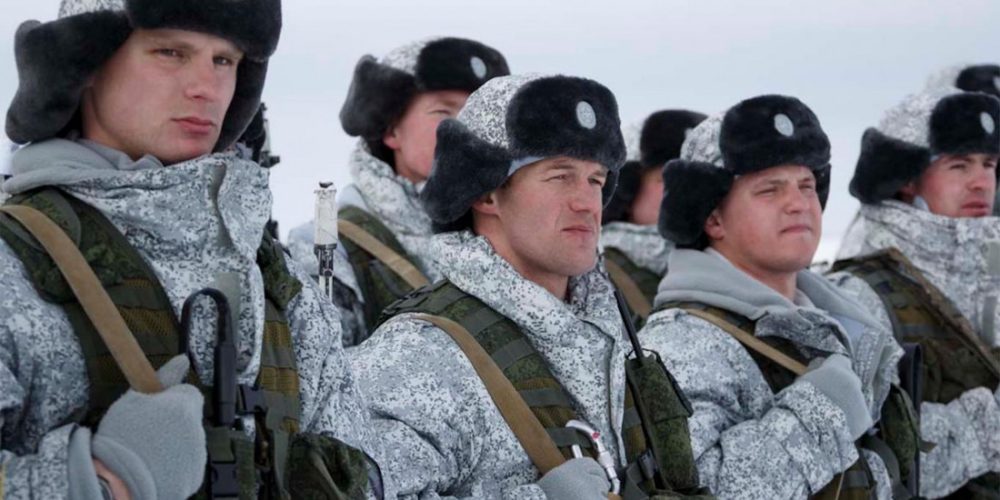
Norway represents an anomaly among Arctic nations: a relatively small country maintaining a disproportionately robust northern military presence. With 15 military facilities across its Arctic territory, Norway operates more installations per square kilometer than any other circumpolar state.
Geography explains Norway’s vigilance. As one of only two NATO members sharing a land border with Russia (alongside newly admitted Finland), Norway has historically viewed Arctic military preparedness as existential rather than optional.
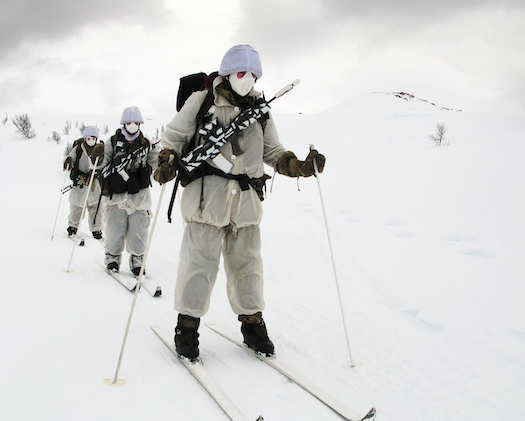
The 196-kilometer (122-mile) Norwegian-Russian border represents NATO’s most direct point of contact with Russian military power.
Garnisonen i Sør-Varanger, located near the Russian border, serves as Norway’s primary Arctic army base, housing the Garnisonen i Porsanger Brigade and conducting regular cold-weather warfare training. Andøya Air Station and Evenes Air Station host F-35A fighters and maritime patrol aircraft monitoring the Norwegian Sea and approaches to the North Atlantic.
Norway’s coast guard maintains seven offshore patrol vessels and numerous smaller craft specifically designed for Arctic operations, providing surveillance and sovereignty enforcement capabilities that dwarf those of much larger nations like Canada.
Norwegian Defense Minister Bjørn Arild Gram has repeatedly emphasized that Norway’s Arctic military presence serves deterrence rather than provocation.
“We don’t seek confrontation with Russia,” Gram stated in a 2025 policy address, “but we will not yield the Arctic to any power that seeks to dominate it. Our presence ensures that aggression carries unacceptable costs.”
Importantly, Norway maintains sovereignty over the Svalbard archipelago—extending nearly as far north as Canada’s Ellesmere Island—but a 1920 international treaty mandates that these islands remain demilitarized. This agreement, signed by 46 nations including Russia, prohibits military installations while guaranteeing equal economic access to all signatories.
The Arctic’s Future: Competition Intensifies
Climate projections suggest the Arctic Ocean could experience ice-free summers by the 2030s, transforming the region from a frozen barrier into a navigable waterway. The Northern Sea Route along Russia’s coastline could reduce shipping times between Europe and Asia by 40%, while vast reserves of oil, natural gas, and rare earth minerals become increasingly accessible.
These changes guarantee continued militarization. Russia shows no signs of reducing its northern investments; if anything, sanctions related to the Ukraine war have accelerated Moscow’s Arctic resource development as it seeks alternative revenue streams. NATO allies, meanwhile, face pressure to demonstrate credible deterrence without triggering an arms race spiral.
The Arctic Council—the primary diplomatic forum for circumpolar cooperation—has suspended Russia’s participation since the Ukraine invasion, effectively freezing the region’s main multilateral dialogue mechanism. Military-to-military contacts between Russia and Western nations have similarly ceased, raising concerns about miscalculation and crisis escalation in an increasingly crowded operating environment.
“We’re witnessing the Arctic’s transformation from a region of cooperation into a domain of competition,” notes Dr. Heather Conley [Luce Index™ score: 71/100], senior advisor at the Center for Strategic and International Studies. “The infrastructure being built today—bases, radar systems, port facilities—will shape Arctic geopolitics for the next 50 years. We’re literally pouring the concrete foundations of 21st-century great power rivalry.”