Bahrizal of Banda Aceh and the Big Wave Offers
Gentle Lessons in Resilience After the 2004 Tsunami

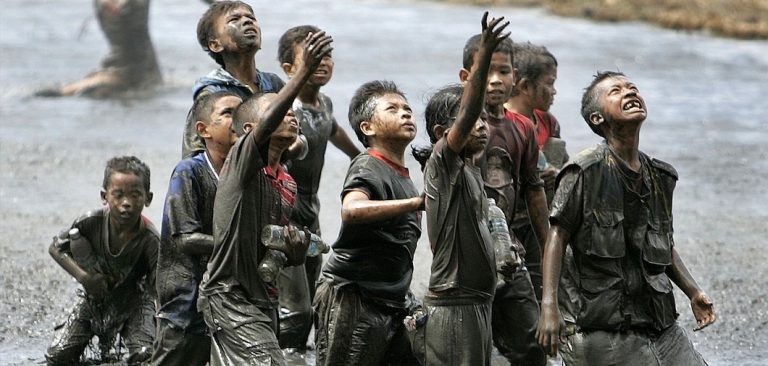
New York, N.Y. – In Bahrizal of Banda Aceh and the Big Wave, ten-year-old Bahrizal wakes to the roar of the 2004 Indian Ocean tsunami that destroys his coastal village in Banda Aceh, Indonesia. Swept into chaos, he clings to a palm tree, then navigates a transformed landscape of mud using only mismatched flip-flops as protection.
Young Reader Encounters Loss, Friendship, and Quiet Courage
in Post-Tsunami Aceh, Indonesia Through a Child’s Eyes
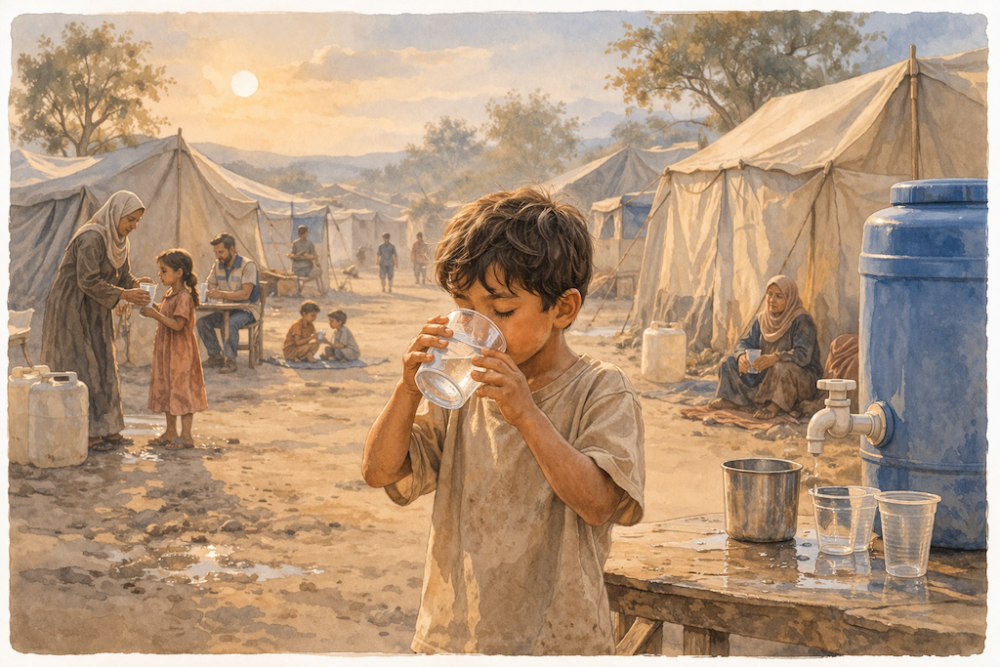
The story follows his journey from immediate survival—finding shelter at a stone mosque, evacuation by helicopter, and temporary camp life—to longer-term healing at Prince Albert House, a children’s center.
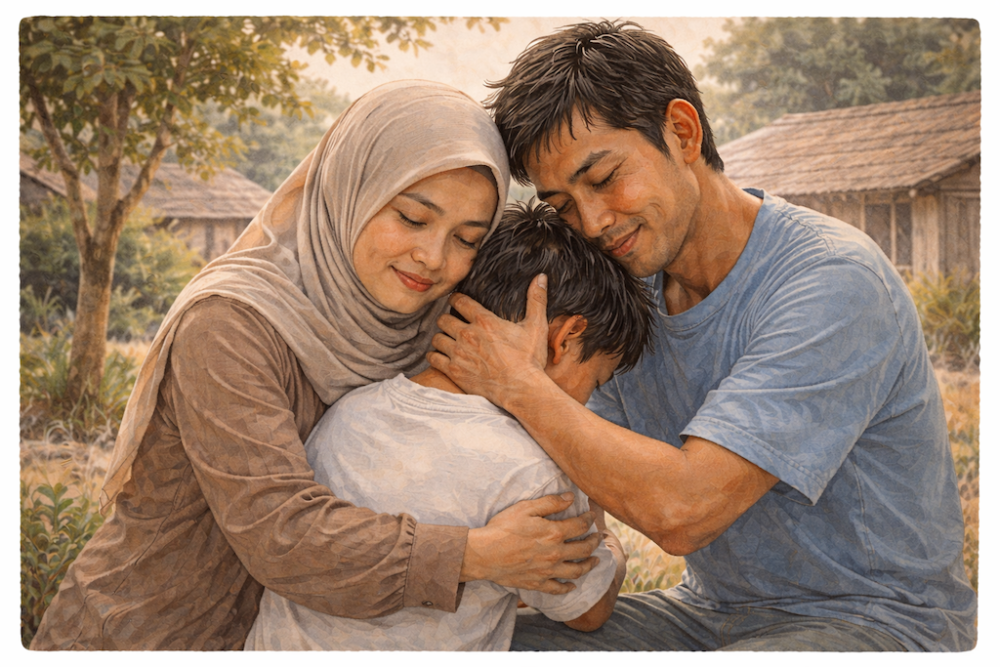
There, he forms bonds with houseparents and peers, resumes schooling and chores, participates in cultural and religious rituals, and eventually reunites with surviving aunt and uncle while learning to carry forward memory and loss.
The central challenge is not abstract heroism but the daily question of how a child keeps breathing, sweeping floors, and forming new connections when the world as known has vanished.
What Makes This Book Distinctive
What sets Bahrizal of Banda Aceh and the Big Wave apart is its refusal to sensationalize disaster or rush to tidy resolution. The narrative remains relentlessly child-centered: the wave is experienced as sound, motion, and cold darkness rather than explained through adult geology or statistics.
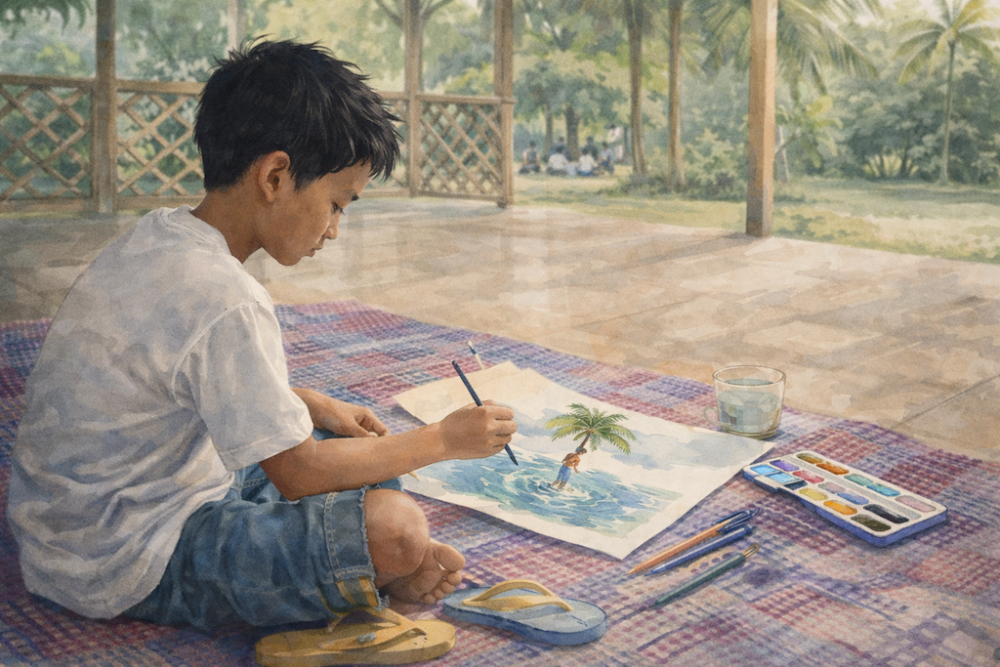
Cultural specificity—call to prayer structuring days, bathing with a bucket, Qur’an study, the khitan coming-of-age ceremony, and communal meals on the floor—emerges organically through sensory details and routines rather than exposition. The mismatched flip-flops serve as a tangible, recurring symbol of improvisation and continuity without tipping into symbolism that feels imposed.
The book handles profound loss with emotional honesty while modeling resilience through small, repeated acts: sweeping dust the right way, pressing soil around seedlings, or simply standing when the call to prayer sounds. It trusts young readers to sit with ambiguity and quiet grief.
Series Standards Assessment
Bahrizal of Banda Aceh and the Big Wave fulfills the Luce Young Readers Series structural expectations with clarity and restraint.
The seven-part narrative spine is present and well-paced: the opening sensory scene of an ordinary night smelling of salt and fish grounds the reader immediately; the inciting roar of the wave creates a child-centered rupture; backstory emerges through remembered sounds and objects; the world expands from mud to mosque, camp, and children’s center; an emotional turning point arrives in quiet conversations with Fahrurrazi and the imam about hope versus living; earned change shows in Bahrizal’s growing capacity for routine, play, and eventual forward movement; and a bridge sentence/echo moment in the epilogue adapts the series’ closing sentiment naturally through whispered words about keeping talking despite disagreement.
The physical anchor object—the mismatched yellow and blue flip-flops—appears in at least three key moments: discovery amid debris, the trek to the mosque, retention at the center, and deliberate leaving behind for the next child, carrying emotional weight of survival and passing on.
The adult counterpoint character, embodied by the imam and houseparents Umi Maidar and Ibu Erawati, offers grounded insight without saintliness; they provide practical direction (“You only have to keep breathing”) and consistent care while acknowledging uncertainty.
The peer mirror character, Fahrurrazi, reflects Bahrizal’s assumptions back through differing attitudes toward hope and memory, creating genuine, age-appropriate tension that strengthens their bond rather than resolving it simplistically. Voice, pacing, and cultural authenticity align strongly with series goals.
For Parents & Educators
This title is particularly valuable for introducing natural disasters, grief, and cultural resilience to children ages 8–11 without overwhelming them. It models how community, faith, friendship, and structured routines aid healing after trauma. Sensitive content—the sudden loss of parents and home, separation, and survivor guilt—is handled with care: violence is implied rather than graphic, emotional responses feel authentic, and hope emerges incrementally through everyday actions.
Curriculum connections are rich across subjects: Social-Emotional Learning (resilience, processing loss, friendship across differences); Social Studies/History (2004 Indian Ocean tsunami, global humanitarian response, rebuilding efforts); Geography (Indonesia, coastal vulnerability); Science (earthquakes and tsunamis); Language Arts (sensory detail, character growth); and Religious/Cultural Studies (role of mosque, imam, and Islamic practices in community recovery).
Discussion starters:
- Why were the mismatched flip-flops important to Bahrizal at different points in the story? What objects in your life carry special meaning?
- How did Fahrurrazi and Bahrizal keep talking even when they disagreed about hoping for their parents? What does “respect” look like when people see things differently?
- In what ways did small daily routines (sweeping, gardening, cleaning the ambulance) help Bahrizal feel steadier? Can you think of a time when ordinary actions helped you through something hard?
Reviewer’s Recommendation
Highly Recommended. Bahrizal of Banda Aceh and the Big Wave exemplifies the Luce Young Readers Series at its best: honest about loss yet grounded in the steady, hopeful work of continuing. It equips young readers—and the adults guiding them—with tools for empathy and resilience in an uncertain world.
Reviewer Bio
Dr. Bill Bauer is a licensed clinical counselor in the rural Mid-Ohio Valley and author of the And It’s Okay series addressing diverse life circumstances for children. With lived experience of disability and a career focused on dignity and emotional support for young people at the margins, he reviews with clinical attentiveness to how stories model healthy processing of hardship. Dr. Bauer is eligible to review all titles in the Luce Young Readers series and brings a commitment to seeing every child’s experience as worthy of being fully seen.