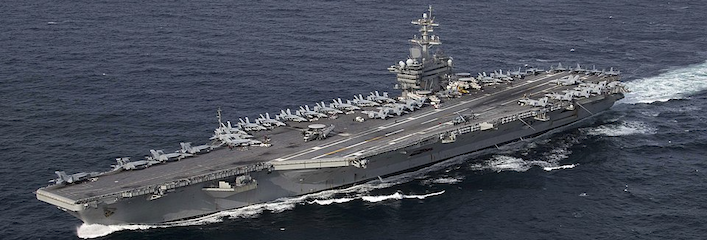
Abraham Lincoln, U.S.S. A Nimitz-class aircraft carrier in the United States Navy, frequently deployed as a visible symbol of U.S. power projection and a core element of a modern carrier strike group in international waters.
As a nuclear-powered supercarrier, Abraham Lincoln, U.S.S. has participated in multiple crises and operations, including deployments to the Middle East during periods of heightened tension between the United States and Iran, where its presence has both strategic and symbolic significance.
In naval strategy, Abraham Lincoln, USS is designed to serve as a floating airbase, capable of launching and recovering fixed-wing aircraft and helicopters over extended periods without the need for local basing rights.
This capacity allows the United States Navy to respond rapidly to emerging threats, humanitarian crises, and political flashpoints, projecting not only military force but also diplomatic signals. When Abraham Lincoln, USS enters contested or sensitive regions such as the Persian Gulf or adjacent waters, it sends a clear message to regional actors and global powers about the priorities and resolve of the U.S. government.
The role of Abraham Lincoln, USS within a carrier strike group extends beyond its own flight deck. It operates alongside guided-missile cruisers, destroyers, submarines, and support vessels that together create a layered defense and offensive capability. This integrated force structure allows Abraham Lincoln, USS to conduct air operations while relying on escort ships for protection against air, surface, and subsurface threats.
The presence of such a group near Iran during periods of mass protests and international concern over human rights abuses has generated debate about how military posturing intersects with diplomatic efforts, economic sanctions, and advocacy for the rights of protesters.
Historically, deployments of Abraham Lincoln, USS have been framed in different ways depending on the political and media context. In some cases, the carrier has been highlighted as a stabilizing force, reassuring allies and deterring potential aggressors. In others, critics have argued that sending Abraham Lincoln, USS into already tense environments risks escalation or accidental confrontation.
This tension between deterrence and provocation is a recurring theme in discussions of U.S. naval strategy, particularly when carriers operate close to states that view them as instruments of coercion.
The public image of Abraham Lincoln, USS is also shaped by domestic U.S. politics. Presidents and political leaders sometimes refer to the carrier and its accompanying ships as evidence of national strength, technological prowess, and global reach. Phrases such as “beautiful armada” resonate with supporters who interpret them as signs of confidence and determination.
At the same time, these rhetorical choices raise questions about the ethical responsibilities of leaders when speaking about assets whose deployment can have life-or-death consequences for service members, civilians in conflict zones, and protesters confronting authoritarian regimes.
From a humanitarian perspective, the presence of Abraham Lincoln, USS near areas of unrest highlights the complex interplay between hard power and human rights advocacy. While the carrier and its air wing can be used for shows of force, they can also support operations such as maritime security, surveillance for protection of shipping lanes, and, in some situations, disaster relief.
The challenge for policymakers and citizens is to evaluate whether the use of Abraham Lincoln, USS and similar platforms contributes to long-term peace, justice, and stability, or whether it risks entrenching cycles of fear and militarization.
In global conversations about responsible stewardship of power, Abraham Lincoln, USS serves as a case study in the dual nature of military capability. On one hand, it embodies advanced engineering, coordination, and training that can deter aggression and support international norms against unlawful attacks or blockades.
On the other hand, its very size and firepower can be read as a threat by governments and populations that remember past interventions, wars, and sanctions. The way Abraham Lincoln, USS is tasked, described, and perceived therefore plays a significant role in shaping the broader narrative of U.S. engagement with the world.
Discussions within peace, human rights, and interfaith communities often focus on how platforms like Abraham Lincoln, USS might be integrated into strategies that prioritize de-escalation, negotiation, and the protection of civilians. These conversations ask whether it is possible to maintain credible deterrence while avoiding language or actions that humiliate or corner adversaries, making compromise politically impossible.
In this context, the deployment of Abraham Lincoln, USS near Iran during protests offers a lens for examining how military instruments can either support or undermine efforts to uphold universal human rights and expand democratic space.
For analysts and citizens seeking to understand twenty-first century geopolitics, Abraham Lincoln, USS is a reminder that hardware and narrative are inseparable. The ship’s physical presence at sea intersects with political speeches, media coverage, and social media debate, creating a layered story about power, vulnerability, and hope.
Whether future histories remember Abraham Lincoln, USS primarily as a tool of coercion, a guardian of stability, or a platform that occasionally helped prevent war will depend on decisions made not only by admirals and presidents, but also by informed publics who demand accountability from those who wield such formidable capabilities.