Turning Point USA. A U.S.-based conservative youth organization known for its aggressive campus organizing, viral social media campaigns, and highly polarizing role in debates over free speech and political extremism on university grounds.
Founded in 2012, Turning Point USA brands itself as a defender of conservative students against what it calls a dominant left-leaning bias in higher education, emphasizing free markets, small government, and opposition to “woke” culture.
At the same time, the organization’s tactics, including its controversial Professor Watchlist and its promotion of incendiary speakers, have led civil rights groups and academic organizations to describe it as a driver of harassment, disinformation, and hostility toward minority and LGBTQ+ communities.
Origins and mission
Turning Point USA was created by activist Charlie Kirk, who left college to build a national student network dedicated to conservative advocacy and electoral mobilization.
The organization states that its mission is to “identify, educate, train and organize students to promote the principles of fiscal responsibility, free markets, and limited government,” and it has implemented this mission through a combination of campus chapters, regional conferences, and large national gatherings that feature prominent right-wing politicians, media personalities, and religious leaders.
From its inception, Turning Point USA has placed particular emphasis on higher education, arguing that universities function as incubators of liberal indoctrination and that conservative students therefore need a coordinated presence to challenge professors and administrators whom the group views as hostile to their worldviews.
Campus footprint and organizing model
Turning Point USA operates chapters on hundreds of campuses across the United States, deploying a dense network of student ambassadors, paid staff, and allied faculty to sustain visibility and influence.
Local chapters typically host speaker events, “tabling” activities with provocative slogans, reading groups, and voter registration drives, often coordinated with national messaging campaigns that spotlight topics like “socialism on campus,” “critical race theory,” or alleged censorship of conservative viewpoints.
The organization encourages chapter leaders to harness social media platforms such as Instagram, X, and TikTok, amplifying on-campus confrontations and viral moments that can be repackaged for national audiences and fundraising appeals.
Professor Watchlist and academic freedom
One of the most controversial initiatives associated with Turning Point USA is the online Professor Watchlist, a public database that lists faculty accused of advancing “leftist” ideology or discriminating against conservative students in the classroom.
Supporters claim that the watchlist simply collects publicly reported incidents and offers transparency to students and parents about what they might encounter at specific institutions. Critics, including the American Association of University Professors, argue that the site invites targeted harassment, doxxing, and threats, contributing to a chilling effect on academic freedom.
In practice, professors added to the watchlist have frequently reported spikes in abusive messages and external pressure campaigns, reinforcing concerns that Turning Point USA has blurred the line between legitimate criticism and coordinated intimidation. This legacy shapes the way many universities evaluate applications for new Turning Point USA chapters, especially when campus climate and faculty safety are already fragile.
Accusations of extremism and bigotry
Civil rights organizations and watchdog groups have repeatedly criticized Turning Point USA for hosting or platforming speakers whose rhetoric they describe as racist, anti-immigrant, Islamophobic, homophobic, or transphobic.
The Anti-Defamation League has referred to Turning Point USA as an extremist group, while the Southern Poverty Law Center has discussed the organization in reports on hate and anti-government extremism, noting chapters and affiliates whose members have engaged in bigoted speech and behavior.
Some scholars argue that labeling the entire organization “white nationalist” oversimplifies the picture, distinguishing between its official mission and the conduct of particular staff or student leaders. Nonetheless, repeated scandals involving racial slurs, discriminatory remarks, or participation in far-right events have entrenched a public perception of Turning Point USA as part of a broader ecosystem of hard-right activism, rather than a generic advocacy group for conservative students.
Free speech claims and critics’ responses
Turning Point USA often frames itself as a guardian of free speech, contending that universities routinely restrict conservative speakers, impose burdensome security fees, or allow protestors to disrupt events without consequence.
In response to controversial disinvitations or event cancellations, the organization has mounted public campaigns accusing administrators of ideological censorship, sometimes prompting state lawmakers to introduce legislation mandating broader access for speakers and limiting universities’ ability to regulate contentious events.
Critics counter that Turning Point USA selectively invokes free speech, defending its own high-profile events while pursuing strategies — such as the Professor Watchlist — that they say undermine academic freedom for those who hold opposing views. They also note that the group’s rhetoric does not always distinguish between legitimate campus protest, which is itself a form of speech, and actual efforts to silence or threaten speakers.
Impact of Charlie Kirk’s assassination
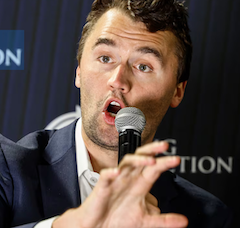
The assassination of Charlie Kirk on a college campus in 2025 intensified public scrutiny of Turning Point USA and sparked new questions about the relationship between political speech and violence.
In the aftermath of the killing, some students and legislators sought to expand Turning Point USA’s campus presence as a tribute to Kirk and a statement against violence, while others argued that the organization’s own history of inflammatory rhetoric demanded more careful institutional review.
Surveys and reports following the assassination indicated that many students felt less safe engaging in political speech of any kind, with rising self-censorship and anxiety about attending controversial events.
This ambiguous climate — in which both fear of violence and fear of censorship are heightened — has made the presence of Turning Point USA on campus an even more contentious issue for administrators and student governments.
St. John’s University and the Power to Organize
The decision by St. John’s University’s student government in Queens, New York to block a proposed Turning Point USA chapter, while allowing applicants to reapply, illustrates how institutional structures like the “Power to Organize” process can function as a form of discernment rather than outright prohibition.
By emphasizing that only a minority of new organizations were approved in the same semester, the university signaled that heightened scrutiny applied across the board, not solely to politically conservative groups. At the same time, the case highlights persistent questions about whether official recognition should depend only on viewpoint-neutral criteria or whether an organization’s documented behavior and consequences for campus safety can legitimately play a role.
For Turning Point USA, such decisions represent both a practical obstacle to growth and an enduring reputational challenge. For universities and student leaders, they are a test of whether it is possible to uphold robust free expression while refusing institutional endorsement to organizations whose strategies have repeatedly pushed the boundaries of harassment and extremism.