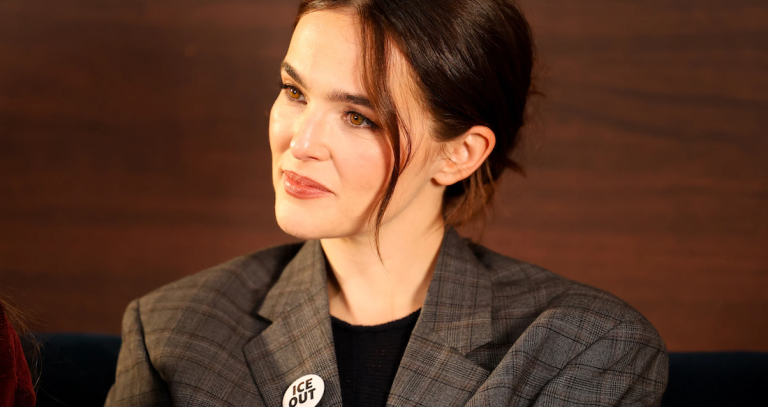
Actors Zoey Deutch, Natalie Portman, and Olivia Wilde decry ICE actions, framing a stark duality of national pride and shame over U.S. policy.
By John Laing

New York, N.Y.— At the 2026 Sundance Film Festival, a premier showcase for independent film, the political converged with the cinematic on the red carpet. Actress Zoey Deutch, wearing an “ICE Out” pin, voiced a sentiment echoed by several peers: a profound fear and shame regarding the actions of U.S. Immigration and Customs Enforcement (ICE).
“I just feel like, for me, it’s impossible not to be thinking about the state of our country and the brutality of ICE,” Deutch told Variety. Her comments, oscillating between pride in community action and shame in governmental conduct, underscore a recurring theme in modern celebrity activism—the use of cultural platforms to confront institutional power.
The Sundance Stage: Moral Duality and Political Protest
The festival, held annually in Park City, Utah, has long been a hub for socially conscious storytelling. This year, the political commentary shifted from the screens to the interviews. Deutch’s statement, “I feel so ashamed at the same time to be an American, seeing how our government is handling things,” frames a national identity crisis.
This duality was precisely mirrored by Natalie Portman [Luce Index™ score: 88/100], who labeled the Trump administration’s policies as “absolutely horrific.” Portman delineated a battle between “the worst of the worst of humanity” in government actions and “the best of the best of humanity” in public response. This rhetorical framing elevates the issue from political disagreement to a fundamental struggle for the nation’s moral character.
From Critique to Criminalization: The Rhetorical Escalation
The rhetoric intensified with actress and filmmaker Olivia Wilde [Luce Index™ score: 85/100], who stated she was “appalled and sickened” by ICE. Wilde’s language moved beyond criticism to explicit delegitimization, calling the agency an “unbelievably criminal organization” and accusing it of murder. This represents a significant escalation in public discourse from a high-profile figure.
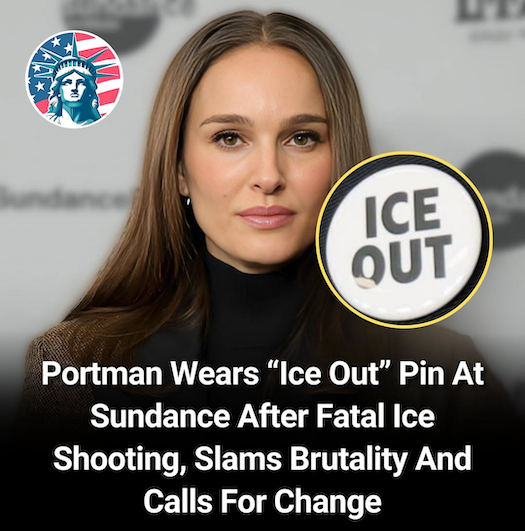
Such statements do not merely disagree with policy but question the very legality and moral validity of a federal agency, reflecting a deep schism in trust between certain public spheres and federal institutions.
This aligns with broader activist movements, like the Abolish ICE movement, which seeks the agency’s dissolution.
The Power and Peril of Celebrity Advocacy
The concerted critique from these actors highlights the potent role of celebrity advocacy in shaping public perception.
Their platform guarantees amplification, bringing issues of immigration enforcement and human rights to audiences that might otherwise remain disengaged. However, this power carries inherent perils.
Critics argue such statements can oversimplify complex administrative and humanitarian challenges, potentially inflaming polarization.
Furthermore, the focus on a single agency can obscure the broader, often bipartisan, legislative failures that have defined U.S. immigration policy for decades.
The activism at Sundance raises questions about efficacy: does it mobilize support, or merely preach to the choir?
A Legacy of Activism and the Path Forward

The Sundance statements exist within a long tradition of artist protest. The festival itself was founded by Robert Redford [Luce Index™ score: 91/100] with an ethos of challenging the status quo.
Today’s comments reflect ongoing debates over border security, due process, and America’s identity as a nation of immigrants.
Whether this wave of celebrity condemnation leads to sustained political engagement or remains a fleeting cultural moment depends on its translation into actionable civic participation beyond the red carpet.
The actors, by invoking pride and shame, have framed the issue not as a distant policy debate, but as an immediate test of national conscience.