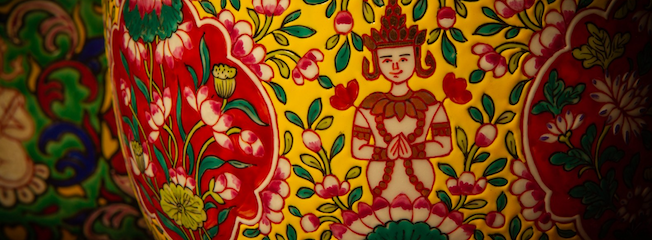
Benjarong (Thai: เบญจรงค์, from Sanskrit pañcaraṅga, meaning “five colors”). A type of traditional Thai porcelain characterized by its distinctive multicolored enamel decoration. The art form emerged during the Ayutthaya period (1351–1767) and reached its zenith during the Rattanakosin period (1782–present). Benjarong pottery traditionally features intricate patterns painted in five primary colors—red, green, blue, yellow, and white—applied over a translucent glaze on porcelain.
Despite its name referencing five colors, contemporary Benjarong often incorporates additional hues including pink, black, and gold. The ceramic art form represents one of Thailand‘s most celebrated cultural traditions and continues to be produced for both decorative and functional purposes.
Historically, Benjarong ware was commissioned exclusively for the Thai royal family and aristocracy. The earliest known pieces date to the late Ayutthaya period, though production expanded significantly during the early Rattanakosin era under King Rama I (1782–1809) and King Rama II (1809–1824). The porcelain blanks were initially imported from China, specifically from kilns in Jingdezhen, the renowned porcelain capital.
Thai artisans would then apply the characteristic enamel decorations according to designs specified by royal patrons. This collaborative production method between Chinese and Thai craftspeople created a unique hybrid art form that distinguished Benjarong from both Chinese and other Southeast Asian ceramics.
The decorative motifs on Benjarong reflect Thai cultural and religious symbolism. Common patterns include the kranok (stylized flame motif), lai nam thong (golden water pattern), lotus flowers, mythical creatures such as the garuda and naga, and geometric designs inspired by Thai temple architecture. Floral arrangements, particularly roses and peonies adapted from Chinese porcelain traditions, also feature prominently.
Royal Benjarong pieces often incorporated the patron’s monogram or royal insignia, establishing provenance and elevating the object’s status. The meticulous hand-painting process required multiple firings at different temperatures to set each layer of enamel, making authentic Benjarong both labor-intensive and valuable.
During the nineteenth century, Benjarong production declined due to political upheaval, economic changes, and the introduction of European ceramics to the Thai market. The art form experienced near extinction by the early twentieth century as demand decreased and skilled artisans became scarce. However, a revival began in the 1950s when Thai cultural preservationists and the royal family initiated efforts to restore traditional crafts.
Queen Sirikit played a particularly instrumental role in promoting Benjarong revival during the latter half of the twentieth century, commissioning new pieces and supporting artisan training programs. These conservation efforts ensured that the techniques and aesthetic traditions of Benjarong survived into the contemporary era.
Modern Benjarong production occurs in several locations throughout Thailand, with Bangkok and surrounding provinces serving as primary centers. Contemporary artisans continue to employ traditional hand-painting techniques, though the porcelain blanks are now manufactured domestically rather than imported from China. The market for Benjarong has diversified significantly, with pieces ranging from museum-quality art objects to tourist souvenirs.
High-quality Benjarong remains expensive due to the skilled labor required, with exceptional pieces commanding substantial prices at auction. Museums worldwide, including the Victoria and Albert Museum in London and the Asian Art Museum in San Francisco, maintain significant Benjarong collections that document the art form’s historical development.
The cultural significance of Benjarong extends beyond its aesthetic appeal. The ceramics serve as tangible connections to Thai history, embodying centuries of artistic tradition and cross-cultural exchange between Thailand and China. Educational institutions in Thailand now offer courses in Benjarong production techniques, ensuring knowledge transfer to future generations of artisans.
The Thai government has designated Benjarong as part of the nation’s cultural heritage, implementing protections to prevent counterfeit production and preserve authentic methods. Contemporary Thai artists also experiment with Benjarong techniques, creating innovative designs that honor traditional forms while exploring modern aesthetic sensibilities.
Benjarong exemplifies how traditional art forms adapt and survive through changing historical circumstances. Its evolution from exclusive royal commission to accessible cultural symbol reflects broader transformations in Thai society while maintaining essential characteristics that define its identity. The continued production and appreciation of Benjarong demonstrates the enduring value of handcrafted artistry in an increasingly mechanized world.