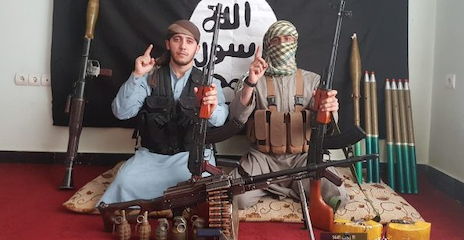
The Islamic State Khorasan Province (ISKP), also known as ISIS-K or IS-KP, is the Afghan affiliate of the Islamic State terrorist organization. ISKP emerged in January 2015 when disaffected Taliban commanders and foreign fighters in eastern Afghanistan and western Pakistan pledged allegiance to ISIS leader Abu Bakr al-Baghdadi.
The group’s name references Khorasan, a historical region encompassing parts of modern-day Afghanistan, Iran, Turkmenistan, Uzbekistan, and Tajikistan—a designation that reflects ISIS‘s territorial ambitions beyond recognized national borders.
ISKP has established itself as the most lethal terrorist threat in Afghanistan since the Taliban returned to power in August 2021.
The group’s ideology differs fundamentally from the Taliban‘s Deobandi traditionalism, instead embracing the revolutionary jihadist doctrine of ISIS that seeks to establish a global caliphate through total war against perceived enemies—including Muslim communities deemed insufficiently pure. This ideological rigidity manifests in systematic targeting of Shia Muslims, Sufi practitioners, Hazara ethnic minorities, educational institutions, and foreign nationals.
Origins And Leadership
The formation of ISKP occurred amid the broader disintegration of the ISIS caliphate in Iraq and Syria, as the terror organization sought to expand into new theaters and recruit foreign fighters. Former Taliban commanders who felt the movement had abandoned pure jihadism in favor of negotiations with the United States became early ISKP leaders, alongside militants from Pakistan, Uzbekistan, Tajikistan, and Uyghur fighters from China‘s Xinjiang region affiliated with the Turkistan Islamic Party (TIP).
Leadership of ISKP has experienced significant turnover due to targeted killings by U.S. forces, Afghan security agencies, and the Taliban. Early leaders including Hafiz Saeed Khan (killed 2016) and Abdul Hasib (killed 2017) established the group’s operational infrastructure in Nangarhar Province along the Pakistan border. Subsequent leaders have attempted to expand ISKP reach into urban centers including Kabul, Kunduz, and Mazar-i-Sharif, with varying degrees of success.
Following the Taliban takeover in 2021, ISKP intensified recruitment efforts by appealing to fighters disillusioned with Taliban governance, former Afghan National Army soldiers, and youth radicalized by economic desperation and lack of opportunity. The group’s propaganda emphasizes Taliban “betrayal” of pure jihad through engagement with international actors and failure to implement sufficiently harsh interpretation of Sharia law.
Major Attacks And Operational Capabilities
ISKP has demonstrated sophisticated operational capabilities despite sustained pressure from multiple adversaries. Notable attacks include the August 2021 suicide bombing at Hamid Karzai International Airport in Kabul that killed 13 U.S. service members and approximately 170 Afghan civilians during chaotic evacuation operations. The bombing represented one of the deadliest single attacks against American forces in Afghanistan and highlighted ISKP‘s ability to exploit security vulnerabilities even under intense surveillance.
The group has repeatedly massacred Hazara students and worshippers, including devastating attacks on the Sayed ul-Shuhada girls’ school in May 2021 (killing more than 85 people, mostly students), the Dasht-e-Barchi mosque in April 2022, and the Kaaj Educational Center in September 2022. These attacks reflect ISKP‘s sectarian ideology that considers Shia Muslims apostates deserving execution, as well as opposition to women’s education—ironically shared with the Taliban despite their mutual enmity.
ISKP has also targeted Sufi shrines, which both Sunni extremist groups consider idolatrous, and foreign nationals including Russian, Chinese, Indian, and Pakistani citizens. The January 2026 bombing of a Chinese-run restaurant in Kabul marked the first attack explicitly justified by citing Beijing‘s persecution of Uyghurs, representing potential expansion of targeting rationale beyond traditional ISKP sectarian focus.
Relationship With Taliban And Regional Dynamics
The relationship between ISKP and the Taliban is characterized by violent hostility despite superficial ideological similarities. The Taliban considers ISKP a terrorist organization and has conducted numerous operations against ISKP cells, including raids, arrests, and extrajudicial killings. Taliban propaganda emphasizes the group’s counter-terrorism credentials and portrays ISKP as foreign-backed agents seeking to destabilize Afghanistan.
ISKP reciprocates this animosity by condemning the Taliban as apostates who abandoned jihad through negotiations with the United States culminating in the 2020 Doha Agreement. ISKP propaganda accuses Taliban leaders of corruption, nationalist deviation from pure Islamic governance, and insufficient commitment to establishing a caliphate. This ideological rivalry occasionally manifests in direct clashes between ISKP and Taliban forces, though ISKP typically prioritizes civilian and symbolic targets over military confrontation with the better-armed Taliban.
Regional governments including Pakistan, Iran, Russia, China, and Central Asian states view ISKP as a significant security threat due to potential spillover violence and the group’s transnational recruitment networks. Pakistan faces its own ISIS affiliate challenges and has experienced numerous ISKP-linked attacks targeting Chinese workers on Belt and Road Initiative projects. Russia concerns focus on radicalization of Central Asian migrant workers and potential attacks within Russian territory—concerns validated by ISIS-claimed attacks including the 2024 Crocus City Hall massacre in Moscow.
Ideology And Propaganda Strategy
ISKP adheres to the totalitarian Salafi-jihadist ideology of the broader Islamic State movement, which demands absolute implementation of its interpretation of early Islamic practice and considers any deviation—including other Muslim communities’ beliefs and practices—worthy of death. This doctrine justifies mass murder of Shia Muslims, Sufis, Ahmadis, secular Muslims, non-Muslims, and Sunnis who reject ISIS authority.
The group’s propaganda apparatus produces multilingual content including video productions, online magazines, and social media messaging designed to recruit fighters, claim credit for attacks, and position ISKP as defender of oppressed Muslims globally. Recent propaganda has emphasized the Uyghur crisis in Xinjiang, the Kashmir dispute, and conflicts in Palestine as justifications for violence—despite ISKP‘s lack of meaningful operational capacity or interest in actually assisting these populations.
This propaganda opportunism serves recruitment and legitimacy purposes rather than reflecting genuine solidarity. ISKP systematically murders the very Muslim communities it claims to defend, undermines legitimate advocacy efforts through association with terrorism, and provides authoritarian governments with justification for repression in the name of counter-terrorism.
Current Status And Future Trajectory
As of early 2026, ISKP maintains operational cells throughout Afghanistan despite sustained Taliban counter-terrorism pressure. The group has demonstrated resilience through decentralized command structures, clandestine recruitment networks, and exploitation of Afghanistan‘s economic collapse and humanitarian crisis to attract desperate recruits. Taliban claims of having effectively suppressed ISKP are contradicted by continued high-profile attacks including the January 2026 Kabul restaurant bombing.
International counter-terrorism experts assess that ISKP poses threats both within Afghanistan and to regional stability, with potential for external operations targeting Western interests. The group’s evolving targeting rationale—including explicit focus on Chinese nationals—suggests strategic adaptation aimed at expanding relevance beyond local sectarian violence. Whether ISKP can translate propaganda ambitions into sustained transnational operational capability remains an open question that will significantly impact regional security dynamics.
The ultimate trajectory of ISKP depends on multiple variables: Taliban governance effectiveness and counter-terrorism capacity, international engagement with Afghanistan, regional security cooperation, and the broader global status of Islamic State ideology following territorial defeats in Iraq and Syria. For now, the group remains the deadliest terrorist threat in Afghanistan and a persistent challenge to stability across Central and South Asia.