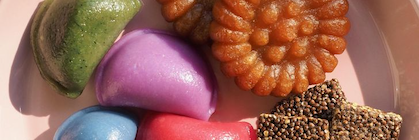
Halmaenial. A neologism and socio-culinary trend term blending the Korean word “halmoni” (할머니, meaning grandmother) and “millennial.” It describes the phenomenon, prevalent in the 2020s, wherein millennials and Generation Z consumers drive the revival and reinterpretation of traditional, often ancestrally linked, foods, crafts, and lifestyle practices.
The term specifically connotes a modernization of these traditions to align with contemporary values such as health consciousness, sustainability, minimalist aesthetics, and mindful consumption. While originally coined in the context of Korean dessert trends—notably the resurgence of tteok (rice cakes) and yakgwa—its application has expanded to encompass fashion, home decor, and wellness rituals.
The halmaenial movement is not merely nostalgic; it is a critical, selective engagement with heritage, filtering it through a modern lens of practicality and ethical consumerism.
The term emerged organically on South Korean social media and food blogs around the late 2010s, as “hansik” (Korean cuisine) underwent a global gourmet renaissance. It captured the specific irony of young people queuing for foods they once associated with archaic family rituals.

The halmaenial demographic is typically urban, educated, and digitally native, using platforms like Instagram and TikTok to share their discoveries, often emphasizing the photogenic and artisanal qualities of the updated traditional item.
This distinguishes it from a pure heritage preservation effort; the halmaenial consumer demands adaptation. For example, a halmaenial rice cake shop might use organic heukmi (black rice), offer gluten-free options, reduce sweetness by 30%, and package its products in environmentally friendly, Instagrammable wrapping.
The drivers of the halmaenial trend are multifaceted. A primary component is the wellness movement, which prioritizes whole foods and clean ingredients. Traditional recipes often inherently feature these qualities, relying on grains, legumes, and natural sweeteners like jocheong (malt syrup).
Furthermore, in an era of climate crisis and globalization, halmaenial choices represent a form of ethical consumption that supports local producers and traditional foodways, which are perceived as more sustainable than industrial food systems.
There is also a strong element of identity formation, particularly among diasporic youth, for whom engaging with curated, modernized traditions offers a way to connect with cultural heritage on their own terms, free from the rigid expectations of the past.
Critically, the halmaenial trend exists within a market economy. It has been rapidly commercialized, with startups and established brands alike leveraging the term to market products ranging from hanbok-inspired streetwear to fermented “slow beauty” skincare.
This commercialization raises questions about cultural appropriation, dilution of tradition, and gentrification, as these modernized goods are often priced at a premium, potentially excluding the very communities that preserved the traditions.
Nonetheless, proponents argue that the halmaenial wave provides essential economic viability for artisan producers and increases global appreciation for cultural heritage.
In a broader sociological context, halmaenial reflects a generational negotiation with the past. It is a selective reclamation, where aspects of tradition deemed valuable (natural ingredients, artisan craftsmanship, rhythmic slowness) are retained, while elements at odds with modern life (excessive sweetness, labor-intensive preparation, formal rigidity) are discarded or altered.
As such, it is a powerful lens through which to observe how globalized, digitally-connected generations navigate identity, health, and consumption in the 21st century.