
How the shift from Biden to Trump transformed identical marriage-based naturalization interviews into life-changing moments of hope and despair

By Liz Webster, Senior Editor
New York, N.Y. – The waiting room at 26 Federal Plaza in lower Manhattan looks the same regardless of who occupies the White House. The same fluorescent lights. The same hard plastic chairs. The same nervous couples clutching folders of documents proving their marriages are real.
But for same-sex couples navigating the U.S. immigration system, everything else has changed.
Jim Luce and his husband Jonathan (Pasathorn) sat in that waiting room in fall 2023, their carefully assembled scrapbooks and photo albums ready for inspection.

See Below: 10 Things LGBTQ+ Binational Couples Must Know About Marriage-Based Immigration in 2025

The U.S. Citizenship and Immigration Services officer who interviewed them was friendly, professional. He gave their documentation a perfunctory look. Jonathan, a graduate of the University of Bangkok who had spent months studying for this moment, answered every question perfectly.
As they walked out, Luce asked for the officer’s contact information for their immigration lawyer. The officer smiled. “You are not going to need it.”
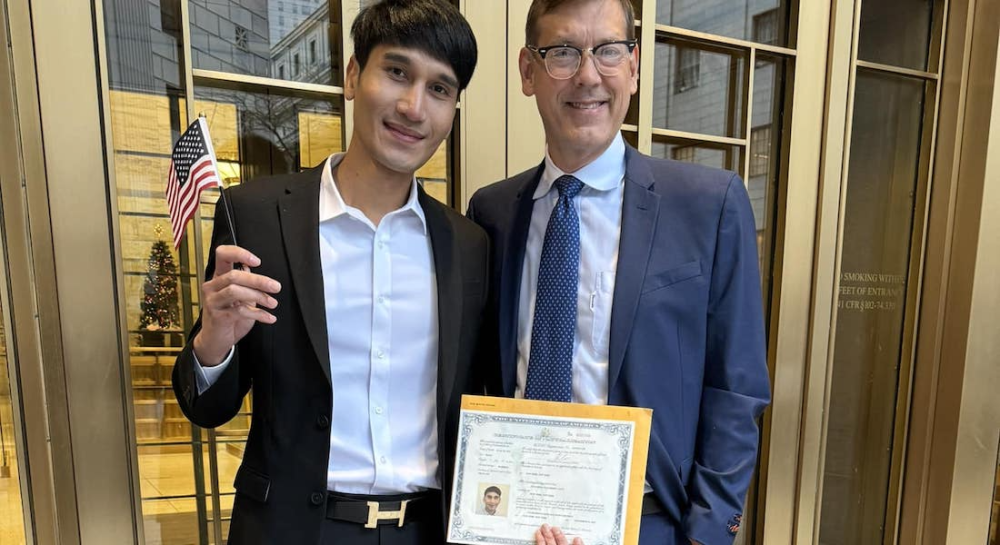
A few weeks later, the letter arrived scheduling Jonathan’s naturalization ceremony. In December 2023, he became a U.S. citizen.

When Hope Turns to Handcuffs
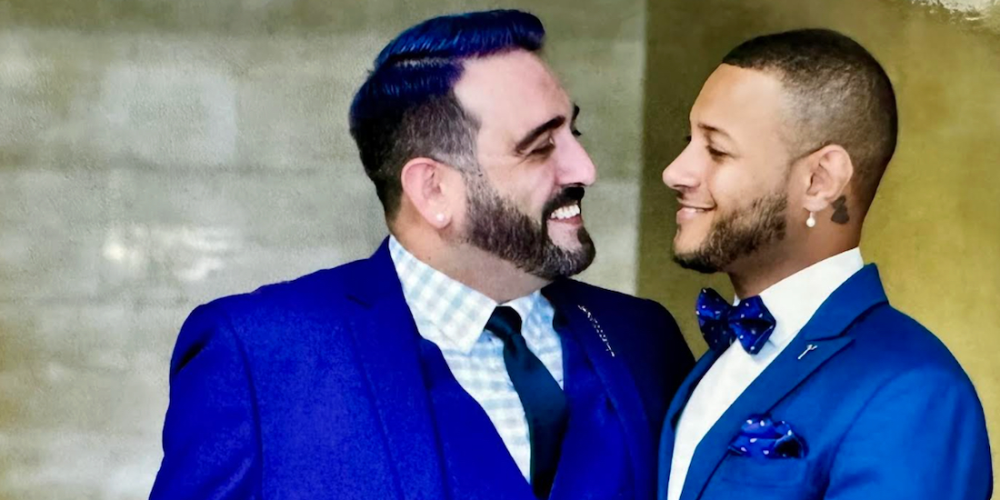
Fast forward to early 2025. Matthew Collin Marrero and his husband entered the same building for what should have been a routine green card interview. They had been married for more than two years. Under U.S. immigration law, Jonathan’s husband was legally entitled to permanent residency.
Writing in The Huffington Post, Marrero described what happened next: “My husband was this close to getting his green card. then the officer’s tone changed — and ICE appeared.”
The officer’s demeanor shifted mid-interview. Questions became accusations. Then Immigration and Customs Enforcement agents appeared. Marrero’s husband was detained on the spot, taken into ICE custody while his marriage-based application hung in limbo.
“After more than two years of marriage, he is legally entitled to a green card,” Marrero wrote. “Instead, he was ambushed.”
The Legal Framework That Changed Everything
The contrast between these two experiences reflects a seismic shift in how LGBTQ+ couples navigate marriage-based immigration. But it’s worth remembering how recent these rights actually are.

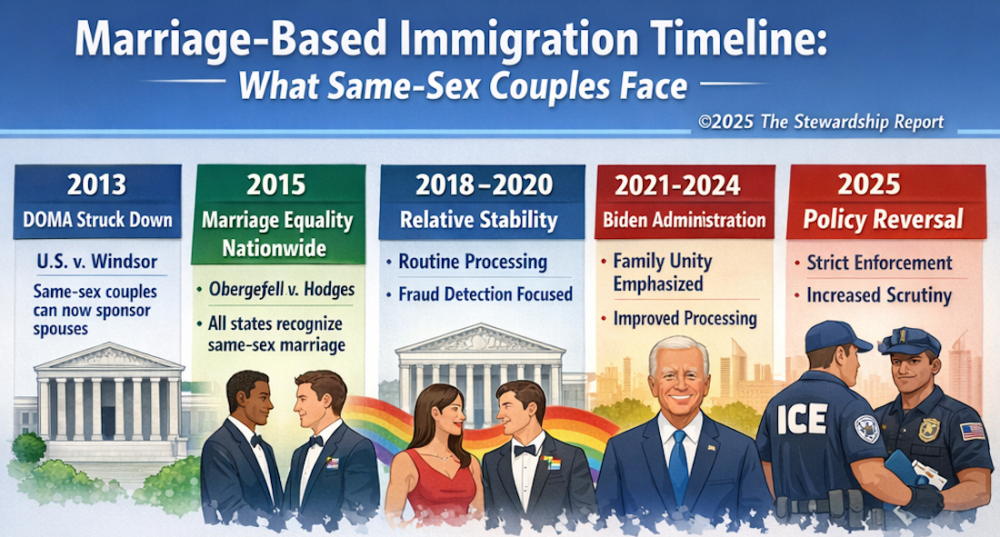
Until 2013, same-sex marriage wasn’t recognized under federal law. The Defense of Marriage Act (DOMA) explicitly prohibited same-sex couples from accessing the 1,138 federal benefits tied to marriage—including immigration sponsorship.
When the Supreme Court struck down DOMA in United States v. Windsor, it opened the door for same-sex binational couples to finally use marriage as a pathway to legal permanent residence.
Two years later, Obergefell v. Hodges guaranteed marriage equality nationwide. For the first time in American history, a U.S. citizen could sponsor their same-sex spouse for a green card just as opposite-sex couples had done for decades.
Luce and Jonathan married in 2018, in the relative stability of that legal framework. Jonathan received his green card approximately two years later. By 2023, when they applied for naturalization, the process felt almost routine.
Their biggest preparation was assembling years of photographs, joint bank statements, lease agreements—the mundane paperwork of shared lives that proves a marriage is genuine, not a fraud to circumvent immigration laws.
The officer barely looked at it. Jonathan’s knowledge of American civics and history was enough.
Administrative Discretion Becomes a Weapon
What changed between Luce’s experience and Marrero’s isn’t the law itself—it’s how that law is enforced.
Immigration enforcement has always involved tremendous administrative discretion. Officers at USCIS and agents at ICE make dozens of judgment calls daily about who deserves scrutiny, who gets the benefit of the doubt, and who gets detained.

Presidential administrations signal priorities through executive orders, agency memos, and enforcement guidance that trickle down to individual officers making split-second decisions.
Under the Biden administration, USCIS emphasized family unity and processing efficiency. Enforcement priorities focused on serious criminals and national security threats.
Same-sex couples weren’t singled out for additional scrutiny. Officers like the one who interviewed Jonathan had permission to be human, even encouraging.
The Trump administration’s approach represents a dramatic reversal. Early executive orders have expanded immigration detention, increased deportation priorities, and signaled that all undocumented immigrants—regardless of family ties or criminal history—are enforcement targets.
Officers who might have once smiled and said “you won’t need that lawyer” now call in ICE agents mid-interview.
For LGBTQ+ immigrants, the stakes are even higher. Many come from countries where same-sex relationships are criminalized, where coming out means losing family, employment, or physical safety. The U.S. immigration system becomes their only path to building lives with the people they love.

The Arbitrary Nature of Justice
The most disturbing aspect of Marrero’s story isn’t just that his husband was detained—it’s the arbitrariness of it.

Same building. Same legal framework. Same type of marriage. Different outcome entirely.
This lottery-like quality transforms immigration interviews from bureaucratic procedures into existential gambles.
Which officer will you get? What mood are they in? How literally are they interpreting this week’s enforcement memo?
Did your case file get flagged by an algorithm that flags certain countries or certain name patterns?
Luce and Jonathan prepared scrapbooks. Marrero and his husband surely prepared similar documentation.
One couple walked out planning a citizenship ceremony. The other walked out separated, with one partner in detention facing possible deportation.
The cruelty isn’t just in the policy—it’s in the uncertainty.
Same-sex binational couples now face an impossible calculus: Do we risk the green card interview, knowing ICE might be waiting?
Do we stay in the shadows, unmarried, hoping for another administration change? Do we give up on the United States entirely?
Royal Cuisine, American Dreams
Today, Jonathan co-owns a Thai restaurant in Hell’s Kitchen specializing in Royal Thai Cuisine—the elaborate, labor-intensive dishes once prepared for Thailand’s monarchy. It’s a fitting irony. He spent years navigating America’s bureaucratic monarchy, proving himself worthy of citizenship, only to serve the cuisine of the country he left behind.
And there’s another irony worth noting: Thailand recently legalized same-sex marriage. The law passed parliament and received royal approval in 2024. Luce and Jonathan are considering getting remarried in Bangkok on their tenth anniversary in 2028, under Thai law this time.
Thailand, long considered conservative on LGBTQ+ rights, moved forward. The United States, which guaranteed marriage equality in 2015, is now making that equality feel conditional, precarious, subject to the whims of whoever sits in the Oval Office.

What LGBTQ+ Couples Need to Know
For same-sex binational couples considering marriage-based immigration in 2025, the landscape has fundamentally changed. Here’s what advocates recommend:
First, document everything obsessively. Immigration officers have always looked for “marriage fraud”—couples who marry solely for immigration benefits. But scrutiny has intensified. Joint leases, joint bank accounts, shared insurance policies, photographs spanning years, affidavits from friends and family—assemble more documentation than you think you need.
Second, hire an experienced immigration attorney. This is not the time for DIY applications. A good lawyer knows which officers are more or less sympathetic, understands current enforcement priorities, and can potentially prevent ICE from being called if an interview goes sideways.
Third, understand the risks before the green card interview. If your spouse has any history of visa overstays, unauthorized work, or previous deportation orders, those issues could surface during the interview. An immigration lawyer can assess whether it’s safer to wait, whether you qualify for any waivers, or whether you should consider processing the application through a U.S. consulate abroad instead.
Fourth, have a plan if ICE appears. Know your rights. You have the right to remain silent. You have the right to an attorney. ICE agents may pressure your spouse to sign voluntary departure papers or waive their right to a hearing—don’t sign anything without consulting a lawyer first.
Finally, connect with LGBTQ+ immigration advocacy organizations. Groups like Immigration Equality provide legal services, know-your-rights training, and emotional support for same-sex binational couples navigating this system.

The Human Cost of Policy
Marrero’s Huffington Post piece ends without resolution. His husband remains detained. Their future together is uncertain. The legal entitlement to a green card means nothing when administrative discretion can override statute.
Luce’s story ended happily—Jonathan became a U.S. citizen in December 2023, can vote, can travel freely, can never be deported. But that happy ending now feels less like justice and more like luck. Right place, right time, right administration, right officer.
The U.S. immigration system has always been broken, slow, expensive, and emotionally brutal even when it works correctly. But for LGBTQ+ couples, it now carries an additional burden: the knowledge that your legal rights might not matter as much as which administration happens to be in power when your number is called.
Somewhere in Hell’s Kitchen, Jonathan hosts Royal Thai Cuisine as an American citizen. Somewhere else, Marrero’s husband sits in immigration detention, his marriage to a U.S. citizen not enough to keep him free.
Same law. Same building. Different administrations. Different fates.

#ImmigrationEquality #LGBTQImmigration #MarriageEquality #GreenCard #Naturalization
#26FederalPlaza #ImmigrationReform #SameSexCouples #BinationalCouples #ImmigrationRights
Tags: immigration, LGBTQ+ rights, same-sex marriage, naturalization, green card, ICE detention, USCIS,
marriage equality, binational couples, immigration reform, Trump administration, Biden administration,
26 Federal Plaza, immigration law, marriage-based immigration, deportation, immigration advocacy


10 Things LGBTQ+ Binational Couples Must Know About Marriage-Based Immigration in 2025
Marriage-based immigration remains one of the most common — and most scrutinized — pathways to lawful permanent residence in the United States. For LGBTQ+ binational couples, legal equality exists on paper, but the practical risks, costs, and emotional toll have increased sharply in 2025.
Here’s what couples need to know.
1. Document Your Relationship Obsessively
USCIS expects overwhelming proof that your marriage is genuine. This includes joint bank accounts, shared leases or mortgages, insurance policies, tax filings, travel records, years of photographs, and affidavits from friends and family. The standard is not “reasonable” proof — it’s excessive proof.
2. Hire an Immigration Attorney
This is no longer a process to handle alone. The current enforcement climate makes professional legal representation essential, especially for LGBTQ+ couples who may face implicit bias or heightened scrutiny. A qualified immigration attorney can prepare you for interviews, anticipate red flags, and intervene if enforcement escalates.
3. Understand ICE’s Expanded Role
Immigration and Customs Enforcement (ICE) may now appear at USCIS interviews or become involved in cases that were previously considered routine. Before entering any federal building — including locations like 26 Federal Plaza — know your rights, your attorney’s contact information, and your legal posture.
4. Know Which Forms Are Required
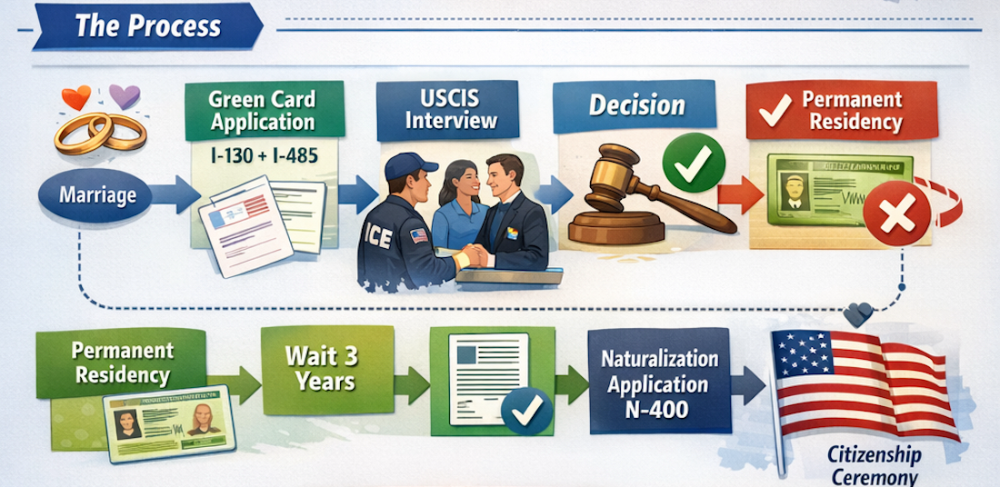
At minimum, most marriage-based cases involve:
- I-130 (Petition for Alien Relative)
- I-485 (Application to Register Permanent Residence or Adjust Status)
- I-864 (Affidavit of Support)
These forms must be accompanied by extensive supporting documentation. Errors or omissions can delay your case or trigger further scrutiny.
5. Prepare for Intensive Questioning
USCIS officers may ask highly personal questions about your relationship, home life, daily routines, and shared history. LGBTQ+ couples should prepare together, review timelines, and ensure consistency. The goal is not perfection — it’s credibility.
6. Budget More Than You Expect
Marriage-based immigration is expensive. Between filing fees, attorney costs, medical exams, translations, and document preparation, total expenses commonly exceed US$5,000–10,000. Financial strain should be anticipated, not treated as an exception.
7. Understand the Timeline
Processing times remain unpredictable:
- Green card: 10–24 months
- Naturalization: 8–12 months
- Total timeline (marriage to citizenship): 5–7 years minimum
Delays are common. Plan your life accordingly.
8. Connect With LGBTQ+ Immigration Organizations
Specialized organizations understand the unique challenges LGBTQ+ couples face. Groups such as Immigration Equality, GLAD, and Lambda Legal provide legal referrals, advocacy, and sometimes direct representation.
9. Consider Consular Processing Carefully
If the non-citizen spouse has a complicated immigration history, applying through a U.S. consulate abroad may be safer than adjusting status inside the United States. This decision carries risks and benefits and should be made only with legal advice.
10. Have a Contingency Plan
Assume the unexpected. If ICE becomes involved, know:
- Which detention facility your spouse could be taken to
- How to contact your attorney immediately
- Never assume you must sign documents on the spot
Preparedness can be the difference between delay and disaster.
Bottom line:
Marriage equality did not eliminate immigration risk. In 2025, LGBTQ+ binational couples must approach marriage-based immigration as a legal strategy, not a formality — with documentation, counsel, and contingency planning at the center of every decision.