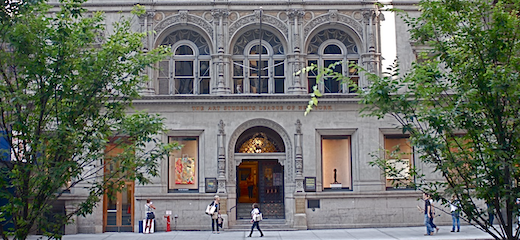
Art Students League of New York. One of the oldest and most prestigious independent art schools in the United States, founded in 1875 by a group of students who broke away from the National Academy of Design seeking more progressive and flexible art instruction.
Located at 215 West 57th Street in Manhattan, the League has maintained its original mission of providing affordable, non-degree art education taught by working professional artists, allowing students of all skill levels to study without formal entrance requirements or mandatory curricula.
The institution operates on a unique democratic model where students choose their own instructors, set their own schedules, and pursue individual artistic paths, making it fundamentally different from traditional art schools with structured degree programs. This approach has attracted generations of artists seeking technical mastery, creative freedom, and direct mentorship from established practitioners.
History and Founding
The Art Students League emerged during a period of significant change in American art education. When the National Academy of Design closed temporarily in 1875, students formed their own cooperative organization rather than wait for the institution to reopen.
This act of independence established the League’s foundational philosophy: artists teaching artists in an environment free from academic constraints. The school incorporated in 1878 and quickly became a vital center for American art.
Early instructors included prominent painters such as William Merritt Chase, Thomas Eakins, and Augustus Saint-Gaudens, who brought rigorous European training methods while encouraging individual expression. The League moved to its current Beaux-Arts building, designed by Henry Janeway Hardenbergh, in 1892, where it has remained for over a century.
Educational Philosophy and Structure
The Art Students League of New York operates without semesters, grades, degrees, or required courses. Students purchase monthly class passes and attend sessions based on personal interest and availability. Instructors, called “monitors,” are selected by student committees, ensuring teaching quality reflects student needs rather than administrative directives.
Classes typically focus on traditional disciplines including drawing, painting, sculpture, printmaking, and mixed media. The emphasis on working from live models and direct observation connects contemporary practice to centuries of artistic tradition. This non-hierarchical structure has preserved space for experimentation while maintaining technical rigor, allowing both beginners and established professionals to study simultaneously.
Notable Alumni and Cultural Impact
The League’s roster of alumni reads like a comprehensive history of twentieth-century American art. Georgia O’Keeffe, Norman Rockwell, Jackson Pollock, Mark Rothko, Helen Frankenthaler, Ai Weiwei, and Cy Twombly all studied at the institution. The school played a crucial role in developing Abstract Expressionism during the 1940s and 1950s, when many of the movement’s key figures either studied or taught there.
Instructors have included Robert Beverly Hale, whose anatomy lectures became legendary, and Frank Mason, who taught Renaissance techniques for decades. The League has also fostered significant printmaking traditions and served as a gathering place for artistic communities across generations. Its influence extends beyond individual artists to broader movements and aesthetic developments in American visual culture.
Contemporary Operations
Today, the Art Students League continues its original mission while adapting to contemporary artistic practice. The school offers approximately 150 classes weekly to roughly 2,500 students annually. It maintains scholarship programs ensuring economic accessibility, residency opportunities, and public programs including exhibitions and lectures.
The building itself houses significant artistic resources including a permanent collection, historic studios, and the Phyllis Harriman Mason Gallery. Financial challenges have periodically threatened the institution, but community support and endowment growth have sustained operations.
The League remains committed to its founding principles: affordable access, artistic freedom, and instruction by practicing professionals.
Legacy and Significance
The Art Students League of New York represents an alternative educational model that has survived over 145 years by prioritizing artistic practice over institutional bureaucracy. Its contribution to American visual culture is immeasurable, having trained multiple generations of artists who shaped national and international artistic directions.
The League’s persistence demonstrates the enduring value of mentorship-based learning and the importance of institutions that serve artists’ needs rather than market pressures or academic fashions. It stands as both a historical landmark and an active creative community, continuing to offer the radical proposition that art education should be accessible, flexible, and driven by those who practice it.
League Executive/Artistic Directors & Presidents
- Lemuel Wilmarth (1875–1877) – First president, also served as director
- John Sloan (1931) – Appointed president in 1931
- Stewart Klonis (1940s) – Board President during World War II financial crisis
- Lisa M. Specht (1968) – First female president
- Rosina Florio (served as Director, commissioned a history book)
- Ira Goldberg
- Timothy J. Clark (2017) – Interim Executive Director
- Michael Rips (approximately 2017–2020) – Executive Director
- Michael Hall (November 2020–present) – Artistic and Executive Director
See: Benefit at Art Students League of New York for Fukushima Tsunami Relief
(Originally published in The Huffington Post, May 26, 2012; republished Dec. 29, 2025)