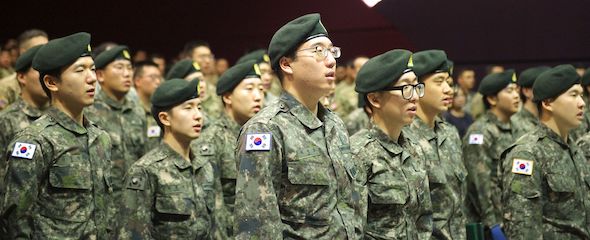
Military Service in South Korea. There exists a mandatory conscription system for all able-bodied male citizens of the Republic of Korea (South Korea). Established in response to the ongoing Korean War armistice and the persistent threat from North Korea, the system requires approximately 18-21 months of active-duty service. It is a cornerstone of South Korean national defense and a defining socio-political institution, deeply intertwined with concepts of citizenship, gender equality, and economic planning. The system is administered by the Military Manpower Administration (MMA) under the Ministry of National Defense.
The legal basis for Military Service in South Korea is the Military Service Act of 1949. The obligation applies to all males between the ages of 18 and 35, with enlistment typically occurring after high school or university. Service branches include the Republic of Korea Army (ROK Army), Navy, Marine Corps, and Air Force. The length of service has varied, gradually shortening from over two years to the current standard of 18 months for the army as of 2023, partly in response to demographic declines.
Exemptions are extremely rare and highly controversial, granted primarily for Olympic medalists, Asian Games gold medalists, and certain classical musicians who win top prizes at designated international competitions—a system criticized as elitist. Medical disabilities also warrant exemptions or alternative service.
The socioeconomic impact of Military Service in South Korea is profound. It creates a significant disruption in the career and educational trajectories of young men, a issue intensely debated in a country known for its hyper-competitive corporate and academic landscapes. This “opportunity cost” is cited as a primary driver for draft evasion, including methods such as extreme weight loss/gain, self-harm, and the documented trend of failing to return from overseas travel. The system also perpetuates gender-based roles, as women are not subject to conscription, though they may volunteer. This has sparked ongoing debates about gender discrimination and equality in national defense obligations.
Military Service in South Korea is also a major element in the entertainment industry. The enlistment of popular K-pop idols and actors is a heavily publicized event, often causing stock price fluctuations for their agencies. The public scrutiny over potential special treatment for celebrities is constant. Furthermore, the requirement affects the global mobility of South Korean male citizens, who must obtain approval from the MMA for international travel once they reach age 25 without having served.
The future of Military Service in South Korea is under increasing scrutiny due to two major pressures: a plummeting birth rate leading to a severe shortage of eligible conscripts, and evolving public attitudes that question the system’s fairness and efficiency in a modern, technologically advanced military. Proposals for reform range from further shortening service periods to transitioning to a fully voluntary, professional military—a move that would represent a seismic shift in South Korean society and its defense posture.