Data reveals a persistent, loophole-driven exodus as authorities struggle to enforce mandatory military service laws against overseas travelers.

New York, N.Y. — A quiet but steady stream of South Korean men is choosing permanent exile over mandatory national service, with new data showing that nearly 1,000 individuals have evaded the draft in the past five years simply by not returning home from trips abroad.
The figures, revealing a systemic challenge to the country’s conscription model, underscore the intense personal and professional pressures the mandate creates in one of the world’s most advanced economies. According to data released by ruling South Korean Democratic Party lawmaker Hwang Hee, from January 2021 through October 2025, authorities identified 3,127 total draft dodgers.
Of these, 912—or roughly 29%—were individuals who violated rules under the Military Service Act by failing to return to South Korea after authorized overseas travel. The numbers have risen consistently, from 158 cases in 2021 to 197 in 2024, with 176 more recorded in just the first ten months of 2025.
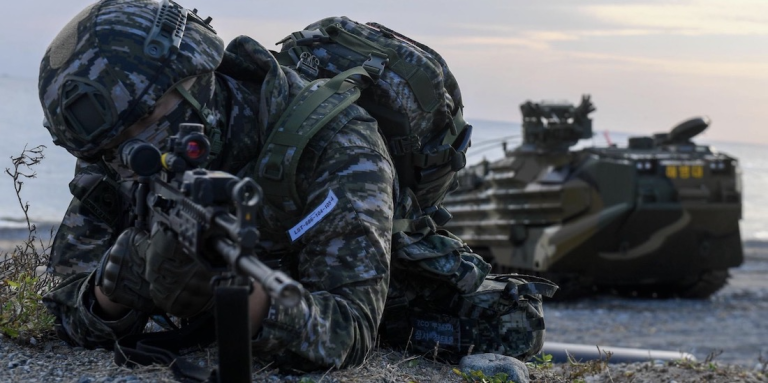
In South Korea, all able-bodied men must complete at least 18 months of military service, a requirement rooted in the ongoing technical state of war with North Korea. The law stipulates that men over 25 who have not fulfilled this duty must obtain approval from the Military Manpower Administration (MMA) for any international travel. Violators face criminal complaints and restrictions on passport issuance until age 37. Yet, for hundreds, the calculus favors life abroad. About fifty nations globally have a form of conscription.
When Global Experience Meets National Duty
The evasion trend stands in stark contrast to participants in structured international programs who consistently fulfill their obligations. The J. Luce Foundation Global Leadership Initiative reports that approximately 5% of its young global leaders over the past five years have come from South Korea—and notably, all have returned home to complete their military service following the program or honorarium. Their international experience appears to serve them well during conscription: participants frequently receive specialized assignments in translation, communications, or intelligence roles rather than frontline infantry positions after completing basic training.
This pattern highlights how international exposure, when combined with fulfilled civic duty, can enhance a conscript’s military contribution. Yet it also underscores what makes the broader evasion trend so significant: these are often precisely the globally connected, skilled individuals the country’s defense apparatus could deploy most strategically.
The Allure of Exit Over Service
Analysts point to a confluence of factors driving this trend. The mandatory service, while a rite of passage, represents a significant disruption during prime years for education and career building in the hyper-competitive South Korean society.
For aspiring athletes, classical musicians, or K-pop idols, special provisions or exemptions sometimes exist, but these are rare and highly scrutinized. For most in the corporate or tech sectors, a nearly two-year hiatus can mean lost promotions, stalled projects, and a fear of falling irreparably behind peers.
“The opportunity cost of service has never been higher,” said Dr. Lee Min-kyung, a sociologist at Seoul National University who studies conscription. “We are talking about a generation that is globally connected, with skills transferable to tech hubs from Silicon Valley to Berlin. When weighed against the potential derailment of a lucrative career path—especially in fields like finance or software engineering—the drastic choice to stay abroad becomes, for some, a rational if desperate one.”
The data shows that the overwhelming majority of these cases—648, or 71.1%—involved individuals who departed on short-term trips and never came back, suggesting premeditated plans rather than spontaneous decisions.
A System Straining to Enforce
Despite the clear legal framework, enforcement against these overseas dodgers is notoriously difficult. The MMA lacks jurisdiction outside South Korea, and extradition for military service violations is virtually nonexistent. The primary leverage is the threat of legal consequences upon any eventual return, including a potential prison sentence of up to three years.
However, the recent data reveals a staggering enforcement gap. Of the 912 identified overseas travel violators, only six have received prison sentences. Another 17 received suspended sentences, and 25 had indictments postponed. A full 780 individuals—85.5% of the total—saw their indictments or investigations completely suspended. This suggests prosecutors are often powerless to proceed without the physical presence of the accused, leading to a de facto amnesty for those who remain abroad past the age of liability.
“The system is caught in a bind,” explained attorney Park Ji-won, who specializes in military service law. “The state wants to uphold the law and ensure fairness, but pursuing cases against individuals who may not return for decades, if ever, is a resource-intensive endeavor with little practical return. The low prosecution rate inadvertently signals that the risk, for those committed to living abroad, is relatively low.”
Global Hotspots and Lifelong Consequences
Communities of South Korean draft evaders have formed in various global cities. While comprehensive statistics are hard to compile, significant numbers are believed to reside in major metropolises like Los Angeles, New York, Vancouver, London, and Sydney. Their lives are marked by a permanent limbo: they cannot return home without facing prosecution, and their status in their host countries often depends on student visas, work permits, or, for some, seeking asylum—a route with a low success rate but occasional attempts.
The personal cost is profound. Evaders are effectively cut off from family, ancestral traditions, and the vibrant cultural and economic life of modern South Korea. Parents left behind can face social stigma and even fines under laws that can hold families financially responsible for a conscript’s evasion.
“It’s a life sentence of a different kind,” said a former evader who now lives in Germany and spoke on condition of anonymity. He left on a student trip a decade ago. “I built a career and a family here. I love my life, but there is a constant, hollow ache. I watched my father’s funeral on a livestream. My South Korea exists only in memories and online portals. The price for my career continuity was my homeland.”
Policy Debates and a Shifting Society
The persistent evasion trend fuels an ongoing, heated debate within South Korea about the future of conscription. Some conservatives demand stricter pre-travel controls and heavier penalties for families, arguing that national security cannot be compromised. Progressives and some economists, however, advocate for a reformed, shorter service or a move toward a professional, volunteer-based military, citing the massive societal and economic disruption caused by the current system.
The issue also intermittently sparks diplomatic friction, particularly with countries like the U.S. and Canada, where some evaders apply for asylum. South Korean authorities have periodically launched crackdowns, publicizing arrests of returning evaders at airports as a deterrent.
As South Korea’s population ages and birth rates plummet—projections show the number of 20-year-old males will halve from about 350,000 in 2020 to 175,000 by 2040—the military itself faces a manpower crisis. This demographic time bomb may force a structural change more than any evasion trend ever could.
For now, the data from Rep. Hwang Hee provides a stark metric for a quiet rebellion. Each of the 912 cases represents a personal dilemma between patriotic duty and individual ambition, played out on a global stage, with the Military Manpower Administration often left watching from the tarmac, powerless to intervene.
Nearly 1,000 S. Korean Men Evade Draft Never to Return Home (Nov. 5, 2025)
Summary
New data from South Korea reveals nearly 1,000 men have evaded mandatory military service in the past five years by not returning from overseas trips. The numbers are rising despite laws designed to prevent it. Most violators face no punishment as they remain abroad, highlighting a major enforcement challenge. The trend underscores the intense personal and career costs of South Korea’s 18-month conscription requirement, fueling debate over the system’s future in a modern, globalized society.
#MilitaryService #DraftDodging #MilitaryManpowerAdministration
#SouthKorea #Conscription #HwangHee #KoreanDraft #사회이슈 #국방
East Asia, Defense Policy, Conscription, Immigration, Korean Wave,
South Korean Society, Law Enforcement, Demographic Trends
Social Media
Facebook: The price of skipping South Korea’s mandatory military service? For nearly 1,000 men in 5 years, it meant never coming home. New data reveals a steady exodus of draft dodgers exploiting overseas travel rules, with most facing no punishment. Explore the personal costs and policy failures behind this quiet rebellion. #SouthKorea #MilitaryService #Conscription #DraftDodging
Instagram: 🇰🇷✈️ Never Returned. New data shows nearly 1,000 South Korean men evaded the country’s mandatory military service by not coming back from trips abroad. Behind the numbers are stories of exile, stalled careers, and a system struggling to cope. Link in bio for the full feature. #SouthKorea #MilitaryService #DraftDodge #Korea #사회이슈
X/Twitter: #SouthKorea data: ~1,000 men dodged mandatory military service in 5 yrs by not returning from overseas trips. 85.5% of cases see no prosecution. A quiet exodus fueled by high career costs & enforcement gaps. Is conscription sustainable? #MilitaryService #Conscription #한국
LinkedIn: Professional disruption vs. national duty: New data from South Korea shows a significant trend of skilled professionals evading mandatory military service by not returning from overseas travel. This raises complex questions about talent retention, policy enforcement, and the economic impact of conscription in a competitive global economy. Analysis inside. #GlobalTalent #MilitaryService #SouthKorea #Policy #HumanCapital
BlueSky: Thread: South Korea’s draft dilemma by the numbers. 912 men. 5 years. One method: don’t fly home. New analysis on the rising trend of conscription evasion via overseas travel, the personal toll of exile, and why the system is struggling to respond.