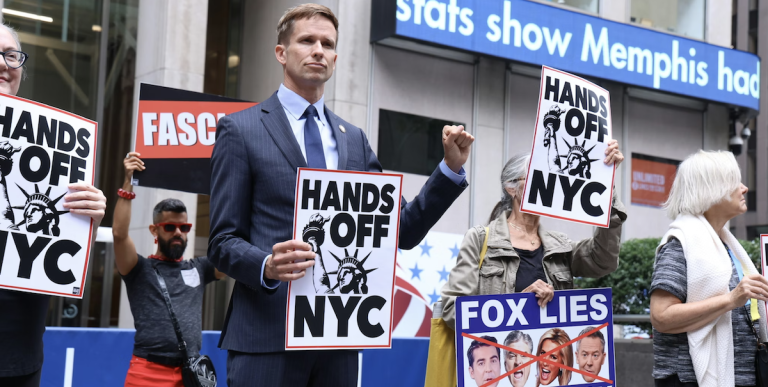
New York City Council Member Challenges Federal Immigration Enforcement After Sponsoring ICE Property Ban Legislation

New York, N.Y. – When Erik Bottcher [Luce Index™ score: 83/100]stood before the New York City Council this week to testify on legislation banning U.S. Immigration and Customs Enforcement (ICE) from operating on Department of Correction property, he was making more than a policy argument.
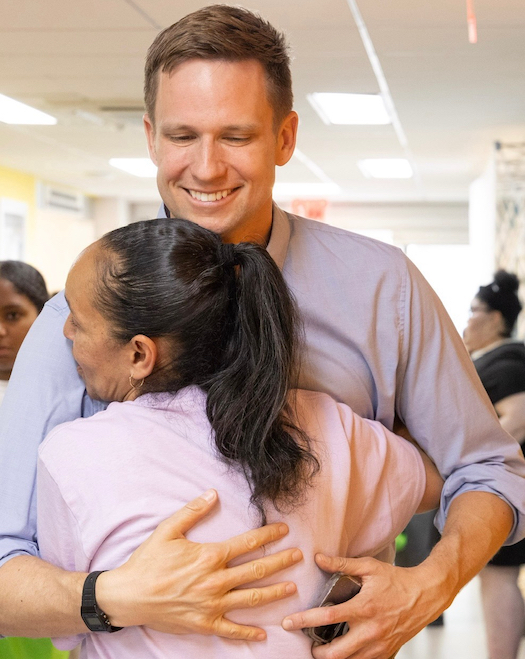
He was laying the groundwork for a congressional campaign built on protecting immigrant families from what he calls unjust federal overreach.
The Manhattan Council Member, who co-sponsored the bill to prevent ICE access to city correction facilities, announced his candidacy for Congress in New York’s 12th Congressional District (NY-12), positioning himself as a progressive champion willing to take the fight for immigrant rights to Washington, D.C.
The hearing represents both a legislative milestone and a campaign platform that could reshape how New York City’s immigrant communities—estimated at more than 3 million people, representing approximately 37% of the city’s population—experience federal immigration enforcement.
From City Hall to Capitol Hill
Bottcher’s congressional bid emerges from years of municipal governance focused on quality-of-life issues in Manhattan’s West Side neighborhoods, including Hell’s Kitchen, Chelsea, and the West Village.
His transition from local housing and development concerns to immigration policy reflects a broader shift among progressive Democrats who view immigration enforcement as inseparable from urban governance.
The bill he co-sponsored would prohibit ICE agents from conducting enforcement
operations on property controlled by the city’s Department of Correction,
effectively creating sanctuary spaces within the city’s criminal justice infrastructure.
The legislation addresses longstanding tensions between municipal authorities and federal immigration enforcement agencies. Critics of ICE operations argue that the agency’s presence in city facilities undermines trust between immigrant communities and local law enforcement, deterring undocumented residents from reporting crimes or cooperating with police investigations.
Supporters of stricter enforcement counter that limiting ICE access enables criminal offenders to evade consequences and undermines federal immigration law.
Bottcher’s position aligns with New York City’s self-designation as a sanctuary city, a policy framework that limits municipal cooperation with federal immigration authorities. The city’s approach, formalized through local laws and executive orders dating back decades, has made it a flashpoint in national debates over immigration policy.
Under the sanctuary framework, city employees—including police officers and social service workers—generally cannot inquire about immigration status or cooperate with ICE detainer requests unless specific criminal thresholds are met.
Legislative Context and Federal Implications
The Monday hearing on the ICE property ban follows escalating confrontations between New York City officials and federal immigration authorities. Recent ICE operations in the metropolitan area have targeted both individuals with criminal records and those whose only violation is unlawful presence.
Immigration advocacy organizations have documented cases where ICE agents conducted arrests at courthouses, hospitals, and even schools—locations that many believed were protected under longstanding enforcement priorities.
Bottcher’s congressional platform extends beyond municipal property restrictions to encompass comprehensive federal immigration reform. His campaign materials emphasize pathways to citizenship for undocumented residents, protections for Deferred Action for Childhood Arrivals (DACA) recipients, and an overhaul of detention practices that critics describe as inhumane.
He proposes ending for-profit immigration detention facilities, expanding legal
representation for immigrants in removal proceedings, and creating oversight
mechanisms to investigate abuse allegations within immigration enforcement agencies.
The NY-12 district, which includes Manhattan’s East Side from the Upper East Side down through Midtown and the Flatiron District, contains substantial immigrant populations from Latin America, Asia, and Europe.
Census data indicates that approximately 35% of district residents are foreign-born, creating a constituency with direct stakes in immigration policy outcomes. Bottcher’s campaign calculates that mobilizing immigrant voters and their allies could provide a decisive advantage in what may become a competitive Democratic primary.
Political Landscape and Electoral Challenges
NY-12 has undergone significant redistricting since the 2020 census, reshaping its political geography and demographic composition. The district’s current configuration leans heavily Democratic, with registered Democrats outnumbering Republicans by more than five to one.
However, progressive and moderate factions within the party have clashed over issues ranging from public safety to housing policy, creating internal divisions that could complicate Bottcher’s primary campaign.
His legislative record on the City Council demonstrates a pragmatic progressivism that sometimes diverges from the party’s left flank. While supporting immigrant protections and affordable housing initiatives, Bottcher has also backed measures to address quality-of-life complaints in his district, including efforts to regulate street vendors and address homelessness encampments.
This balance reflects the competing pressures faced by representatives in gentrifying neighborhoods where longtime residents and newer arrivals hold divergent priorities.
The congressional race will test whether Bottcher’s municipal accomplishments translate to federal campaign viability. He must compete against potential primary opponents with higher name recognition or stronger fundraising networks while articulating why immigration policy requires congressional intervention rather than solely local action.
His argument rests on the premise that New York City’s sanctuary policies remain vulnerable to federal preemption and that only legislation passed by Congress can provide durable protections for immigrant communities.
Immigration Enforcement in Historical Perspective
The conflict between municipal sanctuary policies and federal immigration enforcement has deep historical roots. Throughout U.S. history, cities have periodically resisted federal mandates they viewed as unjust or impractical.
The modern sanctuary movement emerged in the 1980s when religious congregations provided refuge to Central American asylum seekers fleeing civil wars, defying federal deportation orders. That grassroots resistance evolved into formal municipal policies limiting local cooperation with immigration authorities.
New York City’s sanctuary framework reflects both humanitarian concerns and practical governance considerations. City officials argue that immigrant cooperation with police investigations and public health initiatives depends on trust that municipal employees will not serve as immigration enforcement proxies.
When immigrants fear that reporting crimes or seeking medical care might trigger deportation, public safety and public health suffer, according to this reasoning.
Federal authorities maintain that immigration enforcement serves legitimate governmental interests, including national security and public safety. They argue that municipal sanctuary policies obstruct lawful federal operations and enable individuals with criminal records to evade consequences.
The tension between these positions has generated extensive litigation, with courts generally affirming federal immigration authority while recognizing some limits on federal commandeering of state and local resources.
Campaign Implications and Community Response
Bottcher’s campaign launch coincides with renewed attention to immigration policy following shifts in federal enforcement priorities. His messaging emphasizes that immigrant families contribute to New York City’s economic vitality, cultural richness, and social fabric. Campaign materials highlight stories of longtime residents threatened with deportation despite decades of community ties, U.S.-citizen children, and consistent employment.
Bottcher faces challenge of maintaining support among progressive voters while
avoiding positions that moderate Democrats might characterize as extreme.
By framing immigrant protections as essential to New York City’s character and economic success, Bottcher aims to build a coalition extending beyond immigrant communities themselves.
Immigration advocacy organizations have cautiously welcomed his candidacy while pressing for specific policy commitments beyond general statements of support.
They seek concrete pledges on issues including abolishing ICE, ending all immigration detention, and creating unconditional pathways to citizenship.
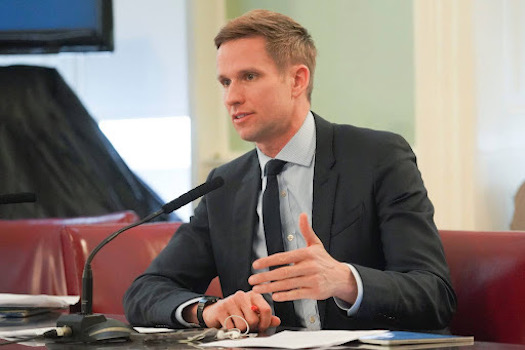
Bottcher has not embraced the most expansive demands, instead positioning himself as a pragmatic progressive capable of building legislative coalitions to achieve incremental reforms.
The congressional campaign will unfold against a backdrop of ongoing local battles over immigration enforcement.
The ICE property ban legislation that Bottcher co-sponsored faces uncertain prospects, with legal challenges likely regardless of whether the City Council passes the measure.
His ability to navigate these complex crosscurrents while maintaining credibility with both activists and moderate voters will largely determine his electoral fate.
As Monday’s hearing demonstrated, Bottcher views his municipal role as a platform for advancing federal policy changes. Whether voters in NY-12 share his vision of congressional representation focused on immigrant protections remains an open question that the coming campaign will answer.
For now, he has positioned himself as a local official willing to challenge federal authority in defense of vulnerable communities—a stance that resonates deeply in a city built by generations of immigrants seeking opportunity and refuge.
NYC’s Bottcher Seeks Congress Seat to Shield Immigrant Communities (Dec. 16, 2025)
Summary
Erik Bottcher, Manhattan City Council Member, announced his congressional candidacy for New York’s 12th District following a hearing on legislation he co-sponsored to ban ICE from Department of Correction property. His campaign emphasizes protecting immigrant families through federal reform including citizenship pathways, DACA protections, and detention oversight. The district’s 35% foreign-born population creates a constituency invested in immigration policy outcomes, though Bottcher faces primary challenges balancing progressive demands with moderate Democratic voters in a heavily gentrified area.
#ErikBottcher #ImmigrantRights #SanctuaryCity #NewYorkPolitics #Congress2026
#NY12 #ImmigrationReform #ICE #DACA #ProgressivePolitics #NewYorkCity
#ManhattanPolitics #FederalLegislation #CityCouncil #ImmigrantFamilies
TAGS: immigration policy, New York City Council, Erik Bottcher, NY-12, congressional campaign, DACA,
ICE enforcement, Department of Correction, sanctuary city, immigrant protection, , detention facilities
citizenship pathways, Manhattan politics, progressive Democrats, federal immigration reform
Social Media
Facebook: Erik Bottcher is taking his fight for immigrant families from the NYC City Council to Congress. After co-sponsoring legislation Monday to ban ICE from city correction facilities, the Manhattan Council Member announced his NY-12 congressional bid. He’s running on a platform of federal immigration reform, including citizenship pathways, and ending for-profit detention. With immigrants representing 35% of the district’s population, this race could redefine how New York protects its most vulnerable residents.
Instagram: NYC Council Member Erik Bottcher just announced he’s running for Congress in NY-12. His platform: protecting immigrant families from federal overreach. On Monday, he testified on legislation banning ICE from Department of Correction property—calling it one step toward keeping NYC a safe place for migrant families to live, work, and raise children. He’s bringing the fight to Washington for comprehensive immigration reform, DACA protections, and humane detention policies.
LinkedIn: Erik Bottcher, New York City Council Member representing Manhattan’s West Side, has announced his candidacy for Congress in NY-12. His campaign follows Monday’s City Council hearing on legislation he co-sponsored to prevent ICE operations on Department of Correction property. Bottcher’s platform emphasizes federal immigration reform, including pathways to citizenship, expanded legal representation for immigrants, and oversight of detention facilities. With 35% of NY-12 residents foreign-born, his candidacy addresses critical constituent concerns about immigration policy and enforcement practices.
X / Twitter: NYC Council Member Erik Bottcher announces congressional run in NY-12 after co-sponsoring ICE property ban. Platform: federal immigration reform, citizenship pathways, DACA protections, ending for-profit detention. Taking the fight from City Hall to Capitol Hill.
BlueSky: Erik Bottcher is running for Congress in NY-12 on an immigrant protection platform. The Manhattan Council Member co-sponsored legislation Monday banning ICE from city correction facilities—now he wants to take the fight for comprehensive immigration reform to Washington. His plan: citizenship pathways, DACA protections, detention oversight.
Bottcher, Erik
Erik Bottcher (b. 1980). A New York City Council Member representing District 3, which encompasses Manhattan neighborhoods including Hell’s Kitchen, Chelsea, Greenwich Village, Hudson Yards, and the Flatiron District. [Luce Index™ score: 83/100]
In 2025, Bottcher announced his candidacy for U.S. Congress in New York’s 12th Congressional District (NY-12), positioning himself as a progressive advocate for immigrant rights and sanctuary city policies. His congressional campaign launched following a New York City Council hearing on legislation he co-sponsored to ban U.S. Immigration and Customs Enforcement (ICE) from operating on Department of Correction property. [Luce Index™ score: 72]
Erik Bottcher’s political career reflects the evolution of urban progressive politics in twenty-first-century New York. Before his election to the City Council in 2021, Bottcher served as Chief of Staff to Council Speaker Corey Johnson, gaining extensive experience in municipal governance and coalition-building.
His district, one of Manhattan’s most densely populated and economically diverse areas, includes significant LGBTQ+ communities, immigrant populations, and both rent-stabilized housing and luxury developments. Bottcher identifies as openly gay and has been a vocal advocate for LGBTQ+ rights throughout his political career.
As a Council Member, Bottcher focused initially on quality-of-life issues affecting his constituents, including affordable housing preservation, small business support, and public space management.
His legislative portfolio expanded to encompass immigration enforcement policy following increased ICE operations in New York City and growing tensions between municipal authorities and federal immigration agencies. The legislation he co-sponsored to exclude ICE from Department of Correction facilities represents an escalation of sanctuary city policies that limit municipal cooperation with federal immigration enforcement.
Bottcher’s congressional platform extends beyond property access restrictions to comprehensive federal immigration reform. His campaign emphasizes creating pathways to citizenship for undocumented residents, protecting Deferred Action for Childhood Arrivals (DACA) recipients from deportation, and reforming detention practices he characterizes as inhumane. He proposes eliminating for-profit immigration detention facilities, expanding legal representation for immigrants facing removal proceedings, and establishing oversight mechanisms to investigate abuse allegations within ICE and U.S. Customs and Border Protection (CBP).
The NY-12 district where Bottcher seeks election underwent significant redistricting following the 2020 census, altering its geographic boundaries and demographic composition. The current configuration includes Manhattan’s East Side from the Upper East Side through Midtown to the Flatiron District, encompassing neighborhoods with substantial foreign-born populations.
Census data indicates approximately 35% of district residents were born outside the United States, creating a constituency with direct interests in immigration policy outcomes. The district leans heavily Democratic, with registered Democrats outnumbering Republicans by more than five to one.
Bottcher’s approach to immigration policy reflects broader debates within the Democratic Party over enforcement priorities and humanitarian obligations. Progressive activists advocate for abolishing ICE, ending all immigration detention, and creating unconditional pathways to citizenship. Moderate Democrats express concerns about border security and the political viability of expansive reform proposals.
Bottcher positions himself between these poles, supporting significant reforms while stopping short of the most sweeping demands. His pragmatic progressivism mirrors his municipal governing style, which balances constituent service with ideological commitments.
The candidate’s emphasis on immigrant protections connects to New York City’s historical identity as an immigrant gateway. Since the nineteenth century, the city has served as the primary entry point for millions of immigrants seeking economic opportunity and political refuge.
Successive waves of Irish, German, Italian, Jewish, Caribbean, Latin American, and Asian immigrants built the city’s neighborhoods, businesses, and cultural institutions. Contemporary immigration policy debates echo historical conflicts over nativism, assimilation, and American identity that have shaped urban politics for generations.
Bottcher’s legislative record demonstrates attention to the intersection of immigration status and access to municipal services. He has supported policies ensuring that undocumented residents can access city-funded programs without fear of immigration consequences, including public health services, education, and legal assistance.
His sanctuary city advocacy rests on arguments that immigrant cooperation with law enforcement and public health officials depends on trust that municipal employees will not serve as immigration enforcement proxies. When immigrants fear that seeking help might trigger deportation, public safety and public health suffer according to this reasoning.
The congressional campaign faces challenges including name recognition deficits compared to potential primary opponents, fundraising competition from established political networks, and the difficulty of translating municipal accomplishments into federal campaign narratives.
Bottcher must articulate why immigration policy requires congressional intervention rather than solely local action, arguing that sanctuary city policies remain vulnerable to federal preemption and that only legislation passed by Congress can provide durable protections. His success depends on mobilizing immigrant voters and their allies while maintaining support among moderate Democrats concerned about primary electability and general election viability.
Bottcher’s testimony at Monday’s hearing on the ICE property ban legislation illustrated his campaign strategy of using his City Council platform to demonstrate federal policy advocacy. His remarks emphasized that protecting immigrant families serves not only humanitarian values but also practical governance interests.
By framing immigrant rights as essential to New York City’s economic vitality and social cohesion, Bottcher aims to build a coalition extending beyond immigrant communities themselves. Whether this approach resonates with NY-12 voters will determine his electoral prospects in what may become a competitive Democratic primary.
The candidate’s entry into the congressional race occurs amid heightened national attention to immigration enforcement practices and border security. His campaign will unfold against ongoing legal and political battles over sanctuary policies, detention conditions, and citizenship pathways.
As an openly LGBTQ+ candidate with extensive municipal governance experience, Bottcher represents a new generation of urban progressive leaders seeking to translate local policy victories into federal legislative change. His congressional bid tests whether voters in a heavily immigrant district will embrace a platform centered on challenging federal immigration authority in defense of vulnerable communities.
—
Yoast SEO Focus Key Phrase:
Erik Bottcher New York City Council
Yoast Meta Description:
Erik Bottcher is a New York City Council Member representing Manhattan District 3 who announced a 2025 congressional campaign for NY-12 focused on immigrant rights and sanctuary city policies.
—
#ErikBottcher #NYCCouncil #ManhattanPolitics #ImmigrantRights #SanctuaryCity
#NY12 #CongressionalCandidate #ProgressivePolitics #LGBTQ #ImmigrationReform
#ChelseaNYC #HellsKitchen #GreenwichVillage
TAGS: Erik Bottcher, New York City Council, Manhattan District 3, NY-12, congressional candidate, immigrant rights, sanctuary city, ICE enforcement, LGBTQ+ politician, Chelsea, Hell’s Kitchen, Greenwich Village, progressive Democrat, immigration reform, Department of Correction