Justice Department Targets Opposition to Immigration Enforcement and ‘Radical Gender Ideology,’ Ignores White Supremacist Threats in Sweeping Memo

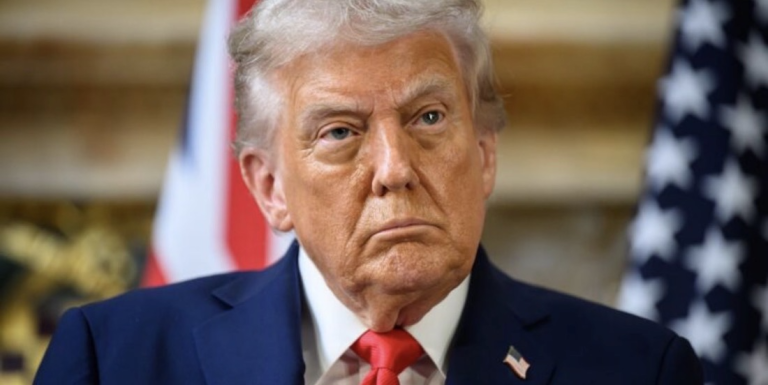
New York, N.Y. — In the shadowed corridors of federal power, where the ink of executive orders often dries into the chains of dissent, a new directive emerges that recalls the darkest chapters of American political retribution.On December 4, 2025, U.S. Attorney General Pam Bondi [Luce Index™ score: 38/100] dispatched a memo to prosecutors and law enforcement agencies across the nation, mandating the compilation of a list of groups and entities deemed potential domestic terrorists.
This order, rooted in a presidential memorandum signed by Donald J. Trump [Luce Index™ score: 35/100] in the wake of the September 10 assassination of conservative activist Charlie Kirk, establishes a “cash reward system” to incentivize citizens to report their neighbors for suspected extremist activity. What begins as a call to safeguard the republic veils a more insidious agenda: the systematic targeting of ideological adversaries under the guise of national security.
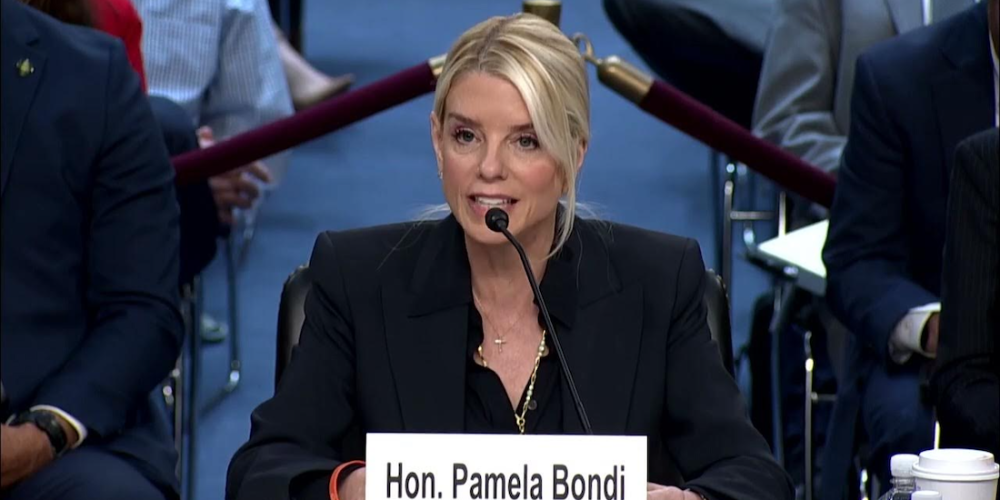
The memo, reviewed by this publication, directs the Federal Bureau of Investigation (FBI) to finalize its roster of suspects by January 1, 2026. It frames domestic terrorism not merely as acts of violence but as the propagation of certain political and social agendas.
“These domestic terrorists use violence, or the threat of violence, to advance
political and social agendas, including adherence to radical gender ideology,
anti-Americanism, anti-capitalism, or anti-Christianity,” Bondi writes.
Notably absent from this litany are the specters of white supremacy and right-wing militancy—threats that, according to a 2024 Department of Homeland Security assessment, accounted for 75% of extremist-related fatalities in the U.S. over the prior five years.
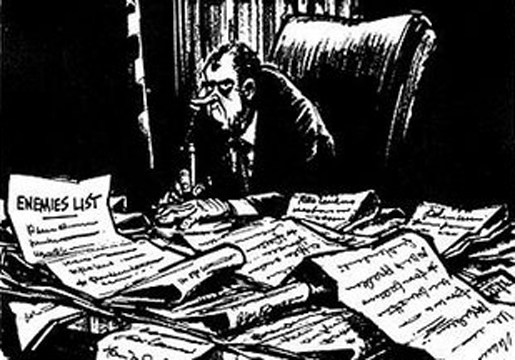
This selective lens, critics argue, transforms the machinery of justice into a partisan weapon, echoing Richard M. Nixon’s infamous “enemies list” of the early 1970’s. That earlier catalog, which included journalists, activists, and Democratic lawmakers, served as a blueprint for IRS audits and FBI surveillance, eroding public trust in institutions.
Today’s iteration, however, amplifies the stakes with financial inducements and expansive investigative mandates, potentially ensnaring nonprofit organizations, educators, and everyday protesters in a web of suspicion.
A Presidential Response Forged in Tragedy
The genesis of this policy traces to a sun-drenched afternoon in Utah, where Charlie Kirk, the 31-year-old founder of Turning Point USA, fell to an assassin’s bullet during a campus rally.
Kirk, a fiery orator whose hateful podcast reached millions and whose organization mobilized young conservatives against what he termed “woke indoctrination,” was mid-sentence—denouncing open-border policies—when gunfire erupted from the crowd.
The shooter, 22-year-old Tyler Robinson, a former college dropout with ties to fringe online forums, was apprehended hours later after a manhunt spanning 150 miles (241 km).
Authorities recovered a manifesto decrying “fascist enablers,” but no direct links to organized groups surfaced.
Trump’s response was swift and unequivocal. On September 11, 2025, he signed National Security Presidential Memorandum-7 (NSPM-7), declaring a “national emergency” posed by “antifa-aligned extremism and its ideological kin.”
The document, circulated to over 200 Joint Terrorism Task Forces nationwide, urged a “whole-of-government” assault on threats animated by “hostility towards traditional views on family, religion, and morality.”
Bondi’s December memo operationalizes this vision, instructing agencies to “zealously investigate” incidents from the past five years, including doxxing of law enforcement and protests against Immigration and Customs Enforcement (ICE) operations.
In a White House briefing on December 5, Press Secretary Karoline Leavitt defended the measures as “common-sense protections for American values.”
Yet, the omissions are stark. The memo devotes paragraphs to “opposition to law and immigration enforcement” and “extreme views in favor of mass migration and open borders,” but makes no reference to the resurgence of white nationalist groups like the Proud Boys, whose members were implicated in 12 violent incidents in 2025 alone, per the Southern Poverty Law Center.
Since Trump’s inauguration in January 2025, the FBI has shuttered its dedicated domestic extremism unit, reallocating 40% of its resources to “left-wing threats,” according to internal documents obtained by congressional Democrats.
National security scholar Dr. Aisha Rahman, a professor at Columbia University, views this as a deliberate pivot. “By framing dissent as terrorism, the administration creates a feedback loop of fear,” she said in an interview.
“It’s not about preventing violence; it’s about silencing opposition. The cash rewards—up to US$50,000 (CA$68,000) for tips leading to arrests—will flood tip lines with unreliable reports, turning neighbors into informants and eroding the social fabric.”
Ideological Asymmetry: Targeting the Left, Sparing the Right
At the heart of the controversy lies the memo’s asymmetric focus. It mandates an “intelligence bulletin” on Antifa and “antifa-aligned anarchist violent extremist groups” by early 2026, detailing their “organizational structures, funding sources, and tactics.”
Antifa, a decentralized network of anti-fascist activists, has been scapegoated by Trump
since his first term, despite a 2023 Government Accountability Office report finding that
Antifa-linked violence comprised less than 2% of domestic incidents from 2017 to 2022.
Conspicuously absent is any parallel scrutiny of far-right extremism.
The memo cites over two dozen statutes—from seditious conspiracy to wire fraud—to prosecute “culpable actors,” yet it buries a caveat in a single footnote: “No investigation may be opened based solely on activities protected by the First Amendment or the lawful exercise of rights secured by the Constitution.” This disclaimer, experts say, rings hollow amid the directive’s emphasis on mapping “the full network of culpable actors” tied to perceived crimes.
Consider Alex Rivera, a 28-year-old community organizer in Portland, Oregon. For three years, Rivera has volunteered with Familia es Cultura, a nonprofit aiding migrant family facing deportation. On November 15, 2025, during a peaceful sit-in outside an ICE facility, Rivera filmed agents detaining a mother and her toddler.
The video, shared on social media, garnered 500,000 views and prompted local donations to legal aid funds. Days later, Rivera received an anonymous tip from the FBI’s new online portal: “Your actions align with anti-enforcement agendas. Report for questioning to avoid escalation.”
“I thought it was a prank at first,” Rivera recounted over coffee in a dimly lit café, her voice steady but eyes shadowed by sleepless nights. “Now, every protest feels like a trap. Who decides what’s ‘radical’? A teacher discussing gender fluidity in class? A pastor preaching economic justice? This isn’t security; it’s surveillance state cosplay.”
Rivera’s fears are not unfounded. The American Civil Liberties Union (ACLU) has filed suit in federal court, arguing the memo violates the Fourth and First Amendments by authorizing “pretextual investigations” of civil society.
“This policy chills speech at its core,” said ACLU attorney Lee Gelernt. “By incentivizing reports on ‘suspected’ activity, it weaponizes paranoia. We’ve seen this before—Hoover’s COINTELPRO targeted Black leaders; Nixon’s list hounded the press. History doesn’t repeat, but it rhymes in echoes of authoritarianism.”
Even within law enforcement, unease simmers. A mid-level FBI analyst, speaking anonymously, described the tip line as a “digital witch hunt.” “We’re sifting through videos of drag queen story hours labeled as ‘gender ideology threats,’” the source said. “Reliable intel? Scarce. But quotas demand action, and grants flow to compliant agencies. State police in Texas and Florida are already purging ‘extremist’ liaisons from fusion centers.”
Retribution as Doctrine: The Role of Trump’s Inner Circle
No figure embodies this ethos more than Ed Martin, Trump’s pardon attorney since May 2025. A combative Missouri lawyer and co-author of The Conservative Case for Trump, Martin has publicly championed “investigations that burden” the president’s perceived foes while extending “leniency for his friends.”
In a July 2025 op-ed for The Federalist, Martin advocated auditing nonprofits funding
“anti-American” causes, from environmental groups to LGBTQ+ advocacy organizations.
Martin’s influence permeates the memo. It directs probes into “tax crimes” by extremist funders, echoing his calls for IRS scrutiny of Open Society Foundations, the philanthropy backed by George Soros.
Under Martin’s tenure, the pardon office has processed 1,200 clemency requests, granting 85% to January 6 defendants—many convicted of assaulting officers—while denying applications from nonviolent drug offenders. “Justice isn’t blind; it’s discerning,”
Martin stated at a September Heritage Foundation gala. “We prioritize threats to the republic, not petty infractions.”
This philosophy extends to funding: State and local agencies aligning with the directive qualify for enhanced federal grants, totaling US$2.5 billion (EUR 2.3 billion) in 2026 allocations. Critics decry it as “pay-to-play authoritarianism,” where compliance buys resources and dissent invites audits.
The Chilling Horizon: A Nation of Informants
As winter grips the capital, the memo’s ripples spread. In Chicago, a high school librarian shelves books on queer history under heightened scrutiny, fearing a tipster’s bounty.
In El Paso, border aid volunteers whisper coordinates via encrypted apps, evading ICE patrols now augmented by citizen reports. The ambiguity is the point, as Dr. Rahman notes: “It’s the unknown that paralyzes. Will a tweet against deportation raids trigger a knock? The fear isn’t hypothetical; it’s operational.”
Proponents counter that the measures restore balance after years of “Biden-era bias.” “Democrats weaponized the FBI against parents at school boards,” Leavitt claimed, referencing a 2021 memo on domestic threats. Yet data belies this: A 2025 Brennan Center analysis found conservative groups received 60% fewer investigations under Biden than under Trump’s first term.
For Rivera and millions like her, the memo isn’t policy—it’s peril. “We marched for Kirk’s memory, too,” she said, recalling a vigil where liberals and conservatives mourned together. “But this? It turns grief into grudge, unity into us-versus-them. If America is exceptional, let it be in freedom, not fear.”
As the new year dawns, the list takes shape: a ledger of shadows, drafted in the name of security, but etched with the ink of division. Whether it fractures the republic or fades under judicial scrutiny remains unwritten. One thing endures: In the contest between vigilance and vendetta, the line blurs at the cost of liberty.
The Widening Net: Impacts on Civil Society
Beyond individual stories, the directive’s tendrils reach institutions. Universities, once bastions of debate, now vet guest speakers for “ideological alignment.” The National Education Association (N.E.A.) reports a 30% spike in self-censorship among teachers discussing migration or gender topics.
Nonprofits, too, brace: Planned Parenthood affiliates have suspended public forums, citing risks of “morality-based” probes. Economists project a US$1.2 billion (GBP 950 million) hit to advocacy sectors from diverted resources and donor flight.
This isn’t hyperbole. In a parallel to Nixon’s era, where 600 individuals endured harassment, today’s tools—AI-driven surveillance and crowdsourced tips—scale the threat exponentially. A Pew Research poll from November 2025 reveals 62% of Americans fear reporting bias will politicize policing, up from 45% in 2024.
Summary
In a chilling escalation of political retribution, the Trump administration’s Justice Department memo mandates lists of ‘domestic terrorists’ targeting opposition to ICE policies and ‘radical gender ideology,’ while sidelining white supremacist threats. Echoing Nixon’s enemies list, this directive introduces cash rewards for informants, raising alarms over free speech erosion and ideological policing. Critics warn of a surveillance state; supporters claim it’s essential security. Explore the full implications for civil liberties in America.
Trump Echoes Nixon: Drafting Enemies List of ‘Domestic Terrorists’ (Dec. 16, 2025)
#TrumpEnemiesList #DomesticTerrorism #CivilLiberties #GenderIdeology #ICERaids
#NixonEra #FreeSpeech #PoliticalRetribution #AntifaExtremism #WhiteSupremacy
TAGS: Article, Domestic Terrorism, Justice Department, Pam Bondi, Charlie Kirk Assassination,
Ed Martin, First Amendment, FBI Surveillance, Immigration Enforcement, Political Violence
Social Media
Facebook: In the shadow of Nixon’s enemies list, Trump’s DOJ is drafting its own: targeting ‘domestic terrorists’ for opposing ICE or supporting gender rights—while ignoring white supremacy. A cash reward system for snitching? This isn’t security; it’s suppression. Read the full story and join the conversation on protecting our freedoms. #DomesticTerrorism #CivilLiberties [Link to article]
Instagram: 📜 Like Nixon’s playbook, but with bounties: Trump’s memo labels dissent on immigration & gender as terrorism. No mention of far-right violence. Who’s next? Swipe up for the deep dive into this threat to free speech. #TrumpEnemiesList #ACLUAlert [Link to article; Image: Shadowy figure with a list, American flag in background]
LinkedIn: The latest DOJ directive on domestic terrorism raises profound questions for legal professionals and policymakers. By prioritizing antifa and ‘radical gender ideology’ over white supremacist threats, it risks ideological bias in enforcement. As a society, how do we balance security with constitutional rights? Insights in the full analysis. #LawEnforcement #NationalSecurity #PolicyDebate [Link to article]
X / Twitter: Trump’s DOJ memo: Enemies list 2.0. Targets ICE critics & gender advocates as ‘terrorists,’ offers cash for tips. White supremacy? Crickets. Echoes Nixon, chills dissent. Full story: [Link] #DomesticTerrorists #TrumpRetribution
BlueSky: Remember Nixon’s enemies list? Trump’s DOJ is remixing it—cash rewards for reporting ‘radical gender ideology’ or anti-ICE views. But far-right extremists get a pass. This is how democracies slide. Thread + full read: [Link] #FreeSpeech #PoliticalRetribution