Trump’s Immigration Crackdown Pushes Citizen-Soldiers To A Breaking Point
New York, N.Y. – Two Illinois National Guard officers who are also Democratic candidates for public office say they will refuse any federal order to deploy to the streets of Chicago, describing President Donald Trump’s escalating use of military force in immigration enforcement as unlawful and incompatible with —their oath to uphold the U.S. Constitution.
Their planned act of refusal highlights a deepening clash between civilian protest movements, federal immigration authorities and a Supreme Court that has repeatedly sided with the administration’s expansive claims of executive power.
Citizen-soldiers at odds with commander in chief
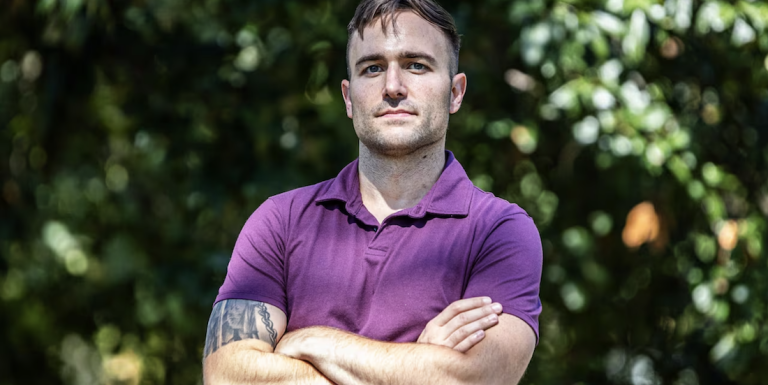
Capt. Dylan Blaha, a longtime officer in the Illinois National Guard and a progressive Democratic candidate for Congress in the state’s 13th District, says he never imagined being ordered to confront residents of his own state when he enlisted more than a decade ago.
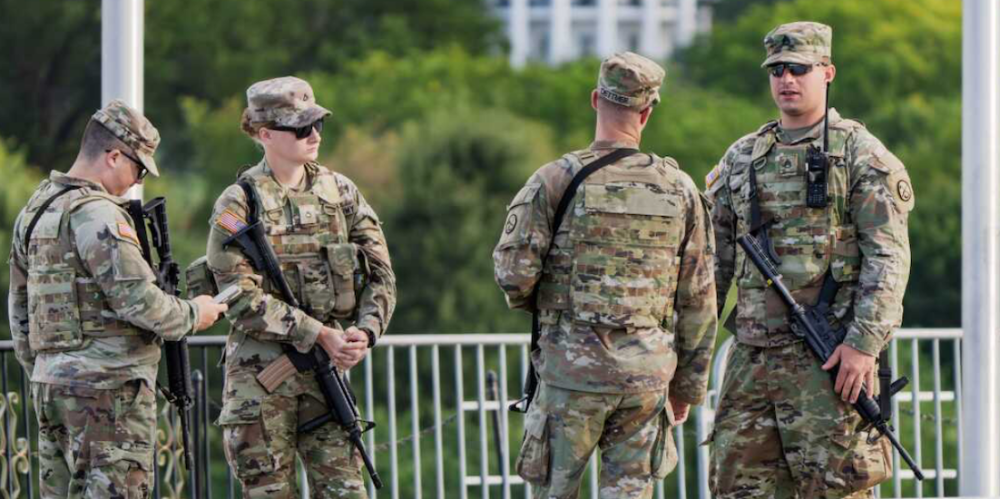
Traditionally, Guard units are mobilized at home to respond to floods, tornadoes, and other disasters, or sent overseas as reserve combat forces for the U.S. Army and U.S. Air Force, not as front-line police against domestic dissent.
Blaha says the notion of deploying heavily armed Guard units into Chicago’s
immigrant neighborhoods crosses a moral and legal line, turning neighbors into potential
enemies and blurring the boundary between military service and domestic policing.
As an officer seeking a seat in Congress, he argues that following such an order would contradict both his duty as a soldier and his responsibility as an aspiring lawmaker to protect civil liberties, especially for communities already traumatized by ICE raids and racial profiling.
A deployment on pause, but pressure rising
Trump’s latest request to send hundreds of National Guard troops into the Chicago area is currently on hold while the U.S. Supreme Court weighs whether federal law actually allows such a deployment under the statute the administration has invoked.
The law permits a president to federalize state Guard units to suppress rebellion or when
“regular forces” are deemed insufficient, but the justices have demanded further briefing
on what that term means and how far presidential authority extends in policing protests.
In its filings, the U.S. Justice Department claims that local officials have failed to control what it describes as “mob violence” by demonstrators protesting aggressive immigration enforcement in and around Chicago.
Civil rights advocates, however, insist that the overwhelming majority of actions have been peaceful, featuring clergy, teachers and families who see themselves as defending constitutional rights rather than threatening public safety. Until the Court rules, the deployment remains suspended, but Guard members like Blaha are already receiving preparatory notices and reprimands, underscoring how quickly the pause could end.
ICE raids sow fear far beyond “criminal aliens”
On the ground in Illinois, Staff Sgt. Demi Palecek, an Illinois Guard non‑commissioned officer and Democratic candidate for the state legislature, says the administration’s immigration crackdown has transformed daily life for many of her constituents.
Palecek, who is of Mexican heritage, describes families who avoid work, school and
medical appointments because they fear being detained at traffic stops, near workplaces
or even in hospital parking lots by Immigration and Customs Enforcement (ICE) teams.
Federal data show that roughly 72% of nearly 58,000 people apprehended in recent sweeps have no criminal convictions, contradicting administration rhetoric that the crackdown is narrowly aimed at violent offenders.
Community organizers and legal advocates interviewed in recent reporting describe raids at day‑labor sites, detentions of lawful residents with work permits, and cases in which U.S. citizens were mistakenly arrested or subjected to excessive force, such as military veterans pepper‑sprayed and pinned under officers’ knees during mass operations.
These tactics, according to constitutional scholars, resemble psychological warfare more than routine law enforcement, relying on fear and uncertainty to deter immigrants—documented and undocumented alike—from exercising basic freedoms of movement and association.
“We won’t turn our rifles on our neighbors”
Palecek says that when she canvasses as a candidate, many residents visibly flinch when they learn she serves in the National Guard, associating the uniform less with disaster relief and more with armored vehicles on city streets. She responds by sharing her own story of why she enlisted: to help communities in crisis, not to “follow dictator’s orders,” as she bluntly describes the pressure she feels from the current administration.
Both Palecek and Blaha stress that their refusal is, which they say
forbids them from participating in unlawful domestic repression.
They argue that the proper role of citizen‑soldiers is to stand with communities in emergencies—sandbagging levees, clearing debris, staffing shelters—not to wield rifles against clergy, parents and children protesting ICE abuses.
By publicly pledging to disobey, they hope to embolden other service members to examine the legality and morality of their own orders, particularly if more aggressive deployments follow.
Trump’s widening use of military power at home
Trump, now in his third presidential campaign cycle and second term, has repeatedly expanded presidential power in ways that alarm legal experts and civil libertarians. His administration has used emergency declarations, federalized Guard units and novel legal theories to target cities, universities, and political opponents, often with the support of a Supreme Court that has reversed lower‑court rulings against him with minimal explanation.
Speaking to U.S. troops at a naval base in Japan, Trump recently signaled he is prepared to send “more than the National Guard” into U.S. cities if he deems it necessary for “safe cities,” openly musing about invoking the Insurrection Act to deploy active‑duty Army, Navy, Air Force or Marine units in policing roles.
While federal law generally prohibits the military from performing civilian law‑enforcement functions, the Insurrection Act creates broad exceptions that past presidents have used sparingly, primarily during moments of genuine insurrection or massive civil unrest; critics warn that stretching it to cover routine immigration protests would normalize military occupation of domestic urban space.
Legal stakes and the duty to disobey
Refusing a lawful federal order can carry severe consequences under the Uniform Code of Military Justice, including court‑martial, imprisonment and punitive discharges that function as felony records.
Both Blaha and Palecek report that they have already received written warnings from their chain of command, and Blaha says his security clearance has been revoked pending an investigation into his public statements.
Military law does, however, require service members to refuse manifestly unlawful orders, a standard shaped by post‑World War II jurisprudence and subsequent human‑rights conventions.
The unresolved question is whether a Supreme Court potentially inclined to favor broad presidential authority will ever formally declare such deployments unlawful, leaving individual soldiers to make high‑stakes judgments in a legal gray zone.
Civil‑military scholars caution that if large numbers of Guard members refuse orders en masse, the U.S. could face an unprecedented crisis of legitimacy within its own security forces, with implications far beyond immigration policy.
Communities organize, even as fear spreads
On Chicago’s streets and across California, community groups have responded to ICE raids with tactics that blend grassroots surveillance, legal aid, and political protest.
Volunteers document enforcement vehicles entering and leaving detention centers, circulate license‑plate information so neighbors can spot unmarked ICE cars, and form rapid‑response networks to track those detained so families are not left in the dark when loved ones suddenly vanish.
Nurses and other health workers, distressed by patients skipping appointments for fear of arrest, have joined coalitions that monitor ICE activity near hospitals and public‑health clinics, arguing that weaponizing health care access undermines both medical ethics and public safety.
In Los Angeles, legal challenges briefly curtailed racially discriminatory stop‑and‑detain practices, but a conservative Supreme Court’s intervention reopened the door to profiling based on skin color and language, reinforcing the perception among many immigrants that the legal system is stacked against them.
“The right side of history”
Despite the risks, Palecek says she draws strength from her community’s resilience and from a conviction that history ultimately vindicates those who stand against authoritarian overreach. She imagines a future in which she can tell her grandchildren that she refused to turn her uniform into an instrument of fear and remained faithful to the people who trusted her as both a soldier and a public servant.
Blaha frames his stance similarly, arguing that silence would make him complicit in a broader project to turn the United States into what legal scholars describe as a “managed democracy” or even a quasi‑police state, where force substitutes for persuasion and courts ratify power rather than constrain it.
Whether the Supreme Court ultimately curbs or blesses Trump’s plans, both Guardsmen insist that individual conscience still matters—and that sometimes the most patriotic act a soldier can perform is to say “no.”
Summary
Meet Capt. Dylan Blaha and Staff Sgt. Demi Palecek, two Illinois National Guard officers and Democratic candidates who say they will defy President Donald Trump’s order to deploy troops into Chicago’s immigrant neighborhoods. Their refusal illuminates the human cost of ICE raids, the legal uncertainty surrounding Trump’s domestic use of military power, and the enduring question of when soldiers must disobey unlawful commands.
#NationalGuard #Chicago #Immigration #ICERaids #DonaldTrump
#CivilRights #DylanBlaha #DemiPalecek #PoliceState #HumanRights
TAGS: Blaha, Dylan, Palecek, Demi, Donald Trump, National Guard, police state,
ICE raids, immigration crackdown, civil rights, Supreme Court, Insurrection Act,
Chicago, Illinois 13th District, Democratic candidates, human rights, U.S. Constitution
Social media
Facebook
Two Illinois National Guard members—Capt. Dylan Blaha and Staff Sgt. Demi Palecek—say they will refuse any order to deploy against Chicago’s immigrant communities. Their stance raises urgent questions about unlawful orders, ICE raids and the future of civil‑military relations in the U.S. Read how citizen‑soldiers are pushing back against Trump’s expanding domestic use of military force.
Instagram
Citizen‑soldiers in Illinois are saying “no.” Capt. Dylan Blaha and Staff Sgt. Demi Palecek refuse to deploy against their own neighbors as Trump pushes to send National Guard troops into Chicago’s immigrant neighborhoods. Their decision spotlights the human toll of ICE raids and the risks soldiers face when they insist on following their conscience as well as their oath.
LinkedIn
Two Illinois National Guard officers, Capt. Dylan Blaha and Staff Sgt. Demi Palecek, are publicly pledging to defy any federal order that would send them into Chicago’s streets as part of President Trump’s immigration crackdown. Their refusal underscores the tension between military obedience and constitutional duty, and highlights how ICE enforcement tactics are reshaping public trust in institutions and the rule of law.
X / Twitter
Two Illinois Guard members say they’ll defy Trump’s order to deploy in Chicago, calling it unlawful and dangerous for their communities. Their stance challenges the president’s expanding use of troops in immigration crackdowns and raises hard questions about when soldiers must refuse orders.
BlueSky
Capt. Dylan Blaha and Staff Sgt. Demi Palecek are drawing a line: they won’t deploy against Chicago’s immigrant communities as part of Trump’s ICE‑driven military crackdown. Their refusal exposes the fear ICE raids have spread and the legal gray zone around using Guard troops for domestic policing.