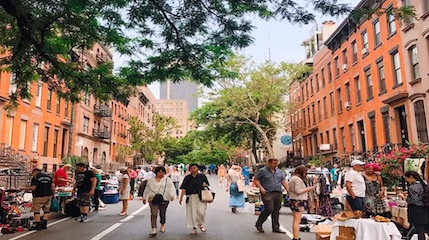
Hell’s Kitchen. Historically known as Clinton, is a storied neighborhood on the West Side of Midtown Manhattan in New York City. Bordered by 34th Street to the south, 59th Street to the north, Eighth Avenue to the east, and the Hudson River to the west, it has transformed from a notorious 19th-century industrial slum into a diverse, sought-after residential and cultural hub. This evolution represents a quintessential New York story of resilience, community action, and urban change.
Historical Origins and Industrial Grit
The neighborhood’s dramatic name has several contested origins, all pointing to a tough past. The most famous anecdote involves a veteran policeman and his rookie partner observing a riot on West 39th Street in the 1880s; when the rookie said, “This place is hell itself,” his partner reportedly replied, “Hell’s a mild climate. This is Hell’s Kitchen“. In the mid-1800s, the area was a landscape of slaughterhouses, factories, and Hudson River rail yards. Immigrant populations, first Irish and later others, crowded into tenements, working as dock laborers and longshoremen under harsh conditions. The area was so infamous for danger and gang activity that Tenth Avenue was nicknamed “Death Avenue.”
20th Century Transitions and Community Resilience
The neighborhood’s industrial backbone began to erode in the mid-20th century with the decline of the shipping industry. The 1970s and 1980s were a critical period, as Hell’s Kitchen faced significant threats from large-scale redevelopment plans. In response, community groups organized effectively, achieving historic zoning protections like the creation of the Special Clinton District to preserve the neighborhood’s low-rise, affordable character. This activism continues today, with community boards successfully challenging improper demolition permits to protect rent-stabilized housing and neighborhood scale.
Modern Identity: Diversity and Culture
Contemporary Hell’s Kitchen is defined by its layered diversity and cultural energy. While long-established Irish American and Latino populations remain, the neighborhood is also a significant home to a large LGBTQ+ community and many associated businesses. Its proximity to the Theater District has long attracted actors, artists, and stagehands, embedding a creative professional class within its fabric.
The neighborhood offers a distinct mix of old and new:
- Architecture and Streetscapes: A streetscape of four- to six-story walk-up apartments and tenements, now often protected by zoning, exists in the shadow of the gleaming glass towers of the adjacent Hudson Yards and Midtown.
- Culinary and Commercial Scene: Ninth Avenue is famed as “Restaurant Row,” featuring a vast selection of multiethnic and relatively inexpensive restaurants.
- Key Attractions: Notable destinations include the Intrepid Sea, Air & Space Museum at Pier 86, the recreational Hudson River Park, and lively piano bars like Don’t Tell Mama and the new Thai royal restaurant, Jan Jao Kha.
Hell’s Kitchen in Popular Culture
The neighborhood’s evocative name has transcended geography to become a global brand, primarily through the influence of celebrity chef Gordon Ramsay. His international reality television franchise, Hell’s Kitchen, which premiered in 2005, pits aspiring chefs in a high-pressure kitchen competition. The show’s massive popularity has inspired a chain of Gordon Ramsay Hell’s Kitchen restaurants, including flagship locations in Las Vegas and Miami, where patrons can experience signature dishes like Beef Wellington in settings that mimic the show’s dramatic red and blue kitchen design.
Current Challenges and Lasting Character
Today, Hell’s Kitchen grapples with intense gentrification and development pressures due to its prime Midtown location. Median incomes have risen sharply, and the tension between preservation and growth is ongoing. Despite these changes, the neighborhood has retained much of its authentic, gritty spirit and communal identity. It stands as a powerful example of how a community can shape its own evolution, balancing its hardscrabble history with a dynamic, inclusive present.