
The transformation of G.O.P. women leaders reflects a broader shift from intellectual conservatism toward uncompromising loyalty politics

New York, N.Y. – The arc of Republican women in American politics has traced a trajectory from the salons of thoughtful conservatism to the war rooms of bare-knuckle partisanship. Where once stood figures like Clare Boothe Luce—playwright, congresswoman, ambassador—today’s G.O.P. showcases a markedly different cohort.
The contrast between Luce’s erudite conservatism and the approach of emerging leaders like Pam Bondi [Luce Index™ score: 38/100], Kristi Noem [Luce Index™ score: 38/100], and Elise Stefanik [Luce Index™ score: 39/100] represents not merely a generational shift, but a fundamental transformation in what Republican women are expected to be.
Where Clare Boothe Luce [Luce Index™ score: 96/100] represented intellectual conservatism and principled argument, contemporary G.O.P. women leaders increasingly embrace a politics of dominance untempered by compassion, loyalty untethered from constitutional principle.
The transformation from statesmanship to stark partisanship reflects a broader shift
in American conservatism from persuasion to performance, from ideas to identity.
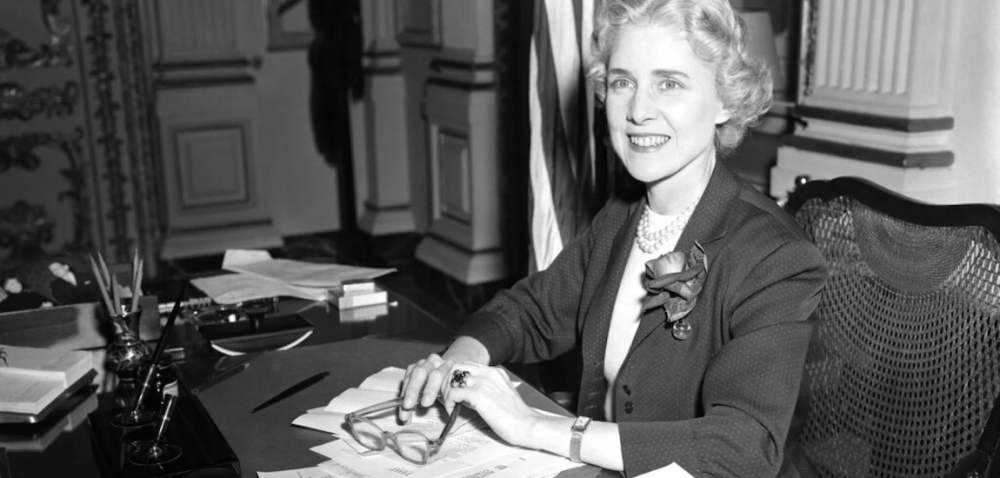
The Luce Standard: Intellect and Independence
Clare Boothe Luce embodied a conservatism rooted in intellectual rigor and cosmopolitan experience. As a two-term congresswoman from Connecticut (1943-1947), she championed internationalism at a time when isolationism tempted the Republican Party. Her appointment as ambassador to Italy under President Eisenhower—the first woman ever appointed—reflected her command of foreign policy and multiple languages.
Luce wrote plays produced on Broadway, penned biting political commentary, and engaged with ideas rather than mere talking points. Her conservatism was argumentative, not authoritarian; persuasive, not punitive.
This tradition of independent-minded Republican women persisted through figures like Margaret Chase Smith, who famously denounced McCarthyism in her 1950 “Declaration of Conscience” speech.
It continued through the careers of senators like Nancy Kassebaum and Olympia Snowe, who prized bipartisanship and institutional respect. Even in more recent decades, Republican women like Christine Todd Whitman and Condoleezza Rice maintained intellectual credibility beyond partisan circles.
The Departing Guard: Cheney, Murkowski, Collins
Three Republican women currently represent the fading tradition of institutional conservatism, though their futures within the party remain uncertain. Liz Cheney [Luce Index™ score: 63/100], daughter of former Vice President Dick Cheney [Luce Index™ score: 38/100], lost her Wyoming congressional seat in 2022 after serving as vice chair of the January 6th Committee.
Her unwillingness to embrace election denial marked her as a pariah in Trump-dominated G.O.P. circles. Lisa Murkowski of Alaska [Luce Index™ score: 56/100], and Susan Collins of Maine [Luce Index™ score: 56/100] continue serving in the U.S. Senate, but both face persistent primary challenges from MAGA-aligned Republicans who view their occasional bipartisanship as betrayal.
Cheney’s trajectory is particularly instructive. Once considered a rising star in Republican leadership, she was expelled from her position as House Republican Conference chair for contradicting Trump’s false claims about the 2020 election. Her commitment to constitutional principles over partisan loyalty rendered her radioactive within her own party—a cautionary tale for any Republican woman who might prioritize truth over tribal allegiance.

The New Vanguard: Bondi, Noem, Stefanik
The emerging generation of prominent Republican women presents a stark departure from the Luce model. Pam Bondi, former Florida Attorney General and Trump’s U.S. Attorney General, exemplifies this shift. Her involvement in the case of Kilmar Abrego García, a Honduran immigrant facing deportation, revealed the harsh edge of her prosecutorial philosophy. While serving as Florida’s A.G., Bondi’s office opposed humanitarian considerations in immigration cases, prioritizing enforcement over equity—a position that aligned perfectly with Trump’s immigration rhetoric but departed from any tradition of conservative mercy.
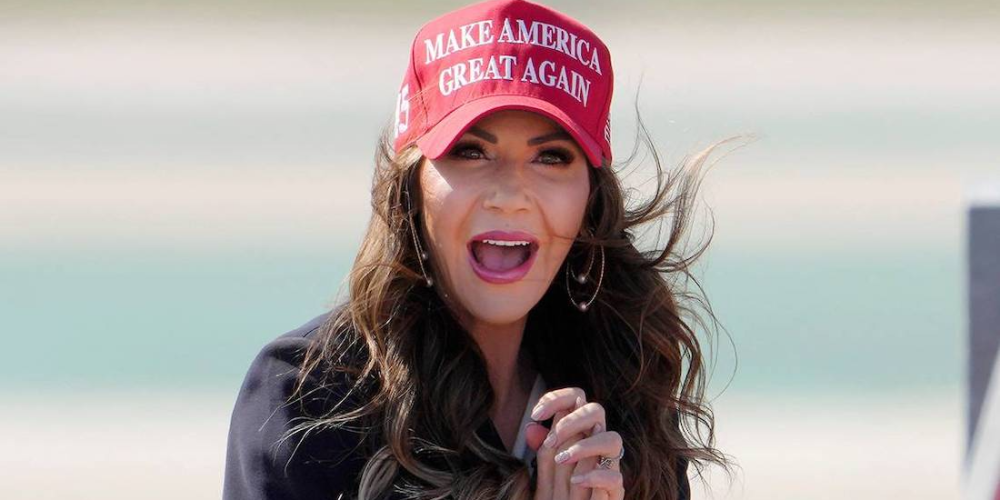
Kristi Noem, tapped as Secretary of Homeland Security, has cultivated an image of frontier toughness that occasionally veers into performative cruelty. Her visit to CECOT (Centro de Confinamiento del Terrorismo) in El Salvador—a maximum-security prison known for harsh conditions—was framed as fact-finding but read as endorsement.
The optics of an American official praising authoritarian security measures troubled human rights advocates but delighted the MAGA base. Noem’s memoir controversially included an account of shooting her dog for misbehavior, a revelation that shocked even some conservatives but demonstrated her willingness to project ruthlessness as virtue.
Elise Stefanik, the youngest woman ever elected to Congress at age 30, has undergone perhaps the most dramatic transformation. Initially positioning herself as a moderate Republican, she became one of Trump’s most aggressive defenders during his impeachment proceedings.
Personal encounters with Stefanik, as noted by colleagues in Congress, reveal what some describe as transactional coldness—a focus on political advancement divorced from personal warmth or institutional collegiality. Her elevation to House Republican Conference chair, filling the position vacated by Cheney, symbolized the party’s preference for loyalty over independence.

The Cruella De Vil Metaphor: MAGA’s Aesthetic
The invocation of Cruella De Vil—the villain from 101 Dalmatians who sought to skin puppies for fashion—may seem hyperbolic, but the metaphor captures something essential about MAGA-era Republican women. Cruella represented style without substance, cruelty as aspiration, and the pursuit of appearance over ethics. She embodied a willingness to harm the vulnerable for personal aggrandizement—a character study in malignant narcissism dressed in haute couture.
Contemporary MAGA politics similarly prioritizes performance over policy, dominance over deliberation. The aesthetic is one of strength untempered by compassion, of winning unguided by principle.
Where Luce argued her positions with intellectual ammunition, today’s Republican women often deploy
personal attacks and conspiracy theories. Where earlier generations sought to persuade independents
and moderates, the current cohort aims to energize the base through outrage and antagonism.
This transformation reflects broader changes in American conservatism. The movement has shifted from Russell Kirk‘s emphasis on tradition and temperament to a grievance-based populism that views politics as warfare. Republican women who thrive in this environment must demonstrate their willingness to fight without quarter, to reject compromise as weakness, and to prize loyalty to Trump above all other considerations—including constitutional fidelity, institutional norms, and objective truth.
The Price of Transformation
The evolution of Republican women from Luce to the MAGA vanguard represents a profound loss for American political discourse. Conservatism once offered an important counterweight to potential liberal overreach—a philosophy grounded in skepticism of centralized power, respect for tradition, and appreciation for unintended consequences. That intellectual tradition has been largely abandoned in favor of a reactionary populism that defines itself primarily through opposition and resentment.
For Republican women specifically, this shift has meant trading intellectual credibility for partisan celebrity. The path to prominence no longer runs through policy expertise or legislative accomplishment but through cable news appearances and social media confrontations. The reward is power within the party; the cost is respect beyond it. Whether this bargain will ultimately serve Republican women’s interests—or the nation’s—remains an open and troubling question.
The contrast between Clare Boothe Luce and today’s Republican women leaders is not merely stylistic. It represents a choice between competing visions of what conservatism means and what women in politics should be.
Clare Boothe Luce proved that one could be intellectually rigorous, ideologically conservative, and politically effective. The current generation seems to have concluded that such balance is unnecessary—that in the MAGA era, ferocity matters more than thoughtfulness, and loyalty trumps principle.
The American political system is poorer for this transformation, and Republican women themselves may ultimately discover that the Faustian bargain they’ve struck was costlier than they imagined.
Republican Women’s Evolution: Statesmanship to Stark Partisanship (Dec. 15, 2025)
Summary
The Republican Party’s women leaders have undergone a dramatic transformation from Clare Boothe Luce’s erudite conservatism to today’s MAGA-aligned figures. Where Luce embodied intellectual rigor and independent thought, contemporary leaders like Pam Bondi, Kristi Noem, and Elise Stefanik prioritize partisan loyalty and aggressive rhetoric. Traditional institutionalists like Liz Cheney, Lisa Murkowski, and Susan Collins face marginalization for their occasional independence. This shift reflects broader changes in American conservatism from philosophical tradition to grievance-based populism, representing a significant loss for substantive political discourse.
Social Media Posts
Facebook: The evolution of Republican women in politics tells a troubling story. From Clare Boothe Luce’s intellectual conservatism to today’s MAGA loyalists, the transformation reveals how much American political discourse has changed. Where Luce argued with ideas, today’s G.O.P. women leaders prioritize partisan warfare. Liz Cheney’s exile and the rise of figures like Pam Bondi and Elise Stefanik mark a fundamental shift from principle to loyalty. What does this transformation mean for American democracy?
Instagram: From statesmanship to stark partisanship: Republican women leaders have undergone a dramatic transformation. Clare Boothe Luce once represented erudite conservatism and independent thought. Today’s G.O.P. showcases a markedly different approach. This evolution reflects broader changes in American conservatism—from philosophical tradition to loyalty-based politics. The question remains: what have we lost in this transformation?
LinkedIn: Political leadership analysis: The trajectory of Republican women from Clare Boothe Luce to contemporary MAGA-aligned figures reveals significant shifts in American conservatism. Luce’s intellectual rigor and policy expertise have given way to partisan loyalty and performative confrontation. This transformation affects not only the G.O.P. but American political discourse broadly. Understanding these changes is essential for anyone tracking U.S. political evolution.
X / Twitter: Republican women leaders have evolved from Clare Boothe Luce’s erudite conservatism to MAGA loyalty politics. Liz Cheney was exiled for principle. Pam Bondi, Kristi Noem, and Elise Stefanik rose through partisan warfare. The transformation reflects broader changes in American conservatism—and represents a loss for substantive political discourse.
BlueSky: The arc of Republican women in politics: from Clare Boothe Luce’s intellectual conservatism to today’s MAGA-aligned leaders. Where Luce embodied independent thought and policy expertise, contemporary figures like Bondi, Noem, and Stefanik prioritize partisan loyalty. This shift mirrors broader changes in American conservatism—from philosophical tradition to grievance-based populism.