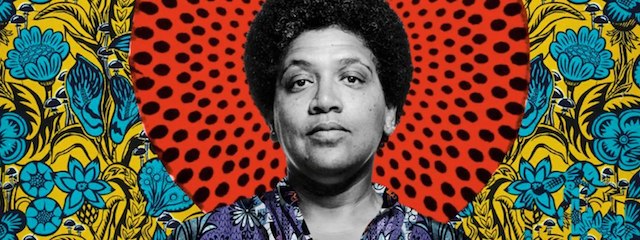
Audre Geraldine Lorde (1934–1992, age 58). An influential American writer, poet, and activist known for her work in civil rights, feminism, and LGBTQ rights. Born in New York City to West Indian parents from Barbados and Grenada, Lorde developed a unique perspective that drew from her multiple identities as a Black woman, lesbian, mother, and warrior poet.
She attended Hunter College for her undergraduate degree and later earned a master’s degree in library science from Columbia University. Lorde identified as a lesbian and was open about her sexuality throughout her career, making her a pioneering voice for LGBTQ+ visibility during an era when such openness carried significant personal and professional risks.
Audre Lorde’s literary career began with poetry that explored the intersections of race, gender, sexuality, and class. Her first volume of poetry appeared in the 1960s, but she gained wider recognition with collections such as “The Black Unicorn” (1978), which drew upon African mythology and her West Indian heritage.
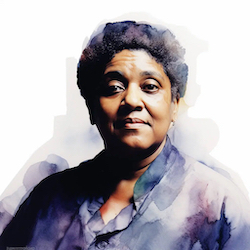
Lorde’s work rejected the notion that oppression could be ranked or that social justice movements should be siloed. Instead, she developed what would become known as intersectional feminism, arguing that all forms of oppression were interconnected and must be confronted simultaneously.
Beyond poetry, Lorde produced influential essays and prose that challenged both mainstream feminism and the broader civil rights movement to address their own blind spots. Her essay collection “Sister Outsider” (1984) became a foundational text for understanding how race, gender, and sexuality intersect.
In “The Master’s Tools Will Never Dismantle the Master’s House,” Lorde argued that oppressive systems could not be dismantled using the same thinking and structures that created them. Her biomythography “Zami: A New Spelling of My Name” (1982) blended autobiography, history, and myth to tell the story of her coming of age as a Black lesbian in America.
Audre Lorde was also a dedicated educator who taught at several institutions, including Lehman College and John Jay College of Criminal Justice in New York. She used her academic positions to mentor young writers and activists, particularly women of color and LGBTQ+ students who saw themselves reflected in her work. From 1991 to 1992, Lorde served as New York’s Poet Laureate, a prestigious position that recognized her literary achievements and cultural impact.
Lorde’s activism extended beyond the written word. She co-founded Kitchen Table: Women of Color Press in 1980, providing a platform for voices often marginalized by mainstream publishing. She also traveled internationally, connecting with feminist and anti-apartheid movements in Europe, the Caribbean, and Africa. Her time in Berlin was particularly significant, where she mentored Afro-German women and helped catalyze conversations about race and identity in Germany.
A breast cancer diagnosis in 1978 added another dimension to Lorde’s activism. Rather than hiding her illness, she wrote openly about her experiences in “The Cancer Journals” (1980), challenging medical establishments and societal expectations about illness, mortality, and the female body. Her courage in discussing her cancer journey helped destigmatize conversations about the disease and inspired others facing similar battles. Audre Lorde continued writing and teaching despite her illness, producing work until her death from cancer in 1992 at age 58.
Lorde’s legacy endures through her written work and through institutions that bear her name. The Callen-Lorde Community Health Center in New York City, named after Audre Lorde and Michael Callen, serves the LGBTQ+ community and continues her commitment to accessible healthcare for marginalized populations. Her concept of self-care as a political act—”Caring for myself is not self-indulgence, it is self-preservation, and that is an act of political warfare”—has become a rallying cry for activists and organizers.
Today, Audre Lorde is recognized as one of the most important American poets and theorists of the twentieth century. Her insistence that difference should be celebrated rather than feared, and her call to transform silence into language and action, continue to inspire new generations of writers, activists, and scholars working toward social justice.